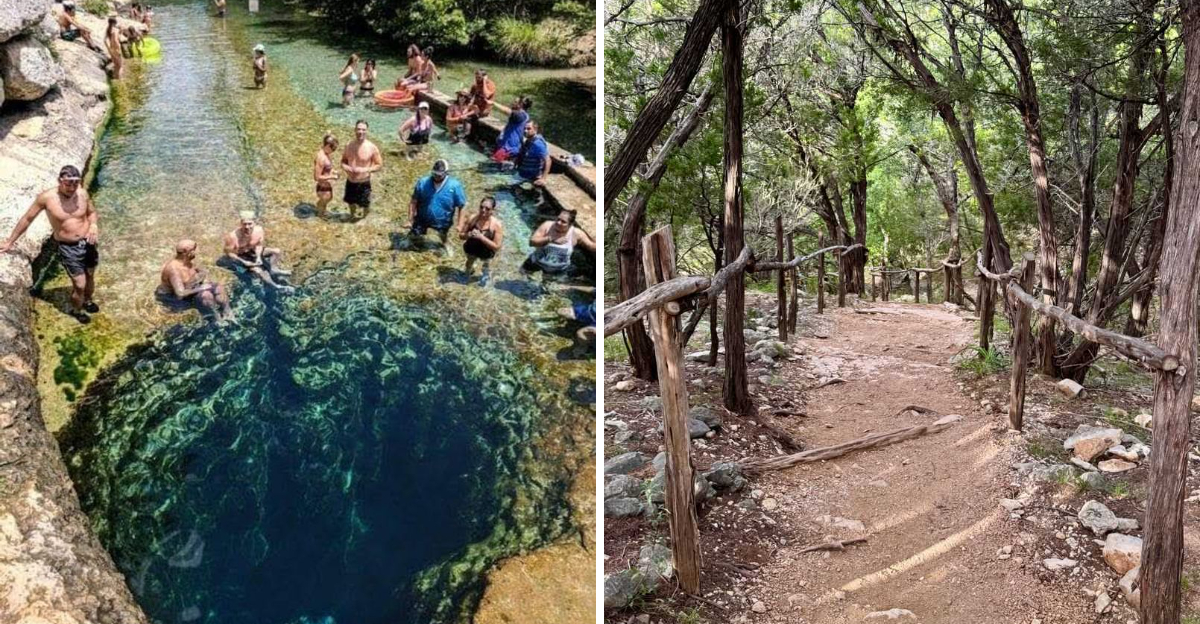
Tucked away in the Texas Hill Country near Wimberley, Jacob’s Well Natural Area sits at 1699 Mt Sharp Rd, a place where crystal-clear artesian spring water once bubbled up from a mysterious underwater cave system that plunges 138 feet deep.
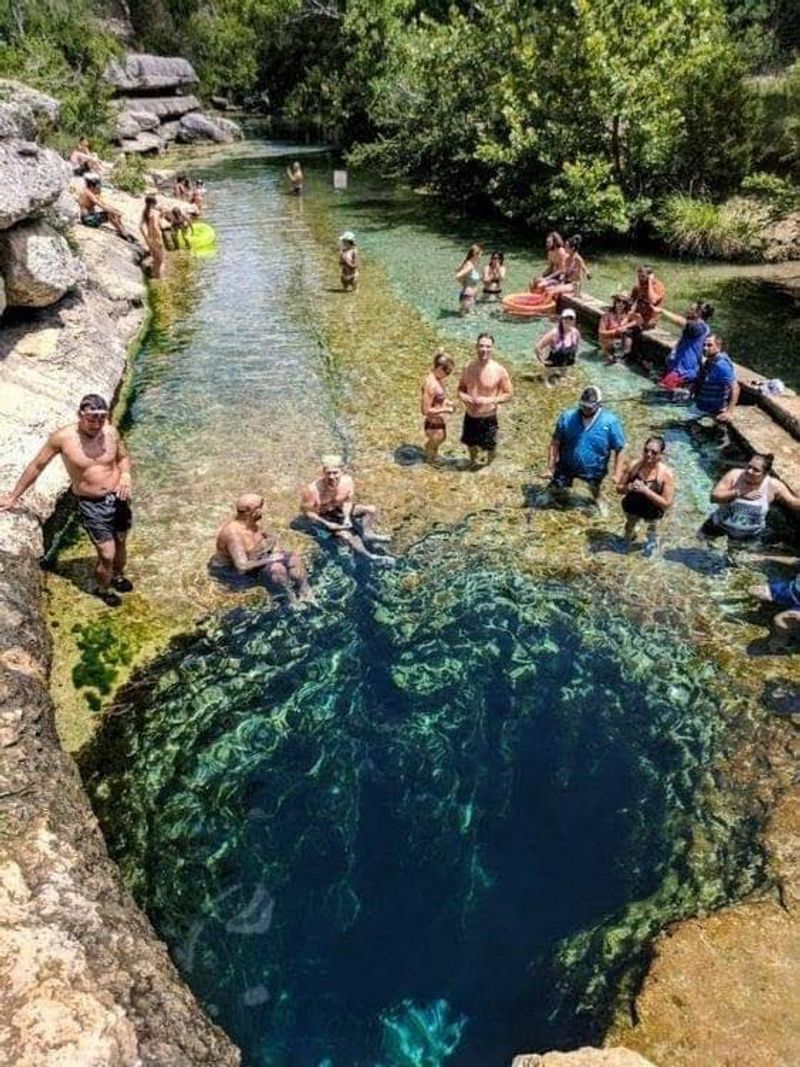
For decades, this natural swimming hole drew crowds eager to dive into its cool, refreshing waters and explore the legendary blue depths that have fascinated adventurers and nature lovers alike.
But here’s the twist: locals are now breathing a sigh of relief as the spring runs low, keeping the tourist hordes at bay. Swimming has been closed for years due to drought and overuse of the aquifer, transforming this once-packed destination into a quieter nature preserve.
A Legendary Artesian Spring with a Dark, Mysterious Depth
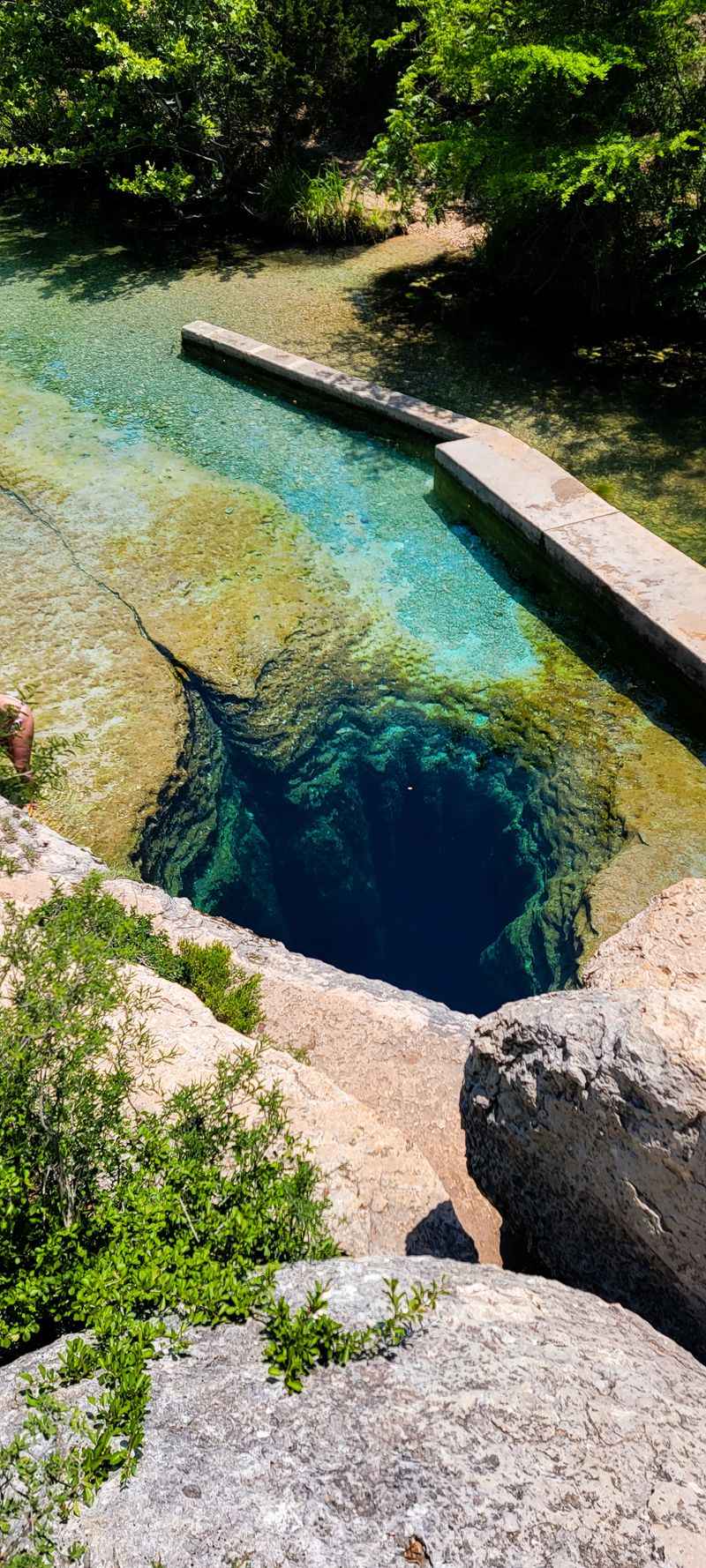
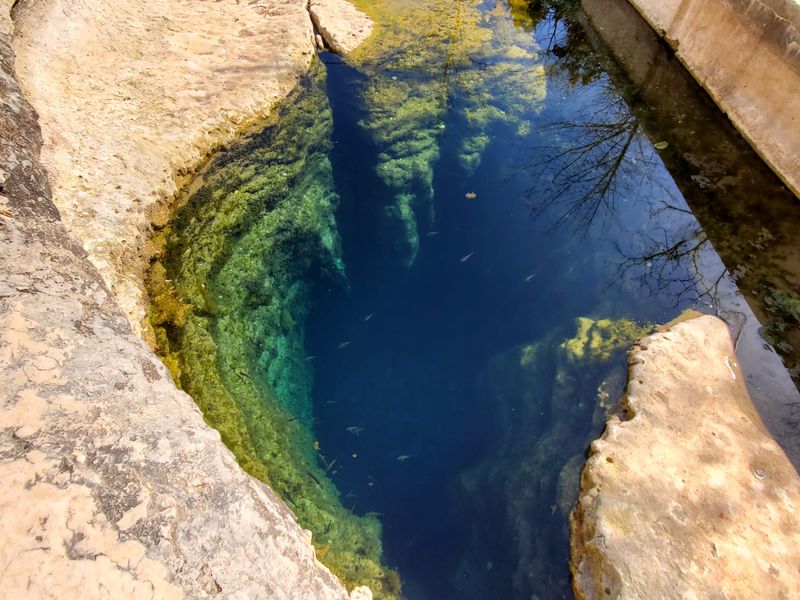
Jacob’s Well is no ordinary swimming hole. Water emerges from a narrow opening in the limestone bedrock, fed by the Trinity Aquifer deep below the Texas Hill Country.
The well itself measures roughly six to eight feet across, but don’t let that modest size fool you. Beneath the surface lies a complex cave system that extends over 138 feet down, with passages stretching more than a mile underground.
Divers have explored these submerged tunnels for decades, though the activity is now heavily restricted due to safety concerns and the fragile ecosystem.
Standing at the edge of the well, you can peer into the deep blue-green water and feel a sense of awe mixed with a little fear. The opening seems almost alive, framed by rock and vegetation that clings to the moist edges.
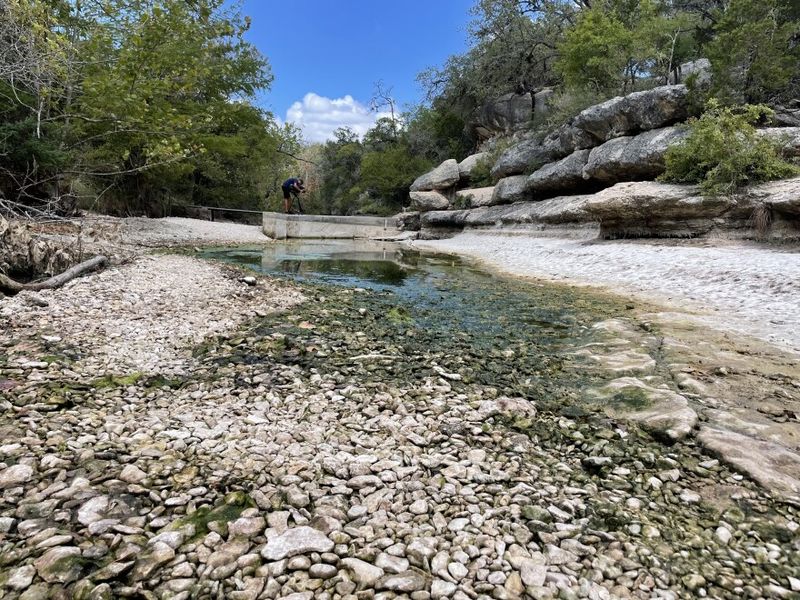
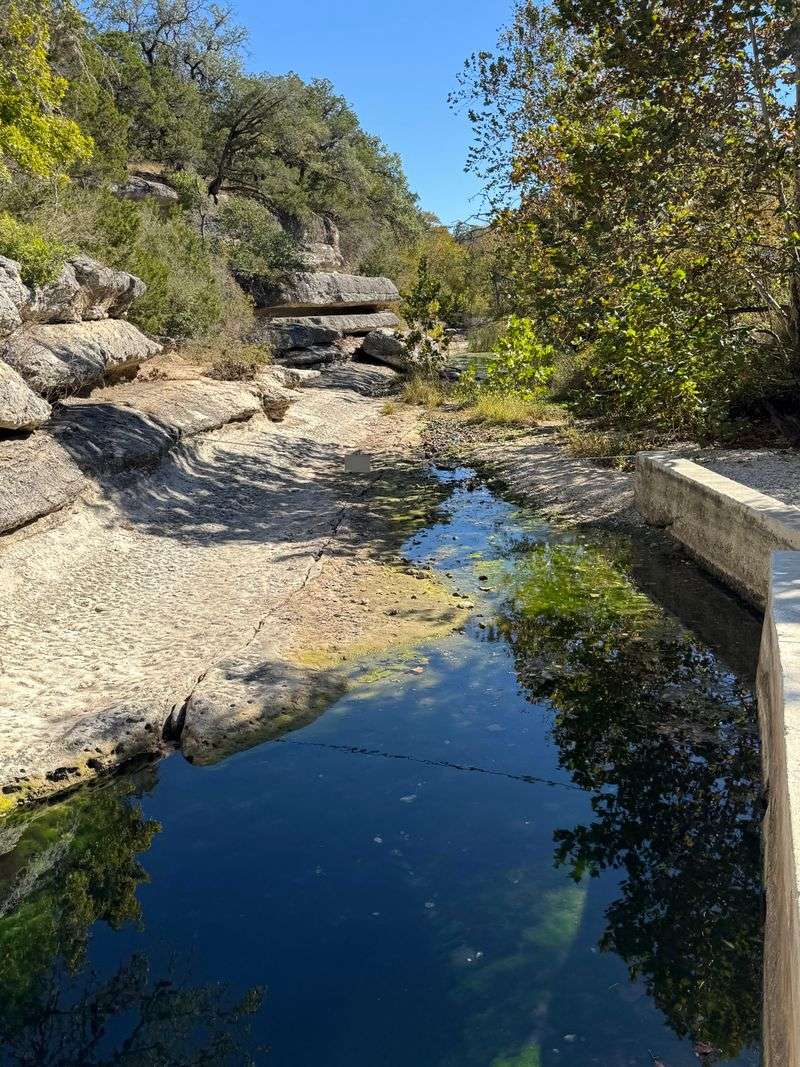
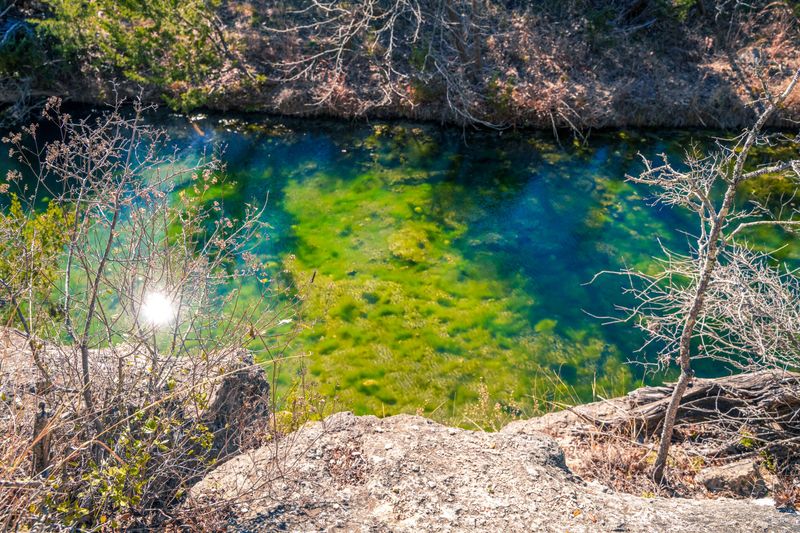
During wetter seasons, the spring flows vigorously, feeding Cypress Creek and creating a lush ribbon of green through the surrounding grasslands. When drought sets in, the water level drops dramatically, sometimes leaving the creek bed dry and the well reduced to a still, reflective pool.
Even in low water, the geological drama remains captivating.
Interpretive signs around the site explain the well’s formation and the delicate balance required to keep it flowing. Visitors learn about the aquifer, the impact of development, and the ongoing conservation efforts to protect this natural wonder for future generations.
The Drought That Saved the Well from Overcrowding
For years, Jacob’s Well was a magnet for summer swimmers, cliff jumpers, and Instagram seekers. Crowds descended on the site, eager to plunge into the famous spring and snap selfies at the edge of the underwater cave.
The constant influx of visitors put enormous pressure on the fragile ecosystem, stirring up sediment, damaging vegetation, and stressing the aquifer that feeds the well. Then came the drought, a three-year stretch of low rainfall that dropped water levels to unprecedented lows.
Swimming was closed, wading was prohibited, and the well became off-limits to all but the most respectful observers.
Locals, who had watched their beloved natural treasure get trampled and overused, found an unexpected silver lining. The drought forced a pause, giving the land a chance to recover and the community a chance to rethink how to manage this precious resource.
Hays County took over stewardship of the site, transforming it into a nature preserve with hiking trails, educational programs, and strict rules to protect the spring. The closure wasn’t popular with tourists, but it was a lifeline for the well itself.
Hiking Trails That Wind Through Hill Country Beauty
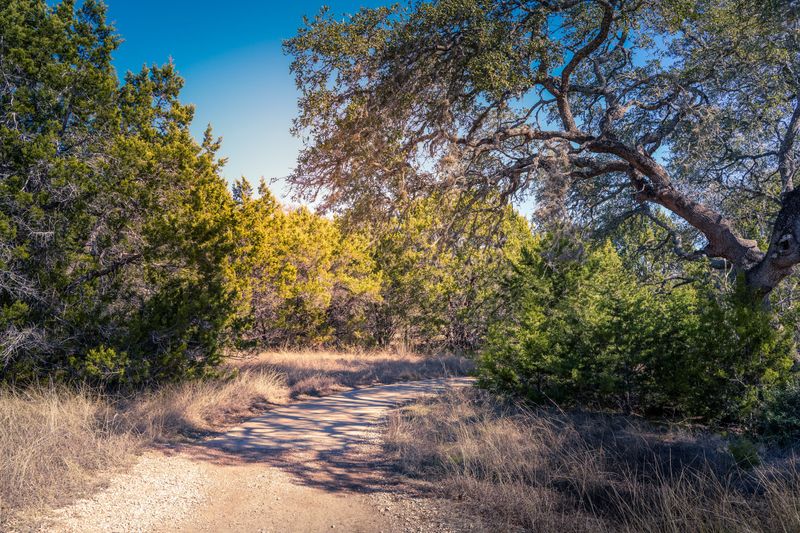
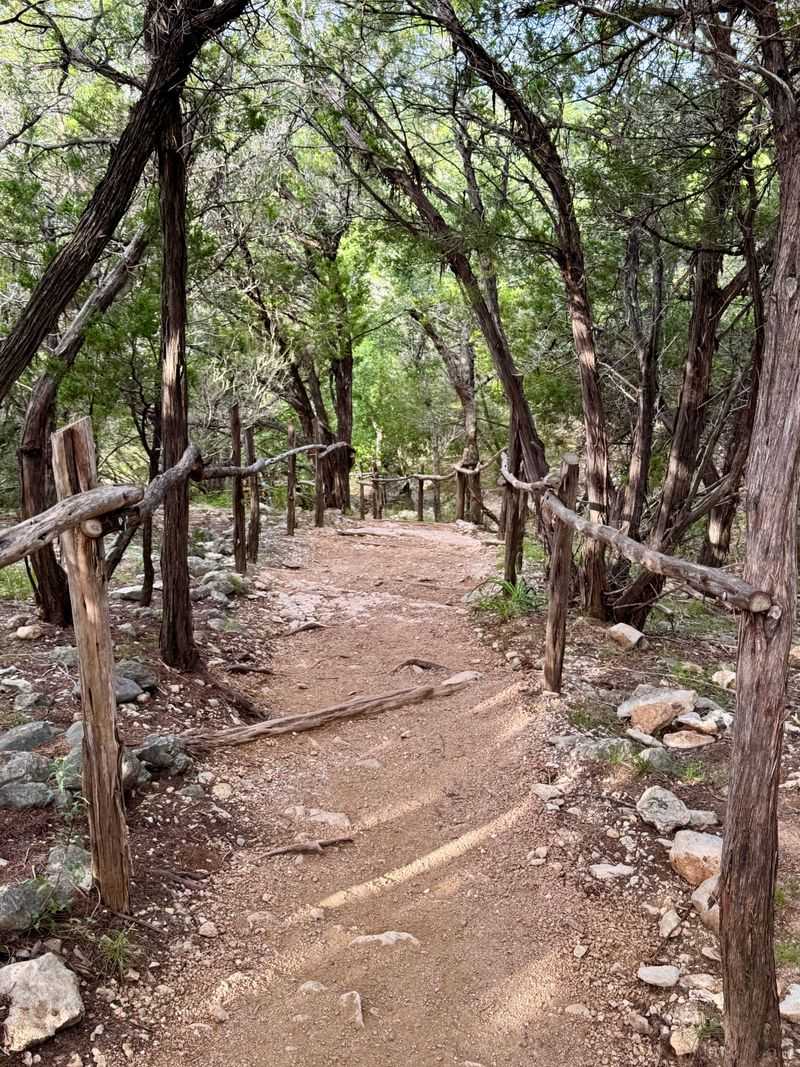
Jacob’s Well Natural Area offers more than just a glimpse of the famous spring. A network of well-maintained trails winds through the 81-acre preserve, leading visitors past native grasses, wildflowers, and stands of juniper and oak trees.
The main trail to the well is an easy quarter-mile walk from the parking lot, suitable for families and casual hikers. It’s a gentle descent with just enough elevation change to make the return trip a mild workout.
Along the way, interpretive signs share stories about the local geology, plant life, and wildlife.
Beyond the well, additional trails invite exploration. The Dry Creek Trail follows the path of Cypress Creek, offering a chance to see how the landscape changes with the seasons.
In spring, wildflowers bloom in vibrant patches of color. In summer, the shade of the trees provides welcome relief from the Texas heat.
The trails are clearly marked and easy to follow, making this a great spot for a leisurely nature walk or a more focused hike. Sturdy shoes are recommended, as some sections feature rocky terrain and occasional steep or slippery spots.
A Human Sundial and Meditation Labyrinth for Reflection
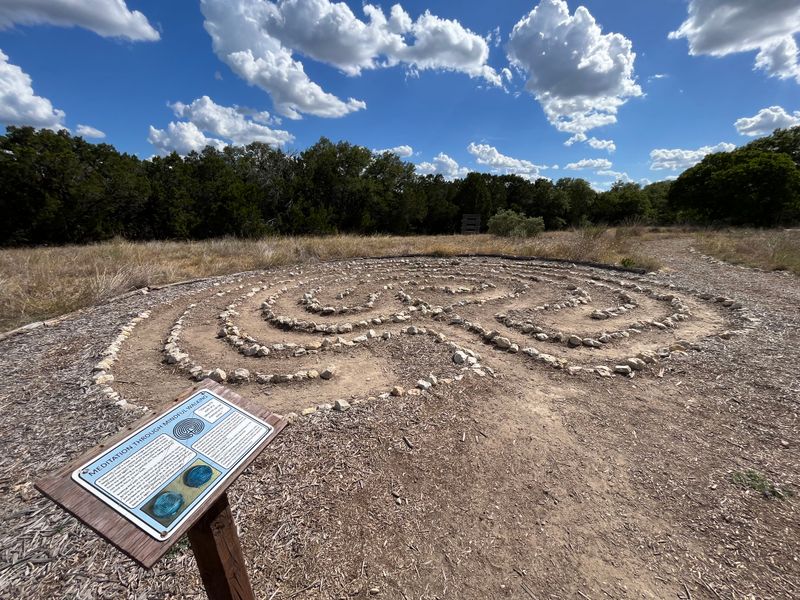
One of the most unexpected features at Jacob’s Well Natural Area is the human sundial, a clever installation that lets visitors become the gnomon. Stand on the central marker, and your shadow points to the time of day on the surrounding circle.
It’s a simple, playful way to connect with the sun and the passage of time, and kids especially love the interactive experience. The sundial sits in an open area with sweeping views of the Hill Country, making it a perfect spot for a quick photo or a moment of contemplation.
Nearby, the meditation labyrinth offers a different kind of experience. This winding path, laid out in a circular pattern, invites walkers to slow down, breathe deeply, and let their thoughts settle.
Walking a labyrinth is an ancient practice, used in many cultures as a tool for mindfulness and spiritual reflection. The one at Jacob’s Well is simple and accessible, open to anyone who wants to take a few minutes away from the bustle of daily life.
Master Gardeners’ Demo Gardens Showcasing Water-Wise Planting
Water conservation is a big deal in Texas, especially in a region where drought can last for years. At Jacob’s Well Natural Area, the Master Gardeners’ demonstration gardens show visitors how to create beautiful, productive landscapes without wasting precious water.
These gardens feature native and adapted plants that thrive in the Hill Country’s rocky soil and hot, dry summers. You’ll see examples of xeriscaping, rainwater harvesting, and composting, all designed to reduce water use while supporting local wildlife.
Strolling through the demo gardens is both educational and inspiring. Colorful blooms attract butterflies and bees, while drought-tolerant shrubs and grasses provide texture and structure.
Informative signs explain the benefits of each plant and offer tips for home gardeners looking to make their own landscapes more sustainable. The gardens change with the seasons, so each visit offers something new to discover.
The Master Gardeners themselves often volunteer at the site, happy to answer questions and share their expertise.
Wildlife Watching Opportunities in a Quiet Preserve
Jacob’s Well Natural Area is a haven for wildlife, thanks to its protected status and the diversity of habitats within its boundaries. Grasslands, creek corridors, and wooded areas provide food and shelter for a wide range of species.
Deer are the most commonly spotted animals, often grazing in the meadows or browsing along the trails. Their graceful presence adds a touch of magic to any visit, especially when you catch sight of a doe with her fawns.
Birdwatchers find plenty to get excited about here. The preserve’s location along migration routes and its mix of habitats attract both resident and seasonal species.
Smaller creatures also thrive here. Lizards bask on sun-warmed rocks, and butterflies dance among the wildflowers.
The preserve’s commitment to conservation means that wildlife can flourish without the constant disturbance of large crowds. Bring binoculars, move quietly, and you’ll be rewarded with sightings that make the trip unforgettable.
The Underwater Cave System That Lures Adventurous Divers
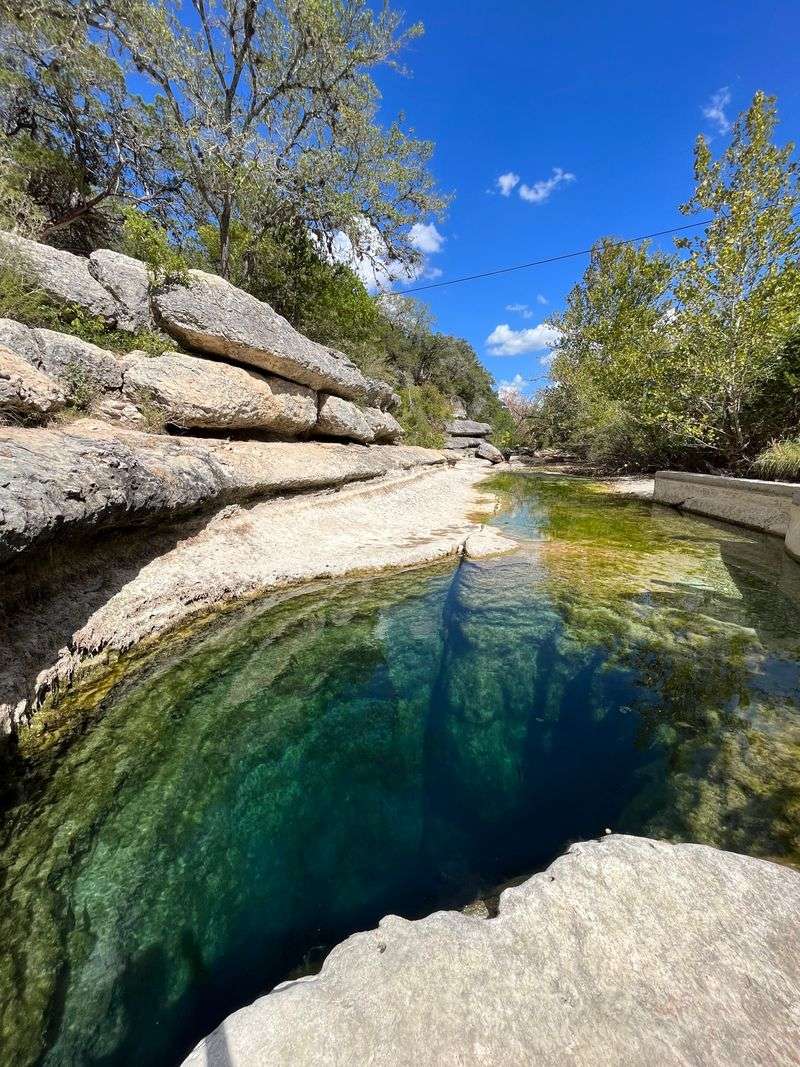
Beneath the surface of Jacob’s Well lies a world that few have seen. The spring’s opening marks the entrance to a complex network of underwater caves that extend deep into the earth.
Divers have mapped over 4,000 feet of passages, descending through chambers and tunnels that require advanced skills and specialized equipment. The caves are beautiful and haunting, with formations sculpted by millennia of flowing water.
But they are also dangerous. The tight spaces, poor visibility, and risk of disorientation have claimed the lives of several divers over the years.
Because of these risks, diving at Jacob’s Well is now heavily restricted. Only certified cave divers with proper permits are allowed to enter the system, and even then, only under strict conditions.
The well’s reputation as one of the most dangerous diving spots in Texas adds to its mystique, drawing thrill-seekers who are fascinated by the challenge. For the rest of us, the stories and videos of these underwater explorations are enough to spark the imagination.
At the visitor center, you can watch footage of divers navigating the caves, offering a glimpse into the hidden world below. It’s a humbling reminder of the power and mystery of nature, and a testament to the importance of protecting places like this for future generations.
A Free, Family-Friendly Destination with Educational Programs
One of the best things about Jacob’s Well Natural Area is that admission is free. Hays County manages the preserve as a public resource, open to everyone who wants to experience its beauty and learn about its ecology.
The parking lot can accommodate a good number of vehicles, and portable restrooms are available on-site. The trails are accessible to a wide range of fitness levels, making this a great destination for families with young children, older adults, and anyone in between.
Throughout the year, the preserve hosts a variety of educational programs and special events. Free outdoor yoga classes have been offered in the past, taking advantage of the serene setting and fresh air.
Workshops on water conservation, native gardening, and wildlife identification provide hands-on learning opportunities. School groups and scouts often visit for field trips, using the preserve as an outdoor classroom where they can explore geology, biology, and environmental science in a real-world context.
The visitor center, though small, is packed with information.
Seasonal Changes That Transform the Landscape
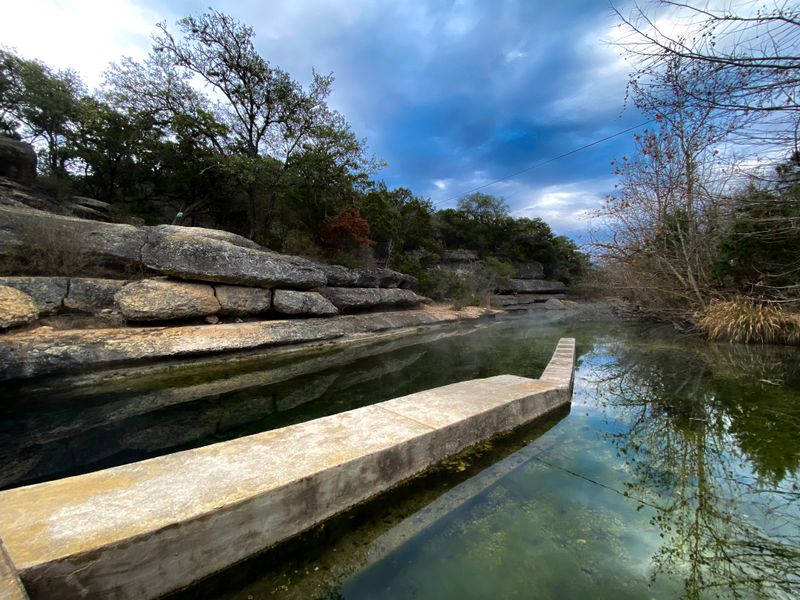
Jacob’s Well Natural Area reveals different faces throughout the year, each season bringing its own palette of colors, sounds, and experiences. Spring is perhaps the most spectacular, with wildflowers carpeting the meadows in waves of bluebonnets, Indian paintbrush, and black-eyed Susans.
The air buzzes with bees and butterflies, and the trees leaf out in fresh greens. Water levels in the well and creek are often higher after winter rains, giving visitors a better sense of the spring’s power and beauty.
Summer brings intense heat, but the shade of the oak and juniper trees offers relief. Early morning or late afternoon visits are best, when the sun is lower and the wildlife is more active.
The preserve’s trails can feel like an escape from the scorching Texas sun, especially along the creek corridor where the vegetation is thickest. Fall ushers in cooler temperatures and a shift in the light, casting a golden glow over the grasslands.
Migrating birds pass through, and the native grasses take on warm tones of amber and rust.
Winter is quieter, with fewer visitors and a peaceful, contemplative atmosphere.
The Impact of Development and the Fight to Protect the Aquifer
Jacob’s Well’s story is inseparable from the larger struggle to protect the Trinity Aquifer, the underground water source that feeds the spring. Over the past few decades, rapid development in the Hill Country has put increasing pressure on the aquifer.
New homes, businesses, and ranches drill wells to tap into the same water that once flowed freely from Jacob’s Well. As more water is pumped out, less is available to sustain the spring, leading to the dramatic drops in water level that have closed swimming and left the creek dry for extended periods.
Local activists, scientists, and concerned citizens have fought to raise awareness and push for stronger regulations on groundwater use. The creation of the Jacob’s Well Natural Area was a major victory in this effort, ensuring that at least this small piece of land would be protected and managed for conservation rather than development.
But the battle is far from over. The aquifer doesn’t recognize property lines, and what happens on neighboring lands has a direct impact on the well.
Visitors to the preserve often leave with a deeper understanding of the connections between land use, water resources, and the health of ecosystems. It’s a powerful reminder that every choice we make, from how we landscape our yards to how we vote on water policy, has consequences for the natural world.
Why Locals Are Relieved the Crowds Have Thinned
For residents of Wimberley and the surrounding Hill Country, Jacob’s Well has always been a cherished local spot, a place to cool off on hot summer days and connect with nature. But as word spread and social media amplified the well’s fame, the quiet swimming hole became a tourist hotspot.
Weekends saw bumper-to-bumper traffic on the narrow country roads, parking overflowed onto private property, and the once-peaceful site buzzed with noise and activity. Trash piled up, vegetation was trampled, and the sheer volume of people threatened to love the well to death.
When swimming was closed due to low water levels, many locals breathed a sigh of relief. The closure wasn’t what they would have chosen, but it brought an unexpected benefit: the crowds vanished.
The preserve became a quieter, more respectful place, visited by people genuinely interested in nature and conservation rather than just a quick thrill or a photo op. Locals could once again enjoy the trails without fighting for parking or navigating throngs of tourists.
There’s a bittersweet quality to this shift. The well’s decline is a sign of serious environmental challenges, and no one wants to see it dry up completely.
But the current balance, with fewer visitors and a focus on education and preservation, feels more sustainable and more in keeping with the spirit of the place.
Dear Reader: This page may contain affiliate links which may earn a commission if you click through and make a purchase. Our independent journalism is not influenced by any advertiser or commercial initiative unless it is clearly marked as sponsored content. As travel products change, please be sure to reconfirm all details and stay up to date with current events to ensure a safe and successful trip.
