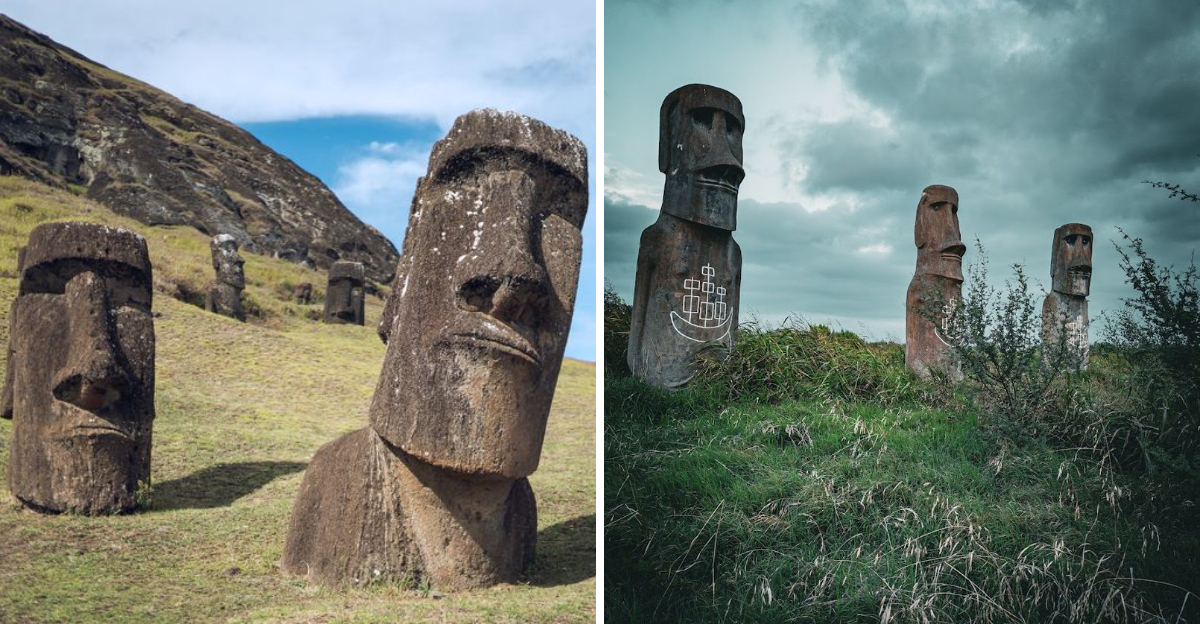
A place that is so unusual it doesn’t feel real is a must-see. This Texas spot features a collection of large, Easter Island-style statues that create a surreal and unexpected experience.
A person can walk among these towering figures and feel like they have stumbled onto a different continent. The setting is surreal, making it a great place for photos and a reminder of the weird and wonderful side of Texas.
It is a testament to the creativity of the people who built it. The fact that a self-taught sculptor created these giants using library books as his only guide makes the story even more extraordinary.
Victoria, Texas just became one of the most fascinating stops I never knew I needed.
The Man Behind the Mo’ai, Alvin T. Dincans Jr.
Not every legend starts with formal training or an art degree. Alvin T.
Dincans Jr. was just a regular Victoria resident who became fascinated by the ancient mo’ai of Easter Island and decided, somewhat quietly and without much fanfare, to build his own versions right in his backyard and along a local Texas frontage road.
He started sculpting in 1996, borrowing books from the Victoria public library to study the distinct facial features, proportions, and symbolic carvings of the original Rapa Nui statues. No professional instruction.
No grant money. Just curiosity, concrete, and a whole lot of determination.
What he produced over the following years was nothing short of remarkable. He eventually crafted at least five statues, possibly as many as fifteen, each one a careful replica of the ancient figures from that remote Pacific island.
He called them his “concreations,” a playful blend of “concrete” and “creations” that perfectly captures his sense of humor and pride.
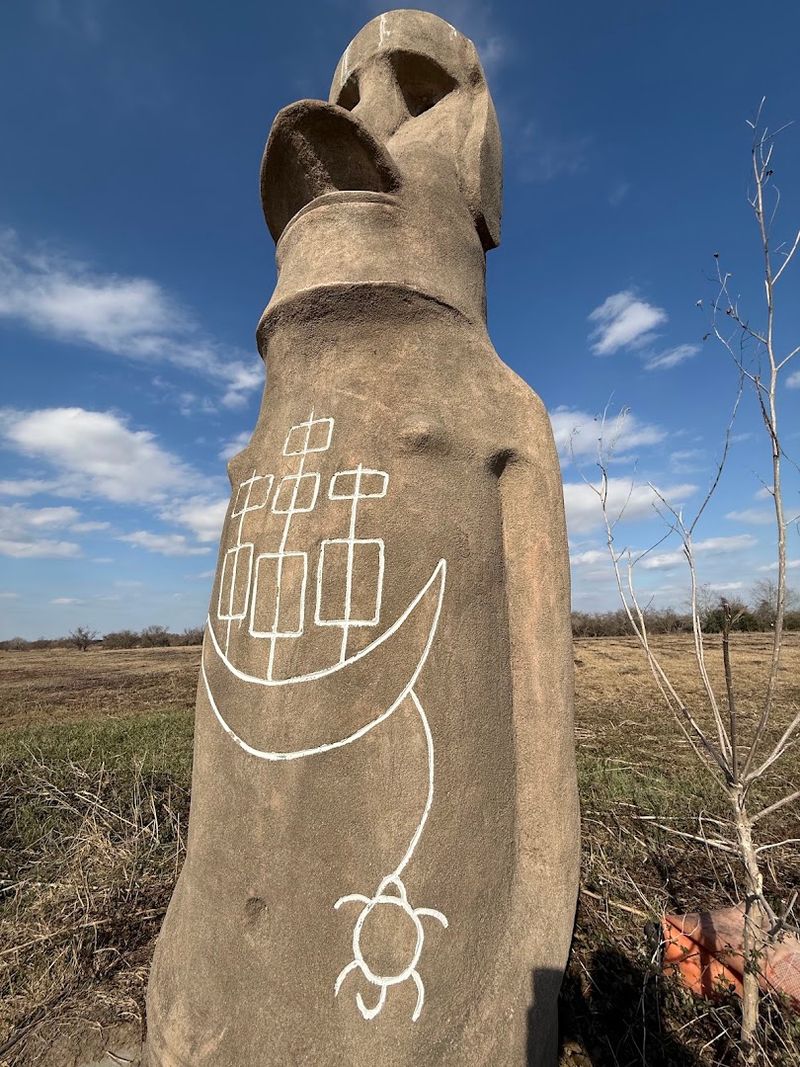
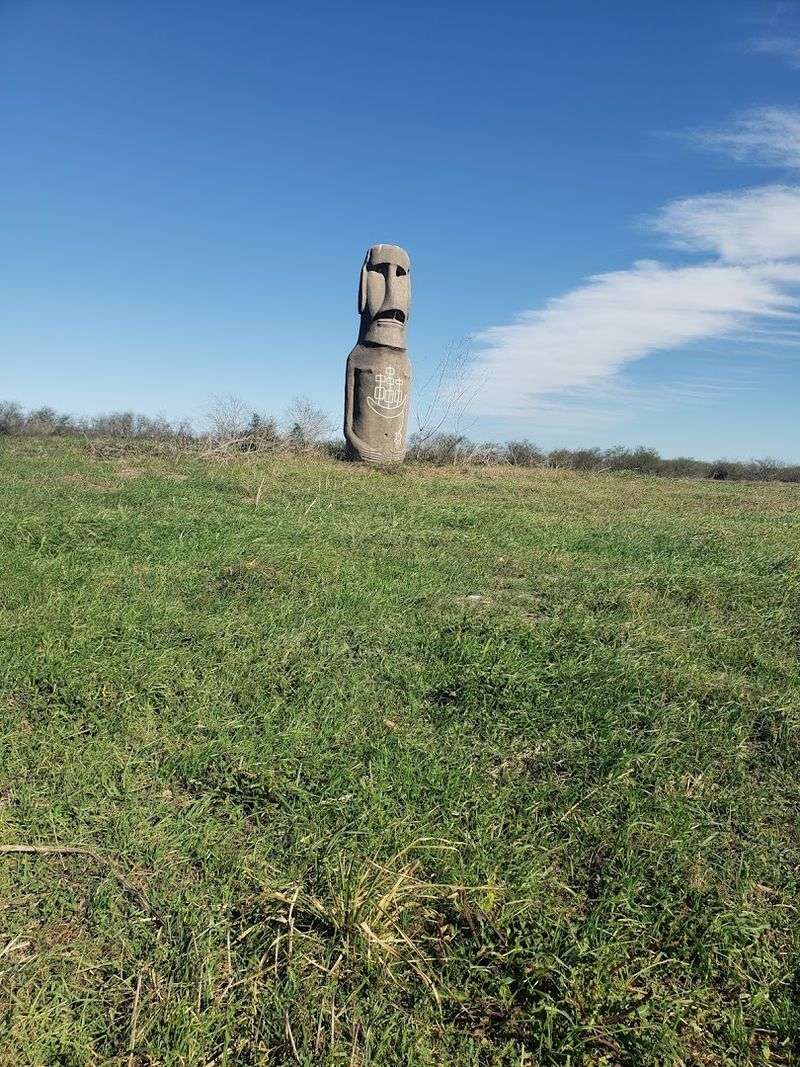
Dincans paid close attention to detail in a way that surprises most visitors. He included ship petroglyphs and small turtle carvings on some of the statues, mirroring features found on genuine Easter Island mo’ai.
That level of research and craftsmanship from a self-taught artist is genuinely hard to wrap your head around.
His story is a reminder that extraordinary art does not always come from galleries or universities. Sometimes it comes from a curious mind, a library card, and a pile of concrete in Victoria, Texas.
Concrete Giants Standing 13 Feet Tall
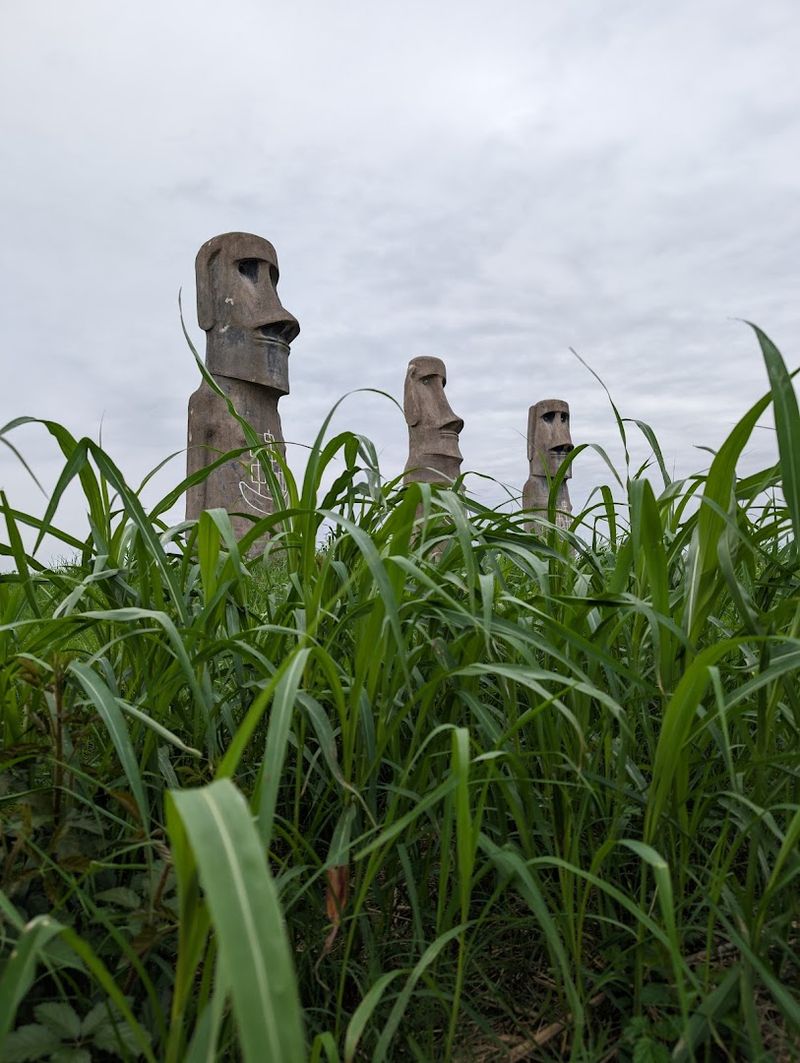
The sheer size of these statues is what gets you first. Each one stands approximately 13 feet tall and tips the scale at around 7 tons, which is roughly 13,000 pounds of solid concrete shaped into a face that feels ancient and otherworldly, right there alongside a Texas highway.
Seeing them in person is a completely different experience from reading about them. Photos do not capture the way they seem to loom over you, their long ears and heavy brows casting real shadows on the ground.
The facial features are unmistakably mo’ai, with that same solemn, forward-facing expression that makes the originals so iconic.
What makes these even more impressive is that Dincans built them without heavy machinery or professional construction support.
The logistics of shaping, curing, and positioning concrete structures of this weight is a serious undertaking for anyone, let alone a solo self-taught artist working from library reference books.
Up close, the texture of the concrete gives each statue a rough, organic quality that actually suits the subject matter well. The mo’ai of Easter Island were carved from volcanic rock, and while concrete is obviously different, the chunky, weathered look of these replicas feels surprisingly appropriate.
There is something oddly peaceful about standing near them. They are massive and imposing, yet the roadside setting gives them this casual, almost neighborly quality, like they have always belonged here in Victoria, watching the traffic roll by on Loop 463.
The Mystery of the Missing Statues
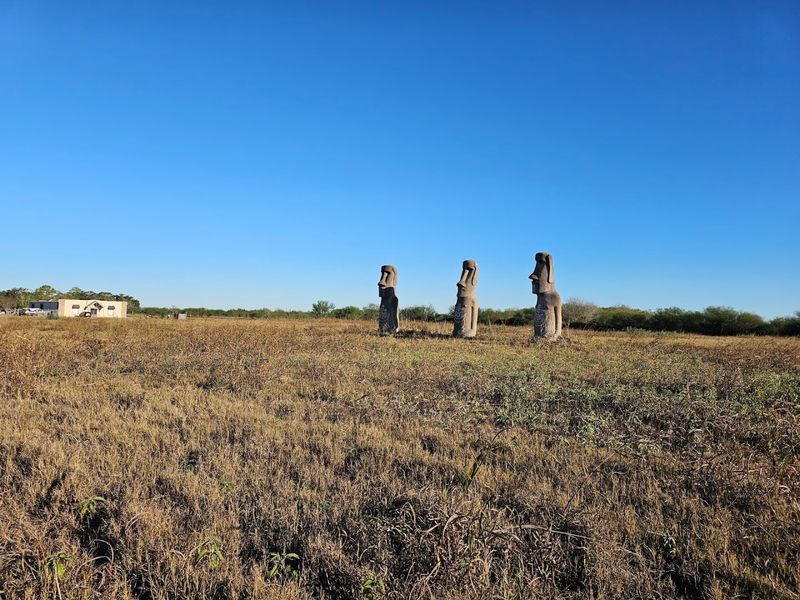
Here is where the story gets genuinely strange. As of December 2025, two of the three concrete mo’ai that once lined Loop 463 near the frontage road address have vanished.
Not damaged, not relocated to a known spot, just gone, which is a remarkable thing to say about objects that each weigh 13,000 pounds.
Even local residents and city officials have expressed puzzlement about the disappearances. Moving a 7-ton concrete statue is not exactly something that happens quietly or accidentally.
Yet the whereabouts of these missing figures remain unclear, which has turned them into something of a local legend within an already unusual story.
The mystery adds a layer to the whole experience that most roadside attractions simply do not have. You are not just visiting a quirky landmark.
You are stepping into an ongoing puzzle, one that involves massive concrete objects, a self-taught sculptor, and a South Texas highway that apparently cannot keep track of its giants.
Some of Dincans’ other mo’ai are located on private property, including at his Seadrift bay house and his ranch, so it is possible some of the missing statues ended up in those locations. But nothing has been officially confirmed, and the ambiguity is part of what makes this place so compelling.
Roadside attractions are usually static and predictable. This one keeps changing.
The fact that you might show up and find something different from what was there last year makes every visit feel like a small adventure with no guaranteed outcome.
Riverside Park, Where One Statue Found a Permanent Home
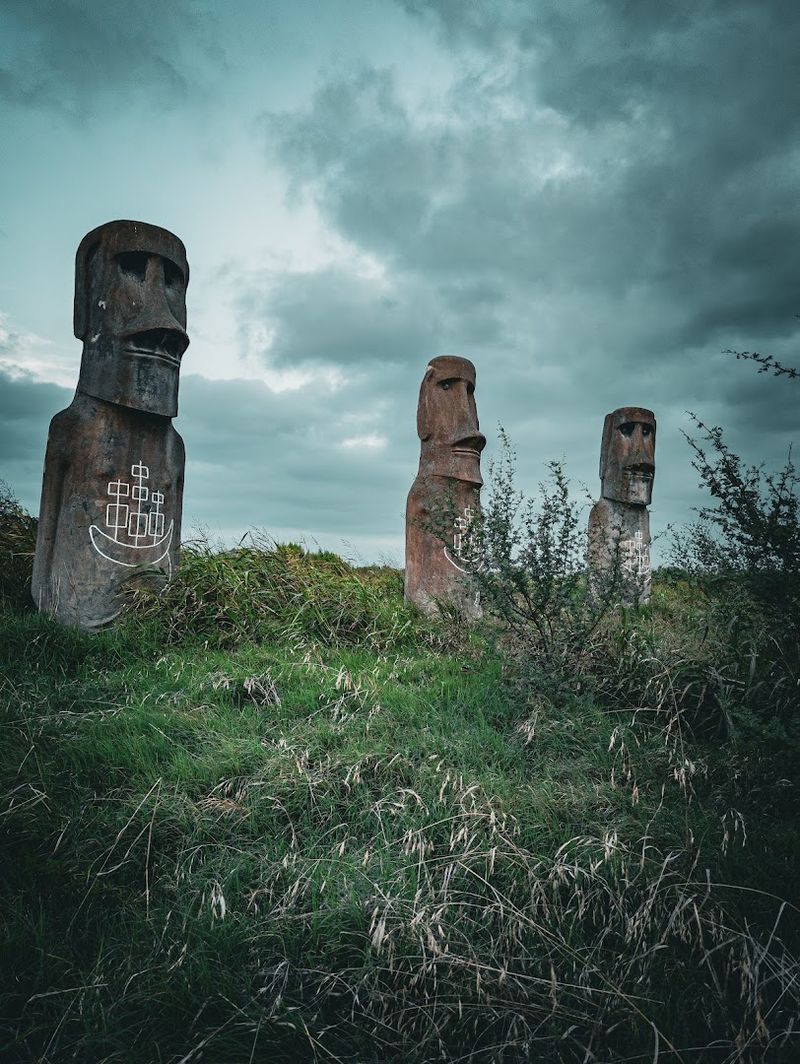
Not all of Dincans’ creations have had uncertain fates. One of his mo’ai found a permanent and celebrated home in Victoria’s Riverside Park, where it has stood since July 24, 1998.
It is one of the more accessible versions of his work, placed in a public green space where anyone can walk right up to it.
The base of this statue bears Dincans’ name and the year 1997, a small but meaningful acknowledgment of the artist behind the work. It is the kind of detail that transforms a curiosity into a tribute, giving credit where it is absolutely due.
Riverside Park itself is a pleasant place to spend some time. The park sits along the Guadalupe River and offers a relaxed, shaded environment that contrasts nicely with the raw roadside energy of the Loop 463 statues.
Seeing the mo’ai here feels more like visiting a museum piece, presented with care and intention.
The park statue also gives you a chance to study the craftsmanship up close without the distraction of passing traffic. The facial details, the proportions, and the surface texture all become more visible when you can circle the statue slowly and take your time with it.
For visitors who want to guarantee they will see at least one of Dincans’ concrete mo’ai, Riverside Park is the reliable option. It is a good starting point before heading out to the frontage road to see what, if anything, remains along Loop 463.
How Library Books Inspired a Texas Legend
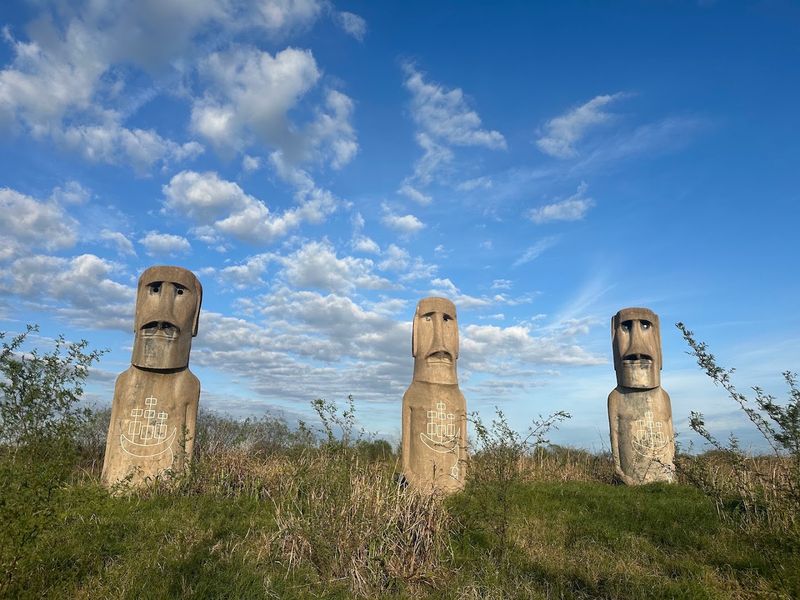
There is something deeply charming about the fact that this entire project started with a library card. Alvin Dincans did not travel to Easter Island to study the mo’ai firsthand.
He walked into the Victoria public library, checked out books on the subject, and taught himself everything he needed to know from the pages he found there.
That kind of self-directed learning is rare and worth celebrating. Most people flip through a book about something fascinating and then move on with their day.
Dincans looked at those same pages and decided to physically recreate what he saw, at full scale, in concrete, in his yard in South Texas.
The attention to detail he managed through book research alone is what really stands out. The ship petroglyphs and turtle carvings he included on some of his statues are not widely known features of the original mo’ai.
They are the kind of specific details you only notice if you are studying the subject seriously and with genuine care.
His process also says something interesting about access to art. You do not need expensive materials or formal education to create something meaningful and lasting.
A public library, some concrete, and a strong enough vision can apparently produce 13-foot statues that confuse and delight people for decades.
The Victoria library may not have a plaque honoring Dincans, but it probably should. Without those borrowed books, the whole story never happens, and Victoria would be missing one of its most unusual and beloved landmarks.
The Polynesian Connection in the Heart of Texas
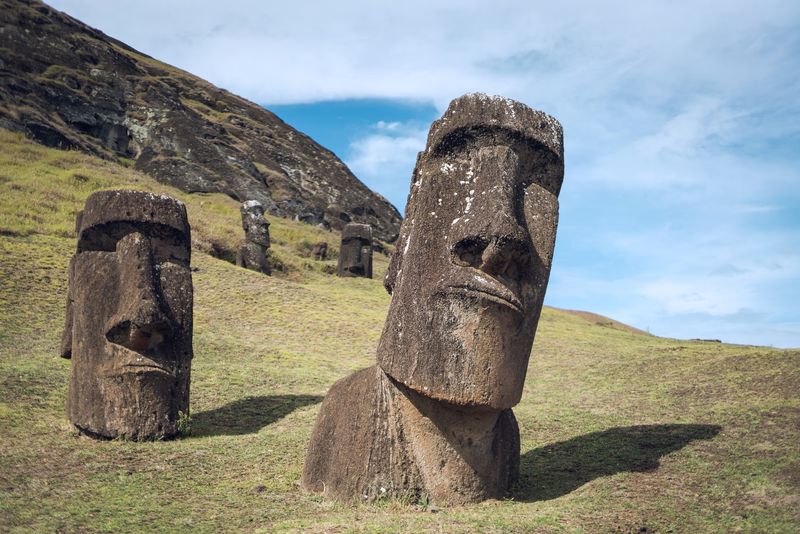
The original mo’ai of Easter Island, or Rapa Nui, are among the most recognized and mysterious structures in the world.
Carved from volcanic tuff by the indigenous Rapa Nui people centuries ago, they are believed to represent ancestral figures, their backs to the sea and faces turned toward the communities they were meant to protect.
Bringing that imagery to Victoria, Texas is a bold creative leap. The cultural distance between a remote Pacific island and a South Texas highway is enormous, and yet Dincans managed to bridge it in a way that feels respectful and genuine rather than gimmicky.
The long ears are one of the most distinctive features of the mo’ai, and Dincans replicated them faithfully. The elongated earlobes on his concrete versions are an accurate nod to the originals, reflecting a cultural practice of ear stretching that was common among the Rapa Nui elite.
That is a detail most casual observers would never even notice or think to include.
The petroglyphs he carved into some of his statues add another layer of cultural accuracy. The original Easter Island mo’ai have carvings on their backs and bases, and Dincans incorporated similar imagery into his own work.
It is the kind of thoughtful detail that separates a true homage from a simple imitation.
Victoria is not a place most people associate with Polynesian culture, which is exactly what makes this connection so unexpected and so memorable. Sometimes the most meaningful bridges between worlds are built in the most unlikely places.
The Frontage Road Where It All Began
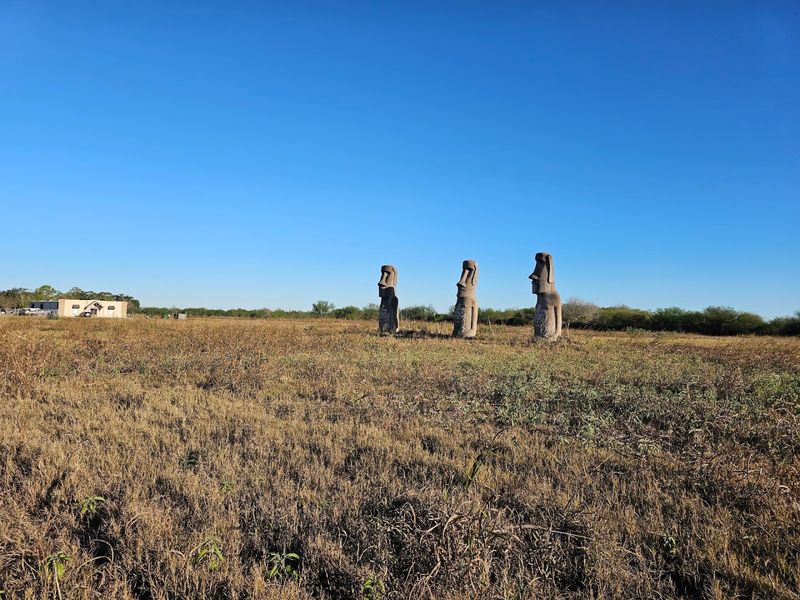
The address 5208 Texas 463 Frontage Road does not sound like anywhere special until you actually drive it. Loop 463, also known as Zac Lentz Parkway, is a fairly standard stretch of South Texas road, lined with the usual mix of businesses, open land, and highway infrastructure.
Then you see the faces.
Originally, three of Dincans’ concrete mo’ai stood along the northbound service road near this address. For years, drivers passing through Victoria would do a double take, slow down, and occasionally pull over to get a closer look at these unexpected giants peering out from the Texas landscape.
The frontage road setting gives the statues a wonderfully absurd quality. There is something genuinely funny and also strangely moving about ancient Polynesian iconography showing up on a South Texas service road.
It is the kind of thing that makes you appreciate how weird and wonderful the world can be when one person follows an unusual creative impulse.
As of late 2025, two of the three statues that once stood at this location have reportedly gone missing, which only adds to the mystique. The remaining presence, or absence, of these figures along the road has become a conversation piece among locals and visitors alike.
Even if the statues are not all there when you visit, the drive itself feels meaningful. Knowing that this ordinary stretch of Texas highway was once home to a trio of handmade giants makes the whole road feel different, charged with a kind of quiet strangeness.
Why Victoria, Texas Deserves a Spot on Your Road Trip Map
Victoria does not always make the top of Texas travel lists, and that is honestly its best quality right now. It is a mid-sized city in the Coastal Bend region, about halfway between San Antonio and Corpus Christi, with a relaxed pace and a surprisingly layered local culture that rewards curious visitors.
The Easter Island heads are the obvious hook, but the city has more to offer once you are there. Riverside Park alone is worth an afternoon, and the broader Victoria area has history, nature trails, and local character that makes for a full day of exploring without feeling rushed.
For road trippers specifically, Victoria sits at a natural crossroads that makes it easy to include without major detours. If you are traveling the Texas Gulf Coast corridor or cutting between San Antonio and Corpus Christi, the city is practically on the way.
Stopping for the mo’ai adds maybe an hour to your trip and gives you a story worth telling for years.
The frontage road statues, the park installation, and the mystery of the missing figures together create a layered experience that goes beyond a simple photo stop.
You find yourself thinking about Dincans, about Rapa Nui, about what drives a person to build something massive and strange in their own backyard, just because the idea excited them.
That kind of place is rare. Victoria earned its spot on the map the moment the first concrete face rose above that Texas horizon, and it has held that spot ever since.
Address: 5208 Texas 463 Frontage Rd, Victoria, TX 77904
