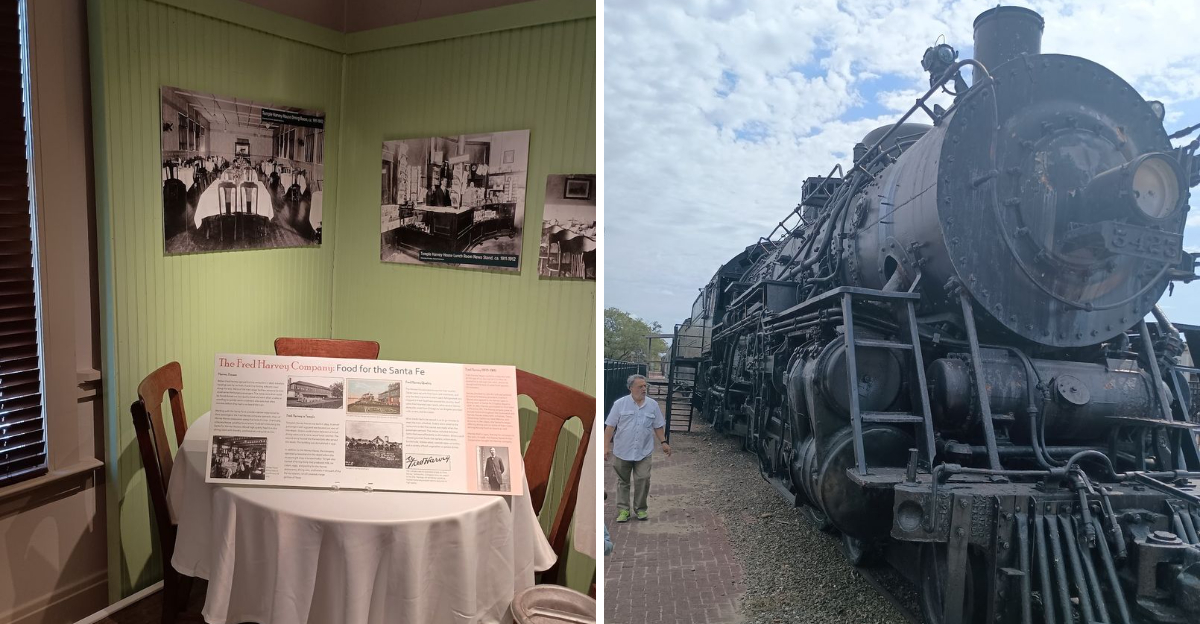
Train travel was a much bigger production in 1911, and this Texas depot still has enough of its old personality to make modern stations feel painfully boring.
The grand brick building once handled passengers through dedicated waiting areas, ticketing spaces, baggage rooms, and railroad offices, serving travelers for decades before railroad operations moved elsewhere in 1989.
After a major restoration, it reopened as a museum filled with exhibits about railroad life, local history, and the Santa Fe Railway, while vintage railroad equipment sits outside beside an active rail yard.
It is the kind of Texas history stop where old trains are not just something printed on an exhibit panel, because modern ones can still rumble past while you are learning how passengers traveled more than a century ago.
Step Through the Restored Lobby and Waiting Areas
Push open the doors and the first thing that hits most visitors is the scale of the room. High ceilings, long benches, and tall windows make the lobby feel like a place built for crowds, because that is exactly what it was.
Passengers once filled these waiting areas while conductors called out destinations across Texas and beyond.
Restoration crews worked carefully to bring the space back to the way it looked when the depot opened in 1911. Wood trim, plaster details, and the general layout of the public rooms were kept intact rather than modernized away.
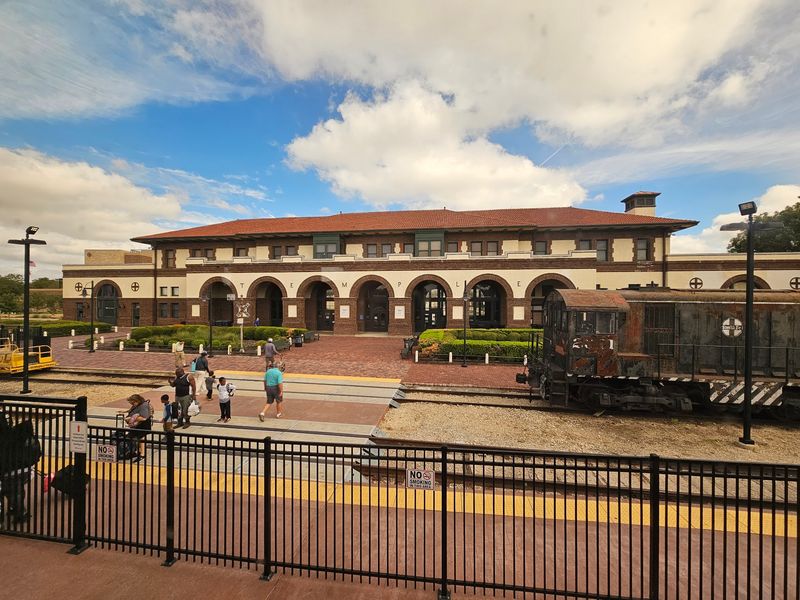
What makes the lobby unusual is that it never became a museum piece behind velvet ropes. Amtrak travelers still sit here waiting for the Texas Eagle, sharing benches with families who came for the exhibits.
Take a slow lap around the room before heading upstairs. Look at the counters, the doorways, and the way the space naturally guides people toward the platform side of the building.
A restored counter from the old Railway Express Agency office sits on display, a reminder that packages, telegrams, and freight moved through here alongside people. Clerks handled everything from farm equipment orders to letters headed north.
Standing quietly in the lobby gives a sense of how many journeys started right on this floor. Weddings, farewells, soldiers shipping out, and families arriving with everything they owned all happened within these walls, and the room still carries that weight.
A 1911 Building With a $200,000 Price Tag
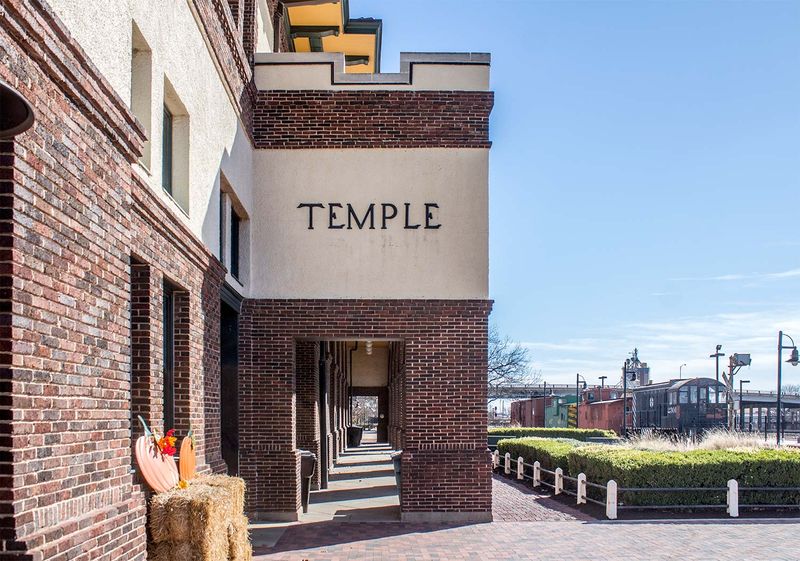
Construction started in August 1909 and wrapped up on January 29, 1911, and the final bill topped $200,000. That was an enormous sum for a small Texas city at the time, which says a lot about how important Temple had become to the railroad.
The Atchison, Topeka and Santa Fe Railway chose Temple as its Southern Division Headquarters, and a headquarters town needed a station that looked the part. Three earlier depots had served the city, but this fourth one was designed to impress.
Materials came from far away. Redwood beams traveled down from the Pacific Northwest, and the bricks were shipped in from Kansas, hauled by the very railroad that ordered them.
Trains kept the building busy until 1989, when railroad operations moved into a newer facility nearby. Amtrak hung on through the early 1990s, and then the depot sat empty and started slipping toward demolition.
Local residents refused to let that happen. The City of Temple purchased the depot and roughly eight surrounding acres in September 1995, setting the stage for a full rescue.
Renovation work ran from September 1999 through June 2000, funded by a $2.4 million ISTEA grant through the Texas Department of Transportation plus $1.6 million from the city. The museum opened inside on August 26, 2000.
Additional foundation repairs followed in 2013, proving that saving a landmark is an ongoing job rather than a one-time project.
Prairie-Beaux Arts Details Worth Slowing Down For
Architecture fans get a treat here that casual visitors often walk right past. The depot blends Prairie style with Beaux Arts influences, a combination of red brick and stucco that manages to look both grounded and formal at once.
Wide horizontal lines pull the eye along the length of the building, while decorative touches around the entrances add a dash of elegance. The result is a station that feels sturdy without being plain.
Hidden in the brickwork is the best detail of all. The Santa Fe trademark, a cross inside a circle, is worked directly into the masonry, so the company signed its own building in brick rather than paint.
Spotting that emblem turns into a small scavenger hunt for kids. Give them a hint about where to look and let them find it themselves.
Recognition for the design goes beyond local pride. Jay C.
Henry included the depot in his book Architecture in Texas 1895-1945, placing it among the notable structures of that era.
The platform side deserves attention too, with its long covered walkway offering shade and a clear view of the tracks. Photographers tend to get their best shots from this angle, especially in late afternoon light.
Walking the full perimeter takes only a few minutes and rewards the effort. Brick patterns, window shapes, and roofline changes all reveal how much thought went into a building meant mainly for buying tickets and catching trains.
Second Floor Galleries Packed With Local Stories
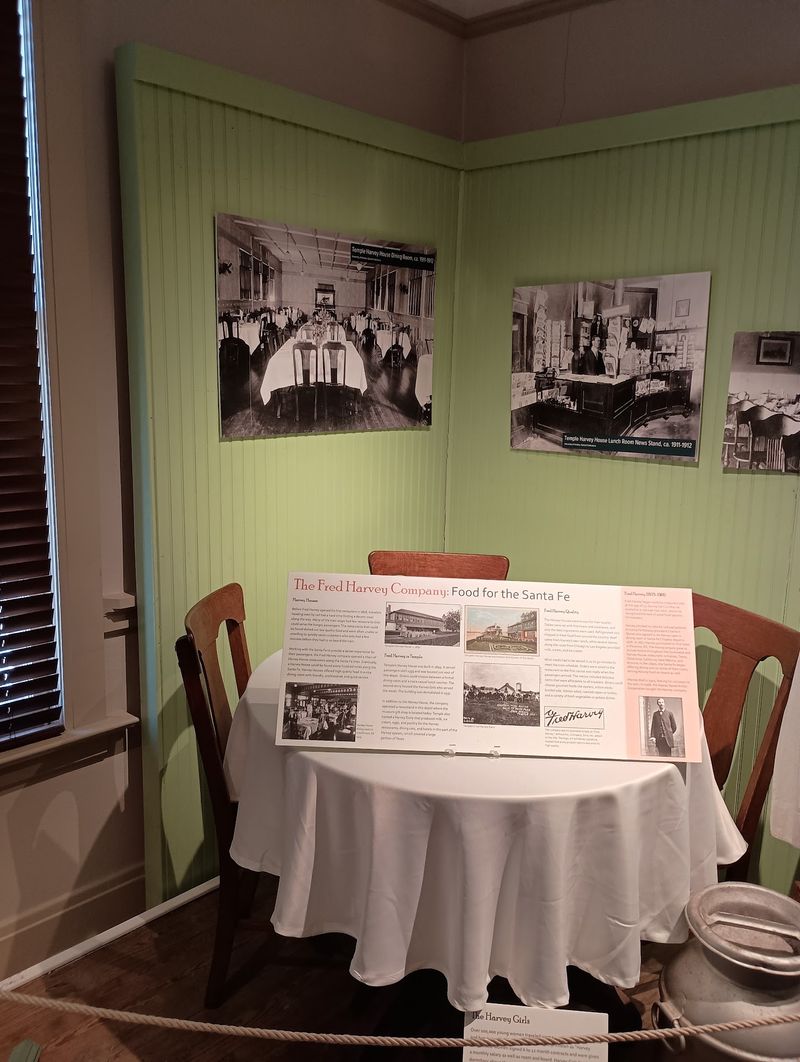
Head upstairs and the atmosphere changes completely. The second floor once held Santa Fe Railroad offices, including the dispatch operations that kept trains moving safely across the division.
Those same rooms now hold the permanent galleries. Artifacts, photographs, and written accounts trace how railroads, workers, and local industries built the city of Temple from the ground up.
Exhibits lean heavily on the Santa Fe Railway, though other Texas lines get their share of attention. Maps show how tracks stitched together towns that would have stayed isolated otherwise.
Antique signals, lanterns, and hand tools fill the display cases. Each one belonged to somebody who worked long shifts in heat, rain, and darkness to keep the trains running on schedule.
One of the more unexpected displays covers the hobo alphabet, the coded chalk symbols that travelers scratched onto fences and walls. A single mark could warn about an unfriendly dog or point toward a kind household.
Kids usually gravitate toward the room stocked with train toys, which gives parents a chance to read the panels at their own pace. It is a smart bit of museum planning.
Researchers have a resource here as well. The Fred M. and Dale M.
Springer Archives hold documents and materials that draw historians studying the Santa Fe and other Texas railroads, making the museum useful far beyond a casual afternoon visit.
Climb Aboard Real Locomotives and Pullman Cars
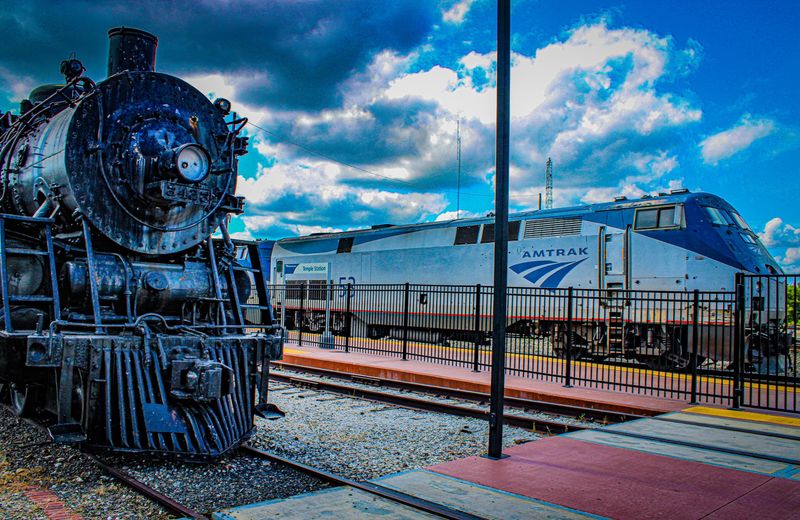
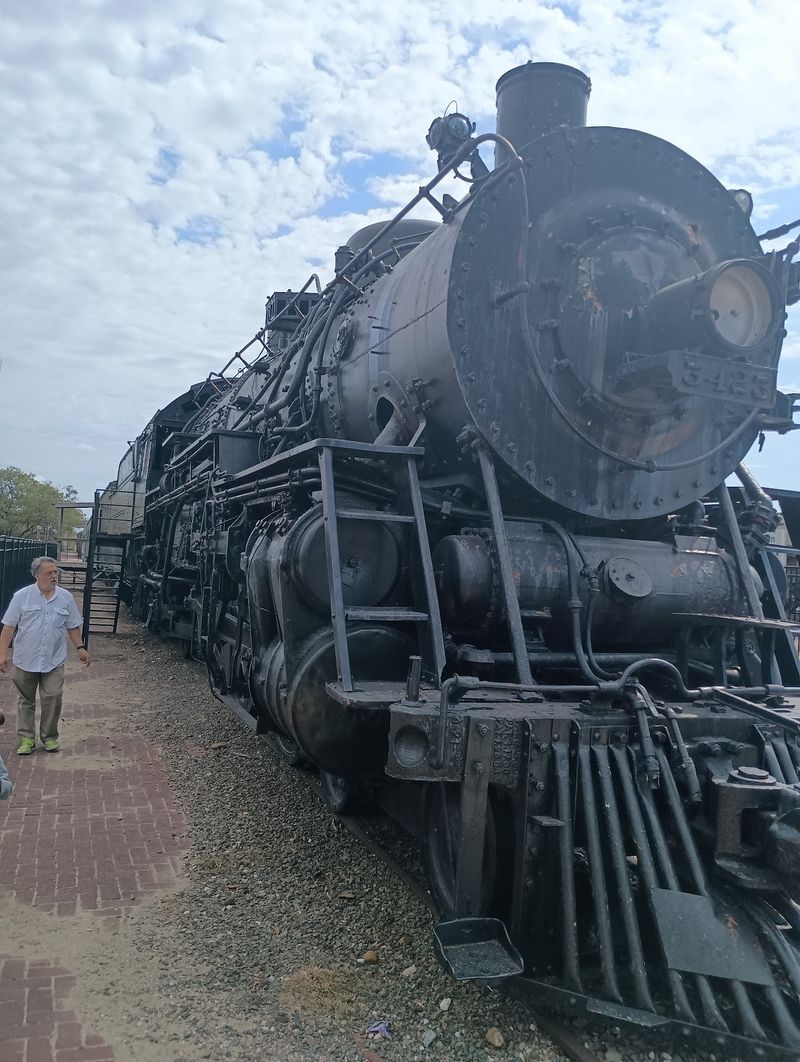
Nothing prepares a first-time visitor for how enormous a steam locomotive looks up close. Photographs shrink them.
Standing beside the driving wheels changes that in a hurry.
The museum grounds hold three locomotives along with passenger cars and cabooses, all sitting on track just outside the depot. The collection turns the lawn into an open-air gallery of heavy machinery.
Visitors can climb into the cab of the big steam engine and look over the controls the engineer once handled. Levers, gauges, and valves crowd the space, and the seat sits higher than most people expect.
Pullman cars are open for touring too, which offers a completely different perspective. Instead of soot and steam, there are sleeping berths and seating arrangements built for long-distance comfort.
Walking from a locomotive cab into a passenger car in the space of a minute shows the two sides of rail travel side by side. One crew shoveled coal while passengers a few cars back watched Texas roll past the window.
Cabooses tend to be the crowd favorite for younger visitors. The compact living quarters, bunks, and lookout cupola feel like a clubhouse on wheels.
Wear comfortable shoes and plan for outdoor time, since the equipment sits in the open. Morning visits are usually cooler, and the low sun makes the paint and lettering on the rolling stock pop for photos.
Model Trains and the CentraMod Layouts
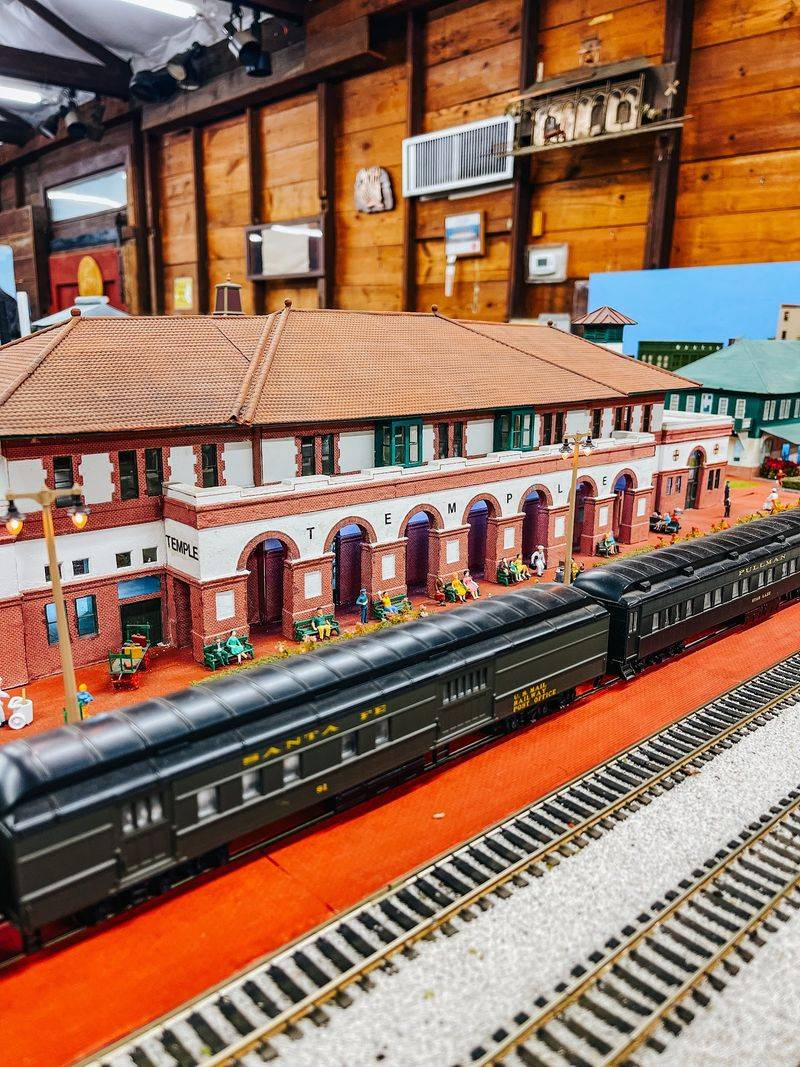
A separate building near the depot hides one of the most detailed attractions on the property. Inside, model train layouts wind through miniature landscapes complete with tiny towns, bridges, and rolling hills.
The Central Texas Area Model Railroaders, known as CentraMod, use the space as a meeting place and maintain the extensive layouts. Members put serious hours into building and improving the scenery.
Watching a layout in operation is oddly hypnotic. Small locomotives pull strings of freight cars through tunnels and past crossings while lights blink and signals change.
Club members often stop what they are doing to explain how a section was built or how the wiring works underneath the table. Those conversations are frequently the highlight of a visit for curious guests.
Anyone thinking about starting the hobby will find plenty of practical inspiration. Seeing scale scenery up close makes the whole process feel more approachable than a magazine photo ever could.
Younger visitors press their noses to the edge of the layout and follow one train around the loop over and over. Adults tend to do the same thing while pretending they are studying the craftsmanship.
Check the museum schedule before going, since the model building may not run during every open hour. A quick call ahead can save disappointment and help time a visit for when the trains are actually moving.
Watch Live Trains From a Front Row Seat
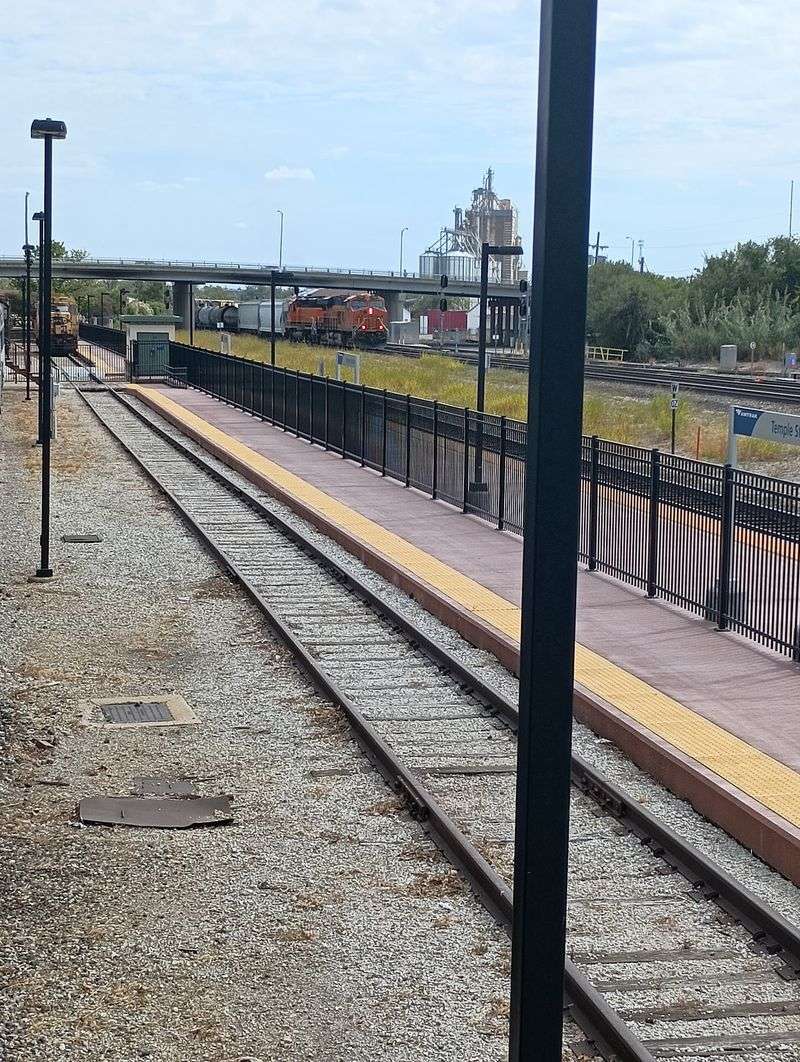
Here is something most museums cannot offer. The depot sits right beside an active railroad yard, so the history on display shares a fence line with trains running today.
Roughly 30 to 35 trains move through Temple on a typical day. Freight rolls past regularly enough that patient visitors rarely wait long for something to happen.
Around 500 BNSF employees work in Temple across the yard, rip track shop, fuel pad, and locomotive shop. The city still functions as a primary supplier of locomotive power for its division.
Railfans bring cameras and scanners and settle in near the platform. Others simply notice the horn and wander over to see what is passing.
Amtrak service keeps the passenger tradition alive at the same building. Watching travelers board a train from a depot built in 1911 collapses the distance between then and now.
The contrast makes the exhibits land harder. After reading about dispatchers upstairs, seeing a modern locomotive glide by drives home that this is a living industry rather than a closed chapter.
Bring a folding chair if planning to linger outside for a while. Shade is available under the platform canopy, and the sound of a passing freight is a fine soundtrack for an afternoon.
Temple earned its nickname as a railroad town honestly, and the yard next door keeps proving it every single day.
Gardens, Plaza Spaces, and Planning the Visit
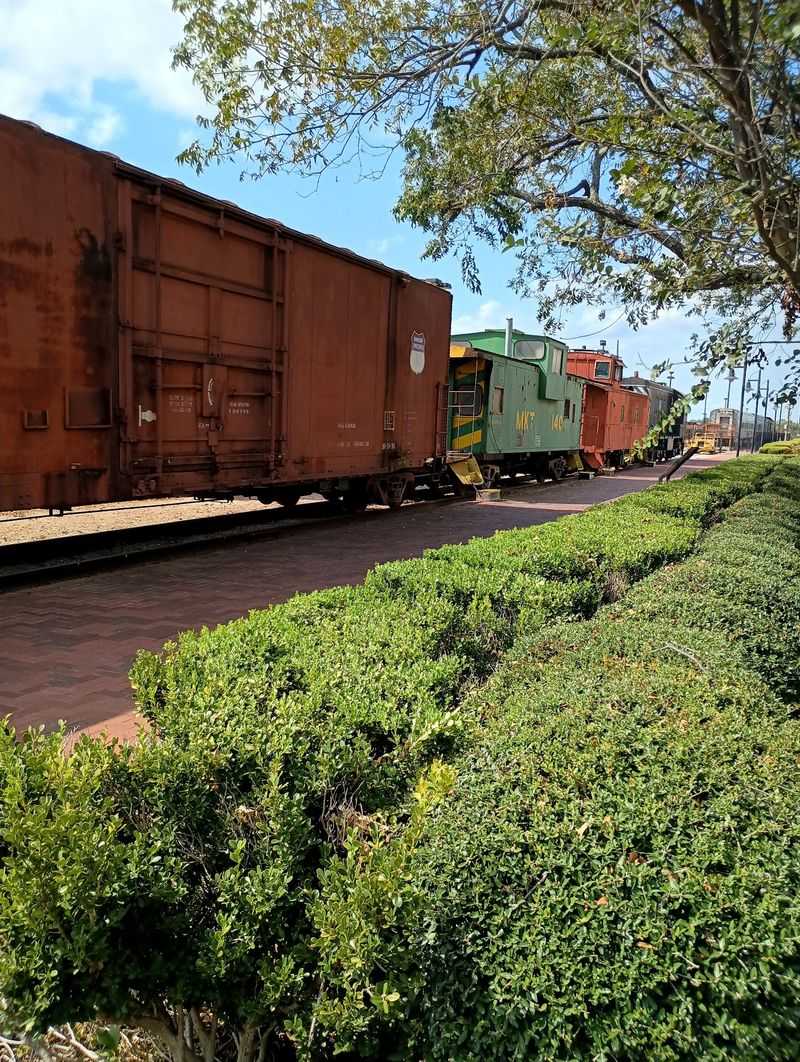
Outside the exhibit halls, the grounds invite a slower pace. A well-kept plaza with walkways and gardens surrounds the depot, giving families room to spread out between stops.
Whistle Stop Park and the Santa Fe Gardens sit nearby, both easy additions to the same outing. Packing a picnic turns a museum trip into a half-day plan without much extra effort.
The depot doubles as an event venue, and that side of the building surprises a lot of people. The Grand Lobby, Gazebo, and Party Caboose can be rented for corporate meetings, weddings, and celebrations.
Event spaces include indoor ceremony options and audio-visual equipment, and outside catering is permitted. A wedding photo taken on a historic platform is hard to beat.
Operating hours run Tuesday through Saturday from 10:00 AM to 4:00 PM, so plan around that window. Arriving shortly after opening usually means quieter galleries.
Active-duty military members and their families, including National Guard and Reserve personnel, receive free admission during certain periods through programs such as Blue Star Museums.
Allow two hours to see everything without rushing, more if young train fans are along. Between the upstairs galleries, the rolling stock, and the model layouts, the property covers a lot of ground.
Address: 315 W Avenue B, Temple, TX 76501
