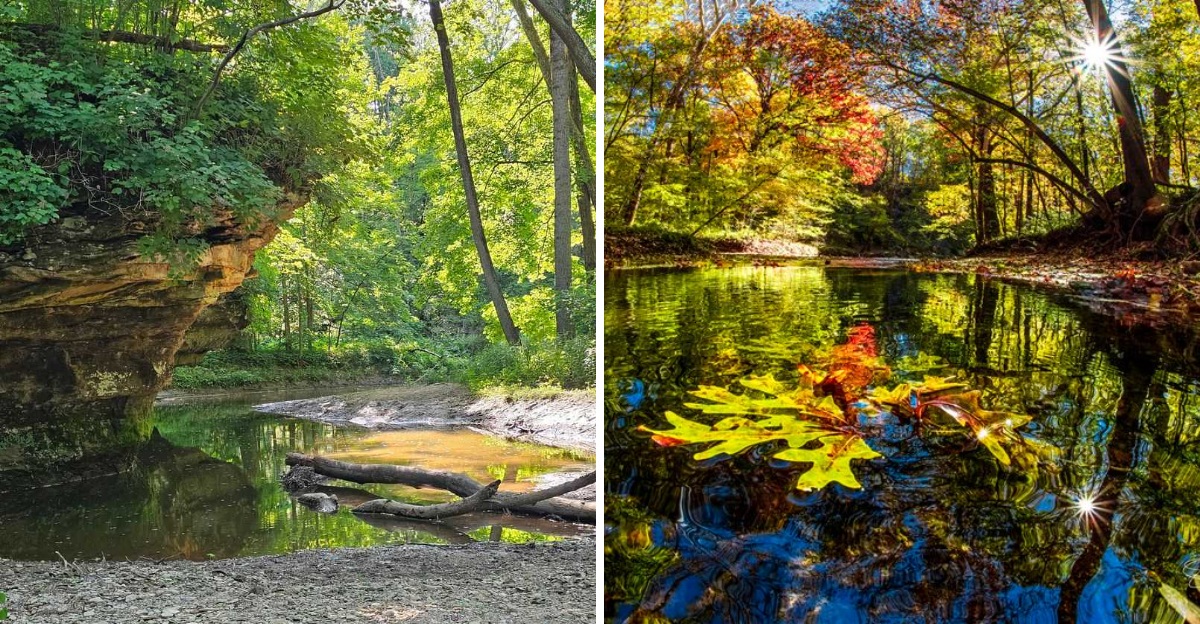
A 13-acre forest does not sound like the place to expect anything enormous. Then you find the boulder.
It is huge, thick with moss, and tucked among trees that make the whole thing feel like a scene from a much older world. A clear stream wanders nearby, wildflowers brighten the woods in spring, and the trails are quiet enough that you can actually hear the forest doing its thing.
The funniest part is how easy it would be to miss. This little preserve sits close to busy roads and college buildings, yet plenty of people who live nearby have never wandered through it.
The land is used as a living laboratory by a college, but you can explore it too. No grand entrance, no crowds, no big production.
Just a tiny Indiana forest hiding one very giant rock.
The Moss-Blanketed Boulder That Anchors the Whole Forest
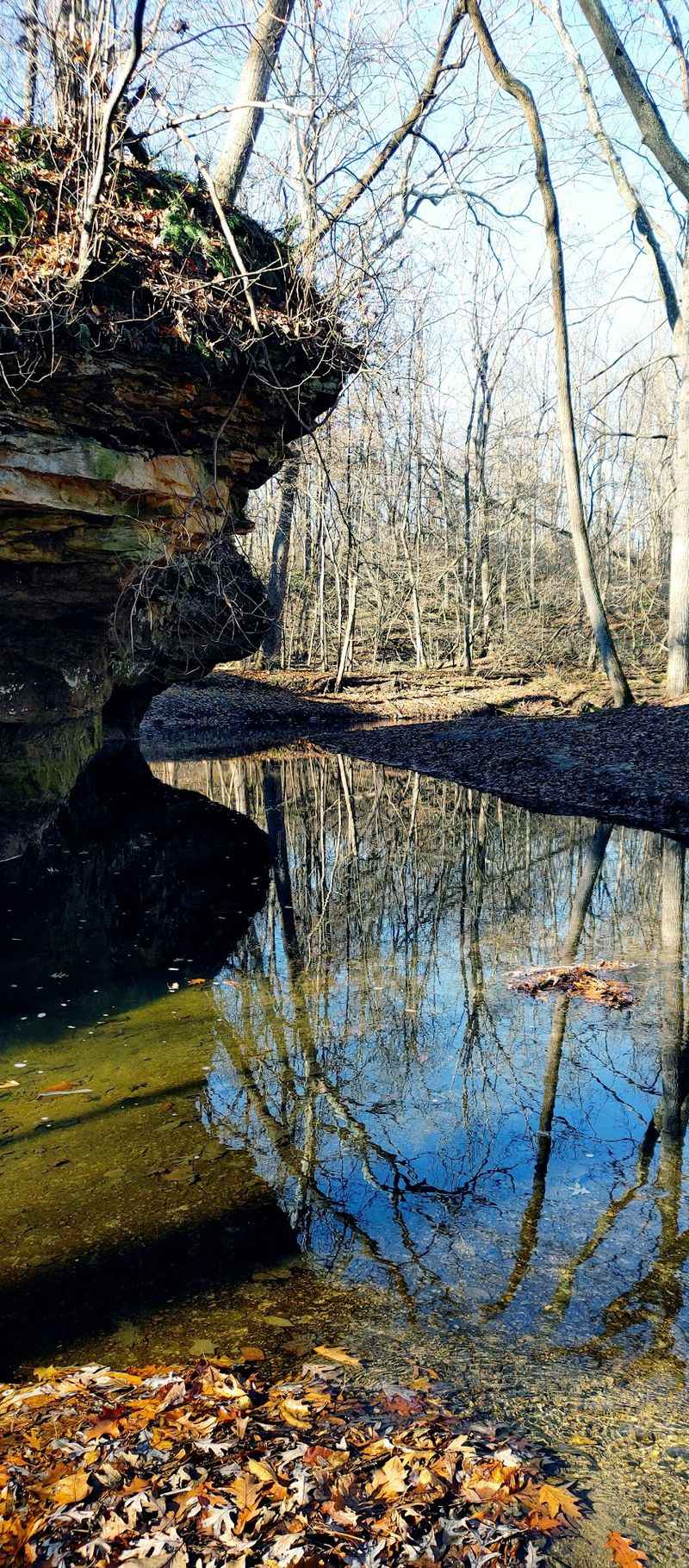
Some landmarks announce themselves. The boulder at the heart of this preserve does the opposite, sitting quietly among the trees until a bend in the path brings it into full view.
Thick moss covers most of the stone, layered in shades of green that shift depending on the light and how recently rain has fallen. Lichens crowd the drier edges, and small ferns sometimes take root in cracks where soil has gathered over the years.
Geologists would call it a leftover from the slow work of ice and time. Visitors tend to just call it impressive.
Sunlight breaks through the canopy in patches, sliding across the surface and picking out grooves and hollows that are easy to miss at a glance. Late afternoon is especially good for this, when the angle turns the moss almost golden at the edges.
Getting close rewards patience. A few minutes of looking reveals an entire miniature world living on the rock, with tiny plants, insects, and textures that vary from velvet-soft to rough and dry.
Touching or climbing the boulder is discouraged, since disturbing natural objects goes against preserve rules and moss takes a long time to recover. Photographs work better anyway, especially after a morning drizzle.
The stone gives the preserve in Indiana its name and its character, and it is the single feature most first-time visitors remember afterward.
Thirteen Acres Packed With Surprising Plant Variety
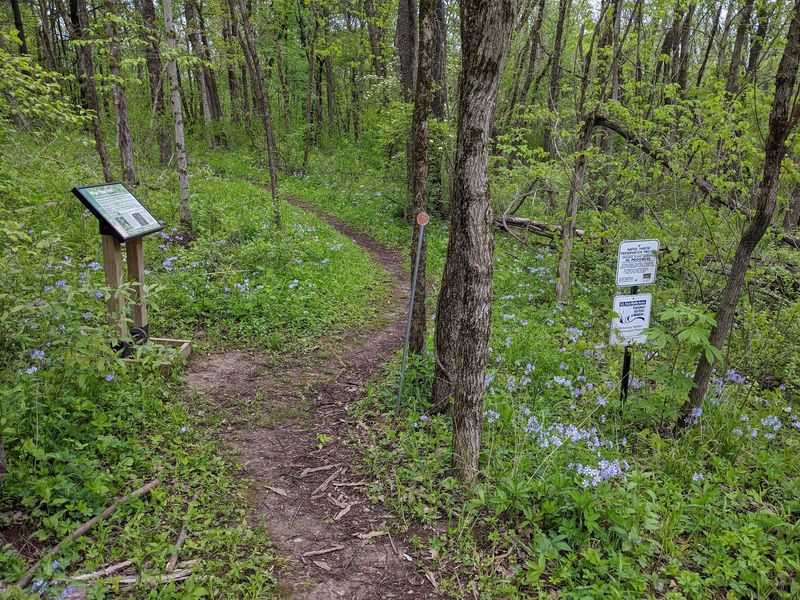
Small acreage usually means a short list of species. Sedgwick’s Rock flips that expectation, cramming a remarkable range of plant life into a footprint that takes very little time to cross.
The understory does most of the heavy lifting here. Beneath the hardwood canopy, low-growing plants form a shifting carpet that changes color and texture as the seasons roll forward.
Spring brings the best show. Ephemeral wildflowers pop up across the forest floor before the trees leaf out fully, taking advantage of a few short weeks of open sunlight.
Miss that window and the woods still deliver, just differently. Summer thickens everything into deep green shade, autumn scatters color across the trail, and winter strips the scene down so the land’s shape becomes obvious.
Terrain plays a big role in the variety. Drier upland areas support one set of plants, while the moist ground near the stream encourages something completely different, all within a few dozen steps of each other.
Botany students study these differences on purpose, and casual visitors can spot them without any training at all. Look at what grows near the water, then look again uphill.
Bring a field guide or a plant identification app if that sort of thing appeals. The preserve rewards slow walking far more than fast hiking, and rushing through means missing the best details.
A High-Quality Stream Running Right Through the Middle
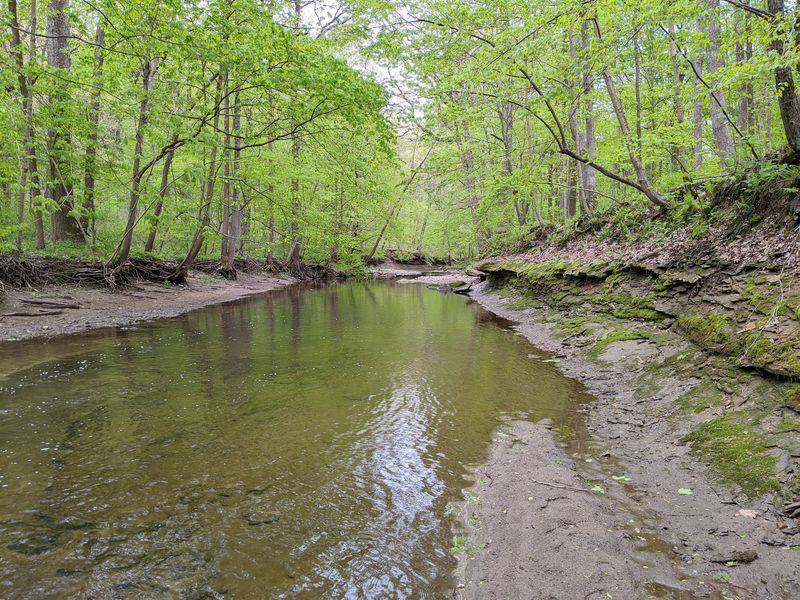
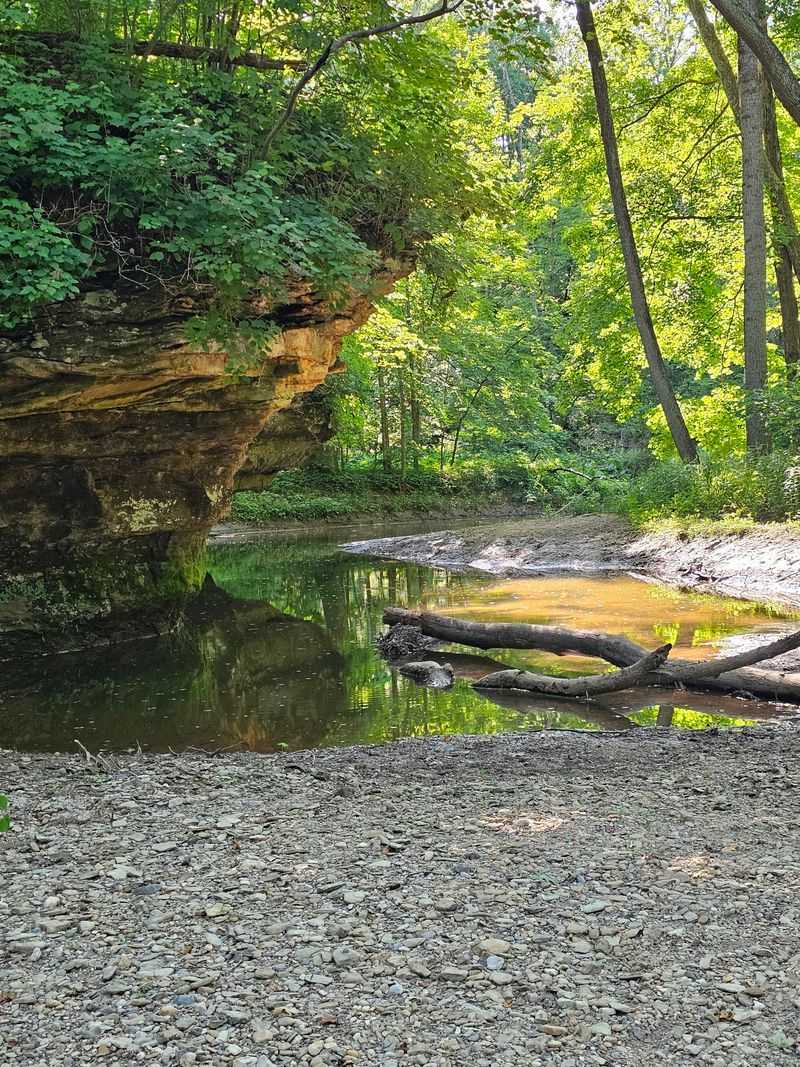
Water changes everything about a walk in the woods. The stream that winds through Sedgwick’s Rock in Indiana adds sound, movement, and a whole separate habitat to an already interesting patch of forest.
Clear and shallow for much of its course, it slips over stones and around roots with a steady, easy murmur. That sound carries surprisingly far under the canopy.
Ecology students from Earlham College come here every year to study it. Aquatic sampling and field techniques get practiced along these banks, which speaks to the stream’s condition and its value as a teaching resource.
For anyone visiting without a research assignment, the appeal is simpler. Streams attract life, and the wet margins near the water hold plants, insects, and small creatures that never show up on the drier slopes above.
Watch the shallows for a minute or two and movement usually appears. Aquatic insects drift along the bottom, and the surface catches flickers of light through the leaves.
Footing near the edge can get slippery after rain, so shoes with real tread beat sandals here. Fishing is not permitted, and neither is disturbing what lives in or around the water.
Spring runoff makes the flow livelier, while late summer often calms it into something almost meditative. Either version works, though the sound is best in April.
An Outdoor Classroom Where Earlham Students Do Real Research
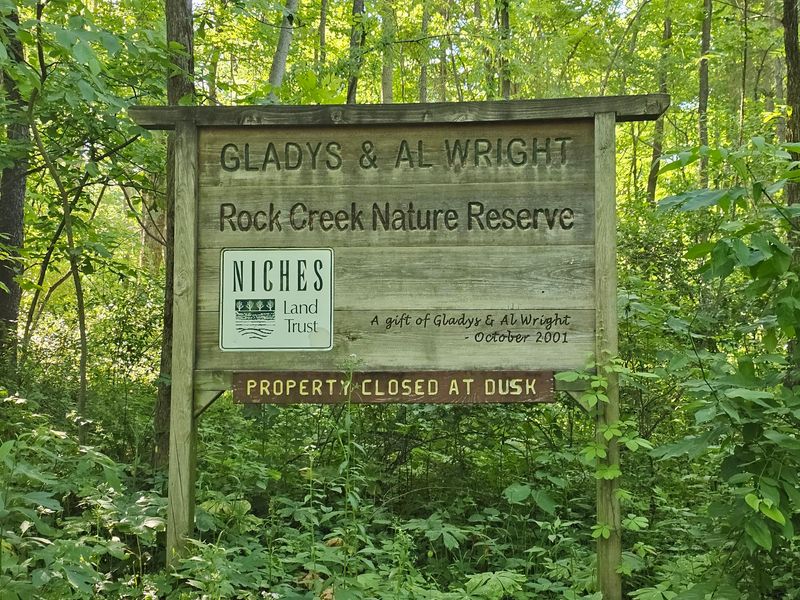
Not every forest doubles as a laboratory. This one does, and that shapes how it looks and how it is cared for.
Earlham College manages Sedgwick’s Rock as part of its nature reserve system, and the property regularly hosts experimental field projects. Understory vegetation gets studied closely here, year after year.
Ecological biology classes head to the stream for hands-on work in aquatic ecology, learning sampling methods that textbooks can only describe. Real mud, real data, real results.
That academic use has a practical side effect for visitors. Land managed for research tends to be monitored carefully, protected from casual damage, and kept as close to its natural state as possible.
Occasionally there might be small markers, plots, or equipment tied to a project underway. Leaving those undisturbed matters, since a season of data can vanish with one kicked stake.
Knowing about the research adds a layer to the walk. The quiet woods start to feel less like scenery and more like a place actively contributing to what people understand about local ecosystems.
The findings feed into better management practices, which in turn keep the preserve healthy. It is a loop that benefits students, the land, and anyone who shows up with a curious eye.
Education and conservation working together is not a bad reason to spend an hour outdoors.
Trails Short Enough for a Quick Escape, Rich Enough to Linger
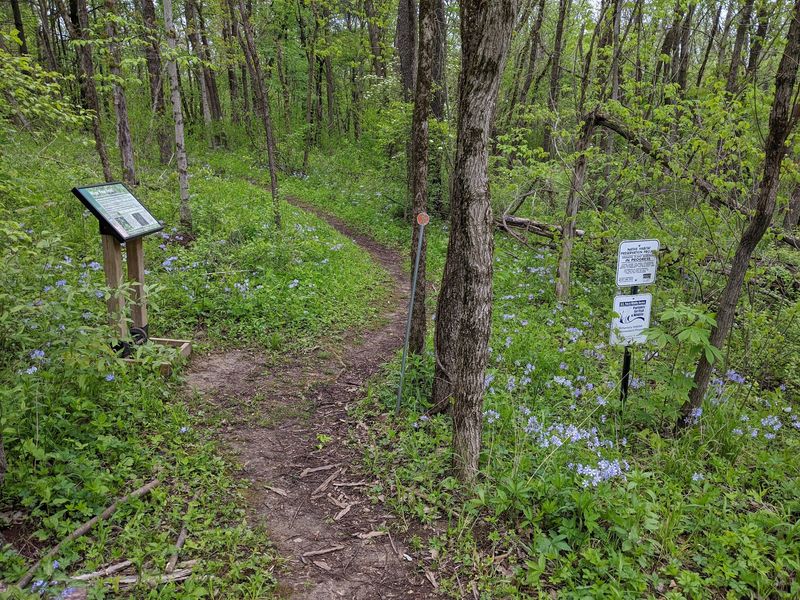
Thirteen acres does not sound like much trail. Somehow the pathways here stretch a visit longer than expected, mostly because there is a reason to stop every few dozen feet.
Recreational trails wind through the mixed woodland, giving access to the boulder, the stream, and the varied ground in between. Nothing about them is strenuous.
Pace drops almost automatically once the trees close in. That is part of the appeal, since this is a place better suited to strolling than to logging miles.
Families with kids do fine here, and so do older walkers looking for something gentle. The short distances mean nobody ends up stranded far from the car.
Earlham College maintains the routes as part of its larger reserve system, and interactive maps are available online showing parking areas and trail layouts. Checking one before arriving saves a bit of guesswork.
Sturdy shoes help, especially in the damp sections near water. Leaves can hide roots in autumn, and spring mud is a genuine possibility.
A quick loop might take twenty minutes. Stopping to look at moss, listen for birds, and study the stream stretches that into an hour without much effort.
Pack light, bring water, and skip the headphones. Half the experience here is what can be heard rather than seen.
One of Richmond’s Best Kept Secrets, Now Slightly Less Secret
Word of mouth has been slow with this one. Sedgwick’s Rock spent years as something close to a campus insider tip, openly accessible but rarely mentioned.
Public visibility has been raised on purpose more recently, though the preserve has kept its hushed, tucked-away feeling. Crowds are simply not part of the equation here.
Solitude is the payoff. On many visits the loudest sounds are birds, moving water, and whatever the wind is doing to the canopy.
Small size actually helps with that. Thirteen acres creates an intimate space rather than a sprawling one, and the surrounding trees muffle a surprising amount of outside noise.
Phones tend to stay in pockets here, partly because there is nothing pressing to check and partly because the setting encourages a different kind of attention. Sitting still for five minutes reveals more than walking fast for twenty.
Morning visits are especially quiet, with cooler air and better birdsong. Weekday afternoons run a close second.
Discovering a place that most nearby residents have never explored carries its own small thrill. There is a difference between visiting a famous park and stumbling onto something overlooked.
Anyone hunting for a reset button within Richmond’s city limits will find one here, no long drive required and no reservation needed.
Wildlife Watching in a Pocket-Sized Habitat
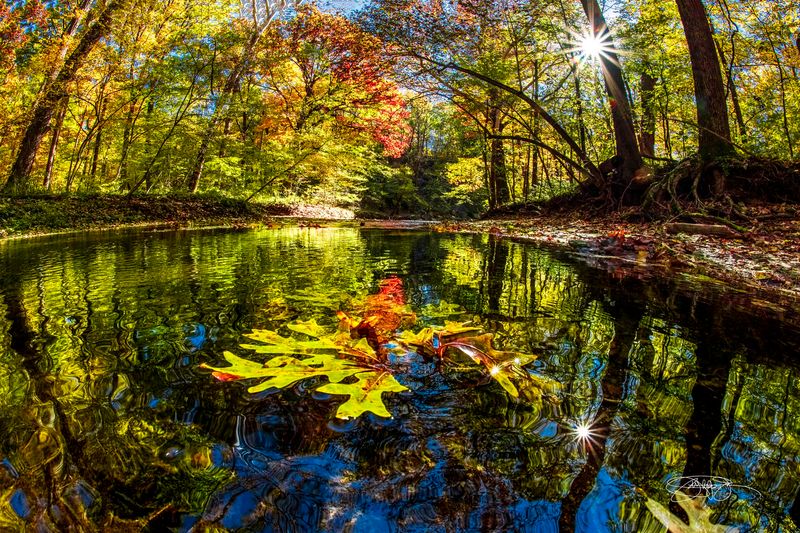
Small preserves punch above their weight when it comes to animals. Wildlife needs shelter, water, and food, and Sedgwick’s Rock supplies all three within a compact area.
Rustling in the undergrowth is common, usually a rabbit or a squirrel deciding a human got too close. Chipmunks add their own noise to the mix.
Birds are the real headliners. The layered canopy and thick understory attract a varied lineup, and the songs overlap enough in spring to make identification a genuine challenge.
Binoculars are worth carrying, though plenty happens close enough to see without them. Woodpeckers announce themselves loudly, and warblers pass through during migration.
The stream widens the possibilities. Water draws animals in, supports aquatic insects, and creates a corridor that small creatures use to move through the woods.
Quiet feet make all the difference. Charging down the trail sends everything into hiding, while slow steps and occasional pauses turn up far more.
Early morning and the hour before dusk deliver the most activity, which is true nearly everywhere but especially noticeable in a place this compact. Overcast days can be productive too.
Hunting is prohibited, along with fishing, foraging, camping, and fires, which keeps the animals here relatively undisturbed and the whole preserve functioning as the refuge it was meant to be.
Address: 801 National Road West, Richmond, Indiana 47374
