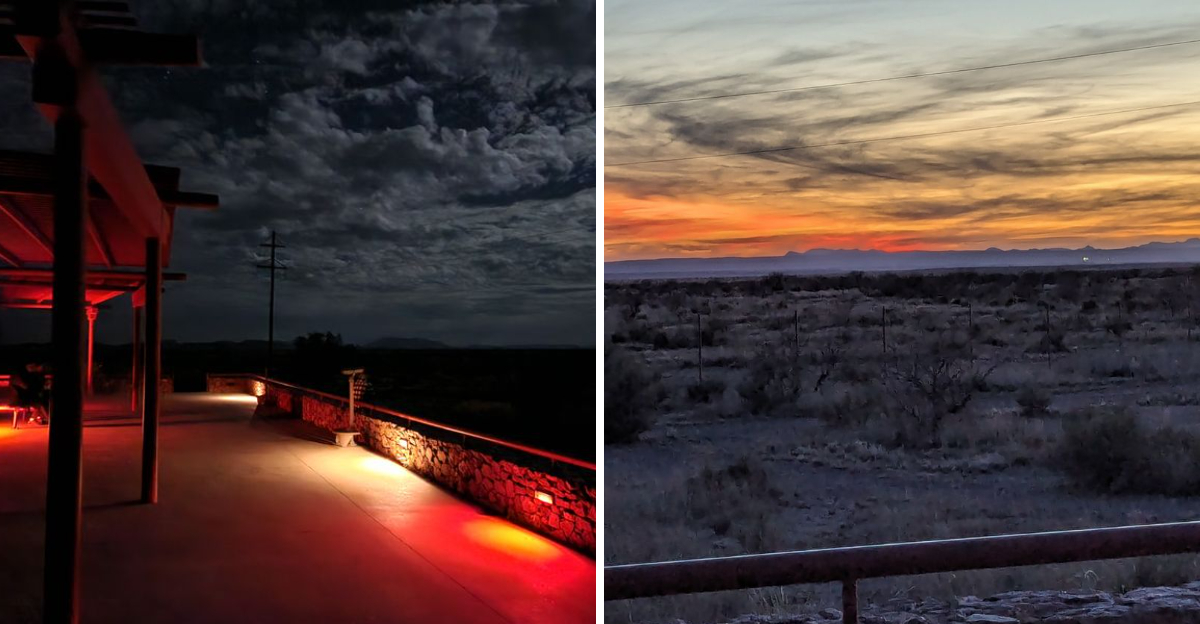
Tucked away in the remote high desert of far West Texas, Marfa sits like a mirage along Highway 90, a tiny dot on the map that has somehow captured the imagination of artists, travelers, and mystery seekers from around the world.
With a population barely topping 1,700, this unassuming ranching town transformed into an unlikely cultural capital, drawing visitors who come for contemporary art installations in old military buildings and stay for the inexplicable lights dancing on the horizon.
The town never set out to become famous, never marketed itself as a destination, yet fate had other plans when strange luminous phenomena started capturing attention decades ago. What began as local ranch hand curiosities became international intrigue.
Mysterious orbs flickering in the darkness brought scientists, skeptics, and believers alike.
Desert Landscape and Stargazing
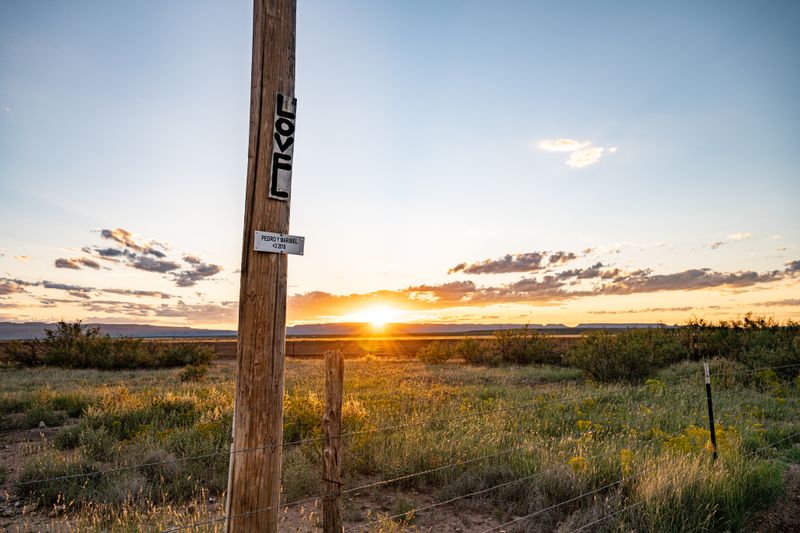
Marfa sits at 4,685 feet elevation in the Chihuahuan Desert, surrounded by mountains and vast stretches of scrubland that seem to extend forever. The landscape appears harsh at first glance, all thorny plants and rocky soil, yet closer inspection reveals subtle beauty in the way light transforms the terrain throughout the day.
Sunrise paints the mountains pink and gold, midday sun bleaches everything to pale intensity, and sunset ignites the western sky in spectacular displays that justify every mile of isolated highway required to reach this place.
With minimal light pollution and high desert air, Marfa offers exceptional stargazing opportunities. The Milky Way stretches overhead in brilliant detail, and meteor showers put on shows that city dwellers never witness.
Simply stepping outside at night reveals celestial wonders that inspired humans long before electric lights dimmed our connection to the cosmos.
The desert ecosystem supports more life than initially apparent, from roadrunners darting between creosote bushes to hawks circling on thermal currents.
Spring brings wildflowers that carpet the landscape in unexpected color, while summer thunderstorms create dramatic cloud formations and brief, intense downpours.
Experiencing this environment requires respect for its power: bring plenty of water, wear sun protection, and never underestimate the desert’s ability to challenge the unprepared. Those who approach with proper caution discover landscapes that feed the soul and expand perspective beyond everyday concerns.
The Marfa Lights Viewing Area
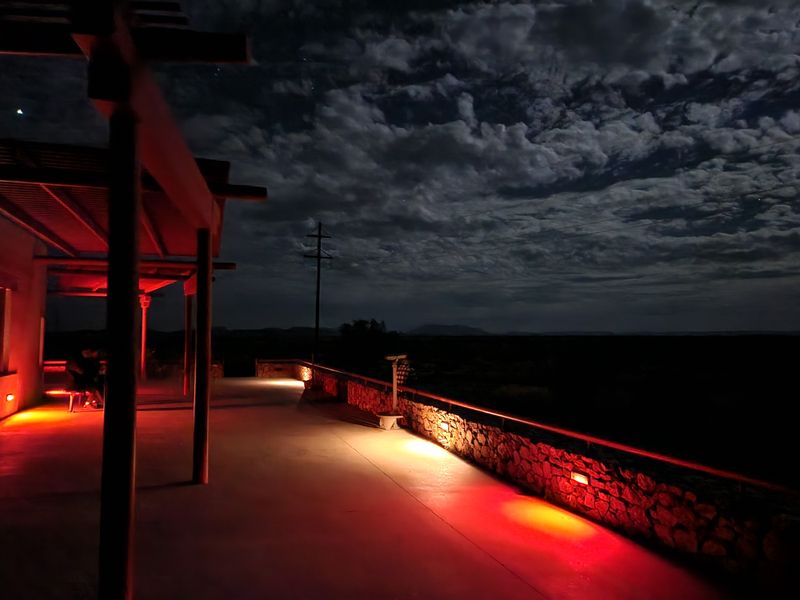
About nine miles east of town on Highway 90, a roadside parking area offers front-row seats to one of Texas’s most enduring mysteries.
The Marfa Lights Viewing Area sits on a stretch of desert scrubland with unobstructed views toward the Chinati Mountains, where unexplained lights have been reported since the 1880s.
Cowboys first spotted them while driving cattle, describing glowing orbs that split, merged, and danced across the dark landscape.
Today, the viewing platform draws curious visitors who gather after sunset, hoping to witness the phenomenon for themselves. Some nights deliver spectacular displays with multiple lights appearing, while others offer nothing but starry silence.
Scientists have proposed theories ranging from atmospheric reflections to gases escaping from the ground, yet no explanation has definitively solved the puzzle.
The viewing area includes informational plaques describing the history and various theories, plus restrooms and a small pavilion. Bring a flashlight, warm layers for chilly desert nights, and patience, because the lights appear on their own schedule.
Whether you spot them or not, the experience of standing beneath that vast Texas sky, scanning the darkness for something science cannot explain, creates memories that linger long after you leave. The mystery itself becomes part of Marfa’s magic, a reminder that some wonders resist easy answers.
Chinati Foundation Art Installations
Artist Donald Judd discovered Marfa in the 1970s and saw potential where others saw emptiness. He purchased the decommissioned Fort D.A.
Russell and transformed 340 acres of former military buildings into one of the world’s most significant contemporary art venues.
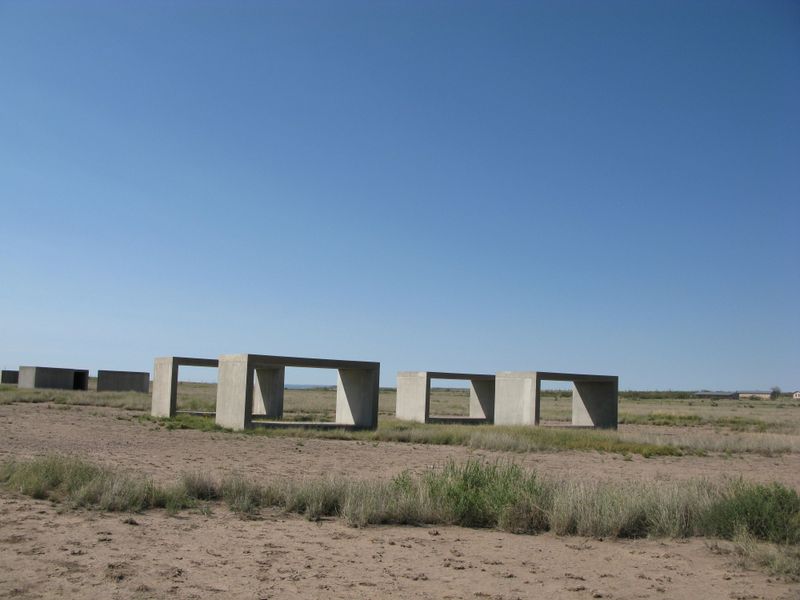
The Chinati Foundation showcases large-scale permanent installations that could never fit in traditional museums, with works designed specifically for the desert landscape and repurposed military structures.
Judd’s own aluminum boxes fill two converted artillery sheds, their reflective surfaces capturing the changing Texas light throughout the day. Dan Flavin’s fluorescent light installations glow within former barracks, creating ethereal color experiences in unexpected spaces.
Outside, concrete sculptures by John Chamberlain catch shadows and sunlight against the backdrop of endless sky.
Tours run Wednesday through Sunday and require reservations, taking visitors through the sprawling grounds over several hours. Comfortable walking shoes are essential, as is sun protection for exploring the outdoor pieces.
The foundation represents Judd’s vision of art existing in thoughtful relationship with its environment rather than isolated in white-walled galleries.
Experiencing these monumental works in their intended setting reveals how Marfa’s isolation and stark beauty became assets rather than limitations, attracting creative minds seeking space to think big and create boldly without compromise.
Prada Marfa Roadside Installation
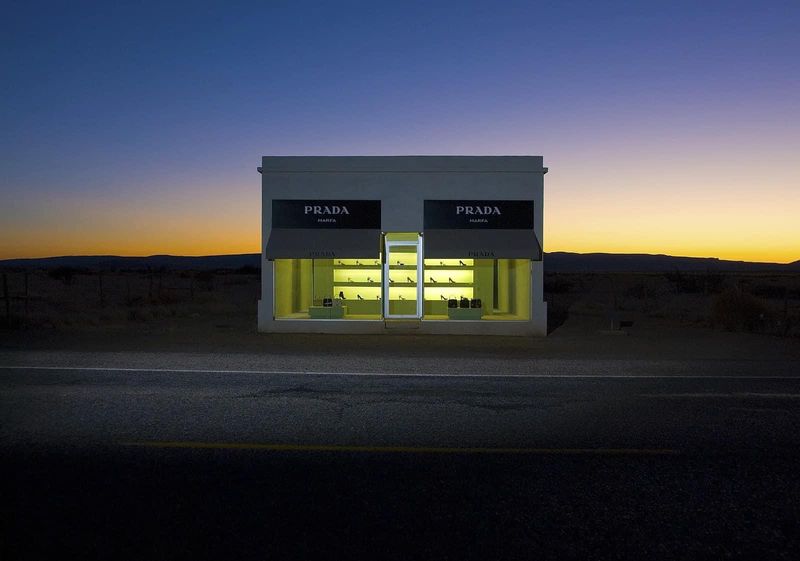
Twenty-six miles northwest of town along Highway 90, a luxury boutique stands alone in the desert, perfectly styled but permanently closed. Prada Marfa looks like a fully stocked store complete with handbags and shoes displayed in the windows, yet the door will never open for customers.
Artists Elmgreen and Dragset created this sculpture in 2005 as commentary on consumerism, luxury branding, and the absurdity of high fashion existing in the middle of nowhere.
The installation has become Marfa’s most photographed landmark, drawing fashion enthusiasts and art lovers who appreciate the surreal juxtaposition. The building sits on private ranch land with a small pullout for visitors to safely park and snap photos.
Over the years, vandals have broken in and thieves have stolen the merchandise, but the community repeatedly restores it, recognizing its value as both art and tourism draw.
Visiting Prada Marfa requires a short drive from town, making it perfect for a sunrise or sunset photo opportunity when the light transforms the stark landscape. The installation captures something essential about Marfa itself: the unexpected collision of sophisticated culture with rugged frontier isolation.
Standing before this impossible boutique, surrounded by empty ranchland stretching to distant mountains, visitors experience the delightful cognitive dissonance that defines the entire Marfa experience.
Historic Downtown Architecture and Galleries
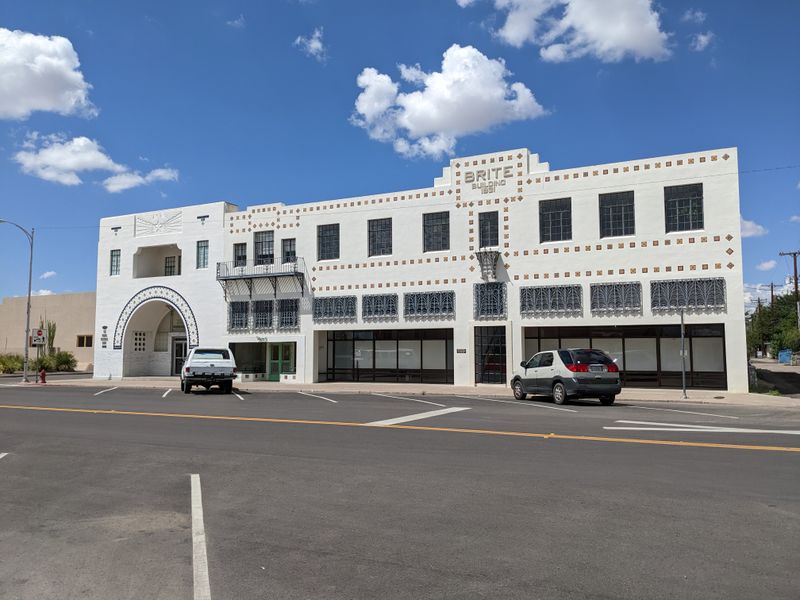
Marfa’s compact downtown centers on Highland Avenue, where early 20th-century buildings house contemporary galleries, boutiques, and restaurants.
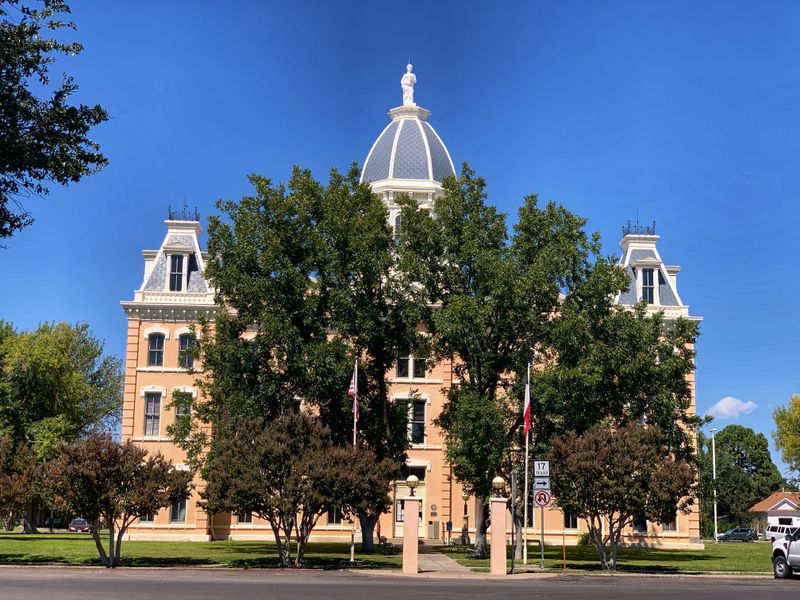
The 1886 Presidio County Courthouse anchors the town square with its distinctive Second Empire architecture, a reminder of Marfa’s origins as a railroad water stop and ranching center.
Walking these streets reveals layers of history, from frontier town foundations to the artistic renaissance that began in the 1970s.
Small galleries occupy former storefronts, showcasing works by artists drawn to Marfa’s creative community and affordable studio space.
Ballroom Marfa, located at 108 East San Antonio Street, presents rotating exhibitions, performances, and cultural programming that connects local and international art worlds.
The organization hosts the annual Marfa Myths music and arts festival, bringing experimental sounds to the desert each spring.
Wandering downtown requires just an hour or two, but the concentration of interesting shops and galleries invites leisurely exploration. Book lovers browse Marfa Book Company’s curated selection, while design enthusiasts admire handcrafted goods at various boutiques.
The architecture itself tells stories, with adaptive reuse transforming historic structures into contemporary spaces without erasing their past. This balance between preservation and innovation mirrors Marfa’s broader identity, honoring ranching heritage while embracing artistic experimentation.
The result feels authentic rather than manufactured, a living town rather than a theme park version of itself.
Food Truck Park and Local Dining
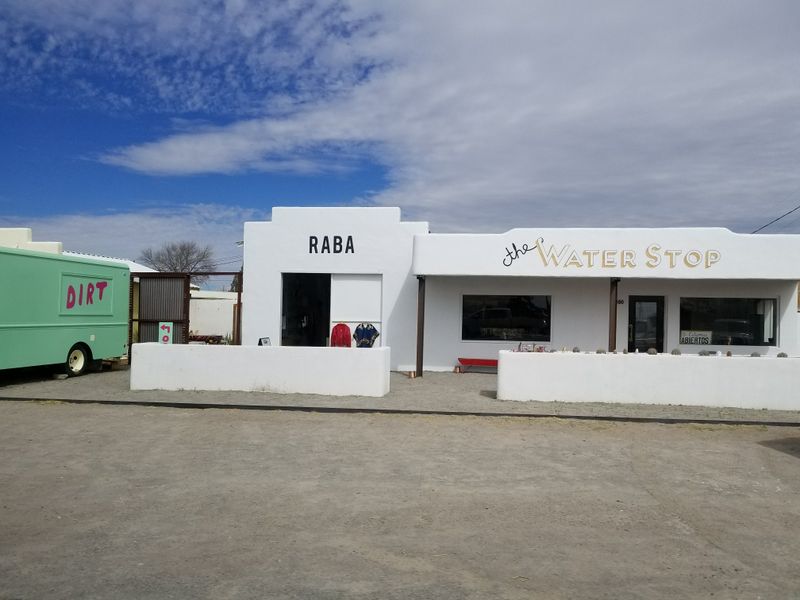
Marfa’s dining scene punches well above its small-town weight, offering surprisingly sophisticated options alongside classic Texas fare.
The food truck park near the corner of West San Antonio Street and South Highland Avenue has become a casual gathering spot where locals and visitors mingle over tacos and conversation.
Multiple vendors rotate through, serving everything from breakfast burritos to creative vegetarian dishes, with picnic tables providing outdoor seating under the big West Texas sky.
Brick-and-mortar restaurants reflect the town’s eclectic character, blending border influences with contemporary techniques. Menus emphasize fresh ingredients despite the remote location, with chefs sourcing locally when possible and improvising creatively with what the desert provides.
Dining options range from casual to upscale, though Marfa maintains a refreshingly unpretentious attitude even in its fancier establishments.
Reservations are strongly recommended for dinner, especially on weekends when visitors swell the population. The compact size means most restaurants are walkable from any lodging, making evening strolls between gallery hopping and dinner part of the Marfa rhythm.
Food becomes another way the town expresses its identity: rooted in regional tradition yet open to innovation, respecting the past while embracing new possibilities.
Even a simple meal tastes better when consumed beneath that impossibly vast sky, surrounded by desert silence broken only by friendly conversation and the occasional passing train whistle.
Hotel Saint George and Accommodations
Finding a place to stay in Marfa requires advance planning, as the small town offers limited lodging that fills quickly, especially during festival weekends and peak season.
Hotel Saint George anchors the downtown scene at 105 South Highland Avenue, occupying a 1886 building that once served as a general store and hotel.
The restoration preserved historic character while adding contemporary comforts, creating spaces that feel both timeless and current.
The hotel’s public areas function as gathering spots where guests and locals intersect, fostering the casual social atmosphere that defines Marfa. Other lodging options include vintage motor courts, minimalist guesthouses, and vacation rentals scattered around town.
Each property reflects different aspects of Marfa’s personality, from nostalgic Americana to sleek modernism, united by thoughtful design and attention to detail.
Booking well ahead is essential, particularly for spring and fall when temperatures are most comfortable and events draw crowds. Summer brings intense heat that some find challenging, while winter nights can dip below freezing despite sunny days.
Wherever you stay, expect limited amenities compared to city hotels, offset by genuine hospitality and unique character. Accommodations become part of the Marfa experience rather than just a place to sleep, with properties that understand their role in creating memorable visits.
The town’s lodging scene reflects its broader transformation: historic bones reimagined for contemporary travelers seeking authenticity over generic luxury.
The Marfa Mystique and Creative Community
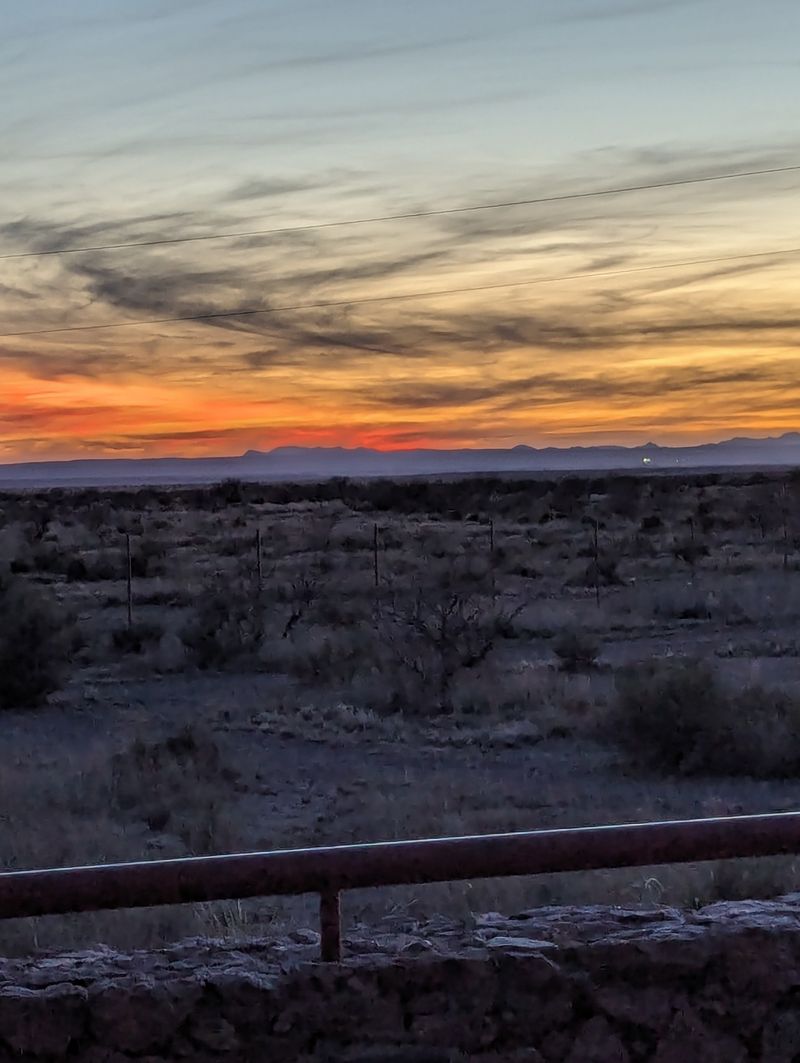
Something intangible draws people to Marfa beyond the lights and art installations. Perhaps the isolation itself creates space for reflection and creativity that crowded cities cannot offer.
Artists, writers, and musicians have established studios and residencies, forming a community bound by shared appreciation for what this remote location provides: freedom from distraction, connection to landscape, and permission to pursue unconventional paths.
This creative energy permeates daily life, from spontaneous performances to impromptu gallery openings. Visitors sense it in conversations with locals, many of whom arrived intending brief visits but found reasons to stay.
The town resists easy categorization, neither purely artistic enclave nor traditional ranching community but somehow both simultaneously, creating productive tension between different ways of seeing and being.
Marfa’s transformation happened organically rather than through calculated planning, which preserves authenticity that manufactured destinations lack.
No corporate interests engineered this cultural hotspot; instead, individual choices by artists seeking space and solitude gradually accumulated into something larger.
The lights that first drew attention remain unexplained, fitting metaphor for Marfa itself: mysterious, captivating, and resistant to simple explanation.
Visiting means accepting uncertainty and embracing the unexpected, whether that manifests as strange lights on the horizon or chance encounters that shift perspective.
Marfa rewards those who arrive with open minds and willingness to experience rather than merely check boxes on predetermined itineraries.
Dear Reader: This page may contain affiliate links which may earn a commission if you click through and make a purchase. Our independent journalism is not influenced by any advertiser or commercial initiative unless it is clearly marked as sponsored content. As travel products change, please be sure to reconfirm all details and stay up to date with current events to ensure a safe and successful trip.
