Odessa sits in the heart of West Texas, a place where oil derricks punctuate endless skies and desert winds carry stories of boom-and-bust cycles.
This city has earned a reputation over the decades for being rough around the edges, a hard-working oil town that doesn’t apologize for its gritty character.
Unlike other Texas destinations that polish their image for tourists, Odessa embraces what it is, and locals wouldn’t have it any other way.
Oil Town Identity Runs Deep
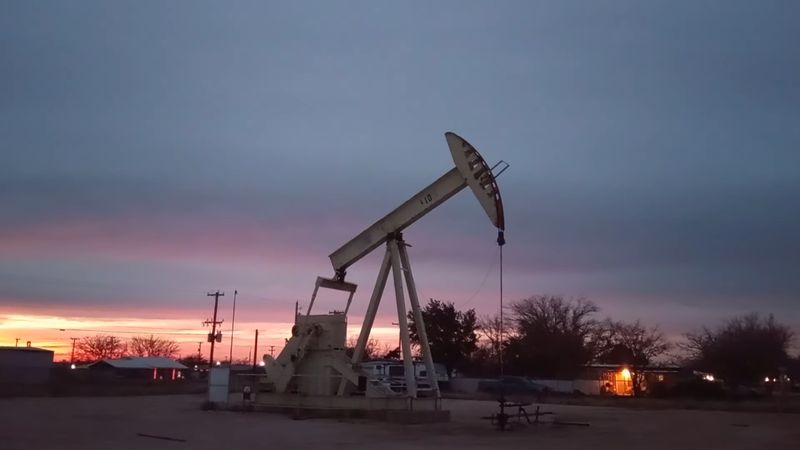
Walking through Odessa, you’ll notice the oil industry isn’t just an economic engine here; it’s woven into the very fabric of daily life. Pumpjacks dot the landscape like mechanical sculptures, working day and night in a rhythm locals find comforting rather than intrusive.
The smell of crude oil occasionally drifts through neighborhoods, a scent that newcomers wrinkle their noses at but longtime residents barely notice.
This petroleum heritage shapes everything from local conversations to career paths, with generations of families building their livelihoods around the oil fields. The boom-and-bust cycles have created a resilient community that knows how to weather economic storms.
When oil prices drop, Odessans tighten their belts and wait for the next upturn with practiced patience.
Museums and historical markers throughout town celebrate this petroleum legacy, but the real story lives in the weathered faces of workers clocking off their shifts. Friday nights find these roughnecks at local diners, their boots still dusty from the field.
Odessa doesn’t pretend to be anything other than an oil town, and that authenticity attracts visitors curious about genuine Texas energy culture.
Friday Night Lights Legacy Lives On
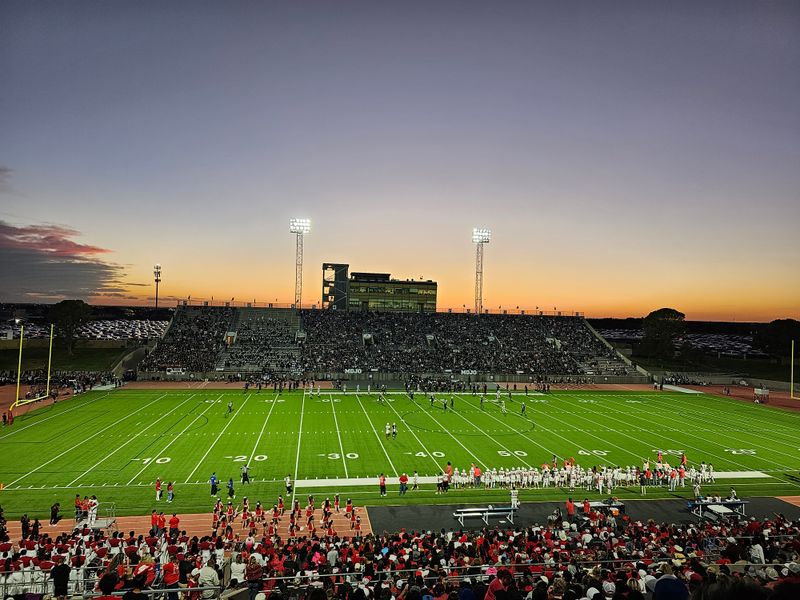
High school football in Odessa transcends sport and enters the realm of cultural religion. Ratliff Stadium, located at 1301 E 42nd St, stands as a temple where thousands gather under blazing lights each fall weekend.
The roar of the crowd echoes across neighborhoods, and businesses close early on game nights so nobody misses kickoff.
Permian High School’s storied program gained national attention through the book and film “Friday Night Lights,” but the passion portrayed wasn’t exaggerated for dramatic effect. Players carry the weight of community expectations on their shoulders, practicing year-round for those precious Friday night moments.
The pressure is intense, the competition fierce, and the glory fleeting but unforgettable. Rival Odessa High adds another layer to this football obsession, creating a city divided by team loyalties that run deeper than blood ties.
Game days between these crosstown rivals bring an electric tension that visitors find both thrilling and slightly overwhelming. Parking lots fill hours before kickoff as tailgaters stake their claims.
Beyond the wins and losses, football provides Odessa with identity and pride during tough economic times. The stadium lights represent hope, community, and tradition in a town that values all three deeply.
Jackrabbit Statues Everywhere You Look
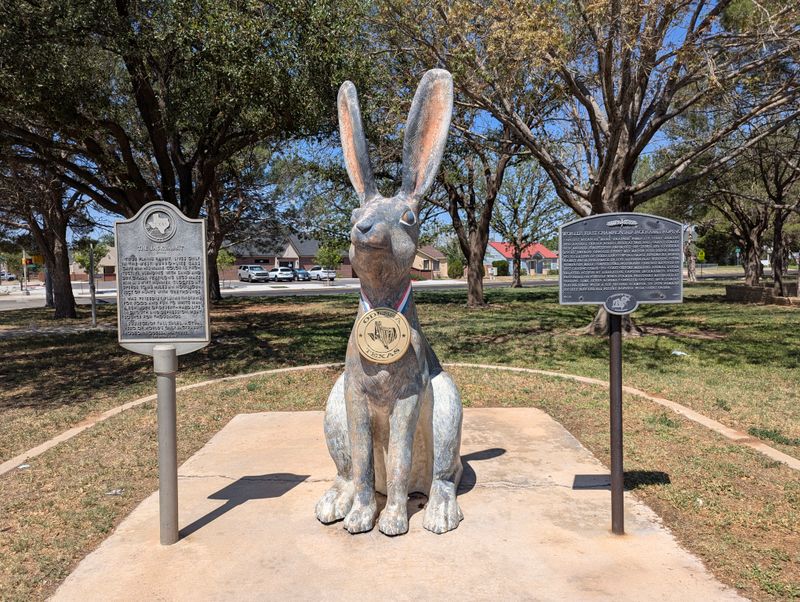
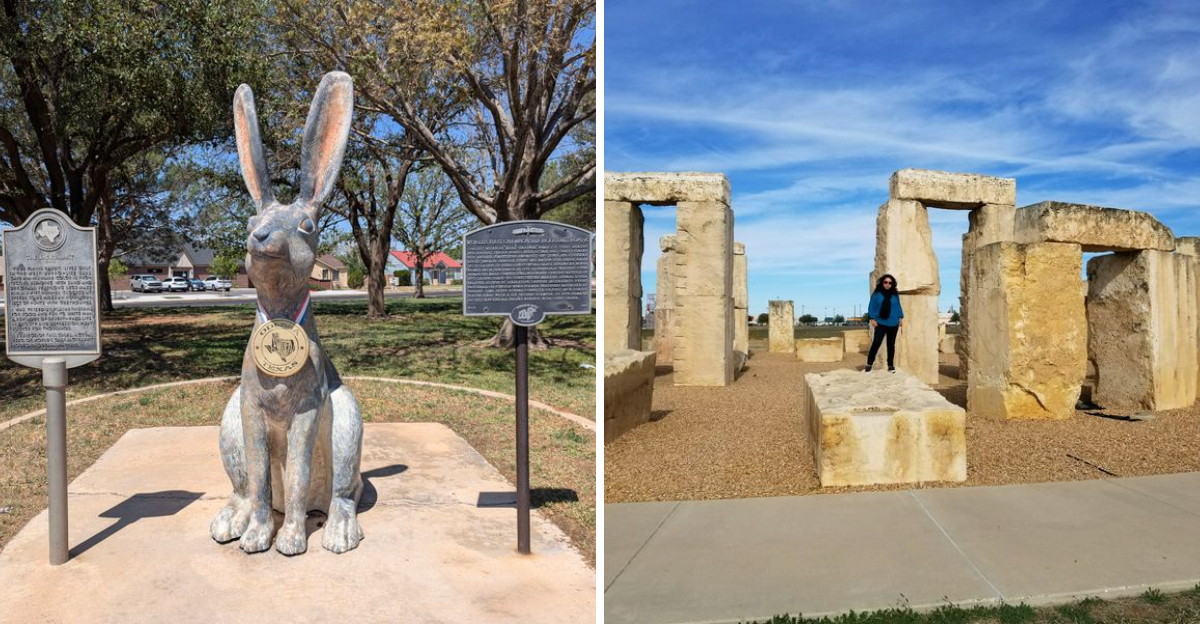
Downtown Odessa features an eight-foot-tall statue of Jack Ben Rabbit, and if you think that’s quirky, wait until you discover the other 37 jackrabbit statues scattered throughout the city.
Each fiberglass sculpture is uniquely decorated, painted, and themed, turning the hunt for all of them into an unexpected scavenger hunt. Families make a game of photographing every jackrabbit they encounter during their visit.
The Jackrabbit Jamboree project started as a way to add public art and whimsy to a town not typically known for either.
Local artists and businesses sponsored individual rabbits, decorating them with everything from patriotic themes to oil industry tributes. Some feature intricate patterns, while others tell visual stories about Odessa’s history and culture.
Visitors often express surprise at finding these colorful creatures outside government buildings, shopping centers, and parks throughout the city. The rabbits serve as informal ambassadors, softening Odessa’s rough reputation with unexpected playfulness.
This public art initiative shows a different side of Odessa, one that embraces creativity alongside its industrial roots. The jackrabbits have become Instagram-worthy landmarks, drawing visitors who might otherwise skip this West Texas city entirely.
Meteor Crater Tells Ancient Story
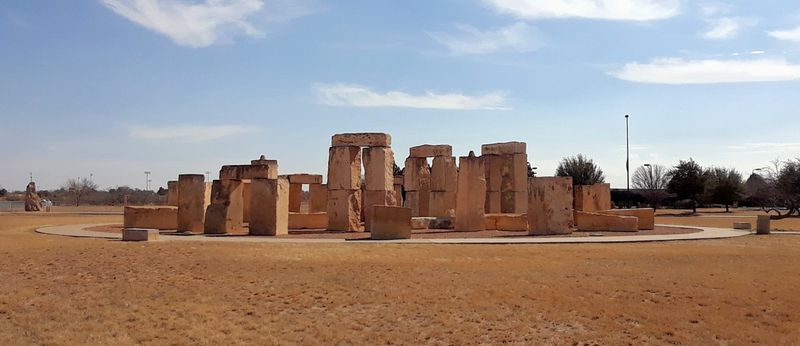
Southwest of the city lies a geological wonder that predates human civilization by millennia. The Odessa Meteor Crater, the second-largest in the United States, formed roughly 63,000 years ago when a massive iron meteorite slammed into the earth.
The impact created a crater originally 550 feet wide and 100 feet deep, though wind and time have softened its dramatic edges.
A small museum at the site displays meteorite fragments recovered from the area, each piece representing a visitor from deep space. The exhibits explain impact physics in accessible terms, making complex science understandable for all ages.
Standing at the crater’s edge, you can almost imagine the incredible explosion that must have lit up the prehistoric sky.
The site remains relatively undeveloped compared to Arizona’s famous Meteor Crater, giving it an authentic, unpolished quality that matches Odessa’s overall character. Visitors walk the crater rim without crowds or commercialization getting in the way.
The silence out here is profound, broken only by wind whistling across the desert.
This cosmic connection provides perspective on Odessa’s relatively brief human history. The crater reminds us that dramatic change can happen in an instant, whether from space rocks or oil discoveries that transform entire communities.
Presidential Museum Surprises Visitors
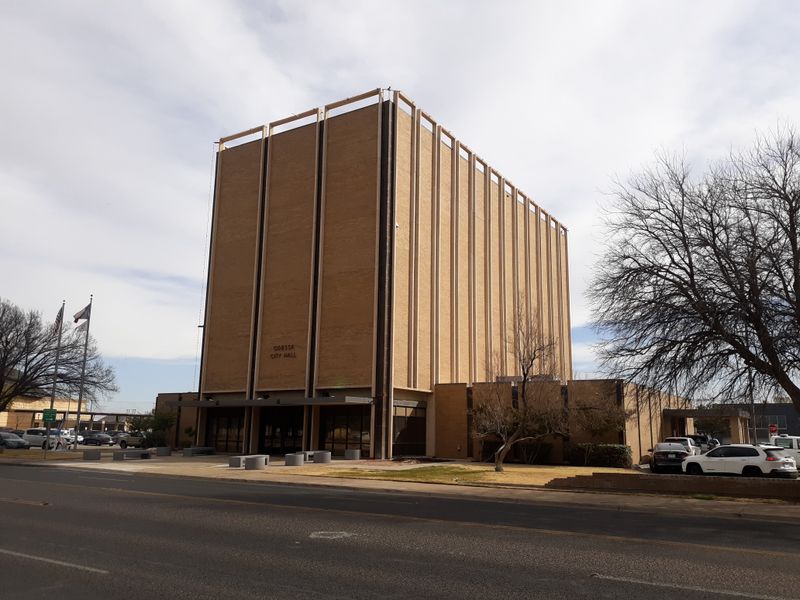
Few expect to find the Presidential Archives and Leadership Library in an oil town, but Odessa delights in defying expectations. This unique museum houses an impressive collection of presidential memorabilia spanning American history from George Washington to recent administrations.
Campaign buttons, signed documents, and personal artifacts tell the story of American leadership through tangible objects.
The collection includes everything from presidential china patterns to handwritten letters, offering intimate glimpses into the lives of those who held the nation’s highest office. Interactive exhibits engage younger visitors, while history enthusiasts can spend hours examining rare documents and photographs.
The library portion contains extensive research materials for serious scholars. What makes this museum particularly special is its presence in Odessa, far from the typical cultural centers where such collections usually reside.
Locals take pride in this intellectual resource, proof that their city values education and history alongside industrial pursuits. School groups regularly visit, connecting textbook lessons to real historical artifacts.
The museum occupies a modest building that doesn’t advertise its treasures with flashy architecture, fitting perfectly with Odessa’s no-nonsense aesthetic. Inside, however, the quality and breadth of the collection rival institutions in much larger cities, offering yet another reason to reconsider assumptions about this West Texas community.
Stonehenge Replica Stands in Desert
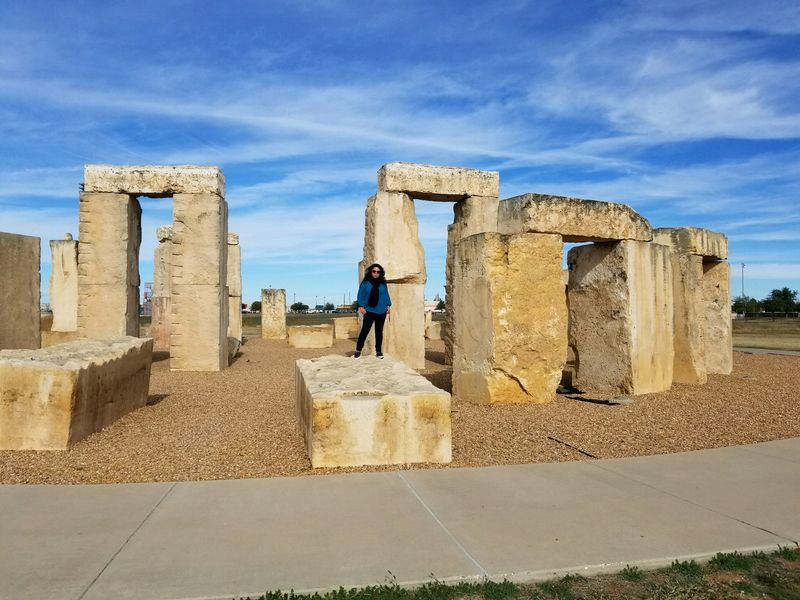
On the campus of the University of Texas of the Permian Basin, a full-scale replica of England’s famous Stonehenge rises from the West Texas landscape. The juxtaposition of ancient Celtic mystery and modern oil country creates a surreal visual that perfectly captures Odessa’s unexpected nature.
Built as an educational tool and artistic statement, the replica uses materials similar to the original’s sarsen stones and bluestones.
Visitors can walk among the massive stones, experiencing the monument’s scale and alignment without traveling across the Atlantic. The replica accurately reflects the original’s dimensions and astronomical orientations, making it valuable for studying ancient engineering and astronomy.
Sunset here creates dramatic shadows and golden light that photographers find irresistible.
The university uses Stonehenge for various academic purposes, from astronomy classes to cultural studies programs. Students gather here for special events, and locals sometimes use it as a unique backdrop for celebrations.
The structure has become an unofficial symbol of the university and another example of Odessa’s willingness to embrace the unusual.
Critics might question building a British monument in the Texas desert, but that misses the point entirely. Odessa doesn’t follow conventional wisdom about what belongs where, creating its own cultural landscape that mixes oil rigs, jackrabbits, and ancient stone circles without apology.
Working-Class Pride Defines Culture
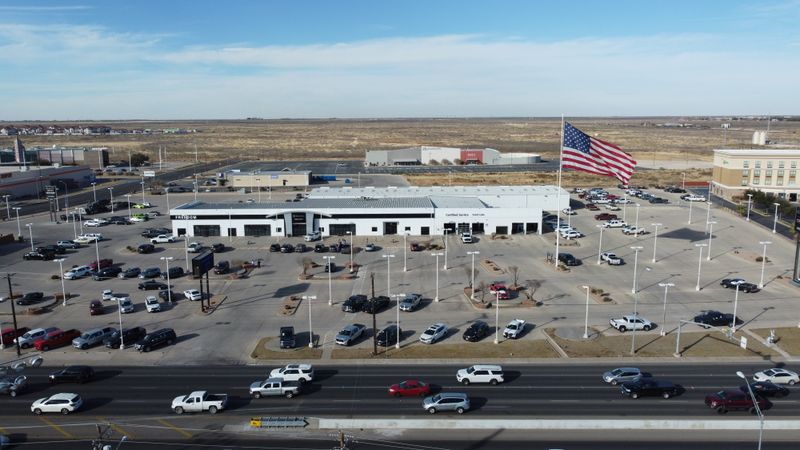
Odessa’s reputation for being rough stems largely from its unapologetic working-class identity. This is a place where people earn their living through physical labor, long shifts, and skills passed down through generations.
Calloused hands and dusty trucks are badges of honor here, not things to hide or be embarrassed about when fancier folks come around.
The city’s restaurants reflect this blue-collar culture, serving hearty portions at reasonable prices without pretentious presentations. Diners like the Barn Door Steakhouse have fed oil workers for decades with no-frills meals that prioritize substance over style.
Conversations at these establishments revolve around work schedules, weather conditions, and high school sports rather than trendy topics.
This working-class foundation creates a community where people value practical skills and hard work above formal education or social status. Neighbors help each other with car repairs, home projects, and childcare without keeping score.
The informal support network runs deep, activated whenever someone faces hardship or crisis.
Visitors sometimes mistake this straightforward culture for unfriendliness, but Odessans simply don’t waste time on small talk with strangers when there’s work to be done. Once you prove yourself genuine and respectful, however, the warmth and loyalty run deeper than in many supposedly friendlier places.
Desert Landscape Shapes Perspective
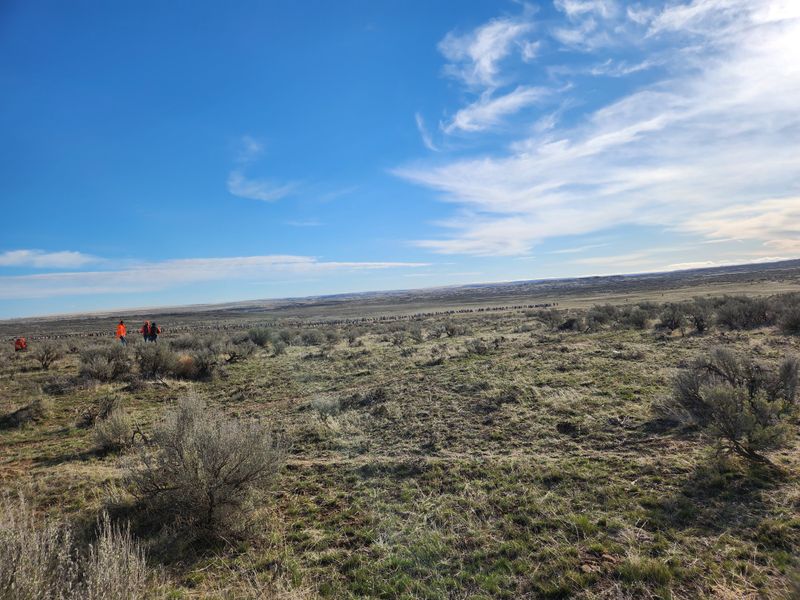
The vast, flat landscape surrounding Odessa stretches to horizons that seem impossibly distant under enormous skies. This desert environment influences everything from architecture to attitudes, creating a mindset shaped by space, isolation, and dramatic weather.
Dust storms can reduce visibility to nothing within minutes, while summer temperatures regularly exceed 100 degrees, testing both machinery and human endurance.
Native vegetation consists mainly of scrub brush, mesquite, and hardy grasses that survive on minimal rainfall. The apparent emptiness deceives newcomers who don’t yet recognize the subtle beauty in earth tones and vast openness.
Longtime residents develop deep appreciation for this landscape, finding peace in its stark honesty and unobstructed views.
Sunrises and sunsets here paint the sky in colors that seem impossible, with nothing blocking the light show from horizon to horizon. Storm clouds gather with visible drama, their movements tracked across miles of open country.
The night sky reveals stars with clarity rarely seen near major cities, reminding observers of their small place in a vast universe.
This environment breeds a certain toughness and self-reliance in residents who must contend with nature’s extremes. The desert doesn’t coddle or comfort, much like Odessa itself, and those who thrive here learn to appreciate beauty that doesn’t announce itself with obvious charms.
Dear Reader: This page may contain affiliate links which may earn a commission if you click through and make a purchase. Our independent journalism is not influenced by any advertiser or commercial initiative unless it is clearly marked as sponsored content. As travel products change, please be sure to reconfirm all details and stay up to date with current events to ensure a safe and successful trip.
