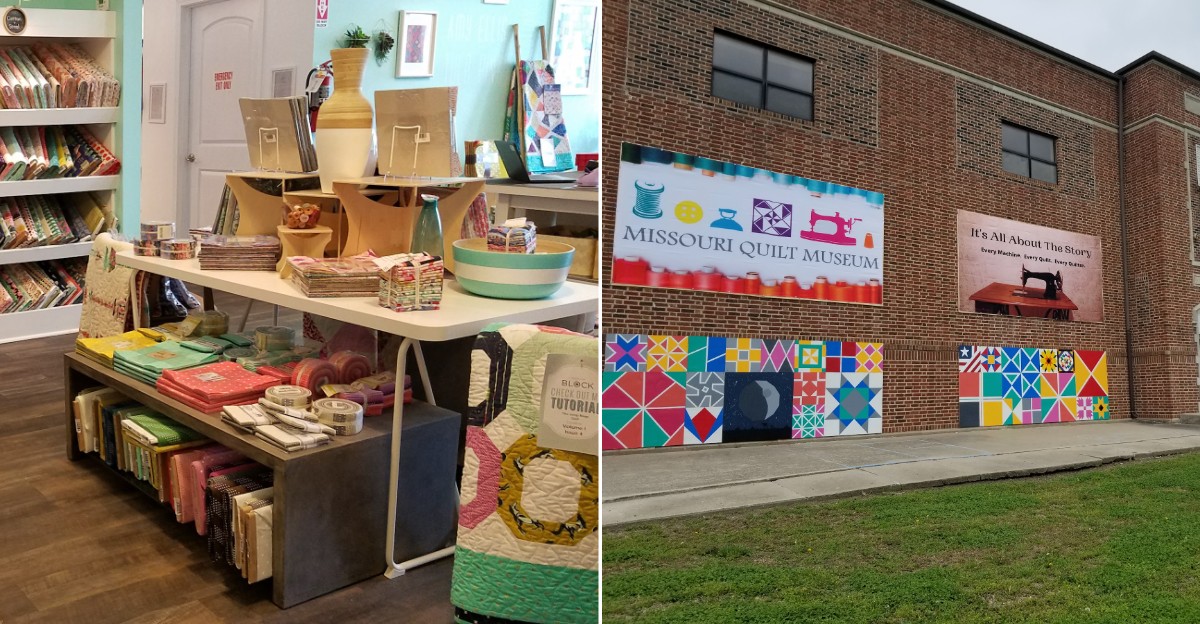
You do not expect one small town to have enough quilt shops to turn a quick visit into an all-day browse. This Missouri town does exactly that, with shop after shop packed along the same main stretch.
Fabric lovers can move from one storefront to the next, checking out colorful bolts, patterns, sewing supplies, and finished pieces without having to drive all over the area. That concentration is what makes the place so much fun.
You can compare styles, spot something completely different at the next shop, and easily lose track of how long you have been wandering.
Even if you are not a serious quilter, the amount of creativity packed into such a small place is hard to ignore. It feels less like running errands and more like a full-on fabric crawl.
The Main Shop On North Davis Street
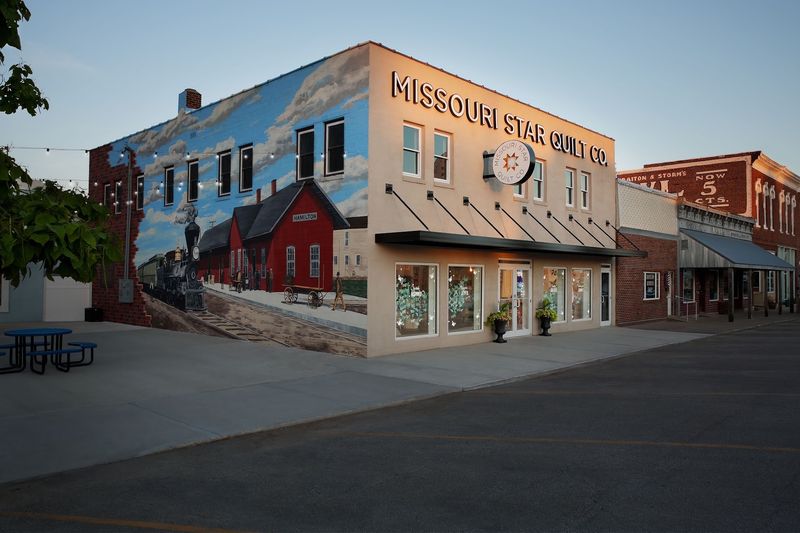
Start here, honestly, because everything else in town makes more sense once you have walked through the Missouri Star Quilt Company Main Shop at 114 North Davis Street. It works like the front door to the whole operation, giving you a taste of what the other themed stores carry before you go wandering off in every direction.
Inside you will find bolts of fabric stacked high, precut bundles that save you a ton of cutting time, and quilt kits that basically hand you a finished plan in a bag. If you have ever stood in a craft store feeling overwhelmed, the layout here actually helps because things are grouped in ways that make choosing easier.
The staff are known for being genuinely helpful, so asking questions is expected rather than awkward. Even if you have never sewn a stitch in your life, walking through is kind of fun just for the color alone.
Grab a town map while you are there, since it shows you where each specialty shop sits along the street. Missouri does not have many towns organized around one craft like this, and you feel that the moment you step inside.
Penney’s And Its Wall Of Solid Fabrics
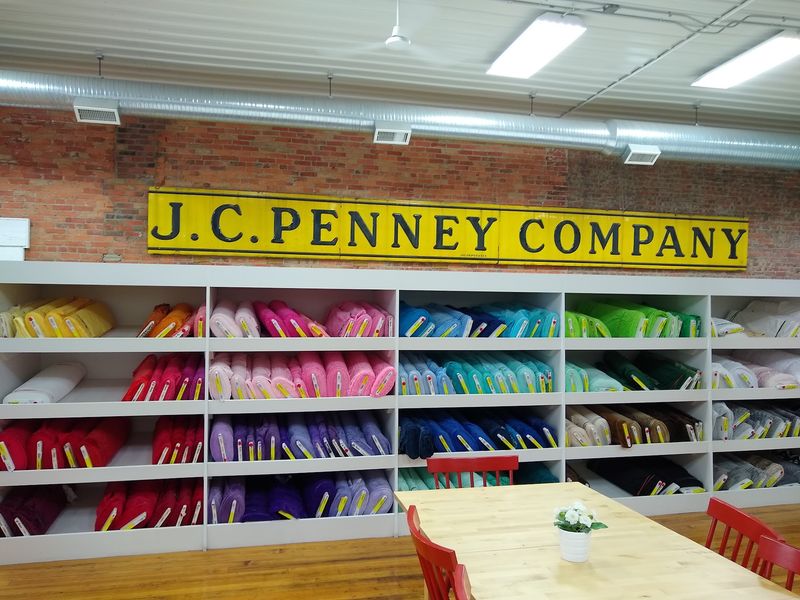
Here is a fun bit of layering for you. The shop called Penney’s sits inside the old J.C.
Penney building, which means you are shopping for fabric inside a piece of retail history, and that combination alone makes the stop worth it.
What they focus on here is solids, and I mean an enormous spread of them arranged so you can compare shades side by side. Anyone who has tried to match a specific blue from memory knows how impossible that is, so having them all in one room is a real relief.
Solids do a lot of quiet work in a quilt because they give your eye a place to rest between busy prints. If you are building something modern with clean lines, this is probably where most of your cart gets filled.
Bring a scrap of whatever fabric you are trying to match, since holding it up against the shelves beats guessing every single time. The building itself has those tall old ceilings and wide floors that newer stores just cannot copy, and it gives the whole place a settled, lived-in feeling.
Shops Sorted By Theme And Mood
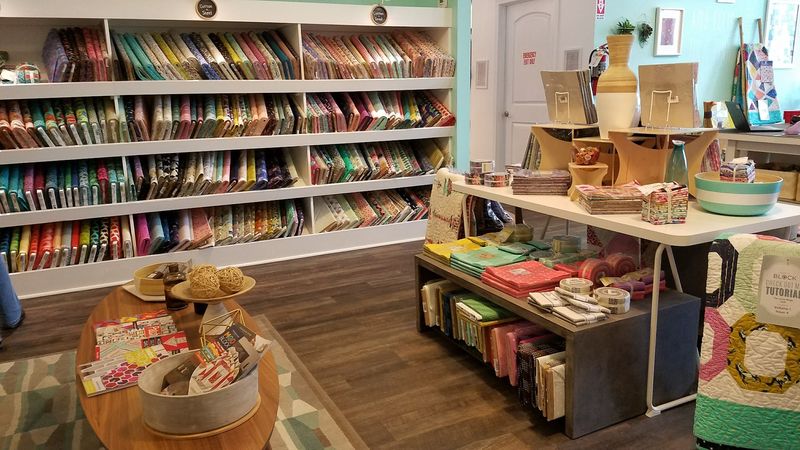
What really surprised me about Hamilton is that the shops are not just copies of each other with different signs out front. Each one has its own personality and its own slice of the fabric world, which turns the whole street into a sort of treasure hunt.
One store leans modern with crisp geometric prints, another goes all in on seasonal and holiday fabrics, and others handle florals, novelty prints, or reproduction styles. So instead of digging through one giant wall hoping to find your thing, you just walk to the shop that already specializes in it.
That setup saves time and somehow makes browsing more fun at the same time. You end up discovering fabrics you never would have picked up otherwise because the curation nudges you toward them.
My advice is to loop the entire street once without buying anything, then circle back for what stuck in your head. Comfortable shoes matter more than you would think, since you will be in and out of doorways for hours.
Missouri towns this small rarely give you this much to poke around in.
Accessories And Such For The Finishing Touches
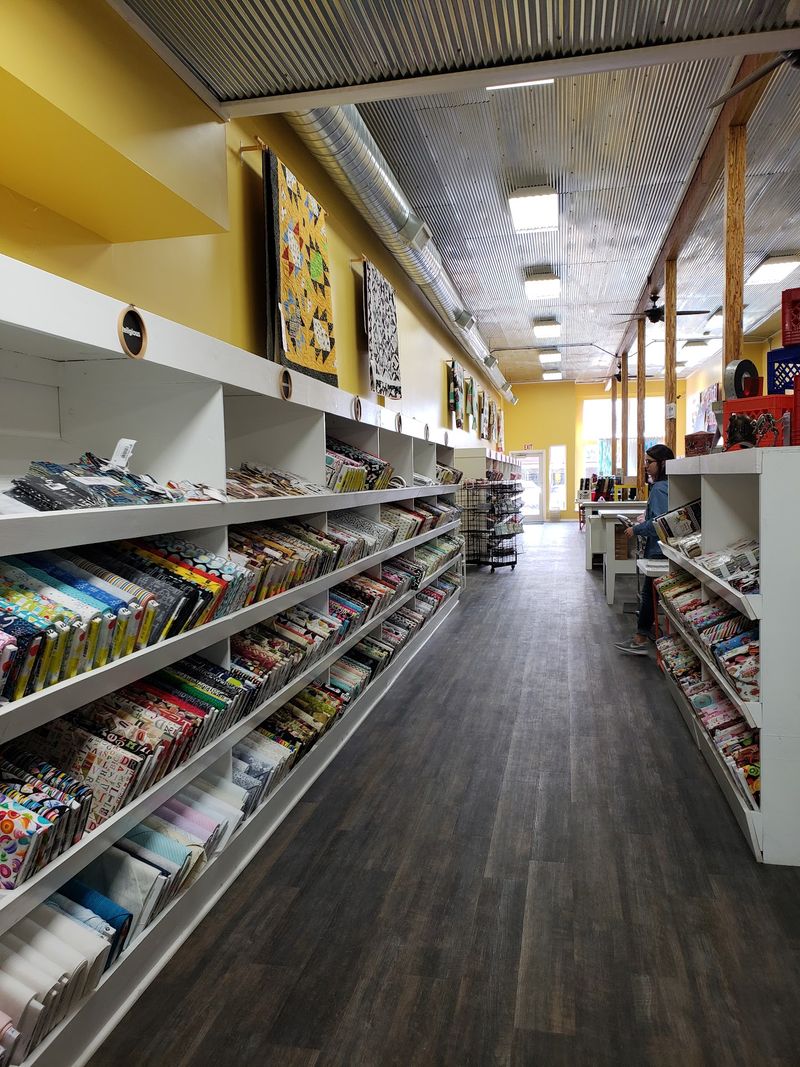
You know that moment when a project is ninety percent done and you cannot find the one zipper or button that pulls it all together? There is a whole shop in Hamilton built around exactly that problem, and it goes by Accessories and Such.
Trims, buttons, zippers, bag hardware, ribbons, closures, all the small stuff that usually hides in a single sad bin somewhere gets a proper home here. Seeing it organized and out in the open makes you realize how many options actually exist for finishing a piece.
Bag makers especially will want to slow down in this one, since hardware choices change the whole look of a finished tote or pouch. Little details like a metal clasp versus a plastic one really do shift how handmade work reads.
Bring photos of any unfinished projects on your phone so you can match hardware without guessing. I would also say budget more time here than you expect, because small things take longer to choose than fabric does.
It is the kind of shop that quietly solves problems you have been putting off for months.
The Stitchery For Slow Handwork
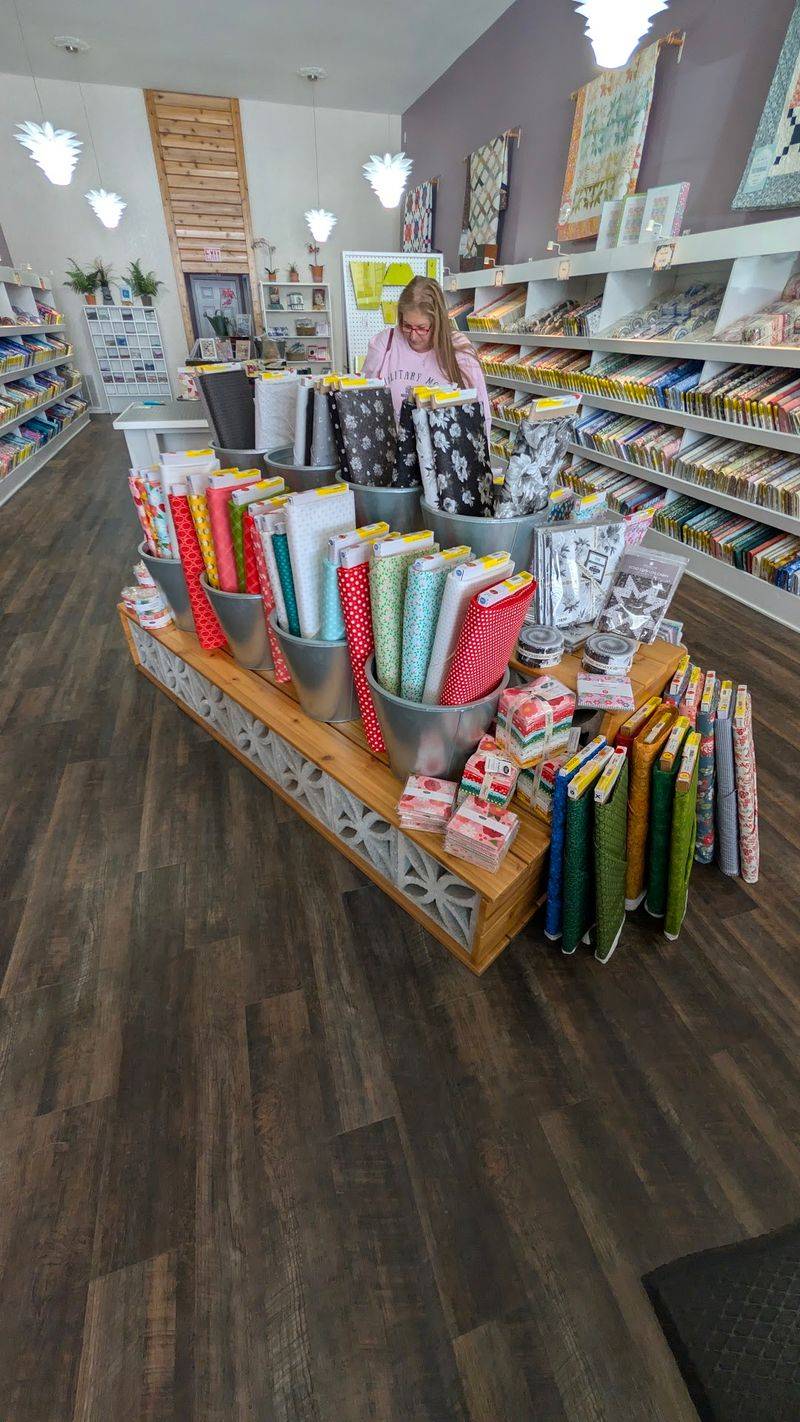
Not everybody wants to sit at a machine, and The Stitchery seems built for exactly those people. Hand quilters, embroiderers, and English paper piecing fans will find this one feels like it was stocked with them in mind.
Floss in every shade imaginable, needles for specific jobs, hoops, templates, and the papers and supplies that hand piecing requires all live under one roof. Handwork moves slowly by nature, and there is something calming about a shop that celebrates that pace instead of rushing past it.
If you have ever wanted to try embroidery but felt unsure about what to buy first, this is a reasonable place to ask questions and start small. A simple hoop, a needle, some floss, and a bit of fabric will get you going without much investment.
Handwork also travels beautifully, which makes it ideal for road trips or long evenings on the couch. Tuck a project in your bag and you always have something to do with your hands.
Out of all the stores along this Missouri street, this one has the quietest, most patient energy.
Machines, Tools, And Serious Gear
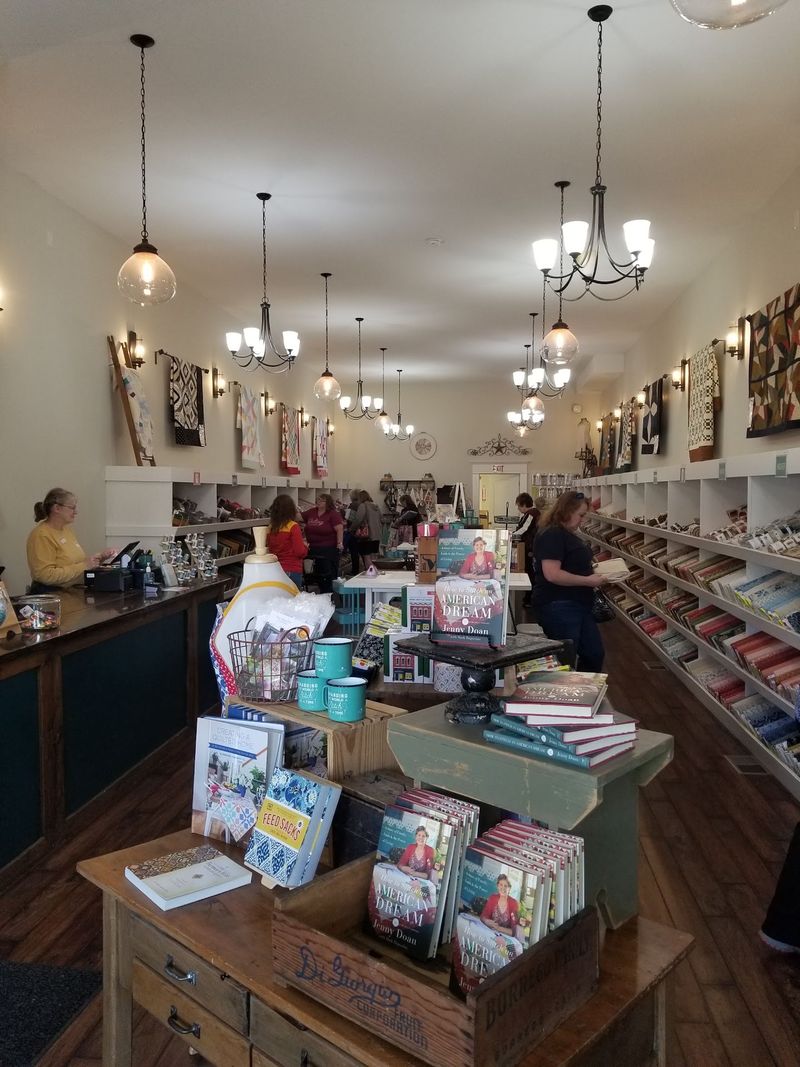
Fabric gets all the attention, but the gear side of quilting has its own dedicated space here too. The Machine Shed handles sewing machines, while Quilter’s Hardware covers the tools that keep a project moving along.
Rotary cutters, rulers, mats, marking pens, specialty feet, and all the equipment that wears out or gets lost eventually can be replaced in one trip. Testing a machine in person also beats reading reviews online, since how it feels under your hands matters a lot.
If you are thinking about upgrading, bring a piece of your usual fabric so you can see how a machine handles it. Thick layers and thin cottons behave differently, and that difference shows up fast once you start stitching.
Even window shopping here is interesting because you get a sense of how much the craft has modernized. Some of these machines do things that would have seemed impossible a generation back.
Tools are easy to overlook until the moment yours fail mid project, so restocking while you are already in town is just practical.
The World’s Largest Spool Of Thread
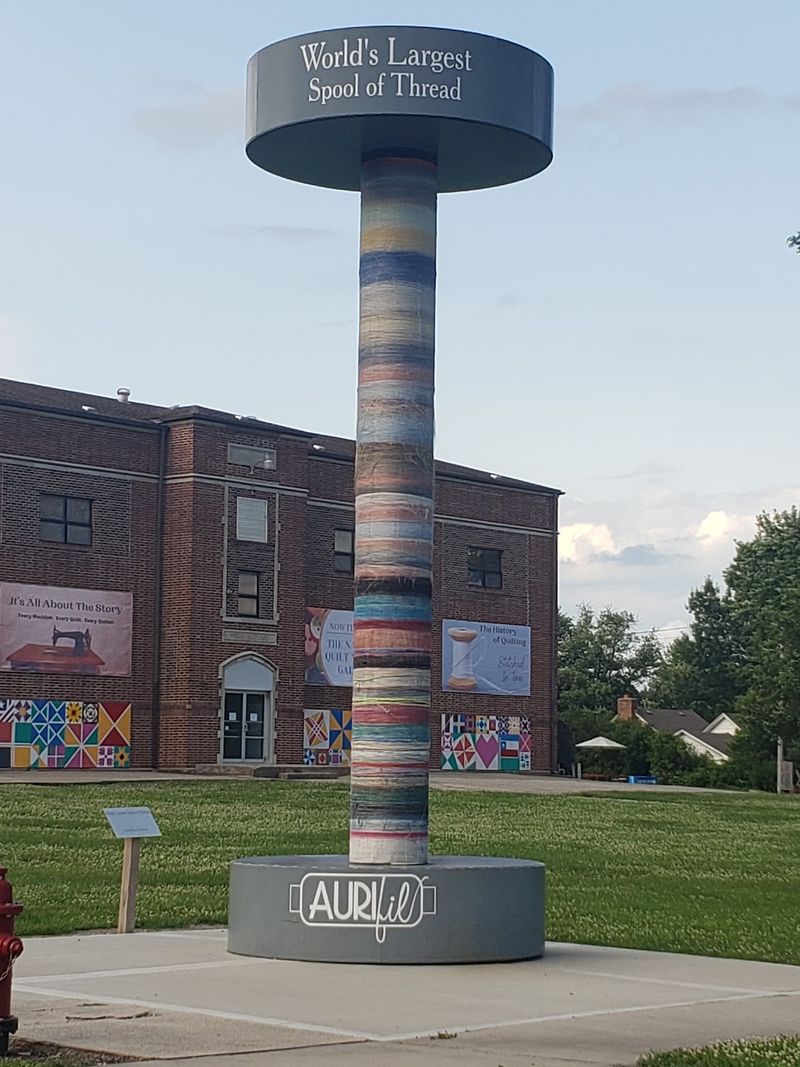
Alright, this one is pure roadside spectacle, and I am completely here for it. Sitting on the Missouri Quilt Museum property is the World’s Largest Spool of Thread, standing twenty-two feet tall and wrapped with more than a million yards of thread.
The part that makes it special is that visitors are invited to add their own thread to it, which means the thing keeps growing as more people pass through. So it is not just a statue you photograph and walk away from, it is something you can literally contribute to.
Kids seem to love it because the scale is so ridiculous compared to a normal spool sitting in a sewing basket. Adults get a kick out of it for the same reason, honestly.
Photos turn out best when you stand someone next to it for scale, otherwise the size does not read right in a picture. It is free to look at and takes only a few minutes, so there is no reason to skip it while you are already in town.
Where else in Missouri are you going to see something like that?
J.C. Penney’s Boyhood Home And Museum
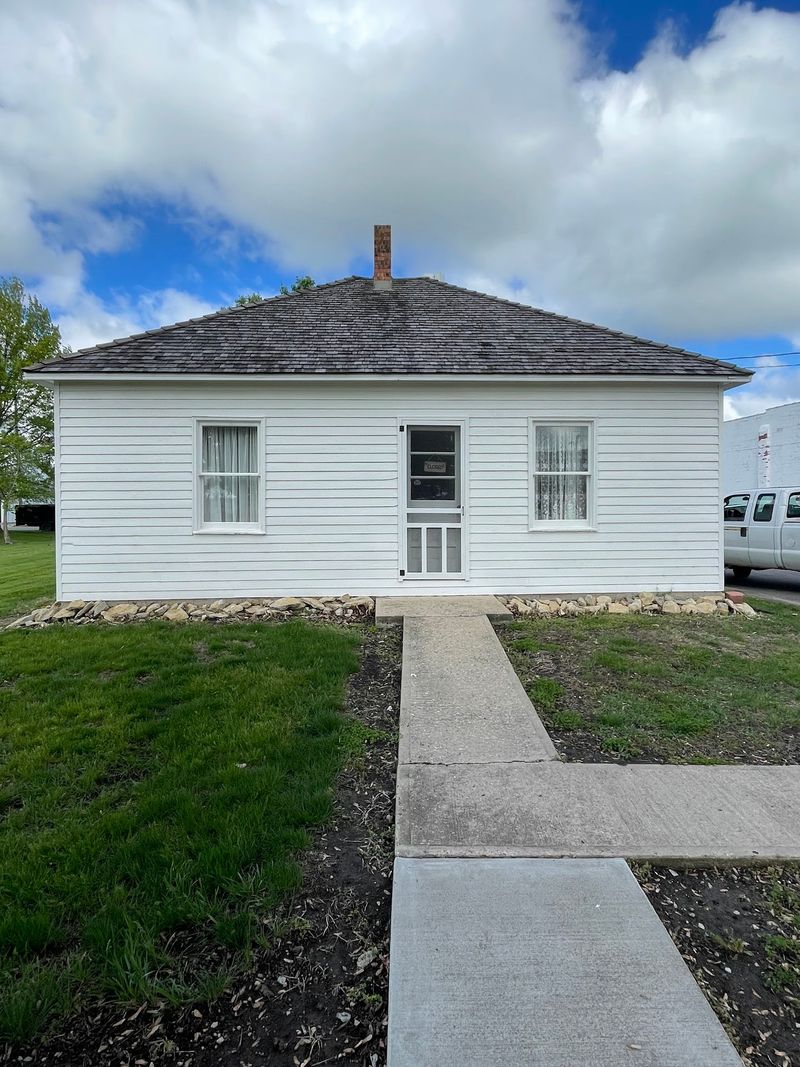
Here is the fact that catches most visitors off guard. Hamilton is the boyhood home of J.C.
Penney, the man behind one of the biggest retail names in American history, and the town has a museum dedicated to him right downtown.
You can walk through exhibits covering his early life and how a kid from a small Missouri town ended up building a department store chain that stretched coast to coast. His original boyhood home still stands too, which is a neat thing to see with your own eyes.
The museum makes a nice change of pace when your brain is full of fabric choices and you need to think about something else for a while. It is small, so you are not committing your whole afternoon to it.
What I find interesting is how the town holds both stories at once, the retail legend and the quilting boom, and neither one crowds out the other. History and craft sitting on the same street feels pretty fitting.
Give yourself a little extra time here if old photographs and stories are your thing.
The Missouri Quilt Museum
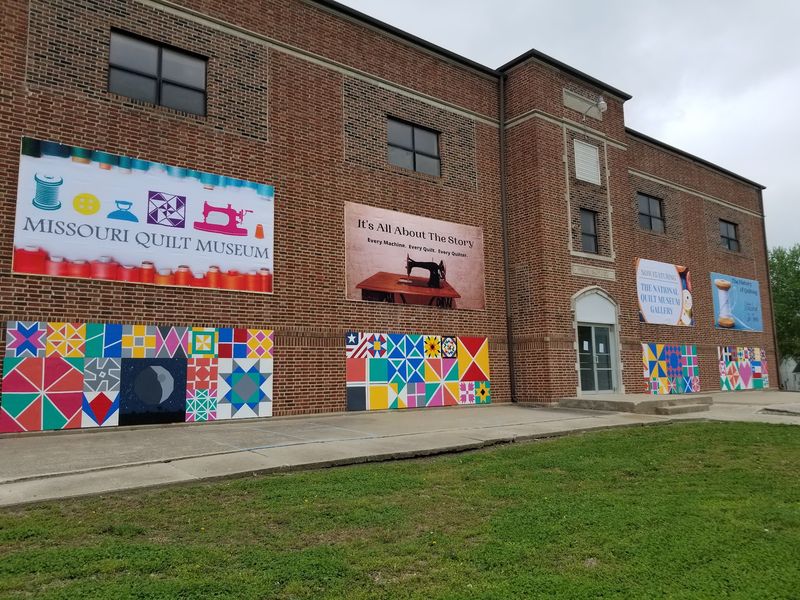
With this many shops in one place, a museum was practically inevitable, and the Missouri Quilt Museum delivers more than a room of pretty blankets. It digs into the history and artistry behind quilting and textile work in a way that appeals even to people who have never held a needle.
Quilts carry stories, and the museum leans into that emotional side rather than just labeling fabrics and dates. Many pieces were made to mark births, marriages, losses, or long journeys, and knowing that changes how you look at the stitching.
The building itself gives the collection room to breathe, so you are not squinting at crowded displays. Rotating exhibits mean repeat visitors usually find something new on the walls.
Plan on spending real time here instead of squeezing it in at the end of a shopping day, because the details reward a slower walk through. Bring reading glasses if you use them, since some of the finest handwork is worth studying up close.
It rounds out the trip nicely by explaining why all those shops outside exist in the first place.
