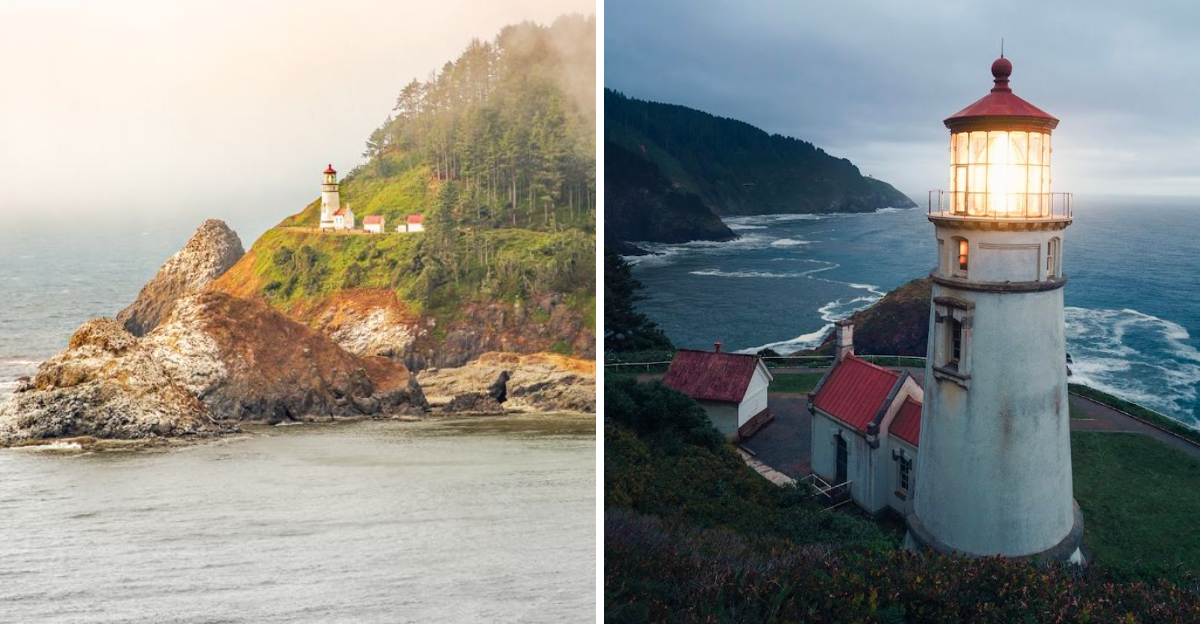
When I first stepped onto that small island in Oregon, I immediately felt the pull of history and sea air. The lighthouse stood tall, its white paint gleaming against the deep blue, and I could hear the gulls call above the surf.
I spent hours wandering the rocky shoreline, snapping shots that captured the light’s rhythmic sweep across the water.
The island’s quiet trails offered a brief retreat from everyday noise, and each turn revealed a new, picture-perfect perspective.
I even found a cozy bench where I could sit, sip coffee, and watch the sun dip behind the cliffs. It’s the perfect blend of adventure and calm. I can’t wait to bring anyone who loves a good snap and a gentle breeze back here.
The History Behind Heceta Head Lighthouse
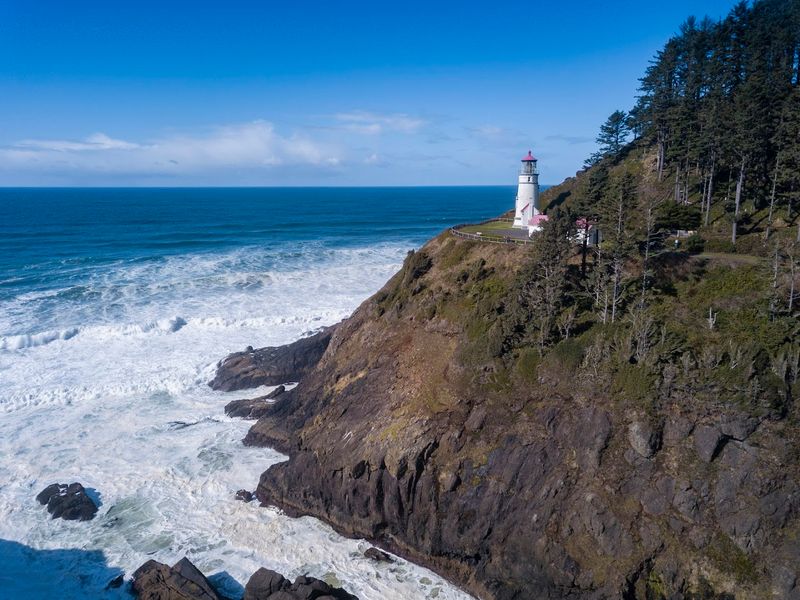
Built in 1894 and named after Spanish explorer Bruno de Heceta, this lighthouse has one of the richest backstories on the entire Oregon Coast. The structure took years of careful planning and construction, with materials hauled in by ship to this rugged stretch of coastline.
It was no small task getting everything up to that clifftop perch.
The lighthouse was designed to warn ships away from the rocky reefs that made this section of the Pacific especially dangerous. Its Fresnel lens, a marvel of optical engineering, could cast a beam visible for miles out at sea.
Sailors relied on it completely during dark and stormy nights.
Today, the site functions as a living museum. Volunteers and park hosts share the full story of the lighthouse’s past with visitors who make the trek up the trail.
The state of Oregon has invested enormous effort in restoring the buildings and exhibits to their original character, making a visit feel genuinely educational.
Getting There and Finding Your Way Around
The lighthouse sits along the famous Highway 101, roughly 13 miles north of Florence and about 23 miles south of Yachats. Pulling off the highway and seeing the bridge and beach below is already a moment worth stopping for.
The main parking area fills up fast, especially on summer weekends.
Parking can be tight, but there is overflow space across the street and along the highway shoulder in designated pull-offs. Arriving before 10 AM on busy days gives you a real advantage.
I noticed that even the walk from overflow parking has some nice views along the way.
Once parked, the trail to the lighthouse is clearly marked and easy to follow. It runs about half a mile uphill, with a steady incline that most moderately active visitors handle just fine.
A gift shop sits at the midpoint of the trail, which is a handy place to rest and grab a souvenir before continuing up to the lighthouse itself.
The Iconic Hike Up to the Lighthouse
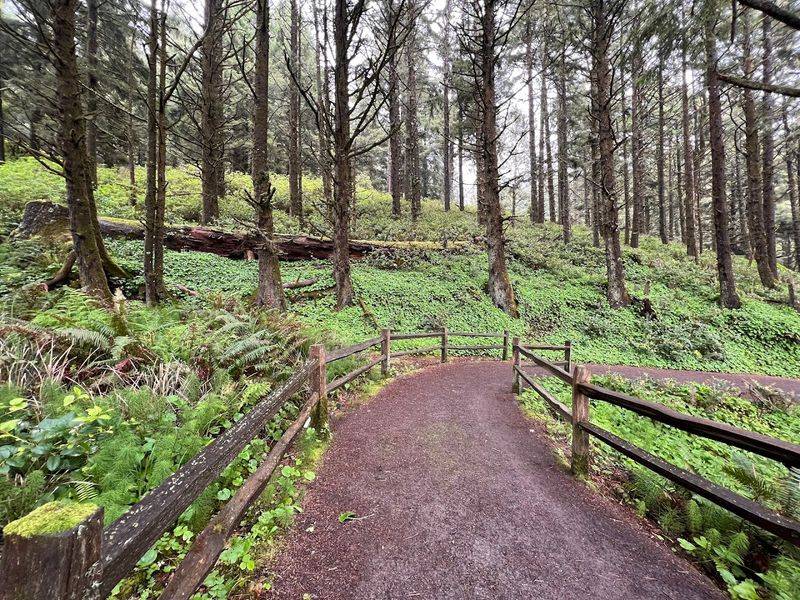
The hike up to the lighthouse is not technically demanding, but it does get your heart going a little. The path is wide, paved in sections, and well-maintained throughout the year.
Even in foggy conditions, the trail feels safe and easy to navigate.
What makes the walk special is not just the destination but everything along the way. Dense coastal forest lines the path, and you can hear the ocean long before you see it.
Small breaks in the trees offer teaser views of the coastline that keep you moving forward with genuine anticipation.
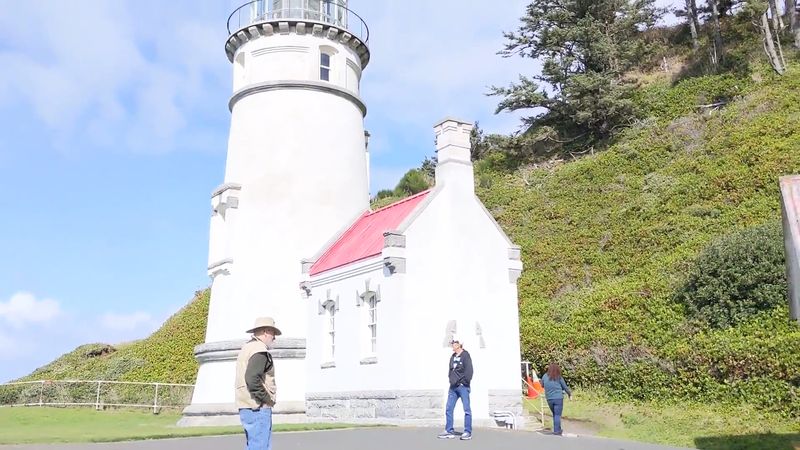
At the top, the view opens up completely and it hits you all at once. The lighthouse, the keeper’s house, the cliffs, the ocean stretching to the horizon.
Take your time up there because the light changes constantly, with fog rolling in and burning off in ways that make every hour feel different. Visitors with limited mobility can still enjoy excellent views from the upper platform area near the lighthouse grounds.
The Stunning Views That Make It So Photogenic
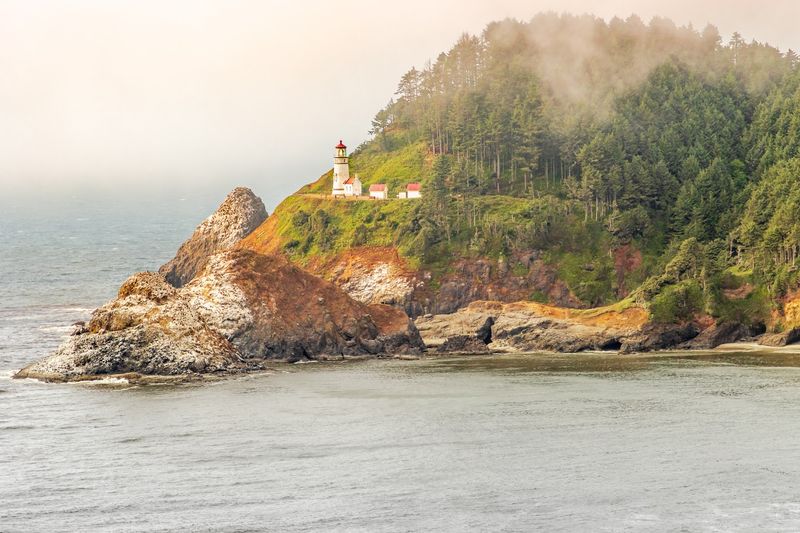
Photographers have been obsessing over this lighthouse for good reason. The combination of the white tower, the lush green headland, and the wild Pacific below creates a composition that almost frames itself.
On clear days, the view stretches so far south you can trace the curve of the coastline for miles.
Fog actually adds something magical to the experience rather than taking away from it. I watched the morning mist curl around the base of the lighthouse tower and thought it looked better than any sunny postcard version I had ever seen.
The light here shifts constantly and rewards patience.
The upper trails above the lighthouse offer even more dramatic vantage points. From up there, you can look straight down at the lighthouse roof with the ocean as a backdrop.
Those trails do have some steep drop-offs with no barriers, so careful footing is important. Keep a close eye on young children near the edges, and the payoff views are absolutely worth the extra effort to get there.
Inside the Lighthouse and Its Remarkable Fresnel Lens
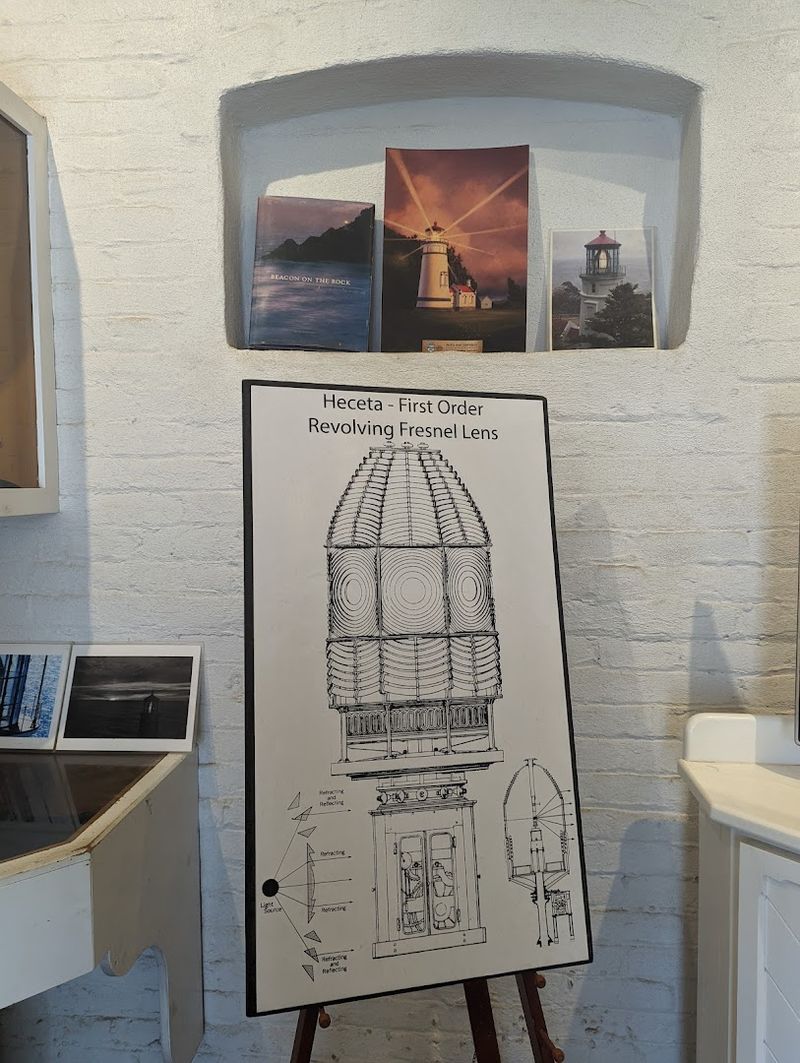
Stepping inside the lighthouse base is one of those quiet, surprisingly moving experiences. The walls are thick, the space is narrow, and you immediately get a sense of how seriously this structure was built to last.
Everything about it feels purposeful and deliberate.
The Fresnel lens at the top is the real showstopper. Made up of dozens of precisely arranged glass prisms, it concentrates light into a powerful beam that once guided ships safely through the night.
Park volunteers describe it as astonishingly complex, and once you see it up close, that description feels accurate.
The public stairs to the very top of the lighthouse are not open for climbing, but the ground floor and the exhibits inside are fully accessible. Knowledgeable volunteers are on hand to explain the mechanics of the lens and the history of the keepers who once lived and worked here.
It is one of those rare spots where the story behind the object makes the object itself even more impressive to look at.
The Keeper’s House Turned Bed and Breakfast
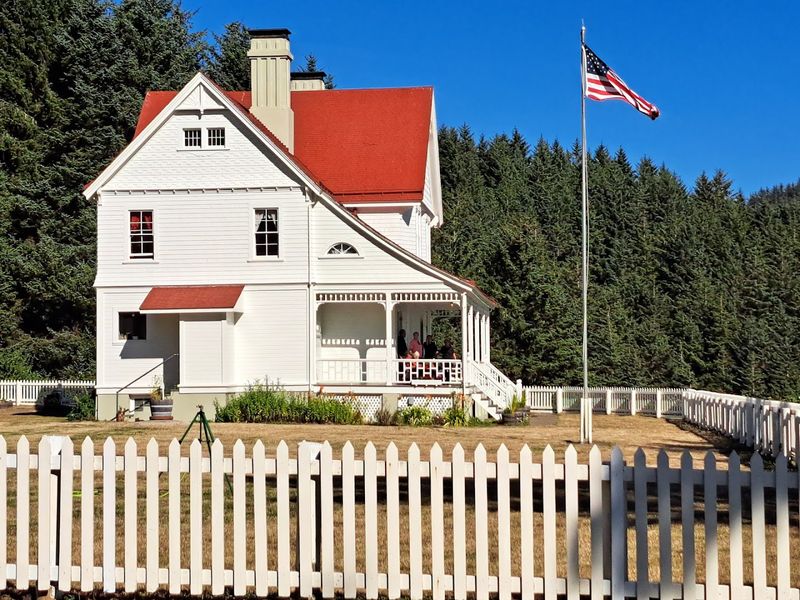
The old lighthouse keeper’s dwelling is now one of the most unique places to spend a night anywhere on the West Coast. Operating as a bed and breakfast with six guest rooms, it sits just steps from the lighthouse itself.
Waking up there with the sound of the ocean outside your window is a genuinely different kind of travel experience.
Guests at the B&B have described the staff as exceptionally warm and attentive. A multi-course breakfast is part of the stay, and the meals have earned a strong reputation for quality.
The setting alone makes it feel like something out of a novel.
The property has also hosted private events including weddings, and the feedback from those occasions has been glowing. Staying overnight means you get the lighthouse almost entirely to yourself in the early morning hours, before the day visitors arrive.
That quiet window of time, just you and the foghorn and the view, is something most people who experience it say they never forget.
The Beach and Bridge Below the Headland
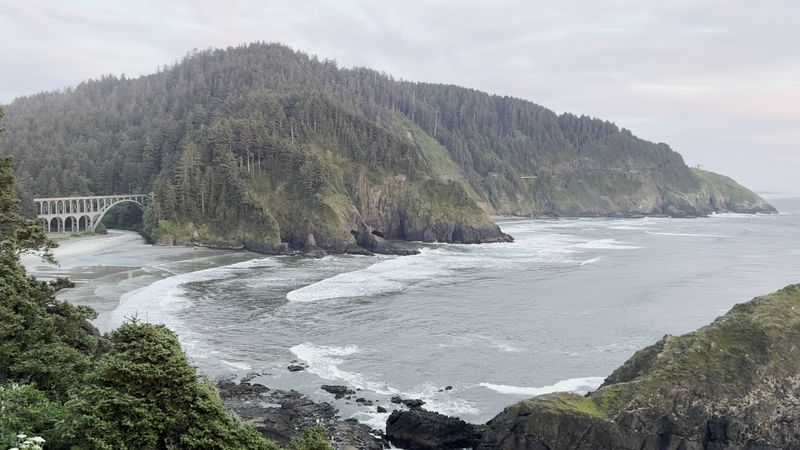
Most visitors focus entirely on the lighthouse, but the beach and bridge at the base of the headland are worth just as much attention. A river flows down to meet the ocean here, creating a small estuary with calm water on one side and breaking waves on the other.
It is a surprisingly peaceful spot to sit and watch the water move.
The bridge itself was built in the 1930s and has a graceful arched design that looks almost European against the wild coastal backdrop. Photographing the bridge with the headland rising behind it gives you a completely different angle on the whole landscape.
It is one of those spots that rewards wandering.
The cliffs flanking the beach are covered in green plants and dotted with small caves. Tidepooling is possible here at low tide, and visitors have spotted sea stars along this stretch of shore.
Picnic tables near the beach make it easy to settle in for a while, and restrooms are available at the trailhead area nearby.
Wildlife and Nature Around Heceta Head
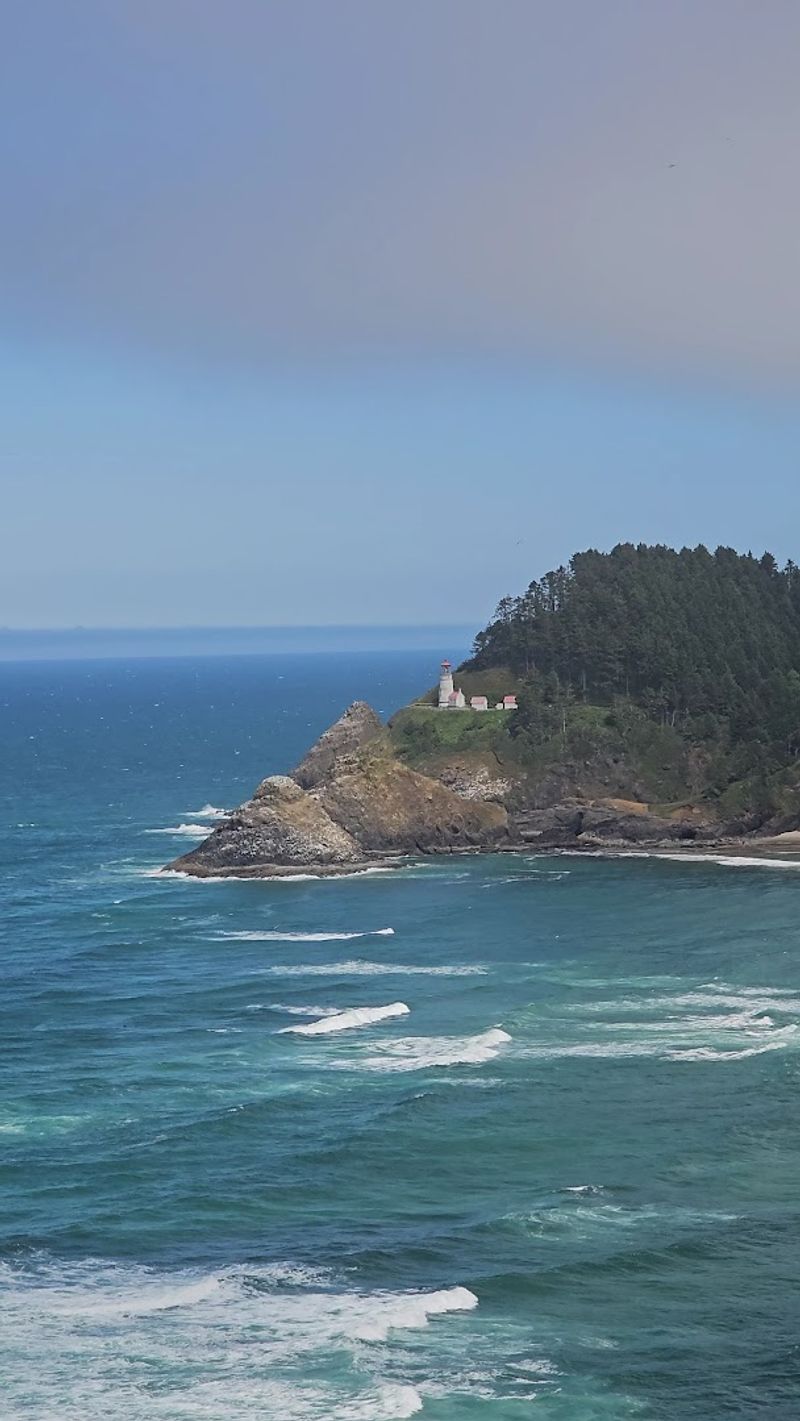
The natural world around Heceta Head is just as impressive as the lighthouse itself. The headland sits within a stretch of Oregon Coast that supports a rich variety of marine and coastal wildlife.
On a clear day, you might spot sea lions hauled out on rocks not far offshore.
Sea Lion Caves, one of the largest sea caves in North America, is located just a short drive north of the lighthouse. Many visitors combine both stops into a single day along Highway 101.
The proximity of these two landmarks makes the area feel especially rewarding for nature lovers.
Shorebirds are common along the beach below, and the forested trail up to the lighthouse passes through habitat used by a range of Pacific Coast species. Bringing binoculars adds a whole new layer to the visit.
The coastal vegetation itself is striking, with wind-sculpted trees and wildflowers clinging to the clifftops in ways that look almost sculptural against the gray-blue sky.
Tips for Visiting Heceta Head Lighthouse
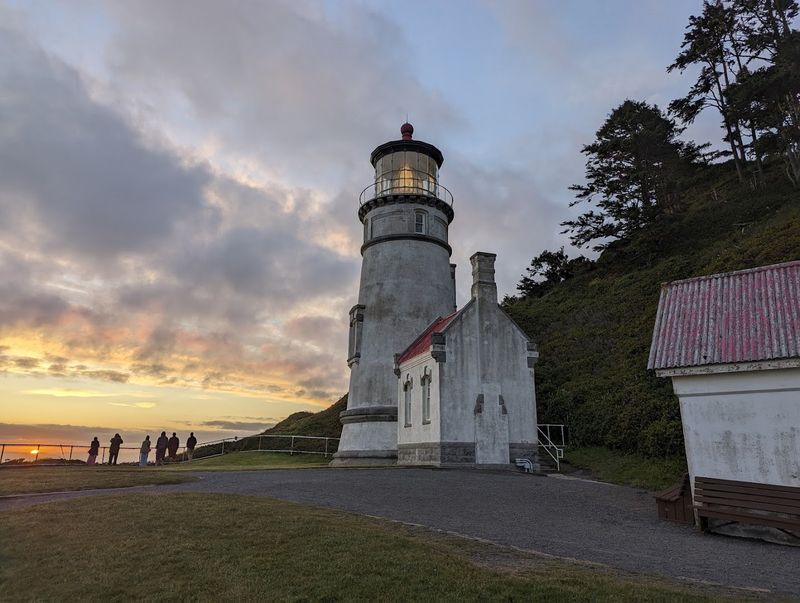
A few practical things make a real difference at this spot. Arriving early is probably the single best piece of advice, especially during summer months when the parking lot fills before 10 AM.
The lighthouse grounds are open daily from 6 AM to 9 PM, which gives early risers a lovely quiet window before the crowds build up.
Layering your clothing is genuinely important here. Even on warm inland days, the headland can be windy and cool, and the temperature can drop noticeably as you gain elevation on the trail.
A light jacket tucked into your bag will save you from being miserable at the top.
Dogs are welcome on the grounds and the trail, but they cannot enter the lighthouse building or the gift shop. Cell service is weak to nonexistent on the trail, so download any maps or information before you leave the car.
The park charges a day-use parking fee, so having some cash or a card ready helps you avoid any surprises at the entrance.
Why Heceta Head Lighthouse Stays With You Long After You Leave
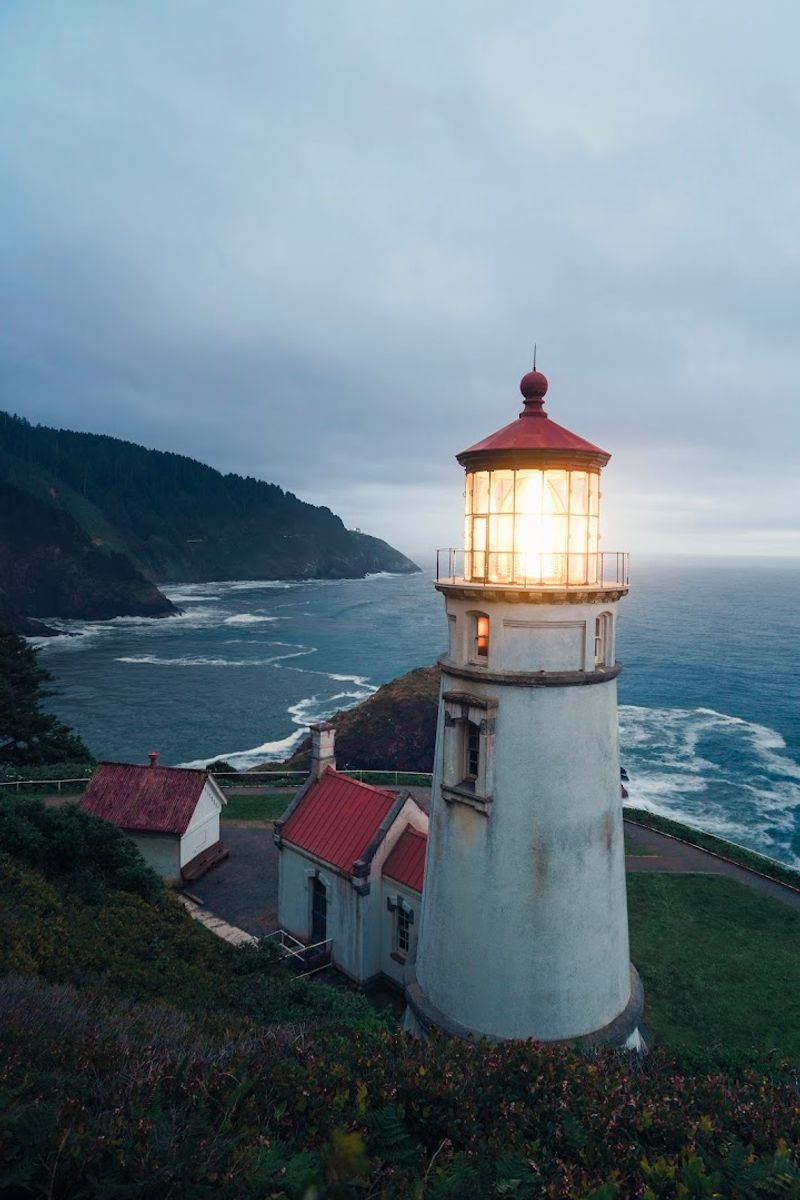
There are plenty of beautiful places along the Oregon Coast, but Heceta Head has something harder to name. It is not just the view, although that is extraordinary.
It is the combination of history, wildness, and quiet that settles over you once you reach the top of that trail.
People return here again and again, and that says something real about the place. The light changes every hour.
The fog comes and goes. The ocean never looks exactly the same twice.
Each visit ends up feeling slightly different from the last one.
For a first-time visitor, it might feel like just another scenic stop on a road trip. But give it an hour, talk to one of the volunteers, walk the upper trail, and sit for a moment on the headland.
By the time you head back down to your car, something about the place has already started to stick. Heceta Head is the kind of spot that earns its reputation not through hype but through the simple, unhurried experience of being there.
Address: 725 Summer St, Florence, OR 97439
Dear Reader: This page may contain affiliate links which may earn a commission if you click through and make a purchase. Our independent journalism is not influenced by any advertiser or commercial initiative unless it is clearly marked as sponsored content. As travel products change, please be sure to reconfirm all details and stay up to date with current events to ensure a safe and successful trip.
