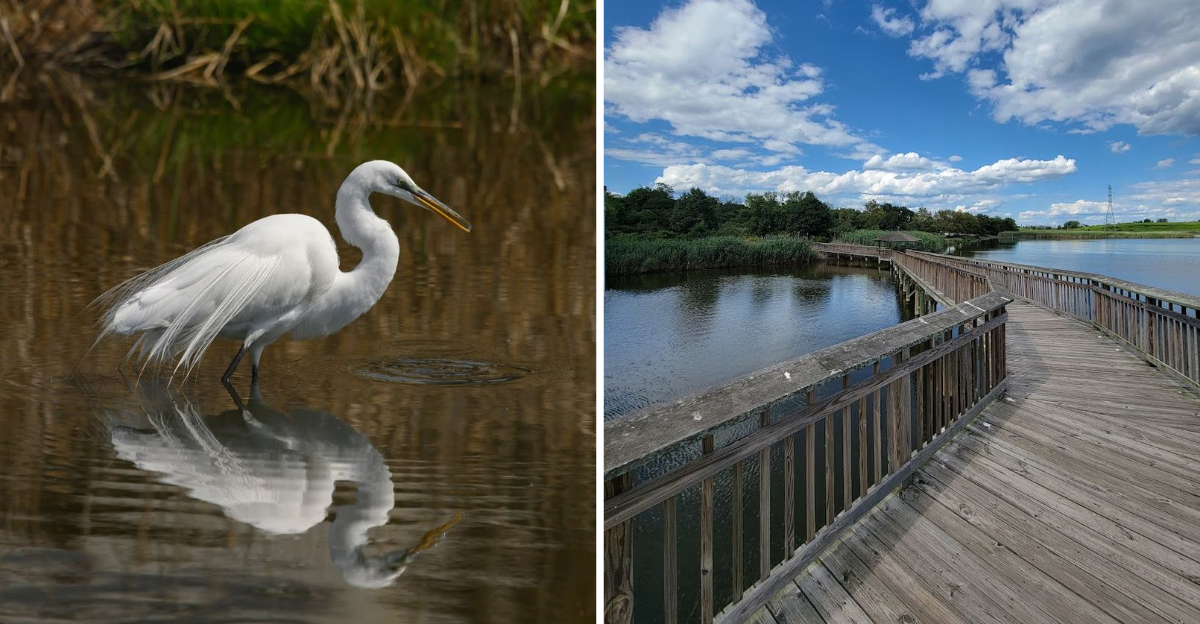
A former landfill turned into a bird paradise. That is this New Jersey park.
Walk the half-mile boardwalk, spot the egrets and herons, and watch planes land at Newark while ospreys soar right over your head.
The Manhattan skyline sits in the distance, a quiet reminder that you are still minutes from the city.
Most people drive past this place on the Turnpike every single day. Do not be one of them.
Bring binoculars and maybe some bug spray.
The Marsh Discovery Trail: A Boardwalk Unlike Anything You Expect
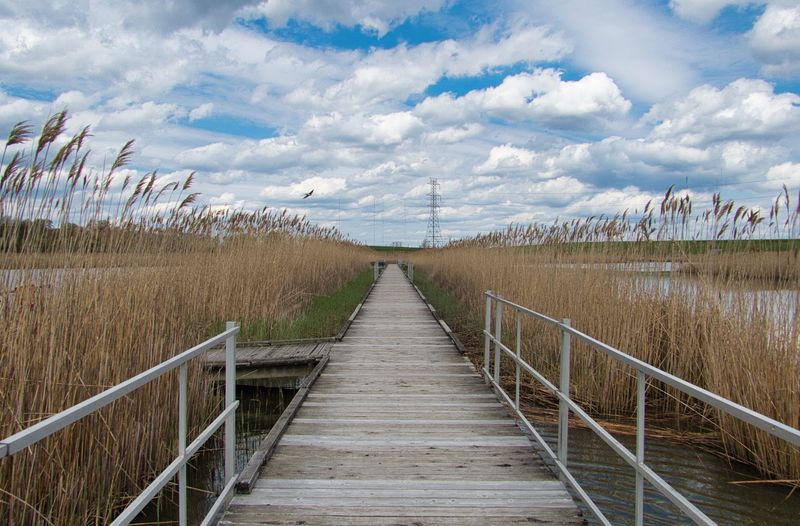
Some trails make you work for the view. This one hands it to you the moment your feet hit the first wooden plank.
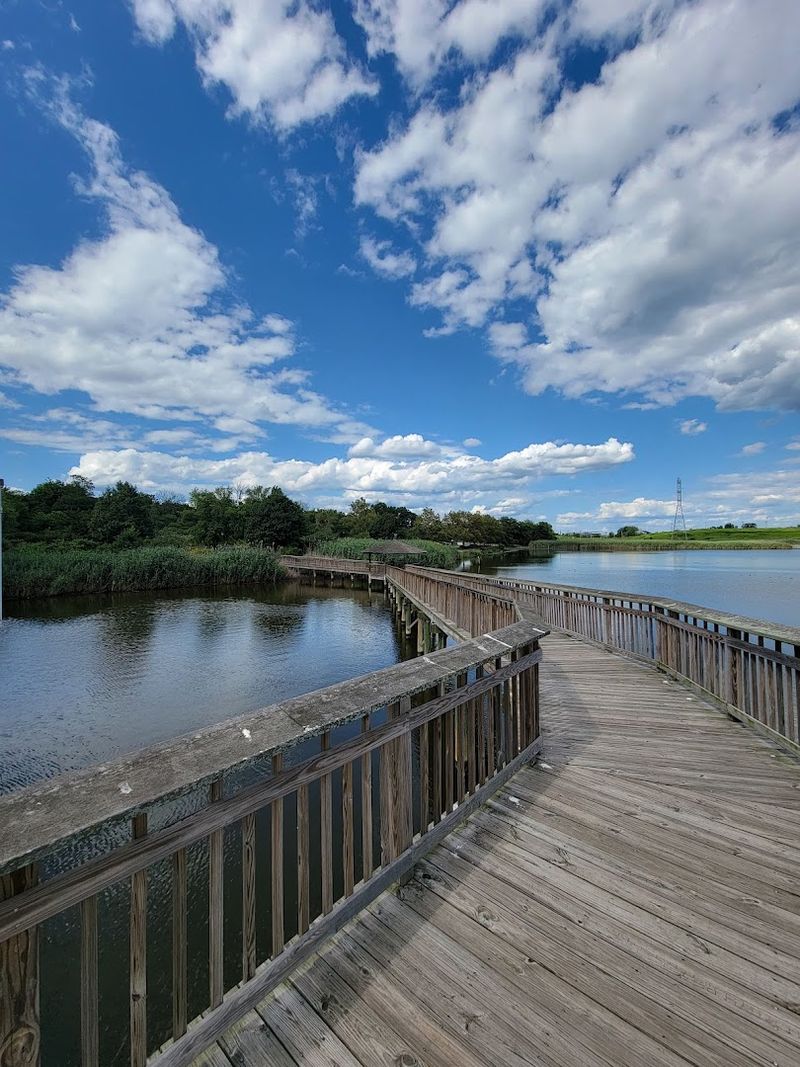
The Marsh Discovery Trail is a half-mile boardwalk loop that extends directly over the park’s tidal impoundment, known as the Shorebird Pool. Walking it feels less like a hike and more like gliding across the surface of the marsh itself.
The water sits just below your feet, and the reeds rise up on either side like nature’s own corridor.
What makes this trail genuinely special is everything built along it. Bird blinds let you peek at shorebirds without startling them.
Shaded and open classrooms give the trail an educational rhythm that never feels forced.
Several seating areas are scattered throughout, so there is always a spot to stop and just breathe. Whether you are visiting alone or bringing kids along, this loop delivers a quiet kind of wonder that is surprisingly hard to find this close to a major city.
It is short, but it is absolutely worth every step.
Over 285 Bird Species Call This Place Home
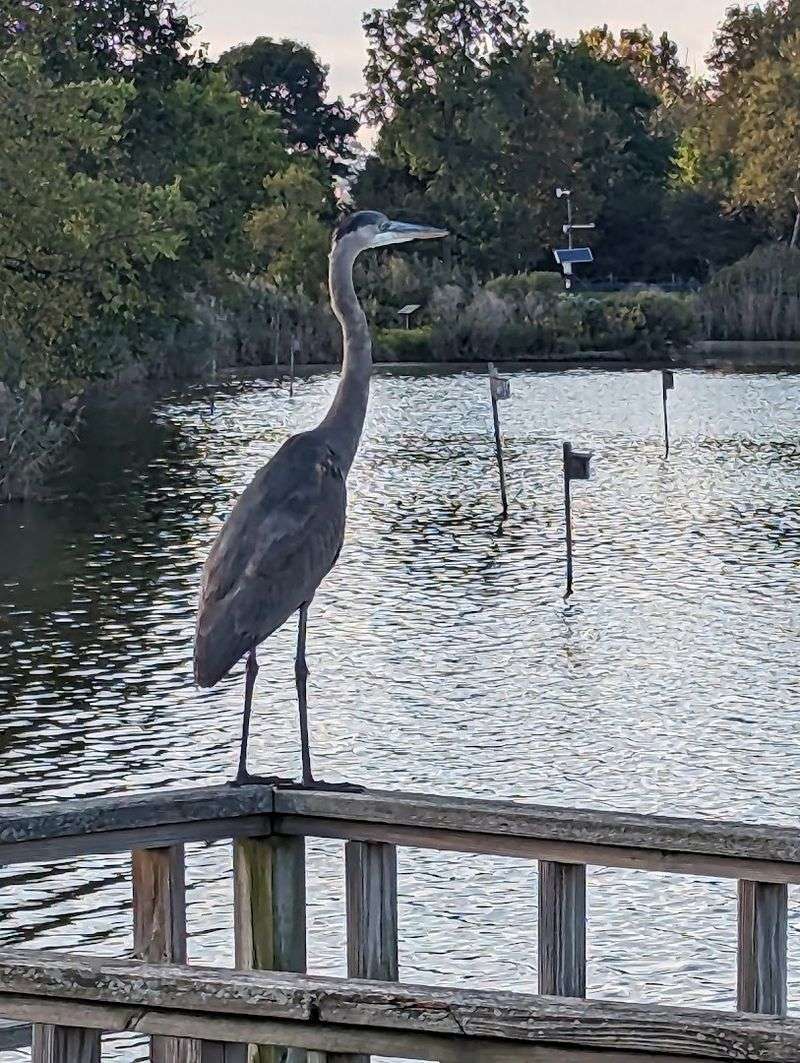
Before visiting, the number 285 just sounds like a statistic. Standing on the boardwalk with birds landing a few feet away, that number starts to feel very real.
Richard W. DeKorte Park sits along the Atlantic Flyway, one of the most significant migratory routes on the East Coast.
This positioning means the park sees an extraordinary rotation of species throughout the year. Egrets wade through the shallows in summer.
Ospreys circle overhead in spring. Hawks and falcons pass through during fall migration in numbers that genuinely stop you mid-stride.
Birder’s World magazine has nationally recognized the Meadowlands region as a birding hotspot, and this park is the crown jewel of that reputation. Several species on New Jersey’s threatened and endangered lists have been spotted here, which adds a layer of significance to every visit.
Bring binoculars. Seriously, do not make the same mistake and show up empty-handed.
Even a basic pair transforms the experience from a pleasant walk into something closer to a genuine wildlife encounter worth telling people about.
The Transco Trail Connects It All Together
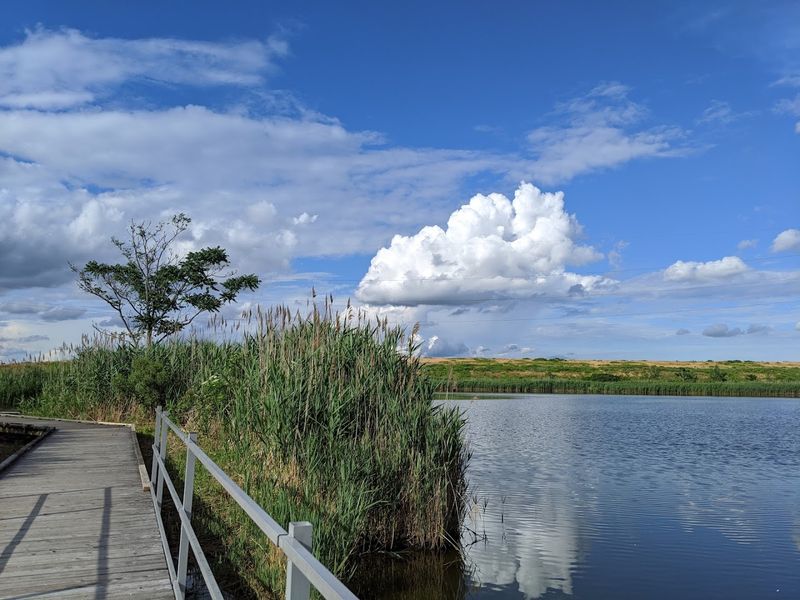
Once you finish the Marsh Discovery Trail, it can feel like the adventure is over. Then you find the Transco Trail and realize you have barely started.
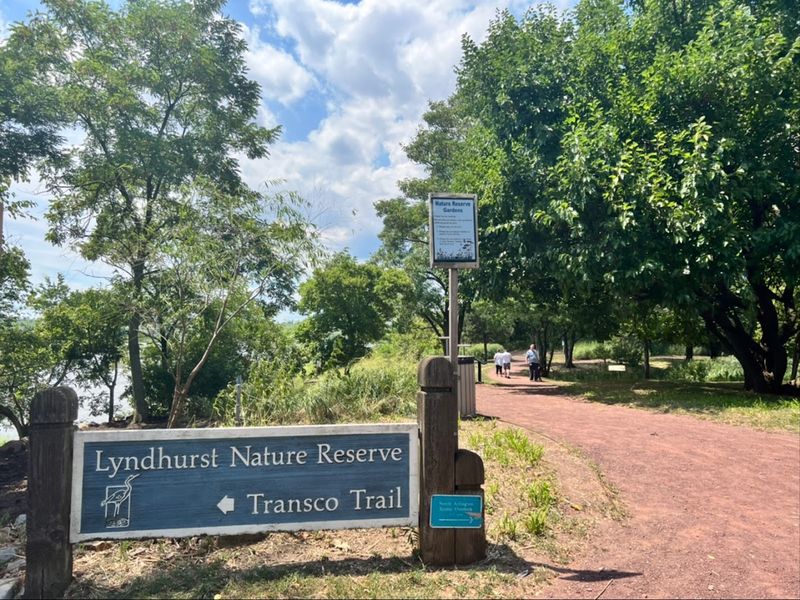
This connecting trail links the Marsh Discovery Trail with the Lyndhurst Nature Reserve, threading through open wetland landscapes that feel surprisingly vast. The path is flat and easy to walk, making it accessible for most fitness levels.
Dogs on leashes are welcome here, which means it doubles as one of the better dog-walking routes in the area.
What sets the Transco Trail apart is the sense of continuity it creates. Rather than a single out-and-back experience, it pulls the entire park together into one flowing journey.
The transition from boardwalk to open trail to nature reserve happens so naturally that you barely register the change.
Panoramic wetland views accompany almost every step. On clear days, the Manhattan skyline appears in the distance, framed by marsh grass and open sky in a way that genuinely does not look real.
It is one of those views that makes you stop and double-check that you are still in New Jersey.
The Saw Mill Creek Trail and Its Vast Mudflat Views
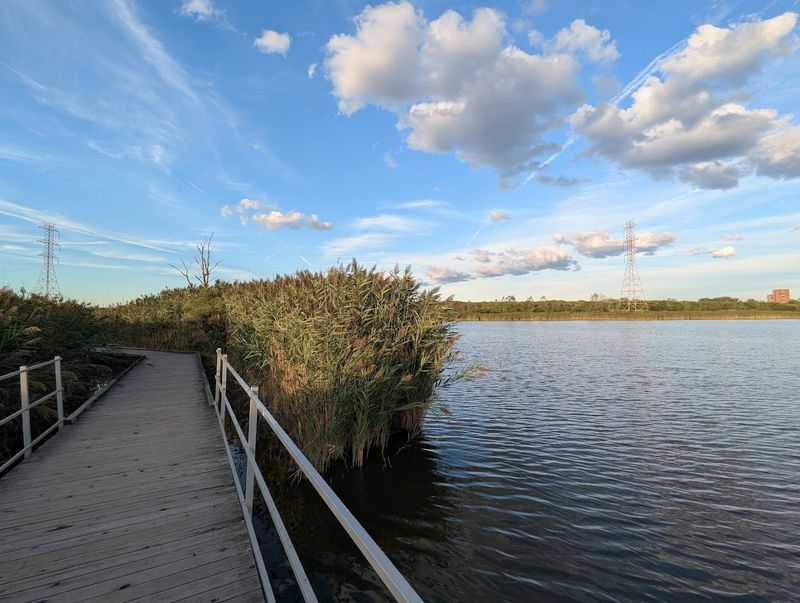
Mudflats might not sound glamorous, but spend ten minutes watching shorebirds work a low-tide flat and your opinion will change completely.
The Saw Mill Creek Trail runs along the edge of the Saw Mill Creek Wildlife Management Area, offering some of the most open and unobstructed views in the entire park. At low tide, the mudflats stretch out in a way that feels almost cinematic.
Birds forage along the exposed mud with focused energy, and the whole scene has a quiet, working wildness to it that is hard to describe but easy to feel.
The trail itself is straightforward and relaxed, with no serious elevation changes or tricky terrain. It is the kind of path where the pace naturally slows down because there is always something worth pausing to look at.
Fishing is permitted in designated areas on a catch-and-release basis, so you may spot a few anglers set up along the water’s edge.
Even on a gray, overcast day, this trail delivers. The muted tones of the marsh under cloudy skies have their own moody beauty that photographers tend to appreciate more than anyone.
The New York City Skyline View That Earns Its Surprise
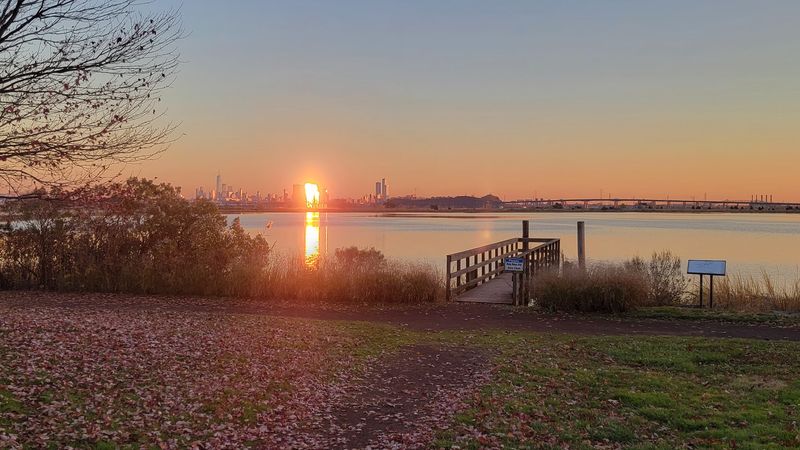
Nobody tells you about the skyline view. You just round a bend on the trail and there it is, Manhattan sitting on the horizon like it wandered into the wrong landscape painting.
From several points along the park’s trails, the New York City skyline appears with startling clarity. The contrast between the quiet, grassy wetlands in the foreground and the sharp towers in the distance creates a visual that feels genuinely cinematic.
Sunset visits amplify this effect dramatically. The sky turns orange and pink behind the skyline, and the water in the marsh catches the color in a way that makes every photo look edited even when it is not.
This view has become a quiet favorite among locals who come specifically for the golden hour. It is not advertised heavily, which somehow makes it feel even more like a personal discovery each time.
The North Arlington Scenic Lookout offers one of the clearest vantage points for this view. Plan to arrive about thirty minutes before sunset and give yourself permission to just stand there for a while.
Some views genuinely deserve that kind of time.
The Meadowlands Environment Center: Where the Ecosystem Gets Explained
Most parks offer scenery. This one offers context, and that makes a real difference in how much you take away from the visit.
The Meadowlands Environment Center sits within the park and houses exhibits focused on the unique urban ecosystem of the Meadowlands region. Walking through it before hitting the trails genuinely changes what you see outside.
Suddenly the birds have names, the plants have roles, and the marsh becomes a living system rather than just a pretty backdrop.
The center is particularly great for families with curious kids. Exhibits are engaging without being overwhelming, and the information is presented in a way that connects science to the landscape you are about to walk through.
It bridges the gap between nature and understanding in a way that feels effortless.
Environmental education programs are also available through the center, making it a popular destination for school groups. Even if you visit without kids, spending a few minutes inside before your walk adds a layer of appreciation to the whole experience.
Knowledge makes the outdoors richer. This place proves that without ever feeling like a classroom.
Stargazing at the William D. McDowell Observatory
A bird sanctuary with a working observatory inside it sounds like something someone made up. It is completely real, and it is open to the public for free.
The William D. McDowell Observatory is located within the park and hosts free stargazing sessions every Wednesday night throughout the year.
Showing up on a clear Wednesday evening and pointing a telescope at Saturn from inside a New Jersey wetland park is the kind of experience that feels almost surreal in the best possible way.
The sessions are open to everyone, no experience required. Whether you are an astronomy enthusiast or someone who just wants to see the moon up close for the first time, the observatory delivers something memorable.
It adds a completely different dimension to what the park offers, turning it from a daytime nature destination into an all-hours experience.
Pairing an evening walk along the trails with a stargazing session afterward makes for an unexpectedly full outing. The park takes on a different personality after dark, quieter and more atmospheric.
Bring a jacket, especially in cooler months, and arrive a little early to get your bearings before the sky darkens.
A Former Landfill Turned Wildlife Haven: The Backstory
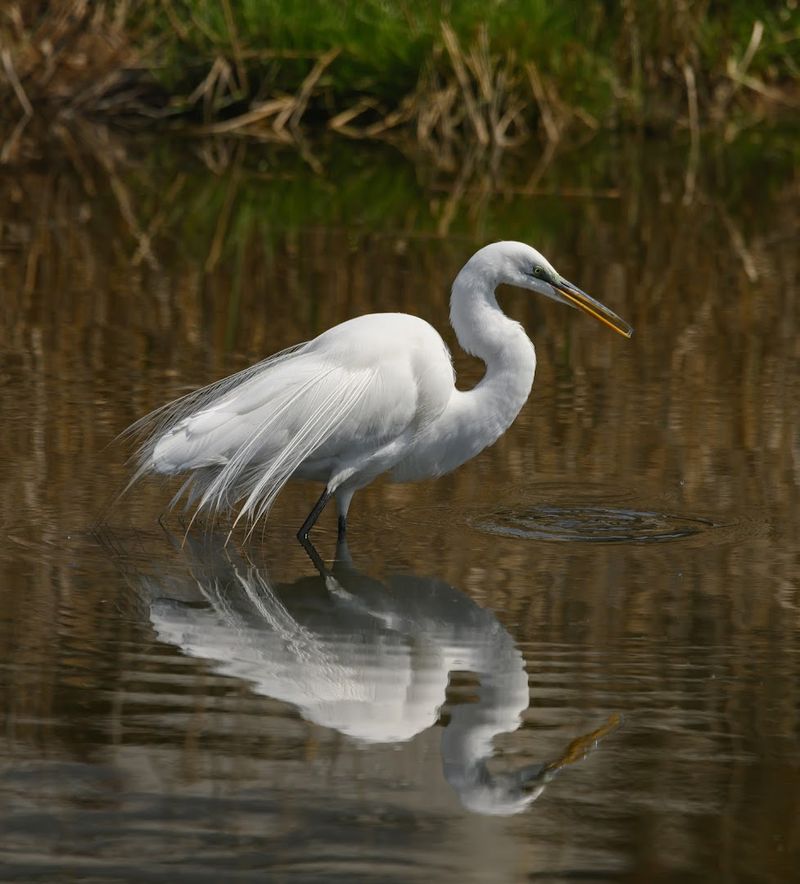
The ground you are walking on used to be a landfill. That fact hits differently once you are standing in the middle of a thriving marsh watching a great blue heron hunt for fish.
Richard W. DeKorte Park is part of the broader New Jersey Meadowlands, a region that spent decades being used for industrial purposes and waste disposal.
The transformation of this particular site into a functional, biodiverse wetland park is one of the more remarkable environmental comeback stories in the Northeast. Nature moved back in, and it did not come back quietly.
The park is managed by the New Jersey Sports and Exposition Authority, which has worked to restore and maintain the wetland habitats that now support hundreds of bird species and a wide range of other wildlife. The effort shows in every corner of the park.
Knowing the history adds weight to the experience. Every egret that lands on the water and every osprey that circles overhead is, in a small way, a sign that recovery is possible.
This place is living proof that the right kind of attention can turn something broken into something genuinely beautiful.
Practical Tips for Your First Visit to DeKorte Park
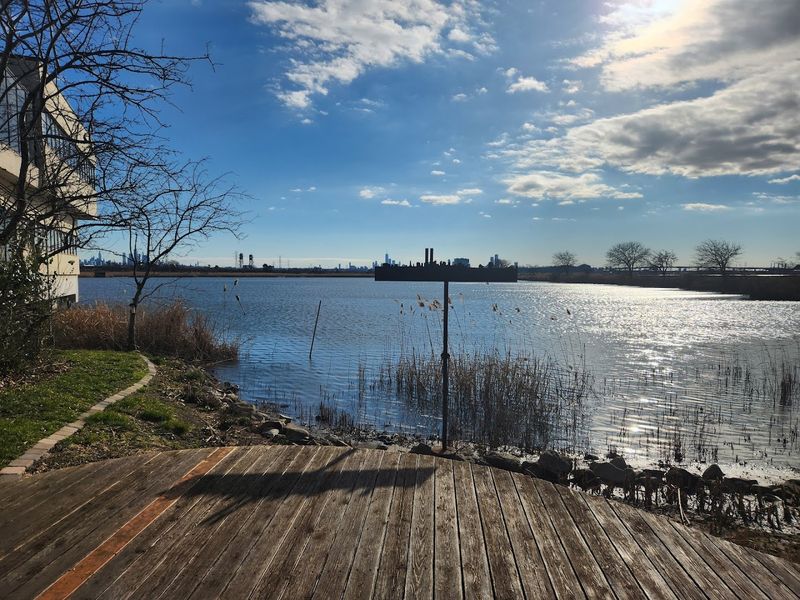
Knowing what to bring and when to go makes a genuine difference between a good visit and a great one. A few simple preparations go a long way here.
The park is open daily from 8 AM to 4 PM and is closed on Thanksgiving, Christmas, and New Year’s Day. Arriving early on weekday mornings tends to offer the most peaceful experience, with fewer people on the trails and birds that are more active in the cooler morning hours.
Parking is available and generally easy to find, which is a small but appreciated luxury.
Binoculars are strongly worth packing, even a basic pair. Comfortable walking shoes handle all the trails well since the terrain is flat throughout.
Bringing water is smart, especially during warmer months when the open marsh offers very little shade on certain stretches.
Dogs are welcome on the Lyndhurst Nature Preserve, Transco Trail, Saw Mill Creek Trail, and Kingsland Overlook, but not on the Marsh Discovery Trail. Restroom availability is limited, so plan accordingly.
The trails are well-marked and easy to navigate, making the whole park genuinely approachable for first-time visitors of any age.
Address: 1 DeKorte Park, Lyndhurst, NJ
