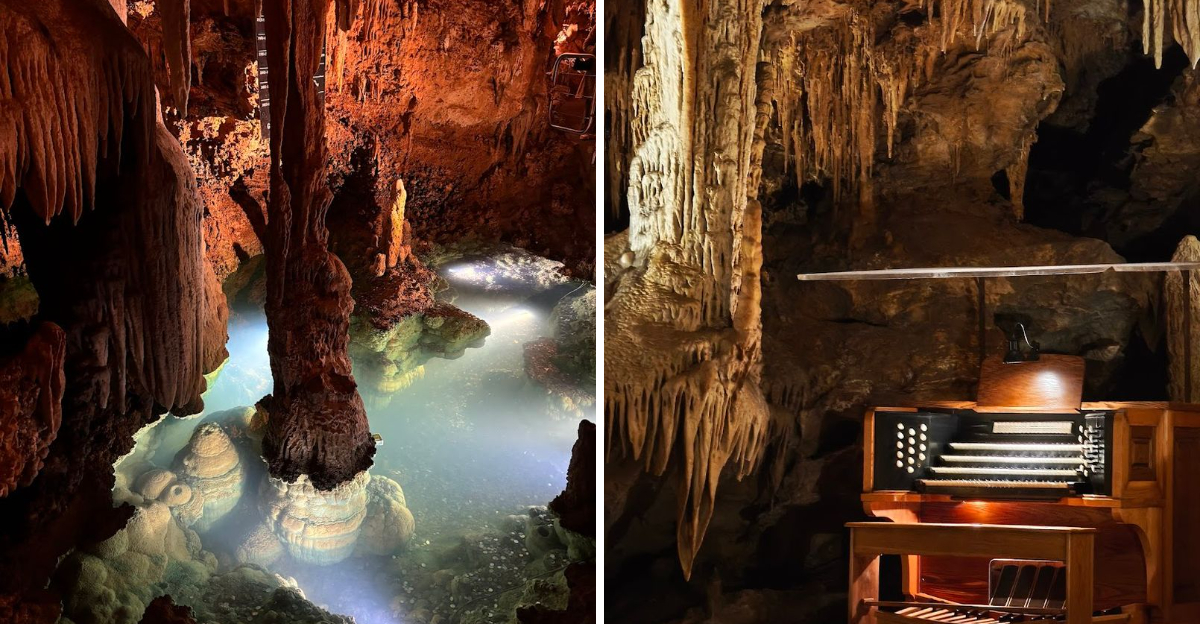
Deep underground in Virginia, a hidden symphony waited millions of years to be heard. This instrument transforms ancient stone into music, turning natural formations into resonating instruments unlike anything else on Earth.
This remarkable fusion of geology and creativity creates sounds that feel almost unreal, echoing through vast chambers shaped long before humans arrived. It’s not just a curiosity; it’s an experience that surprises even seasoned travelers.
Often overlooked, this site deserves far more attention than it gets. Once those tones ripple through the cave, it becomes clear why.
Few places combine science, art, and wonder so seamlessly in a single, unforgettable setting.
The World Record That Lives Underground
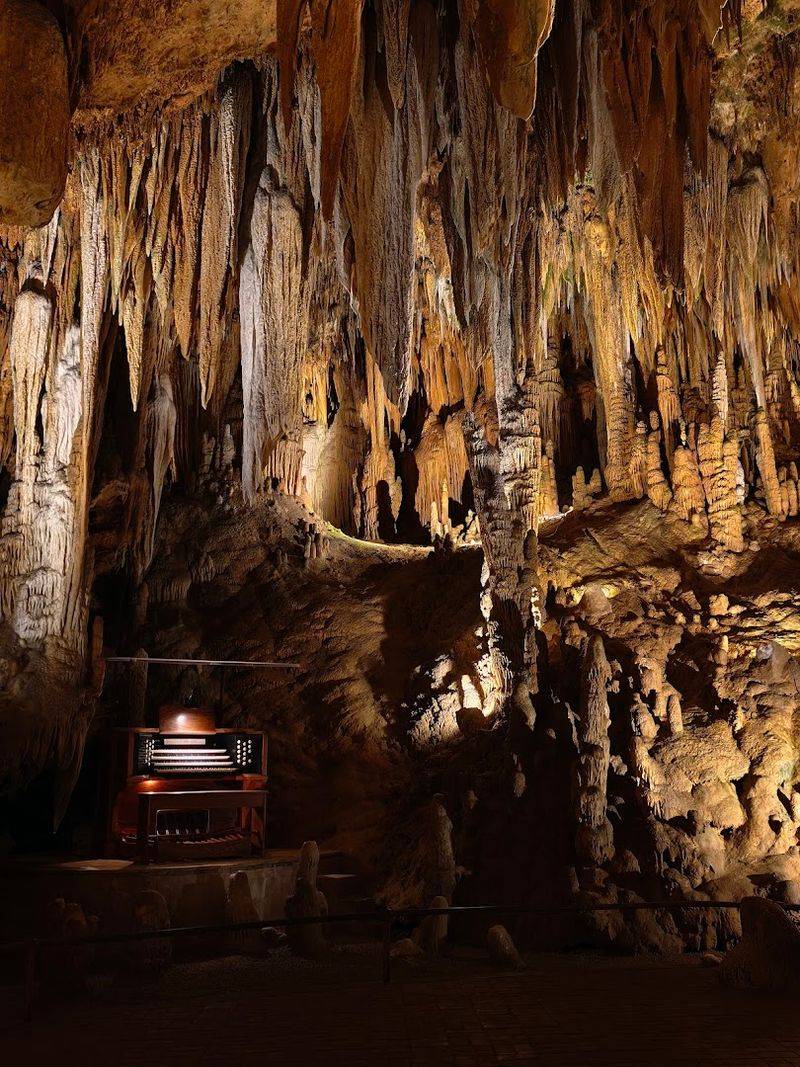
Forget concert halls and grand cathedrals. The most extraordinary musical venue on Earth is located underground in Virginia, and it holds an official Guinness World Record to prove it.
The Great Stalacpipe Organ stretches across a staggering 3.5 acres of cavern, making every other musical instrument on the planet look absolutely tiny by comparison. Nothing else even comes close in terms of sheer scale.
What makes this record so remarkable is that the instrument is not built from wood or metal pipes like a traditional organ. Instead, it uses the actual stalactites hanging from the cave ceiling, formations that took millions of years to grow into their current shapes.
The sound produced resonates through the entire cavern, bouncing off limestone walls and filling every corner with rich, layered tones. Standing inside and hearing it perform feels genuinely surreal.
Virginia is no stranger to incredible natural wonders, but this one sits in a category entirely its own. No other place on Earth can claim a musical instrument of this size carved by nature itself, then fine-tuned by a remarkably inventive human mind.
Meet the Brilliant Mind Behind the Music
Leland W. Sprinkle was not your average music lover.
A mathematician and electronics scientist who worked for the Pentagon, Sprinkle had a sharp analytical mind that saw potential where others saw only pretty rocks.
During a tour of Luray Caverns, he noticed a guide casually tapping stalactites to demonstrate their natural resonance. That simple moment sparked an obsession that would consume three full years of his life.
Sprinkle methodically tested hundreds of stalactites throughout the cavern, searching for formations that produced specific musical tones. He needed notes precise enough to build a complete, harmonious musical scale across 3.5 acres of underground terrain.
The engineering challenge was extraordinary. Each selected stalactite had to be carefully tuned, and the entire system had to be wired with solenoid-actuated rubber-tipped mallets that could strike each formation on command from a central console.
What Sprinkle ultimately created was not just an instrument. It was a fusion of natural science, musical theory, and electrical engineering that had never been attempted before anywhere in the world.
Virginia became home to something genuinely unprecedented because one curious mind refused to walk away from an interesting idea.
How Stalactites Actually Make Music
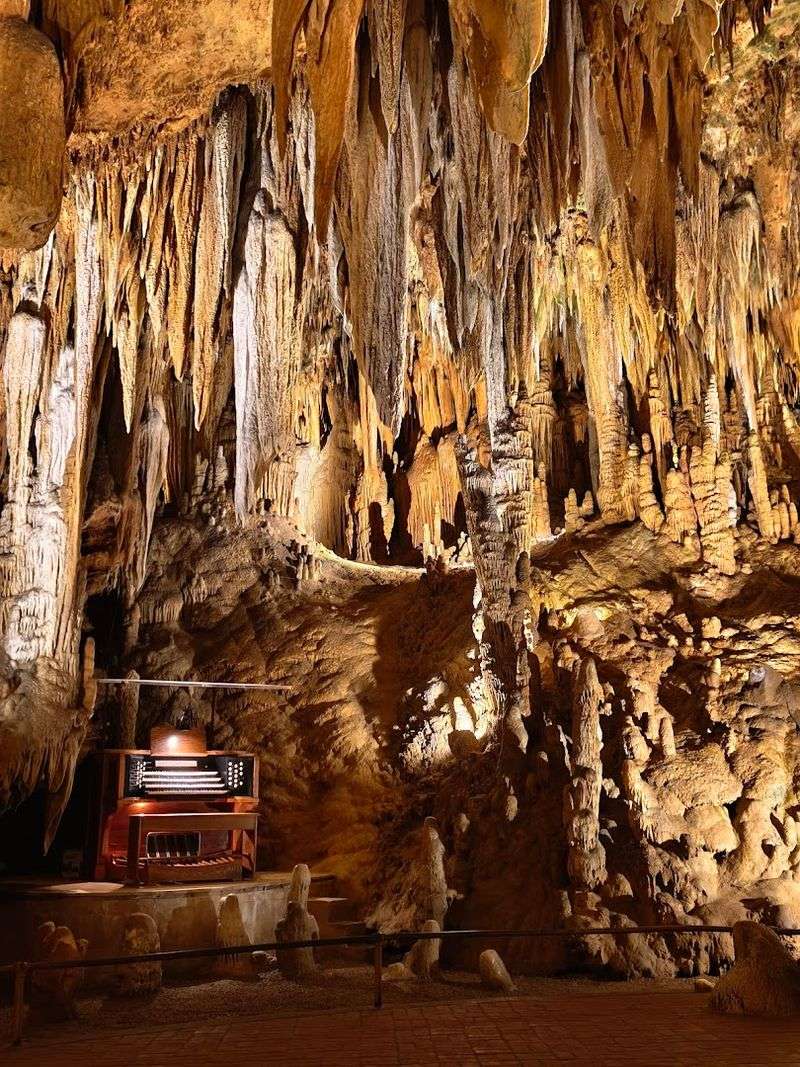
Stalactites are not just decorative cave jewelry. These mineral formations, built drop by drop over millions of years, turn out to be surprisingly excellent at producing musical tones when struck correctly.
The Great Stalacpipe Organ works by sending electrical signals from a custom-built console to solenoid mechanisms attached throughout the cavern. Each solenoid activates a small rubber-tipped mallet that taps its assigned stalactite with precise timing.
The resulting sounds resemble a blend of xylophones, tuning forks, and bells, tones that are warm, resonant, and surprisingly melodic. Because the cave walls amplify and reflect sound naturally, even soft taps produce music that fills the entire space.
Selecting the right stalactites was the hardest part of the whole project. Not every formation produces a usable musical note, and finding 37 stalactites across 3.5 acres that together formed a complete musical scale required extraordinary patience and precision.
The cave’s natural acoustics do much of the heavy lifting once the mallets strike. Sound travels differently underground than it does in open air, bouncing and layering in ways that give the music a deeply immersive, almost otherworldly quality that no concert venue could replicate.
The Console That Controls the Cavern
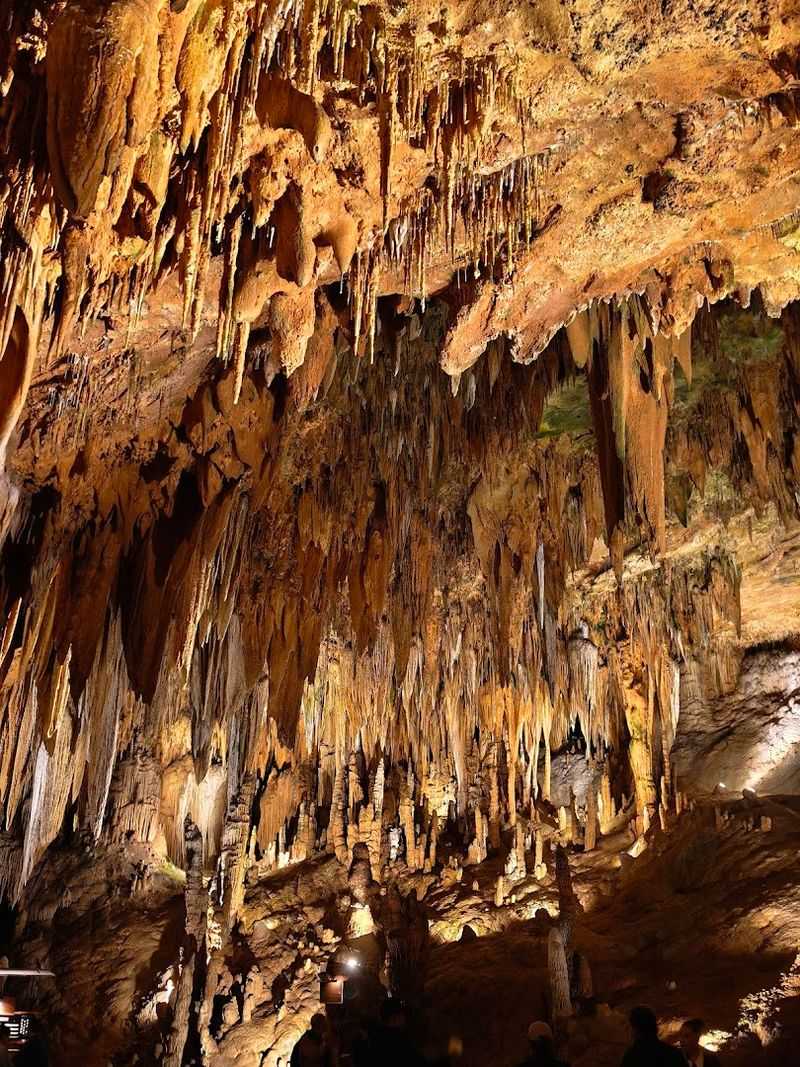
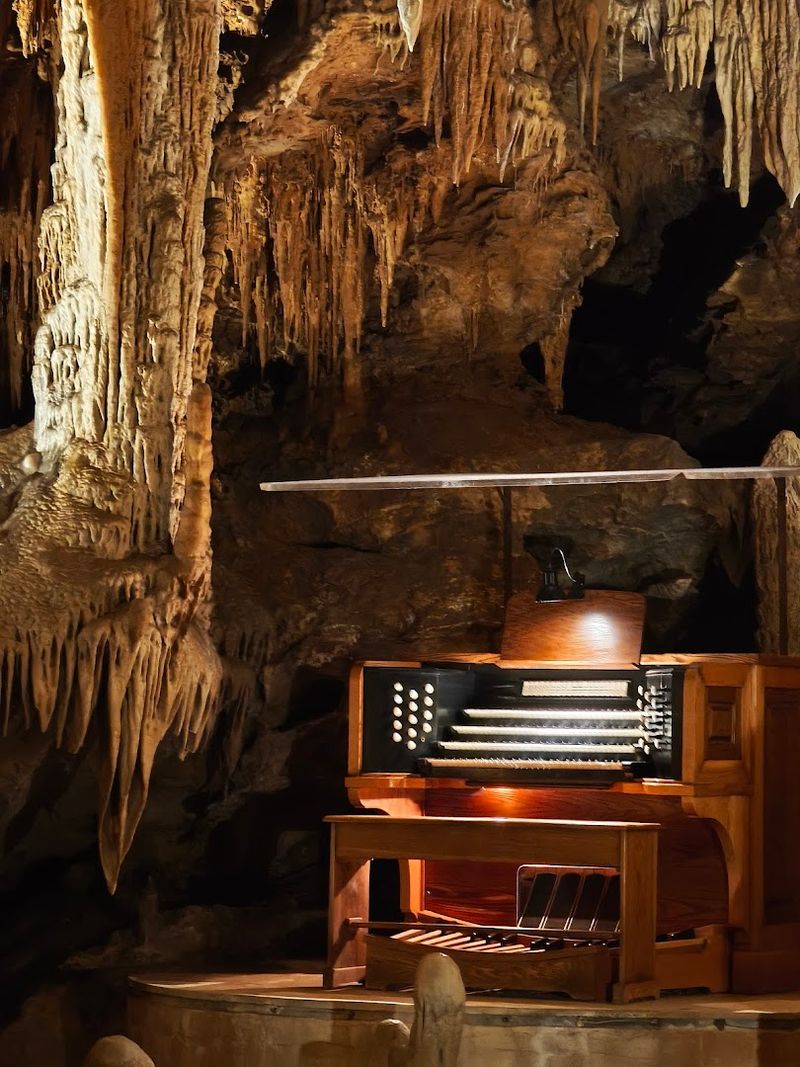
Sitting at the heart of this underground marvel is a custom-built organ console that looks surprisingly familiar at first glance. It has keys, stops, and controls much like any traditional pipe organ you might find in a grand church.
Press a key, and an electrical signal races through wiring that stretches across the entire 3.5-acre cavern. Somewhere in the darkness above, a solenoid fires and a rubber mallet taps a stalactite, sending its tone rolling through the cave.
Because the stalactites are spread across such a vast underground space, there is an unavoidable time delay between striking a key and hearing the full sound reach your ears. This acoustic quirk makes live performance particularly challenging and fascinating at the same time.
To ensure consistent and flawless musical playback, the organ often operates through an automated system similar to a player piano. Pre-programmed sequences trigger each mallet in perfect rhythm, delivering polished performances without a single missed note.
The console itself is a piece of engineering history, a purpose-built instrument designed for a situation that had never existed before. Seeing it in person inside Luray Caverns gives you an immediate appreciation for just how much thought and creativity went into making this whole idea actually work.
A Cave With Its Own Natural Concert Hall
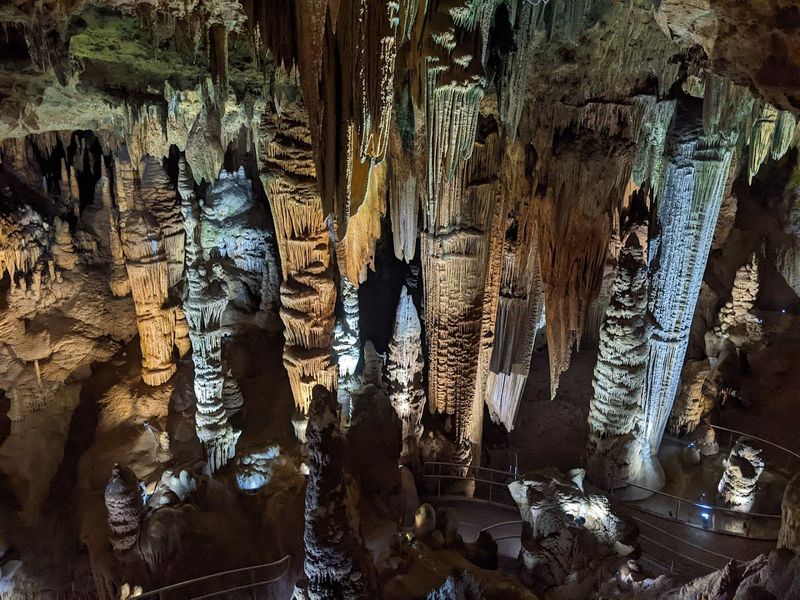
Luray Caverns is not just a backdrop for the Great Stalacpipe Organ. It is an active participant in the music itself, shaping and amplifying every note in ways no architect could deliberately design.
The cavern’s chambers are cathedral-sized, with ceilings soaring high above the walkways and walls that curve in organic, unpredictable formations. Sound behaves very differently in this environment compared to any above-ground space.
Tones linger longer underground, layering on top of each other as they reflect off limestone surfaces. The result is a natural reverb effect that gives the organ’s music an almost sacred, meditative quality that wraps around you completely.
Virginia’s Luray Caverns maintains a steady cool temperature year-round, which also affects the acoustic environment. The dense, stable air inside the cave carries sound with remarkable clarity, ensuring that even the softest stalactite tap reaches your ears with full richness.
Walking through the cavern while the organ plays is an experience that engages every sense simultaneously. The visual spectacle of the formations, the cool air on your skin, and the music floating from every direction combine into something that is genuinely hard to describe and absolutely impossible to forget once you have felt it firsthand.
Thirty-Seven Stalactites, One Magnificent Scale
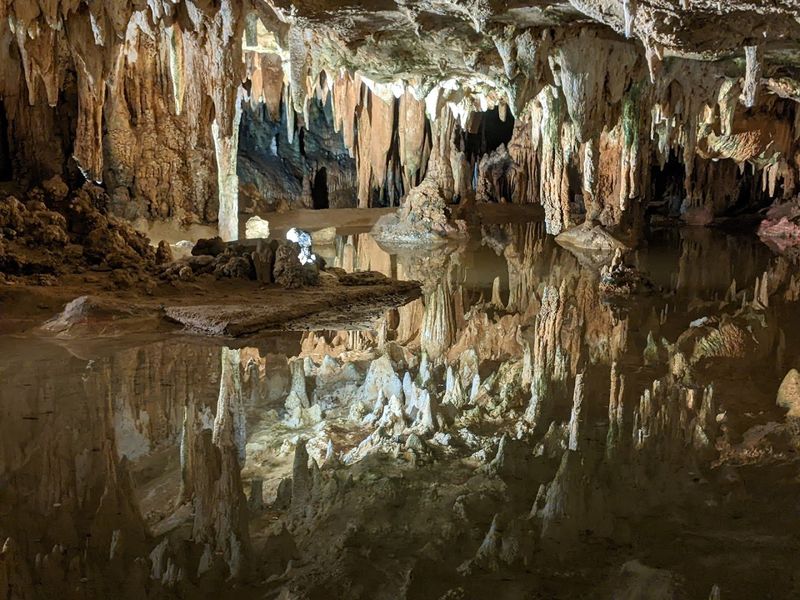
Finding 37 stalactites capable of producing musically usable tones across a 3.5-acre underground space sounds like an impossible task, but that is exactly what Leland Sprinkle accomplished over three methodical years of work.
Each stalactite selected for the Great Stalacpipe Organ had to meet very specific criteria. The formation needed to produce a tone that fit precisely within the musical scale Sprinkle was building, not approximately, but with genuine accuracy.
Some stalactites were gently shaped or adjusted to bring their natural pitch into tune. This required extraordinary care, since these formations are millions of years old and permanently irreplaceable.
One careless strike could ruin a formation forever.
The 37 chosen stalactites are spread throughout the cavern, meaning the instrument is literally the cave itself. There is no single point where all the sound originates.
Music emerges from every direction simultaneously, surrounding listeners in a three-dimensional sonic experience.
Hearing all 37 stalactites play together in a coordinated melody is one of those moments that genuinely recalibrates your sense of what music can be. Virginia holds many impressive attractions, but nothing else in the state, or arguably the world, produces music quite like this remarkable underground ensemble of ancient stone.
Dream Lake and the Mirror World Below
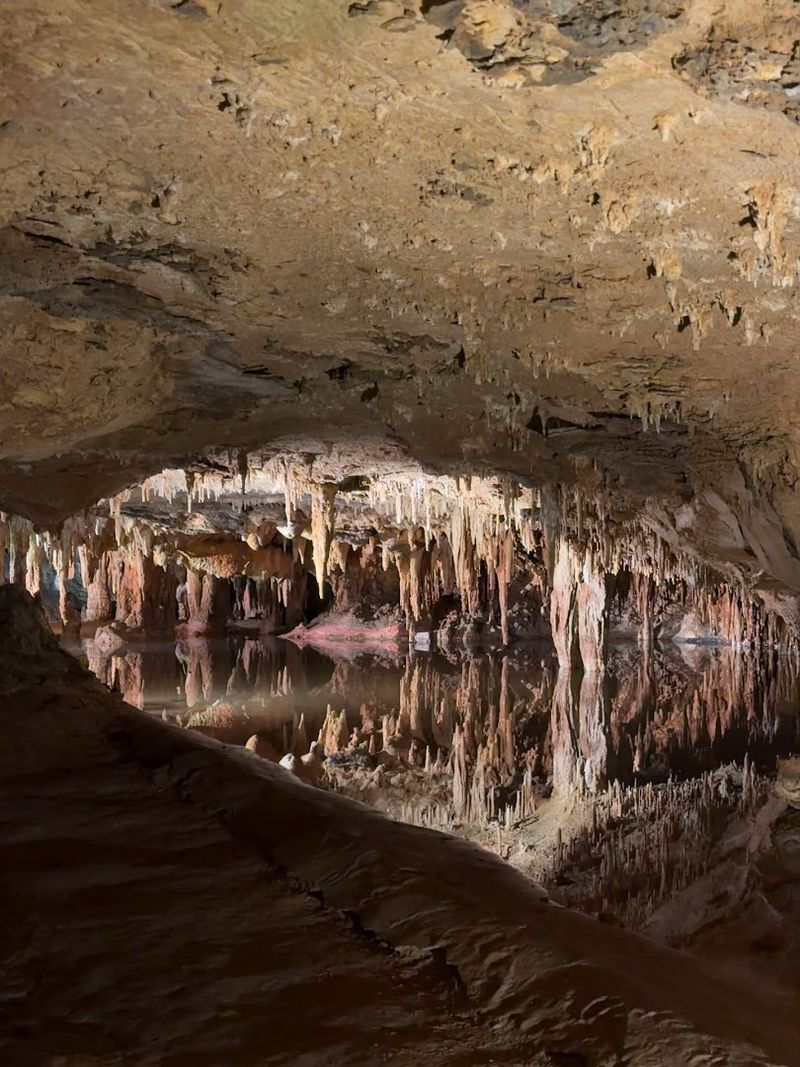
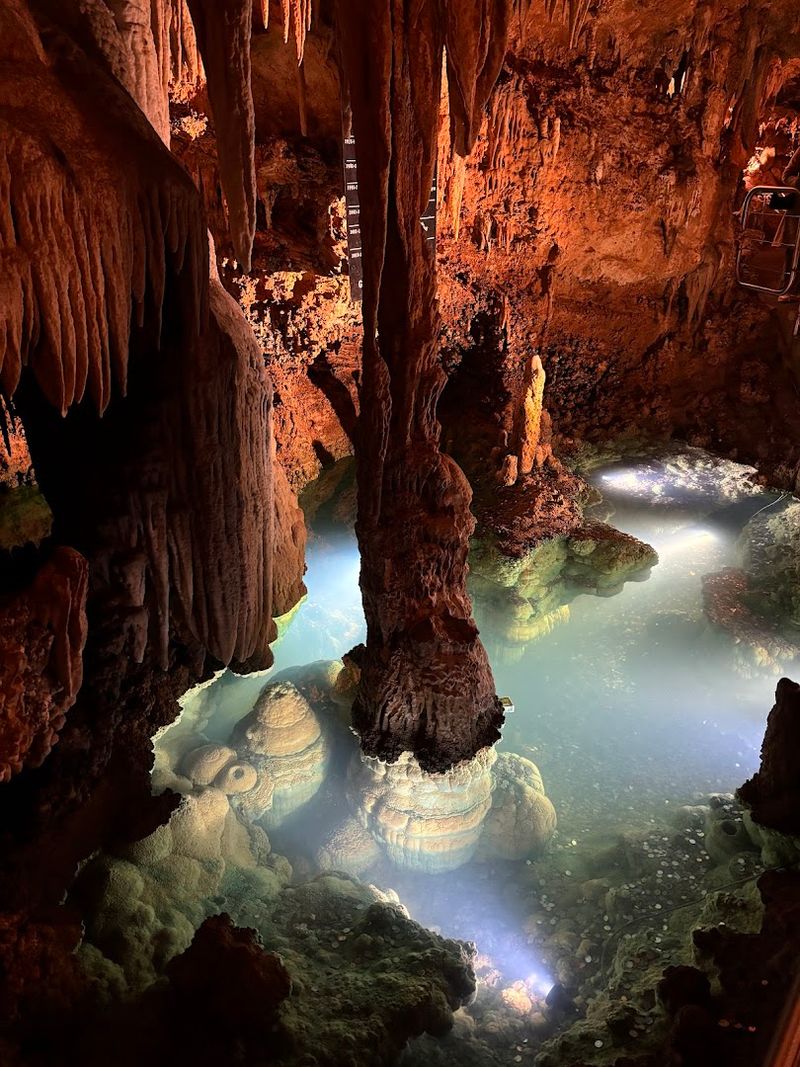
The Great Stalacpipe Organ is the star of the show at Luray Caverns, but the underground lake known as Dream Lake deserves its own standing ovation. This perfectly still pool of water creates mirror-perfect reflections of the stalactites above.
The effect is so convincing that first-time visitors routinely misjudge the depth of the water. The reflected ceiling looks identical to the real one, creating an optical illusion that makes the cave appear to extend infinitely downward into the earth.
When the organ plays near this section of the cavern, the music seems to rise from the reflection itself, adding another layer of visual and auditory magic to an already extraordinary setting. The combination is genuinely theatrical without trying to be.
Dream Lake is one of several underground pools scattered throughout Luray Caverns, each contributing its own reflective magic to the overall atmosphere. The water is remarkably clear, and the cave lighting is positioned to maximize the dramatic impact of each pool.
Experiencing Dream Lake while the stalactite organ fills the air with music is one of those rare travel moments where you genuinely forget about everything outside. Virginia has produced many memorable destinations, but this underground combination of sound and reflection stands completely apart from anything else in the state.
Why the Automated System Is Actually Genius
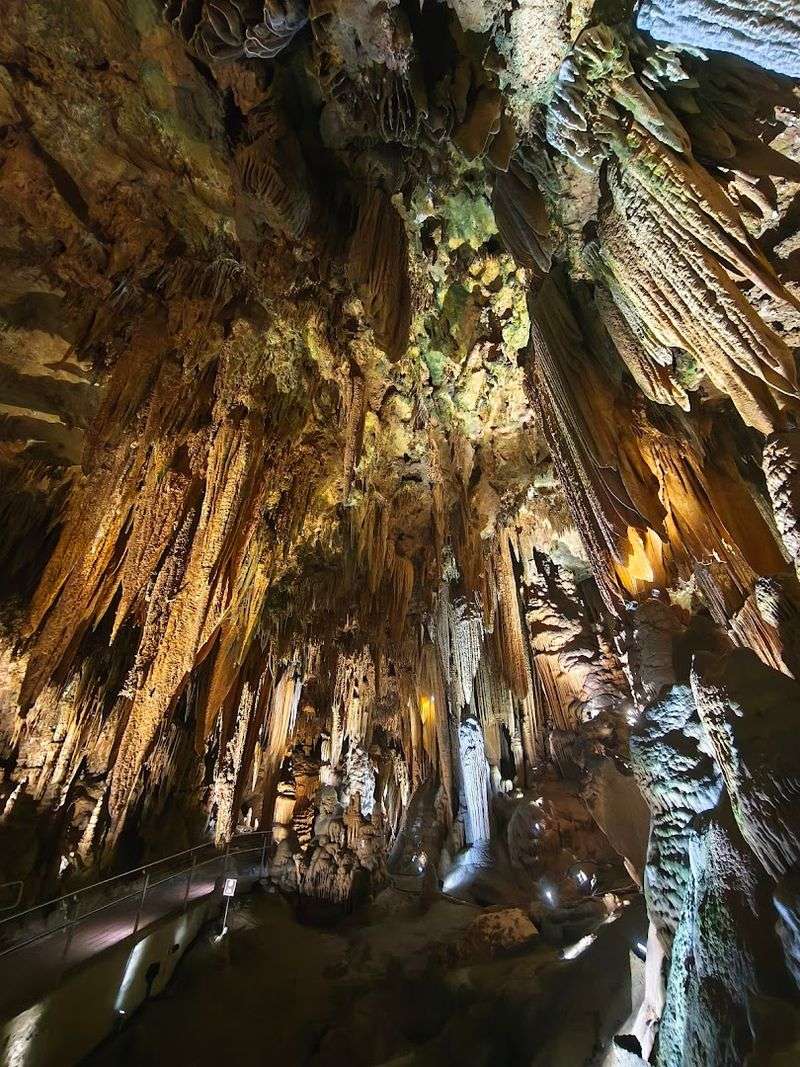
Live performance on the Great Stalacpipe Organ presents a unique acoustic puzzle. Because the stalactites are spread across 3.5 acres, sound from distant formations takes slightly longer to reach the listener than sound from nearby ones.
This delay makes real-time performance extremely tricky. A musician playing at the console hears notes arrive at slightly different times depending on where each stalactite is located, making it nearly impossible to judge rhythm accurately through feel alone.
The solution Sprinkle developed is elegant in its simplicity. An automated playback system, functioning much like a sophisticated player piano, controls the timing of each mallet strike with programmed precision.
The system accounts for acoustic distances and triggers each solenoid at exactly the right moment.
The result is music that sounds perfectly coordinated to the listener’s ears, even though the physical strikes are happening at carefully calculated time offsets throughout the cave. It is a beautiful example of engineering solving an artistic problem creatively.
Far from being a shortcut, this automated approach actually produces more musically accurate performances than live playing could achieve. The Great Stalacpipe Organ demonstrates that sometimes the most inventive solution to a creative challenge comes from thinking like a scientist rather than a traditional musician.
Planning Your Visit to Luray Caverns
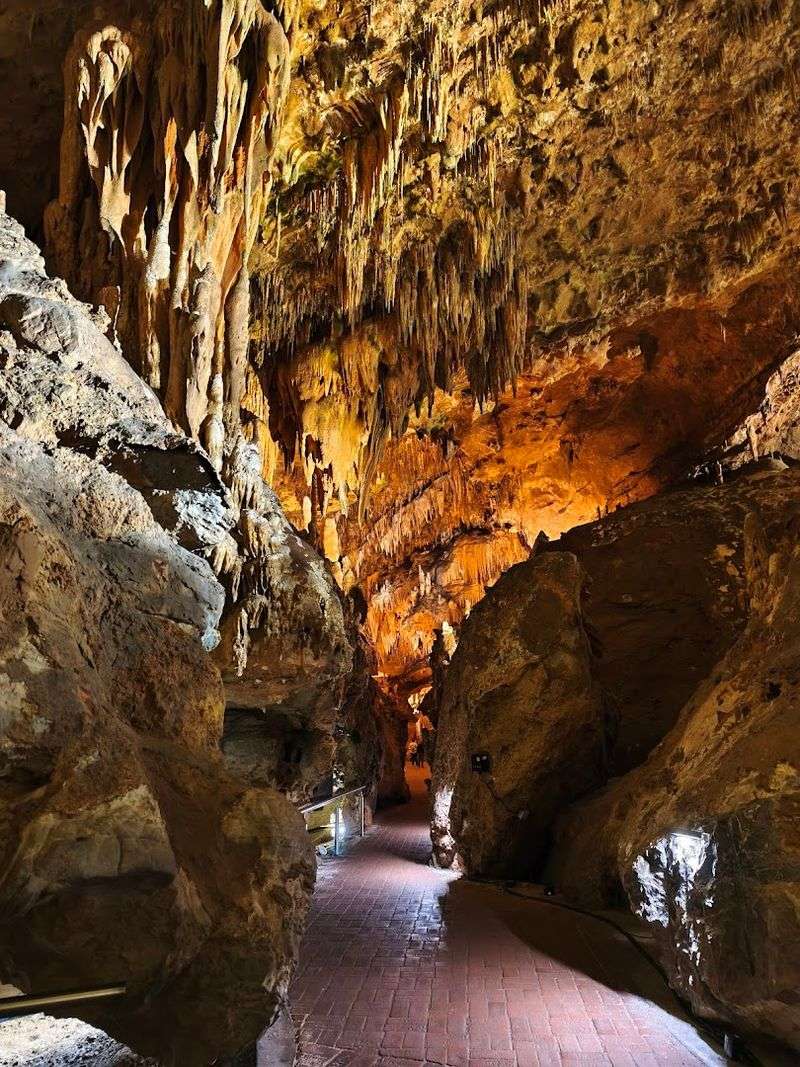
Getting to Luray Caverns is part of the adventure. The drive through Virginia’s Shenandoah Valley region is genuinely beautiful, with rolling mountains and green farmland framing the road in every direction as you approach the town of Luray.
The caverns are open daily, making it easy to slot a visit into almost any travel itinerary. Morning visits tend to offer a quieter experience, while weekends and warmer months bring larger crowds eager to explore the underground world below.
Wear comfortable, closed-toe shoes because the walkways inside the cave can be slightly slippery. The temperature inside stays consistently cool year-round, so bringing a light layer is genuinely useful regardless of what the weather is doing above ground.
Your admission ticket covers more than just the caverns. The Car and Carriage Museum, a toy museum, and the Heritage Village are all included, making this a full day of exploration rather than a quick underground stroll.
The Great Stalacpipe Organ performs during tours, so you do not need to time your visit around a specific concert schedule. Music fills the cave throughout the tour experience, ensuring that every visitor gets to hear Virginia’s most extraordinary underground instrument in full, resonant action.
The address is 101 Cave Hill Rd, Luray, VA 22835.
An Underground Experience Worth Every Step
Some attractions promise a lot and deliver a little. Luray Caverns and its legendary Great Stalacpipe Organ operate in the opposite direction entirely, consistently exceeding expectations for everyone who makes the trip.
The walkways inside are well-maintained, paved, and accessible for a wide range of visitors. Handrails and clear signage make navigation straightforward, so you can focus your attention on the extraordinary formations surrounding you rather than watching your footing constantly.
Photography is fully permitted throughout the caverns, which is a genuine gift considering how photogenic every single corner of this underground world turns out to be. Each formation seems to have been lit specifically for dramatic effect.
Children are consistently fascinated by the cave, particularly by the moment when the stalactite organ begins to play and music seems to emerge from the stone walls themselves. For many young visitors, it becomes the most memorable part of any Virginia road trip.
Adults tend to leave with a profound appreciation for both geological time and human ingenuity. Knowing that the formations took millions of years to grow, and that one determined mathematician turned them into a world-record instrument, gives the entire experience a depth that stays with you long after you have stepped back into the sunlight.
Go experience it yourself.
Dear Reader: This page may contain affiliate links which may earn a commission if you click through and make a purchase. Our independent journalism is not influenced by any advertiser or commercial initiative unless it is clearly marked as sponsored content. As travel products change, please be sure to reconfirm all details and stay up to date with current events to ensure a safe and successful trip.
