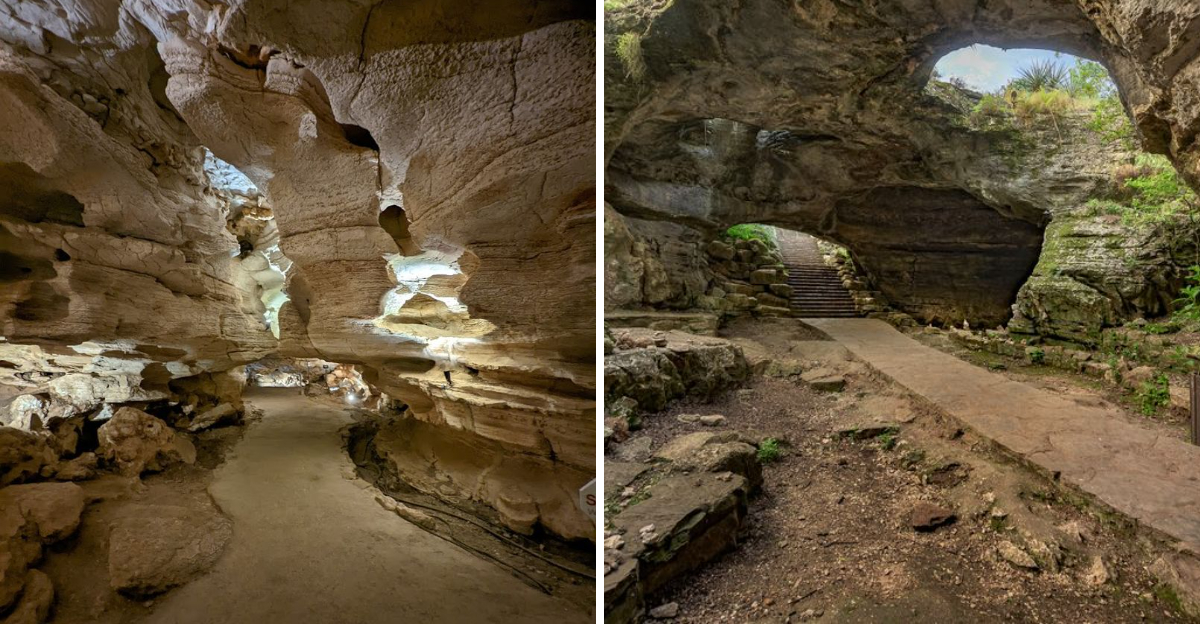
The temperature drops fast when you start down the stone steps at Longhorn Cavern, and so does the outside world. Within minutes, I was standing underground in the Texas Hill Country, surrounded by limestone walls carved out by an ancient river millions of years ago.
Then the stories started. Outlaws hiding out.
Gunpowder stored during the Civil War. A Prohibition era dance hall where music once echoed through these same chambers.
It is one thing to admire the rock formations twisting overhead. It is another to realize how many people have passed through here long before us.
Standing 200 feet below ground, the cavern feels less like a simple tour stop and more like a layered piece of Texas history. Dramatic, a little mysterious, and far more interesting than I expected when I first stepped inside.
Guided Tours Bring History to Life
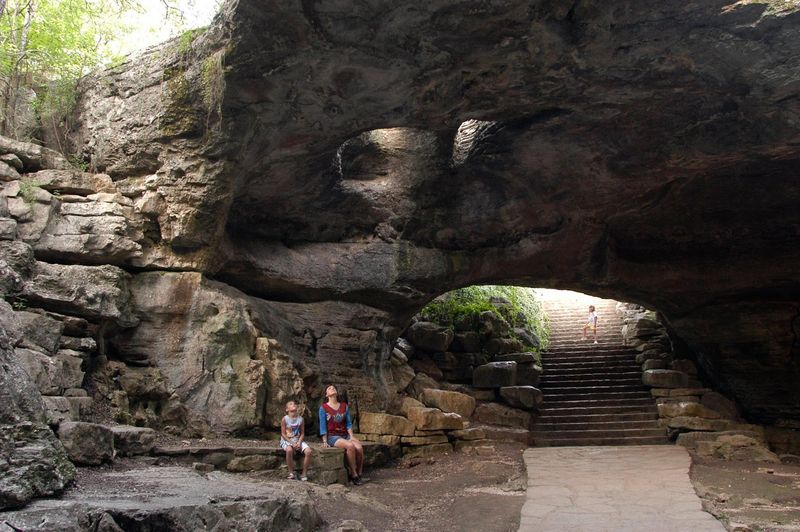
The only way to experience the cavern is through guided tours, and honestly, that makes the visit much better. The guides at Longhorn Cavern aren’t just reading scripts but sharing genuine enthusiasm for both geology and history.
They point out features you’d walk right past and tell stories that connect the rocks to real people.
Tours last about 90 minutes and cover roughly a mile of walking through various chambers and passages. The path stays paved throughout, but you’ll need to duck in a few spots and navigate some stairs.
The guides adjust their pace based on the group and happily answer questions throughout the journey.
Several visitors in reviews specifically mentioned guides like Jim, Jennifer, Nikki, and Misty by name, praising their knowledge and humor. That kind of consistent positive feedback says a lot about the quality of interpretation here.
The guides make you feel like you’re exploring with a knowledgeable friend rather than being lectured at.
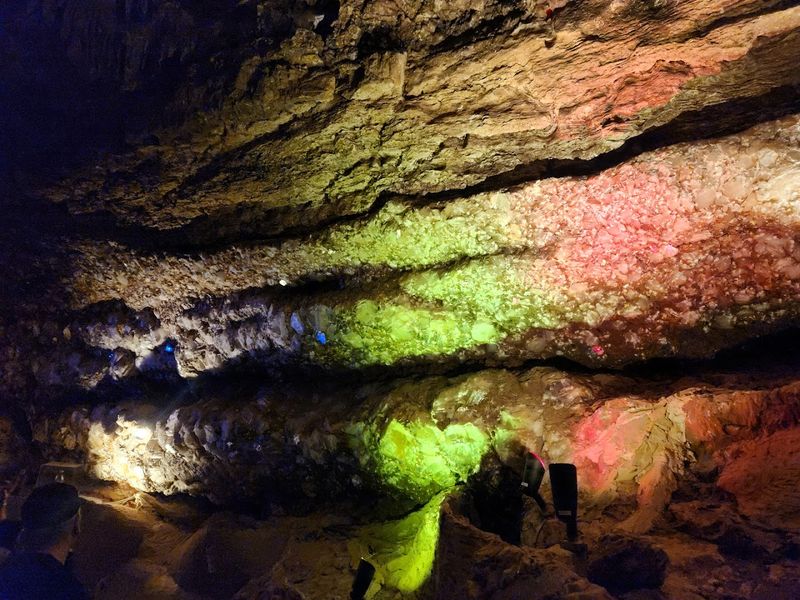
Special tours are available too, including blacklight tours that reveal hidden minerals and wild cave tours for more adventurous visitors. The standard tour works great for families and anyone who wants to experience the cavern without crawling through tight spaces.
Booking ahead is recommended, especially on weekends when tours fill up quickly.
A River That Carved History Into Stone
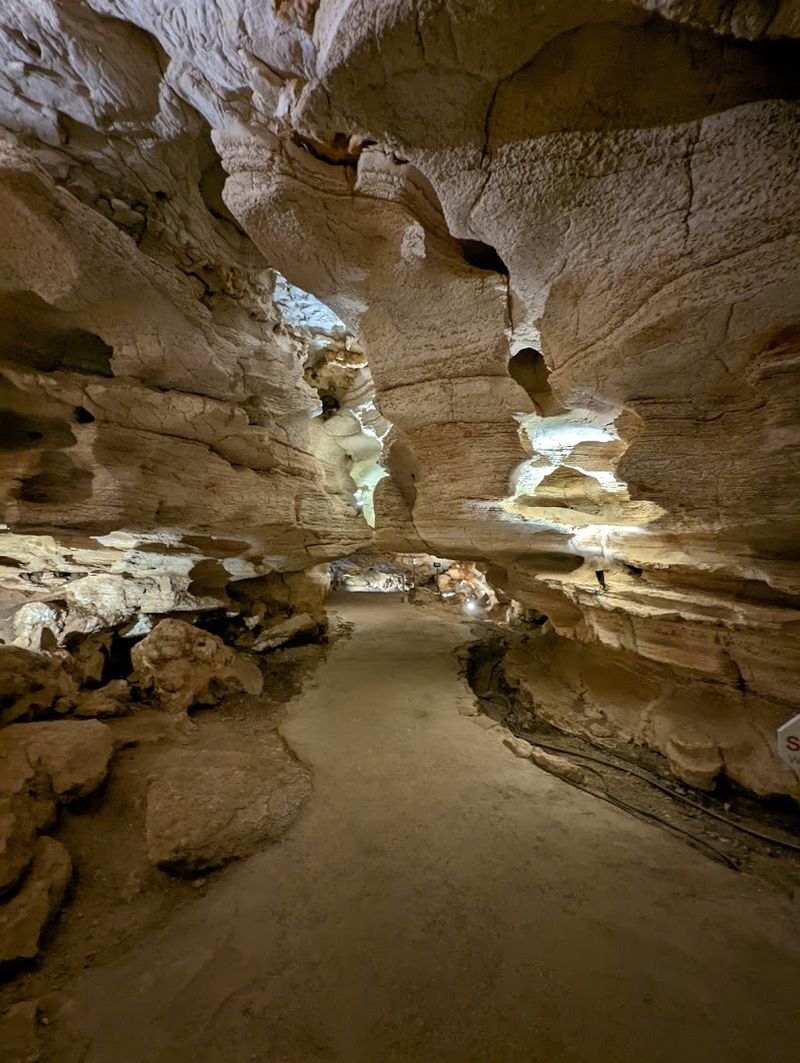
Water shaped every inch of this cavern over millions of years, creating something completely different from the drip-formed caves you might know.
An ancient underground river carved these passages when this part of Texas sat beneath a shallow sea, grinding and polishing the limestone into swooping curves and smooth channels.
The walls feel almost sculpted by an artist’s hand.
Walking through the main passages, I noticed how the rock surfaces differ from typical cave formations. Instead of pointed stalactites hanging from the ceiling, you see rounded contours and wave-like patterns that tell the story of rushing water.
The cavern stretches over a mile underground with chambers large enough to hold gatherings.
Geologists estimate the river stopped flowing here about a million years ago, leaving behind these hollow passages. The temperature stays at a constant 68 degrees year-round with high humidity that makes the air feel thick.
Some sections narrow into passages you need to duck through, while others open into rooms tall enough to swallow sound.
The unique formation process means fewer of the delicate mineral deposits you’d find in other Texas caves. What you get instead is a testament to water’s patient power to reshape solid rock into something beautiful and strange.
When Comanche Tribes Gathered Underground
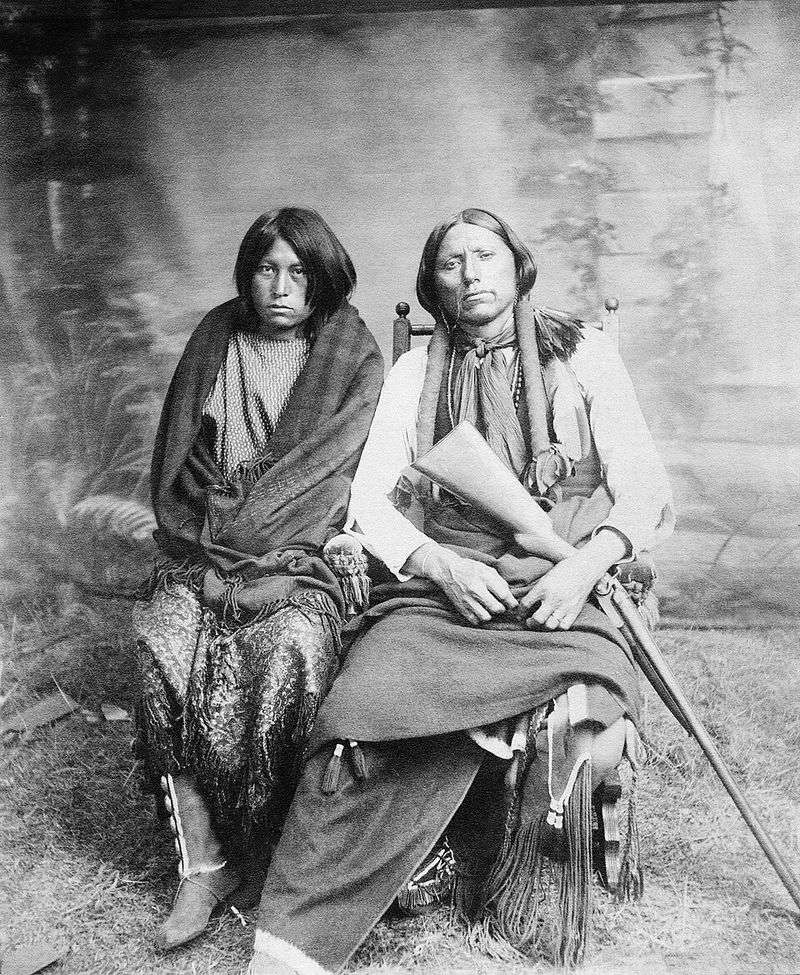
Long before European settlers arrived, Comanche and other Native American tribes used these caverns for shelter and ceremonies. Archaeologists have found evidence of human activity dating back thousands of years, including tools, arrowheads, and fire pits in various chambers.
The constant temperature made it an ideal refuge during extreme weather.
One chamber in particular shows clear signs of regular use as a meeting space. The acoustics in this room carry voices remarkably well, making it perfect for gatherings where stories and traditions passed between generations.
I stood in that space trying to imagine the firelight dancing on those walls centuries ago.
The cavern offered more than just shelter from storms. It provided a strategic vantage point with multiple entrances and exits, crucial for groups who needed to move quickly.
The surrounding landscape gave clear views of approaching visitors, whether friendly or hostile.
Tour guides share these historical details with genuine respect for the indigenous peoples who first recognized this place’s value. The cavern witnessed countless moments of daily life, celebration, and survival long before it became known for its later colorful history.
That ancient human connection adds depth to every step through the passages.
Confederate Gunpowder Production in the Depths
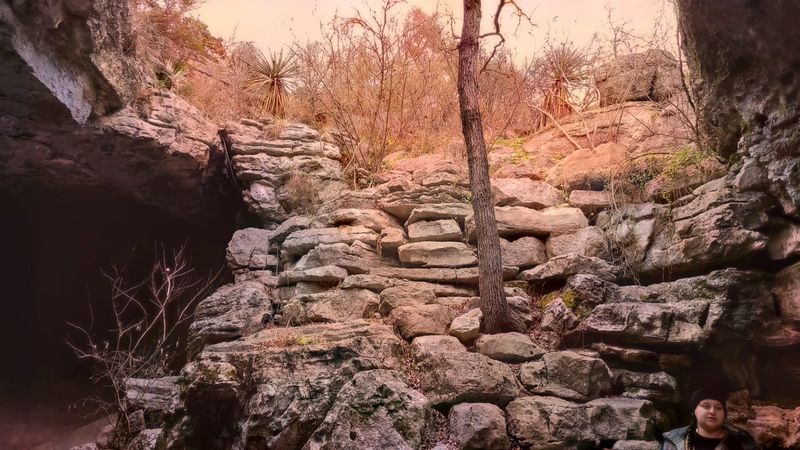
During the Civil War, Confederate forces turned this cavern into a gunpowder manufacturing facility, taking advantage of the consistent temperature and humidity. The natural conditions helped stabilize the volatile materials needed for ammunition production.
Workers descended into the earth daily to mix and process ingredients far from prying Union eyes.
The chamber used for this operation, nicknamed the Powder Room, still exists deep in the cavern. Standing there now, it’s hard to imagine the danger those workers faced handling explosive materials by lamplight.
The Confederate army desperately needed ammunition, and this hidden location provided perfect cover from enemy raids.
Production continued until Union forces gained control of the region in 1865. The cavern’s remote location in Burnet County made it difficult to supply and staff, but its secrecy proved valuable.
Local residents knew about the operation but kept quiet, understanding the strategic importance.
Historical records show the facility produced significant quantities of gunpowder before shutting down. The limestone walls absorbed the history of those tense years, and guides point out the specific areas where equipment once stood.
It’s a sobering reminder that this natural wonder served very practical, sometimes grim purposes throughout Texas history.
Sam Bass and the Outlaw Years
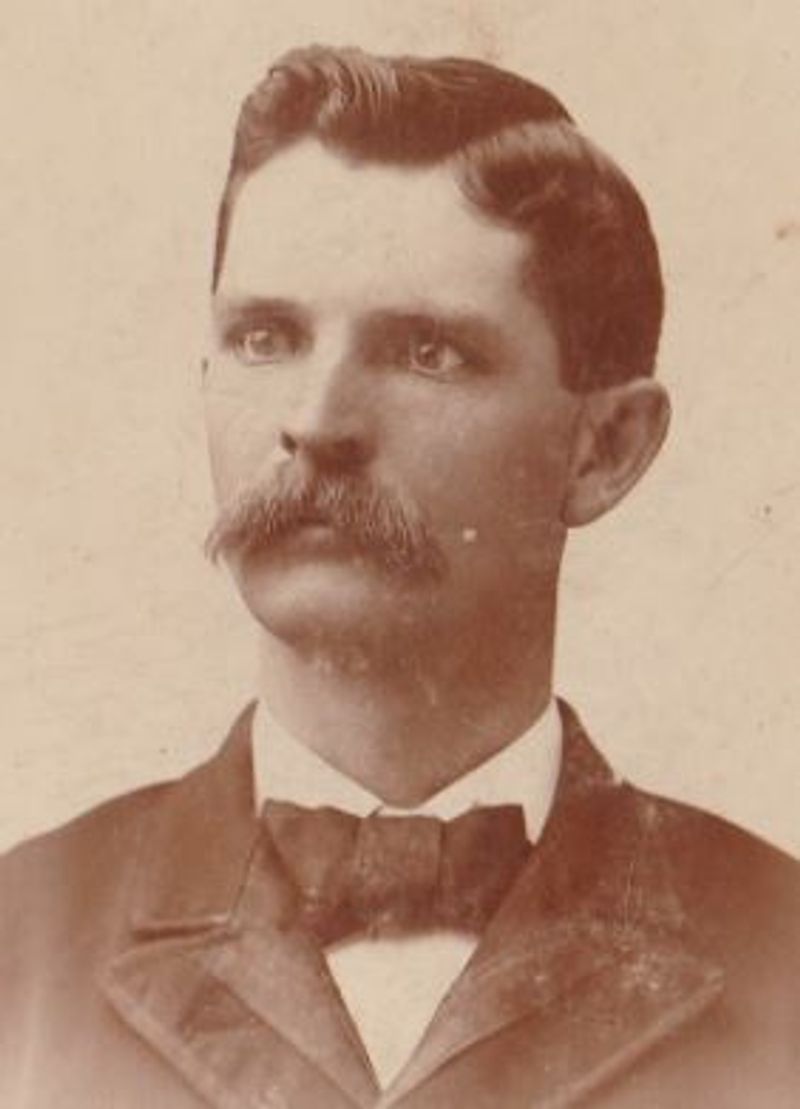
Sam Bass, one of Texas’s most famous outlaws, allegedly used these caverns as a hideout during his train-robbing days in the 1870s. The multiple entrances and maze-like passages made it nearly impossible for lawmen to trap anyone inside.
Bass and his gang could disappear into the darkness whenever posses got too close.
Local legends claim Bass stashed stolen loot somewhere in the cavern’s depths, though no treasure has ever been found. The stories persist partly because the cavern really did offer perfect refuge for people avoiding the law.
Cool, dry, and hidden from view, it beat sleeping under the stars when Texas Rangers came looking.
Bass met his end in 1878 during a botched bank robbery in Round Rock, but his connection to Longhorn Cavern lives on in tour guide stories. Whether he actually spent significant time here or just passed through remains debatable.
The cavern’s reputation as an outlaw haven certainly benefited from the association with such a notorious figure.
Other criminals likely used these passages too, though their names didn’t make it into history books. The cavern sat far enough from major towns to offer real isolation while remaining accessible to those who knew the terrain.
That combination made it valuable to anyone living outside the law.
The Underground Dance Hall Era
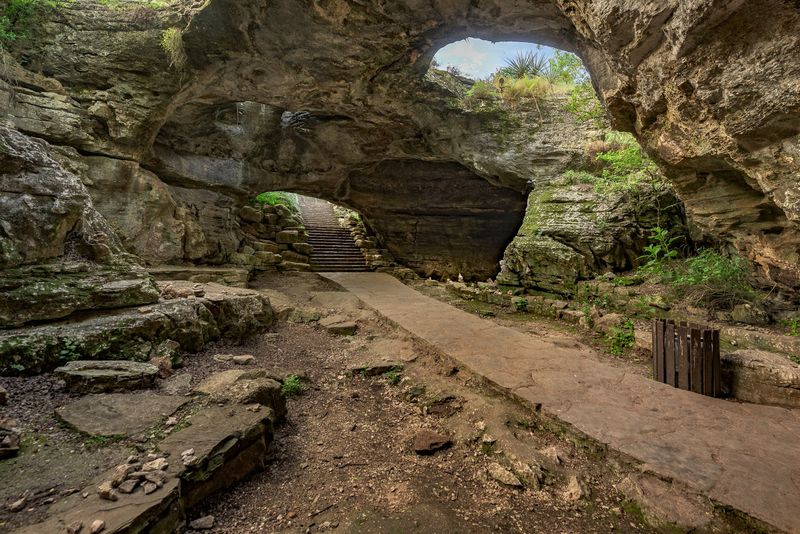
In the 1920s and early 1930s, one of the larger chambers transformed into an actual dance hall where locals gathered for entertainment. The natural acoustics made it perfect for live music, and the constant cool temperature provided relief from brutal Texas summers.
Couples would descend the stone steps dressed in their finest to dance the night away.
The dance hall operated during Prohibition, which gave it an extra layer of appeal. While the cavern itself wasn’t technically illegal, the atmosphere attracted people looking for places where rules felt a bit more relaxed.
The remote location and underground setting created a sense of escape from everyday life above ground.
Wooden floors were installed over the stone, and lights strung throughout the chamber to create ambiance. On busy nights, the sound of fiddles and laughter echoed through the passages.
I tried to picture the scene while standing in that same space, now empty except for tour groups.
The dance hall closed when the Great Depression hit and people had less money for entertainment. The wooden floors and fixtures were eventually removed, leaving the chamber much as nature formed it.
But the stories of those underground parties remain part of the cavern’s colorful social history.
Prohibition’s Secret Underground Venue
When the Volstead Act made certain beverages illegal, creative Texans found creative solutions. The cavern’s dance hall became known as a place where rules from the surface world didn’t always apply.
The underground location made it nearly impossible for law enforcement to conduct surprise inspections, assuming they even wanted to.
While official records stay vague about exactly what happened during those years, local oral histories paint a vivid picture. The cavern attracted crowds from surrounding counties who wanted entertainment that felt a bit more exciting than church socials.
The cool air, natural acoustics, and sense of secrecy created an atmosphere unlike anywhere else in the region.
Burnet County sat far enough from major cities that enforcement efforts focused elsewhere. The cavern’s owners operated in a gray area, hosting dances and gatherings without explicitly breaking laws.
What guests brought in their own flasks wasn’t technically the venue’s responsibility.
The Prohibition era ended in 1933, but the cavern’s reputation as a special gathering place continued. Those years cemented its status as more than just a geological curiosity but as a living part of community social life.
The limestone walls witnessed countless celebrations during a time when joy itself felt like an act of rebellion.
Unique Water-Carved Geology
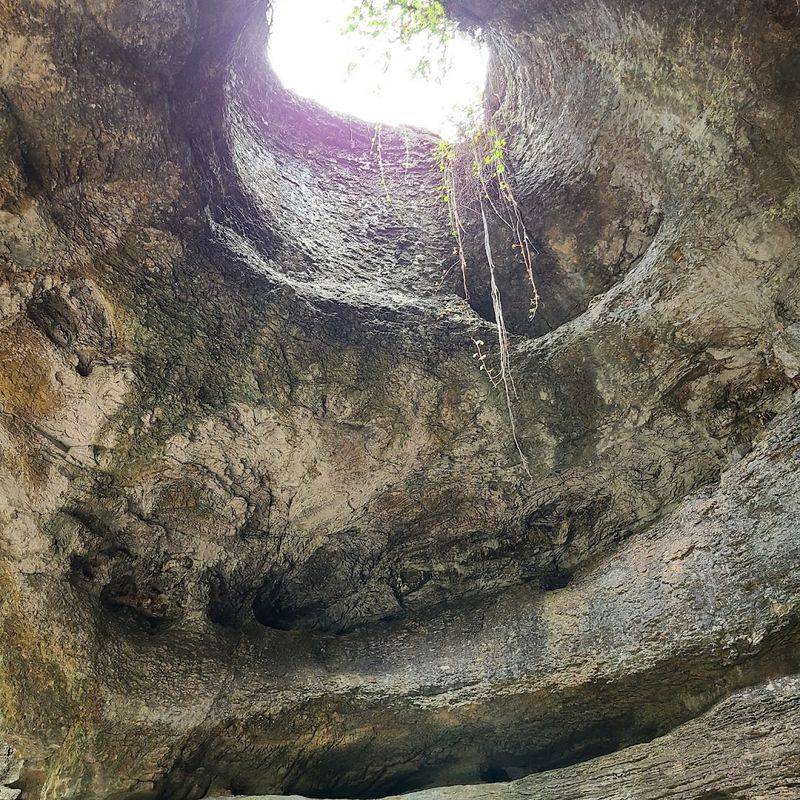
Most Texas caves form through dripping water creating stalactites and stalagmites over thousands of years. Longhorn Cavern formed differently, carved by a powerful underground river that created smooth, flowing shapes instead of pointed formations.
The difference is immediately obvious when you compare photos to other cave systems.
The limestone here eroded in ways that created swooping curves, natural bridges, and rooms with domed ceilings. Geologists study this cavern because it demonstrates river erosion processes rarely visible underground.
The rock surfaces feel almost polished in places where water flowed strongest for longest.
You won’t find many living formations like stalactites because the river stopped flowing too long ago. What grows here develops extremely slowly in the humid air.
Instead, the beauty comes from the architecture the ancient river created through pure erosive force over millions of years.
Certain chambers show distinct layers of limestone that tell the story of different geological periods. The rock formed from ancient sea creatures whose shells compressed into stone.
Then water carved through those layers like a sculptor working in slow motion. Understanding the timeline makes the cavern even more impressive than just looking at pretty rocks.
CCC Workers Transform the Cavern
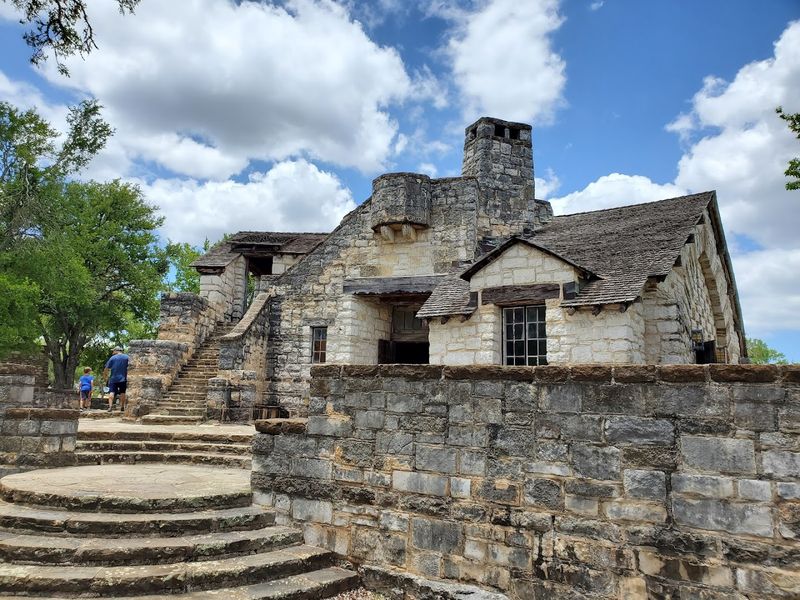
The Civilian Conservation Corps arrived in the 1930s and completely transformed the cavern and surrounding area into a proper state park. Young men enrolled in this Depression-era work program built the stone entrance building, observation tower, and other structures that still stand today.
Their craftsmanship turned a wild cave into an accessible attraction.
Inside the cavern, CCC workers installed paths, lighting, and safety features that made tours possible for regular visitors. They carefully placed lights to highlight natural features without damaging formations.
The work required hauling equipment down narrow passages and working in challenging conditions with limited technology.
Above ground, the crew constructed beautiful limestone buildings using stone quarried nearby. The observation tower offers panoramic views of the Hill Country and stands as a testament to their skill.
These structures blend so naturally with the landscape that they feel like they’ve always been there.
The CCC program ended when World War II began, but their legacy lives on in every stone they placed. Walking through the park, I kept noticing small details like hand-carved drainage channels and perfectly fitted rock walls.
These young men, many from poor families, created something that would serve visitors for generations. Their work ethic and craftsmanship deserve recognition alongside the cavern’s more dramatic stories.
The State Park Experience Above Ground
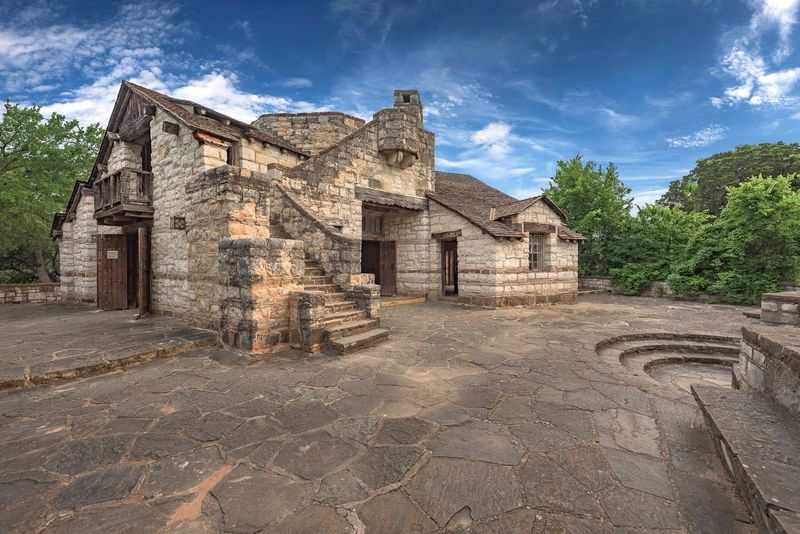
The cavern gets most of the attention, but the state park above ground deserves exploration too. Hiking trails wind through typical Hill Country terrain with limestone outcrops, native plants, and occasional wildlife sightings.
The trails vary in difficulty, offering options whether you want a serious hike or just a short walk.
The observation tower built by the CCC provides incredible views of the surrounding landscape. Climbing to the top rewards you with a panorama that stretches for miles across rolling hills and valleys.
It’s worth the climb just to see how the cavern fits into the larger geological context of the region.
Historic buildings scattered throughout the park showcase the beautiful stonework from the 1930s. These structures serve various purposes now but maintain their original character.
The visitor center houses a gift shop with reasonable prices and offers information about both the cavern and surface features.
Kids enjoy the gemstone mining activity where they sift through water to find colorful stones. Picnic areas provide shaded spots to relax and enjoy the scenery.
The park feels well-maintained and cared for, which reflects the dedication of the rangers and staff. It’s an easy day trip from Austin and makes a great addition to exploring other Hill Country attractions nearby.
Address: 6211 Park Road 4 S, Burnet, TX 78611
Dear Reader: This page may contain affiliate links which may earn a commission if you click through and make a purchase. Our independent journalism is not influenced by any advertiser or commercial initiative unless it is clearly marked as sponsored content. As travel products change, please be sure to reconfirm all details and stay up to date with current events to ensure a safe and successful trip.
