I never thought a museum could make me feel like I was standing in a 1936 Ford showroom, but that’s exactly what happened when I walked into the Early Ford V-8 Museum in Auburn. This place isn’t just another car museum; it’s like stepping back in time.
The whole vibe screams classic American cars, especially the flathead V-8 engine that really put Ford on the map. From the moment you pull up, you notice the building itself pays tribute to the old Ford Rotunda, and it immediately feels special.
Inside, everything is set up so you can almost imagine the showroom floors from the 1930s; the cars, the signage, even little details that make it feel alive. If you’ve ever wondered why people get so excited about early Fords, this museum will show you exactly why.
Incredible 1936 Ford Showroom Recreation
Walking into the 1936 Ford showroom recreation feels like stepping through a time portal. The attention to detail is absolutely stunning, from the period-correct signage to the gleaming vehicles positioned exactly as they would have been in a Depression-era dealership.
You can almost hear the sales pitch and smell the new car leather.
This isn’t just a collection of old cars parked in a room. The museum has recreated the entire showroom experience, complete with vintage sales materials, pricing information, and promotional displays that dealers would have used to sell these revolutionary V-8 powered machines.
Every element transports you back to an era when buying a Ford meant joining a movement.
The showroom features multiple 1936 models in pristine condition, each one representing different trim levels and options available to buyers at the time. You’ll see everything from basic models to fully loaded luxury versions.
The museum even displays the original tool sets that came with each vehicle, a detail that surprises most visitors and shows Ford’s commitment to customer service even back then.
One of Four Remaining 1936 Allegheny Stainless Steel Cars
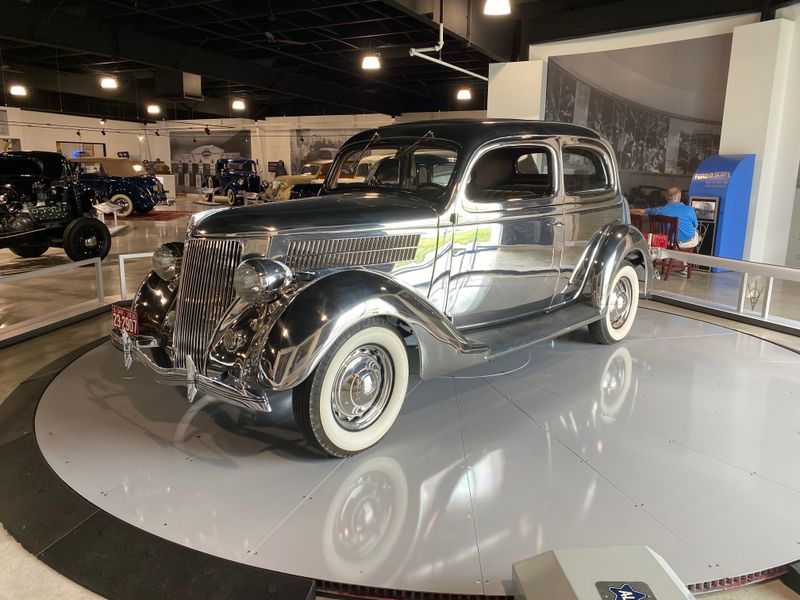
Imagine a car so rare that only four examples still exist in the entire world. The Early Ford V-8 Museum houses one of these automotive unicorns, a 1936 Allegheny Stainless Steel Ford.
This experimental vehicle represents Ford’s ambitious attempt to create a rustproof automobile using stainless steel body panels.
The car gleams under the museum lights with an otherworldly shine that no paint can match. Stainless steel was an exotic material in the 1930s, far more expensive than conventional steel, and the project never moved beyond the experimental stage.
Standing before this vehicle, you’re looking at automotive history that almost nobody gets to experience.
What makes this display even more fascinating is the story behind these cars. Ford partnered with Allegheny Steel to test whether stainless steel could be practical for automobile manufacturing.
The answer was no, at least not in the 1930s, but the surviving examples became instant collectibles. The museum’s example is beautifully preserved, allowing visitors to see exactly how this futuristic material looked when applied to classic Ford styling.
Complete Flathead V-8 Engine History Display
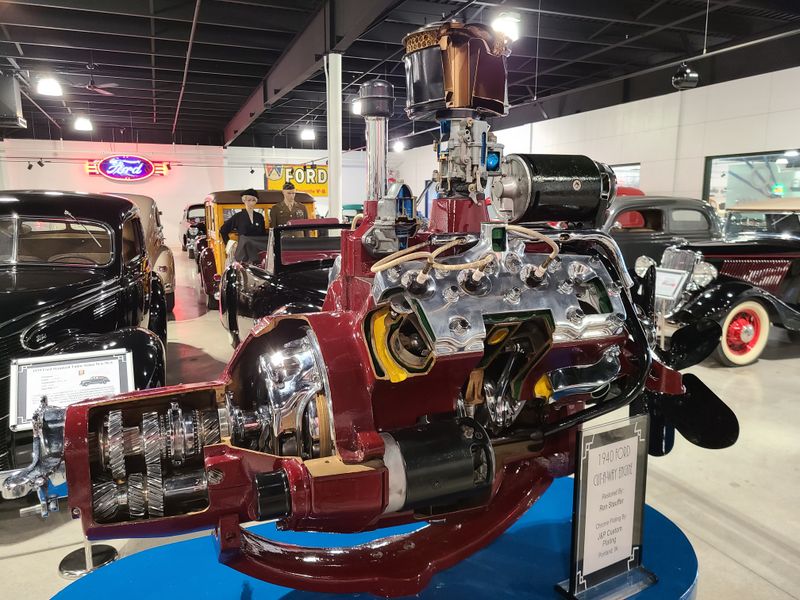
Every year of the legendary flathead V-8 is represented at this museum, so you can follow the full story of one of America’s most important engines. From its introduction in 1932 all the way through the mid-1950s, when it was finally retired, you get a sense of how Ford kept improving and refining it.
Walking through the exhibits, you can see the subtle changes year by year; the tweaks that made it smoother, more powerful, and more reliable. It’s like seeing history unfold in metal and chrome.
The flathead V-8 didn’t just power cars; it changed everything about driving in America. Before it existed, V-8 engines were mostly reserved for expensive luxury vehicles.
Ford flipped that idea on its head by making a smooth, powerful engine available in cars that regular people could actually afford. The museum really drives this home with cutaway engines that let you see the unique valve-in-block design that gave the flathead its name.
You can actually peek inside and understand why it was so revolutionary for its time.
But it’s not just about passenger cars. The collection shows how the flathead powered racing cars, trucks, boats, and even industrial machines.
Exceptional Staff Knowledge and Personal Tours
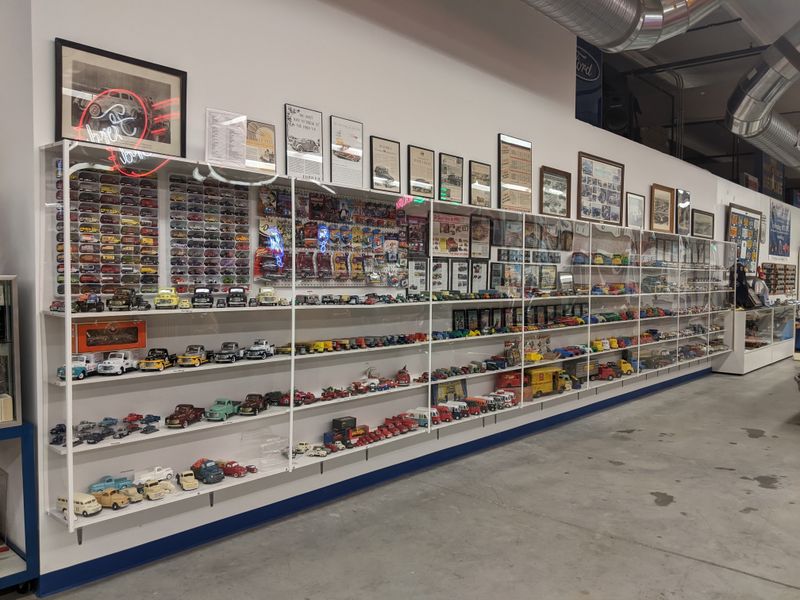
The friendly staff at the Early Ford V-8 Museum transforms a good visit into an unforgettable experience. These aren’t just ticket-takers, they’re passionate experts who can tell you the story behind every vehicle and artifact in the collection.
Many visitors mention Mr. Conrad specifically, whose encyclopedic knowledge brings each car’s history to life.
Unlike larger museums where you’re left to wander alone, this facility encourages interaction with knowledgeable guides. They’ll answer questions you didn’t even know you had and share fascinating details that aren’t on the display cards.
The self-guided tour format means you can explore at your own pace, but help is always available when you want to dig deeper into the stories.
The front desk staff receives special praise from visitors for being welcoming and informative. One reviewer even mentioned the chocolate kept at the desk, a small touch that shows the museum’s commitment to hospitality.
Whether you’re a hardcore Ford enthusiast or just curious about automotive history, the staff tailors their approach to your interest level, making everyone feel welcome and engaged throughout their visit.
Impressive Collection of Vintage Ford Trucks and Woodies
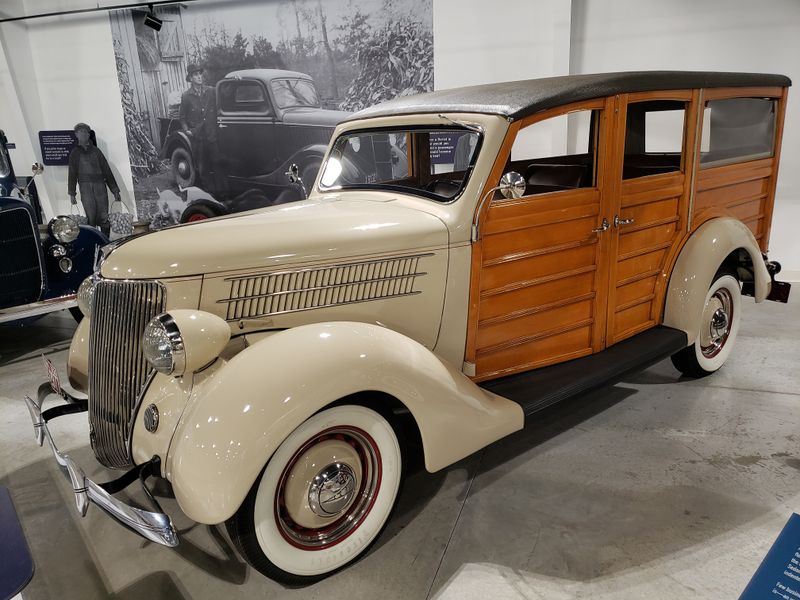
Beyond the passenger cars, the museum has an incredible collection of early Ford trucks and the iconic woody station wagons that defined an era. These working vehicles tell a very different story than the sleek sedans and coupes, showing how Ford’s V-8 power didn’t just make driving fun; it changed the way Americans worked and traveled.
The woody wagons are especially striking. Originally called station wagons because they shuttled passengers from train stations to hotels and resorts, these wood-bodied cars were all about craftsmanship and utility.
The museum keeps the wood panels in amazing condition, letting you appreciate the detail and care that went into building them. Standing next to one, it’s easy to see why these cars became symbols of California surf culture and American nostalgia; they’re just effortlessly cool.
The truck collection is just as impressive. From light delivery trucks to heavy-duty workhorses, you can see how the flathead V-8 made Ford the go-to choice for businesses across the country.
Each truck has its own personality and story, representing industries from agriculture to construction, and showing how these engines kept America moving through the Depression and the war years.
Unbeatable Value and RV-Friendly Facilities
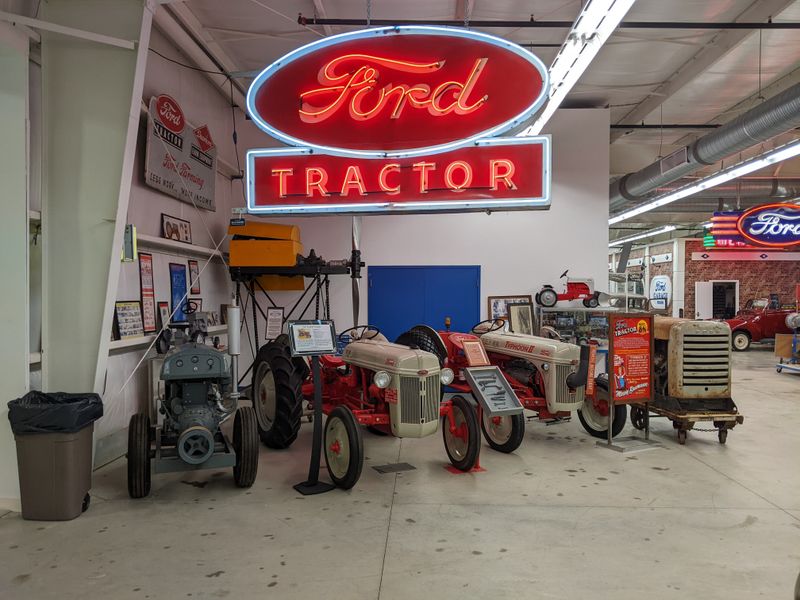
At just $10 for adults and $8 for seniors, the Early Ford V-8 Museum is an incredible bargain for what you get. You could easily spend several hours wandering through the exhibits, and many visitors say it’s the best ten dollars they’ve spent in a long time.
The affordable admission makes it perfect for families, classic car fans, or anyone visiting Auburn on a budget.
The museum is also extremely welcoming to RV travelers. Their spacious parking lot can handle even the largest recreational vehicles, and they even allow overnight parking.
That makes it easy to visit without worrying about finding RV-friendly accommodations nearby; a level of hospitality that’s rare for museums and speaks to the foundation’s commitment to making automotive history accessible to everyone.
You’ll find the museum at 2181 Rotunda Drive in Auburn, right in the heart of Indiana’s automotive museum district. It’s just a short drive from the Auburn Cord Duesenberg Museum and the National Automotive and Truck Museum, so visitors can easily turn a single trip into a multi-day adventure exploring the state’s rich automotive heritage.
With its affordability, fascinating collection, and convenient location, the Early Ford V-8 Museum is the perfect starting point, or anchor, for anyone looking to dive into Auburn’s car culture.
Beautifully Maintained Modern Facility with Rich History
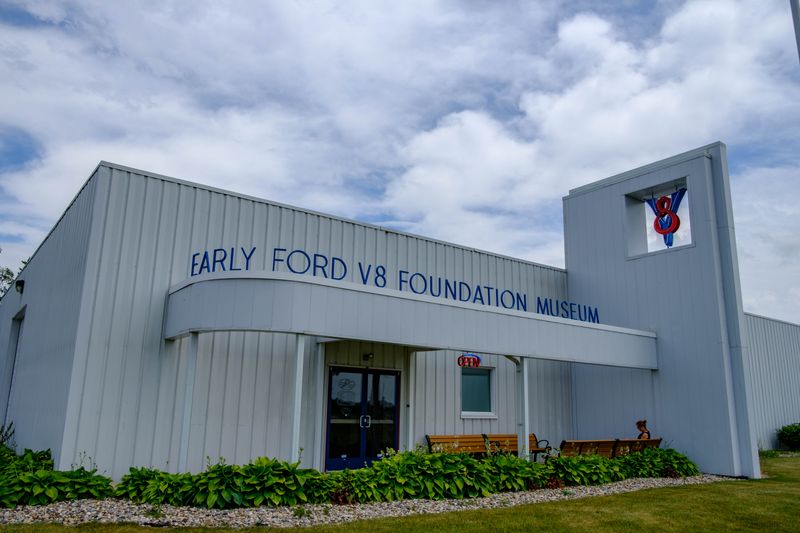
The museum building itself is a work of art. Its design includes architectural elements that pay tribute to the historic Ford Rotunda that once stood in Dearborn, Michigan, giving the space a sense of grandeur and history before you even step inside.
Though the facility is relatively new, it opened to glowing reviews, and it’s easy to see why. Visitors consistently praise the clean, professional presentation and thoughtful layout, which feels both modern and respectful of the history it showcases.
Inside, every display is meticulously maintained. Cars are positioned to highlight their best angles, and signage provides just the right amount of information to educate without overwhelming.
The museum manages to strike a perfect balance between being a serious archive for car enthusiasts and a welcoming, accessible attraction for casual visitors. Families enjoy the kid-friendly atmosphere, while collectors and restorers can dive into the technical details they love.
The Early Ford V-8 Foundation is always looking forward, adding new displays, hosting events, and planning attractions for the future. That means return visits never feel repetitive; there’s always something new to discover.
The museum reflects decades of dedication by Ford enthusiasts who wanted to preserve this pivotal chapter of automotive history for future generations.
Dear Reader: This page may contain affiliate links which may earn a commission if you click through and make a purchase. Our independent journalism is not influenced by any advertiser or commercial initiative unless it is clearly marked as sponsored content. As travel products change, please be sure to reconfirm all details and stay up to date with current events to ensure a safe and successful trip.
