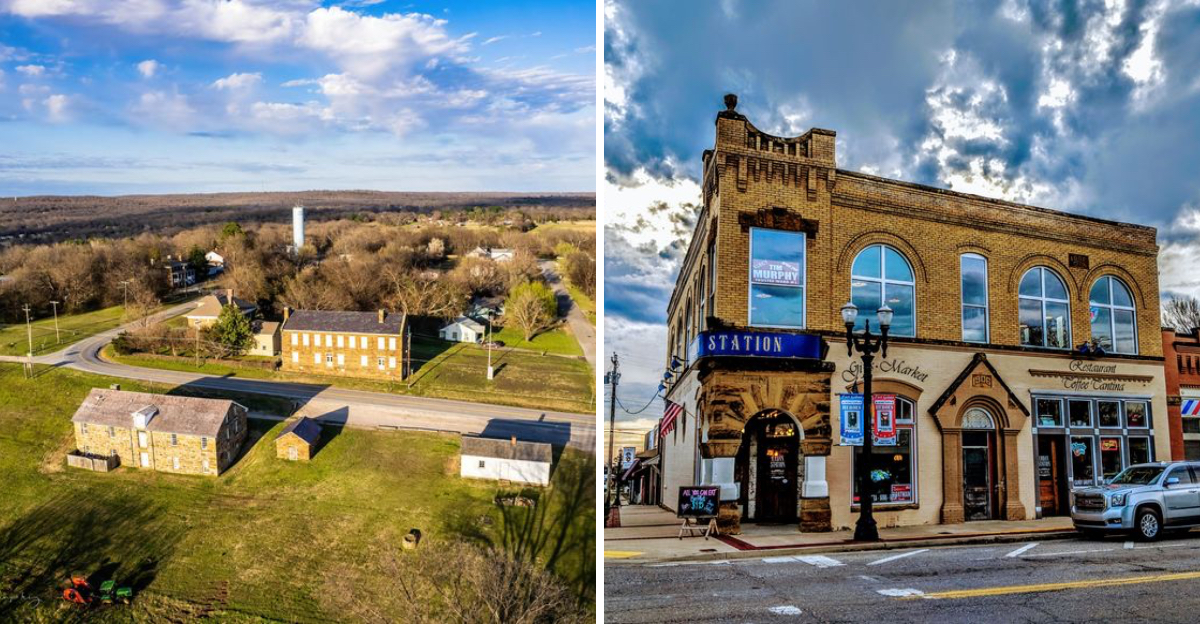
Tucked along the banks of three rivers in eastern Oklahoma, Fort Gibson rests where the Verdigris, Grand, and Arkansas rivers converge.
This quiet town of fewer than 4,000 residents holds an outsized place in the story of the American frontier.
Long before statehood, before the Oklahoma Land Run, and before Route 66 cut through the heartland, Fort Gibson stood as a military outpost that shaped the fate of Native nations, settlers, and soldiers alike.
The town carries the weight of its past in its historic fort walls, its centuries-old cemetery, and the stories that still echo through its streets.
Visitors today find a place that hasn’t rushed into the modern age.
The landscape is lush and green, framed by rolling hills and broad waterways that once served as highways for explorers and traders.
The air feels slower here, heavy with humidity in summer and cool with river breezes in spring.
Fort Gibson offers a rare chance to walk through history without the crowds or commercialization found in better-known destinations.
It’s a town where local pride runs deep, where every monument and marker tells a chapter of Oklahoma’s complex heritage.
Whether you’re drawn to military history, Native American culture, or simply the charm of a riverside town that time nearly forgot, Fort Gibson rewards those willing to listen to what it has to say.
Fort Gibson Historic Site
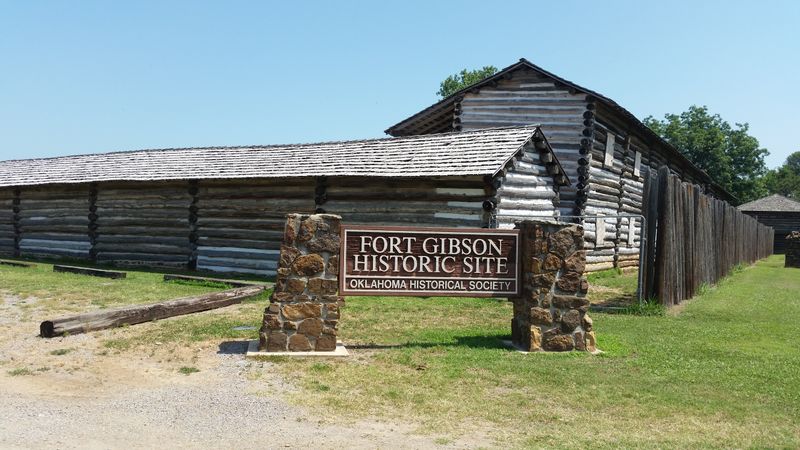
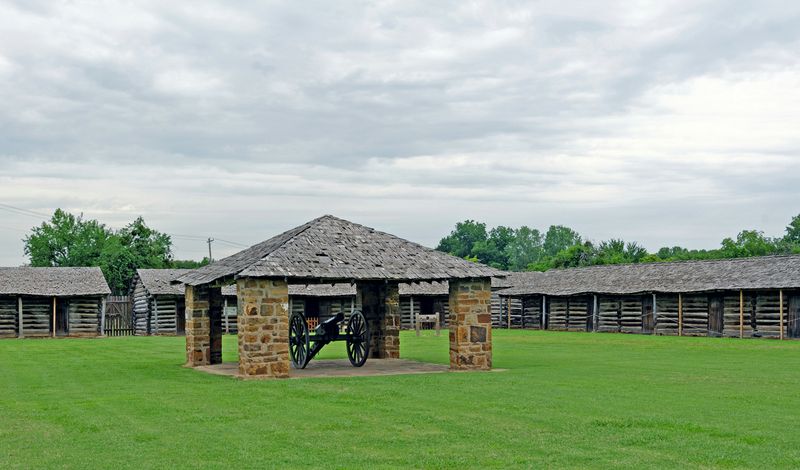
Standing at the original site where soldiers once guarded the western frontier, Fort Gibson Historic Site brings visitors face to face with a chapter of American expansion that’s often glossed over in textbooks.
Established in 1824, this military post served as a critical buffer zone during the Indian Removal era, housing troops who oversaw the forced relocation of thousands of Native Americans along the Trail of Tears.
The reconstructed log stockade and stone buildings offer a sobering glimpse into life on the frontier, where disease, harsh weather, and tension between cultures made survival uncertain for everyone involved.
Walking through the fort today, you’ll find authentically recreated barracks, officers’ quarters, and a commissary that paint a vivid picture of garrison life.
Interpreters in period dress demonstrate blacksmithing, cooking, and military drills, making history tangible in ways that no museum placard can match.
The site doesn’t shy away from difficult truths.
Exhibits address the complex relationships between soldiers, settlers, and Native tribes, acknowledging the suffering caused by federal policies while honoring the resilience of those who endured them.
The grounds are peaceful now, shaded by mature trees and bordered by open fields that stretch toward the rivers.
Spring and fall bring the best weather for exploring, though summer events like living history weekends draw crowds eager to see musket demonstrations and hear firsthand accounts of frontier struggles.
Fort Gibson Historic Site remains one of Oklahoma’s most significant landmarks, a place where the past refuses to be forgotten and where understanding grows with every visit.
Address: 907 N Garrison Ave, Fort Gibson, Oklahoma
Fort Gibson National Cemetery
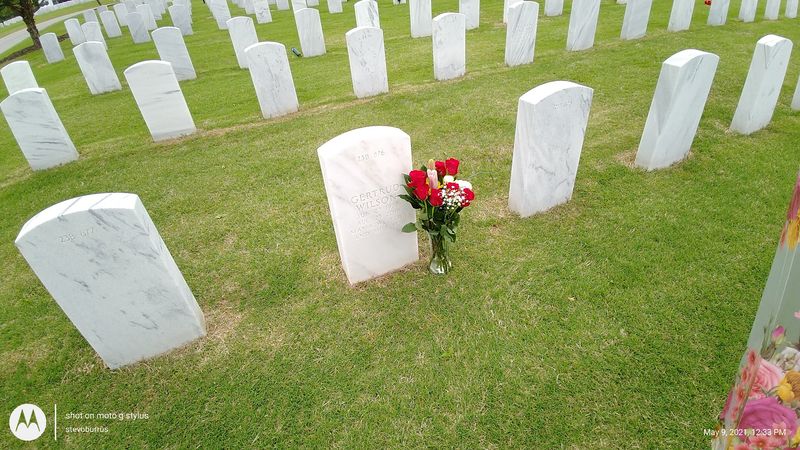
Few places in Oklahoma carry the emotional weight of Fort Gibson National Cemetery, where row upon row of white headstones mark the final resting places of soldiers who served from the frontier era through modern conflicts.
Established in 1868, this cemetery holds the remains of more than 20,000 veterans and their family members, making it one of the oldest and most historically significant burial grounds west of the Mississippi River.
The silence here is profound, broken only by wind rustling through the oaks and the occasional call of a crow overhead.
Among the graves rest Buffalo Soldiers, Native American scouts, Civil War veterans from both sides, and servicemen from every American conflict since.
The diversity of those buried here reflects the complex military history of the region, where allegiances shifted and cultures clashed in ways that shaped the entire Southwest.
Some headstones bear names and dates worn smooth by more than a century of weather.
Others stand crisp and new, reminders that this remains an active cemetery honoring those who continue to serve.
Visitors often come seeking specific graves, tracing family histories that lead back to this riverside town.
The cemetery office maintains records and helps locate burial sites, though wandering the grounds reveals its own stories.
Memorials honor specific units and conflicts, while flags flutter at each grave on holidays, placed by volunteers who ensure no veteran is forgotten.
The view from the hillside section overlooks the rivers that once brought soldiers and settlers to this frontier outpost, a landscape largely unchanged since those early days.
Address: 1423 Cemetery Rd, Fort Gibson, Oklahoma
Three Forks Harbor and River Confluence
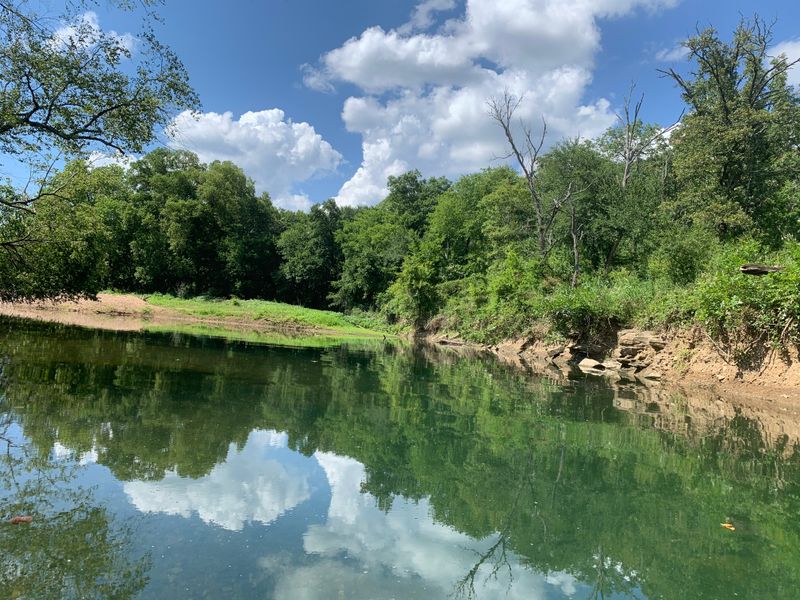
Geography determined Fort Gibson’s importance long before the first soldiers arrived, and nowhere is that clearer than at Three Forks, where the Verdigris, Grand, and Arkansas rivers meet in a broad convergence of water and wildlife.
Native peoples recognized this junction as a natural crossroads centuries before European explorers mapped it.
French traders followed, then American military strategists who understood that controlling these waterways meant controlling movement and commerce across a vast territory.
Today, the confluence remains a defining feature of the landscape, though its significance has shifted from military strategy to recreation and natural beauty.
Three Forks Harbor serves as the modern gateway to these historic waters, offering boat launches, fishing access, and views that stretch across miles of river channel and wooded shoreline.
Anglers come for bass, catfish, and crappie that thrive in the slow-moving currents where the rivers blend.
Kayakers and canoeists explore quieter backwaters where herons hunt and turtles sun themselves on half-submerged logs.
The harbor sees its busiest days in spring and early summer when water levels run high and temperatures haven’t yet climbed into the sweltering range that defines Oklahoma summers.
Standing at the confluence, you can imagine the dugout canoes and flatboats that once carried furs, trade goods, and desperate families seeking new starts in uncertain lands.
The rivers haven’t changed much, though dams upstream now regulate their flow and bridges span their widths.
Wildlife abounds here, from bald eagles in winter to clouds of swallows in summer.
It’s a place where Oklahoma’s natural and human histories intertwine, where the land still speaks if you know how to listen.
Cherokee Heritage and Cultural Connections
Fort Gibson sits within what was designated as Cherokee Nation territory following the forced removal of the 1830s, and the town’s history cannot be separated from the Cherokee people who rebuilt their lives in these river valleys after enduring unimaginable loss.
Thousands died on the journey from their southeastern homelands, yet survivors established communities, farms, schools, and a new capital at nearby Tahlequah.
Fort Gibson became a point of contact and often conflict between Cherokee citizens rebuilding their nation and federal authorities who continued to exert control over tribal affairs.
Cherokee heritage remains visible throughout the area today, though you need to know where to look and what questions to ask.
Descendants still live in and around Fort Gibson, maintaining cultural traditions that stretch back centuries.
Tribal historic preservation efforts have identified significant sites connected to removal routes and early resettlement.
The Cherokee Nation itself, headquartered in Tahlequah just 30 miles away, operates museums and cultural centers that provide essential context for understanding what happened here and why it matters.
Exploring this heritage requires sensitivity and respect, recognizing that for many Cherokee families, this history isn’t distant or abstract but personal and ongoing.
Visitors can learn about traditional governance systems that influenced Oklahoma’s own constitution, about syllabary and language preservation, and about the resilience required to maintain identity in the face of systematic attempts to erase it.
Fort Gibson’s story includes the Cherokee story, and any honest reckoning with the town’s past must acknowledge both the suffering inflicted and the strength demonstrated by those who refused to disappear.
Downtown Fort Gibson and Historic Main Street
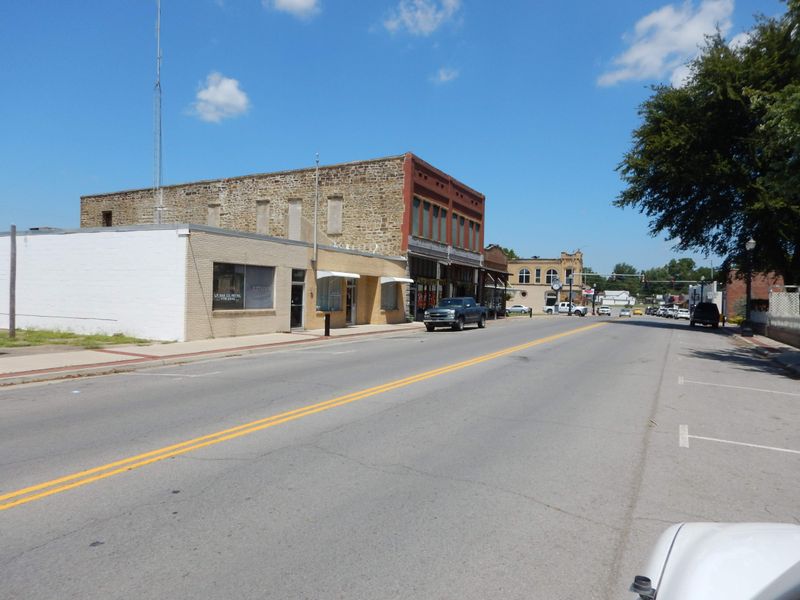
Downtown Fort Gibson won’t overwhelm you with size or bustle, but what it lacks in scale it makes up for in authenticity.
The main street stretches just a few blocks, lined with brick storefronts that date back a century or more.
Some buildings stand empty, victims of economic shifts that have hollowed out many small Oklahoma towns.
Others house antique shops, a hometown diner, and businesses that have served local families for generations.
There’s no pretense here, no manufactured charm designed to lure tourists.
This is a working small town that happens to sit on historically significant ground.
Walking these sidewalks, you pass structures that witnessed Fort Gibson’s evolution from military outpost to civilian settlement to modern community.
Architecture tells stories here, from pressed tin ceilings inside old mercantiles to the way upper-story windows reveal where lodging houses once operated.
Murals on building sides depict scenes from the town’s past, adding color to streets that can feel sleepy on weekday afternoons.
Locals still gather at the coffee shop to discuss weather, grandkids, and high school sports, conversations that haven’t changed much in substance even as the world beyond has transformed.
The pace downtown matches the town’s character, measured and unhurried.
You won’t find chain stores or franchise restaurants here, just locally owned establishments operating on their own schedules.
Antique hunters browse for vintage finds and military memorabilia connected to the fort’s history.
The courthouse anchors one end of the district, a reminder that Fort Gibson serves as more than a historical curiosity but as a living community with its own rhythms and concerns, its own pride in place.
Fort Gibson Lake Recreation Area
Created by the damming of the Grand River in the 1950s, Fort Gibson Lake sprawls across nearly 20,000 acres of eastern Oklahoma, offering recreation opportunities that draw visitors from across the state and beyond.
The lake’s creation altered the landscape forever, flooding valleys and changing river patterns, but it also provided flood control and water resources that supported regional growth.
Today, the lake serves primarily as a playground, its coves and channels dotted with fishing boats, ski boats, and pontoons loaded with families seeking relief from Oklahoma’s summer heat.
Multiple parks and access points ring the shoreline, each with its own character and amenities.
Some feature full-service marinas with boat rentals and supplies.
Others offer primitive camping where you can pitch a tent within sight of the water and wake to mist rising off the lake at dawn.
Fishing remains a primary draw, with the lake consistently producing trophy bass, catfish, and crappie that keep anglers returning season after season.
Tournaments bring competitive fishermen who know every submerged structure and seasonal pattern, while casual anglers find success casting from shore or drifting in rented johnboats.
The lake’s proximity to Fort Gibson town makes it an easy addition to any visit, though many come specifically for the water and never venture into the historic sites.
Summer weekends see the busiest activity, with boat traffic heavy and campgrounds full.
Spring and fall offer quieter experiences, with comfortable temperatures and fewer crowds.
Winter transforms the lake into a haven for bald eagles that migrate south to feast on shad and enjoy milder weather than their northern territories provide.
Fort Gibson Stockade Museum
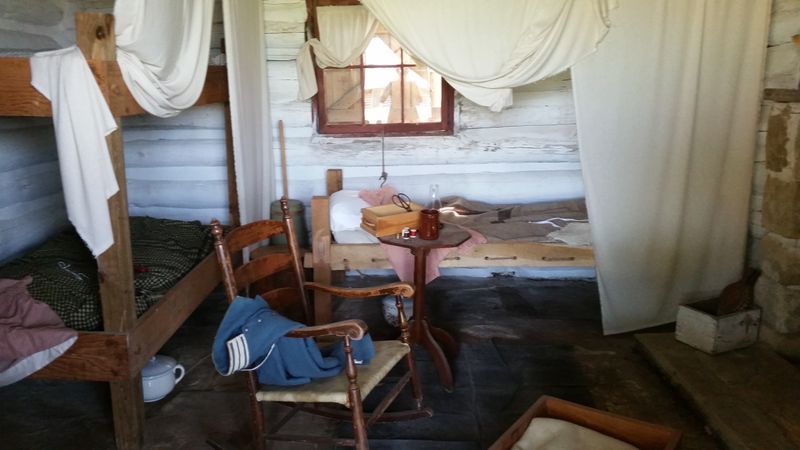
Housed in a building constructed to resemble the original fort’s architecture, the Fort Gibson Stockade Museum packs an impressive collection into a compact space, offering context and artifacts that bring the region’s history into sharper focus.
Operated by the Fort Gibson Historical Society, the museum functions as both archive and interpretive center, preserving documents, photographs, and objects that might otherwise have been lost to time.
Local volunteers staff the museum, sharing knowledge passed down through families who’ve called this area home for generations.
Exhibits cover the full sweep of Fort Gibson’s story, from pre-contact Native cultures through military occupation and into the town’s civilian development.
You’ll find military uniforms and weapons, domestic items from frontier households, and photographs of faces that stare out from the past with expressions both familiar and foreign.
Native American artifacts share space with pioneer tools, reflecting the complicated intersection of cultures that defined this place.
The museum doesn’t attempt to sanitize history or present a single narrative, instead offering multiple perspectives on events that affected different groups in vastly different ways.
Researchers appreciate the museum’s archives, which include letters, military records, and oral histories collected over decades.
Casual visitors find the exhibits accessible and informative, with explanations written for general audiences rather than specialists.
The museum hosts occasional programs and lectures, bringing in speakers to discuss specific aspects of frontier history or Native heritage.
It’s a small institution doing important work, ensuring that Fort Gibson’s significance doesn’t fade from memory as the generations who lived closer to those events pass on.
Address: 907 N Garrison Ave, Fort Gibson, Oklahoma
Sequoyah’s Cabin Historic Site
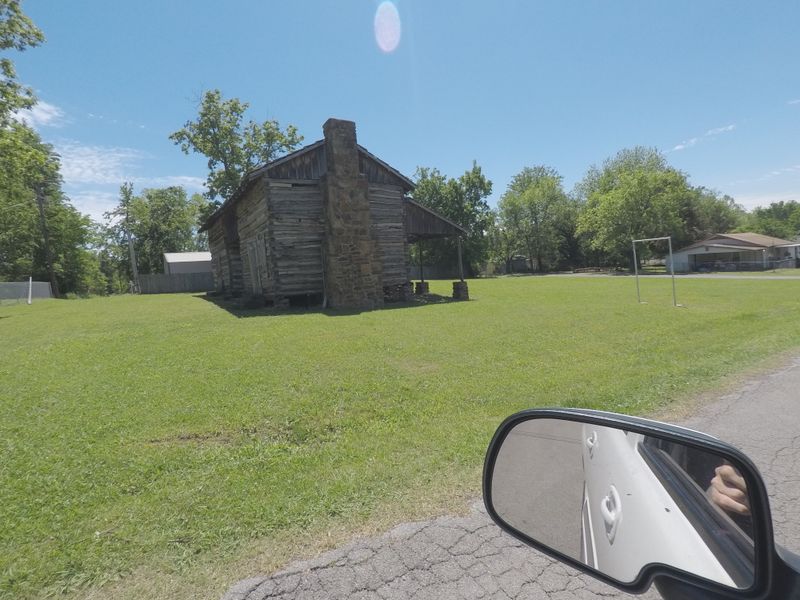
Just a short drive from Fort Gibson sits one of Oklahoma’s most significant cultural landmarks, the cabin where Sequoyah, creator of the Cherokee syllabary, spent his final years.
Though not located within Fort Gibson proper, this site connects directly to the town’s history and the broader Cherokee presence in the region.
Sequoyah’s invention of a writing system for the Cherokee language stands as one of the most remarkable intellectual achievements in American history, allowing an entire people to become literate in their own language within a generation.
The cabin where he lived has been preserved and now sits within a protective structure, surrounded by exhibits that explain his work and its lasting impact.
Visiting Sequoyah’s cabin provides essential context for understanding Cherokee resilience and adaptation.
Forced from their homelands, stripped of much of their property, the Cherokee people rebuilt in Oklahoma in part because of the literacy and documentation that Sequoyah’s syllabary made possible.
Legal documents, newspapers, religious texts, and personal correspondence flowed in Cherokee script, creating a written record and cultural continuity that strengthened the nation’s ability to resist further encroachment.
The cabin itself is modest, a simple log structure that belies the revolutionary thinking that occurred within its walls.
The site includes a museum with exhibits on Cherokee history, language preservation efforts, and Sequoyah’s biography.
Interactive displays allow visitors to try writing with the syllabary, experiencing firsthand how the system works and why it proved so effective.
The grounds are peaceful, shaded by trees and maintained with obvious care and respect.
For anyone interested in Fort Gibson’s history, understanding the Cherokee context is essential, and Sequoyah’s cabin offers an accessible entry point into that deeper story.
Address: 470188 OK-101, Sallisaw, Oklahoma
Wildlife and Natural Landscape
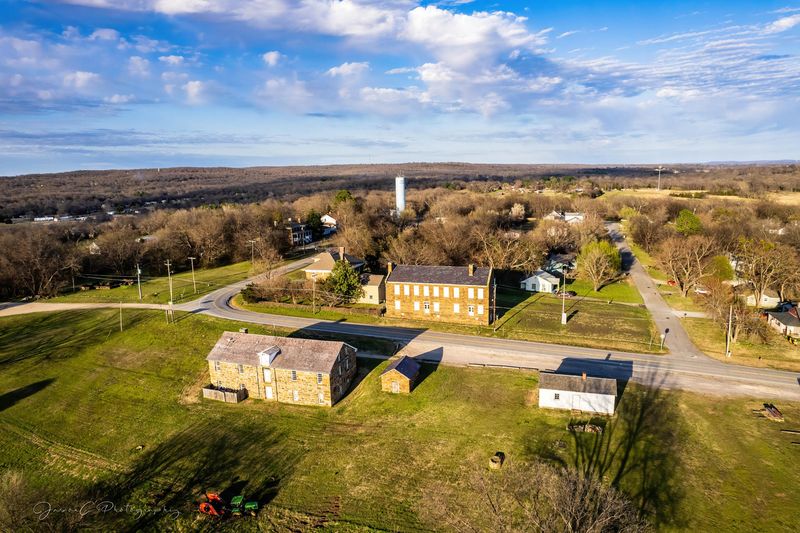
Beyond its human history, Fort Gibson occupies a landscape rich with natural diversity, where three river systems create habitats that support remarkable wildlife populations.
The bottomland forests that line the rivers shelter white-tailed deer, wild turkey, and an abundance of smaller mammals.
River otters have returned to these waters after decades of absence, their playful presence a sign of improving water quality.
Beaver lodges dot quieter channels, and their dam-building activities create wetlands that benefit countless other species.
Birdwatchers find Fort Gibson particularly rewarding, as the river corridors serve as migration routes for species moving between breeding and wintering grounds.
Spring and fall bring waves of warblers, vireos, and other songbirds that pause to rest and feed before continuing their journeys.
Summer residents include painted buntings, whose jewel-toned plumage seems almost tropical against Oklahoma’s green backdrop.
Winter transforms the area into eagle territory, with both bald and occasional golden eagles hunting along the rivers and lake, drawn by abundant fish and waterfowl.
The landscape itself shifts with the seasons in ways that northern visitors might not expect from Oklahoma.
Spring explodes with wildflowers and fresh green growth, while summer’s heat turns everything lush and humid.
Fall brings color to the hardwood forests, though the change comes later and less dramatically than in New England or the Appalachians.
Winter reveals the bones of the land, the structure of ridges and valleys that geography textbooks describe as the Ozark Plateau’s western edge.
Throughout the year, the rivers remain constant, flowing brown and steady, carrying the same waters that brought explorers and soldiers to this junction centuries ago.
Legacy and Modern Community
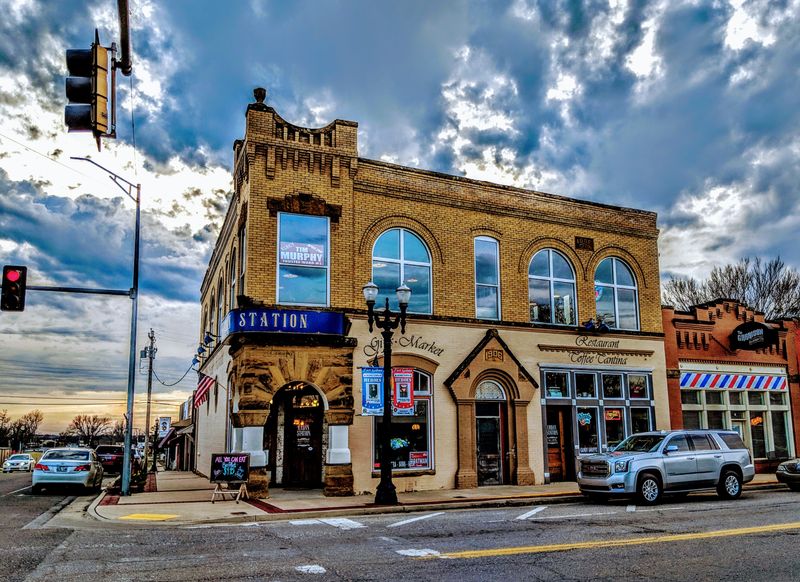
Fort Gibson today exists in a space between past and present, a town that knows its historical significance while grappling with the same challenges facing rural communities across Oklahoma and beyond.
The population has declined slightly in recent decades as younger residents move to larger cities for education and employment.
Main Street shows the effects of this exodus, with empty storefronts and aging infrastructure.
Yet those who remain demonstrate fierce loyalty to place, a determination to preserve what matters while adapting to changing economic realities.
Local schools teach Fort Gibson’s history as part of their curriculum, ensuring that children understand the ground beneath their feet and the events that unfolded here.
Community events like the Fort Gibson Founder’s Day celebration bring residents together to honor shared heritage and maintain connections that might otherwise fray.
Churches that have served the town for generations continue to anchor social life, providing not just spiritual guidance but community support networks that matter more as population declines and services consolidate.
The town’s legacy extends far beyond its current borders or population count.
Decisions made at Fort Gibson in the 1820s and 1830s shaped the entire region’s development, influencing tribal boundaries, settlement patterns, and the eventual path to statehood.
The suffering that occurred here, particularly during the removal era, deserves remembrance and honest acknowledgment.
The survival and rebuilding that followed deserve recognition and respect.
Fort Gibson might be underrated, might lack the name recognition of other Oklahoma destinations, but its quiet streets and historic sites hold stories that matter deeply to understanding how the American West was won and at what cost to those who were already here.
Dear Reader: This page may contain affiliate links which may earn a commission if you click through and make a purchase. Our independent journalism is not influenced by any advertiser or commercial initiative unless it is clearly marked as sponsored content. As travel products change, please be sure to reconfirm all details and stay up to date with current events to ensure a safe and successful trip.
