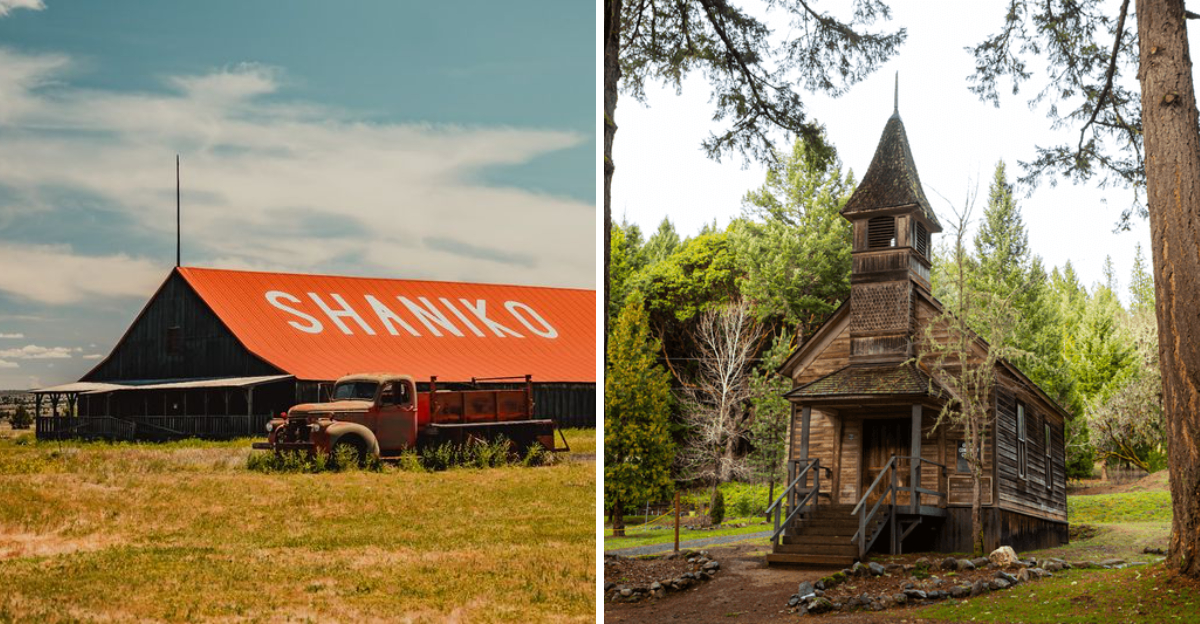
Setting off on this Oregon ghost town road trip felt like signing up for a slightly spooky adventure – with snacks. Each stop brings crumbling buildings, creaky silence, and just enough eerie vibes to make you glance over your shoulder.
I kept expecting a dusty door to swing open dramatically or a ghost to clock in for their shift. The history here isn’t just interesting – it’s the kind that gives you goosebumps in the best way.
Some towns feel frozen in time, like everyone just stepped out and forgot to come back. Even the quiet has a personality, and it’s definitely a little dramatic.
It’s the kind of trip where you laugh, get a tiny bit spooked, and somehow end up wanting more.
1. Shaniko, North-Central Oregon
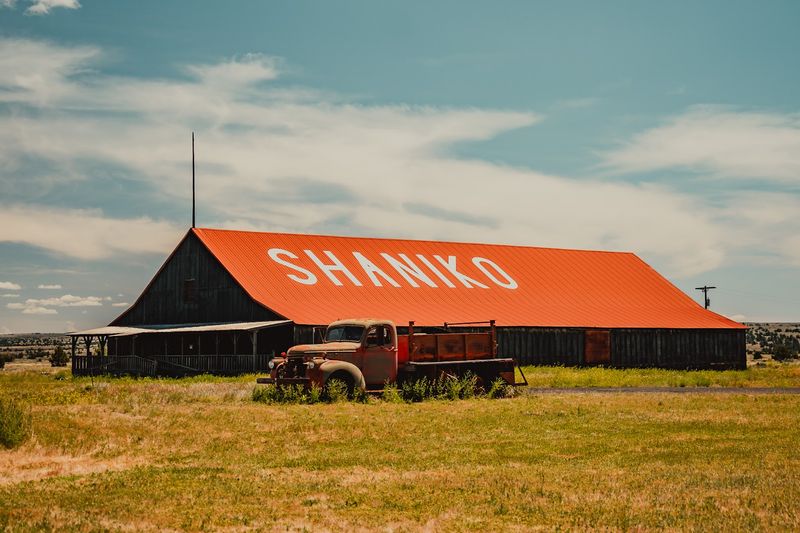
Back in the early 1900s, this tiny town was moving more wool than almost anywhere else in the United States. Shaniko, located in north-central Oregon, earned the nickname “Wool Capital of the World” and was a major shipping hub for the region.
The Shaniko Hotel still stands today, its faded facade holding decades of stories. Nearby, the old jailhouse sits quietly, its iron bars a reminder of a time when this place was buzzing with commerce and colorful characters.
Walking through Shaniko feels like stepping onto a movie set. The streets are wide and mostly empty now, lined with structures that have refused to fully surrender to time.
Most buildings are well-preserved, which makes this one of the better ghost towns to photograph. Bring a wide-angle lens if you have one, because the surrounding high desert landscape adds serious drama to every shot.
Shaniko is located along U.S. Route 97, making it one of the most accessible ghost towns on this entire road trip.
It is a great first stop to ease you into the eerie, captivating world of Oregon’s abandoned past. Every creak of the old floorboards here tells a story worth hearing.
2. Sumpter, Eastern Oregon
Gold changed everything here. Sumpter, located in the Blue Mountains of eastern Oregon, exploded into life during the gold rush and quickly became one of the busiest mining towns in the region.
The star attraction today is the Sumpter Valley Gold Dredge, a massive floating machine that once scooped up riverbeds in search of precious metal. It sits in a pond it essentially created, surrounded by gravel mounds that look almost lunar.
You can walk around the dredge and read interpretive signs explaining how this hulking machine worked. It is genuinely impressive to stand next to something so enormous and think about the ambition it represented.
Beyond the dredge, the Sumpter Valley Railroad offers seasonal rides through the surrounding landscape. It is a nostalgic, slow-paced experience that gives you a feel for how people and supplies once moved through this remote area.
The town itself still has a handful of residents and a few small businesses, so it sits somewhere between ghost town and living community. That in-between quality makes Sumpter feel especially layered and interesting.
Plan to spend at least two to three hours here, because there is more to absorb than a quick pass-through allows. The dredge alone is worth the drive out east.
3. Golden, Southern Oregon
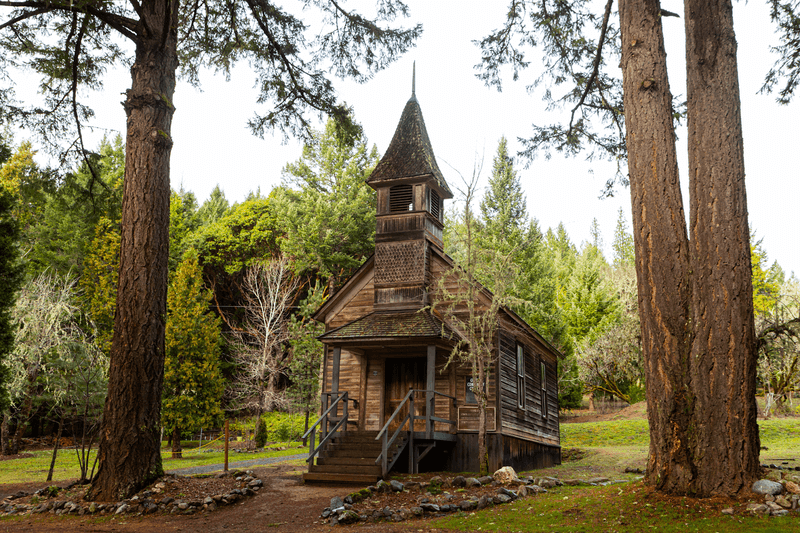
Most gold rush towns had saloons on every corner, but Golden took a different path entirely. Founded as a mining camp in southern Oregon during the 1840s gold rush, this town was notably built around a church and a schoolhouse instead.
That detail alone makes Golden stand out on any Oregon ghost town road trip. The community that formed here clearly had different priorities than the rowdy camps that popped up nearby, and the physical evidence of that is still standing today.
Golden is located in Josephine County, tucked among forested hills that give it a lush, almost storybook appearance. The church in particular is photogenic, its weathered wood framing perfectly against the surrounding Douglas firs.
Access requires a short drive on unpaved road, so a vehicle with decent clearance is helpful. The site is managed and maintained, which means the key structures are in good condition for visitors to explore up close.
Because Golden is not widely advertised, it tends to draw visitors who have done their homework and are genuinely passionate about Oregon history. That makes for a quieter, more reflective visit than some of the more touristy stops on this route.
Standing inside that old church, surrounded by forest and silence, is one of the more unexpectedly moving moments this entire road trip has to offer.
4. Buncom, Southern Oregon
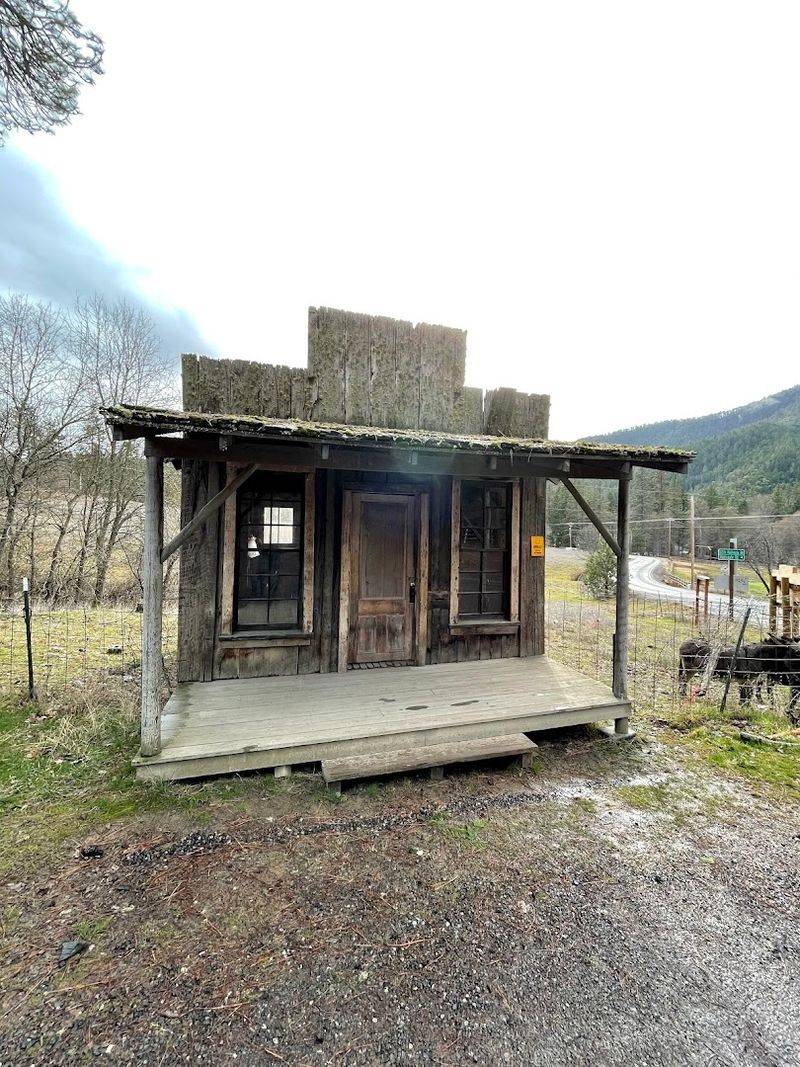
Sixteen miles south of Jacksonville in southern Oregon, Buncom has earned a reputation as one of the best-preserved Wild West towns in the entire state. The fact that it is completely uninhabited makes that reputation feel even more earned.
This former gold-mining camp has three surviving historical buildings that give visitors a clear picture of what life looked like here during its active years. Each structure carries visible age and character without being fully ruined, which is a rare and satisfying balance.
The setting along the Applegate River adds natural beauty to the historical intrigue. The river runs clear and cold, and the surrounding hillsides are covered with the kind of mixed forest that makes southern Oregon so visually distinct from the rest of the state.
Buncom is accessible via the Applegate Road, and the drive itself is scenic enough to justify the trip even before you arrive. Keep your eyes open along the route because the landscape shifts noticeably as you gain and lose elevation.
Because the town is completely uninhabited and relatively compact, visits here tend to be focused and unhurried. There is no gift shop, no entrance fee, and no guided tour.
Just you, the buildings, and the quiet hum of the river nearby. That raw, unmediated quality is exactly what makes Buncom one of the most authentic stops on this entire road trip through Oregon.
5. Galena, Eastern Oregon
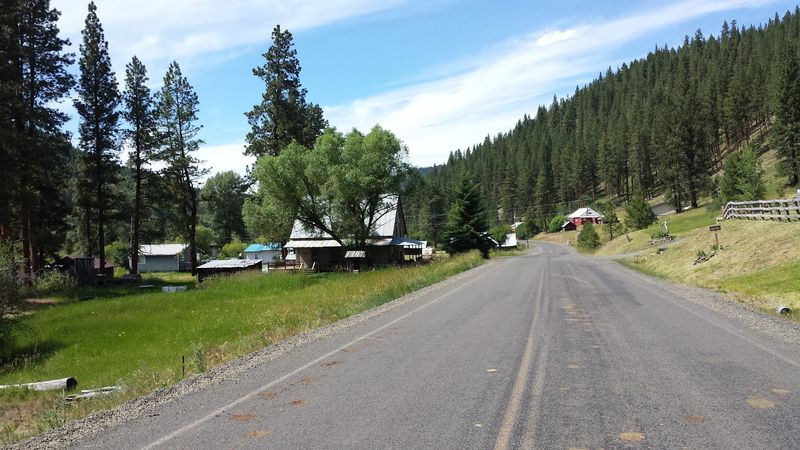
Settled in 1865, Galena sits deep inside the Malheur National Forest in Oregon’s Blue Mountains. Getting here is part of the experience, and the forested mountain drive is one of the most scenic approaches on this entire road trip.
The town has an interesting naming history worth knowing before you arrive. It was originally called Susanville, after an early inhabitant named Susan Ward, before eventually being renamed Galena.
That kind of human detail makes the place feel more grounded and real.
Galena was a gold mining camp, and the surrounding landscape still carries evidence of that era. Old workings, remnants of structures, and the general layout of the land all point back to a time when this remote corner of eastern Oregon was surprisingly busy.
Because of its location within a national forest, the area around Galena is genuinely beautiful. Tall pines, mountain streams, and clean air make this stop feel like a nature trip and a history lesson rolled into one.
Road conditions can be rough depending on the season, so check ahead before heading out. A high-clearance vehicle is strongly recommended for the final approach.
Galena rewards patient, prepared travelers with a sense of discovery that more accessible ghost towns simply cannot replicate. It feels like finding something the rest of the world quietly forgot about, and that feeling is hard to put a price on.
6. Granite, Eastern Oregon
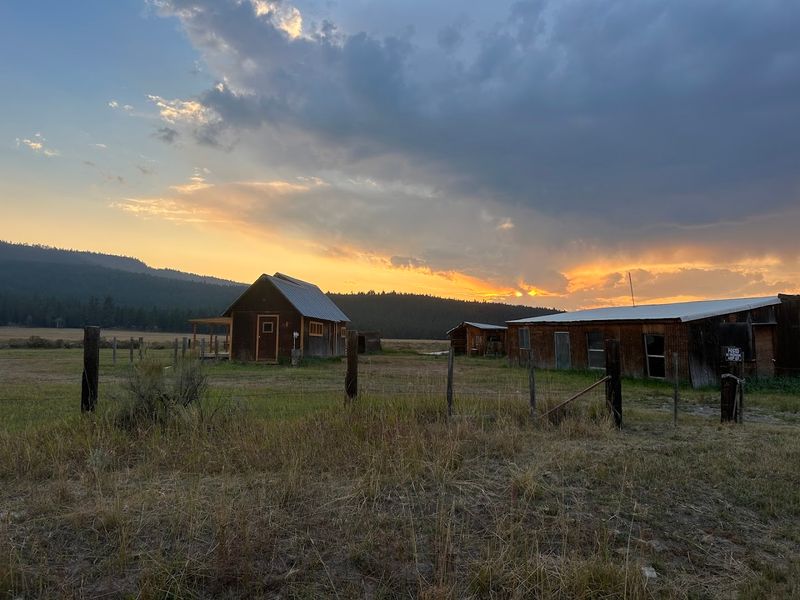
Hard to believe, but Granite once had a population of over 5,000 people. Today, fewer than two dozen people call it home, making the contrast between past and present almost dizzying to think about.
Located in Grant County in eastern Oregon, Granite is one of the more visually striking ghost towns on this road trip. Its remaining structures are spread across a hillside setting that gives the whole place a dramatic, slightly forlorn quality.
The town boomed during the gold rush era and then contracted sharply as the ore ran thin and the economy shifted. What was left behind is a collection of buildings in various states of preservation, each one telling a slightly different chapter of the same rise-and-fall story.
Granite sits at a fairly high elevation, which means weather can change quickly and winters are serious. Summer and early fall are the best times to visit if you want reliable road access and comfortable temperatures for walking around.
One thing that separates Granite from other ghost towns on this list is the sheer scale of what was lost. Standing on its quiet streets and imagining thousands of people filling this same space is a genuinely powerful exercise in historical perspective.
Bring a jacket even in summer because the mountain air carries a chill that no amount of sunshine fully cancels out. Granite lingers in your memory long after you drive away.
7. Cornucopia, Eastern Oregon
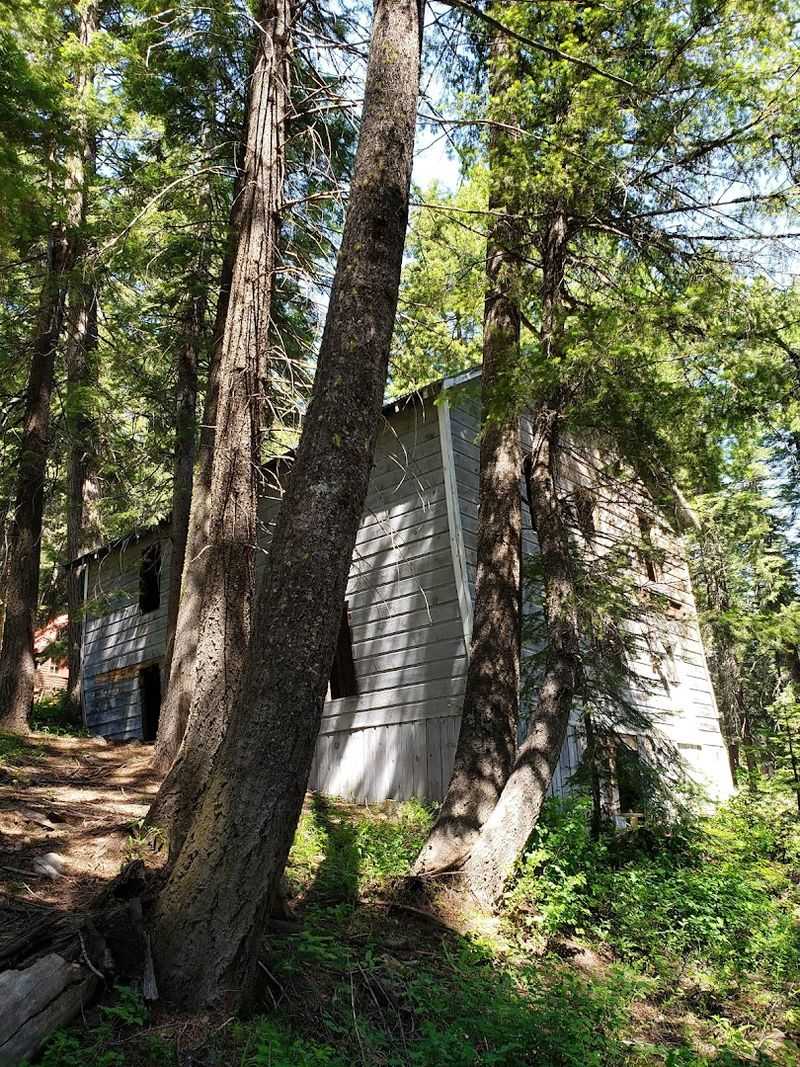
Officially platted in 1886, Cornucopia grew out of the gold mining boom that reshaped much of eastern Oregon during the late 19th century. The town had real momentum for decades before finally going quiet in 1942.
Located near Pine Valley in eastern Oregon, Cornucopia is one of the more remote stops on this road trip. The drive in passes through scenery that feels genuinely wild, with forested ridges and open meadows giving way to the tucked-away valley where the town once stood.
What remains today includes the ruins of several mining-era structures, some partially collapsed and others still holding their shape against the elements. The visual effect is haunting in the best possible way, especially in the soft light of early morning or late afternoon.
Cornucopia now functions primarily as a tourist attraction, drawing history enthusiasts and photographers who appreciate its combination of dramatic landscape and well-documented past. Interpretive information is available on-site to help put the ruins in context.
Road access can be challenging, particularly after wet weather, so checking conditions before you go is genuinely important here. A four-wheel-drive vehicle is ideal.
Cornucopia rewards the effort required to reach it with an atmosphere that feels completely separate from the modern world. Spending time among these ruins, with nothing but birdsong and wind for company, is the kind of travel experience you end up describing to people for years afterward.
8. Bayocean, Oregon Coast
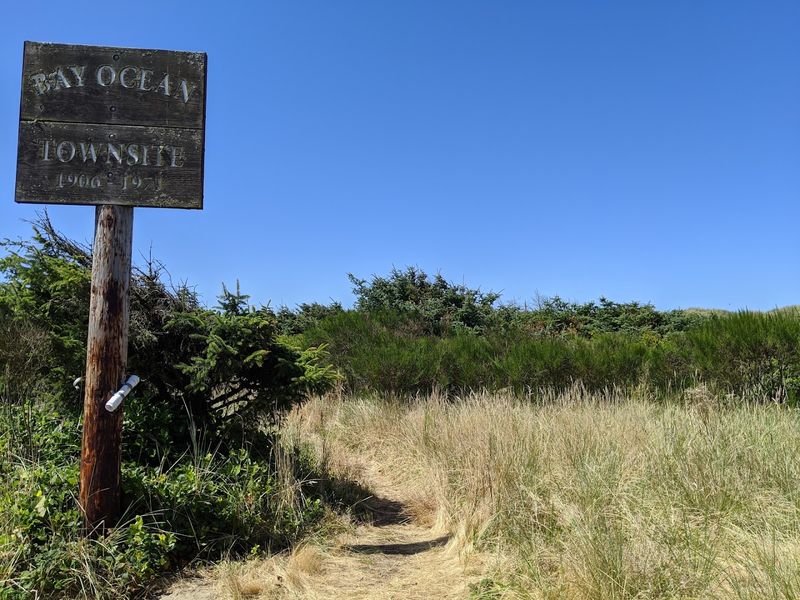
Few ghost town stories are as dramatic as Bayocean’s. Marketed as the “Atlantic City of the West,” this coastal resort town on the Oregon coast once promised luxury, entertainment, and a glamorous Pacific lifestyle to anyone willing to invest in its future.
The problem was the ocean itself. Natural erosion combined with ill-advised human engineering slowly pulled the land out from under the town.
Buildings toppled into the sea. Streets disappeared.
An entire resort community was swallowed by the Pacific over the course of several decades.
Bayocean is located on a spit of land along Tillamook Bay, and what remains today is mostly dune grass, wind, and the occasional structural fragment emerging from the sand. The natural beauty of the location is undeniable, even as it serves as a cautionary tale about building in vulnerable coastal zones.
Hiking out to the Bayocean Spit is a popular activity for visitors who want to experience the site firsthand. The walk is flat and relatively easy, offering sweeping views of Tillamook Bay and the surrounding coastal forest.
Wildlife is abundant here, including shorebirds, harbor seals, and migratory species that use the spit as a resting point. Bayocean manages to be both a sobering history lesson and a genuinely beautiful natural area at the same time.
That rare combination makes it one of the most emotionally resonant stops on this entire Oregon road trip. Nature always gets the last word.
9. Detroit, Willamette Valley Foothills, Oregon
What happened to Detroit, Oregon is unlike anything else on this road trip. The original town was not abandoned by its people or hollowed out by a fading economy.
It was deliberately flooded when the Detroit Dam was completed in the 1950s, and the entire community went underwater.
Detroit Lake now covers the original townsite, and for most of the year, there is nothing to see below the surface. But when water levels drop significantly during dry seasons, the old town begins to reappear.
Streets, foundations, and other structures emerge from the reservoir like a slow-motion reveal from the past.
The current town of Detroit, located in the Willamette Valley foothills along the North Santiam River, sits nearby and gives visitors a base for exploring the area. The drive along the Santiam Highway into this region is genuinely beautiful, winding through tall timber and past cascading mountain streams.
Detroit Lake itself is a popular recreation spot for boating, fishing, and camping, which means the area has infrastructure and services that many ghost town destinations lack. That makes logistics considerably easier for road trippers.
Timing is everything if you want to see the submerged town emerge. Late summer and early fall tend to offer the best conditions, though it varies year to year depending on precipitation levels.
Detroit is the kind of place that reminds you how completely a community can be reshaped by a single infrastructure decision. Its story stays with you.
Dear Reader: This page may contain affiliate links which may earn a commission if you click through and make a purchase. Our independent journalism is not influenced by any advertiser or commercial initiative unless it is clearly marked as sponsored content. As travel products change, please be sure to reconfirm all details and stay up to date with current events to ensure a safe and successful trip.
