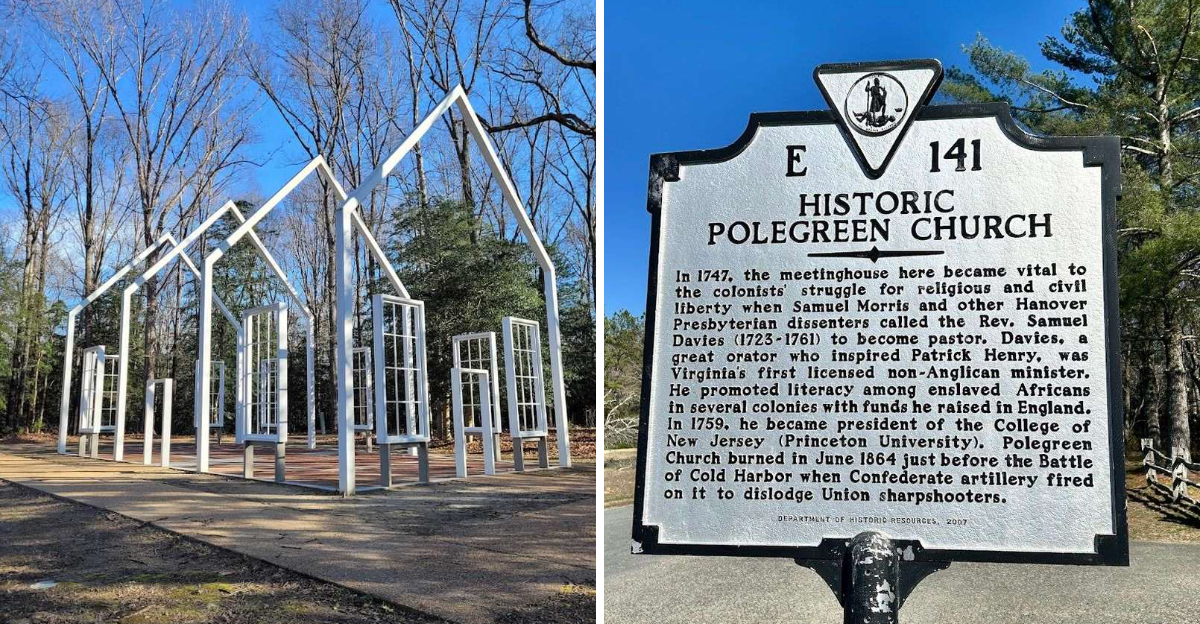
Virginia has its share of surprises, but few are as striking as a church with no walls, no windows, and no roof. A sacred site stands as a steel framework, outlining the exact shape of a historic congregation that helped shape American history.
This is not a ruin or an unfinished project. It is a deliberate, powerful tribute to one of the most important religious landmarks in the country.
The open structure invites you to imagine what once stood there, and the effect is both haunting and unforgettable.
A Ghost Church Like No Other in Virginia
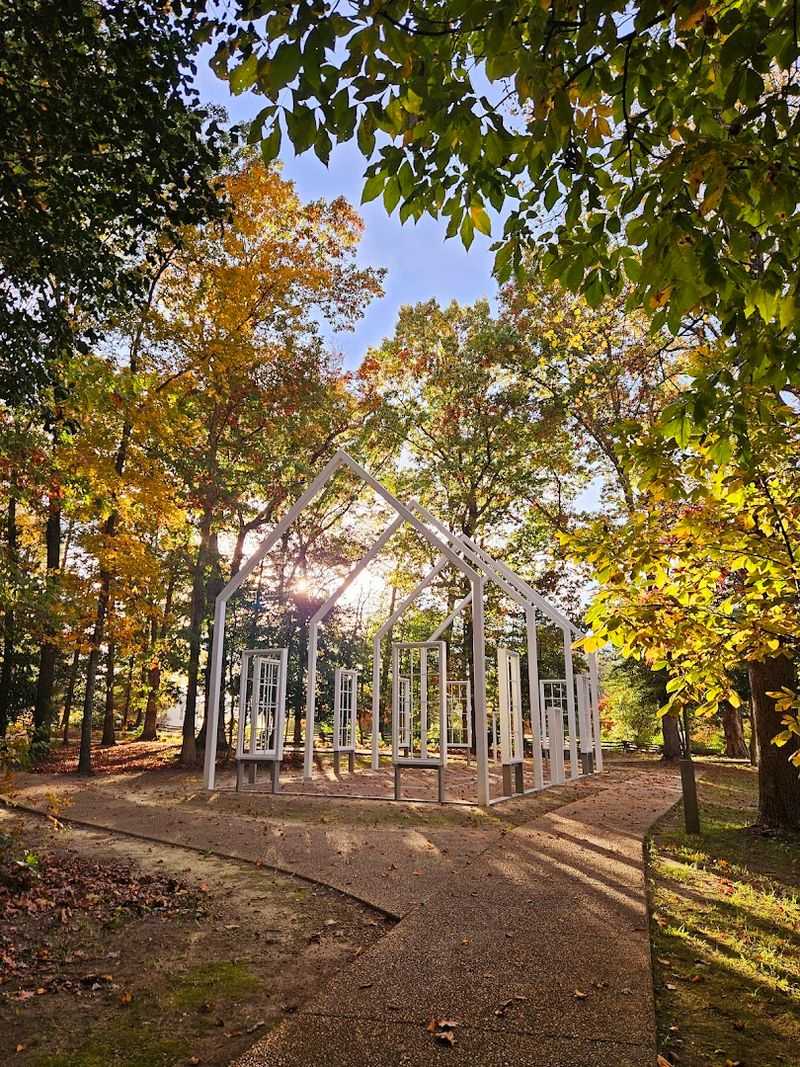
Some places stop you in your tracks, and Historic Polegreen Church is absolutely one of them. Standing on a quiet stretch of land in Mechanicsville, Virginia, this open-air steel frame rises from the ground like a memory made visible.
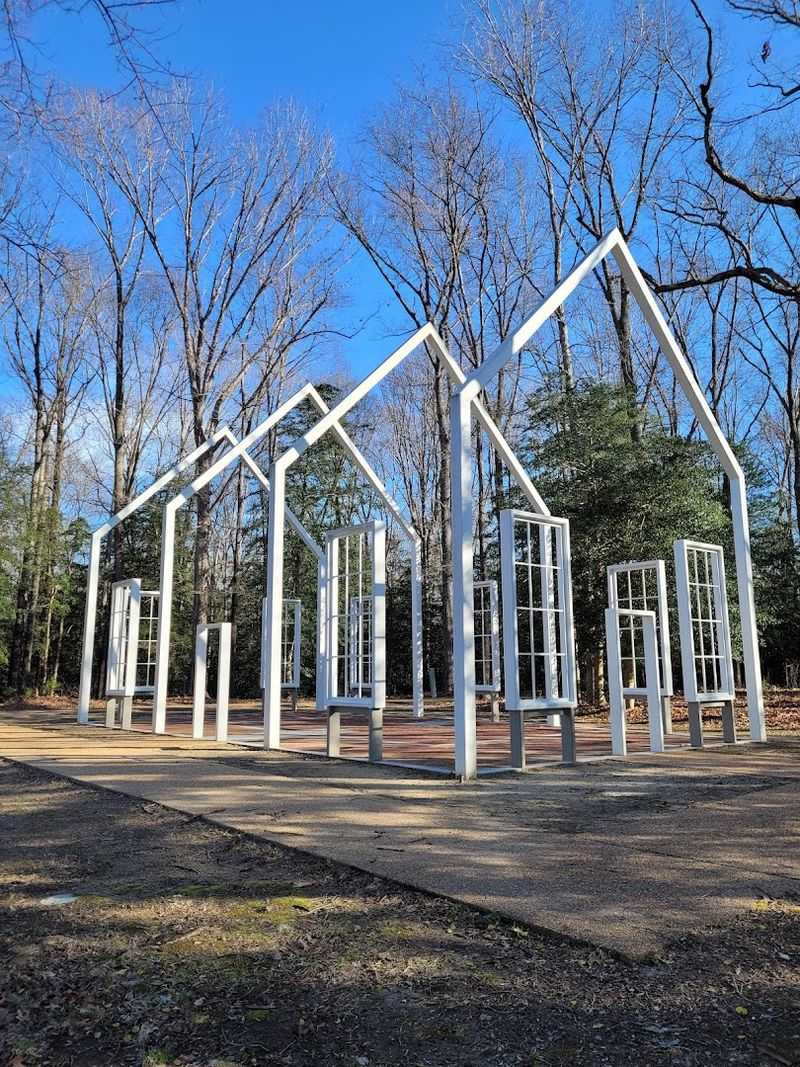
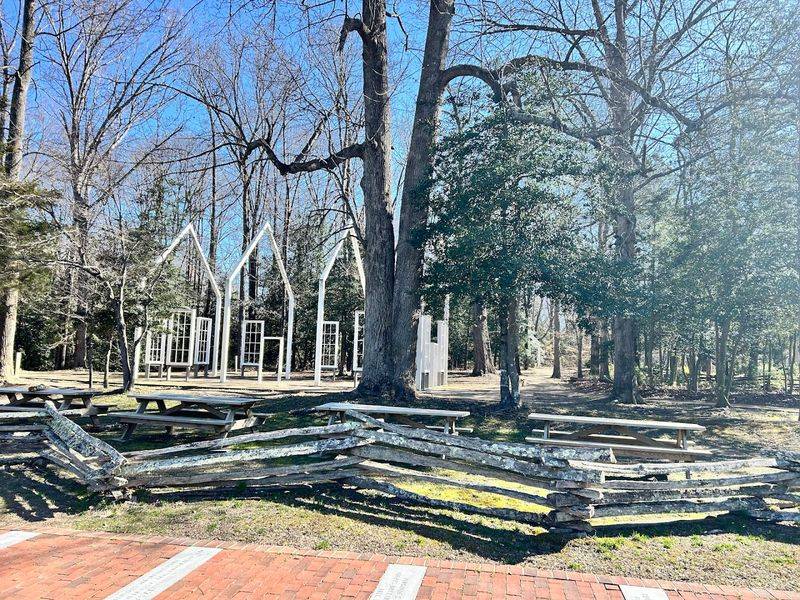
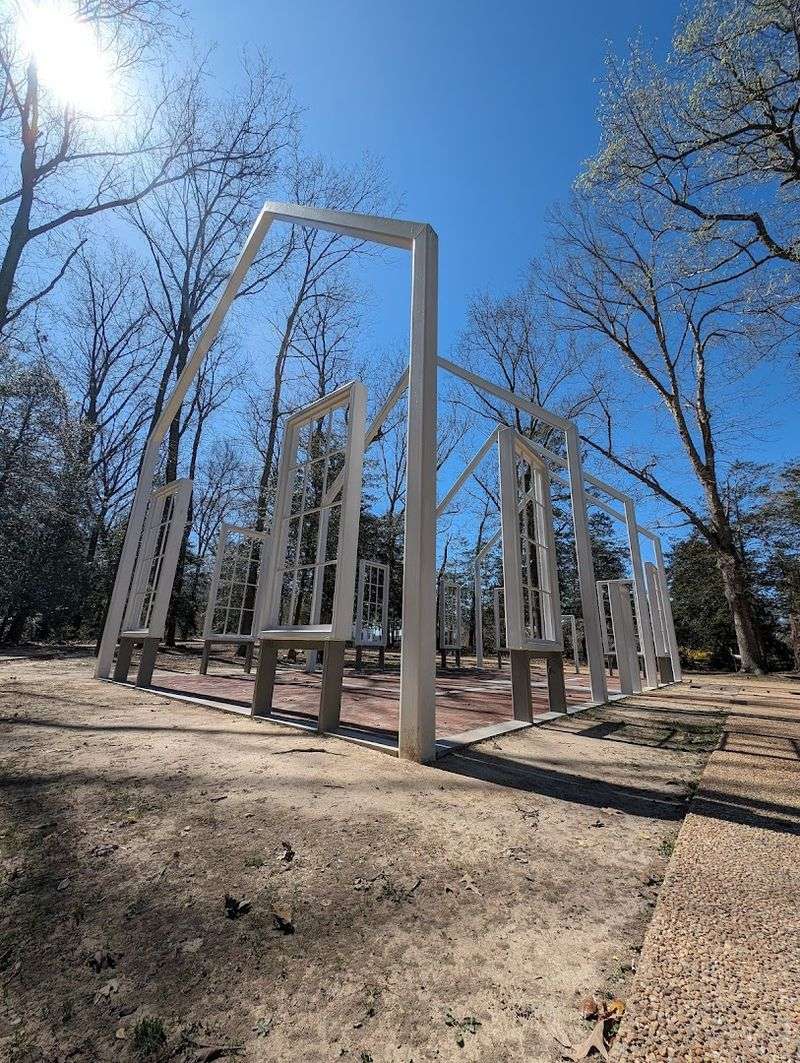
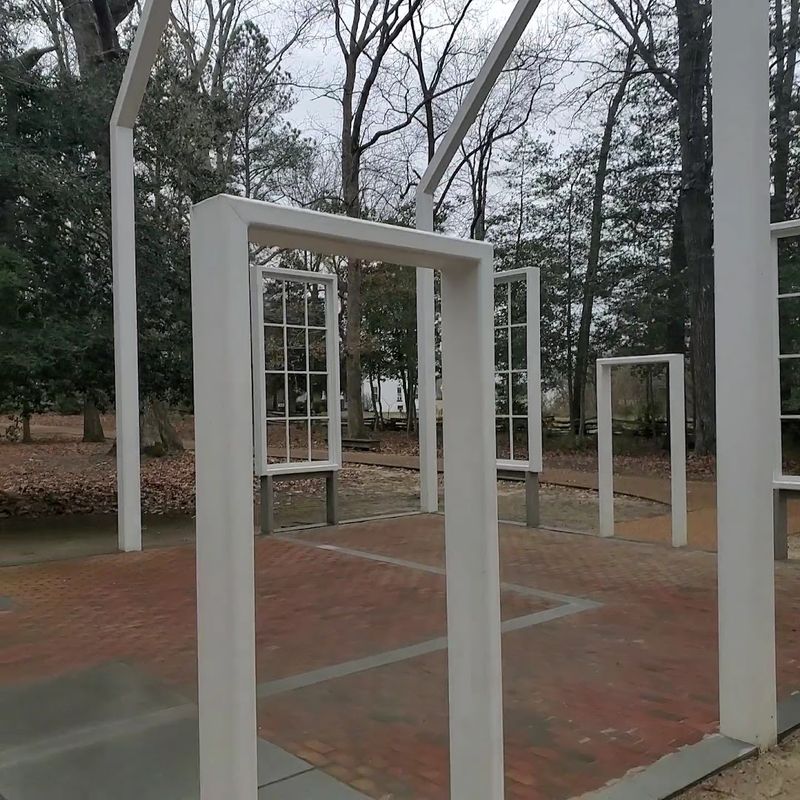
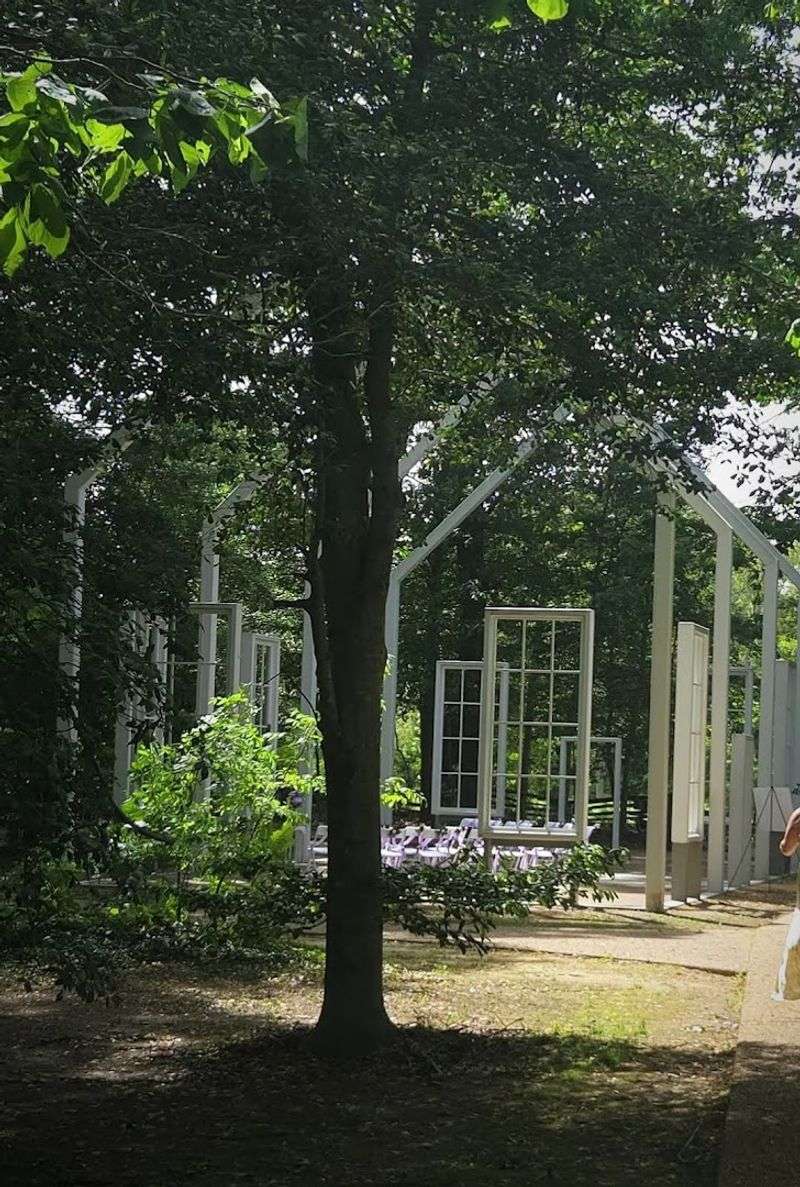
There are no walls, no windows, and no roof. Just elegant white-painted steel beams forming the precise footprint of a church that once stood here centuries ago.
Architect Carlton Abbott designed this striking structure as a deliberate tribute rather than a traditional reconstruction. The idea was to preserve the spirit of the original building without pretending it never burned.
Every beam traces the silhouette of history with quiet authority.
Standing inside the frame, you can see the sky above you, the trees around you, and the ground beneath your feet. It creates a feeling that is hard to describe but impossible to forget.
Virginia has plenty of historic sites, but none carry this kind of raw, open-air emotional power. The structure earns its nickname, the ghost church, with every beam and shadow it casts across the original foundation.
The Remarkable Origin Story Behind Polegreen
Long before the steel frame existed, this land held a wooden church that played an outsized role in American religious history. Established in the mid-1700s, the Hanover Meeting House, as it was also known, became one of the very first non-Anglican churches to take root in Virginia.
That was a genuinely radical act at a time when the Church of England held enormous legal and social power over colonial life.
The church was named after George Polegreen, a landowner from the previous century whose name became permanently attached to this patch of Virginia soil. His legacy lives on every time someone reads the sign at the entrance or walks the brick pathway leading to the steel frame.
Understanding the founding context makes the site feel even more charged with meaning. Virginia in the 1700s was not a place where religious dissent was easily tolerated.
The congregation that gathered here was making a statement simply by showing up. That courageous spirit of independent faith is woven into the very ground where the steel beams now stand, making every visit feel like a quiet act of remembrance.
Reverend Samuel Davies and the Power of the Spoken Word
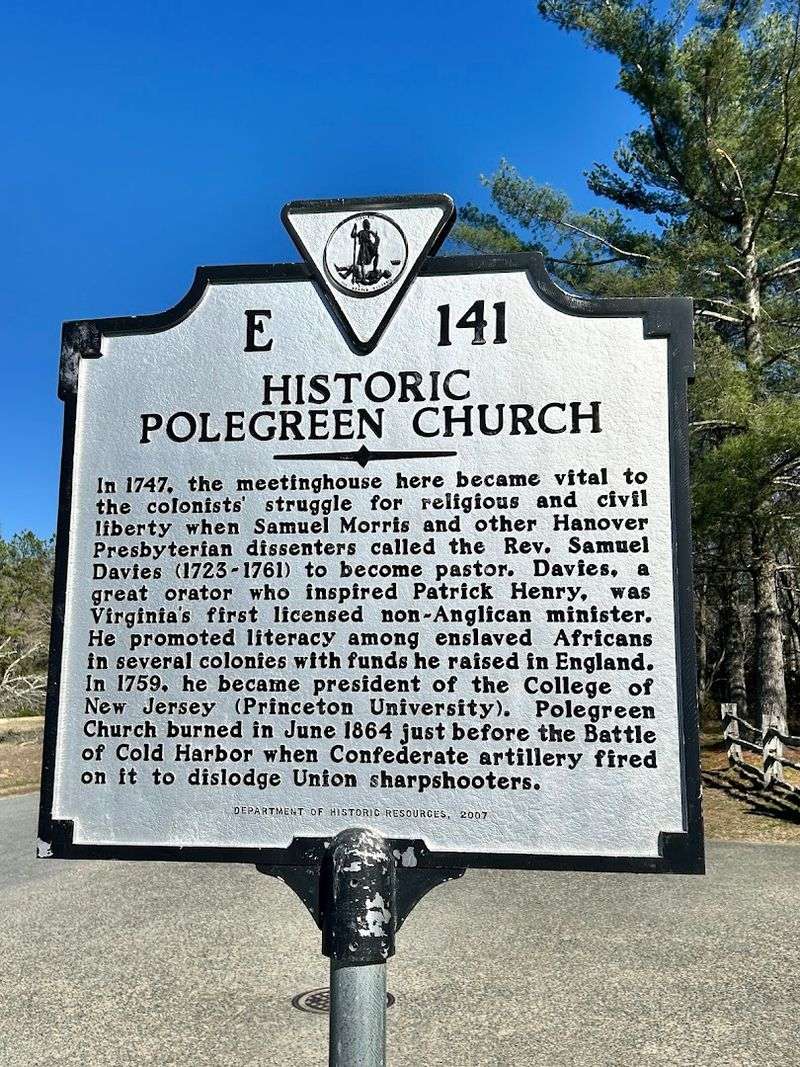
Few pastors in American history left a mark as lasting as Reverend Samuel Davies. Serving the congregation at Polegreen during the mid-1700s, Davies became one of the most celebrated preachers of his era.
His sermons were electric, his arguments sharp, and his voice reportedly capable of filling a room and then some.
What makes his story even more fascinating is the company his words kept. A young Patrick Henry attended services here with his mother, and by his own account, watching Davies preach was the single greatest influence on his development as a public speaker.
Think about that. The oratorical fire behind the famous cry for liberty was kindled right here in Mechanicsville, Virginia.
Davies also championed religious tolerance at a time when that position carried real personal risk. He petitioned for legal protections for dissenting congregations and helped carve out space for non-Anglican worship in a colony that preferred conformity.
His legacy at Historic Polegreen Church is not just spiritual. It is deeply political, profoundly American, and very much alive in the exhibits and interpretive materials spread across the grounds today.
Patrick Henry Learned to Speak Here
Most people associate Patrick Henry with the halls of political power, but his journey to becoming one of history’s greatest orators started right here on this quiet piece of Virginia land. Henry attended services at Polegreen as a boy, and he later credited Reverend Samuel Davies as the model for everything he became as a speaker.
That is not a small claim. That is a direct line between a country church and a revolution.
The site honors this connection thoughtfully. A series of stepping stones along the grounds traces the history of religious freedom in America, and Henry’s name and influence appear prominently in the interpretive displays.
Walking that path feels like following the breadcrumbs of a founding story that rarely gets told in full.
There is something genuinely thrilling about standing in the same open-air space where those early sermons echoed. Henry absorbed lessons here about rhythm, passion, and conviction that he later unleashed on an entire nation.
Historic Polegreen Church does not let visitors forget that great movements often begin in small places, and that a preacher’s voice can travel much further than the walls of any building.
Civil War Destruction and the End of the Original Structure
The original church survived for well over a century before the Civil War arrived and changed everything. In the summer of 1864, Confederate artillery opened fire on the building, not out of any religious animosity, but because Union sharpshooters had taken position inside.
The church became a tactical problem, and it was destroyed as a result.
That moment of destruction ended more than just a building. The congregation, already scattered and struggling, could never gather the resources to rebuild.
The land sat without a structure for generations, holding its history quietly while the rest of Virginia moved forward around it.
Understanding this loss gives the steel skeleton an entirely different emotional weight. The ghost church is not just a design statement.
It is a direct response to that artillery fire, a way of saying that what was taken by war can be reclaimed by memory and intention. The site near Mechanicsville now includes interpretive markers explaining the Civil War engagement, placing the destruction in its full military and historical context.
Virginia has many Civil War sites, but few tell their story through architecture quite as powerfully as this one does.
The Design Genius Behind the Steel Ghost Frame
Not every memorial gets its design right, but Carlton Abbott absolutely nailed this one. Tasked with commemorating a church that no longer existed in physical form, he made the bold choice to build its outline rather than its replica.
The result is a white-painted steel frame that traces the original church’s dimensions with architectural precision, rising from the same foundation stones that supported the wooden structure centuries ago.
The design works on multiple levels at once. Practically, it preserves the footprint without claiming to be something it is not.
Emotionally, the open frame invites the landscape in, letting sunlight, rain, and wind pass through the space as if the building itself is breathing. Philosophically, it asks visitors to fill in the gaps with their own imagination and understanding.
Abbott’s creation has been widely praised for its restraint and intelligence. At Historic Polegreen Church, the absence of walls becomes the most powerful architectural statement of all.
The structure proves that sometimes the most honest way to honor the past is to show exactly what is missing. Virginia is lucky to have a site this thoughtfully conceived sitting on its historic landscape.
Walking the Grounds: What to Expect on Your Visit
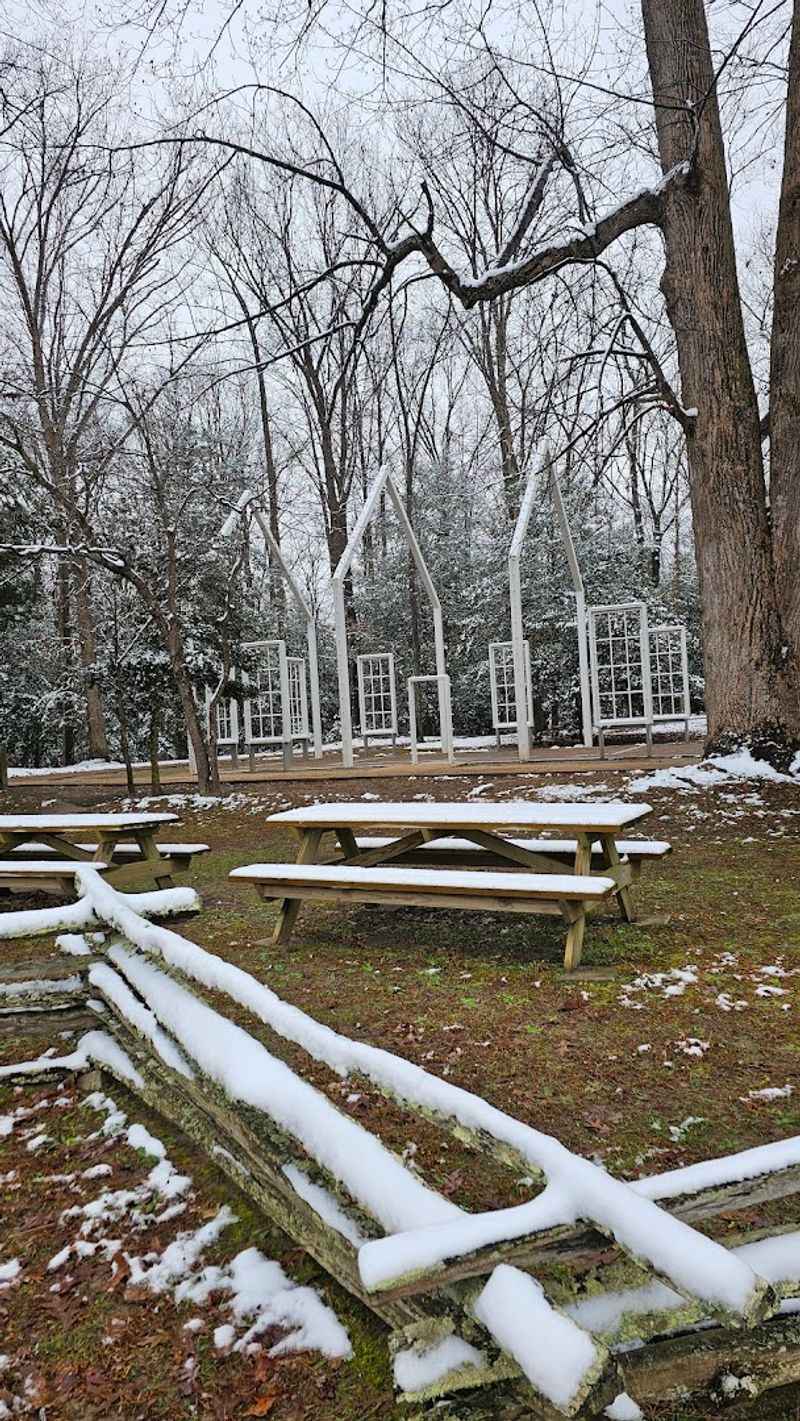
Arriving at Historic Polegreen Church for the first time is a genuinely peaceful experience. The grounds stretch across preserved acres of Virginia countryside, and the whole site invites slow, thoughtful exploration rather than a rushed walk-through.
Start at the visitor center if it is open, where exhibits and displays lay out the full sweep of the site’s history in clear, accessible language.
From there, the brick pathway leads you past the stepping stones, each one inscribed with milestones in the history of religious freedom in America. The sequence builds a compelling narrative that connects this small Virginia property to the broadest possible story of human rights and conscience.
The steel frame itself sits at the heart of the grounds, and spending time inside it is the undeniable highlight of any visit. Look up through the open roof.
Look out through the open walls. Feel the scale of the original congregation’s space around you.
The site is free to enter, open year-round from sunrise to sunset, and requires no advance booking for a self-guided visit. Bring comfortable shoes, a sense of curiosity, and maybe a little extra time to simply sit and take it all in.
Religious Freedom Told in Stone and Steel
One of the most quietly powerful features of this entire site is the series of stepping stones that line the main pathway. Each stone marks a significant moment in the long, complicated story of religious freedom in America, from the earliest colonial struggles through the founding era and beyond.
Walking the path feels like reading a history book one sentence at a time.
The stones do not lecture or preach. They simply present moments, names, and turning points with dignified brevity, trusting visitors to make their own connections.
That restraint is exactly right for a site that has always been about the right of people to think and believe for themselves.
Historic Polegreen Church takes this educational mission seriously without ever becoming dry or academic. The combination of the stepping stones, the interpretive panels near the steel frame, and the visitor center exhibits creates a layered experience that rewards careful attention.
Virginia’s history of religious dissent is not always taught in mainstream classrooms, which makes this site all the more valuable as a place where that story gets told honestly, fully, and with real artistic flair.
Weddings, Events, and the Living Legacy of the Site
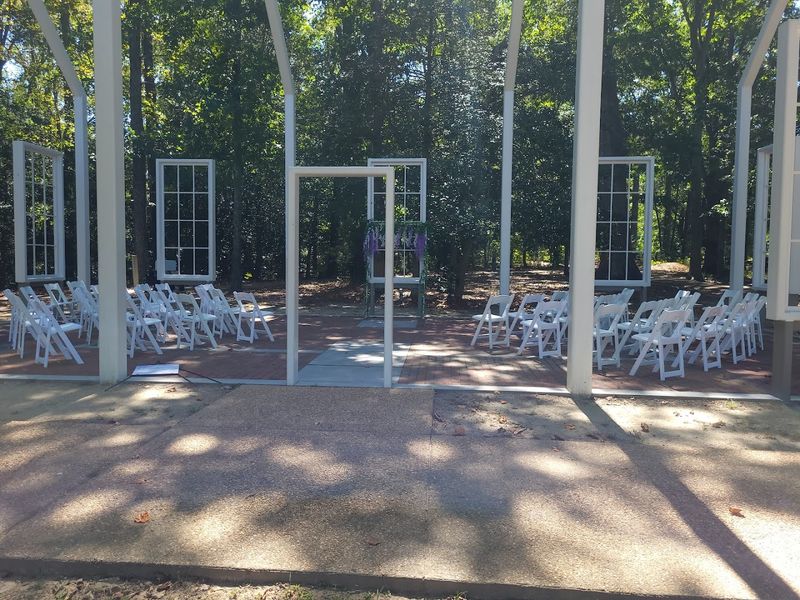
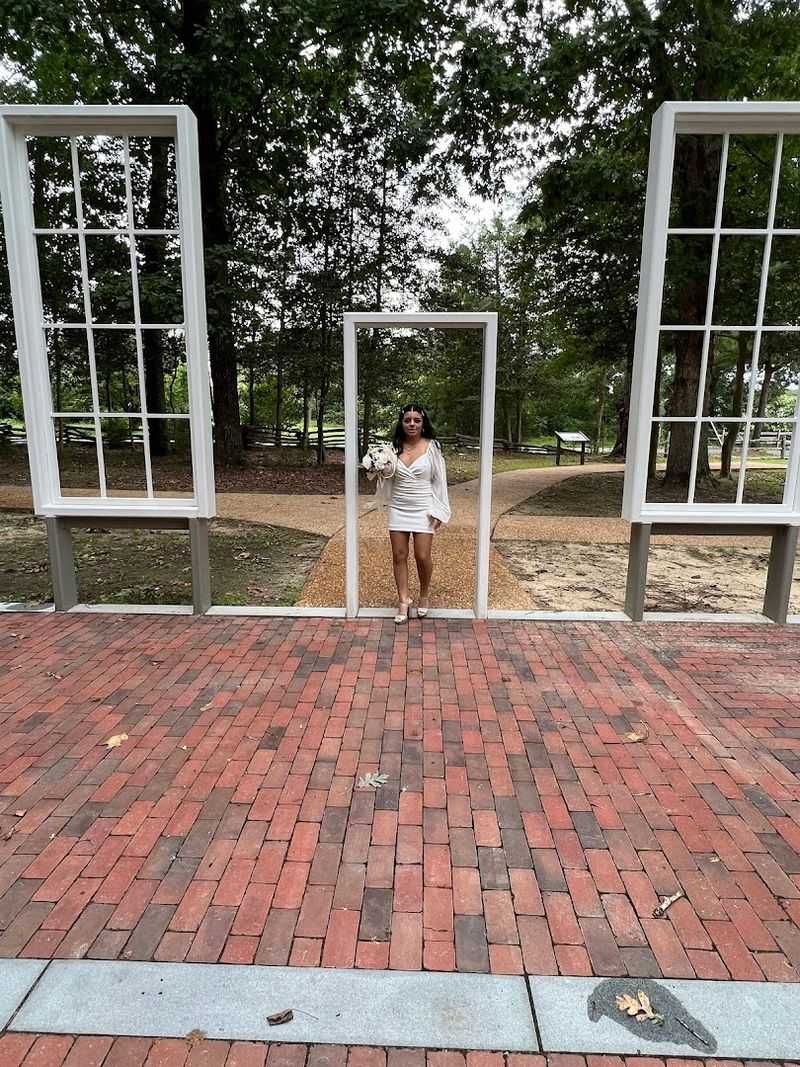
History does not have to be frozen in place to be meaningful, and Historic Polegreen Church proves that beautifully. The site has become one of the most distinctive and sought-after wedding venues in the Mechanicsville area, drawing couples who want a ceremony location that carries genuine weight and visual drama.
Getting married inside an open-air steel frame on sacred historic ground is about as memorable as it gets.
The grounds accommodate large tents for receptions, and the surrounding preserved acreage provides a stunning natural backdrop that changes beautifully with the seasons. Autumn visits bring warm foliage colors that frame the white steel beams in spectacular fashion, while spring turns the whole property lush and green.
Beyond weddings, the site hosts educational tours, community events, and school group visits throughout the year. The staff and foundation team work to keep the property accessible and welcoming for all kinds of gatherings.
There is something genuinely moving about a place that was once silenced by artillery fire now filling regularly with the sounds of celebration, learning, and community. The living legacy of this Virginia landmark is very much in progress.
Plan Your Trip to 6411 Heatherwood Drive, Mechanicsville
Getting to Historic Polegreen Church is straightforward, and the reward for making the trip is absolutely worth it. The site sits at 6411 Heatherwood Drive in Mechanicsville, Virginia, just a short drive from Richmond and easily reachable from most parts of the greater metro area.
Parking is available on site, and the grounds are open every single day from sunrise to sunset at no charge.
The visitor center operates on a more limited schedule, so checking the official website before your visit is a smart move if you want to make sure the exhibits are accessible. That said, a self-guided tour using the on-site signage and your phone is genuinely satisfying and takes roughly thirty to forty-five minutes at a relaxed pace.
Bring a camera, because this place photographs beautifully in almost every kind of light. The steel frame at golden hour is particularly striking, and the grounds look magical when dusted with snow in winter.
Virginia has no shortage of historic destinations, but Historic Polegreen Church occupies a category entirely its own. Pack your curiosity, leave your schedule loose, and let this remarkable ghost church do what it does best: make history feel absolutely alive.
Dear Reader: This page may contain affiliate links which may earn a commission if you click through and make a purchase. Our independent journalism is not influenced by any advertiser or commercial initiative unless it is clearly marked as sponsored content. As travel products change, please be sure to reconfirm all details and stay up to date with current events to ensure a safe and successful trip.
