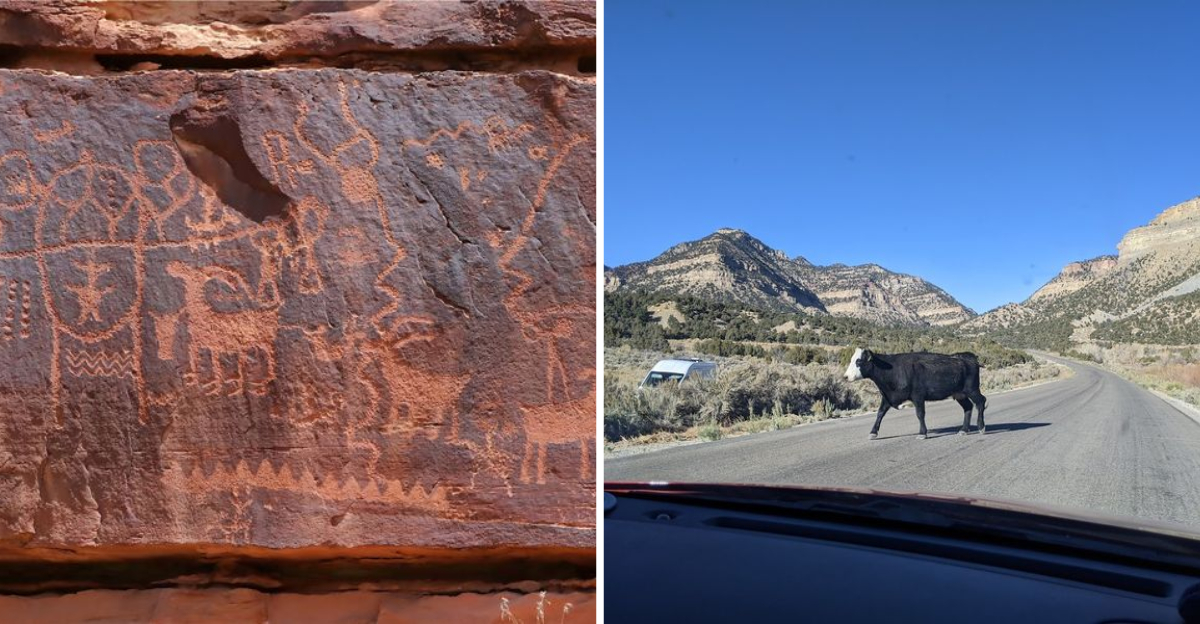
This canyon in eastern Utah stretches for miles and holds more ancient rock art than almost anywhere else on Earth. The first time I heard about it, I could not believe a place like this existed so quietly. Thousands of petroglyphs and pictographs line the canyon walls, created over a thousand years ago.
The road through here feels almost empty on most days. You might pass a few curious travelers, maybe a hawk circling overhead, but mostly it is just you and the rocks and all that history pressed into stone. This canyon earned the nickname the world’s longest art gallery.
That title is well deserved. The place stays with you long after you have driven back to the highway.
The World’s Longest Art Gallery, Right Here in Utah
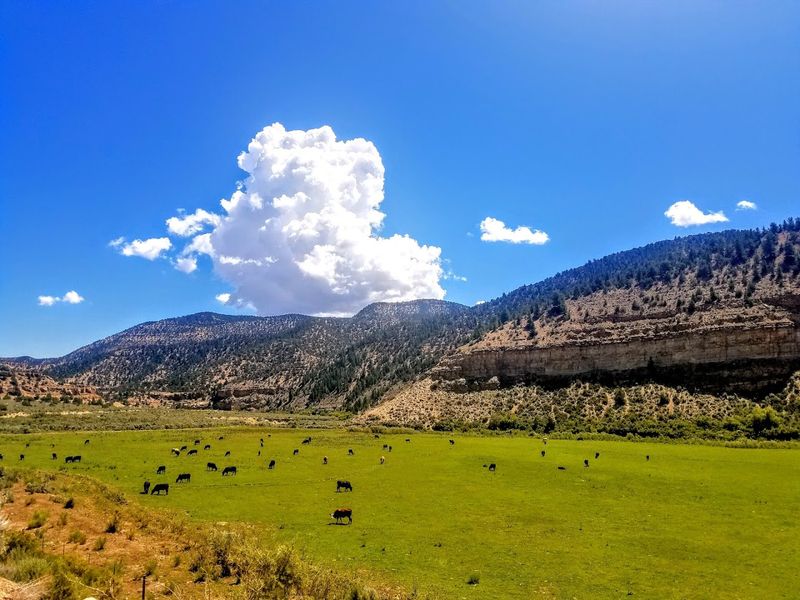
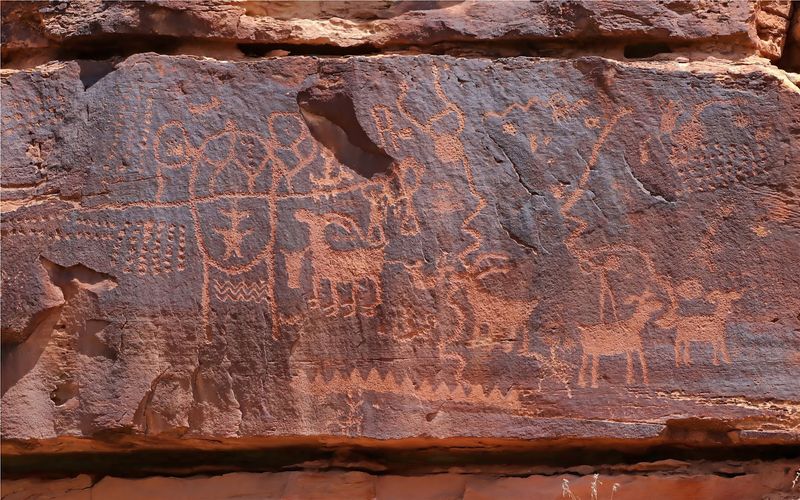
Most people have never heard of Nine Mile Canyon, and that is honestly one of the strangest things about it. Researchers estimate the canyon holds over 10,000 individual rock art images spread across roughly 1,000 separate sites, making it one of the densest concentrations of prehistoric art in all of North America.
The canyon earned the nickname the world’s longest art gallery, and it is not just a catchy phrase. Stretching approximately 40 to 45 miles through Carbon and Duchesne counties in eastern Utah, the sheer scale of what ancient people left behind here is staggering.
Some researchers believe the actual number of images could be ten times higher than current estimates. The art includes both petroglyphs, which are carved directly into rock surfaces, and pictographs, which are painted onto the stone.
Hunting scenes, abstract designs, and human figures all appear along the canyon walls.
What makes this place feel so remarkable is not just the volume of art but the silence around it. There are no crowds, no long lines, and no gift shops.
Just open desert, warm sandstone, and thousands of years of human expression waiting to be noticed by anyone patient enough to look.
Who Made All This Art, and When
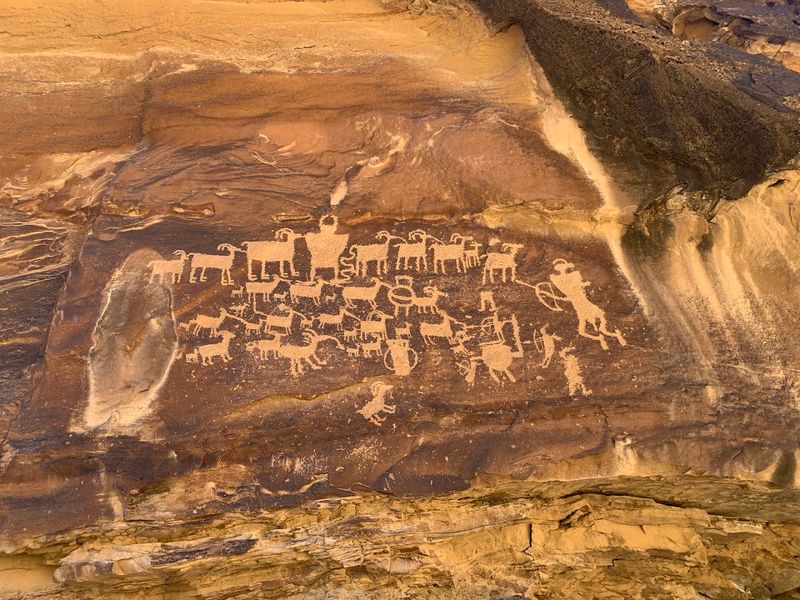
The majority of the rock art in Nine Mile Canyon was created by the Fremont culture, a group of prehistoric people who lived in this region from roughly 950 to 1250 AD. They were skilled farmers and hunters who left behind an extraordinary visual record of their world, carved and painted across canyon walls that have survived for centuries.
The Fremont people were not a single unified group but rather a collection of communities sharing similar artistic and cultural traditions. Their art tends to feature trapezoidal human figures, bighorn sheep, and intricate abstract patterns that researchers are still working to fully understand.
Later, around the 16th century, the Ute people also contributed to the canyon’s rock art tradition. Their imagery sits alongside the older Fremont work, creating a layered visual timeline that spans hundreds of years of human life in this desert landscape.
Looking at these images up close, you get a real sense that these were not random markings. They feel intentional, expressive, and deeply personal.
Whether they recorded hunts, ceremonies, or territorial boundaries, each image represents a moment in someone’s life that they felt was worth preserving permanently in stone.
Getting There Is Easier Than You Think
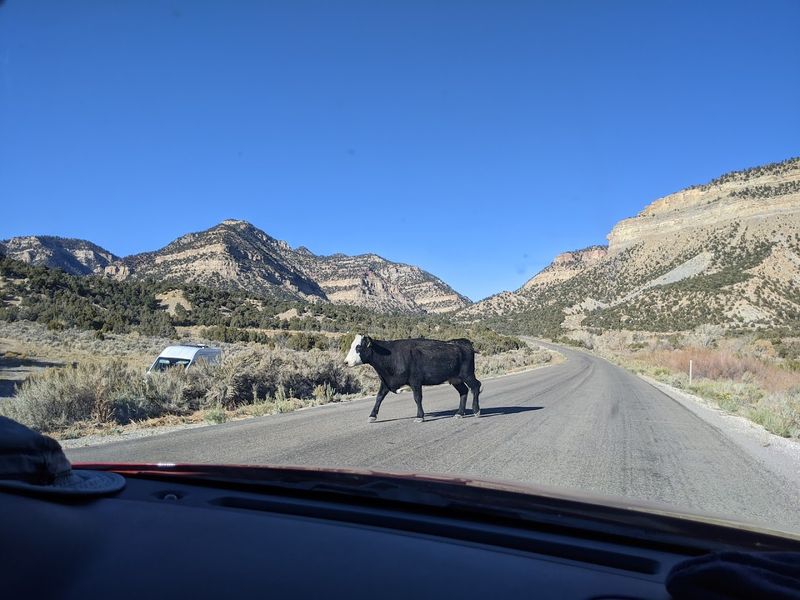
Nine Mile Canyon has a reputation for being remote and hard to reach, and while it is certainly off the beaten path, getting there is more straightforward than most people expect. The canyon sits roughly a three-hour drive from Salt Lake City, making it a very doable day trip or a relaxed weekend getaway.
For many years, the road through the canyon was unpaved and rough, which discouraged casual visitors. That changed between 2013 and 2014 when the main road was fully paved, dramatically improving the experience for anyone driving a standard passenger vehicle.
The nearest town is Wellington, Utah, which sits at the canyon’s western entrance and serves as a practical launching point for the drive. From Wellington, you simply head north and follow Nine Mile Canyon Road, which takes you deep into the canyon at a comfortable pace.
Fuel up before you leave town. There are no gas stations inside the canyon, and services are extremely limited once you are on the road.
Bringing extra water and snacks is a smart move. The drive itself is scenic from the very beginning, with the landscape shifting gradually from open plains into dramatic sandstone walls that seem to close in around you in the best possible way.
What to Expect When You Arrive
Nine Mile Canyon does not greet you with a visitor center or a glossy brochure rack. The experience here is raw and self-directed, which is actually a big part of its appeal.
You are essentially exploring on your own terms, at your own pace, with nothing but canyon walls and open sky around you.
The rock art sites are scattered along the canyon road, and many of the best panels are visible right from your car or after a very short walk from a pullout area. Some panels require a bit more effort to reach, but nothing demands serious hiking experience or technical skills.
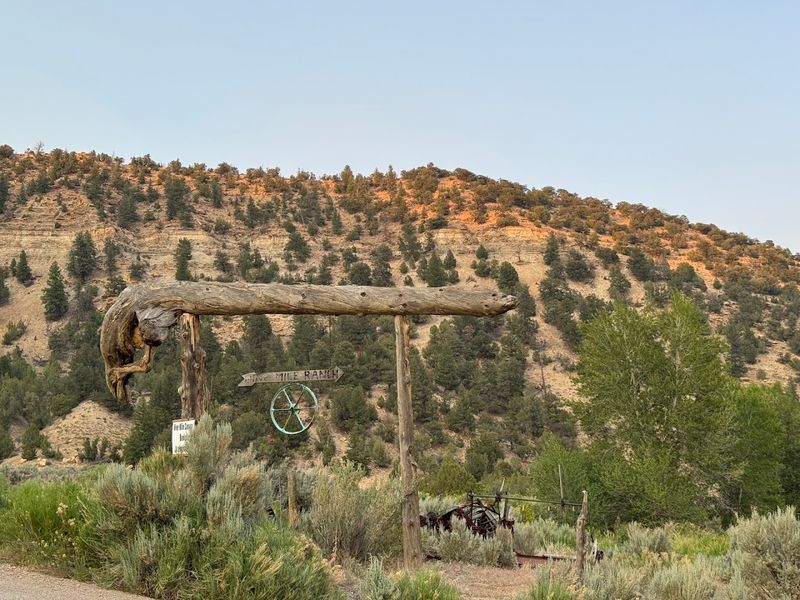
The Nine Mile Ranch is the one spot inside the canyon that offers lodging and camping, making it a good base if you want to spend more than a day exploring. Beyond that, amenities are essentially nonexistent, so planning ahead matters.
Morning light tends to work beautifully for viewing and photographing the rock art, as the sun hits the canyon walls at angles that bring out texture and detail. Afternoons can get warm, especially in summer, so carrying plenty of water is not optional.
The canyon rewards slow, attentive visitors far more than those rushing through to check a box.
The Buffalo Soldiers and Pioneer History Hidden in the Canyon
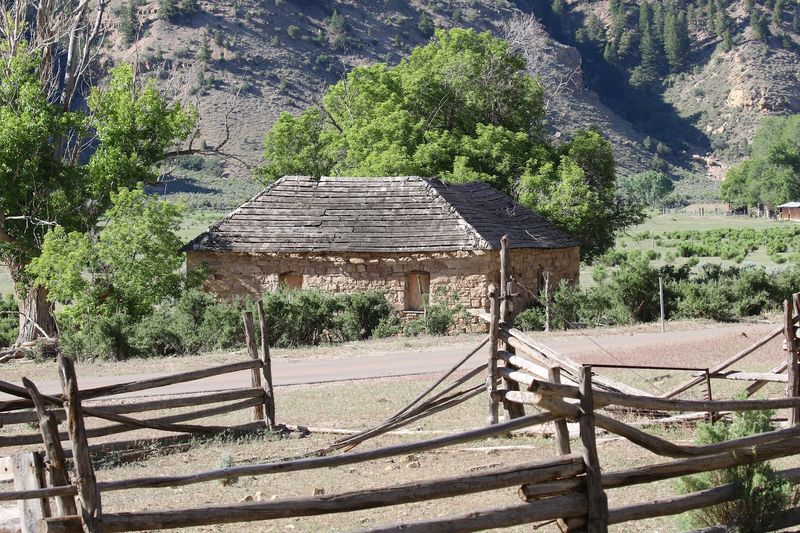
The story of Nine Mile Canyon does not start and end with ancient rock art. The canyon also holds a fascinating layer of 19th-century American history that most visitors walk right past without realizing it.
During the 1880s, the Buffalo Soldiers, African American military units who served in the U.S. Army after the Civil War, helped construct a telegraph line that ran through the canyon.
Remnants of those original telegraph poles can still be spotted along the route today, standing quietly among the desert scrub like forgotten sentinels.
The canyon also served as a supply route and stagecoach corridor during the settlement era, connecting communities across this rugged stretch of eastern Utah. Evidence of pioneer homesteads and old stagecoach stops can be found scattered throughout the landscape.
There is something genuinely moving about standing in a place where prehistoric art, military history, and frontier life all overlap within the same narrow canyon walls. It is a reminder that this landscape has been drawing people in for a very long time, each leaving their own mark in different ways.
The Buffalo Soldiers chapter alone is worth reading up on before you visit, because it adds real depth to what you see out there.
Why This Place Is Endangered and Why That Matters
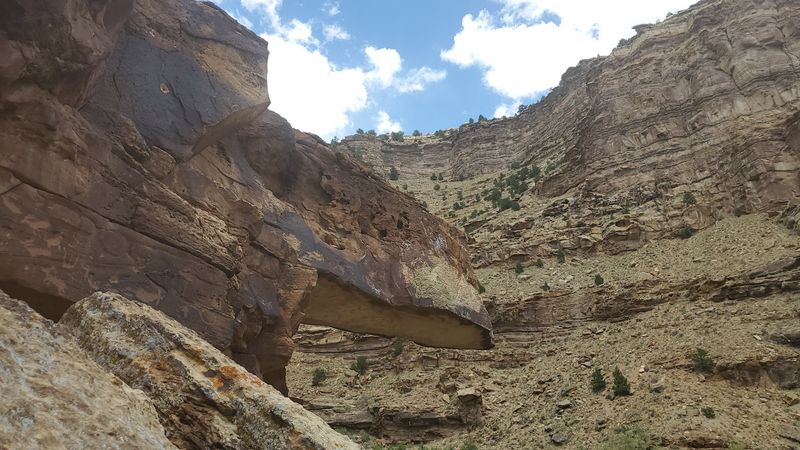
Nine Mile Canyon is extraordinary, but it is also fragile. The canyon’s rock art faces a serious and ongoing threat from industrial activity, specifically the heavy truck traffic associated with natural gas extraction operations in the surrounding region.
Those trucks kick up enormous amounts of dust as they travel through the canyon, and that dust settles onto the ancient rock surfaces. Over time, the accumulation can obscure, erode, and permanently damage petroglyphs and pictographs that have survived for over a thousand years.
It is a slow and quiet kind of destruction, but the effects are real.
In 2004, the National Trust for Historic Preservation placed Nine Mile Canyon on its list of America’s Most Endangered Places, drawing national attention to the problem. Several archaeological sites within the canyon have since been added to the National Register of Historic Places, offering some level of formal recognition and protection.
Visiting places like this responsibly actually helps. When more people show up, learn the history, and spread the word, it builds the kind of public awareness that supports preservation efforts.
Staying on designated paths, not touching the rock art, and respecting the sites makes a real difference. This canyon has survived a thousand years.
It deserves a fighting chance at a thousand more.
Tips for Making the Most of Your Visit
A little preparation goes a long way in Nine Mile Canyon. The canyon rewards visitors who come ready to slow down, pay attention, and spend real time with the landscape rather than rushing from one site to the next.
Bring more water than you think you need. The desert sun is intense, and shade is limited along most of the canyon road.
A hat, sunscreen, and sturdy walking shoes will make your experience significantly more comfortable, especially if you plan to get out of the car and explore pullout areas on foot.
A pair of binoculars is genuinely useful here. Some rock art panels sit higher on canyon walls and are easier to appreciate with a little magnification.
A camera with a zoom lens works well for the same reason, and morning light really does produce the best results for photography.
Cell service inside the canyon is essentially nonexistent, so download offline maps before you leave Wellington. There are printed guides available that identify major rock art sites along the canyon road, and picking one up beforehand helps you navigate without missing the best panels.
Most importantly, go with curiosity rather than a checklist mindset. Nine Mile Canyon is the kind of place that reveals itself gradually, and the longer you linger, the more it gives back.
Address: Nine Mile Canyon Road, Wellington, UT
