Millions of perfectly round iron spheres sit quietly in the red desert sand of southern Utah, as if someone dropped a giant bag of marbles and never came back. The first time I saw them clustered together, I crouched down to make sure my eyes were not playing tricks. These ancient iron concretions formed underground over millions of years.
They are one of the strangest and most beautiful geological secrets in the state. The monument stretches across rugged canyons, towering sandstone cliffs, and wild backcountry roads that feel like another planet. What makes this place so special is not just the scenery but the layers of mystery hiding beneath your boots.
And yes, as tempting as it is, these little iron orbs are off-limits to take home.
What Exactly Are Moqui Marbles and Why Do They Look So Perfect
Nature has a funny way of making something that looks handmade. Moqui Marbles are iron-oxide concretions, which basically means they formed when iron minerals slowly gathered around grains of sandstone underground, layer by layer, over millions of years.
The outer shell is made of hematite, a hard and dense form of iron oxide, while the inside is softer sandstone. That contrast in hardness is exactly what gives them their smooth, almost machine-perfect spherical shape.
As the surrounding Navajo Sandstone erodes away over time, the tougher Moqui Marbles get left behind on the surface. They range in size from as small as a pea to as large as a grapefruit, roughly up to eight inches across.
Some are perfectly round, others form flat discs, hollow tubes, or even fused clusters that look like tiny snowmen. The variety is part of what makes finding them feel like a treasure hunt every single time you visit.
Geologists estimate they formed between two and twenty-five million years ago, making each one older than almost anything you will ever hold in your hand.
The Ancient Hopi Name and the Spiritual Story Behind These Stones
The name Moqui comes from a Hopi word meaning dear departed ones, and the story tied to that name is genuinely moving. According to Hopi tradition, the spirits of ancestral loved ones play with these marbles at night on the desert floor.
By morning, they leave the spheres behind as small signs that they are happy and at peace. That belief gives these otherwise geological objects a warmth that purely scientific descriptions cannot fully capture.
They are also sometimes called thunderballs or shaman stones, names that hint at the reverence different cultures have felt toward them over centuries. For the Hopi people, the landscape of the Colorado Plateau is deeply sacred, and the Moqui Marbles are woven into that spiritual geography in a meaningful way.
Knowing that history changes how you look at them scattered across the desert floor. They stop being just rocks and start feeling like something more intentional, more connected to the people who lived here long before any monument boundaries existed.
That layered meaning is part of what makes Grand Staircase-Escalante such a rich and humbling place to explore.
Spencer Flat: The Best Spot Inside the Monument to Find Them
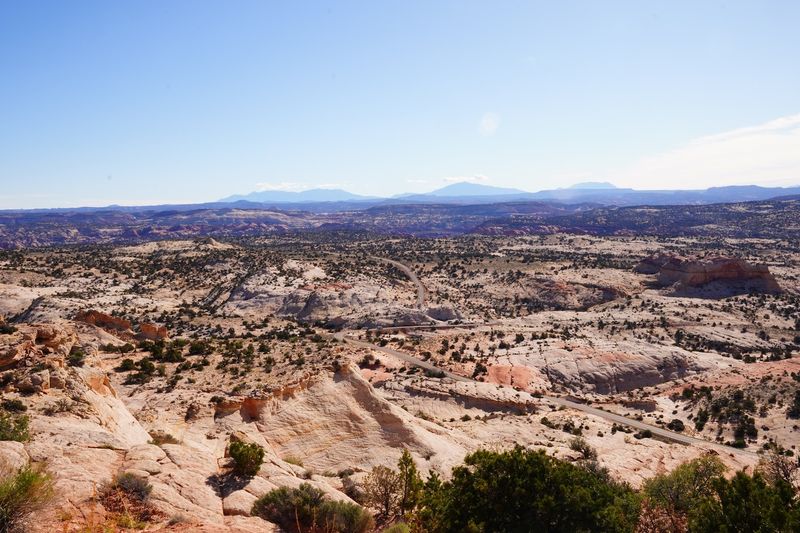
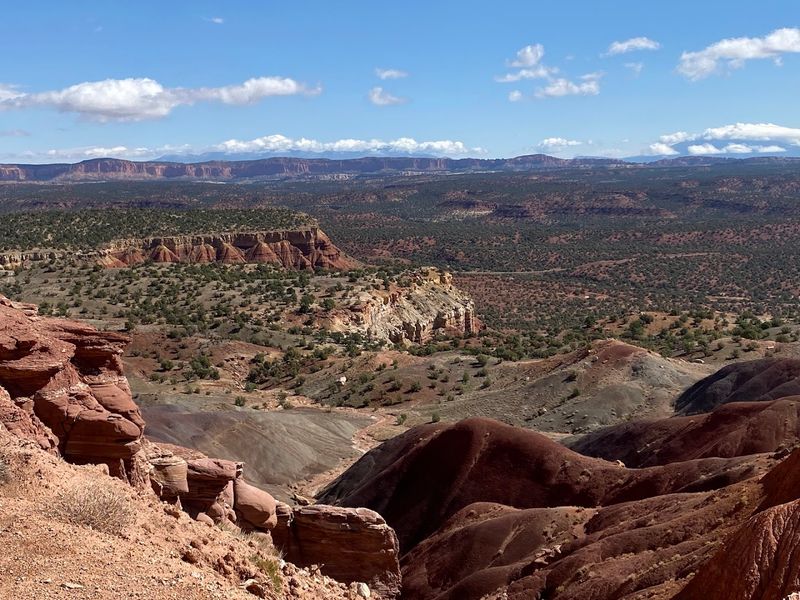
Not every corner of the monument offers the same density of Moqui Marbles, and Spencer Flat is the place that consistently delivers the most impressive displays. Located in the Escalante Canyons section of the monument, this area sits atop exposed Navajo Sandstone where erosion has been working steadily for ages.
The result is a surface practically carpeted with these iron spheres in certain spots. Some sit alone, others pile up in clusters along small ridges and depressions in the rock.
Getting there requires a bit of planning since the monument has no paved entrance roads in most sections and services are minimal at best. Downloading an offline map before you go is genuinely important here, not optional.
Cell service disappears quickly once you leave the main highways.
Bring more water than you think you need, especially in warmer months when temperatures can climb fast. The hike itself is not technically demanding, but the desert environment demands respect and preparation.
Once you arrive and see the marbles spread out across the sandstone in the afternoon light, the effort feels completely worth it.
The Mars Connection That Made Scientists Pay Attention
Here is a detail that genuinely makes you stop and think about how connected things are across the universe. In 2004, NASA’s Mars Exploration Rover Opportunity discovered tiny iron concretions on the Martian surface that looked remarkably similar to Moqui Marbles.
Scientists nicknamed them Martian blueberries, and their discovery was a significant moment in planetary science. The presence of these iron spheres on Mars suggested that liquid water once flowed there, because the same water-driven mineral precipitation process that created the Utah marbles likely formed them on Mars too.
The Utah concretions became a key comparison point for understanding Martian geology. Researchers studied the formation process of Moqui Marbles closely to build models for what happened on the red planet billions of years ago.
That connection between a remote desert in southern Utah and the surface of Mars is quietly remarkable. It means that every time you crouch down to look at one of these iron spheres on the desert floor, you are looking at something that helped scientists understand another world.
Few geological features anywhere on Earth carry that kind of cosmic weight alongside their earthly beauty.
Why Taking Even One Is Illegal and What That Rule Actually Protects
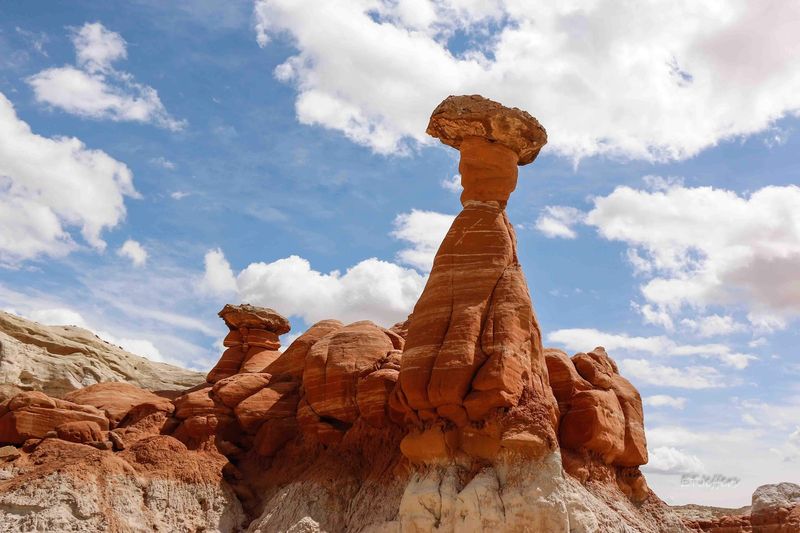
The rule is clear and it applies to every single visitor without exception: removing Moqui Marbles, or any rock, plant, fossil, or artifact, from Grand Staircase-Escalante National Monument is illegal. The Bureau of Land Management, which oversees the monument, has a simple guiding principle for visitors: take only photographs, leave only footprints.
That rule exists for good reason. If every one of the thousands of annual visitors pocketed just one marble, the surface deposits that took millions of years to form could be stripped bare within a generation.
The same protection covers the monument’s petrified wood, fossils, and archaeological artifacts, all of which are equally irreplaceable. Grand Staircase-Escalante has yielded some of the most significant dinosaur fossil discoveries in North America, so the stakes for preservation are genuinely high.
Violations can result in fines and legal consequences, but honestly, the more compelling reason to leave them is simply respect. These objects belong to the landscape, to the science they support, and to the cultural traditions of the people who named them.
Leaving them exactly where you found them means the next visitor gets the same jaw-dropping experience you just had.
The Wider Monument: Canyons, Slot Hikes, and Untouched Backcountry
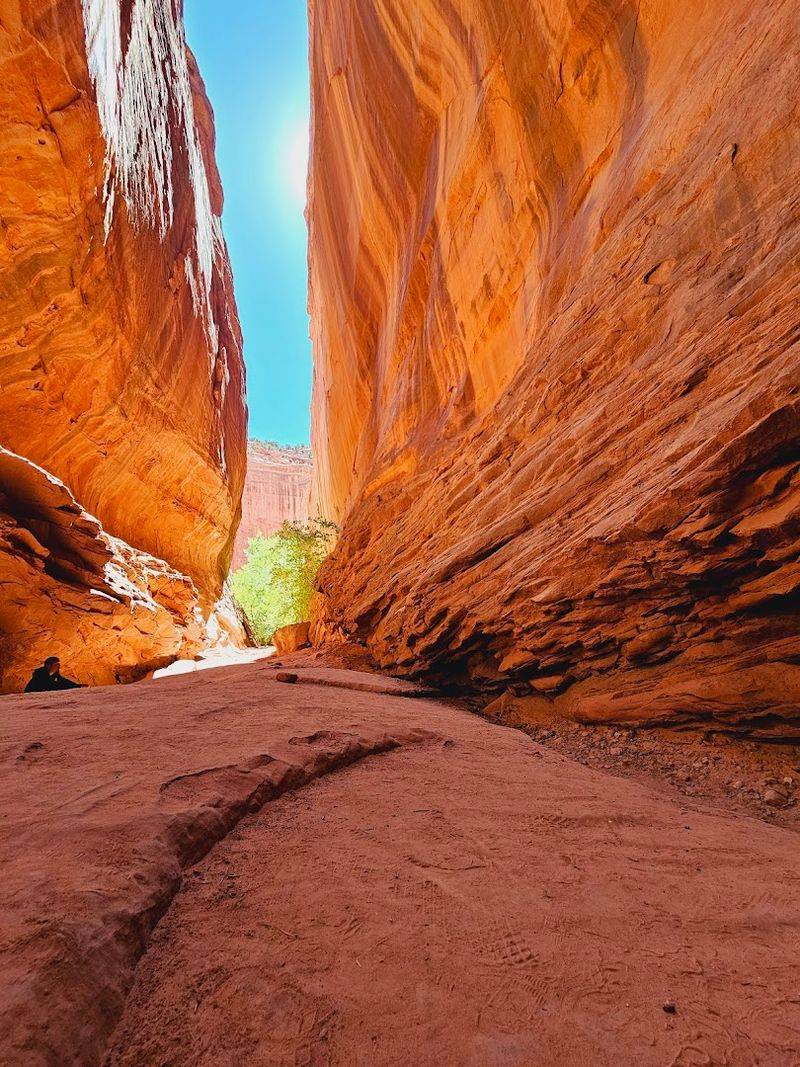
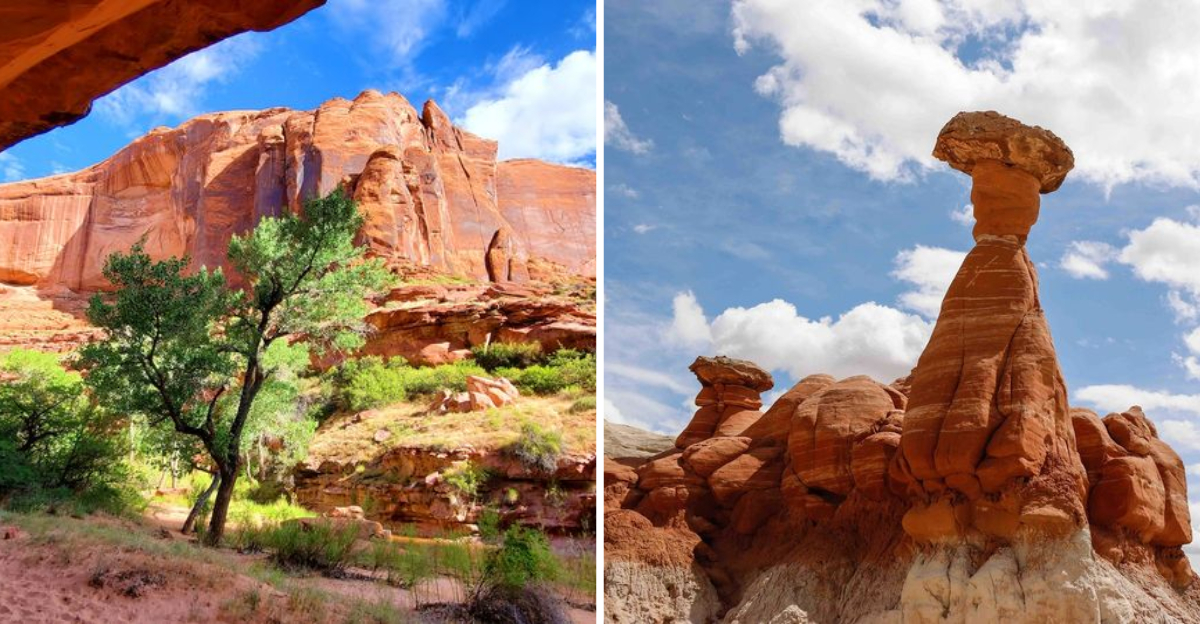
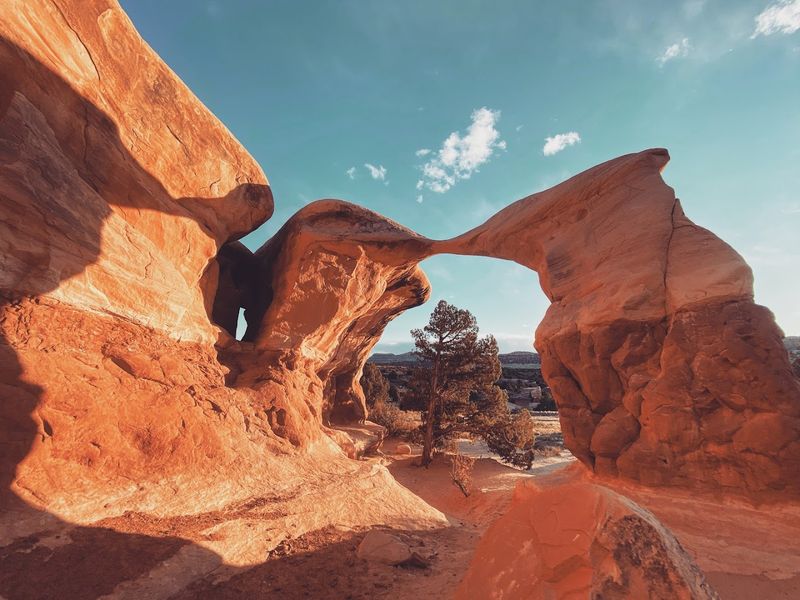
The Moqui Marbles are extraordinary, but they are just one layer of what Grand Staircase-Escalante holds. This monument covers 1.7 million acres of southern Utah terrain that shifts constantly between open plateaus, deep slot canyons, cottonwood-lined creek beds, and towering sandstone walls painted in every shade of red and orange.
Peekaboo and Spooky slot canyons are among the most popular routes, though they require physical fitness and are not suitable for small children or pets. Willis Creek offers an easier slot canyon experience with shade and a gentle trail, roughly four miles round trip.
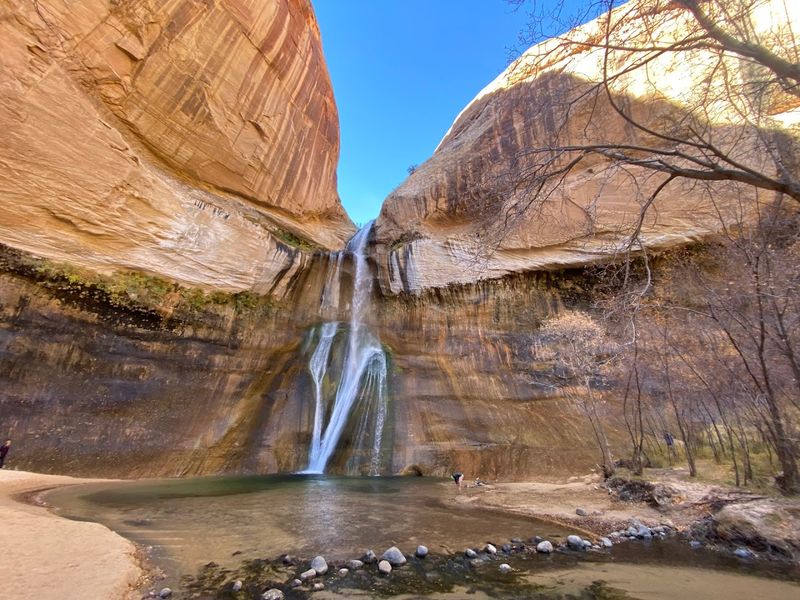
Lower Calf Creek Falls is another highlight, a six-mile round trip hike that ends at a stunning 126-foot waterfall tucked into a sandstone alcove. Wildlife sightings here are common, from songbirds and trout to the occasional otter along the creek.
The monument has almost no services inside its boundaries, which is precisely what keeps it feeling raw and real. Fewer crowds, no parking headaches, and a genuine sense of wilderness that is increasingly hard to find.
For anyone who wants southern Utah without the shoulder-to-shoulder national park experience, this place delivers something genuinely different.
How to Visit Grand Staircase-Escalante and Actually Be Prepared
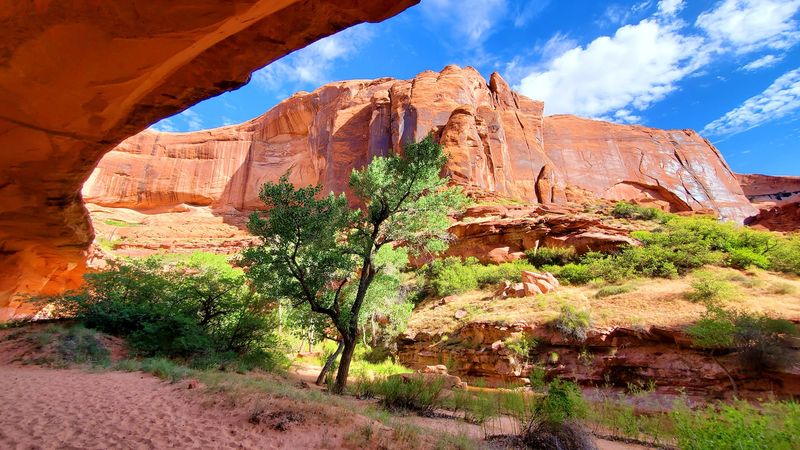
Planning a visit here takes a little more effort than a typical national park trip, and that preparation genuinely pays off. The monument has no main entrance gate, no shuttle buses, and very few paved roads once you leave Utah Highway 12 or Hole in the Rock Road.
An AWD or high-clearance vehicle is strongly recommended for most backcountry routes, especially after rain when dirt roads become completely impassable. Always check weather forecasts before heading into any slot canyon area because flash floods can move in without warning.
Water is non-negotiable. Even on mild days, the desert pulls moisture from you faster than you expect.
Carry significantly more than you think you will need and bring food for longer outings since there are no concessions inside the monument.
The Escalante Interagency Visitor Center in the town of Escalante is a great first stop for updated road conditions, trail maps, and permit information. Cell service is unreliable across most of the monument, so saving offline maps before you leave town is essential.
Sunrise and sunset are the most dramatic times to be out on the landscape, and the light during those hours makes everything, including those scattered iron marbles, look absolutely otherworldly.
