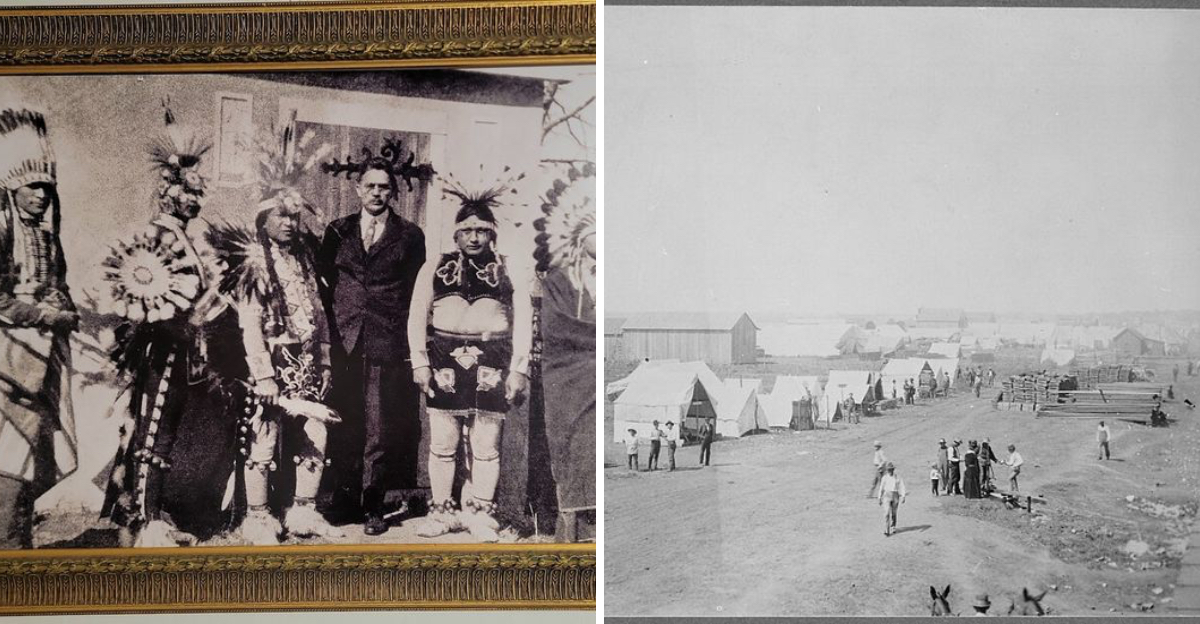
Oklahoma has a way of pulling you back in time before you even realize what is happening. One glance at a sepia toned street scene or a faded portrait from the Land Run era, and suddenly you are completely hooked.
Dusty main streets, horse drawn wagons, early storefronts, and faces that seem to stare straight through the decades all come alive in a way that feels surprisingly immediate. The state’s history is raw, dramatic, and deeply human, filled with moments of ambition, hardship, celebration, and change.
Vintage photographs capture those moments in ways that words simply cannot. They freeze the small details that often get lost in history books.
The look on a shopkeeper’s face, the rough edges of a brand new town, the quiet pride of people standing in front of homes they just built from nothing. Each image becomes a doorway into another era.
The longer you look, the easier it is to imagine the sounds of those streets, the conversations happening just outside the frame, and the lives unfolding behind every photograph. Get ready to travel through time across the Sooner State, one remarkable image at a time.
The Oklahoma History Center
Some places stop you cold the moment you walk through the door. The Oklahoma History Center, operated by the Oklahoma Historical Society does exactly that, and it does it without fanfare or flash.
You step inside and the weight of time just settles on your shoulders like a warm, heavy coat.
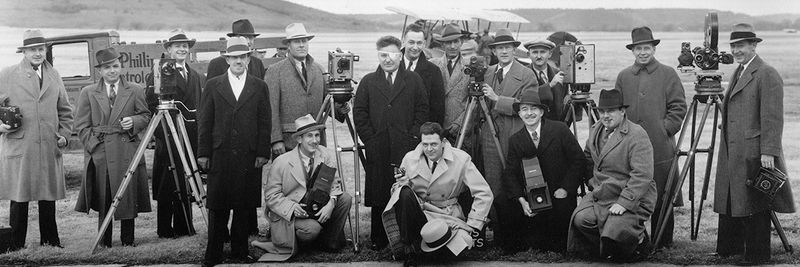
The collection here is staggering. Thousands of photographs document Oklahoma life from territorial days through the mid-twentieth century.
One striking photograph from the early 1940s shows an 89er celebration marking the anniversary of the 1889 Land Run. The streets are packed.
Faces are bright. You can almost hear the crowd noise rising off the paper.
What makes this archive so special is how personal it feels. These are not sterile museum displays.
They are real moments frozen in time, farmers and families, storefronts and schoolyards. Each photograph carries a quiet story that demands your attention.
Visiting in person gives you access to research tools and rotating exhibits that bring different eras of Oklahoma history into sharp focus. The staff knows this collection deeply and their enthusiasm is contagious.
You leave feeling like you just spent an afternoon with people who truly love what they protect.
Plan to spend at least two hours here. The archive is part of the larger Oklahoma History Center complex, which is worth exploring fully.
Address: Oklahoma History Center, 800 Nazih Zuhdi Drive, Oklahoma City, OK 73105.
The 1889 Land Run Through the Camera Lens
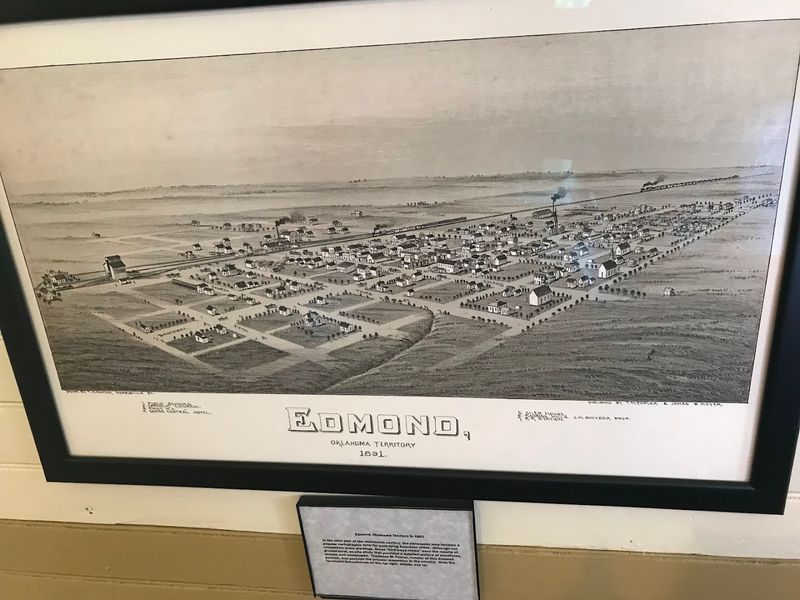
Nothing in American history quite matches the organized chaos of April 22, 1889. At noon on that single day, roughly fifty thousand people raced across Oklahoma Territory to claim free land.
And somehow, photographers were there to capture pieces of it.
The images that survive from that era are extraordinary. Grainy and imperfect, they show tent cities that appeared almost overnight.
They show men in bowler hats standing in muddy streets that would become Guthrie and Oklahoma City within hours. The speed of it all is almost impossible to believe, even looking straight at the evidence.
What strikes you most is how ordinary the people look. These were not mythic figures.
They were shopkeepers, farmers, and dreamers who packed everything they owned into a wagon and gambled on a fresh start. The photographs make that human reality impossible to ignore.
The Oklahoma Historical Society holds many of these images and contextualizes them brilliantly. Exhibit panels explain what you are seeing, who these people were, and what happened to the land they claimed.
Some stories ended in triumph. Others ended in heartbreak.
The photographs do not flinch from either outcome.
Seeing these images in person hits differently than viewing them online. The scale, the texture, the age of the paper, all of it adds a layer of emotional weight that a screen simply cannot replicate.
Address: Oklahoma History Center, 800 Nazih Zuhdi Drive, Oklahoma City, OK 73105.
Sam Noble Oklahoma Museum of Natural History
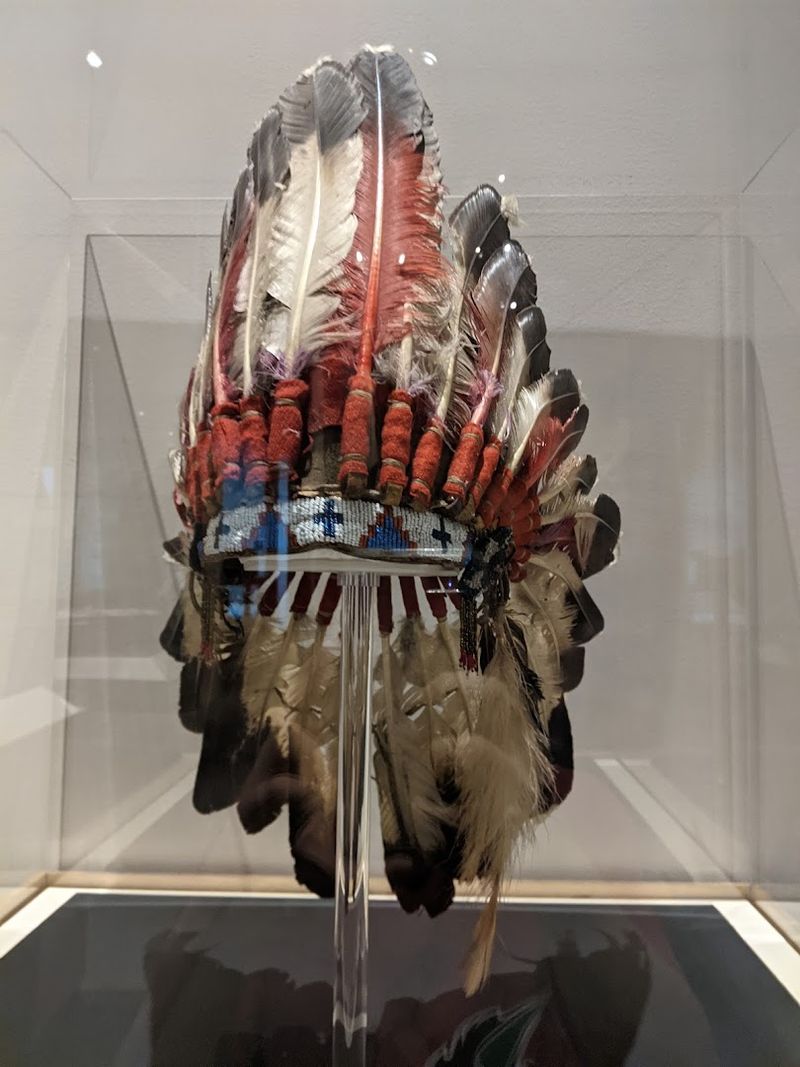
Walk into the Hall of the People of Oklahoma at the Sam Noble Museum and prepare to have your assumptions rearranged. This is not a dusty collection of arrowheads behind glass.
It is a living, breathing story of human presence in Oklahoma stretching back thousands of years, told through artifacts, art, and some genuinely stunning vintage photography.
The photographs here document Indigenous communities, early settlers, and the cultural blending that shaped Oklahoma’s identity over centuries. Some images date back to the late 1800s, capturing faces and ceremonies that were rarely photographed elsewhere.
The depth of representation is remarkable and handled with obvious care and respect.
One section focuses on the Five Civilized Tribes and their forced relocation along the Trail of Tears. The photographs from this era carry an emotional gravity that is hard to shake.
You find yourself standing still for a long time, just looking, trying to comprehend what those faces endured.
The museum sits on the University of Oklahoma campus in Norman, which adds a scholarly energy to the whole experience. Students, families, and serious history enthusiasts all share the space comfortably.
Nobody feels out of place here.
Give yourself at least three hours if you want to do the place justice. The natural history exhibits beyond the human history hall are equally fascinating, but the vintage photograph displays are the true emotional core of any visit.
Address: Sam Noble Oklahoma Museum of Natural History, 2401 Chautauqua Avenue, Norman, OK 73072.
Route 66 Rediscovered: Photographs From the Mother Road
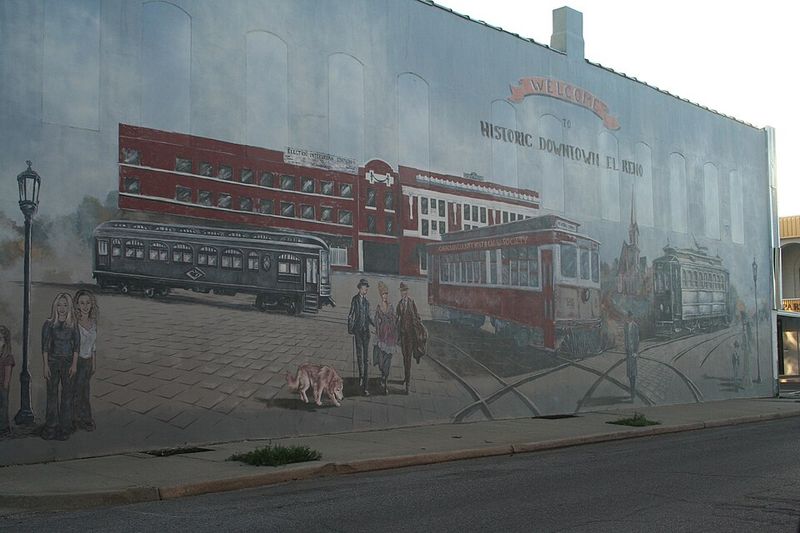
Route 66 has been romanticized to the point of cliche, but then you see the rediscovered photographs of early highway travel in northeast Oklahoma from the early 1900s through the 1940s, and the romance suddenly feels completely earned. These images are not polished postcards.
They are raw, candid slices of life along what became America’s most famous highway.
The Oklahoma Route 66 Association brought these photographs back into public view after they had been largely forgotten for decades. They show filling stations with hand-painted signs, travelers in Model T Fords, and small towns like Afton that once buzzed with energy and commerce.
Looking at them now, knowing how many of those towns eventually faded, gives the images a bittersweet quality that lingers long after you put them down.
What surprises most people is how cosmopolitan the road looks in these early images. People from all walks of life passed through northeast Oklahoma during those years, migrants heading west, families on road trips, truckers hauling goods.
The highway was genuinely democratic in a way that few places were at the time.
The Afton area photographs are particularly striking because so much of the physical landscape still exists. Standing on that same stretch of road today and holding the old image up is a genuinely eerie experience.
Time collapses in the best possible way.
The Oklahoma Route 66 Association is based in Chandler and maintains resources about the road’s history. Address: Oklahoma Route 66 Association, 400 East First Street, Chandler, OK 74834.
Photographing the Plains: FSA Images From Oklahoma
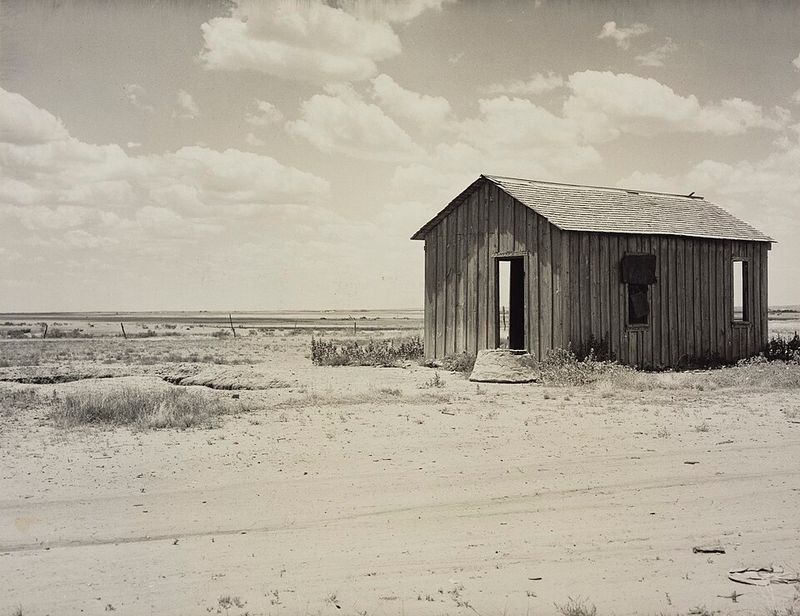
The Farm Security Administration sent photographers across America during the 1930s and 1940s with one mission: document the truth of rural poverty and hardship. In Oklahoma, they found more than enough material.
The resulting images are among the most powerful documentary photographs ever made.
The Oklahoma Historical Society’s traveling exhibit, Photographing the Plains: Farm Security Administration, 1935 to 1945, brings these images to communities across the state. Seeing them up close is not a comfortable experience, and that is entirely the point.
Cracked earth, hollow eyes, children in threadbare clothes, the Dust Bowl era photographs refuse to let you look away.
What many people do not realize is how technically brilliant these photographs are. The FSA photographers were not just documentarians.
They were serious artists who understood light, composition, and the power of a single human expression to tell a much larger story. Every frame is deliberate.
Oklahoma was hit especially hard during the Dust Bowl years. Entire communities were uprooted.
Families who had farmed the same land for generations found themselves with nothing. The photographs capture that specific kind of loss, the loss of place and identity, in ways that historical text simply cannot replicate.
The traveling exhibit moves between venues, so checking the Oklahoma Historical Society website before visiting is always smart. The core collection is also viewable at the Oklahoma History Center.
Address: Oklahoma History Center, 800 Nazih Zuhdi Drive, Oklahoma City, OK 73105.
Guthrie: Oklahoma’s First Capital Frozen in Time
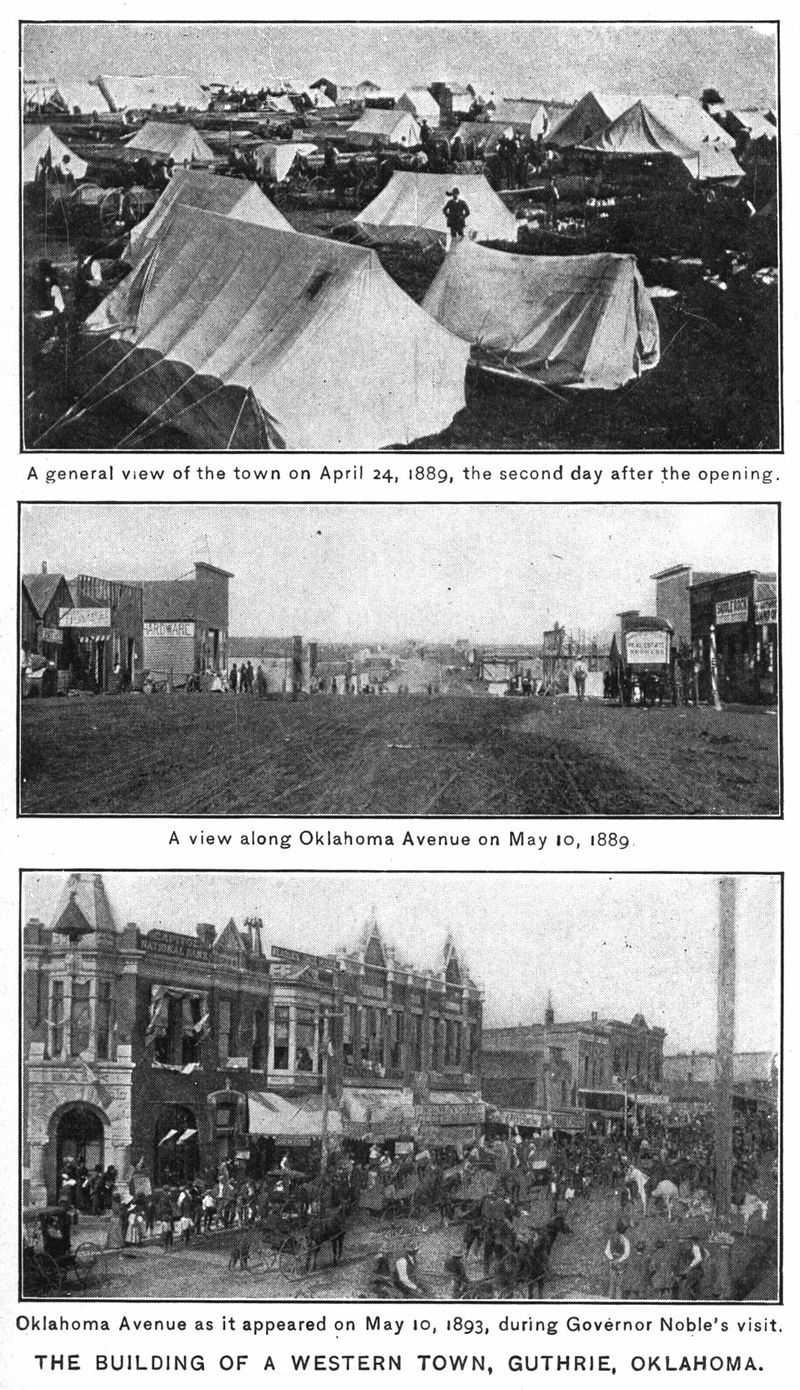
Guthrie might be the most photogenic piece of Oklahoma history that most people completely overlook. When the Land Run of 1889 ended, Guthrie became the territorial capital almost instantly.
By nightfall on that first day, it had a population of ten thousand people. Photographers arriving in the days that followed found a city materializing from raw prairie in real time.
The vintage photographs of Guthrie’s early years are jaw-dropping. Victorian brick buildings lined the streets within months of the Land Run.
Saloons, newspapers, banks, and hotels appeared with almost suspicious speed. The images show a city with serious ambitions, and the architecture that still stands today confirms those ambitions were well-founded.
Walking Guthrie’s historic downtown today alongside printed copies of those old photographs is one of Oklahoma’s great time-travel experiences. Many of the original buildings are still standing.
The facades have barely changed. You can match a photograph from 1895 to a building on Division Street and feel the years collapse between your fingers.
The Oklahoma Territorial Museum in Guthrie holds a strong collection of photographs and artifacts from this era. The staff there are passionate about the city’s overlooked role in state history and will happily point you toward the best visual comparisons between old images and current streetscapes.
Guthrie is about thirty minutes north of Oklahoma City and absolutely worth the drive. Address: Oklahoma Territorial Museum, 402 East Oklahoma Avenue, Guthrie, OK 73044.
Native American Portraits of Early Oklahoma
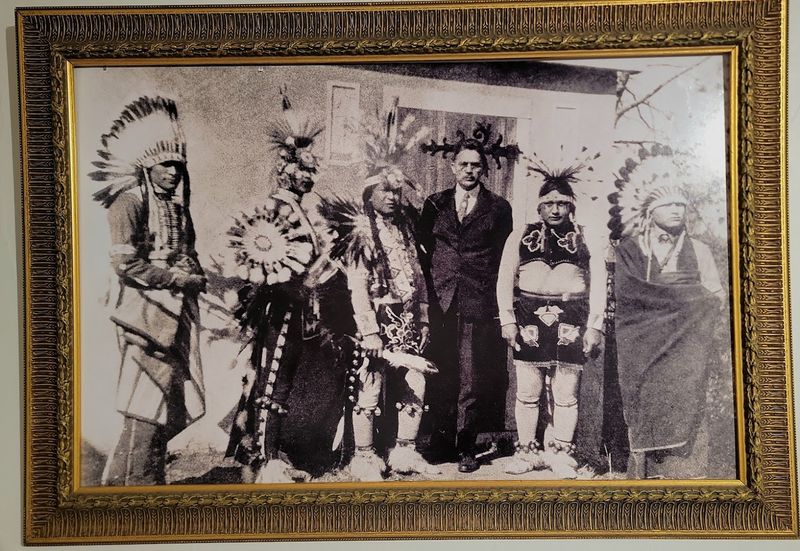
Before Oklahoma was a state, before it was even a territory in the modern sense, it was Indian Territory.
The photographs taken of Native American communities during the late nineteenth and early twentieth centuries represent some of the most historically significant images in the state’s entire visual archive.
These portraits are complicated to look at. They were often taken by outside photographers with their own cultural assumptions baked in.
But they also preserve faces, clothing, and ceremonial details that would otherwise exist only in written descriptions. The tension between those two realities is something you feel standing in front of them.
The Five Civilized Tribes Museum in Muskogee holds an impressive collection of these early portraits alongside cultural artifacts that provide essential context.
The museum is run by tribal members and approaches its collection with a perspective that feels very different from a standard state history institution.
That difference matters enormously.
What hits hardest in these photographs is the dignity. Despite the circumstances, despite the losses, the people in these images look directly into the camera with a composure and strength that is deeply moving.
They are not victims. They are people with full, complex lives, and the photographs insist on that humanity.
The Five Civilized Tribes Museum is one of Oklahoma’s most underrated cultural destinations and deserves far more attention than it typically receives. Address: Five Civilized Tribes Museum, 1101 Honor Heights Drive, Muskogee, OK 74401.
Oklahoma City Before the Skyscrapers: Downtown in the Early 1900s
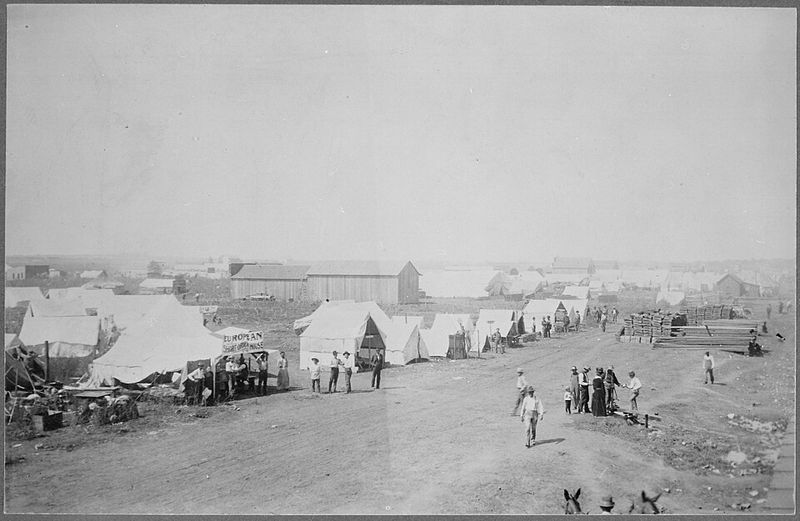
Oklahoma City is a proper big city now, all glass towers and highway overpasses and urban energy. But the vintage photographs of its earliest decades show something almost impossibly different.
Dirt streets. Wooden storefronts.
The smell of possibility and horse manure in equal measure, you can almost sense both just from the images.
The city grew at a speed that defies easy comprehension. In 1889 it was an empty plain.
By 1910 it had paved streets, electric streetcars, and a downtown that would not look out of place in much larger American cities. The photographs from that transitional period capture something electric, a place becoming itself right before your eyes.
The Metropolitan Library System in Oklahoma City maintains a digital archive of many of these early downtown photographs, and the physical collection is accessible to researchers.
Browsing through images of Main Street from 1905 or the old Santa Fe Depot from 1910 gives you a completely new appreciation for how aggressively this city willed itself into existence.
One particularly striking series of photographs documents the oil boom years of the 1920s, when derricks appeared literally within the city limits. Oil wells on the State Capitol grounds.
Wells in residential neighborhoods. The images look surreal but they are completely real, and they explain a great deal about how Oklahoma City developed its particular character.
Address: Metropolitan Library System, 300 Park Avenue, Oklahoma City, OK 73102.
The Greenwood District: Tulsa’s Black Wall Street Through Vintage Photography
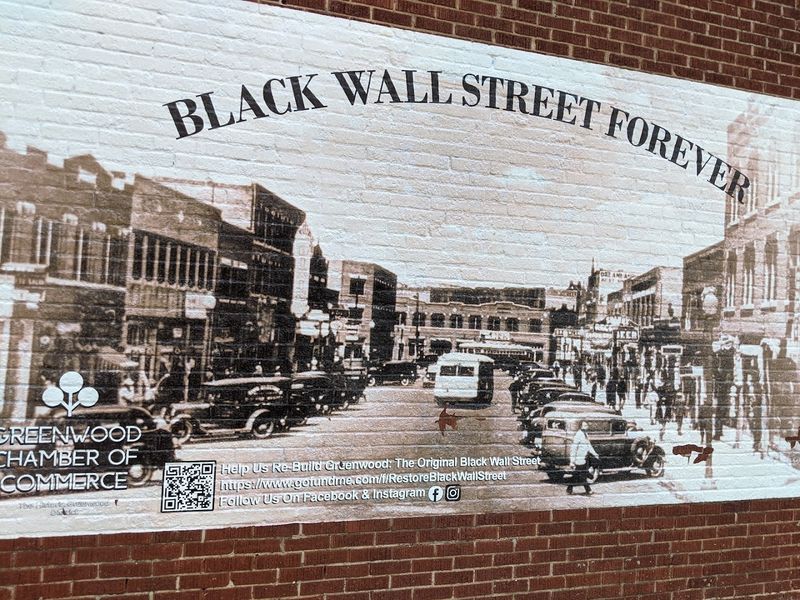
No section of Oklahoma’s photographic history carries more emotional weight than the images of Tulsa’s Greenwood District before 1921. Known as Black Wall Street, Greenwood was one of the most prosperous African American communities in the entire United States.
The photographs from its peak years are extraordinary documents of achievement, beauty, and community pride.
The images show thriving commercial streets, elegant buildings, and a community that had built something remarkable against every imaginable obstacle. Doctors, lawyers, shop owners, and entrepreneurs built their lives here.
The photographs radiate energy and ambition in every frame. Then comes May 31, 1921, and the images after that date tell a devastating different story.
The Greenwood Cultural Center in Tulsa holds a significant collection of photographs from both before and after the 1921 Tulsa Race Massacre. Confronting those before-and-after images in the same room is one of the most emotionally intense museum experiences anywhere in Oklahoma.
It is also one of the most important.
Recent years have brought increased national attention to this history, and the Greenwood District is experiencing a meaningful cultural revival. New murals reference the old photographs.
New businesses echo the spirit of the originals. Walking the neighborhood with vintage images in hand shows you both the loss and the resilience simultaneously.
The Greenwood Cultural Center is a must-visit for anyone serious about understanding Oklahoma’s full and complicated history. Address: Greenwood Cultural Center, 322 North Greenwood Avenue, Tulsa, OK 74120.
Dear Reader: This page may contain affiliate links which may earn a commission if you click through and make a purchase. Our independent journalism is not influenced by any advertiser or commercial initiative unless it is clearly marked as sponsored content. As travel products change, please be sure to reconfirm all details and stay up to date with current events to ensure a safe and successful trip.
