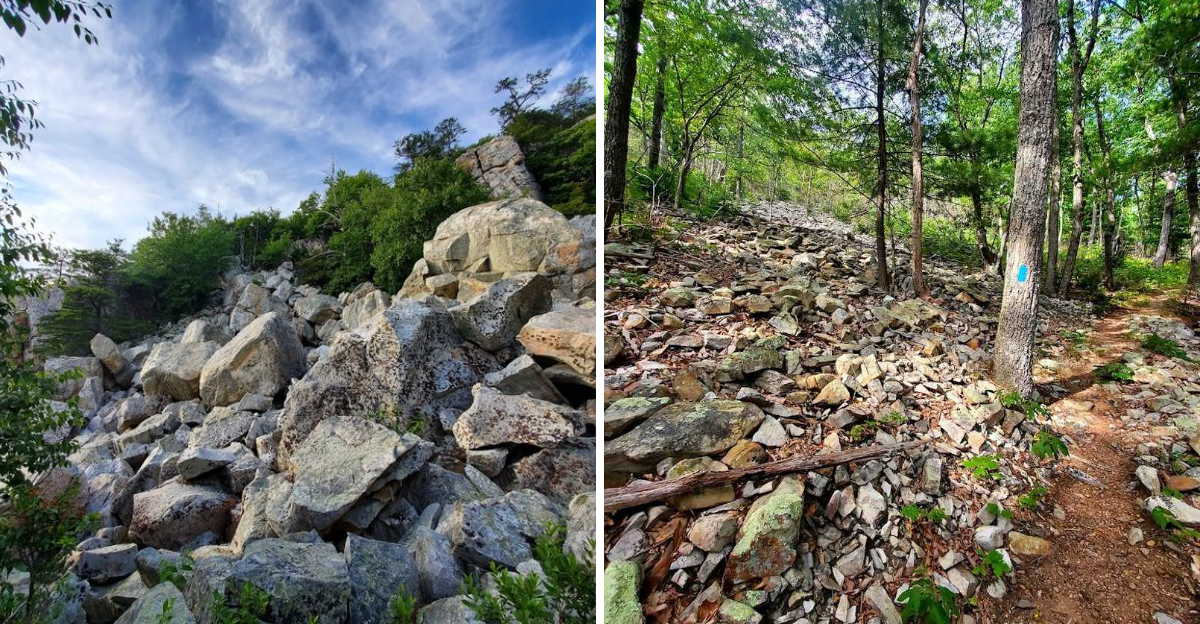
Somewhere tucked inside the rugged heart of Virginia, a geological spectacle sits waiting to blow your mind. Massive quartzite boulders the size of vans and coffee tables tumble across a steep mountainside like nature decided to toss a giant’s toy chest down a hillside.
This place sparks fierce debate among hikers: is it Virginia’s most photogenic spot, or is it dangerously underrated? I say both.
My first visit left me breathless, muddy, scraped up, and absolutely desperate to come back. Locals know this secret well, but the wider hiking world is just catching on.
If you crave jaw-dropping scenery, a genuine physical challenge, and photos that make every scroll stop dead in its tracks, pack your boots and point your GPS toward the Blue Ridge Mountains of Virginia.
The Boulder Field That Rewrites Your Definition of Wow
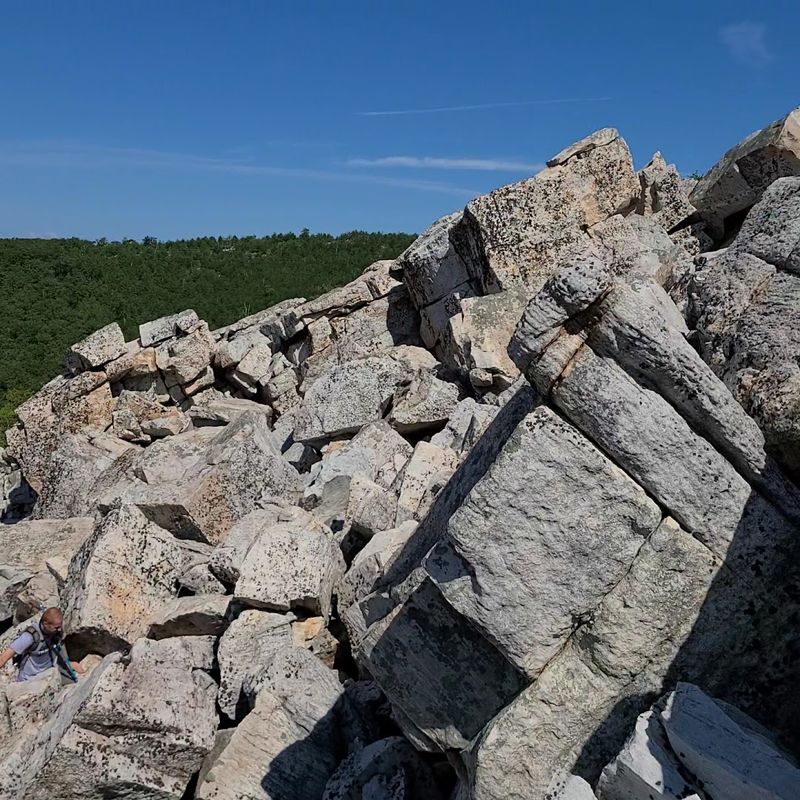
Nothing quite prepares you for that first glimpse of Devil’s Marbleyard. One moment you’re hiking through quiet forest shade, and the next, a jaw-dropping cascade of enormous quartzite boulders opens up in front of you like a scene from another planet.
The sheer scale of the boulder field is staggering. Some rocks are the size of small cars, others could double as living room furniture, and a few are so massive they cast genuine shadows.
They tumble down the mountainside in a chaotic, beautiful jumble that geologists believe formed over millions of years through a process called frost wedging.
Quartzite is an exceptionally hard rock, which means these boulders have survived the ages with remarkable stubbornness. The grey-white surfaces catch morning light in spectacular ways, making this spot a dream for photography.
Every angle offers something new, every shadow tells a different story.
The boulder field stretches wide enough that you could spend an entire afternoon exploring without retracing a single step. James River Face Wilderness surrounds it all, adding layers of wild, untouched forest to the backdrop.
Belfast Trail: Your Gateway Into the Wild
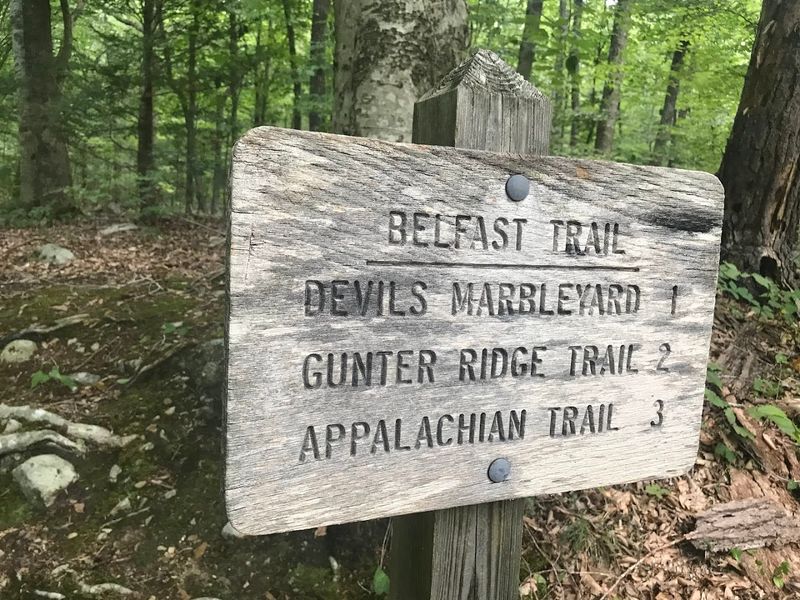
The adventure kicks off at the Belfast Trailhead, a modest starting point that gives absolutely no hint of the drama waiting ahead. A footbridge crosses the east fork of Elk Creek right at the beginning, and that crossing alone sets a mood.
Cool water rushing below, birdsong filling the canopy above, the smell of damp earth underfoot.
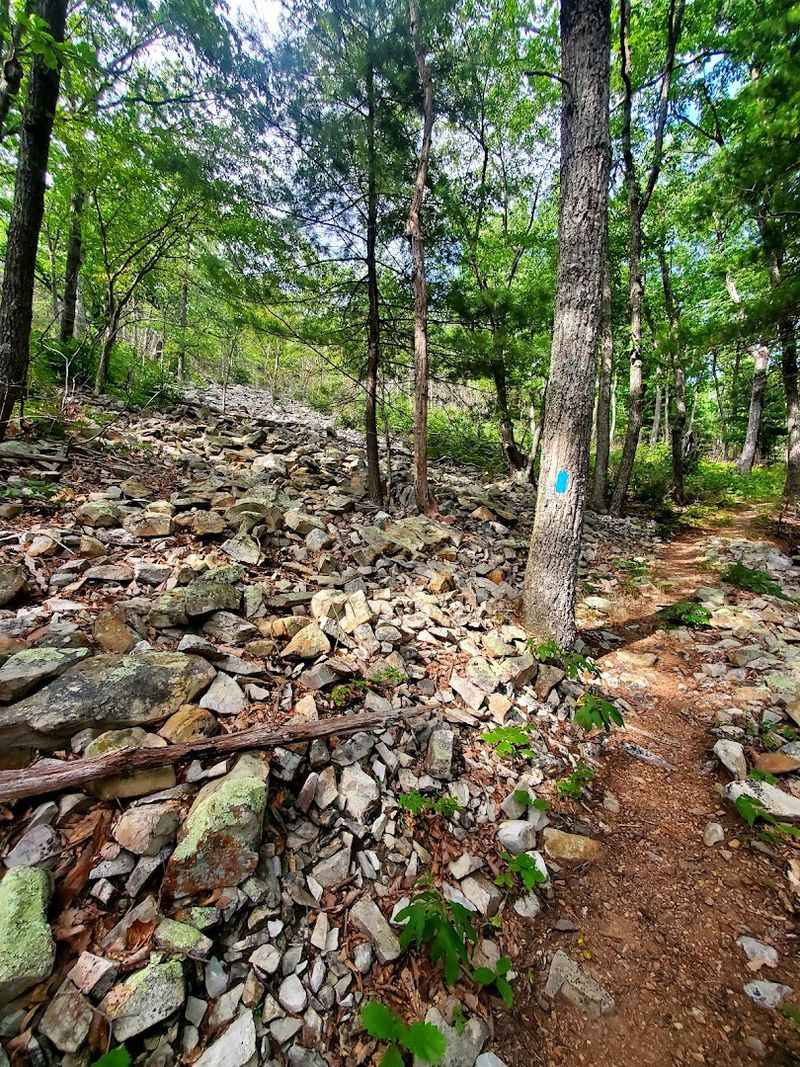
Blue blazes mark the path with satisfying regularity, guiding you through dense hardwood forest that feels genuinely wild. The trail climbs steadily, and experienced hikers will notice the grade tightening as the miles accumulate.
Remnants of an old Boy Scout camp appear along the route, adding a nostalgic, slightly eerie quality to the journey.
Around the one-mile mark, the forest begins to thin and light starts pouring through the trees differently. That change in atmosphere is your first signal that something extraordinary is near.
The trail passes along the right side of the boulder field with a clearly marked path, giving you the choice to scramble or observe from a safer vantage point.
Starting early means having this gorgeous trail mostly to yourself, which honestly amplifies every sensory detail tenfold.
Rock Scrambling at Its Most Gloriously Chaotic
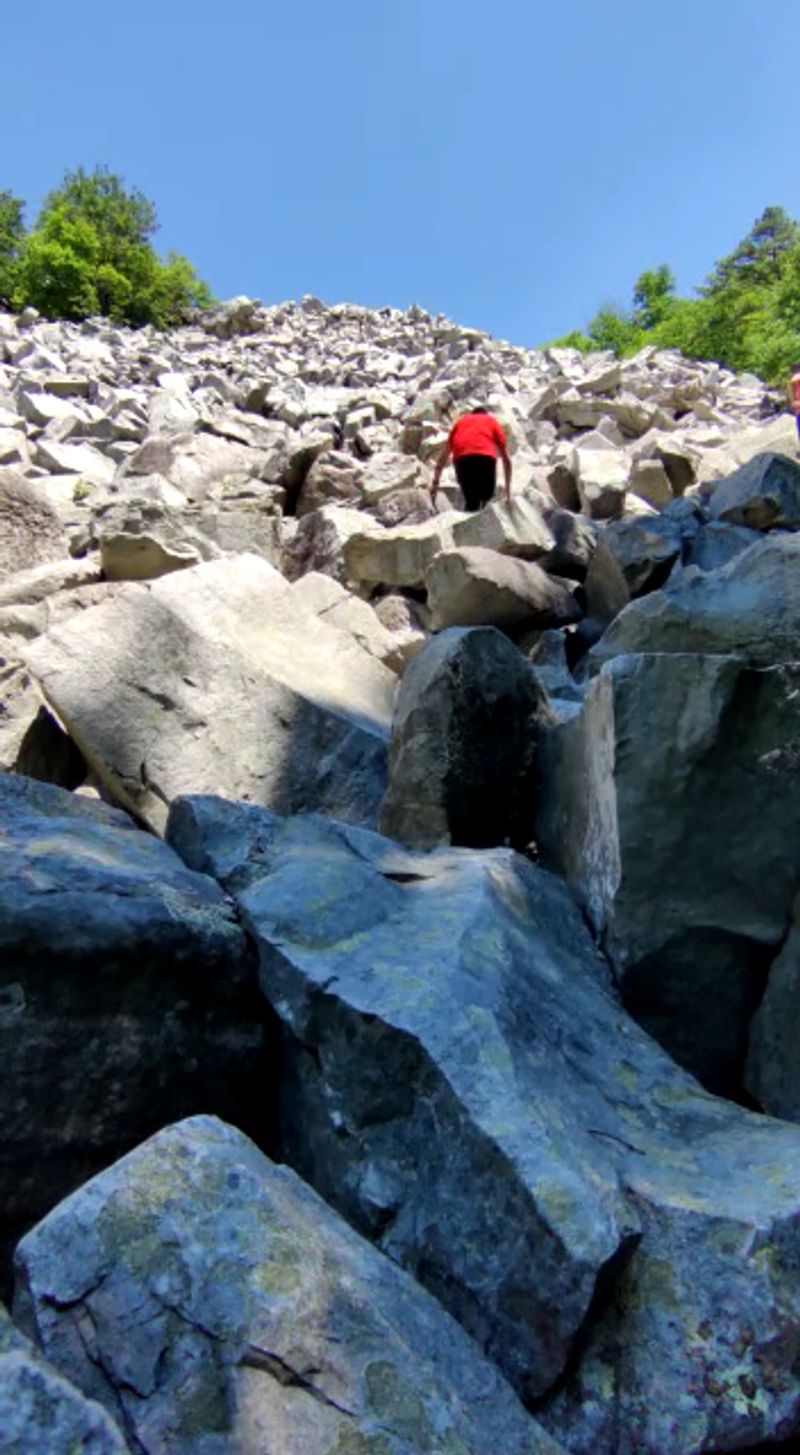
Scrambling up Devil’s Marbleyard is not just a hike. It is a full-body puzzle that demands your complete attention and rewards every ounce of effort with pure, unfiltered exhilaration.
Arms, legs, core, and brain all clock in for duty simultaneously.
The boulders are not locked in place uniformly, which means each step requires a quick assessment of stability before committing your weight. Good footwear with aggressive traction is genuinely non-negotiable here.
Ankle support matters enormously, and flexible, movable clothing makes navigating the awkward angles between rocks far less frustrating.
Deep crevasses open up between certain boulders, some dropping several feet into shadow. Respect those gaps and plan your route thoughtfully rather than charging ahead on impulse.
The smartest scramblers move deliberately, testing each surface before trusting it fully.
The physical engagement is addictive in the best possible way. By the time you reach the upper sections of the boulder field, your muscles are warm, your focus is laser-sharp, and the sense of accomplishment builds with every upward move.
Virginia does not have many experiences quite like this raw, kinetic joy of boulder scrambling under an open sky.
Panoramic Views That Make Every Burning Muscle Worth It
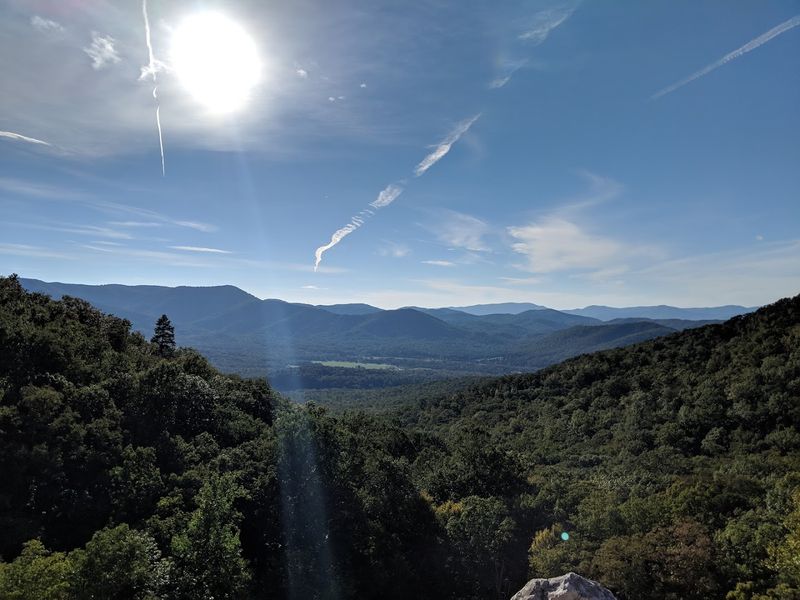
Reaching the upper sections of the boulder field delivers one of the most satisfying visual payoffs in all of Virginia’s outdoor scene. Arnold Valley spreads below in a wide, green, extraordinarily peaceful patchwork of forest and farmland that feels almost surreal after the intensity of the climb.
On clear days, the ridgelines stack up one behind the other in fading shades of blue and grey, creating the kind of depth that makes wide-angle camera lenses earn their keep. Morning light from the east paints everything gold and soft.
Late afternoon brings dramatic shadows that carve texture into the valley floor far below.
No official summit marker exists here, which somehow makes the experience feel more honest and personal. You define your own peak based on how far your legs and nerve carry you.
Some stop at the first broad overlook; others push higher for even wider perspectives.
Autumn transforms these views into something almost unreasonably gorgeous, with the Virginia hardwood forest exploding in orange, red, and gold. Spring brings fresh greens and wildflowers along the approach trail.
Every season repaints the scene, making return visits feel like entirely new adventures.
Photography Tips for Capturing the Marbleyard’s Magic
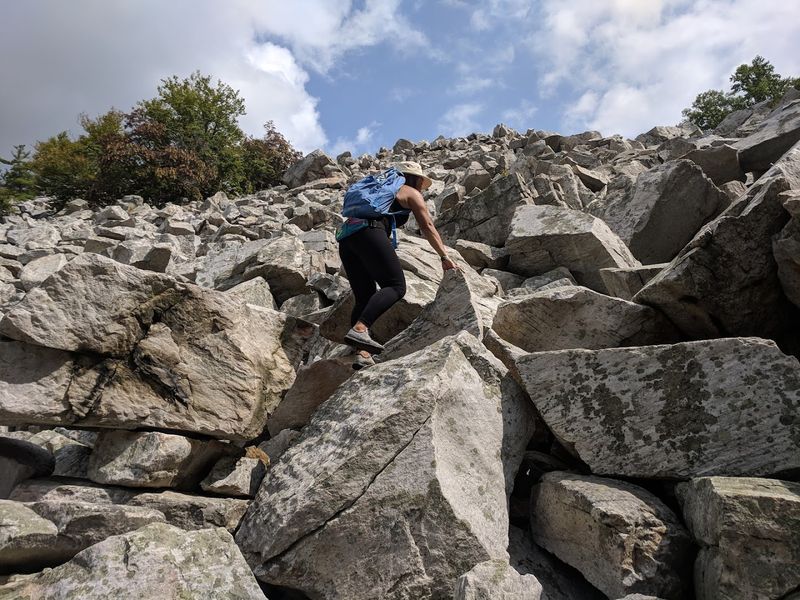
Devil’s Marbleyard is a photographer’s playground, but getting the best shots requires a bit of strategic thinking beyond just pointing and shooting. The exposed nature of the boulder field means lighting conditions change rapidly, so timing your arrival matters enormously.
Golden hour, the hour after sunrise, bathes the pale quartzite in warm amber tones that make the rocks glow. Shadows fall at angles that reveal texture, depth, and scale in ways that flat midday light simply cannot replicate.
Arriving early also means fewer people in frame, which keeps compositions clean and dramatic.
Shooting from low angles, practically lying across the boulders, creates powerful foreground interest with the valley stretching dramatically behind. Wide-angle lenses emphasize the immensity of the rock field.
A human figure perched on a boulder adds crucial scale and transforms a landscape shot into a genuine story.
Overcast days are underrated for photography here. Soft, diffused light eliminates harsh shadows and brings out the subtle grey and white tones of the quartzite beautifully.
Virginia’s mountain weather shifts quickly, so packing a rain sleeve for your camera is practical wisdom. The dramatic clouds that roll through before a storm can produce some of the most stunning backdrops imaginable.
What to Pack for a Serious Day on the Rocks
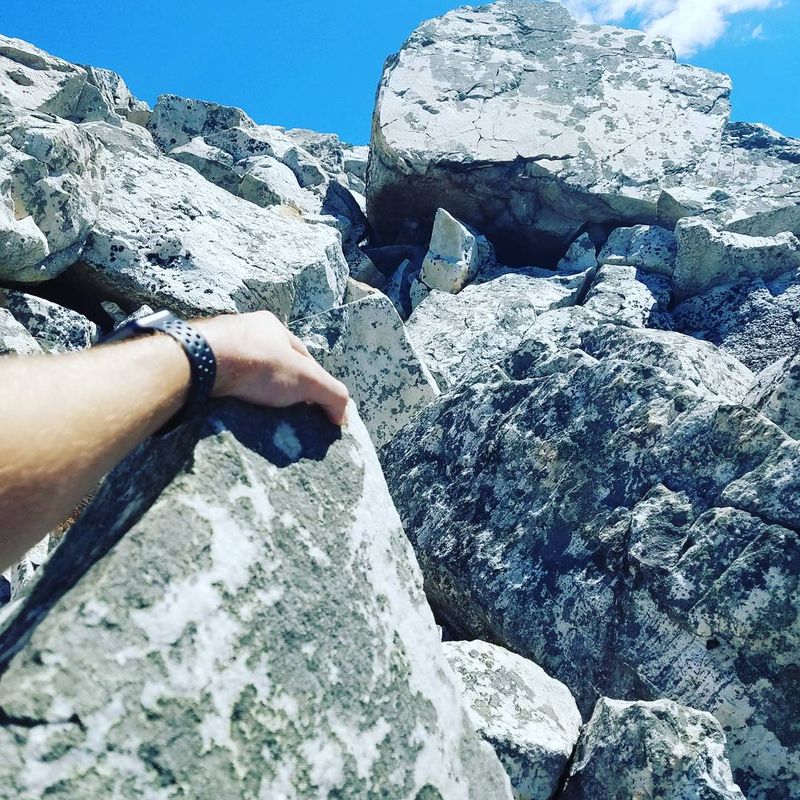
Heading to Devil’s Marbleyard underprepared is a recipe for a miserable afternoon. This trail earns its difficulty rating honestly, and your gear choices will either make the experience genuinely joyful or quietly punishing from the first mile onward.
Footwear tops the priority list without question. Trail boots with solid ankle support and aggressive rubber soles handle the rocky, uneven terrain with confidence.
Lightweight sneakers might feel comfortable at the trailhead, but they become a liability the moment the serious scrambling begins. Flexible, moisture-wicking pants allow full range of motion without restriction.
Hydration is critical, especially in warmer months when the exposed boulder field offers zero shade. Carrying more water than you think you need is always the right call.
Salty snacks help replace electrolytes lost during the steep, sweaty ascent.
Trekking poles are genuinely useful on the descent, when tired legs and tricky footing combine into a coordination challenge. A small first-aid kit handles minor scrapes from the inevitable rock-on-skin contact.
Sunscreen matters on the open boulder field, where UV exposure is significant. The George Washington and Jefferson National Forests surrounding the trail have no services, so self-sufficiency is the name of the game.
Seasonal Highlights: When to Visit for Maximum Drama
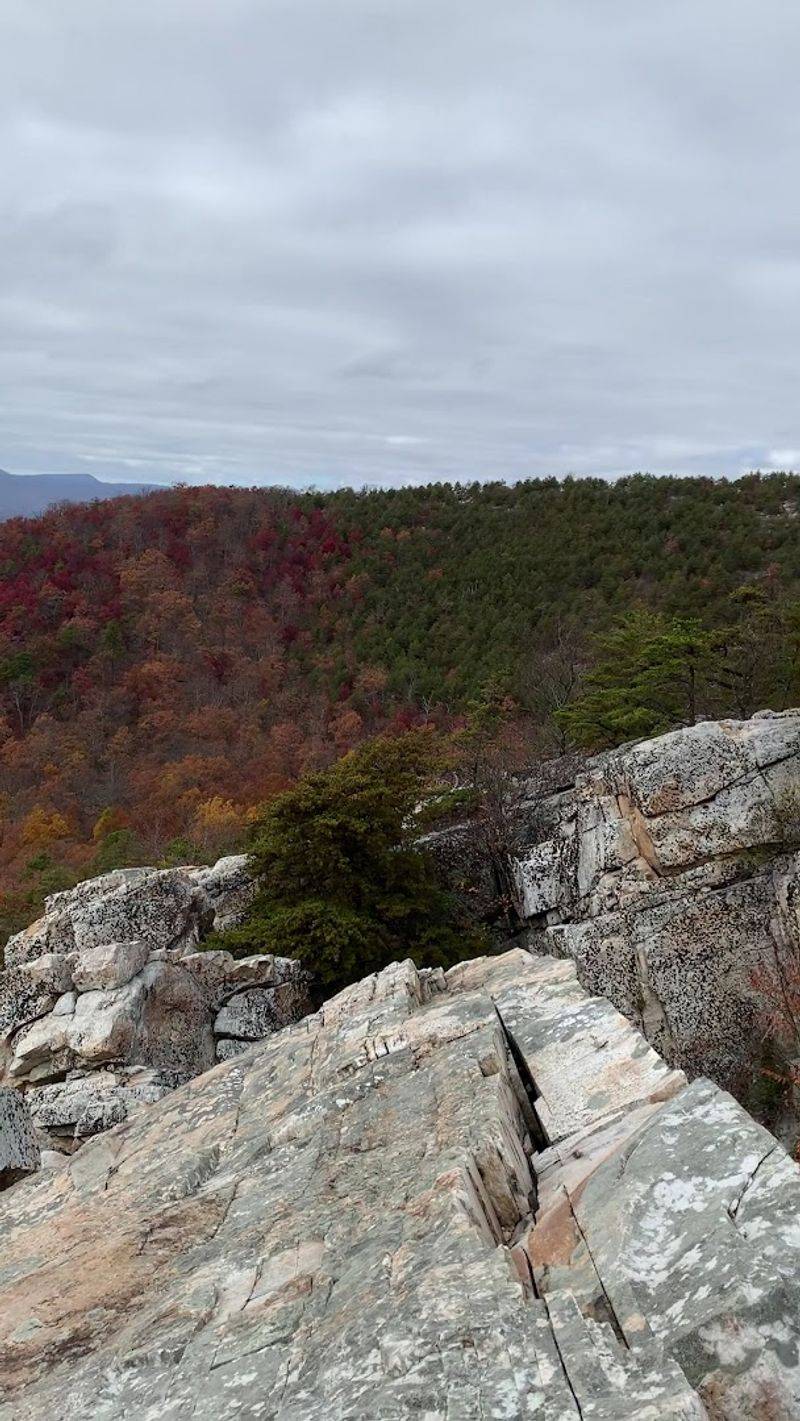
Every season delivers a completely different personality at Devil’s Marbleyard, and passionate hikers have strong opinions about which one reigns supreme. Autumn is the crowd favorite, and the reasoning is hard to argue with.
Virginia’s hardwood forests ignite with color in October, wrapping the boulder field in a fiery frame of orange, crimson, and gold that transforms every photograph into something extraordinary.
Spring brings its own quiet magic. Wildflowers line the Belfast Trail approach, the creek runs high and musical after winter snowmelt, and the forest canopy is still thin enough to let light filter through in dramatic beams.
Temperatures stay cool and comfortable, making the steep ascent far more manageable.
Summer visits are absolutely possible but demand early starts before heat builds on the exposed boulders. The shade along the forested approach trail provides relief, and the creek crossing at the start offers a refreshing moment worth savoring.
Winter is the wildcard season that rewards the adventurous. Snow-dusted boulders create an almost otherworldly, monochrome landscape that few people ever see.
Ice can make scrambling genuinely dangerous, so micro-spikes and serious caution are essential. Virginia in winter has a stark, raw beauty that feels like a well-kept secret among dedicated outdoor enthusiasts.
Safety Smarts: Navigating the Boulder Field Wisely
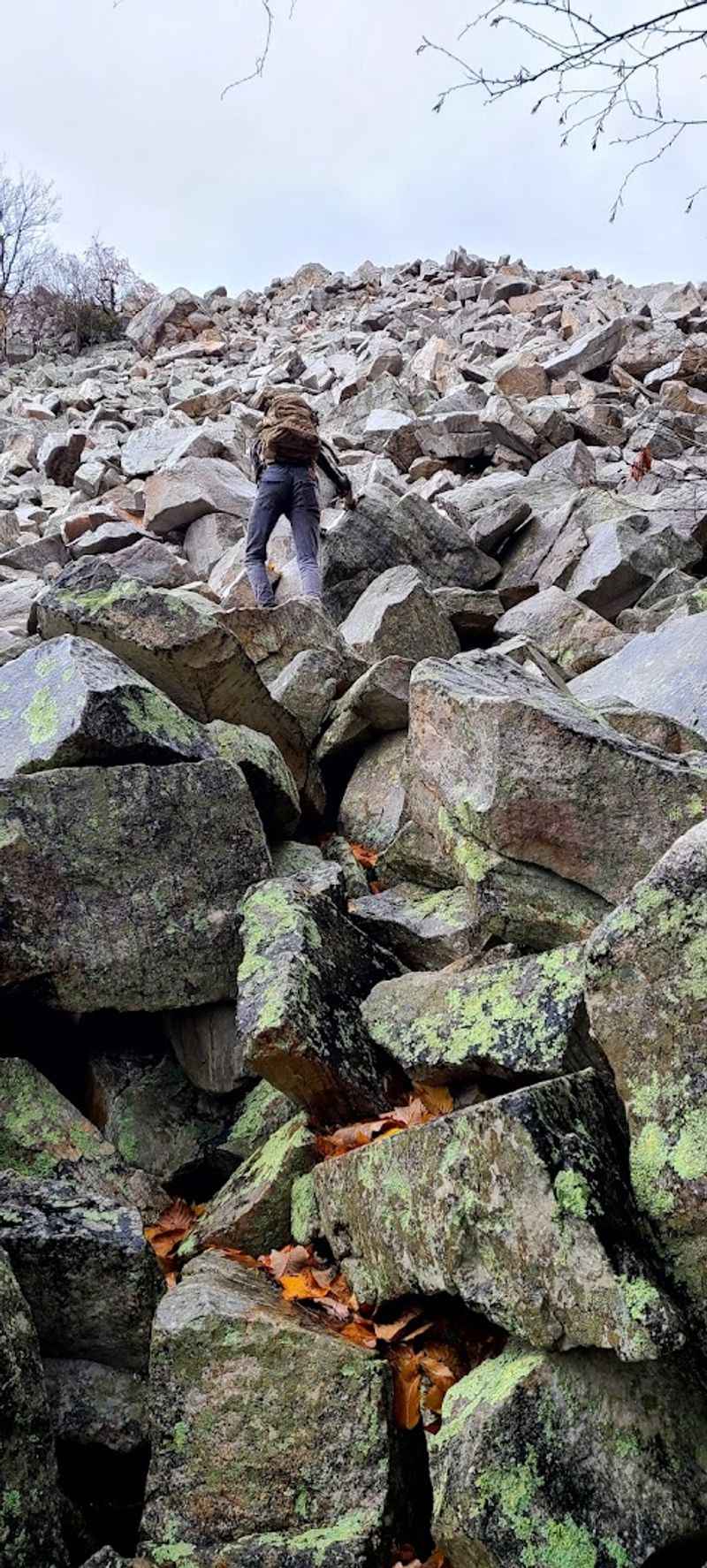
The boulder field is exhilarating, but it demands genuine respect. Rocks that look firmly planted can shift unexpectedly under body weight, and the gaps between boulders range from ankle-twisting nuisances to legitimately deep drops that require careful navigation.
Testing each rock before committing full weight is a habit worth building immediately. Three points of contact, two feet and one hand or two hands and one foot, is the standard scrambling safety principle that keeps bodies upright and ankles intact.
Moving too fast is the most common mistake, especially on the descent when tired muscles reduce reaction time significantly.
The designated trail running along the right side of the boulder field offers a safer alternative to full scrambling. Hikers who are uncomfortable with exposed climbing or who have mobility concerns can still enjoy spectacular views from this route without the added risk.
Solo hiking is technically possible but not recommended here. A partner provides both practical safety backup and someone to help document those spectacular summit moments.
Cell service appears intermittently after about a mile in, but relying on it for emergency communication is unreliable. Telling someone your plans before heading out is simple, sensible, and potentially life-saving in Virginia’s backcountry wilderness areas.
The Geology Behind the Spectacle: Ancient Rocks With a Story
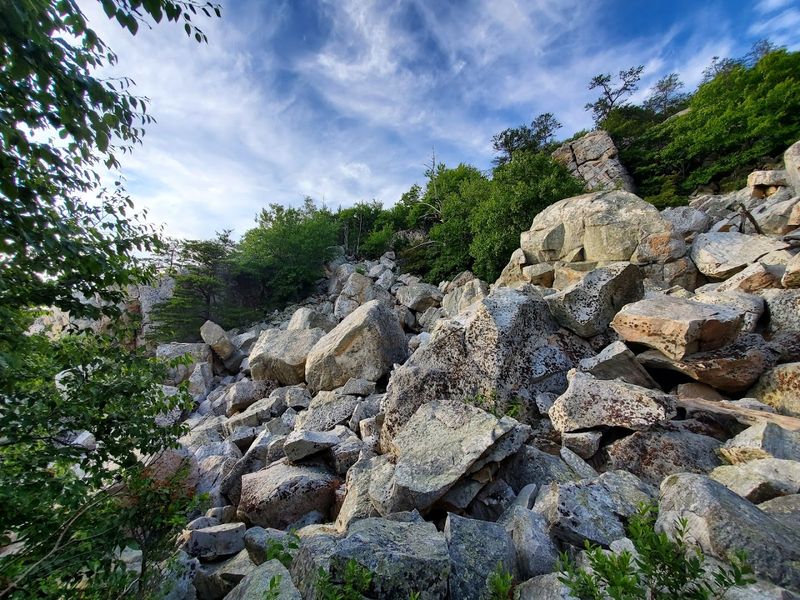
Those boulders did not just fall out of the sky, though the sheer randomness of their arrangement might make you wonder. The quartzite at Devil’s Marbleyard formed from ancient sandstone that was subjected to intense heat and pressure deep within the earth, transforming it into one of the hardest, most durable rock types on the planet.
The boulder field itself is a product of periglacial processes, primarily frost wedging, where repeated freeze-thaw cycles over thousands of years cracked the bedrock apart. Gravity did the rest, sending chunks tumbling downslope and accumulating in the dramatic pile that exists today.
The process is called a talus slope in geological terms, though Devil’s Marbleyard is one of the most visually striking examples found anywhere in the eastern United States.
Quartzite’s resistance to weathering explains why the boulders remain so sharp-edged and angular rather than rounded like river stones. The mineral composition gives the rocks their distinctive pale grey and white coloring, which reflects light beautifully in photographs.
Standing among these ancient stones in the James River Face Wilderness of Virginia, you genuinely feel the weight of geological time pressing down around you in the most wonderful, humbling way possible.
Getting There and Planning Your Perfect Visit
Finding Devil’s Marbleyard requires a bit of navigational commitment, but the approach through Virginia’s rural countryside is genuinely scenic and worth savoring. The trailhead sits near Natural Bridge Station, accessed via Petites Gap Road off Arnold Valley Road.
The parking area is small, accommodating roughly six vehicles, so arriving early is less a suggestion and more an absolute necessity on weekends.
Weekday mornings offer the best combination of available parking, cooler temperatures, and solitude on the trail. Arriving by seven in the morning on a weekend practically guarantees a parking spot and a peaceful start.
Latecomers risk a long roadside walk before the hike even begins.
The official address to plug into navigation apps is Virginia 24579, near Natural Bridge Station. The route involves US-11 South to the US-130 intersection near Natural Bridge, then a turn onto Arnold Valley Road followed by Petites Gap Road to the parking area on the left.
No entrance fees, no permits, and no reservations are required to hike in this section of the George Washington and Jefferson National Forests. Pack out everything you bring in, leave no trace principles apply firmly here, and respect the wild character that makes Devil’s Marbleyard one of Virginia’s most genuinely spectacular outdoor destinations.
Now go book that trip.
Dear Reader: This page may contain affiliate links which may earn a commission if you click through and make a purchase. Our independent journalism is not influenced by any advertiser or commercial initiative unless it is clearly marked as sponsored content. As travel products change, please be sure to reconfirm all details and stay up to date with current events to ensure a safe and successful trip.
