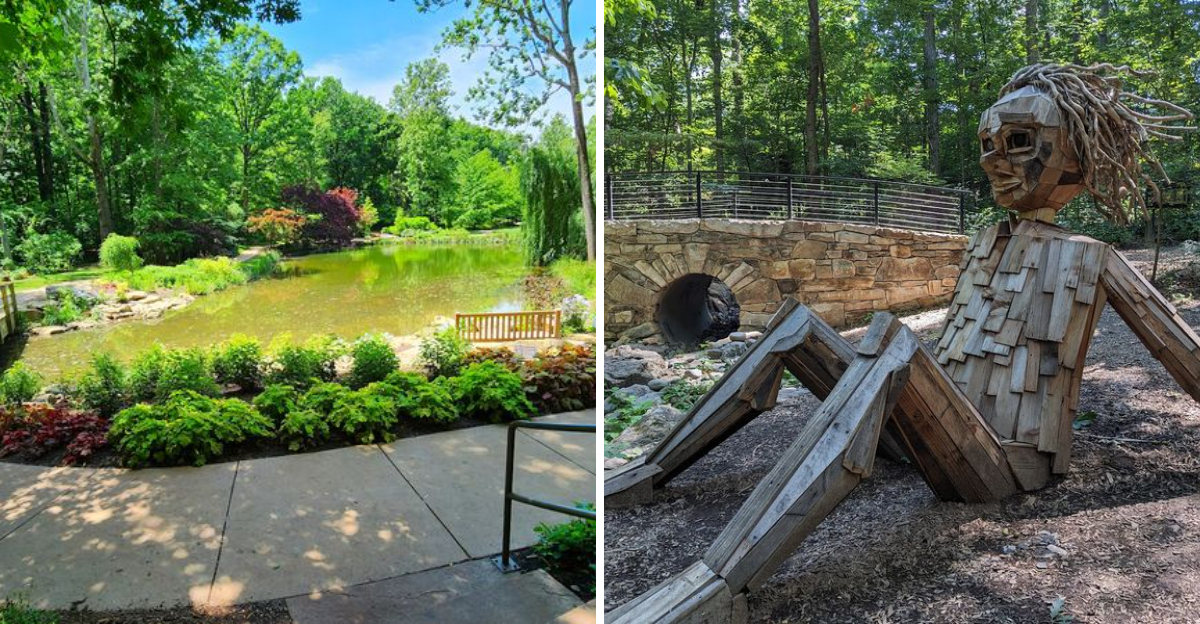
Some places just stop you in your tracks, and this botanical gem tucked inside a Virginia university campus is absolutely one of them. Sprawling across more than a hundred acres, it pulls off a rare trick: ancient wild forest on one side, lovingly sculpted gardens on the other, and miles of winding trails connecting it all.
Locals have been quietly cherishing it for years, but word is getting out fast. Pack your walking shoes, bring your curiosity, and get ready to fall completely in love with one of the Shenandoah Valley’s most underrated natural treasures.
The Oak-Hickory Forest: Where Old Trees Tell Ancient Stories
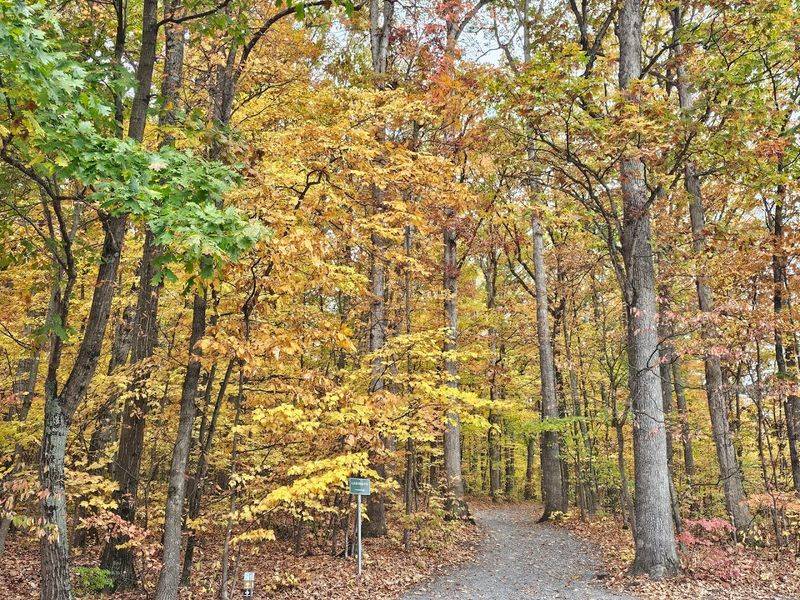
Step beneath the canopy of the oak-hickory forest at the Edith J. Carrier Arboretum, and the outside world simply disappears.
Towering trees stretch overhead, their thick branches weaving a living ceiling that shifts with every breeze. It feels ancient, unhurried, and completely magnificent.
This mature woodland spans the majority of the arboretum’s acreage and shelters some genuinely rare plant species. One standout is the round-leaf birch, a plant so uncommon it carries endangered status.
Finding it growing here, quietly thriving, feels like stumbling onto something precious.
The forest floor rewards slow walkers. Mossy rocks, fallen logs hosting tiny ecosystems, and the occasional glimpse of wildlife darting between the undergrowth all add to the experience.
Virginia’s Shenandoah Valley setting gives the forest a dramatic, moody quality that photographers absolutely love.
Bring sturdy footwear because the terrain gets uneven in places, but that only adds to the adventure. Morning light streams through the branches in golden columns, making early visits especially atmospheric.
Few places in Virginia offer this kind of raw, unfiltered forest immersion so close to a bustling town center.
Spring Wildflowers That Turn the Trails Into a Living Painting
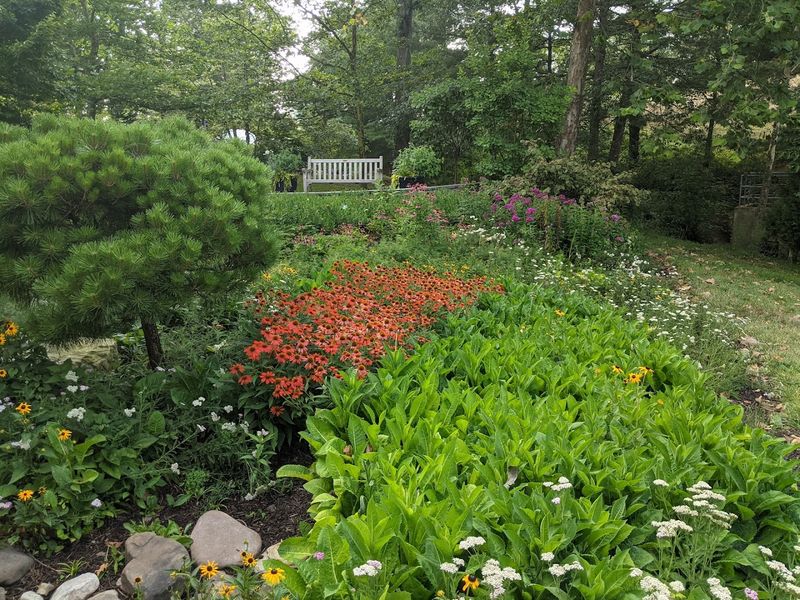
Nothing quite prepares you for the arboretum in spring. The trails transform into something out of a storybook, lined with Virginia bluebells in soft periwinkle blue, bloodroot in crisp white, and trilliums nodding gently in the breeze.
It is genuinely jaw-dropping.
Native wildflowers bloom in waves through the season, so no two visits look exactly alike. Early spring brings delicate ephemerals that vanish as quickly as they appear, making each sighting feel like a small, personal reward.
Returning every few weeks reveals an entirely new floral chapter.
The Edith J. Carrier Arboretum has cultivated these naturalistic plantings with real care, allowing native species to spread organically across the forest floor.
The result looks effortless, though considerable expertise goes into maintaining that wild, unstudied beauty.
Photographers and nature lovers plan entire road trips around this seasonal spectacle. Virginia’s mild spring climate means the blooms linger just long enough to feel generous rather than fleeting.
Grab a trail map from the visitor area, wander slowly, and let the colors do all the talking. This is one of those rare experiences that genuinely exceeds expectations every single time.
The Pond and Lowland Swale: A Quiet World Full of Wildlife
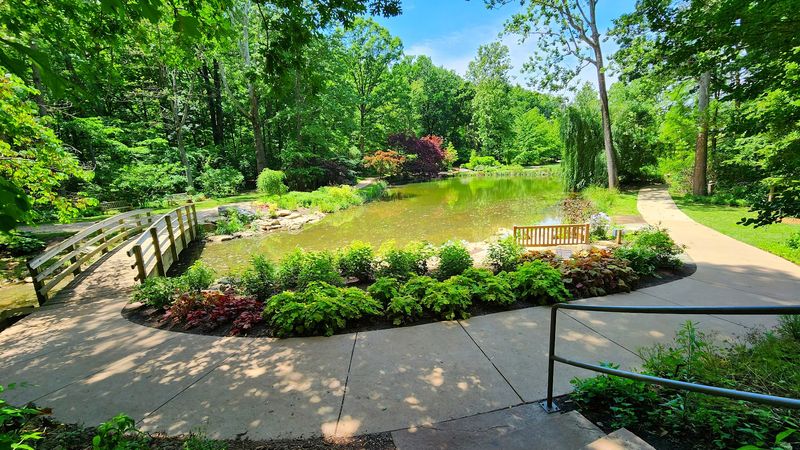
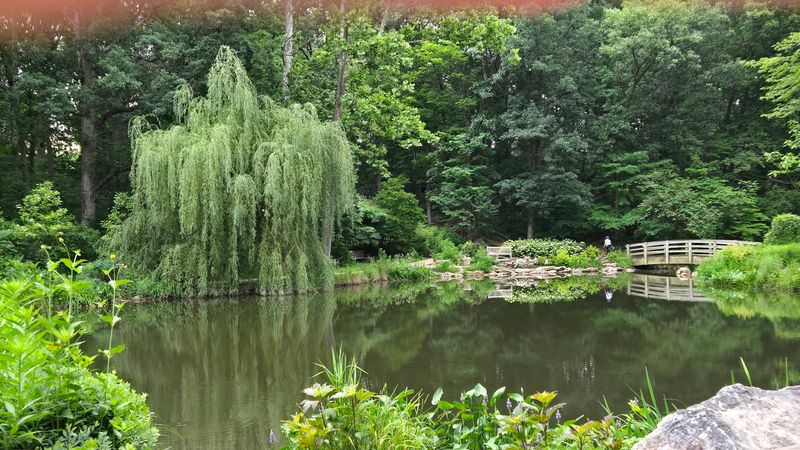
There is something deeply calming about standing at the edge of the arboretum pond and watching the water mirror the trees above. The surface catches light in unexpected ways, and if you stay still long enough, the wildlife comes to you.
Frogs, turtles, and dragonflies are regular residents here.
The lowland swale area adjacent to the pond creates a rich transitional habitat that supports migratory birds and amphibians throughout the year. Birders consistently find this zone rewarding, especially during spring and fall migration windows when species diversity peaks dramatically.
Concrete walkways around the pond make this section accessible for those who prefer smoother surfaces. Benches positioned at thoughtful intervals invite visitors to simply sit and absorb the atmosphere without feeling any pressure to keep moving.
Slow is always the right speed here.
The Edith J. Carrier Arboretum manages this wetland area with ecological sensitivity, maintaining natural vegetation buffers that protect water quality and wildlife habitat.
Virginia’s biodiversity really shines in spaces like this one. Even on overcast days, the pond carries a moody, atmospheric beauty that feels surprisingly cinematic and endlessly photogenic.
The Terraced Herb Garden: Fragrant, Functional, and Totally Charming
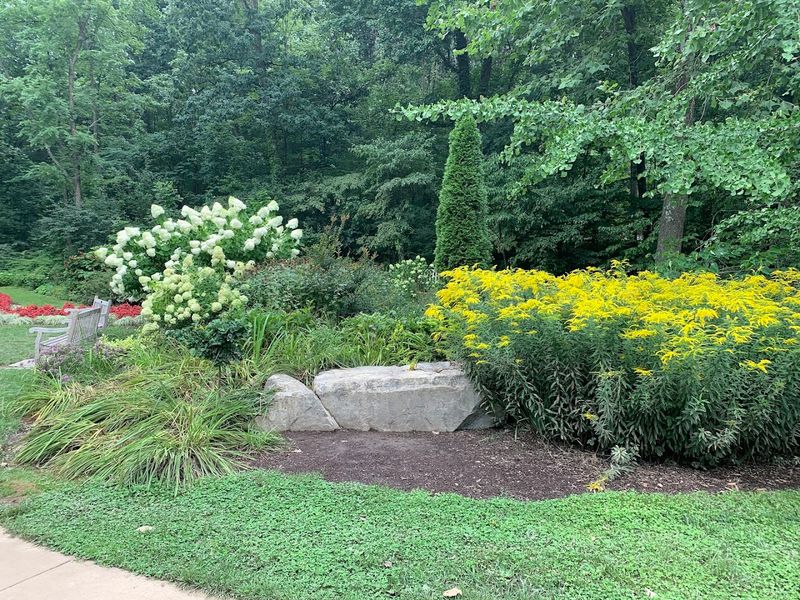
Tucked within the curated garden sections of the arboretum, the terraced herb garden is a sensory experience that deserves its own fan club. Rows of aromatic plants cascade down gentle stone terraces, filling the air with scents that shift as you move from one bed to the next.
Lavender, sage, thyme, and dozens of other species grow here in cheerful abundance.
The garden does double duty as both a beautiful landscape feature and an educational tool. Labels identify each plant with clear, informative text that explains uses, origins, and growing habits.
It is genuinely fascinating, even for people who do not consider themselves particularly plant-obsessed.
Garden design enthusiasts will appreciate the structural elegance of the terracing. Stone walls create strong horizontal lines that anchor the planting beds visually, while the plants themselves soften everything with color and texture.
The combination feels both deliberate and pleasantly relaxed.
Morning visits to this corner of the Edith J. Carrier Arboretum are especially rewarding.
Dew on the leaves amplifies the fragrance, and the low-angle light makes every plant look impossibly lush. Virginia summers mean this garden stays productive and visually rich well into the warmer months, making it a highlight across multiple seasons.
The Bog Garden: A Surprisingly Fascinating Micro-Ecosystem
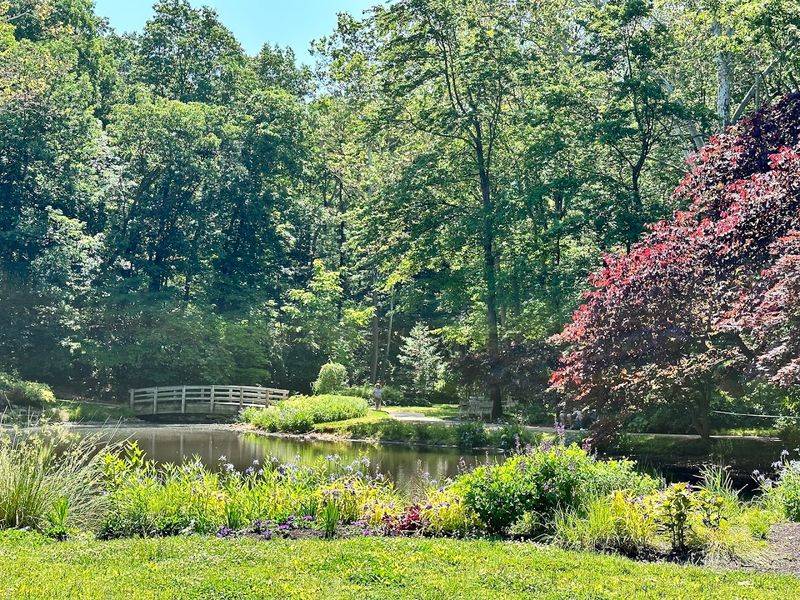
Most people walk past bog gardens without a second glance, but the one at this arboretum absolutely earns your full attention. Carnivorous plants, moisture-loving ferns, and specialized mosses create an ecosystem that feels more like a science fiction landscape than anything you would expect to find on a Virginia university campus.
The bog garden showcases plant adaptations that evolved in nutrient-poor, waterlogged conditions. Species here have developed clever survival strategies, from sticky traps to pitcher-shaped leaves, all on full display and all genuinely captivating.
Curious kids especially love this section, often lingering far longer than their parents anticipated.
Edith J. Carrier Arboretum maintains this specialized garden with careful attention to the very specific conditions these plants require.
Replicating a bog environment in a curated setting takes real horticultural skill, and the results here reflect that expertise clearly.
The contrast between the bog garden and the surrounding forest creates a fascinating sense of ecological variety packed into a compact space. Virginia’s climate supports this kind of biodiversity beautifully, and the arboretum takes full advantage of that.
Stop, crouch down, and look closely at what is growing here. The details are extraordinary, and the whole experience feels like a miniature natural history museum brought to life.
The Monarch Way-Station: A Tiny Garden With a Giant Purpose
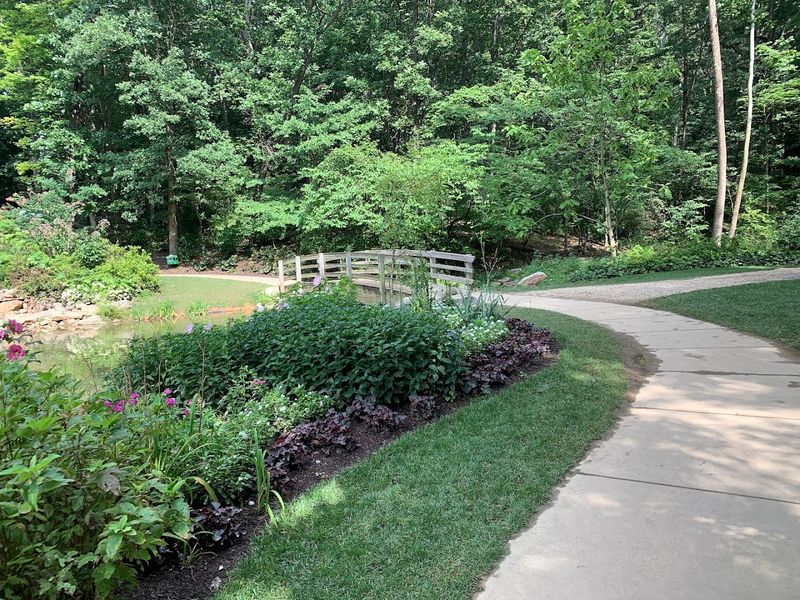
Few spots in the arboretum carry as much ecological weight as the monarch way-station, a dedicated garden planted specifically to support monarch butterfly populations on their remarkable migratory journeys. Milkweed grows in generous patches, providing the only plant on which monarchs will lay their eggs.
The butterflies know exactly where to find it.
Visiting during peak migration season turns this garden into a living spectacle. Dozens of orange-and-black wings flutter among the blooms, and the activity is so concentrated that even casual observers find themselves completely transfixed.
It is one of those experiences that reminds you how extraordinary ordinary nature can be.
The way-station also attracts a wide variety of other pollinators, including bees, skippers, and swallowtail butterflies. Native flowering plants surround the milkweed, creating a dense, buzzing, blooming community that benefits the broader local ecosystem significantly.
The Edith J. Carrier Arboretum registered this garden as an official way-station, connecting it to a nationwide network of monarch-supporting habitats.
Virginia sits along a key migratory corridor, making this location especially valuable for conservation efforts. Spending even fifteen minutes here feels meaningful, like you are witnessing something genuinely important unfolding in real time, one butterfly at a time.
The Family Garden: Where Kids Discover That Nature Is Actually Magic

Parents, this one is for you. The “At Home in the Woods” Family Garden at the arboretum is the kind of outdoor space that makes children forget screens exist entirely.
A stone bridge arches over a small stream, a six-foot-tall troll sculpture guards the woodland entrance with delightful menace, and interactive play elements are tucked throughout the landscape.
The design is clever because it blends play with genuine nature immersion. Kids are not just running around a playground.
They are climbing on natural materials, exploring sensory textures, and moving through a space that feels genuinely enchanted rather than artificially constructed.
Adults get something out of it too. The garden is beautifully landscaped, with plantings that complement the playful elements rather than competing with them.
Sitting on a bench while kids explore gives you time to actually appreciate your surroundings, which is a rare and lovely thing.
The Edith J. Carrier Arboretum clearly invested serious thought into making this space work for families of all ages and abilities.
Virginia outdoor destinations do not always cater this thoughtfully to younger visitors, which makes this garden stand out as genuinely exceptional. Plan to stay longer than you expect.
The kids will insist on it anyway.
The StoryWalk Trail: Reading Books Has Never Been This Much Fun
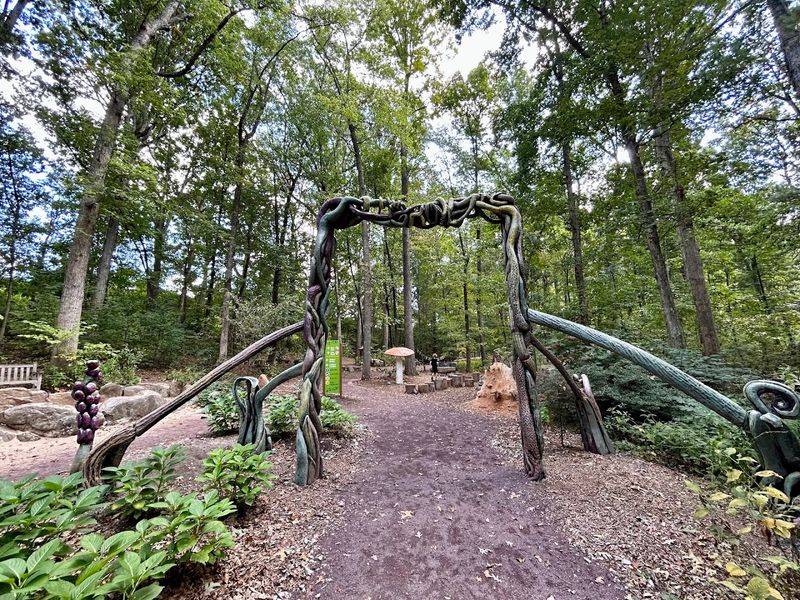
Somebody had a genuinely brilliant idea when they created the StoryWalk trail, and the arboretum runs one of the best versions of this concept anywhere in Virginia. Pages of a seasonal picture book are mounted on posts along the trail, spaced so that readers naturally walk from one page to the next.
By the time you reach the end, you have finished the story and completed a lovely walk through the woods.
Children absolutely adore this experience. The combination of movement, reading, and outdoor exploration hits a sweet spot that keeps even reluctant readers fully engaged.
Parents report that kids who normally resist books will happily sprint ahead to see what happens next on the trail.
The story changes seasonally, which gives repeat visitors a fresh reason to return throughout the year. Spring might feature a wildflower tale, while autumn brings something with falling leaves and forest creatures.
The Edith J. Carrier Arboretum curates these selections thoughtfully, matching the story to the landscape around it.
The trail culminates at a cozy reading roost, a sheltered seating area perfect for lingering and reflecting. It is a small but genuinely inspired touch that elevates the whole experience.
Bring a blanket and stay awhile. This peaceful corner of the arboretum earns its reputation as a favorite spot on campus.
The Labyrinth: A Meditative Walk You Will Not Want to Rush
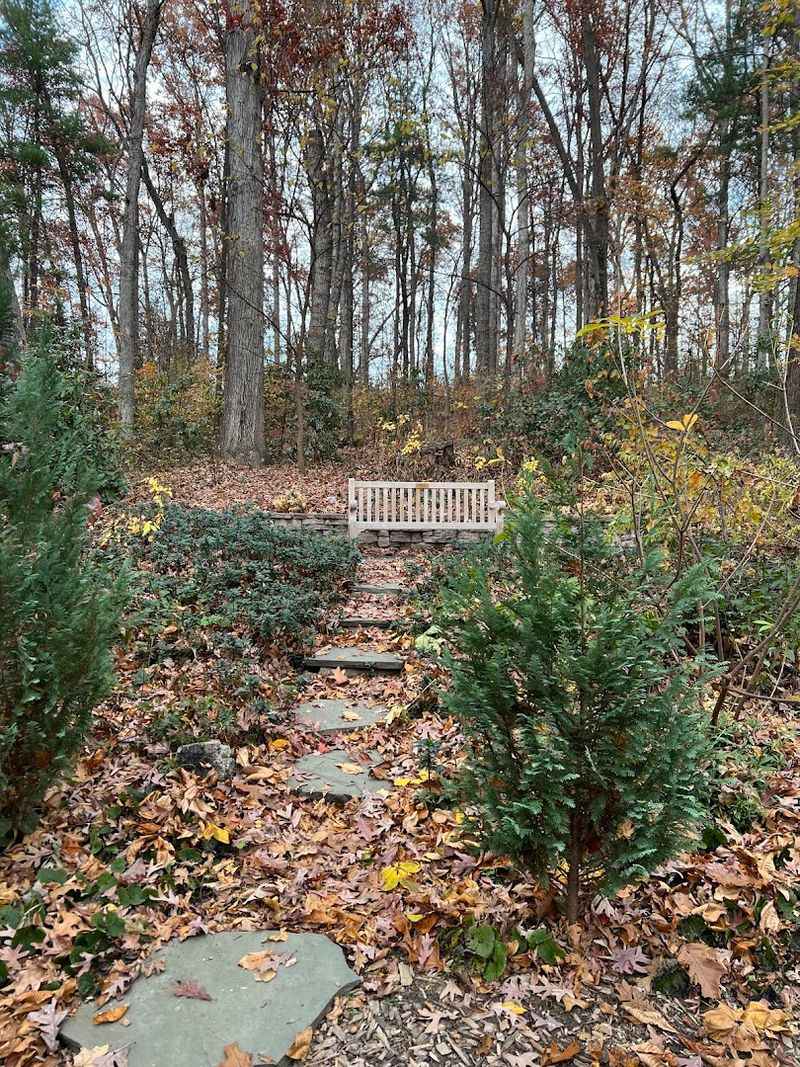
Tucked within the arboretum grounds, the labyrinth is one of those features that catches first-time visitors completely off guard. Unlike a maze, a labyrinth has a single winding path that leads inward and back out again, designed not to challenge but to calm.
Walking it slowly, without any goal beyond the walk itself, produces a surprisingly powerful sense of stillness.
The arboretum’s labyrinth sits within a naturally beautiful setting, surrounded by plantings that shift with the seasons. In spring, flowering plants frame the path in color.
By autumn, fallen leaves carpet the ground in warm amber and rust, making the whole experience feel almost ceremonial.
People use this space in genuinely varied ways. Some walk it meditatively, others bring children who run the path with gleeful energy, and others simply sit at the center and enjoy the quiet.
All of those approaches feel equally valid and equally welcome here.
Virginia has no shortage of beautiful outdoor spaces, but contemplative features like this one are rarer than you might expect. The Edith J.
Carrier Arboretum treats the labyrinth as a genuine wellness offering, not just a novelty. First-time walkers consistently describe feeling noticeably calmer by the time they step back off the path.
That is a pretty remarkable thing for a simple garden feature to accomplish.
Planning Your Visit: Everything You Need Before You Go
Getting to the Edith J. Carrier Arboretum is refreshingly straightforward.
Located at 780 University Blvd, Harrisonburg, VA 22807, the arboretum sits on the James Madison University campus, just minutes from Interstate 81. Parking is available in dedicated arboretum lots as well as the adjacent JMU Lot R5, which offers overflow space for busier days.
Admission is completely free, and the grounds open daily at 7 am, closing at 8 pm. That generous window means early morning walkers and late afternoon wanderers both have plenty of time to explore without feeling rushed.
Dogs are welcome on leash, which makes this a favorite destination for pet owners throughout the Harrisonburg area.
Restrooms and a picnic pavilion are available on site, and a small gift shop gives visitors a chance to take home something to remember the experience. Trail maps are provided at the entrance, though the paths are generally intuitive enough that getting happily lost is part of the charm.
Virginia’s Shenandoah Valley climate means the arboretum offers something beautiful in every season. Spring wildflowers, summer greenery, autumn foliage, and even winter’s bare-branched elegance each have devoted fans.
For questions, reach the arboretum at (540) 568-3194. Pack light, move slowly, and let this remarkable place do the rest.
Dear Reader: This page may contain affiliate links which may earn a commission if you click through and make a purchase. Our independent journalism is not influenced by any advertiser or commercial initiative unless it is clearly marked as sponsored content. As travel products change, please be sure to reconfirm all details and stay up to date with current events to ensure a safe and successful trip.
