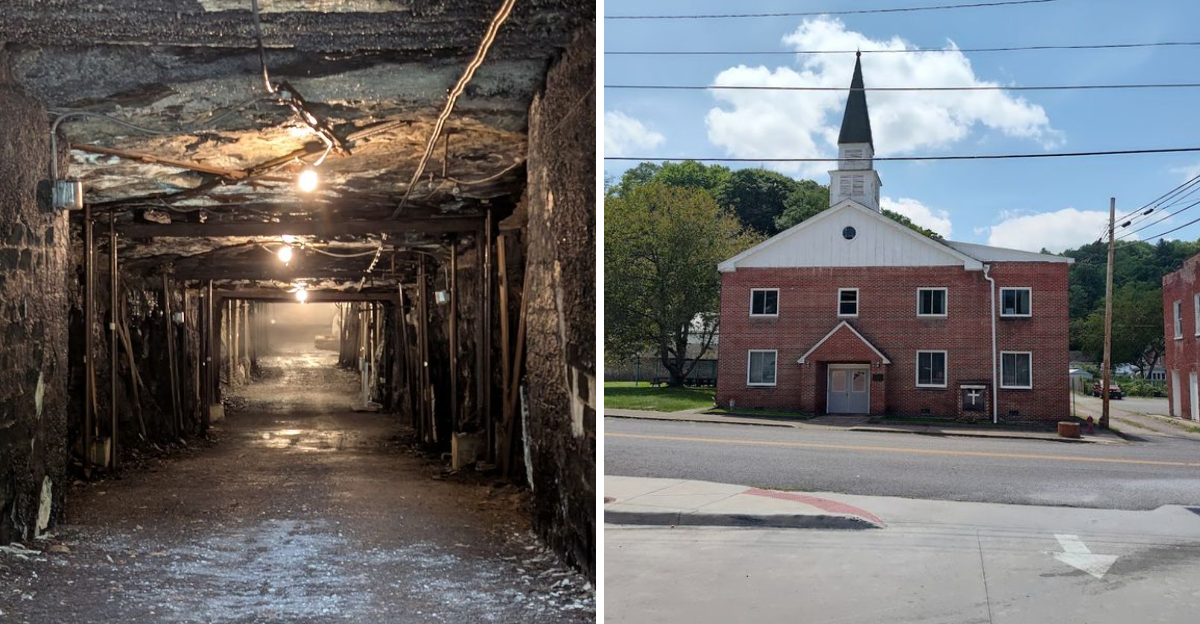
Some places freeze time so completely that walking through them feels less like tourism and more like trespassing on history. One small Tazewell County town has kept its coal-era soul so intact that the pickaxes practically echo off the walls.
Most people drive right past it, and honestly, that is their loss. This town is the kind of place that stops you cold, makes you pull over, and quietly rewrites everything you thought you knew about American industrial history.
Locals will tell you it never really changed, and one afternoon here is enough to make you a true believer. This is not a reconstructed museum town.
It is the real deal, preserved by circumstance, community pride, and a landscape that seems almost reluctant to let the past go.
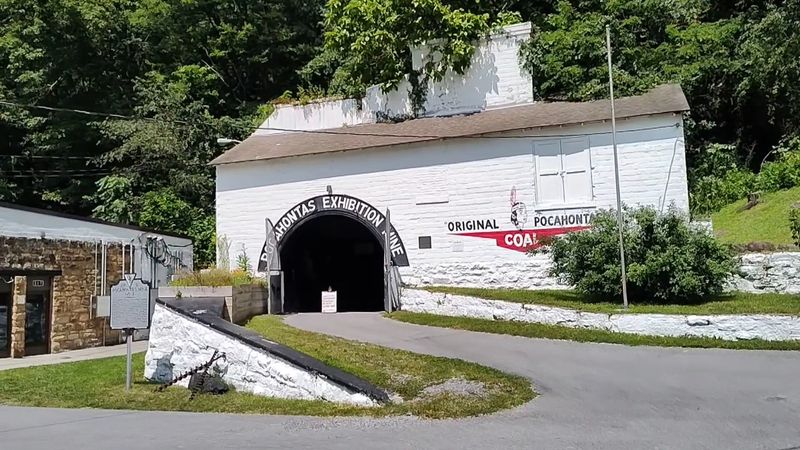
The Pocahontas Exhibition Coal Mine
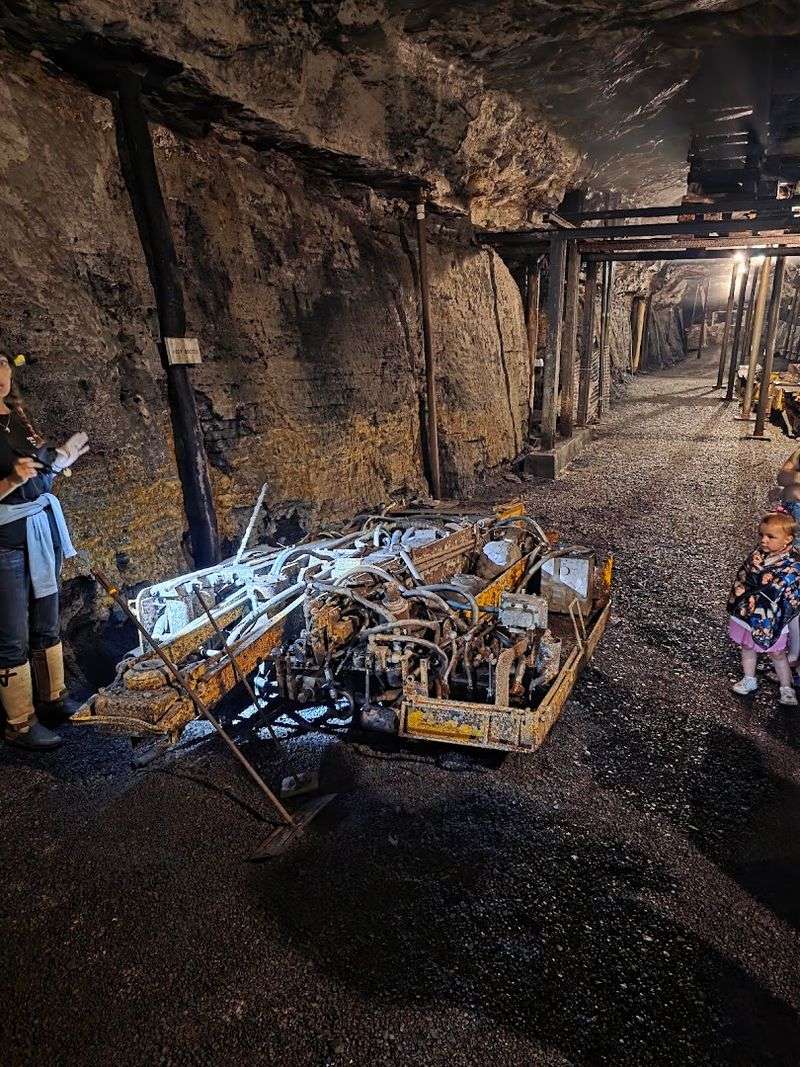
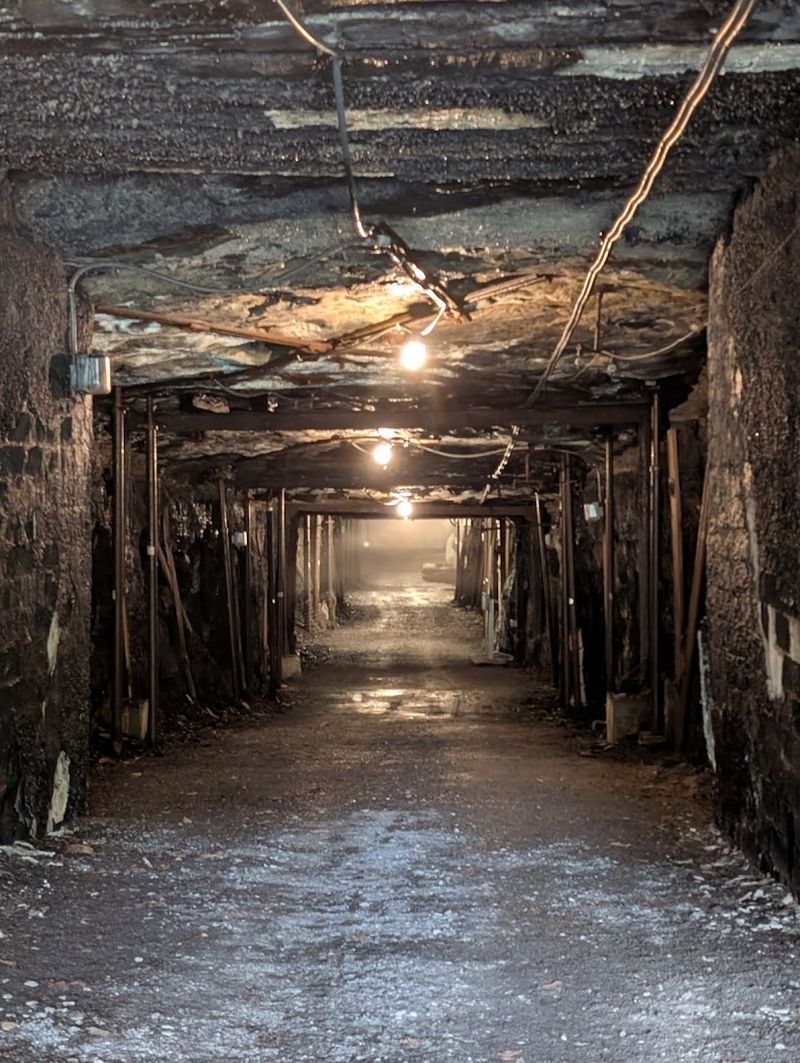
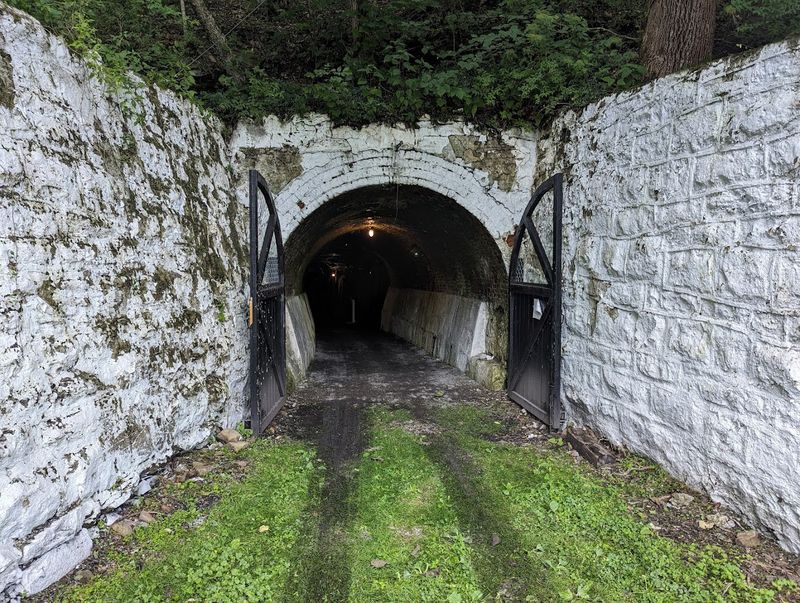
Stepping inside this mine feels like the mountain itself is telling you a story. The Pocahontas Exhibition Coal Mine, also known as Mine No. 1, sits at the heart of the town and holds the remarkable distinction of being the first exhibition coal mine in the entire United States.
The coal seam here stretches an astonishing 13 feet thick, one of the richest ever discovered in Virginia. By the time operations wound down in 1955, this single mine had produced over 44 million tons of coal.
That number is almost impossible to wrap your head around until you are standing inside the darkness with the weight of the mountain above you.
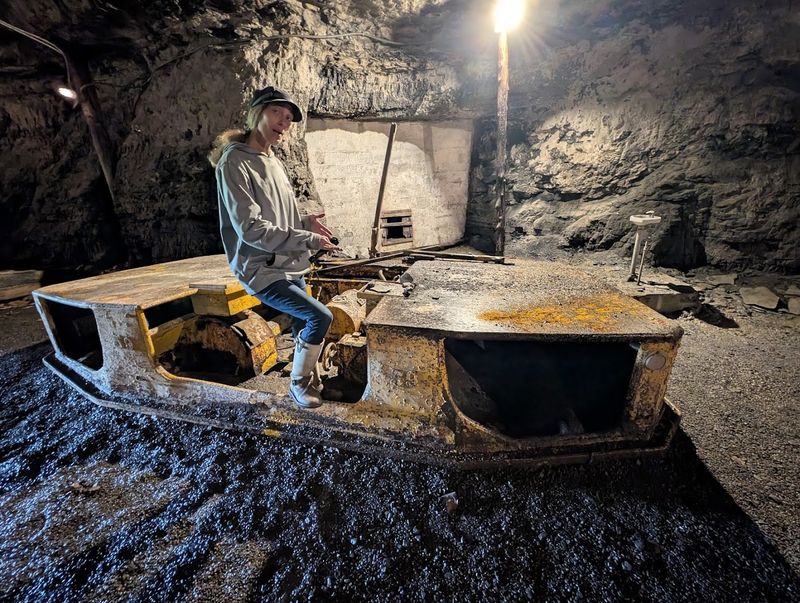
Recognized as a National Historic Landmark, the mine opened its doors to the public back in 1938, decades before heritage tourism was even a concept. The original equipment, the narrow passages, and the thick black walls make every step feel genuinely cinematic.
Guided tours walk you through the actual working sections, explaining the tools, the techniques, and the sheer physical demand of 19th-century mining life. Pocahontas, Virginia has few experiences more gripping than this one.
The Pocahontas Historic District
Seventeen contributing buildings and one contributing structure make up the Pocahontas Historic District, and every single one of them earns its place on that list. Walking through this district feels almost surreal, like a film set where nobody bothered to remove the props after the cameras stopped rolling.
The Victorian-era City Hall, built in 1895, anchors the streetscape with the kind of confident architecture that says this town once had serious ambitions. Nearby, a stone Episcopal Methodist Church and a Catholic Church stand as quiet testaments to the deeply multicultural workforce that built this community from the ground up.
The original company store is perhaps the most evocative structure of all. In the era of company towns, the store was the economic and social center of daily life, and its walls still carry that weight.
Southwest Virginia does not have many places where you can read an entire chapter of American industrial history just by standing on one street corner.
Pocahontas pulls off something rare here. The district does not feel curated or sanitized.
It feels lived-in, authentic, and quietly magnificent in a way that no restoration project could fully manufacture.
The Pocahontas Cemetery and Its Multilingual Gravestones
Few cemeteries in Virginia carry the emotional weight of this one. The Pocahontas Cemetery came into existence following a devastating explosion in 1884 that claimed the lives of at least 114 miners, making it one of the deadliest industrial disasters in the state’s history.
What makes this cemetery extraordinary beyond its tragic origins is the sheer diversity etched into its stones. Gravestones here bear inscriptions in Hungarian, Italian, Polish, and Russian, a physical record of the immigrant communities who came to Tazewell County chasing opportunity and found danger instead.
Walking among the markers is a quietly moving experience. These were not just workers.
They were fathers, brothers, and sons who traveled thousands of miles only to be swallowed by the same mountain that promised them a living. The multilingual inscriptions feel like a chorus of voices still trying to be heard across the decades.
Restoration efforts have been underway to preserve the cemetery’s crumbling markers, led by community members who understand exactly what would be lost if this place fell silent. Pocahontas holds its grief as openly as it holds its pride, and this cemetery is where both feelings live together most honestly.
The Victorian-Era City Hall
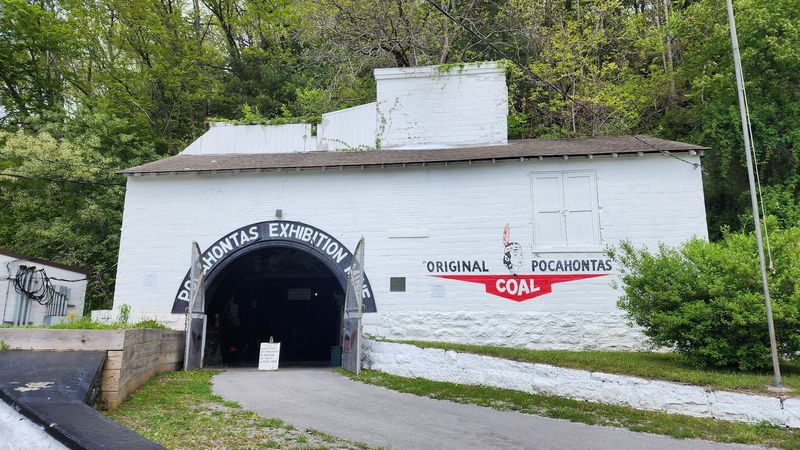
Built in 1895, the Pocahontas City Hall is the kind of building that makes you stop mid-stride and just stare. For a coal town carved out of the Appalachian mountains, this structure carries an almost defiant elegance, a declaration that the people living here expected permanence and sophistication.
The Victorian architectural details, the brickwork, the proportions, and the general sense of civic ambition speak to a moment when Pocahontas was genuinely booming. Southwest Virginia was producing enormous wealth during this era, and this building was meant to reflect that confidence back at the world.
Today, the City Hall remains one of the most photographed structures in the Pocahontas Historic District, and it is easy to understand why. The building has aged with dignity rather than decay, holding its form in a way that feels almost stubborn.
Standing in front of it, you get a clear sense of the town’s original character: industrious, proud, and deeply invested in building something that would last. Virginia has plenty of historic courthouses and civic buildings, but few of them arrive with this particular combination of mountain setting and coal-era gravitas.
The Stone Episcopal Methodist Church
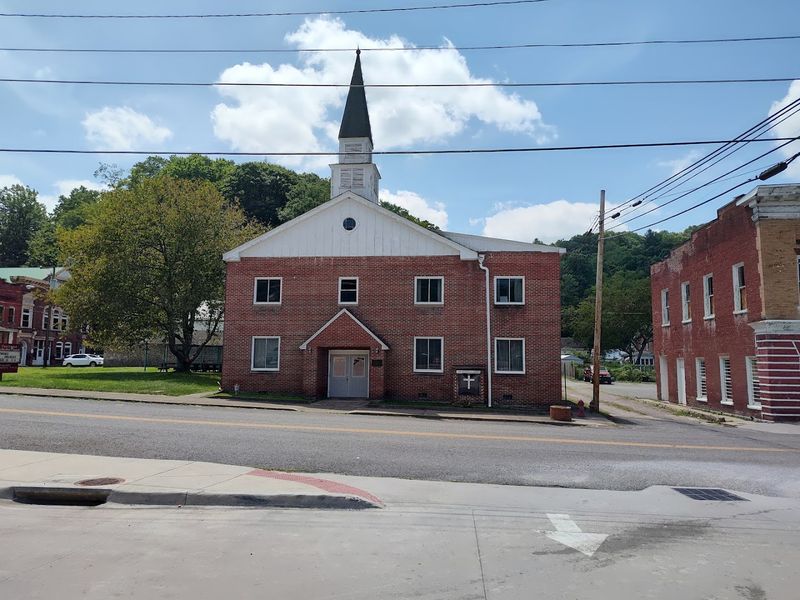
Religion and coal mining were inseparable in the company towns of southwest Virginia, and the stone Episcopal Methodist Church in Pocahontas stands as the most architecturally striking proof of that bond. Built from locally quarried stone, the church has a solidity to it that feels almost geological, as if it grew naturally from the same mountain that fed the mines.
The arched windows, the modest bell tower, and the careful stonework give the building a contemplative quality that sets it apart from the brick commercial structures surrounding it. On a misty Tazewell County morning, the church looks almost medieval, which is not a comparison you make lightly about a building in rural Virginia.
Inside, the simplicity is just as compelling as the exterior craftsmanship. The congregation that worshipped here was drawn from the same multinational workforce that built the town, meaning this space once echoed with prayers spoken in half a dozen languages.
The church remains one of the contributing structures in the Pocahontas Historic District and continues to draw architecture enthusiasts who make the trip specifically to see it. Few buildings in the region communicate the spiritual weight of the mining era quite this effectively.
The Original Company Store
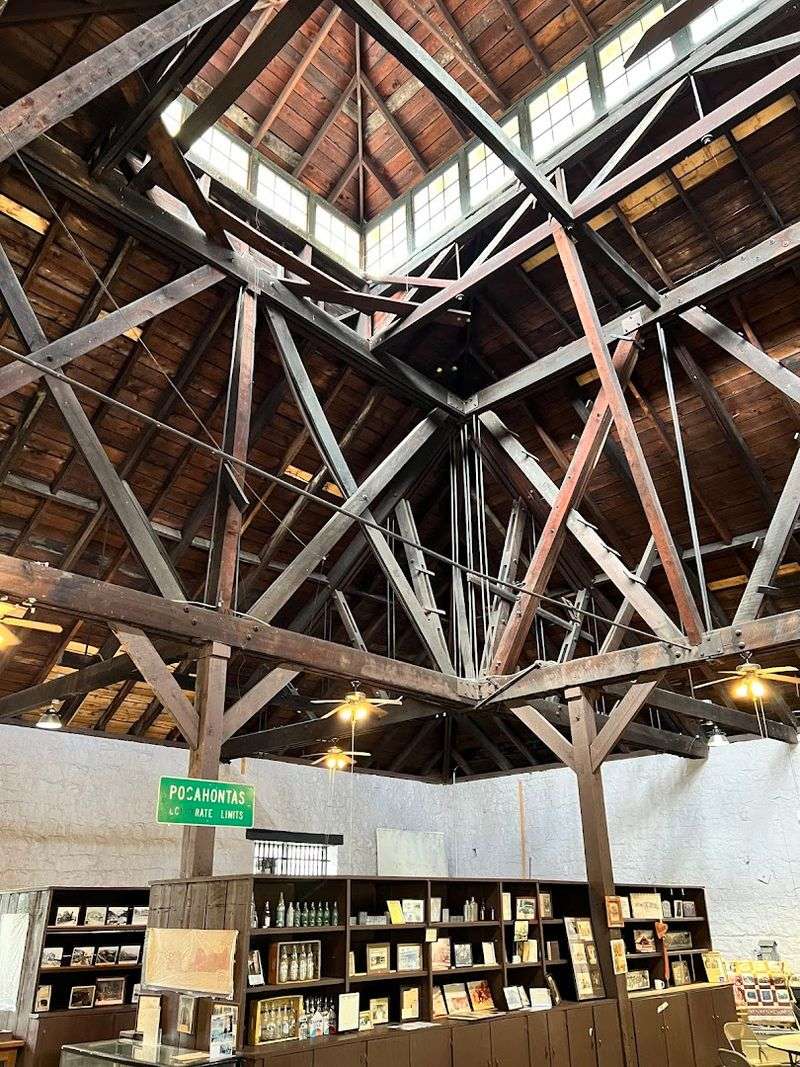
Company stores were the economic engines of 19th-century mining towns, and the one in Pocahontas is among the best-preserved examples anywhere in Virginia. In the company town system, miners were often paid in scrip, a form of currency redeemable only at the company store, which meant this building was not just a shop.
It was the financial center of the entire community.
The scale of the structure reflects that power. Wide storefront windows, a generous footprint, and a prominent position on the main street all communicate that this was where Pocahontas did its business.
Walking past it today, you can almost feel the transactional energy that once buzzed through its doors every single morning.
Historians point to company stores as both a practical necessity and a mechanism of control, and the one here captures that complicated legacy with uncomfortable clarity. Tazewell County was shaped by these dynamics as much as any place in Appalachia.
The building now stands as a physical argument for why Pocahontas deserves its place on the National Register of Historic Places. It is not just old.
It is genuinely irreplaceable as a document of how industrial capitalism organized daily life in early 20th-century America.
The 1884 Mine Explosion Memorial
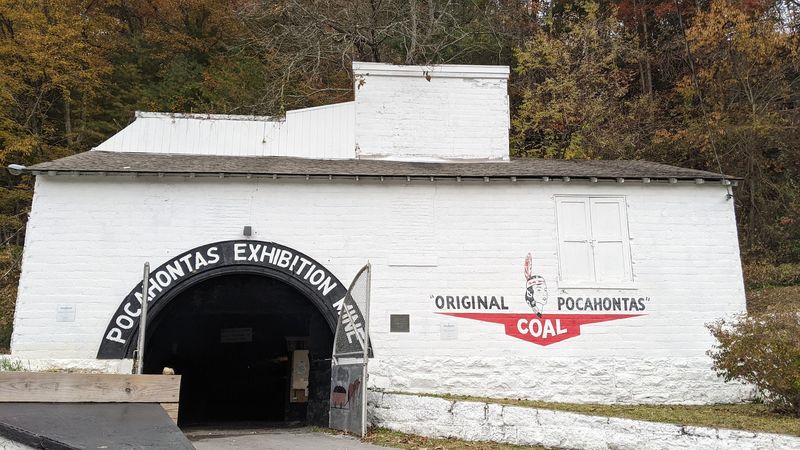
On March 13, 1884, the earth beneath Pocahontas shook and the world changed for this small Virginia mountain town forever. An explosion tore through the mine workings and killed at least 114 men and boys in one of the worst industrial disasters in the history of the American coal industry.
The memorial to those victims carries a gravity that is hard to articulate. Standing before it, you realize that the town’s entire identity, its cemetery, its churches, its community fabric, was fundamentally shaped by this single catastrophic event.
Pocahontas grieved collectively and then rebuilt collectively, and that cycle is written into every structure still standing here.
The disaster also triggered significant changes in mining safety standards across Virginia and beyond, giving the tragedy a legacy that extended far past the mountains of Tazewell County. The victims were not forgotten by the industry that claimed them, even if the changes came too late for the men already gone.
Visiting this memorial is not a cheerful experience, but it is an essential one. The weight of it clarifies everything else you see in Pocahontas.
The preserved buildings are not just architectural curiosities. They are a community’s way of insisting that these lives mattered and still do.
The Appalachian Landscape Surrounding the Town
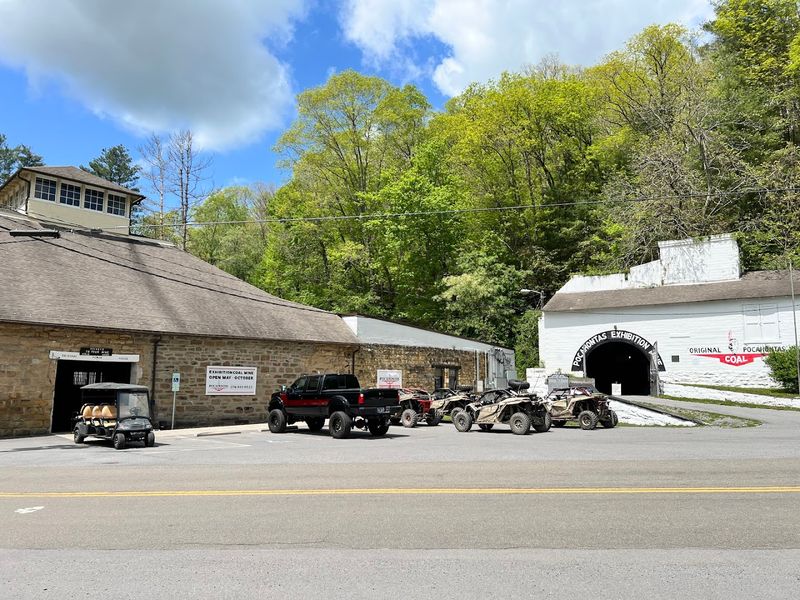
The mountains around Pocahontas are not background scenery. They are the reason the town exists at all.
The rich coal seams that drew the Southwest Virginia Improvement Company here in 1881 were buried inside these ridges, and the dramatic topography that made extraction so challenging also created one of the most visually striking industrial settings in all of Virginia.
Arriving by road, the descent into the valley offers a view that feels genuinely theatrical. The town appears suddenly below you, a cluster of Victorian rooftops and church steeples cupped in a mountain hollow, looking exactly like a place that time decided to skip over.
The surrounding forests have reclaimed much of the land once stripped for mining infrastructure, softening the industrial legacy with a lush green canopy that changes dramatically with each season. Fall in Tazewell County is particularly spectacular, with the ridgelines igniting in orange and red above the town’s slate-grey rooftops.
Outdoor enthusiasts will find that the area surrounding Pocahontas offers serious hiking and trail opportunities, with the landscape itself serving as a living record of the geological forces that created the coal deposits below. The mountains gave this town its identity, and they continue to shape every experience of it.
The Immigrant Heritage of Pocahontas
Few small towns in Virginia carry a more genuinely international story than Pocahontas. When the Southwest Virginia Improvement Company began recruiting labor in the 1880s and 1890s, it cast a global net, drawing workers from Hungary, Italy, Poland, Russia, and across Eastern Europe into this narrow mountain valley.
The result was a community unlike almost anything else in Appalachia. Different languages, different religions, different food traditions, and different cultural practices all converged in a place that had been wilderness just years before.
The town’s cemetery, with its multilingual gravestones, is the most visible remnant of that remarkable demographic mix.
This immigrant heritage gives Pocahontas a complexity that sets it apart from the more homogeneous narratives often associated with Appalachian coal towns. The people who built this place came from everywhere, and they brought everything with them.
Understanding this history reframes the entire experience of walking through the Pocahontas Historic District. The buildings were not just constructed by anonymous labor.
They were built by specific communities with specific traditions, each contributing something distinct to the town’s character. Tazewell County holds a genuinely multicultural American origin story here, and it deserves far more recognition than it currently receives.
Planning Your Visit to Pocahontas, Virginia
Getting to Pocahontas requires a bit of commitment, which honestly makes arriving feel like a reward. The town sits in Tazewell County in the far southwest corner of Virginia, tucked into the Appalachian mountains near the West Virginia border.
The drive in is scenic in the most serious possible sense of that word.
The Pocahontas Exhibition Coal Mine is the anchor attraction and the logical starting point for any visit. From there, the Historic District is entirely walkable, with the cemetery, the churches, the City Hall, and the company store all within easy reach on foot.
Give yourself at least half a day to do it properly.
The town is a genuinely small community, so there is no sprawling tourist infrastructure here. That is entirely the point.
Pocahontas rewards visitors who come with curiosity rather than convenience, and the experience is richer for the lack of commercial packaging around it.
The address for the Pocahontas Exhibition Coal Mine is Centre Street, Pocahontas, VA 24635. For the broader town, Pocahontas is located along Route 644 in Tazewell County, Virginia.
Pack comfortable shoes, bring a camera, and prepare to stay longer than you planned.
Dear Reader: This page may contain affiliate links which may earn a commission if you click through and make a purchase. Our independent journalism is not influenced by any advertiser or commercial initiative unless it is clearly marked as sponsored content. As travel products change, please be sure to reconfirm all details and stay up to date with current events to ensure a safe and successful trip.
