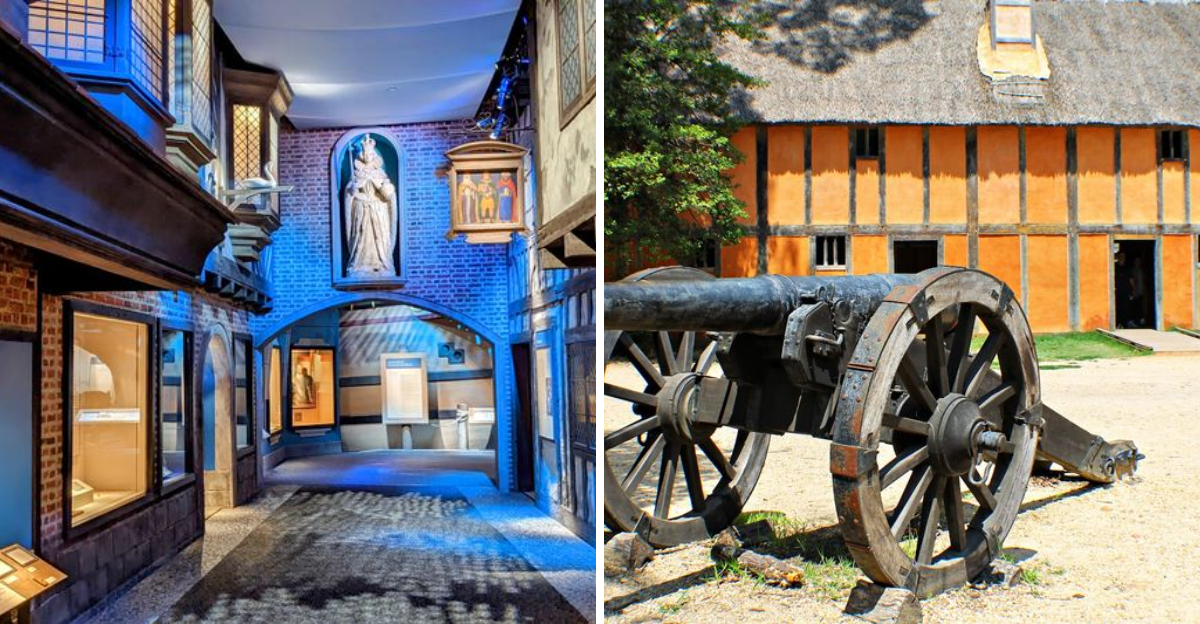
You have heard of Jamestown, of course. The first permanent English settlement in America.
But this Virginia landmark is not just a monument or a plaque. It is a massive living history museum that recreates the world of 1607.
Three ships sit in the harbor, replicas of the ones that brought the colonists across the Atlantic. A Powhatan village shows how Indigenous people lived before the English arrived.
And the fort, with its wooden walls and thatched roofs, makes you feel like you have stepped back in time. I spent hours here, walking the decks of the ships, watching interpreters fire muskets, and learning about the complicated history of this place.
The settlement is huge, and most of it is outdoors, so wear comfortable shoes. Virginia’s history is on full display here.
Boarding the Recreated Ships of 1607
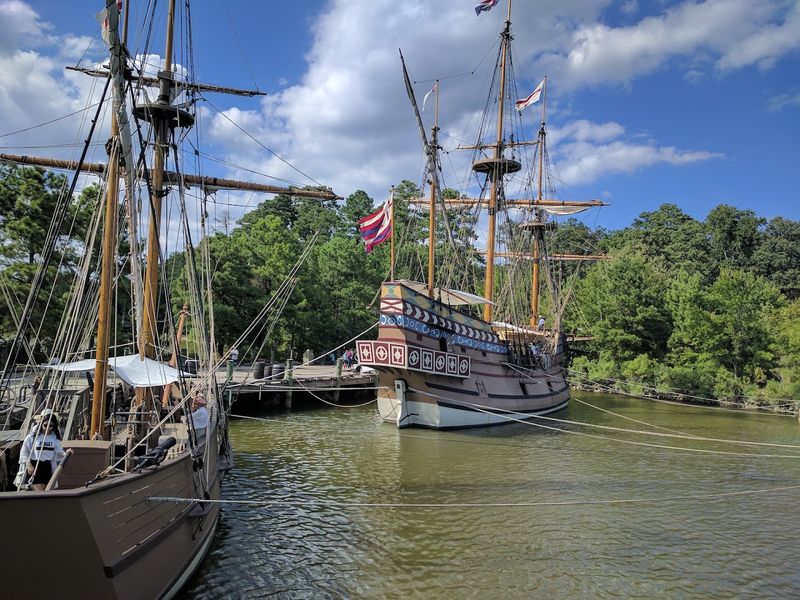
Standing on the dock staring up at those towering wooden masts, you genuinely forget what century you’re in. The recreated Godspeed and Discovery are full-scale replicas of two of the three ships that carried the first English colonists across the Atlantic in 1607, and they are jaw-droppingly real up close.
Climbing aboard feels like stepping into a time machine that actually works. The cramped below-deck quarters give you a visceral sense of what a 144-day ocean crossing must have felt like, packed into a vessel barely bigger than a school bus.
Every beam, rope, and hatch has been crafted to match 17th-century specifications.
The Susan Constant, the flagship of the fleet, is currently undergoing restoration, but an immersive virtual experience lets you explore her in detail. Costumed interpreters on deck answer every question with remarkable depth and enthusiasm.
Jamestown Settlement pulls off something rare here: it makes the past feel uncomfortably, brilliantly close.
Exploring James Fort Up Close
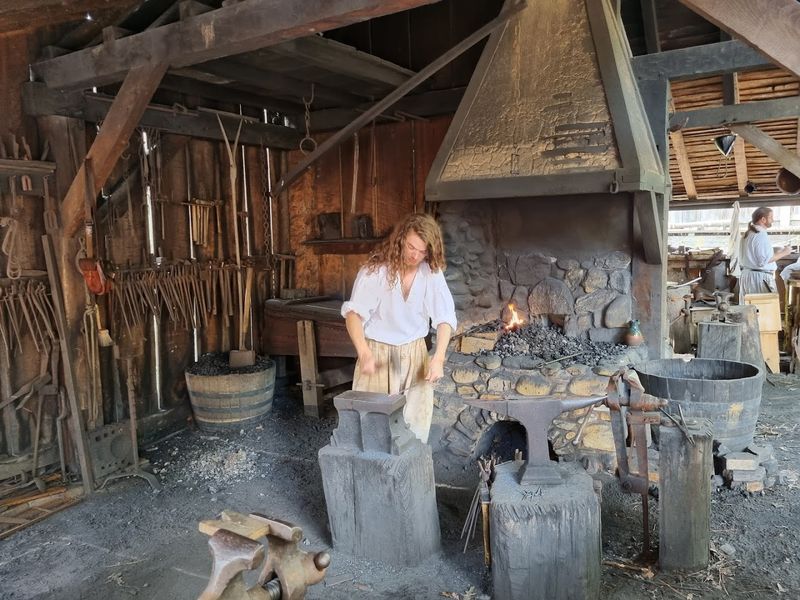
James Fort is not a polished, sanitized version of history. It’s muddy, low-ceilinged, and wonderfully authentic, which is exactly the point.
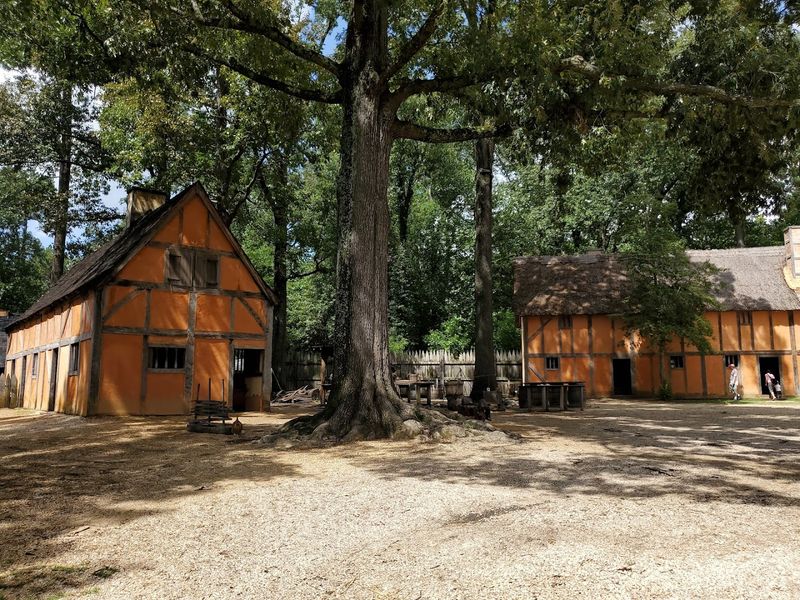
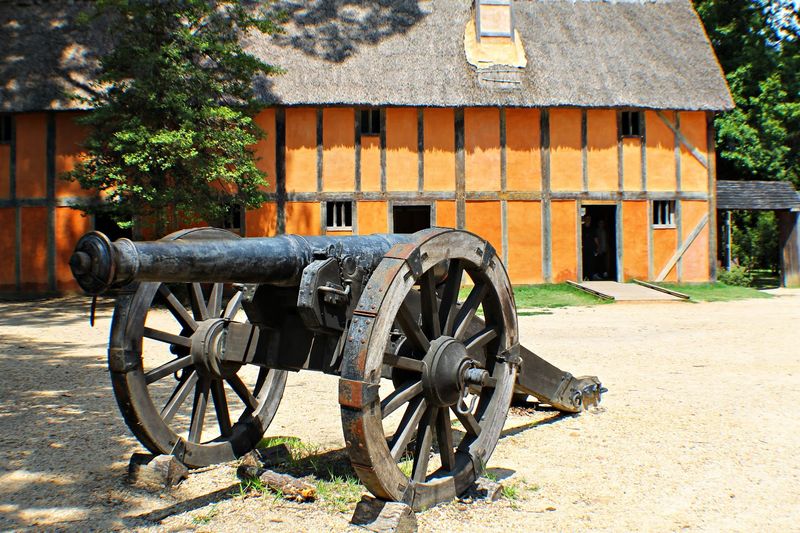
The recreation reflects the fort as it appeared between 1610 and 1614, complete with thatched roofs, rough timber walls, and wattle-and-daub buildings that look like they were finished last Tuesday in the 17th century.
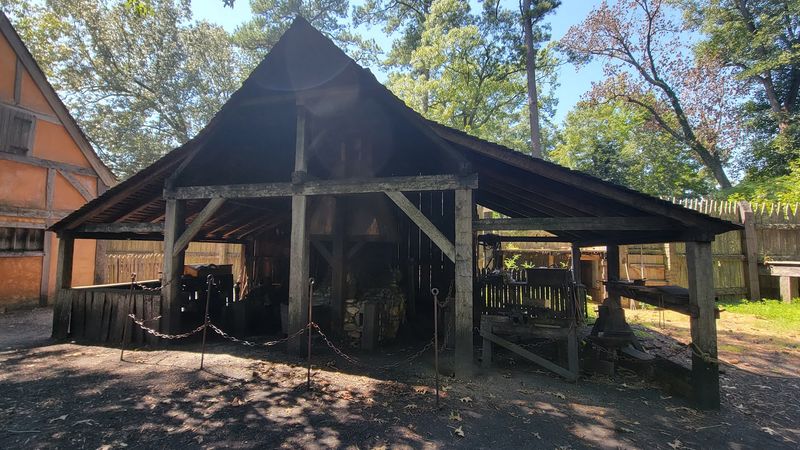
Walking through the triangular palisade walls, you immediately grasp how vulnerable and determined those early colonists must have been. The buildings inside are fully furnished as if someone actually lives there, with period tools, sleeping quarters, and storage areas that tell the story without needing a single caption.
Costumed interpreters demonstrate blacksmithing, woodworking, and English pike drills right inside the fort grounds. You can try on armor, which is heavier than it looks, or pick up a replica tool and immediately understand why colonial life was relentlessly physical.
Virginia history doesn’t get more tactile than this corner of Jamestown Settlement, and that hands-on quality is what keeps people talking about it long after they’ve driven home.
Stepping Into Paspahegh Town
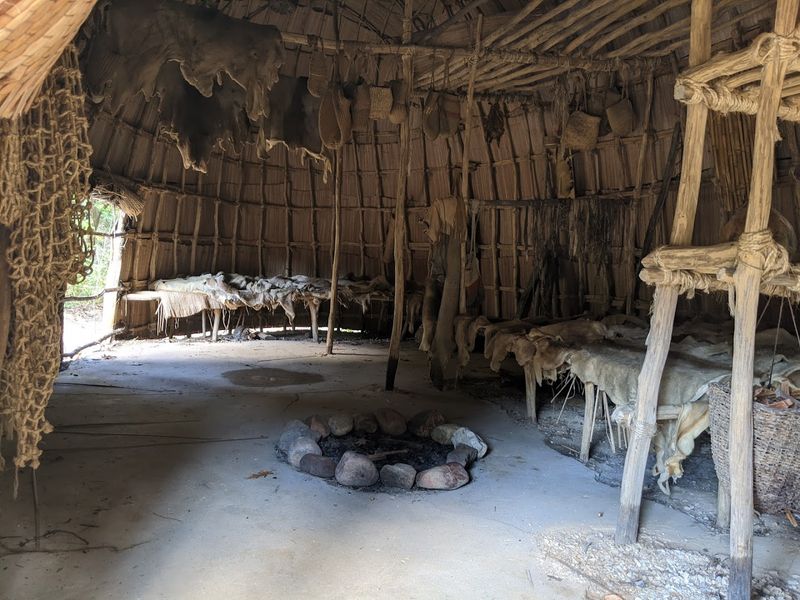
Before any English ship appeared on the horizon, this land already had a story. The recreation of Paspahegh Town at Jamestown Settlement offers a genuinely respectful and detailed look at the culture of the Powhatan Indians, the indigenous people who called this region home long before 1607.
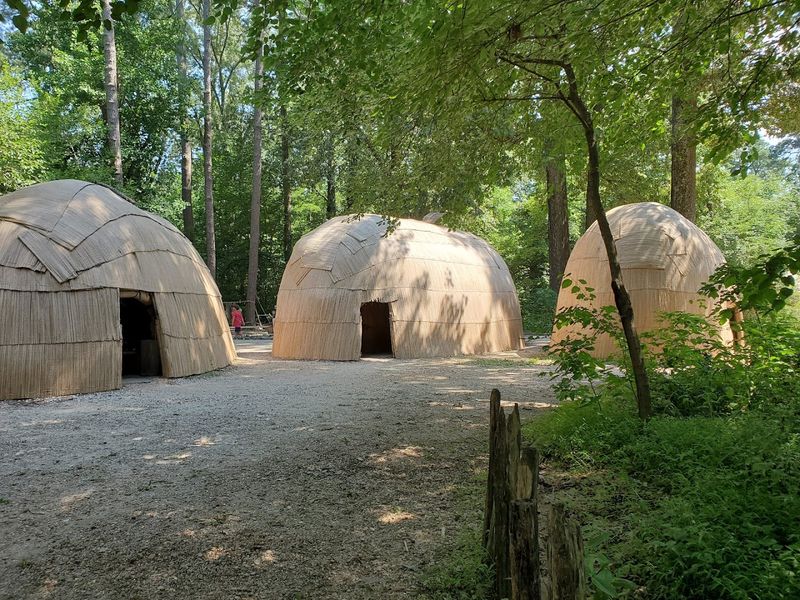
Bark-covered yehakins, which are the traditional dwellings of the Powhatan people, are reconstructed with striking accuracy. Inside, you’ll find sleeping platforms, storage baskets, and fire pits that reflect the rhythm of everyday life in a thriving indigenous community.
It’s a stark and important contrast to the English fort just a short walk away.
What makes this section especially meaningful is the involvement of an Indigenous Advisory Group that works directly with Jamestown Settlement to ensure the presentation is accurate and respectful. Interpreters explain Powhatan foodways, hunting techniques, and cultural practices with the kind of nuance that most history books skip entirely.
Virginia has a layered, complicated past, and this exhibit doesn’t flinch from showing all of it with honesty and care.
The Indoor Gallery Experience
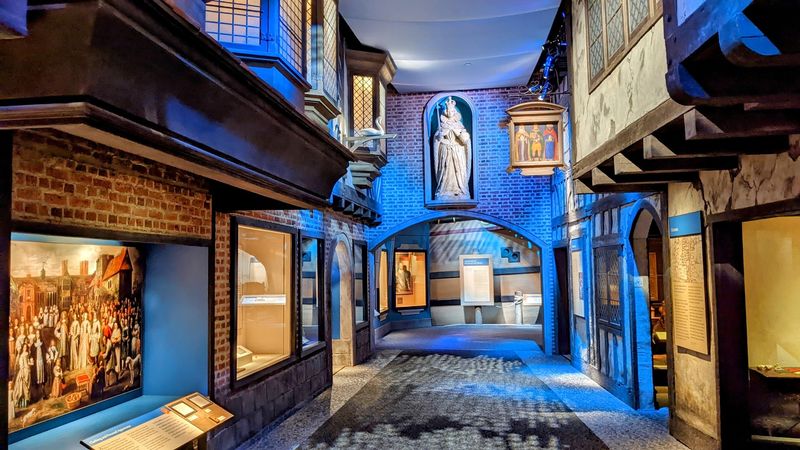
Before you head outside to the fort and ships, the indoor galleries set the stage in spectacular fashion. Centuries-old artifacts sit behind glass while interactive displays pull you into the political, social, and cultural forces that shaped the founding of America’s first permanent English settlement.
The introductory film, titled 1607: A Nation Takes Root, runs through the story of the Virginia Company, the complex relationship between English colonists and Powhatan Indians, and the arrival of the first recorded Africans in Virginia in 1619. It’s not a feel-good highlight reel.
It’s honest, layered, and genuinely gripping in the way that only well-researched history can be.
The exhibit design is modern and clean without feeling sterile. Timelines, artifacts, and multimedia elements work together to create a narrative flow that carries you naturally from one era to the next.
Families with kids will appreciate the age-indicated displays throughout the space, which adjust the complexity of information based on who’s reading. Jamestown Settlement clearly put serious thought into making this gallery work for every kind of curious mind.
Hands-On Activities for Every Age
Forget standing behind a velvet rope and reading a tiny placard. Jamestown Settlement is built around the idea that history should be felt, not just observed.
The hands-on activities scattered across the site are genuinely fun, and not just for kids, though the kids absolutely lose their minds over them.
Trying on a full suit of 17th-century armor is a rite of passage here. It’s heavier and more awkward than any movie makes it look, and that physical reality teaches you something no textbook paragraph ever could.
Grinding corn the Powhatan way, climbing into a dugout canoe, or grabbing the tiller of a ship replica are all equally humbling and fascinating.
The interpreters running these activities are patient, knowledgeable, and genuinely enthusiastic about sharing what they know. Ask a question and you’ll get a real answer, not a rehearsed script.
Virginia offers plenty of historic sites across the state, but few places match the interactive energy that Jamestown Settlement brings to every corner of its grounds. Plan to stay longer than you think you need to, because one activity always leads to another.
Meeting the Costumed Historical Interpreters
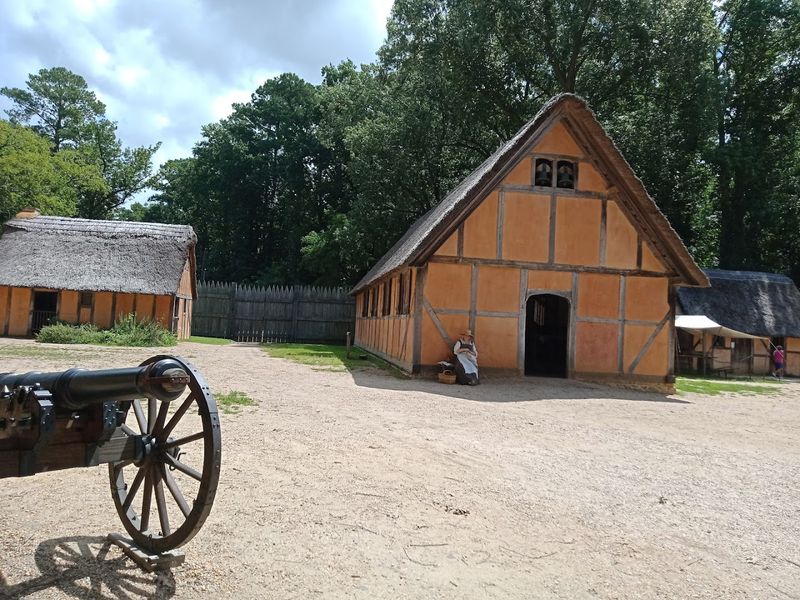
There’s a particular kind of magic that happens when someone in full 17th-century kit explains colonial life with the casual confidence of someone who actually lived it. The historical interpreters at Jamestown Settlement are that magic, and they are extraordinarily good at what they do.
Blacksmithing demonstrations, woodworking sessions, and English pike drills all happen right in front of you, narrated by people who have clearly spent years mastering both the craft and the historical context behind it. The detail they bring to every explanation is the kind of thing that makes even the most history-averse member of your group suddenly lean in with genuine curiosity.
What stands out most is that these interpreters don’t just perform. They engage.
They field tough questions about conflict, disease, and the brutal realities of early colonial life without flinching or softening the edges. It’s refreshing and important.
Virginia has a complicated founding story, and the team at Jamestown Settlement tells it with both depth and dignity. Come with questions, because the answers you get here will stick with you far longer than any classroom lesson ever did.
The Story of Three Converging Cultures
Most founding narratives focus on one group of people. Jamestown Settlement refuses to do that, and it’s one of the most intellectually honest things about the entire museum.
The story told here is deliberately and powerfully three-dimensional, centering the Powhatan Indian, English, and West Central African cultures that collided and shaped early Virginia together.
The arrival of the first recorded Africans in Virginia in 1619 is given serious, thoughtful treatment in the exhibits. It’s presented not as a footnote but as a pivotal moment in American history, one that the museum handles with care, complexity, and the kind of nuance it deserves.
The Indigenous Advisory Group’s involvement ensures that the Powhatan story is told with equal weight and accuracy.
Walking through these exhibits, you start to understand that 1607 wasn’t just a beginning for English colonists. It was a collision of worlds, each with its own sophistication, survival strategies, and cultural depth.
Jamestown Settlement makes that collision visible in a way that feels urgent and relevant today. This is history that doesn’t just sit in the past.
It connects directly to the Virginia and the America we live in right now.
The Outdoor Living History Loop
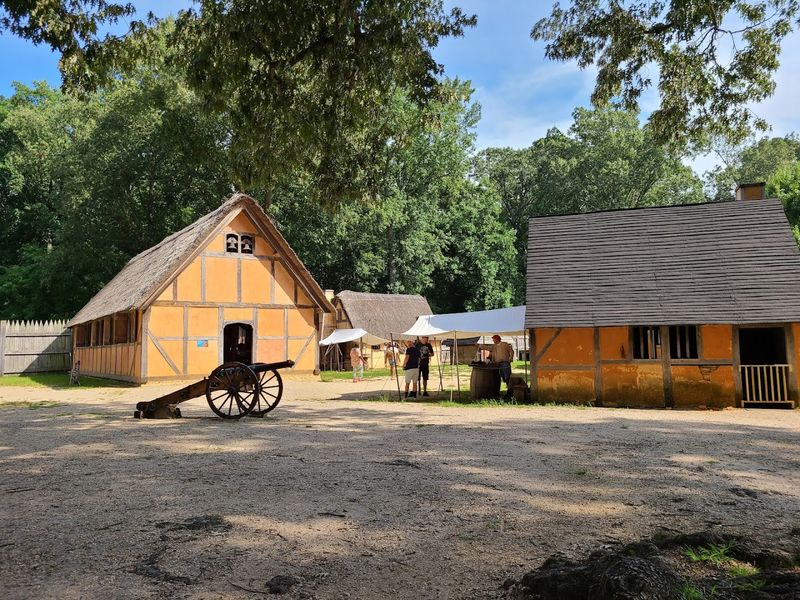
The full outdoor loop at Jamestown Settlement is one of those rare museum experiences where the journey between exhibits is just as interesting as the exhibits themselves. Moving from the Paspahegh Town to James Fort to the docked ship replicas on the waterfront, you cover a remarkable amount of historical ground in a single walk.
The grounds are clean, well-organized, and easy to navigate, with clear pathways and plenty of shaded areas to pause and take it all in. Each outdoor section flows naturally into the next, building a cumulative sense of immersion that sneaks up on you.
By the time you reach the ships, the fort behind you and the river ahead of you, something clicks into place.
Plan to spend a full day here. That’s not an exaggeration.
Between the indoor galleries, the outdoor recreations, the hands-on activities, and the interpreter demonstrations, there is genuinely more to absorb than a few hours allow. Virginia is full of historic sites, but Jamestown Settlement’s outdoor loop is something different: a living, breathing, fully realized world that happens to be set four centuries in the past.
Perfect for Families and School Groups
Few places manage to genuinely hold the attention of a ten-year-old and a forty-year-old at the same time. Jamestown Settlement does it with impressive consistency.
The combination of visual spectacle, hands-on engagement, and genuinely interesting storytelling creates an experience that scales beautifully across age groups.
Kids who climb into a dugout canoe or try on armor aren’t just playing. They’re processing history through their bodies, which is the most effective kind of learning there is.
The age-indicated displays inside the museum let younger readers engage at their level without feeling talked down to, while adults get the full depth of context they’re looking for.
School groups have been coming to Jamestown Settlement for decades, and the site clearly knows how to handle them. The flow of the grounds, the pacing of demonstrations, and the variety of activity stations all seem designed with educational groups in mind.
But it never feels institutional or dry. The energy here is warm, curious, and alive.
Families who visit often say they wished they had budgeted more time, which is just about the best thing you can say about any destination in Virginia.
Planning Your Visit to Jamestown Settlement
Getting the most out of Jamestown Settlement starts with a little planning, and it’s worth doing properly. The museum is open daily from 9 AM to 5 PM, which gives you a solid window to work through both the indoor galleries and the full outdoor loop without feeling rushed.
Arriving early is a smart move, especially during peak season.
One important distinction to keep in mind: Jamestown Settlement is not the same as Historic Jamestowne, which is the actual archaeological site managed by the National Park Service. They’re nearby but separate, and both are worth visiting if you have the time.
Jamestown Settlement is the living history museum with the recreations, interpreters, and hands-on experiences.
The museum is located at 2110 Jamestown Road, Williamsburg, VA 23185, and can be reached at 757-253-4838. Parking is spacious and accommodates large vehicles including RVs.
A gift shop and cafe are on-site, making it easy to extend your visit comfortably. Virginia is a state that takes its history seriously, and Jamestown Settlement is proof that serious history can also be wildly, unexpectedly fun.
Pack comfortable shoes, bring your curiosity, and clear your whole day.
