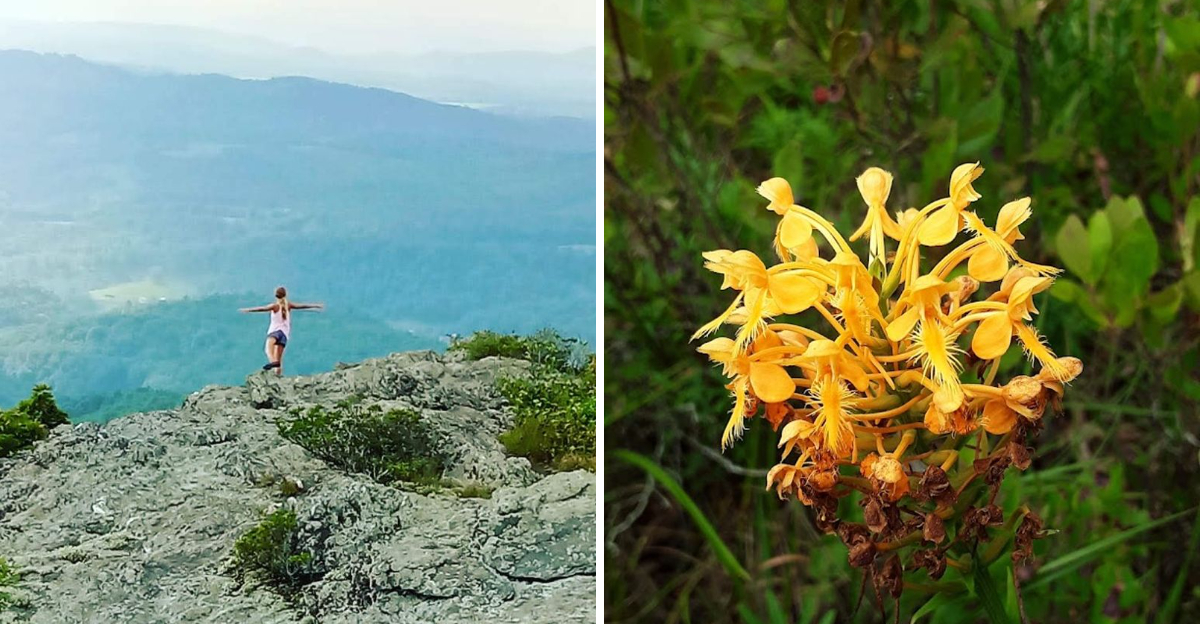
Let’s be honest, most mountains are just big piles of dirt and regular old rocks. Boring, right?
Well, one peak in our state decided to get a major ego boost and form itself out of some seriously rare stuff. You will feel like a geologist while hiking here, except with better snacks and less homework.
On top of that, the whole place is basically a VIP lounge for plants you won’t see anywhere else. It is a flex that Mother Nature had no business making.
Just don’t expect a gift shop at the summit.
The Geology That Makes Buffalo Mountain One of a Kind
Not every mountain earns its fame through sheer height. Buffalo Mountain Natural Area Preserve sits atop geology so unusual that scientists have been scratching their heads over it for decades.
The mountain is composed of ancient greenstone and mafic rocks packed with magnesium. That magnesium-rich chemistry creates soils that are genuinely toxic to most plant species, acting like a natural filter that only the toughest, most specialized plants can survive.
Think of it as nature’s most exclusive membership club, where the entrance fee is the ability to thrive in conditions that would kill ordinary vegetation.
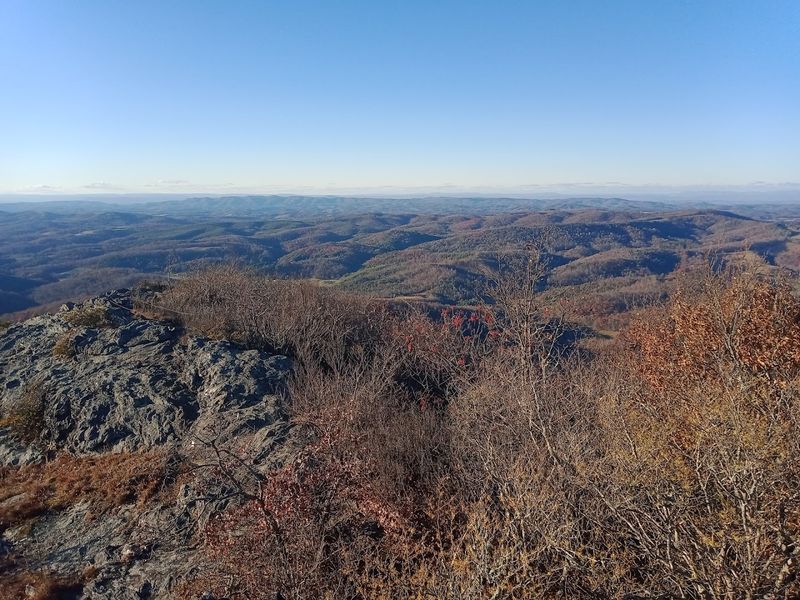
These erosion-resistant rocks have also shaped the mountain’s dramatic, open summit landscape. Rather than a dense forested cap, the peak opens into rocky barrens and grassy outcrops that feel almost otherworldly.
Virginia has plenty of scenic mountains, but none quite like this one. The geological story here is millions of years in the making, and every exposed rock face tells part of that ancient narrative.
Standing on those strange, hard stones at the summit, with panoramic views stretching across the Blue Ridge, you get the sense that this place operates by its own rules entirely.
Rare Plants That Grow Nowhere Else in the Region
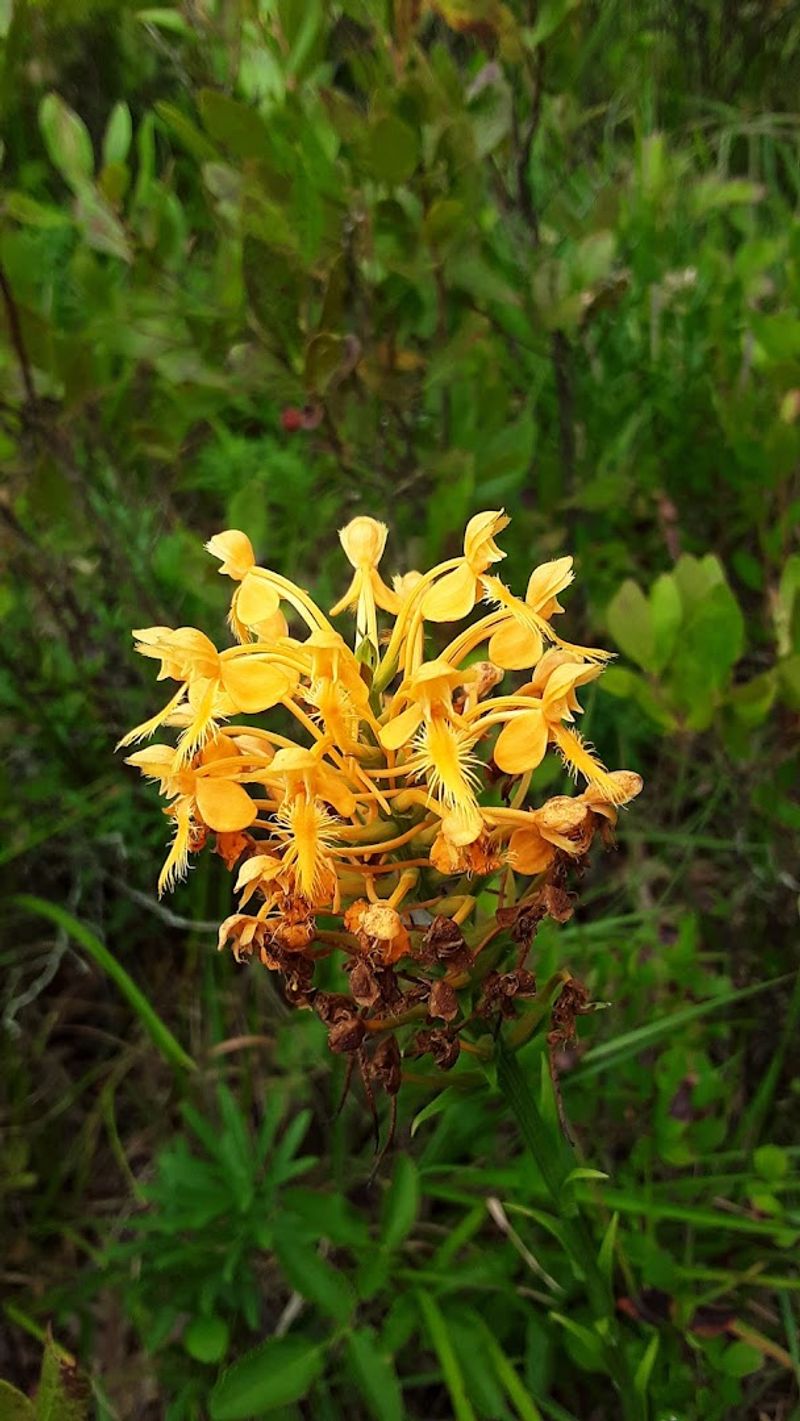
Thirteen rare plant species have claimed Buffalo Mountain Natural Area Preserve as their stronghold, and several of them exist in only a handful of locations across the entire eastern United States.
Three-toothed cinquefoil, a delicate plant more commonly associated with Canadian and Arctic landscapes, grows here on the rocky barrens. Rocky Mountain woodsia ferns cling to cliff faces.
Mountain sandwort, a tiny flowering plant that looks like it belongs on a Scottish moor, carpets sections of the summit.
Large-leaved grass-of-parnassus blooms in boggy pockets, its creamy white petals almost luminous against the dark wet soil. Bog bluegrass, another species with a very limited range in Virginia, fills in the gaps between rocky patches.
What makes this collection so remarkable is the sheer concentration. Finding one rare species on a single mountain is exciting.
Finding thirteen is extraordinary.
The magnesium-rich soil that keeps most plants away has paradoxically created a sanctuary for these specialists. With competition eliminated, rare species that struggle elsewhere thrive here in relative peace.
Walking the summit trail in spring or early summer, the botanical diversity is genuinely jaw-dropping for a mountain of this modest size.
The Only Known Home of a Very Obscure Insect
Plants get most of the attention at Buffalo Mountain Natural Area Preserve, but the rarest resident might actually be an insect most people have never heard of.
Puto kosztarabi, a species of mealybug, has its only confirmed habitat right here on this Floyd County mountain. Nowhere else on Earth has this tiny creature been documented living in the wild.
Mealybugs are soft-bodied insects that typically feed on plant sap, and this particular species is so specialized that it depends on the unique plant communities found exclusively on Buffalo Mountain’s unusual substrate.
The discovery of an insect with such a restricted range on a single mountain is a reminder that biodiversity science still holds genuine surprises. New ecological relationships are still being mapped and understood even in well-studied regions like Virginia.
Protecting this preserve is not just about the plants. Every layer of the ecosystem, from the rocks to the soil chemistry to the insects feeding on specialized vegetation, forms an interconnected web that is irreplaceable.
Lose this mountain, and you lose the only place on Earth where this tiny creature exists. That fact alone makes conservation here an urgent priority.
Two Distinct Trails to the Summit, One Unforgettable Payoff
Reaching the top of Buffalo Mountain Natural Area Preserve means choosing your adventure before you even lace up your boots. Two separate trails climb to the summit, each offering a genuinely different experience of the mountain.
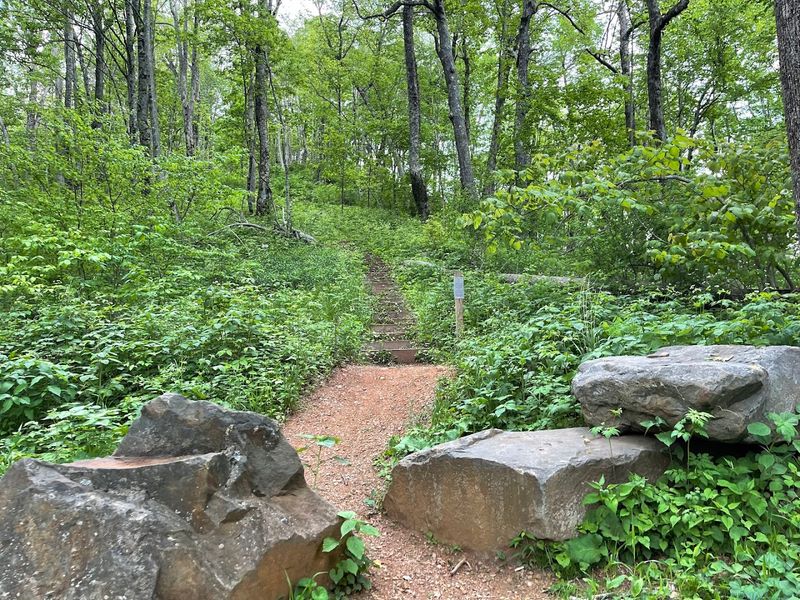
The Ridge Trail is the shorter, steeper option, covering roughly half a mile one way with a direct, no-nonsense ascent that rewards effort quickly. Natural rock steps punctuate the climb, giving it a rugged, adventurous feel that experienced hikers tend to love.
The Oak Trail takes a more relaxed approach, winding through forest with a series of switchbacks that ease the elevation gain over a longer distance. Families with kids and those wanting a gentler pace gravitate naturally toward this route.
Both trails connect at the Barrens Loop, which adds another stretch of trail before the final push to the peak. Combining sections creates a satisfying loop that shows off multiple faces of the mountain.
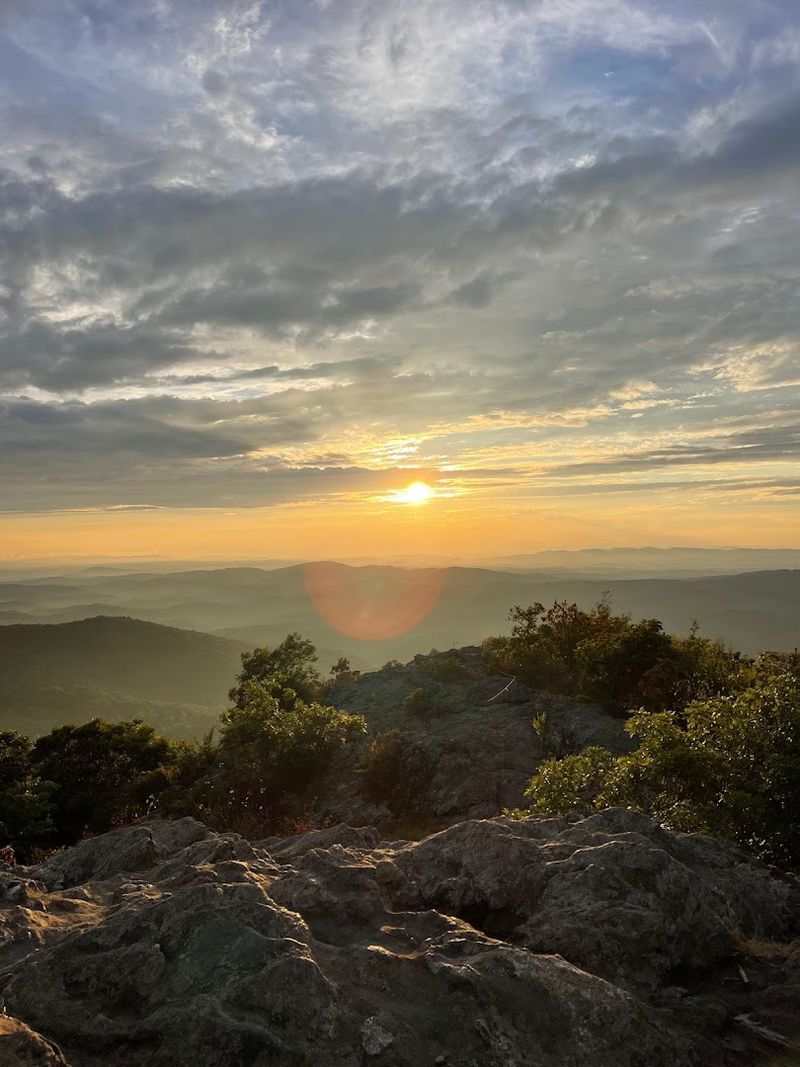
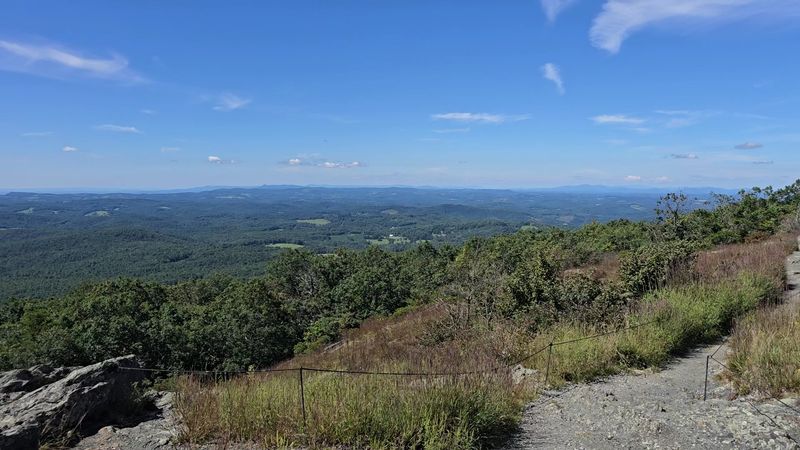
At the top, the payoff is immediate and spectacular. A full panoramic view sweeps across the surrounding Blue Ridge Mountains, with layers of ridgeline fading into blue haze in every direction.
Sunrise hikers are particularly rewarded up here, with the early light painting the valleys below in shades of gold and amber that no photograph ever fully captures.
A Summit View That Earns Every Step of the Climb
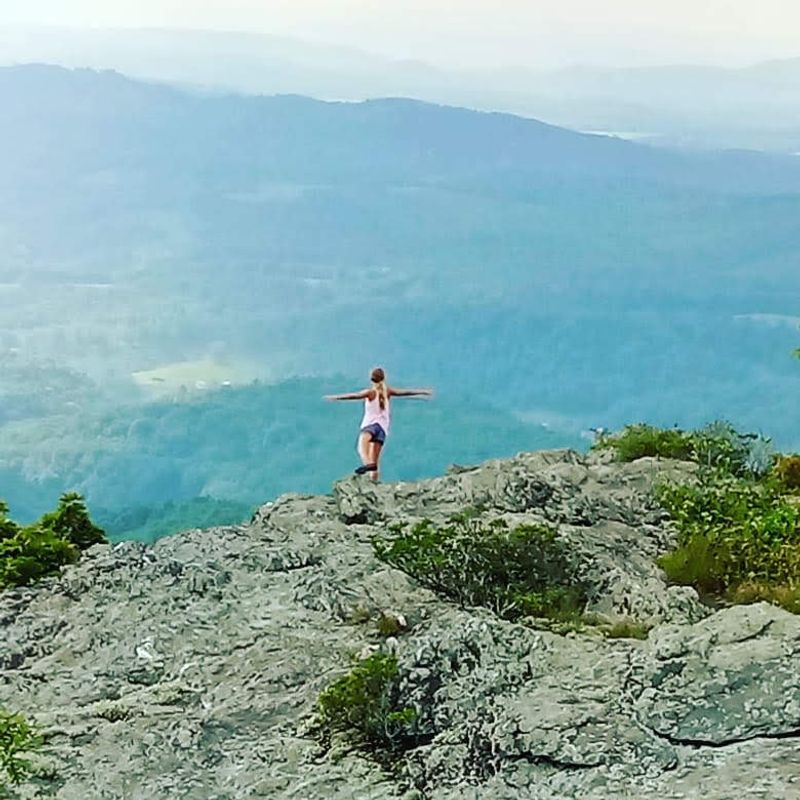
Some mountain views are pretty. The summit of Buffalo Mountain Natural Area Preserve is the kind of view that makes you forget you were sweating and cursing the steep sections just minutes earlier.
A full 360-degree panorama opens up at the top, with the Blue Ridge Mountains rolling away in every direction. On clear days, the visibility is extraordinary, with distant ridgelines stacking up like waves frozen in time.
The open rocky barrens at the summit mean there are no trees blocking sightlines. You stand fully exposed to sky, wind, and an unobstructed horizon that feels almost coastal in its breadth.
Summer brings pleasant breezes that make the exposed summit surprisingly comfortable even on warm days. Winter visits deliver a completely different drama, with frost-covered rocks and cloud inversions filling the valleys below with white mist while the summit floats above it all.
Sitting up here with a packed lunch, watching hawks ride thermal currents below eye level, is one of those simple pleasures that reminds you why getting outside matters. Virginia has no shortage of beautiful overlooks, but few feel this earned or this raw.
Every step of that climb disappears the moment the view hits you. That is simply how it works up here.
The 2026 Expansion That Nearly Doubled the Preserve
Big news arrived for conservation fans in January 2026, when the Virginia Department of Conservation and Recreation announced a major expansion of Buffalo Mountain Natural Area Preserve.
The protected area grew by an additional 975 acres, pushing the total size past 2,100 acres. That expansion nearly doubled the original footprint of the preserve, adding forest buffers and transitional habitats that further shield the rare plant communities at the summit.
The expansion is significant because rare ecosystems do not exist in isolation. The surrounding landscape acts as a buffer zone, protecting the core habitat from development pressure, invasive species encroachment, and edge effects that can degrade sensitive plant communities over time.
For Floyd County, the expansion cements Buffalo Mountain’s status as one of Virginia’s most important natural heritage sites. The additional acreage also opens the possibility of expanded trail networks and enhanced wildlife corridors in the future.
Conservation decisions like this one reflect a growing understanding that protecting a single summit is not enough. The entire ecological neighborhood needs to be secured for the rarest species to persist long-term.
For those planning a visit in 2026 and beyond, the expanded preserve means more wild land to explore and a stronger guarantee that this extraordinary place will still be here for future generations.
What to Expect on the Drive In and the Parking Situation
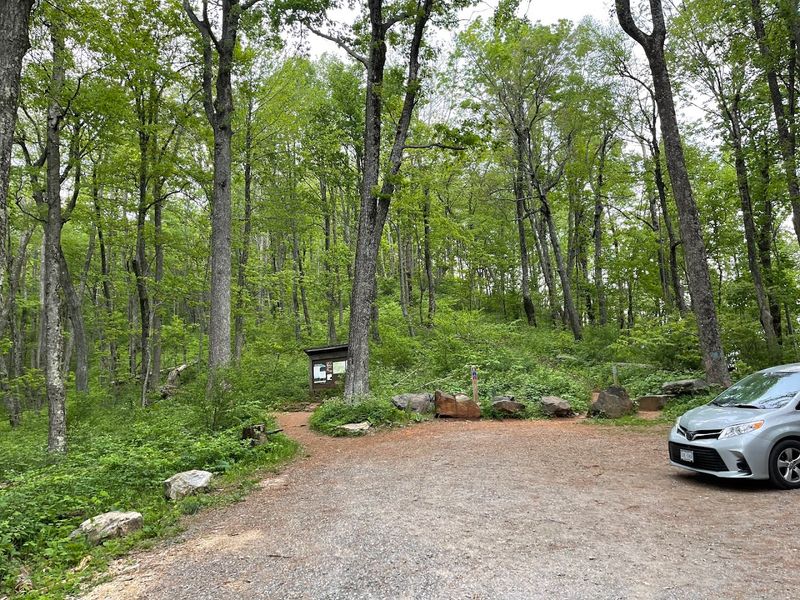
Getting to Buffalo Mountain Natural Area Preserve is part of the adventure, and fair warning: the final stretch of road is not for the faint-hearted or anyone driving a low-clearance sports car.
The access road is a narrow, one-lane gravel path that clings to the mountainside with minimal room for error. Meeting another vehicle coming the opposite direction requires patience, careful maneuvering, and a willingness to edge close to the vegetation on the shoulder.
The small parking area at the trailhead holds roughly ten to twelve cars when everyone parks sensibly. On busy weekend mornings, especially during peak wildflower season or fall foliage, the lot fills up fast.
Arriving early solves most problems here. Morning light on the summit is spectacular anyway, so there is every reason to beat the crowds and claim a spot before the lot fills.
Rangers occasionally manage vehicle flow during peak periods to prevent overuse of the fragile preserve.
A portable restroom sits at the trailhead, a welcome practical touch for a preserve this remote. There are no other facilities, so bring everything you need before heading up the mountain road.
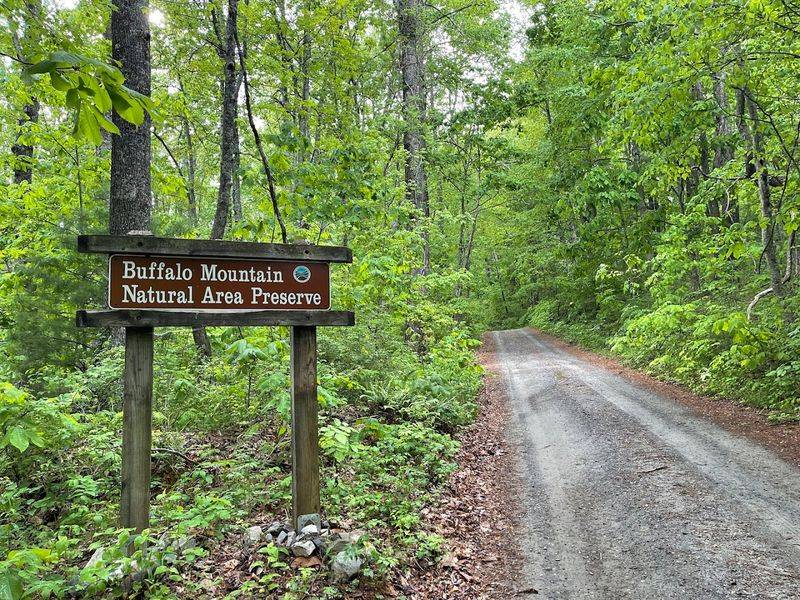
GPS navigation can occasionally direct vehicles to a nearby private driveway by mistake. Watch for the brown preserve sign and follow it rather than blindly trusting your phone.
Wildflowers, Seasons, and the Best Time to Visit
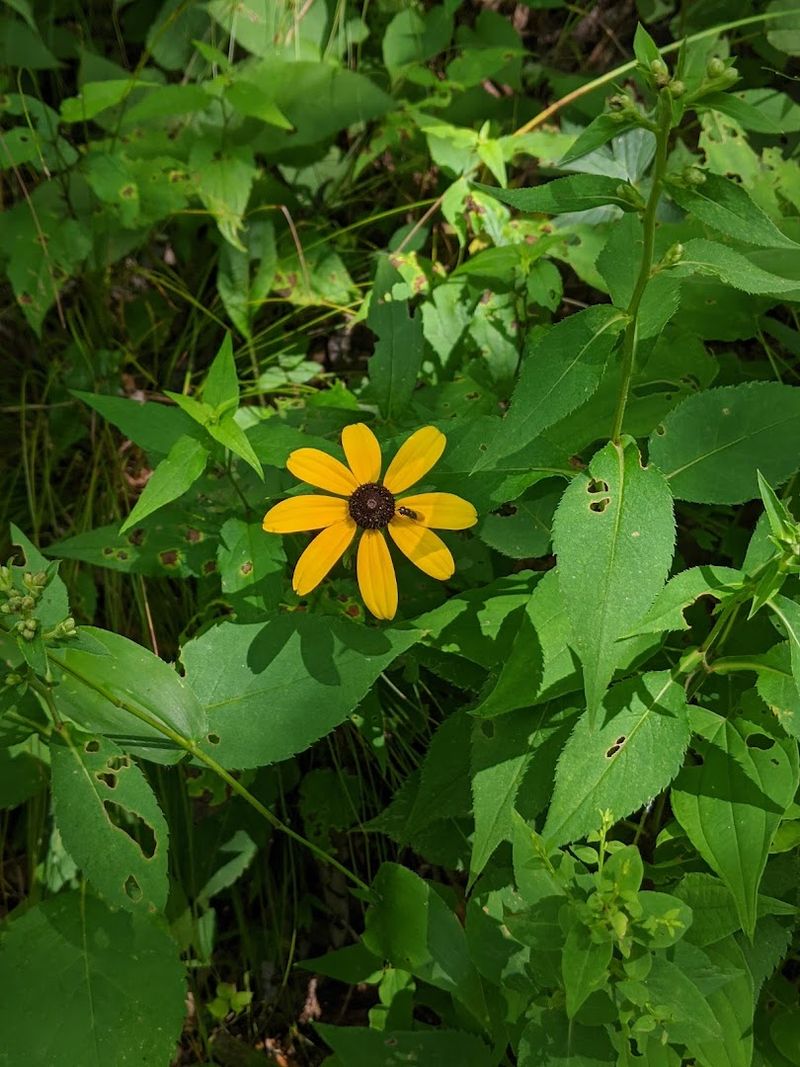
Timing a visit to Buffalo Mountain Natural Area Preserve requires a little strategy, because this mountain puts on very different shows depending on the season you choose.
Late spring through early summer is the prime window for wildflower enthusiasts. The rare plant species that make this preserve famous bloom during this period, transforming the rocky barrens into a surprisingly colorful tapestry of small flowers that reward anyone willing to slow down and look closely.
Mountain sandwort produces tiny white blooms that cluster across the rocky substrate. Large-leaved grass-of-parnassus flowers appear in the wetter pockets.
Three-toothed cinquefoil adds delicate structure to the scene. The combination is genuinely special for anyone with even a passing interest in botany.
Fall brings its own rewards, with the surrounding forest turning through shades of red, orange, and gold that make the panoramic summit view even more dramatic. The air is crisp, the crowds thin slightly, and the light has that particular autumnal quality that photographers obsess over.
Winter visits are possible and genuinely atmospheric, though the access road can become treacherous in icy conditions. Snow on the summit creates a stark, beautiful landscape that feels very far removed from ordinary Virginia.
Summer mornings offer pleasant breezes and manageable temperatures at elevation, making early starts the smartest approach during the warmer months.
Trail Etiquette and Rules for Protecting the Rare Plants
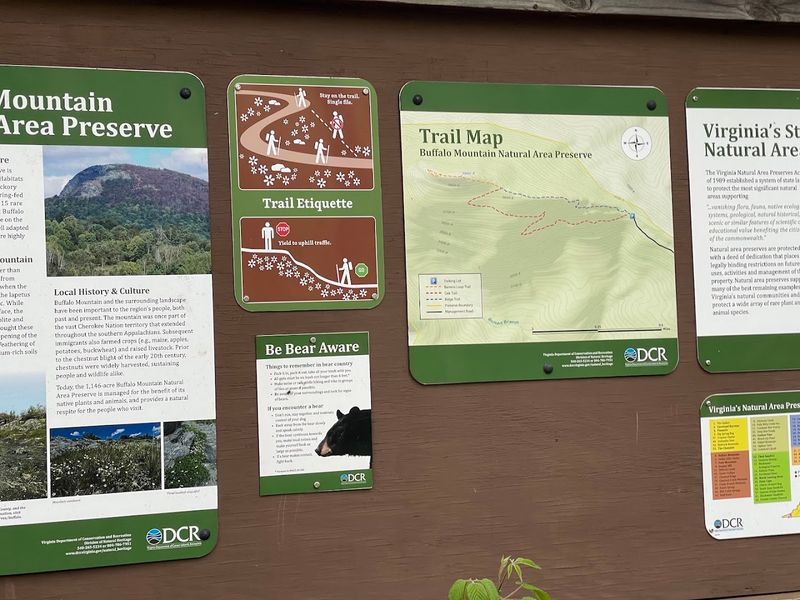
Buffalo Mountain Natural Area Preserve is not a typical park where you can wander freely wherever your boots take you. The rare plant communities here are extraordinarily sensitive, and even well-intentioned foot traffic can cause lasting damage.
Staying on marked trails is the single most important rule for every visitor. The rare plant species growing in the rocky barrens are slow to recover from disturbance.
A single shortcut across an unmarked section can crush plants that took decades to establish in that challenging soil chemistry.
Dogs are welcome on the trails but must remain on leashes at all times. Off-leash pets can disturb wildlife, trample vegetation, and stress the fragile plant communities in ways that are difficult to reverse.
Pack out everything you bring in. The preserve has no waste collection facilities beyond the portable restroom at the trailhead, and leaving trash behind degrades both the visual experience and the ecological health of the area.
Picking plants or collecting rocks is strictly prohibited. The rare species here are protected under Virginia conservation law, and removing any part of them, even a single flower, is a serious offense.
Respecting these guidelines is not just about following rules. It is about ensuring that the extraordinary botanical diversity of this Floyd County treasure survives for every future visitor who makes the climb.
Finding Buffalo Mountain Natural Area Preserve and Planning Your Trip
Planning a trip to Buffalo Mountain Natural Area Preserve is straightforward, but a few practical details will make the difference between a smooth adventure and an avoidable headache.
The preserve is located at 890 Moles Rd SW, Willis, VA 24380, in Floyd County, Virginia. The nearest town with services is Floyd, sitting roughly twenty minutes away by car.
Fuel up, grab supplies, and sort out any last-minute needs in Floyd before heading toward the mountain.
GPS is helpful but not entirely reliable for the final approach. Watch carefully for the official brown preserve sign along the road rather than following navigation blindly, as some routes direct vehicles toward a nearby private driveway.
The preserve is managed by the Virginia Department of Conservation and Recreation, which maintains the trails and monitors the sensitive ecosystems. Their website offers current trail conditions and any seasonal access updates worth checking before your visit.
No entry fee is required to visit, making this one of Virginia’s most accessible natural treasures. The combination of rare geology, extraordinary plant diversity, and sweeping summit views delivers an experience that feels disproportionately grand for such a short hike.
Pack sturdy footwear, carry water, bring a trail map, and get there early. Buffalo Mountain Natural Area Preserve rewards the prepared and the punctual every single time.
