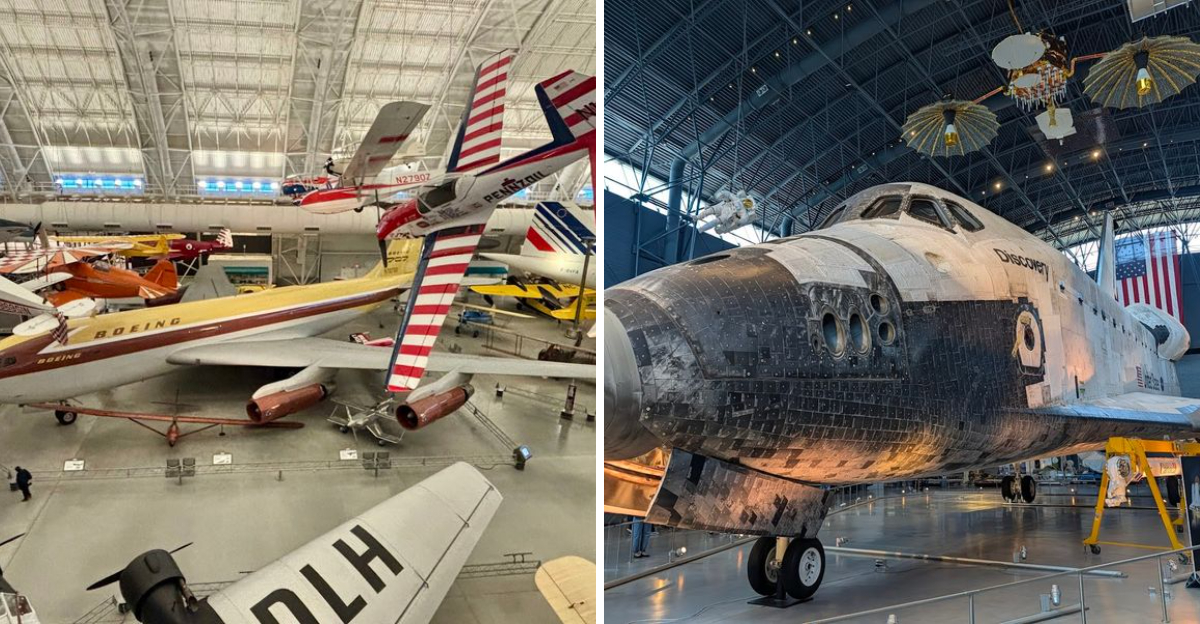
History runs deep across Virginia, but few places hit with the same level of awe as this one. One enormous museum houses some of the most iconic machines ever created.
Inside, record-breaking aircraft, spacefaring giants, and historic warbirds stand in one place, each carrying stories that changed the world. Walking through it feels less like a visit and more like stepping into moments that defined entire eras.
The scale alone is enough to stop you in your tracks, but it’s the legacy behind each machine that truly lingers. By the time I left, it was clear this isn’t just worth seeing, it’s essential.
The SR-71 Blackbird: The Jet That Outran Everything
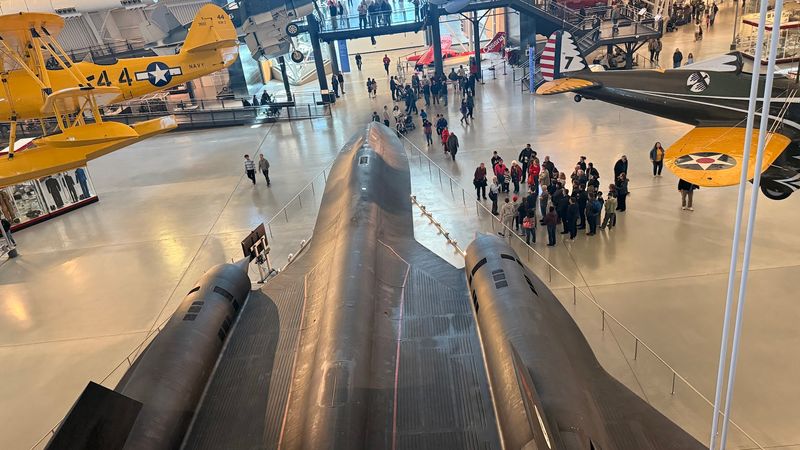
Nothing quite prepares you for the moment you turn a corner and come face to face with the SR-71 Blackbird. It sits there, all sleek black angles and menacing curves, looking less like an airplane and more like something smuggled back from the future.
The Blackbird holds the record as the fastest jet-propelled aircraft ever built, capable of speeds that left missiles in the dust. During its career, it flew reconnaissance missions that no enemy could intercept simply because nothing could catch it.
Standing beneath it at the Steven F. Udvar-Hazy Center, I kept circling it, trying to find an angle that made it look ordinary.
There is no such angle. The titanium skin, the twin-engine nacelles, the razor-thin profile, it all screams purpose and power.
Virginia has plenty of bragging rights as a state, but housing this particular aircraft is genuinely one of the most impressive flex moves imaginable. Every aviation enthusiast owes this jet a personal visit.
Plan extra time, because you will not want to leave.
Space Shuttle Discovery: A Star That Came Home
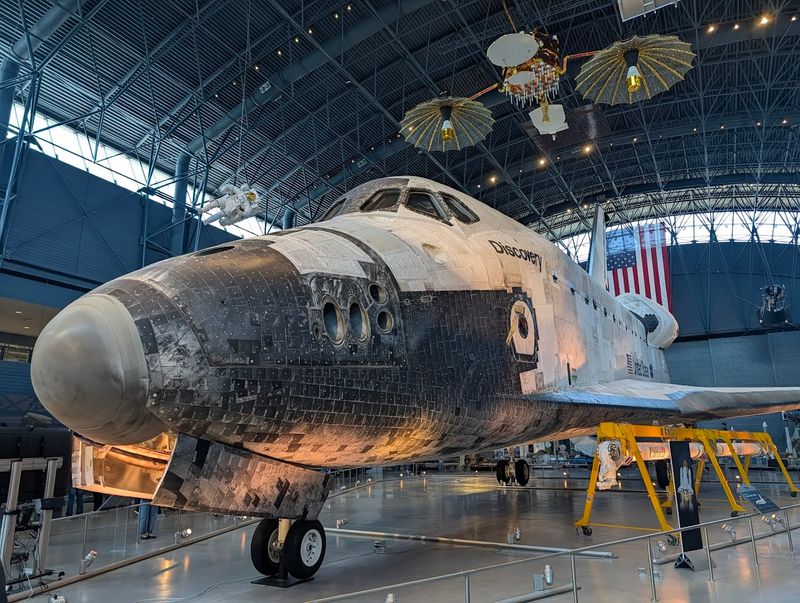
Space Shuttle Discovery is the kind of artifact that makes your knees go slightly weak. Parked inside the James S.
McDonnell Space Hangar at the Steven F. Udvar-Hazy Center, this orbiter completed more missions than any other shuttle in NASA’s fleet.
The sheer scale of it is staggering. Standing at the base and tilting your head up, you realize no photograph ever captures how enormous a space shuttle actually is.
The heat shield tiles, each one hand-placed, cover the underbelly like a mosaic of survival.
Discovery flew missions that repaired the Hubble Space Telescope and helped build the International Space Station. It carried astronauts into orbit dozens of times, and every single one of those flights is part of a story that Virginia now proudly preserves.
There is a skywalk inside the hangar that lets you view the orbiter from above, which is a perspective most people never expect. That elevated view, looking down on a spacecraft that once orbited Earth, is the kind of moment that stays lodged in your memory for years.
The Enola Gay: History You Can Stand Next To
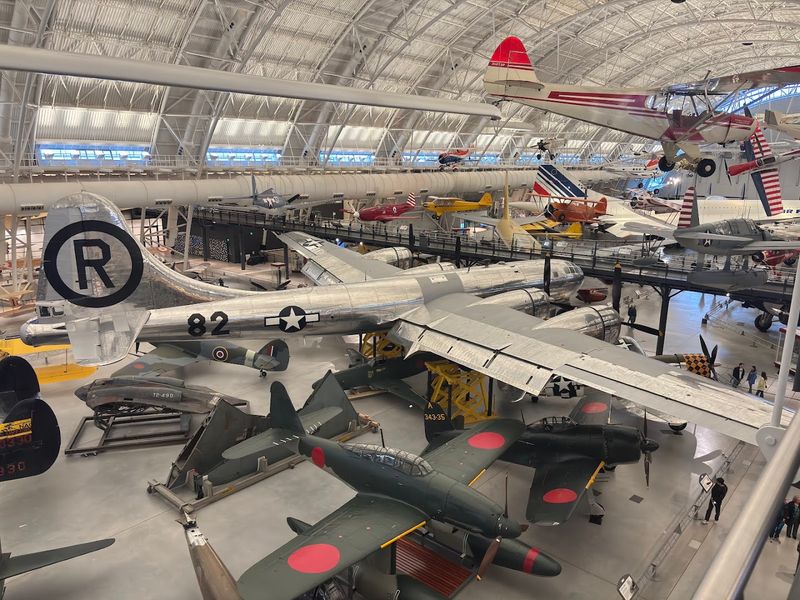
Few aircraft in history carry as much weight, literally and figuratively, as the Boeing B-29 Superfortress Enola Gay. Seeing it in person at the Steven F.
Udvar-Hazy Center is a quietly overwhelming experience that blends awe with deep reflection.
The Enola Gay is one of the most historically significant aircraft ever assembled, and the museum presents it with the gravity it deserves. Informational panels around the aircraft give context without flinching, and the sheer size of the bomber commands respect from every angle.
What strikes me most is how ordinary the aircraft looks from a distance. Up close, though, the scale becomes real.
The fuselage stretches on and on, the engines are enormous, and the polished aluminum skin still catches the museum lighting beautifully.
Virginia does a remarkable job hosting artifacts of this magnitude. The Boeing Aviation Hangar where the Enola Gay lives is so large that the aircraft never feels cramped or crowded.
Guided tours that include this aircraft offer storytelling that genuinely elevates the experience beyond just looking at a very large, very old airplane.
The Concorde: Supersonic Style on the Ground
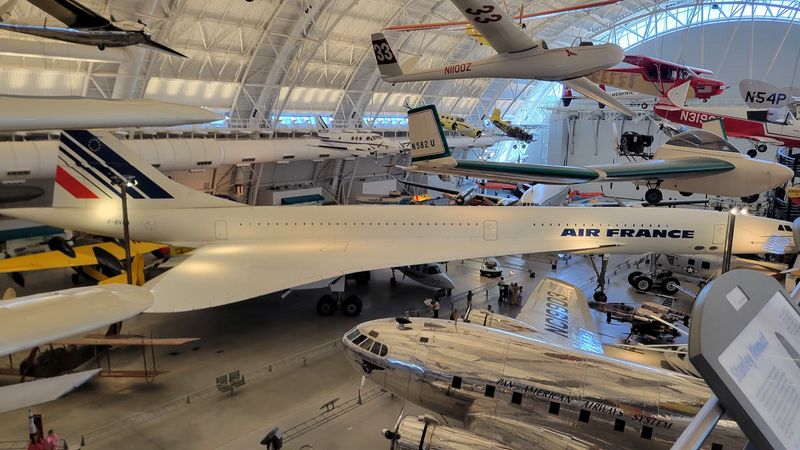
Seeing the Concorde parked inside a museum hangar feels slightly surreal, like catching a fashion icon at a grocery store. This aircraft redefined what commercial aviation could look like, and even standing still, it radiates a kind of restless elegance.
The Air France Concorde on display at the Udvar-Hazy Center is one of the most photographed objects in the entire building, and for obvious reasons. That impossibly long needle nose, the delta wings, the compact fuselage, it looks more like a dart than a passenger jet.
What many people do not know is just how loud and physically intense flying on the Concorde actually was for passengers. The aircraft cruised at altitudes where the sky turned a deeper shade of blue and passengers could actually see the curvature of the Earth.
Getting close to it in Virginia is the next best thing to having flown on it. The museum positions the aircraft so you can walk beneath the fuselage and appreciate the engineering from multiple angles.
It is a genuinely glamorous exhibit, and the Concorde never looks anything less than spectacular.
The Boeing Dash 80: The Jet That Changed Air Travel Forever
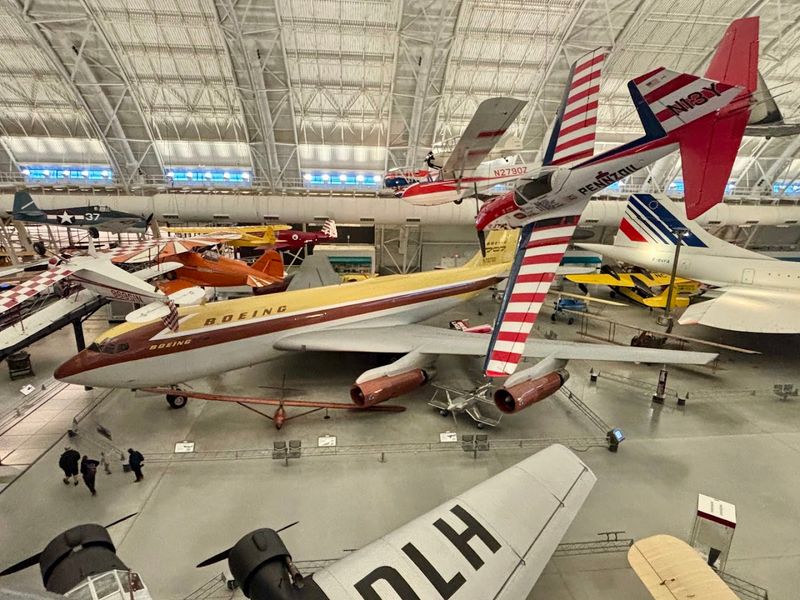
Most museum exhibits tell you about history. The Boeing Dash 80 at the Steven F.
Udvar-Hazy Center actually is history, in the most literal sense possible. This is the prototype that gave birth to the Boeing 707, the aircraft that launched the modern commercial aviation era.
Before the Dash 80, transatlantic flight was a multi-stop, propeller-driven marathon. After it, the world shrank dramatically.
Airlines ordered jets in huge numbers, airports expanded, and the entire rhythm of global travel shifted in ways we still live with today.
The aircraft wears its original yellow and brown test livery, which gives it a slightly retro charm that stands out among the military hardware nearby. It looks almost cheerful compared to its neighbors, which makes the context of its importance even more surprising.
Virginia’s role in preserving this particular machine feels significant. The Dash 80 is not a combat aircraft or a space explorer, but its contribution to everyday life arguably touches more people than almost anything else in the building.
Spend a few minutes reading the panels around it and the full picture becomes genuinely impressive.
The Observation Tower: Live Air Traffic From Seven Stories Up
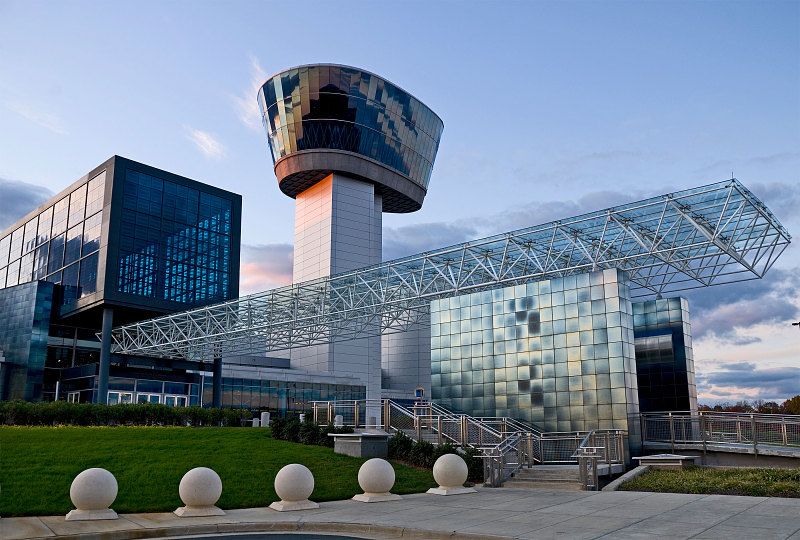
Most aviation museums show you planes that no longer fly. The observation tower at the Steven F.
Udvar-Hazy Center adds a live dimension to the whole experience, and it is genuinely thrilling.
Ride the elevator to the top and you step into a glass-enclosed viewing area with a direct sightline to Washington Dulles International Airport. On a busy afternoon, the parade of aircraft coming and going is almost hypnotic.
Wide-body jets lumber past on final approach while smaller regional aircraft dart between them like busy commuters.
The perspective from seven stories up gives you a completely different appreciation for the scale of modern aviation. Aircraft that look manageable from the ground suddenly reveal their true mass as they roll past at close range.
It is one of those experiences that aviation enthusiasts specifically seek out.
Lines can build up for the tower, particularly on weekends, so arriving early in the morning is a smart move. The view is not the most dramatic panorama in Virginia, but as a companion piece to everything else in the museum, it adds a layer of living context that no static exhibit can replicate.
Worth every minute of the wait.
The Boeing Aviation Hangar: A Cathedral of Flight
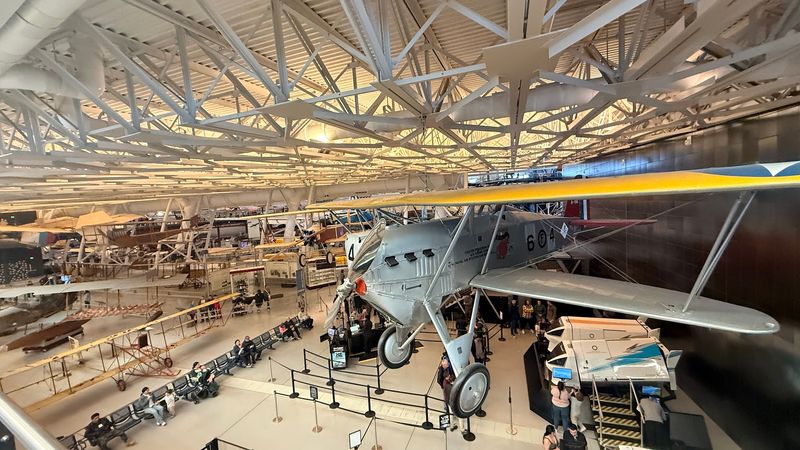
Walking into the Boeing Aviation Hangar for the first time is genuinely one of the great museum moments available anywhere in Virginia. The ceiling soars overhead, aircraft hang suspended in mid-air, and the floor stretches out in every direction covered with machines from nearly every era of powered flight.
The collection spans biplanes, fighter jets, bombers, experimental aircraft, and commercial airliners, all packed into a space that somehow never feels cluttered. The curation is smart, grouping aircraft by era and purpose so the story of aviation unfolds naturally as you walk through.
Looking up is just as rewarding as looking straight ahead. Suspended aircraft include everything from early biplanes to jet-age fighters, and the engineering required to hang them safely is itself a kind of art.
The lighting is designed to highlight each aircraft without washing out the details.
Free guided tours depart regularly and are absolutely worth joining, especially for the lesser-known aircraft that might otherwise get overlooked. The knowledgeable staff bring each machine to life with stories and context that the information panels alone cannot fully provide.
Budget at least two full hours just for this hangar alone.
The James S. McDonnell Space Hangar: Where Spacecraft Live
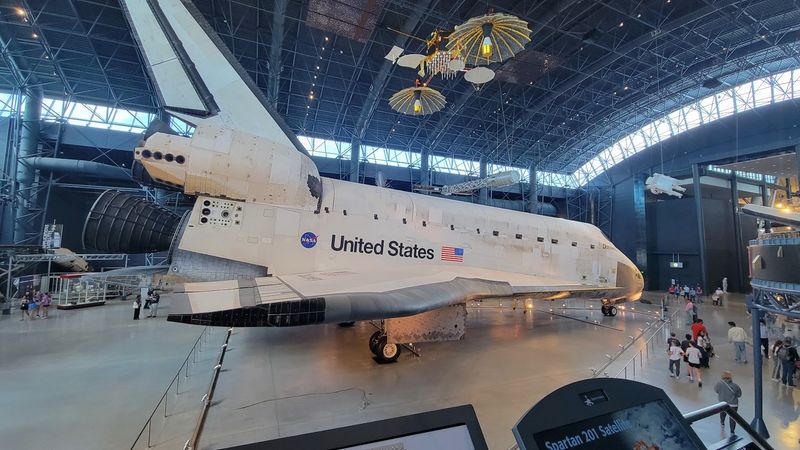
The James S. McDonnell Space Hangar is where the Steven F.
Udvar-Hazy Center pivots from aviation history into something altogether more cosmic. Space Shuttle Discovery dominates the room, but it is far from the only remarkable artifact in here.
The Apollo Mobile Quarantine Facility is one of the more unusual exhibits in the hangar. This is the actual trailer-like unit used to isolate Apollo astronauts after they returned from the Moon, a precaution taken because no one could be entirely certain what they might have brought back with them from the lunar surface.
The Mars Pathfinder Lander prototype is another exhibit that quietly stops people in their tracks. It looks almost toy-like compared to the shuttle, but this design proved that landing on Mars was achievable, paving the way for every rover mission that followed.
Virginia’s connection to space exploration runs deep through institutions like this one, and the McDonnell Space Hangar makes that connection tangible. The combination of human spaceflight hardware and planetary exploration prototypes creates a narrative arc that moves from Earth orbit all the way to the surface of another planet.
It is genuinely moving.
The Aircraft Restoration Hangar: Watching History Come Back to Life
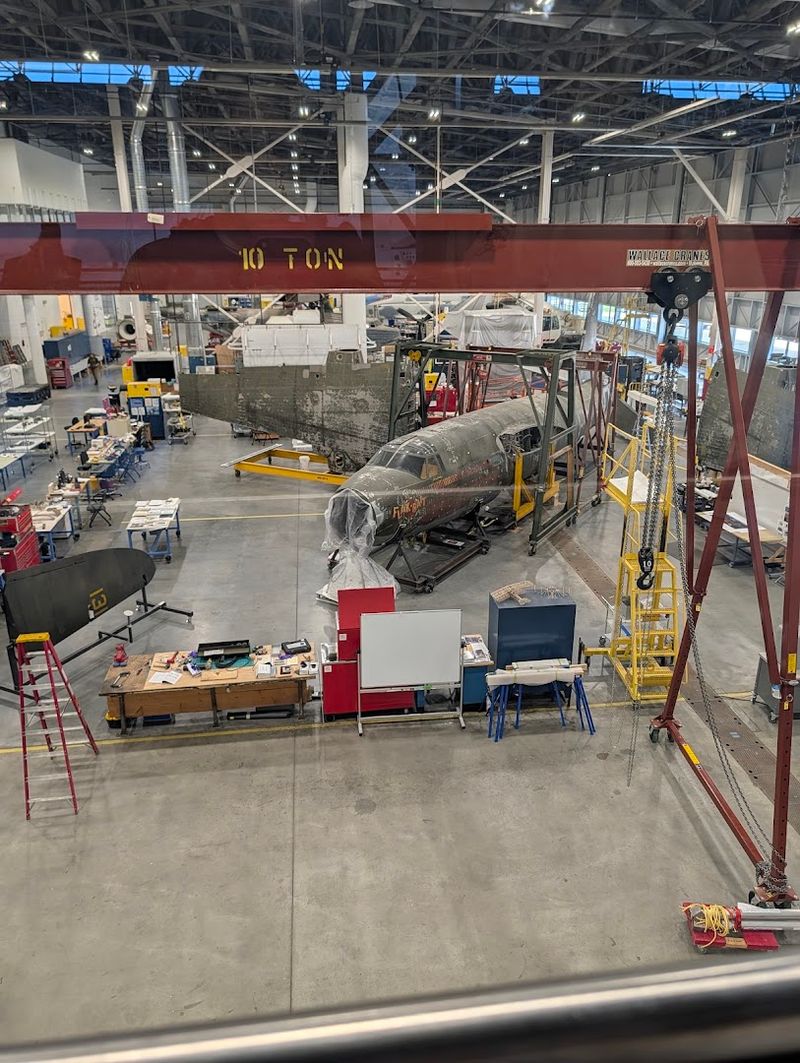
Most museums show you the finished product. The Steven F.
Udvar-Hazy Center goes one remarkable step further by letting you watch the restoration process in real time through a large viewing window into the working restoration hangar.
Skilled technicians work on historic aircraft that are either being prepared for display or preserved for long-term storage. The level of craft involved is extraordinary.
Watching someone carefully tend to the fabric skin of a World War II-era aircraft with the same focus a surgeon brings to an operating room is unexpectedly gripping.
Many of the European aircraft in the collection were either donated or captured after World War II, and their survival is a testament to the decades of careful work that restoration teams have invested. Some pieces arrive in fragments and leave looking ready to fly.
This is one of the most underrated aspects of the entire museum experience. Casual visitors often walk past the viewing window without stopping, which means those who do pause get a relatively uncrowded and deeply fascinating look behind the curtain.
As someone who appreciates craftsmanship, I found this corner of the museum just as compelling as the headline exhibits nearby.
Planning Your Visit to the Udvar-Hazy Center in Chantilly
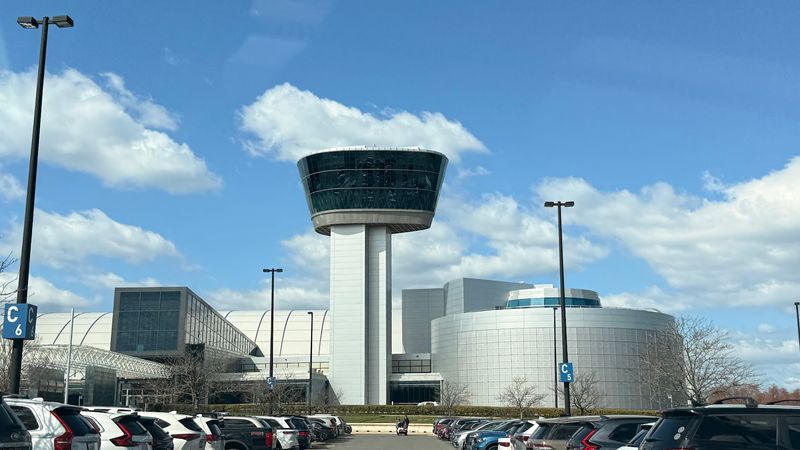
Getting the most out of a trip to the Steven F. Udvar-Hazy Center takes a little planning, and the effort pays off generously.
The museum is open daily, admission is free, and the sprawling layout rewards visitors who arrive with time to spare rather than rushing through.
Morning visits on weekdays tend to be the most comfortable. The hangars are enormous, but popular exhibits like the SR-71 Blackbird and Space Shuttle Discovery draw consistent crowds throughout the day.
Arriving early means getting those unobstructed photos and having genuine elbow room around the most iconic aircraft.
The IMAX theater inside the museum shows films related to aviation and space exploration, which makes for a natural midday break between hangar explorations. The gift shop stocks everything from freeze-dried astronaut ice cream to detailed scale models, and it is genuinely well-stocked for all ages.
The museum is located at 14390 Air and Space Museum Pkwy, Chantilly, VA 20151, just minutes from Washington Dulles International Airport. Virginia has no shortage of great destinations, but few combine this level of historical significance, physical scale, and sheer spectacle in a single free-admission package.
Pack comfortable shoes and go prepared to be amazed.
Dear Reader: This page may contain affiliate links which may earn a commission if you click through and make a purchase. Our independent journalism is not influenced by any advertiser or commercial initiative unless it is clearly marked as sponsored content. As travel products change, please be sure to reconfirm all details and stay up to date with current events to ensure a safe and successful trip.
