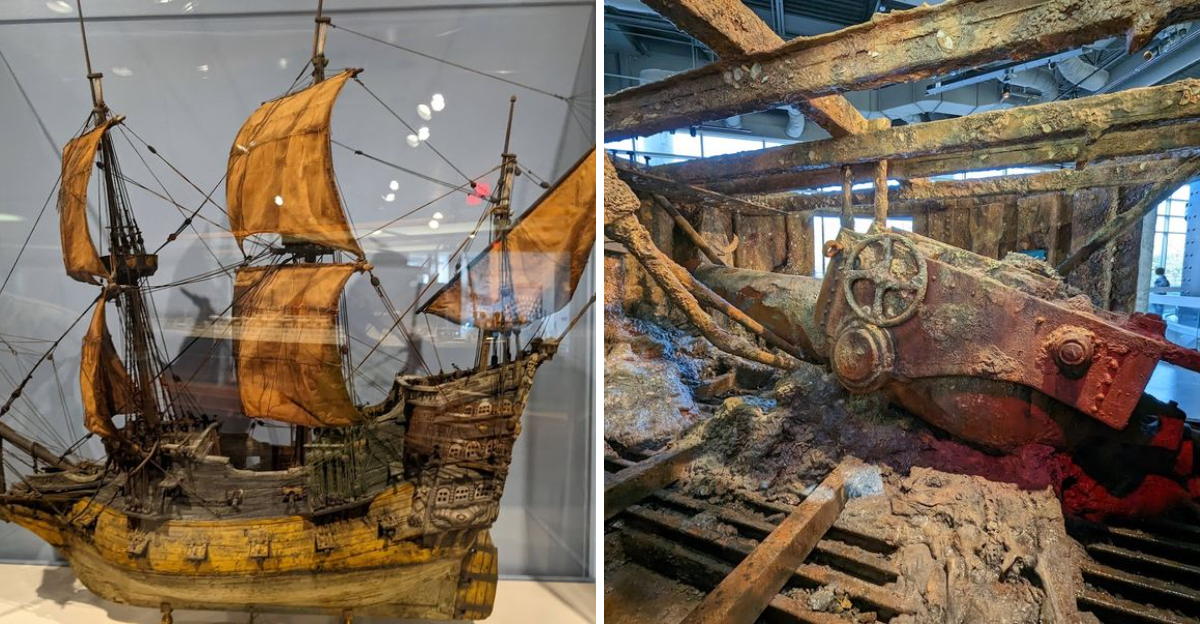
Most museums keep their treasures safely behind glass, but one place in Virginia lets you get so close to Civil War-era relics pulled from the ocean floor that you can practically feel the history radiating off them. Tthis jaw-dropping destination is officially designated by Congress as America’s National Maritime Museum, which is a title it wears with serious pride.
I walked through its doors expecting a quiet afternoon and left completely floored by the scale, the stories, and the sheer audacity of what has been preserved here. If you think maritime history sounds like a snooze, this place will absolutely change your mind.
The USS Monitor Center: Where the Ocean Gives Up Its Secrets
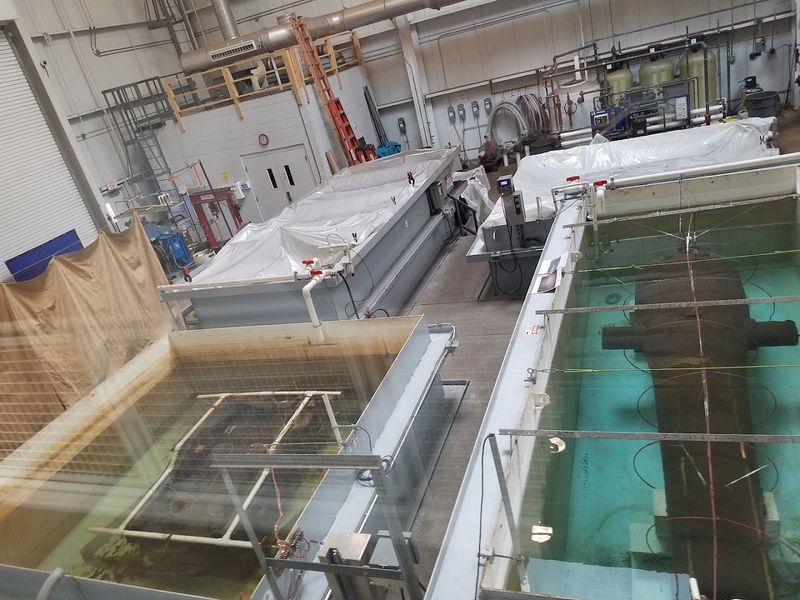
Walking into the USS Monitor Center feels like stepping into another dimension entirely. The sheer scale of the space hits you first, then the realization that what you are looking at was once sitting at the bottom of the Atlantic Ocean.
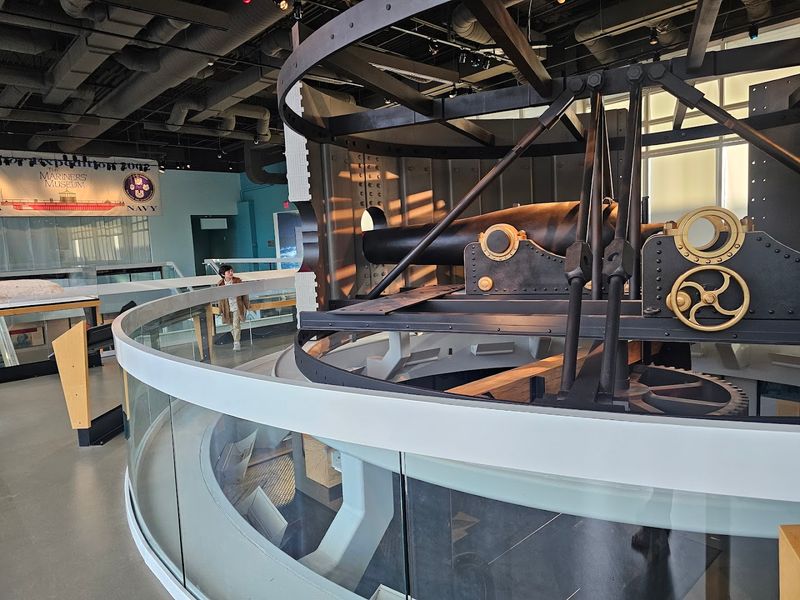
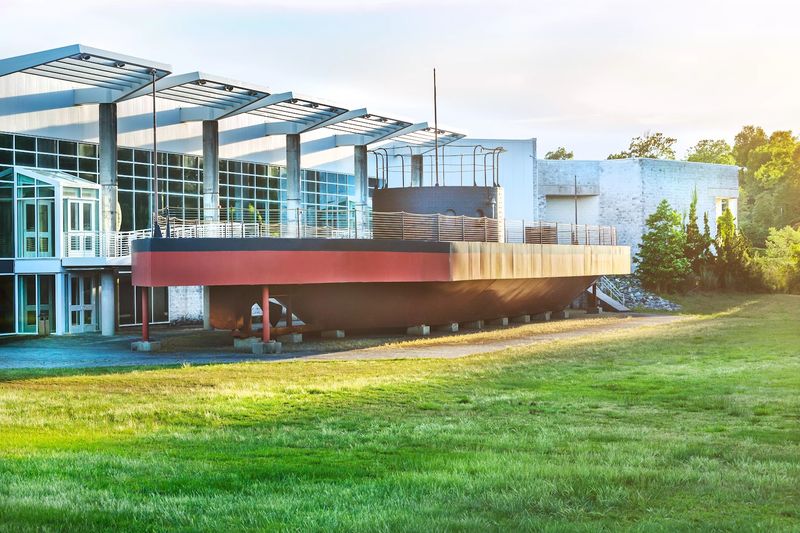
The centerpiece of The Mariners’ Museum and Park is, without question, the recovered turret of the USS Monitor, the famous Civil War ironclad that changed naval warfare forever.
The turret sits in a massive conservation tank, slowly being restored to a state that will keep it preserved for future generations. Surrounding it are real artifacts pulled from the wreck, including the ship’s anchor, propeller, and even personal items belonging to the crew.
Every single object carries the weight of an extraordinary story.
A full-scale replica of the Monitor’s deck lets you physically walk the same surface that sailors once stood on during one of history’s most dramatic naval battles. The immersive video theater, with surround sound and wrap-around screens, makes the Battle of Hampton Roads feel startlingly immediate.
Virginia’s maritime legacy has never felt so alive and urgent.
The Batten Conservation Complex: Science Meets Shipwreck
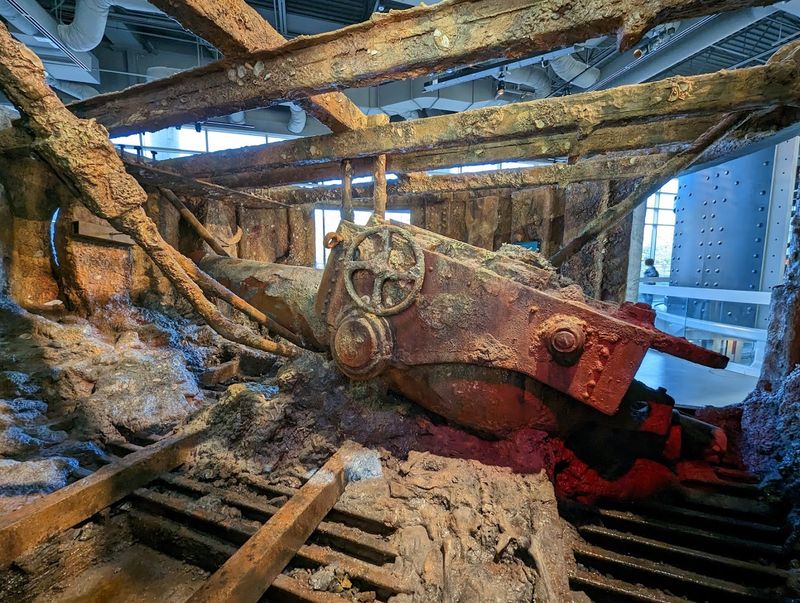
Not many museums let you peek behind the curtain at the actual science keeping history alive, but The Mariners’ Museum and Park does exactly that. The Batten Conservation Complex is one of the largest and most sophisticated conservation laboratories attached to any maritime museum in the world.
Watching conservators work on objects that spent over a century underwater is genuinely mesmerizing.
The process of preserving iron artifacts recovered from saltwater is painstaking and slow. Artifacts must be soaked in chemical baths for years to draw out the salt that would otherwise cause them to crumble once exposed to air.
The revolving gun turret alone has been undergoing this process for an extended period, and the results are extraordinary.
In early 2025, the turret was drained to give the public a rare look inside its interior, an event that drew considerable excitement from history fans across Virginia and beyond. Seeing the conservation work up close makes you appreciate how much effort goes into keeping these objects intact.
It is a reminder that preservation is not passive, it is an ongoing act of dedication and precision that happens every single day.
The International Small Craft Center: A Global Fleet Under One Roof
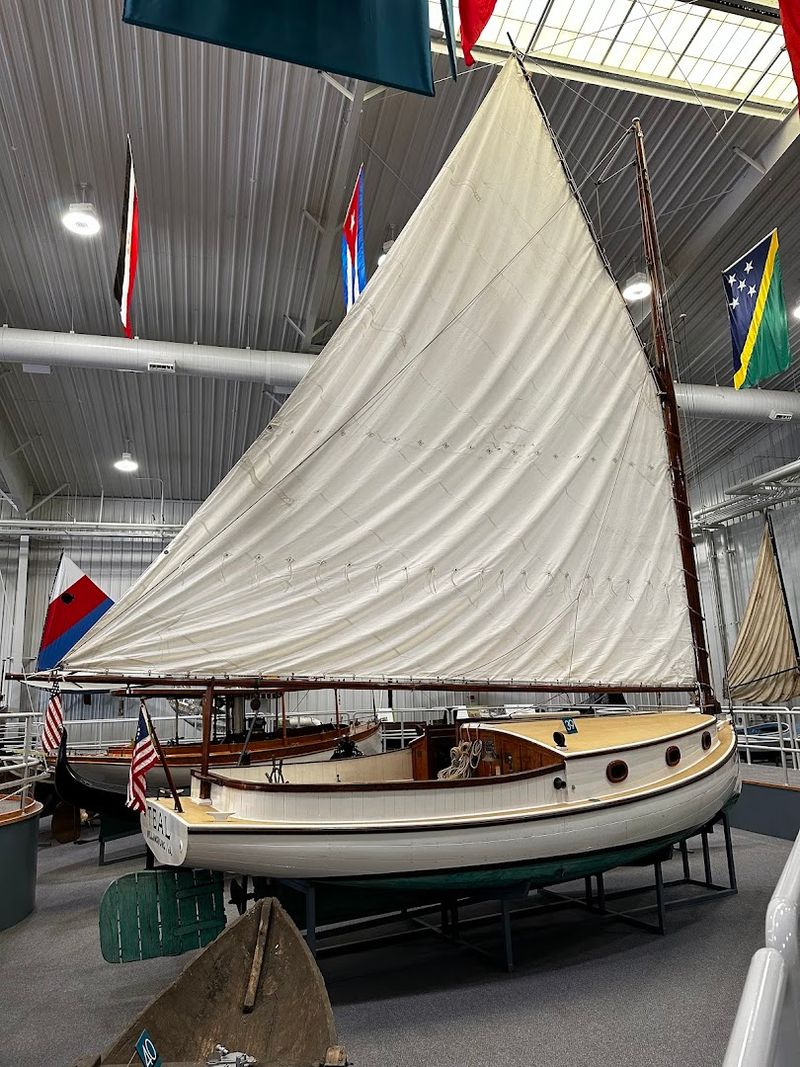
Forget everything you think you know about boat exhibits, because this one is wildly different. Tucked inside The Mariners’ Museum and Park is the International Small Craft Center, a gallery that manages to be simultaneously quirky, fascinating, and genuinely jaw-dropping.
Boats from dozens of cultures hang from the ceiling, rest on pedestals, and crowd the floor in a celebration of human ingenuity on water.
There are dugout canoes that look like they belong in a rainforest river, sleek racing vessels, and peculiar contraptions that make you wonder exactly what the designers were thinking at the time. Each craft tells a story about the community that built it, the waters it navigated, and the people who trusted their lives to it.
The variety is absolutely staggering.
I spent far longer in this room than I planned, circling back repeatedly to look at details I had initially missed. A volunteer was actively building a model ship in an adjacent space, adding a living, breathing quality to the experience.
Virginia is known for its deep connection to the sea, and this gallery captures that spirit on a beautifully global scale that feels inclusive and endlessly surprising.
The Ship Model Gallery: Miniature Masterpieces With Massive Stories
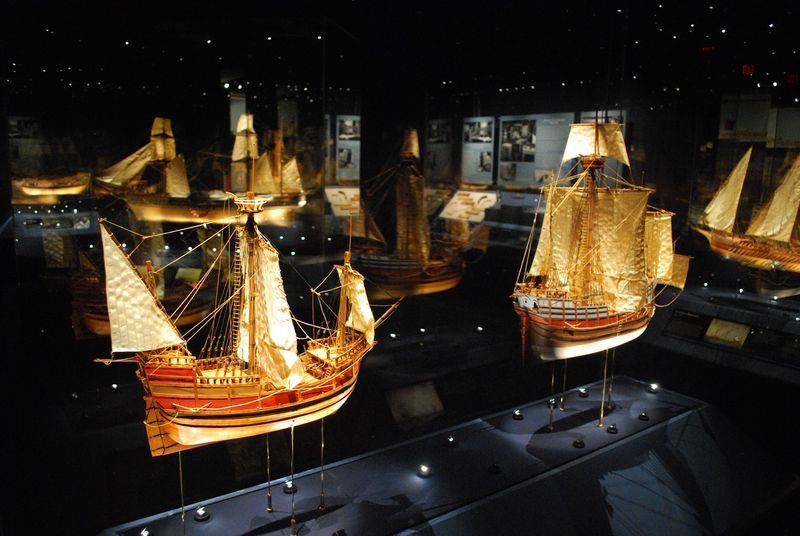
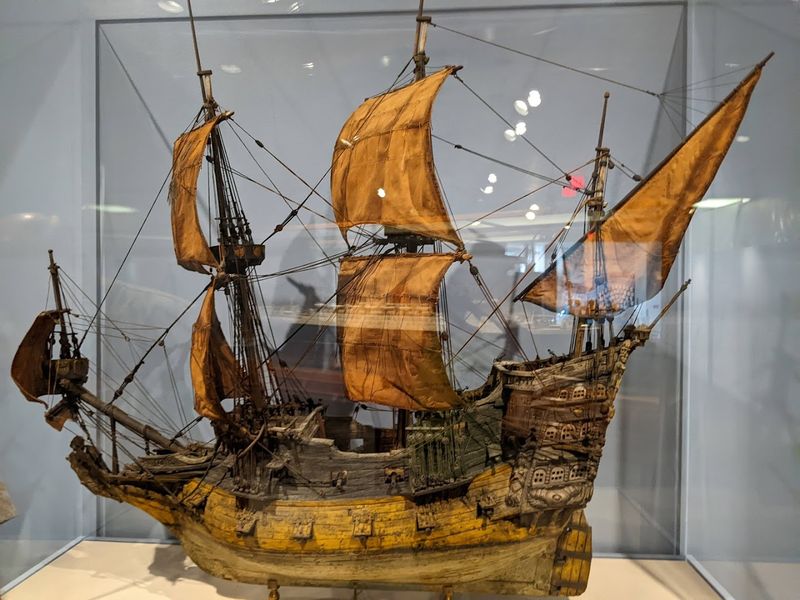
There is something almost magical about a perfectly crafted ship model. Every tiny rope, miniature cannon, and hand-painted hull represents hours of painstaking work, and the Ship Model Gallery at The Mariners’ Museum and Park has some of the finest examples you will ever encounter.
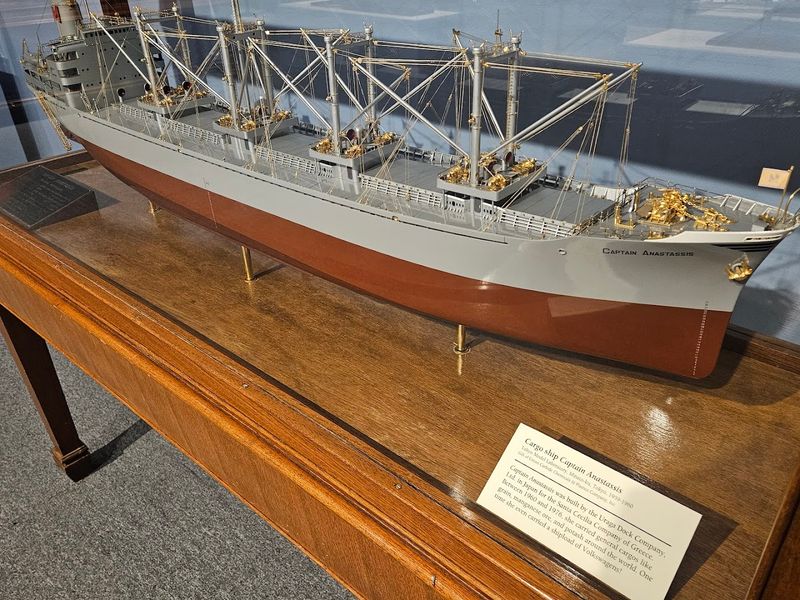
The room is enormous, and the models range from ancient galleons to sleek modern vessels.
Craftsmanship at this level is genuinely humbling. Some of these models were built by sailors themselves during long voyages, giving each one a personal history that goes far beyond simple decoration.
Others were constructed by dedicated artisans specifically for display, and the precision involved is almost absurd in the best possible way.
A volunteer was actively working on a new model during my visit, cheerfully fielding questions from curious onlookers while carefully placing components no bigger than a grain of rice. It added a warm, community-driven energy to a room that could have felt static.
The gallery also features figureheads from historic ships and fine china sets that once graced officers’ tables, proving that maritime history has its glamorous side too. Virginia has always had a complicated and beautiful relationship with the sea, and this room honors that connection with quiet elegance.
The Age of Discovery Galleries: Charting the Unknown World
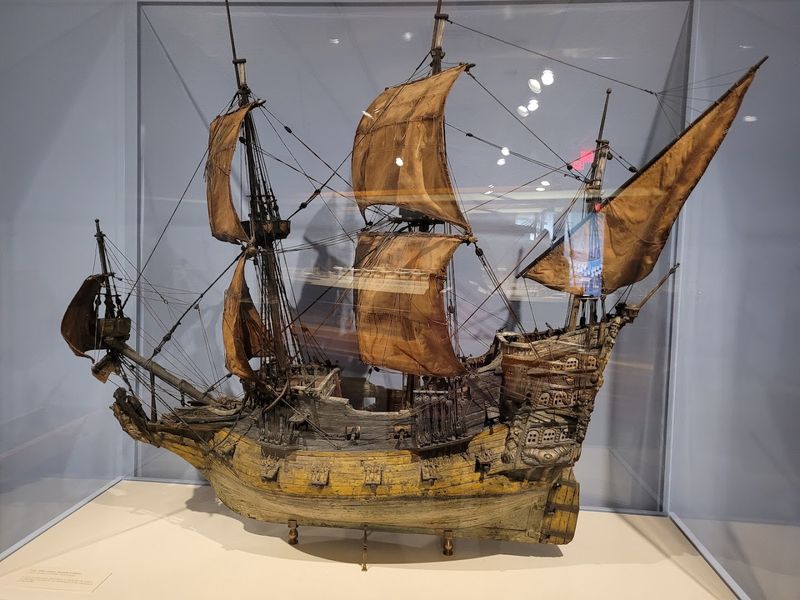
Long before GPS and satellite navigation, sailors crossed oceans using nothing but stars, crude maps, and extraordinary courage. The Age of Discovery galleries at The Mariners’ Museum and Park bring that era roaring back to life with exhibits that capture the ambition, terror, and triumph of early exploration.
The displays are rich with navigational instruments, period maps, and artifacts that paint a vivid picture of a world being discovered in real time.
What makes these galleries particularly compelling is the human element woven throughout. You get a strong sense of the personalities behind the voyages, the rivalries between nations, and the enormous risks that explorers accepted as simply part of the job description.
It was a time when sailing off the edge of the known world was a genuine professional possibility.
The storytelling here is sharp and engaging, avoiding the dry textbook approach that makes some history exhibits feel like homework. Interactive elements keep younger visitors hooked, while the depth of information satisfies serious history fans looking for more than just a surface-level overview.
Newport News sits at the heart of Virginia’s maritime identity, and these galleries make clear just how far back that connection actually stretches into the currents of world history.
The Hampton Roads Naval History Exhibits: Virginia’s Fighting Waters
Hampton Roads is one of the most strategically important bodies of water in American history, and The Mariners’ Museum and Park gives this storied waterway the serious treatment it deserves. Several galleries trace the naval history of the region from the earliest colonial conflicts straight through to the modern United States Navy, and the result is a comprehensive and genuinely gripping narrative.
Military artifacts fill these rooms with a sense of purpose and gravity. Uniforms, weapons, photographs, and personal effects from sailors who served across multiple centuries are displayed with care and context.
The exhibits make clear that Hampton Roads was not just a backdrop for history, it was often the stage where history was decided outright.
A particularly memorable feature is a re-created Navy ready room where you can sit in an actual pilot’s seat and imagine yourself briefing for a mission. The atmosphere is immersive without feeling gimmicky, striking a balance that many museums struggle to achieve.
Virginia has contributed enormously to American naval power, and these galleries celebrate that contribution without slipping into hollow patriotism. The storytelling is honest, layered, and deeply respectful of the men and women whose lives were shaped by these waters.
The America’s Cup Exhibition: Sailing’s Greatest Prize
Competitive sailing at the highest level is a sport of obsession, technology, and breathtaking skill, and the America’s Cup exhibition at The Mariners’ Museum and Park captures that world with flair. One of the most striking features is an actual racing yacht suspended dramatically overhead, its hull gleaming under gallery lighting in a way that stops you mid-stride.
The sheer size of these vessels is something photographs simply cannot convey.
The exhibition traces the long and occasionally contentious history of the world’s oldest international sporting trophy, covering the legendary rivalries, the technological arms races between competing nations, and the sailors who became legends in the process. It is a story full of drama, innovation, and more than a few spectacular wipeouts.
Context panels explain the physics of racing yacht design in accessible terms, making it genuinely interesting even if you have never set foot on a sailboat. The exhibition sits comfortably alongside the museum’s broader maritime narrative, connecting competitive sailing to the larger human story of our relationship with the ocean.
Newport News and the wider Virginia coastline have always attracted people drawn to the water, and this exhibit speaks directly to that enduring pull with energy and elegance.
The Noland Trail: Five Miles of Pure Waterside Magic
Not every great museum experience happens indoors, and the Noland Trail at The Mariners’ Museum and Park is proof of that. Wrapping around a stunning lake within the museum’s sprawling park, this well-maintained loop trail is a genuine gem for anyone who wants to stretch their legs after hours of exhibit exploration.
The path winds through mature forest, over wooden bridges, and along shoreline stretches that feel genuinely serene.
The trail is accessible from several entry points, making it easy to customize your route depending on how much time and energy you have. Joggers, families with strollers, and casual walkers all share the path comfortably, and the atmosphere is relaxed and welcoming throughout.
Wildlife sightings are common, deer in particular have a habit of appearing without warning around quiet corners.
Cell service inside the museum and along much of the trail is famously spotty, thanks in part to the building’s copper roof, which turns out to be a surprisingly welcome feature. Disconnecting from your phone for a few hours while surrounded by Virginia woodland and lake views is an unexpectedly refreshing experience.
The park itself is free to access, making it a fantastic complement to the museum visit without adding a single extra cost to your day.
Scavenger Hunts and Family Activities: Fun That Actually Teaches Something
Bringing kids to a history museum can feel like a gamble, but The Mariners’ Museum and Park has clearly thought hard about making the experience work for every age group. The museum offers scavenger hunts at varying difficulty levels, sending young explorers on missions throughout the galleries with a map and a list of objects to find.
The reward at the end, a prize from an actual treasure chest, is exactly the kind of detail that turns a good outing into an unforgettable one.
The hunts are cleverly designed to guide children through exhibits they might otherwise rush past, using curiosity and competition to slow them down and engage them with the actual content. Parents get to enjoy the exhibits properly while kids are genuinely absorbed in their own adventure running alongside them.
It is a rare win-win in the world of family travel.
Beyond the scavenger hunts, a small outdoor playground features a wooden replica of the USS Monitor for kids to clamber on, which is both adorable and historically educational in the best possible way. Virginia has no shortage of family-friendly destinations, but few manage to blend genuine educational depth with this level of playful, energetic fun.
The museum earns its place at the top of any Newport News family itinerary.
Planning Your Visit: Everything You Need to Know Before You Go
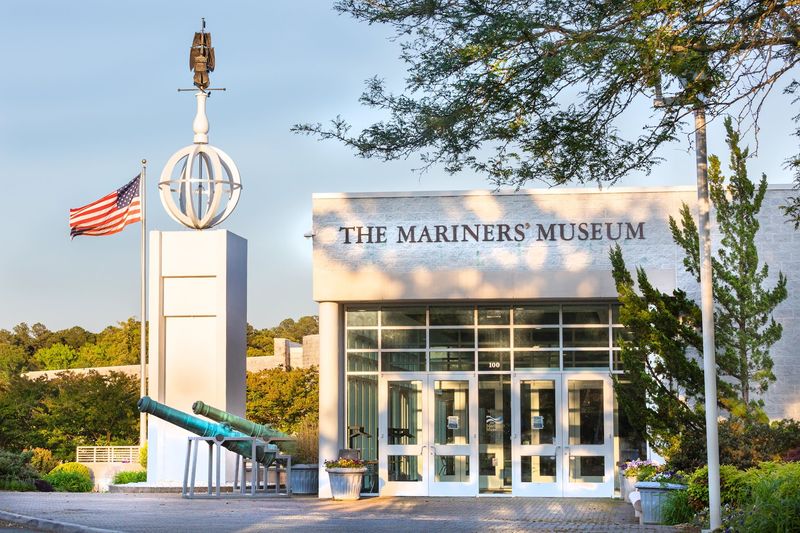
Getting the most out of a trip to The Mariners’ Museum and Park starts with a little advance planning, and the good news is that almost everything about this place is designed to make your visit easy and enjoyable. The museum opens daily and keeps consistent hours throughout the week, giving you plenty of flexibility to fit it into your schedule.
Parking is ample and free, which is a genuinely pleasant surprise for a destination of this caliber.
Admission is remarkably affordable, keeping the museum accessible to everyone regardless of budget. Inside, a cafe called Column 15 opened in spring 2025, offering coffees, teas, and pastries with both indoor and outdoor seating, making it easy to recharge mid-visit without leaving the premises.
A gift shop stocks everything from replica artifacts to USS Monitor merchandise, so leaving empty-handed requires real discipline.
The museum’s address is 100 Museum Drive, Newport News, VA 23606, and it is reachable by phone at 757-596-2222. Plan for at least half a day, though many people happily spend four to five hours exploring without feeling rushed.
Virginia has countless worthwhile destinations, but The Mariners’ Museum and Park stands in a category of its own. Pack comfortable shoes, charge your camera, and prepare to be genuinely amazed.
Dear Reader: This page may contain affiliate links which may earn a commission if you click through and make a purchase. Our independent journalism is not influenced by any advertiser or commercial initiative unless it is clearly marked as sponsored content. As travel products change, please be sure to reconfirm all details and stay up to date with current events to ensure a safe and successful trip.
