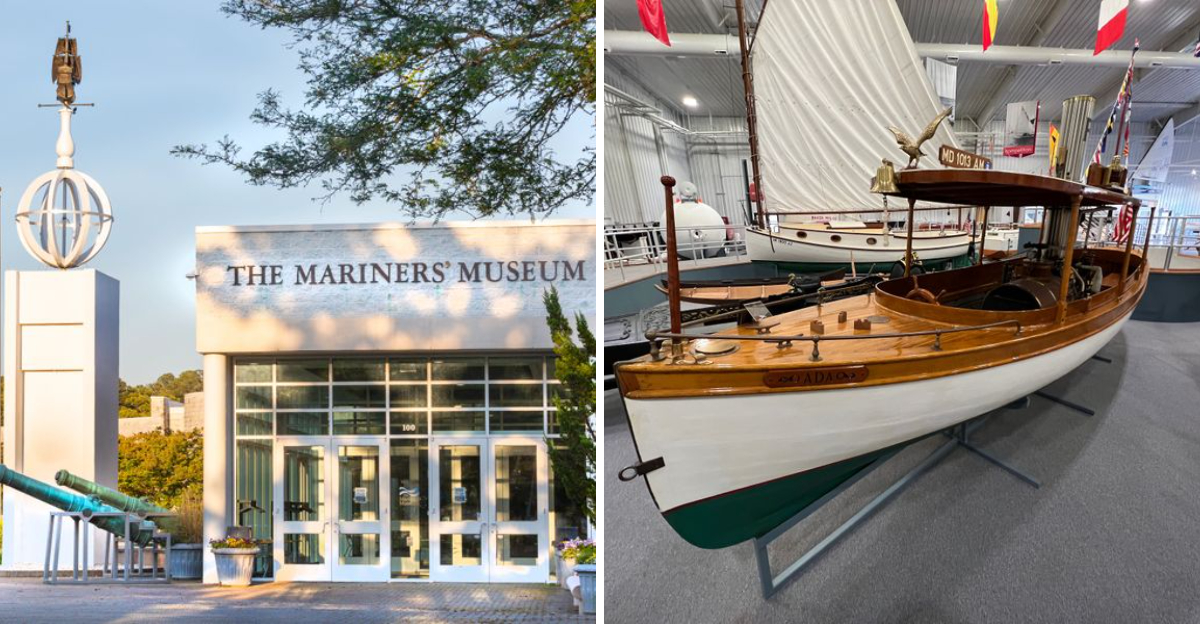
What if you could walk through centuries of maritime history, touch artifacts from legendary sea battles, and explore miles of peaceful trails all in one afternoon? The Mariners’ Museum and Park in Newport News pulls off this magical combination with style.
Located at 100 Museum Dr, Newport News, VA 23606, this sprawling complex houses one of the world’s finest collections of nautical treasures, from the famous USS Monitor turret to exquisite ship models that took craftsmen years to complete. But here’s the kicker: admission costs just a single dollar.
Yes, you read that right. For the price of a candy bar, you gain access to massive galleries, hands-on exhibits, scavenger hunts for kids, and enough maritime lore to make even landlubbers feel like seasoned sailors.
Step outside and you’ll discover the Noland Trail, a five-mile loop winding through pristine woodlands around Lake Maury. This Virginia gem proves that educational adventures don’t need to drain your wallet.
The Unbelievable One Dollar Admission
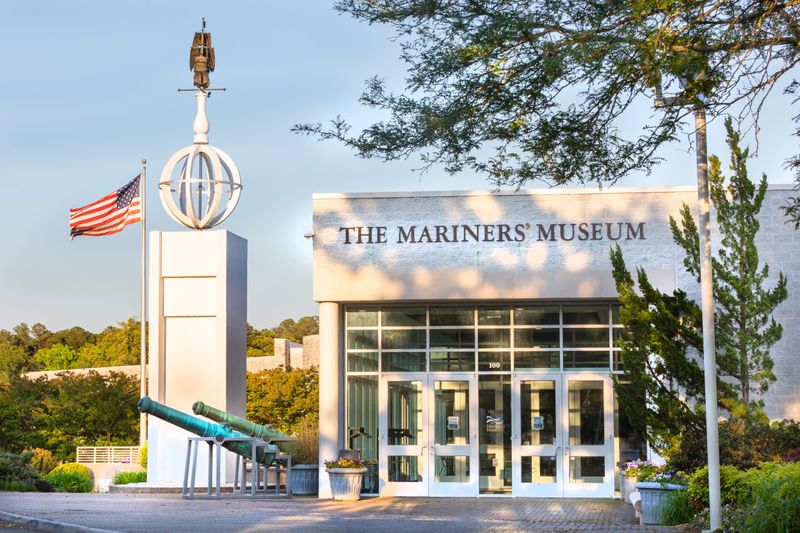
Sticker shock works both ways. When you approach the ticketing counter and see that admission costs exactly one dollar, your brain might glitch for a second.
Museums of this caliber typically charge twenty times that amount, yet The Mariners’ Museum has kept its entry fee astonishingly affordable.
This pricing philosophy opens maritime history to everyone, from families on tight budgets to curious travelers passing through Virginia. You could literally pay with loose change from your car’s cup holder.
The value becomes even more absurd when you realize the museum spans over 60,000 square feet of exhibition space.
Inside, you’ll find world-class displays, climate-controlled galleries, interactive stations, and artifacts worth millions. The staff maintains impeccable standards despite the bargain-basement pricing.
Clean bathrooms, helpful docents, and well-lit exhibits create an experience rivaling institutions that charge exponentially more.
Many visitors report feeling almost guilty about the low cost and leave generous donations afterward. The museum’s philosophy centers on education and accessibility rather than profit.
This approach has created a loyal following of repeat visitors who return again and again, bringing friends and family to share the incredible deal they discovered in Newport News.
The USS Monitor’s Legendary Turret
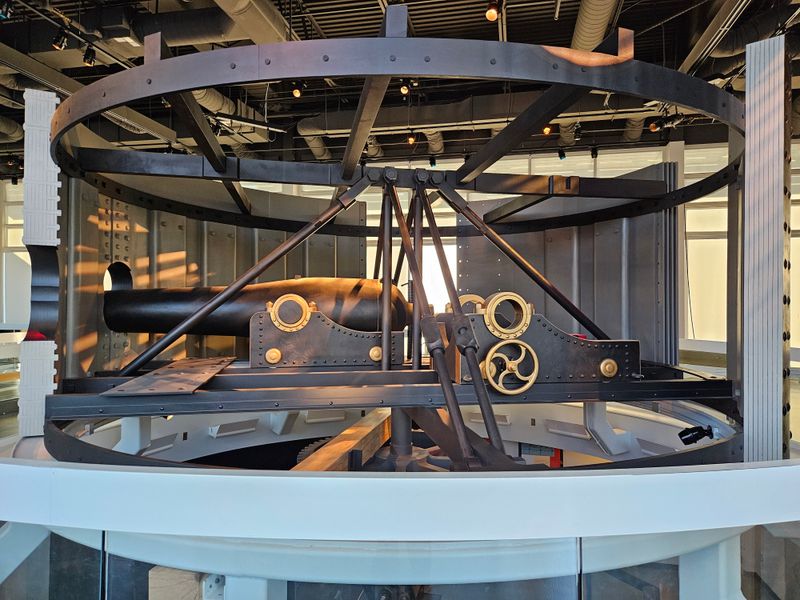
Picture a massive iron cylinder that changed naval warfare forever, now resting in careful preservation after spending over a century beneath Atlantic waves. The USS Monitor’s turret serves as the museum’s crown jewel, drawing history enthusiasts from across the globe to witness this Civil War marvel up close.
During the famous Battle of Hampton Roads, this rotating gun platform revolutionized ship design and combat strategy. Visitors can observe the actual turret undergoing meticulous conservation work, watching specialists preserve every rivet and plate.
The process reveals fascinating details about construction techniques from the 1860s.
Surrounding exhibits explain how the Monitor’s innovative design influenced warship development for generations. You’ll see the red distress lantern that hung from the vessel, the original anchor, propeller, and even an officer’s coat pulled from the wreckage.
These tangible connections to sailors who served aboard the ironclad create powerful emotional moments.
Interactive displays let you understand the claustrophobic conditions crew members endured inside the revolutionary warship. Full-scale recreations allow visitors to walk through quarters and stand where history unfolded.
The Monitor exhibit alone justifies the trip to Newport News, offering insights you simply cannot find anywhere else on Earth.
The International Small Craft Center
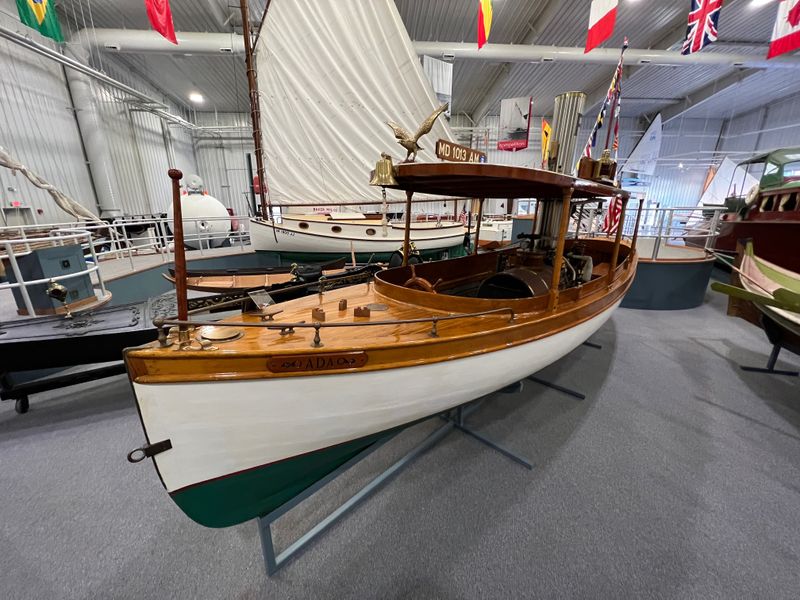
Tucked away from the main galleries lies a treasure trove that many visitors almost miss, yet those who discover it often call it their favorite section. The International Small Craft Center showcases boats from every corner of the planet, each telling stories of human ingenuity and cultural adaptation to water.
From elegant Venetian gondolas to rugged Arctic kayaks, the collection spans continents and centuries. You’ll gawk at ornately decorated ceremonial vessels, puzzle over bizarre experimental designs, and admire the craftsmanship of traditional fishing boats.
Each craft represents a unique solution to maritime challenges faced by different communities.
The variety astounds even seasoned museum-goers. Sleek racing sculls hang beside sturdy cargo canoes.
Whimsical pleasure boats share space with utilitarian work skiffs. Some vessels feature intricate carvings and paintings, while others emphasize pure functional efficiency.
Photography enthusiasts could spend hours capturing the details and colors of these remarkable watercraft. The lighting design highlights each boat’s unique features beautifully.
Informational plaques provide context about construction methods, cultural significance, and historical usage. This hidden gem within the museum proves that maritime innovation extends far beyond military vessels and commercial shipping, revealing the intimate relationship between humans and water throughout civilization.
The Noland Trail Natural Escape
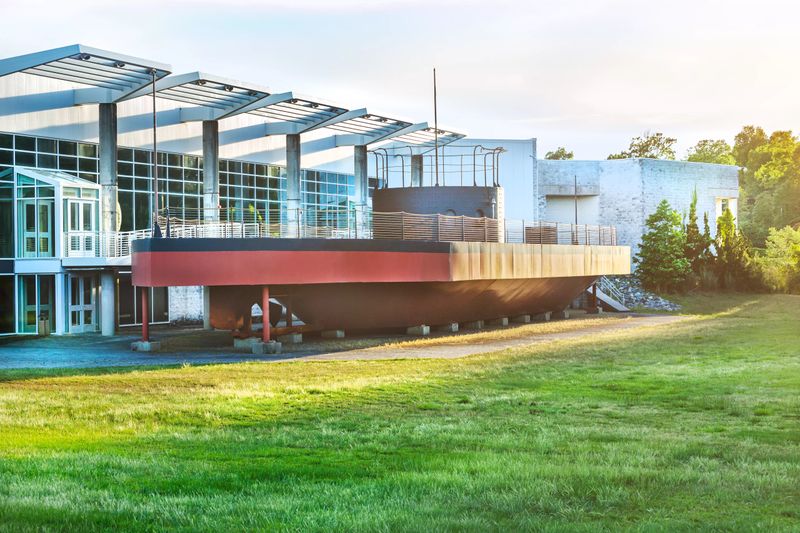
After soaking up maritime knowledge indoors, your legs might crave movement and your lungs fresh air. The Noland Trail delivers both in spectacular fashion, looping five miles around Lake Maury through some of the prettiest woodlands in Virginia.
Joggers, walkers, and nature lovers use this well-maintained path daily, enjoying the peaceful separation from urban noise. The trail surface remains accessible year-round, with multiple entry points allowing shorter walks if you prefer.
Benches positioned at scenic overlooks invite contemplation and rest.
Wildlife sightings happen regularly along the route. Deer appear so frequently that they barely qualify as surprises anymore.
Birds fill the canopy with songs while turtles sun themselves on logs jutting from the lake. The natural setting provides a perfect counterbalance to the museum’s indoor exhibits.
Cell service gets spotty under the museum’s copper roof and along portions of the trail, creating an unintentional digital detox opportunity. Many visitors appreciate this forced disconnection, finding it refreshing to simply exist in nature without constant phone notifications.
The trail remains safe and welcoming at all daylight hours. Locals treat it as their personal wellness sanctuary, returning week after week to walk off stress and reconnect with the outdoors surrounding this remarkable Newport News institution.
The Scavenger Hunt Adventure
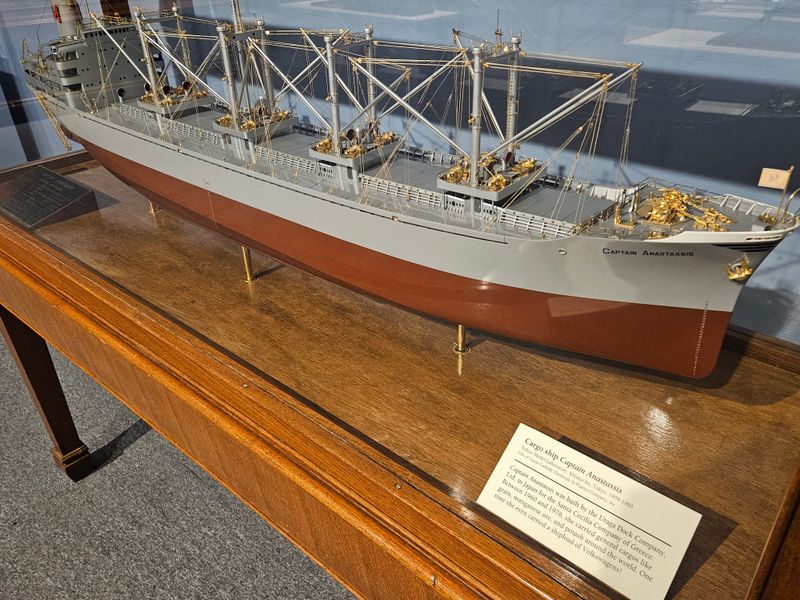
Keeping kids engaged in museums can challenge even the most patient parents, but The Mariners’ Museum has cracked the code with brilliantly designed scavenger hunts. These activity sheets transform potentially restless youngsters into focused treasure hunters, racing through galleries with purpose and excitement.
Multiple difficulty levels ensure age-appropriate challenges for everyone from preschoolers to teenagers. Children receive maps highlighting items to find throughout the expansive collection.
The hunts cleverly guide families to key exhibits while maintaining an element of playful competition.
Parents report that kids who normally resist museum visits become completely absorbed in completing their scavenger sheets. The activities encourage careful observation and reading comprehension without feeling like homework.
Successful hunters earn prizes from the treasure chest at the completion desk, adding tangible rewards to the educational experience.
This interactive approach helps families spend quality time together while learning maritime history. Adults often find themselves just as invested in finding the next clue as their children.
The hunts prevent the glazed-over boredom that sometimes afflicts young museum visitors, replacing it with genuine curiosity and engagement. Even teenagers who arrived expecting tedium admit the scavenger format made the visit surprisingly fun.
The program exemplifies how thoughtful design can make education feel like entertainment.
The Ship Model Masterpiece Gallery
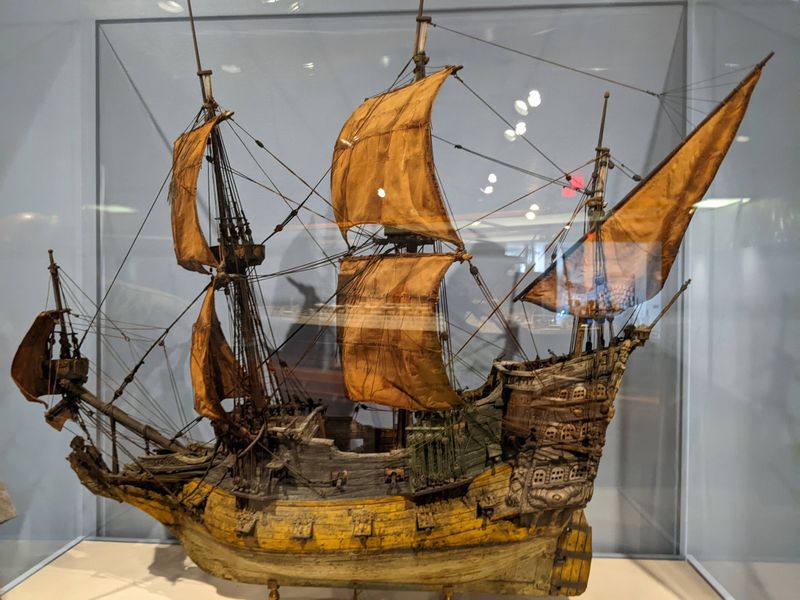
Patience, precision, and passion converge in the gallery devoted to model ships, where miniature vessels represent hundreds of hours of painstaking craftsmanship. These aren’t toy boats but serious works of art, some taking years to complete with accuracy rivaling the original vessels.
The collection includes models spanning maritime history from ancient galleys to modern naval destroyers. Each tiny ship features working rigging, accurate paint schemes, and details so fine you’ll need to lean close to appreciate them fully.
The craftsmanship borders on obsessive, with builders replicating every cannon, mast, and deck plank to scale.
Watching a volunteer actively building models in the gallery adds another dimension to the experience. Visitors can observe the meticulous process, ask questions about techniques, and gain appreciation for the skill required.
The modelmaker’s workspace displays tools, reference materials, and works in progress.
Photography enthusiasts love this section for the incredible detail and lighting. The glass cases protect delicate models while allowing clear viewing from multiple angles.
Informational cards explain each vessel’s history and significance. Ship modeling represents a living art form, connecting modern hobbyists to centuries of maritime tradition.
The gallery proves that sometimes the smallest objects tell the biggest stories about human dedication and the enduring fascination with vessels that brave the seas.
The Battle of Hampton Roads Experience
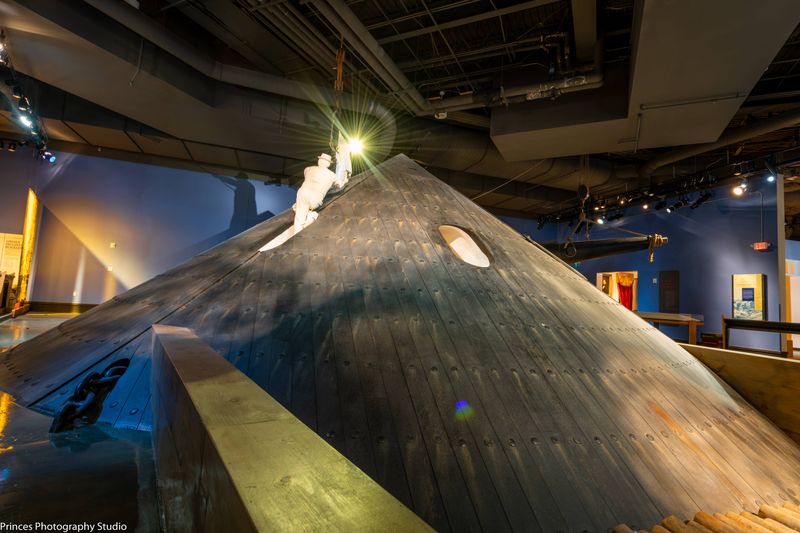
Surround sound rumbles through the theater as cannons fire and ironclads collide in one of history’s most pivotal naval encounters. The Battle of Hampton Roads multimedia presentation drops visitors into the chaos of that fateful confrontation between the Monitor and Virginia, using cutting-edge technology to recreate the revolutionary clash.
Comfortable swivel chairs let you turn toward different screens as the action unfolds around you. Maps illuminate to show ship positions and movements, making the tactical elements crystal clear even for those unfamiliar with naval warfare.
The production quality rivals major museum installations anywhere in the country.
Narration explains the strategic importance of the battle while visual effects convey the terror and confusion experienced by sailors aboard both vessels. You’ll understand why this encounter marked a turning point in naval architecture and combat doctrine.
The ironclad era began right here in Virginia waters.
After the presentation, visitors emerge with context that enriches the entire Monitor exhibit. The video transforms scattered artifacts into pieces of a coherent, dramatic narrative.
Many guests watch the show multiple times during their visit, catching new details with each viewing. The theater experience represents modern museum storytelling at its finest, proving that educational content can deliver genuine entertainment value when executed with skill and passion.
The Confederate Ironclad Reconstruction
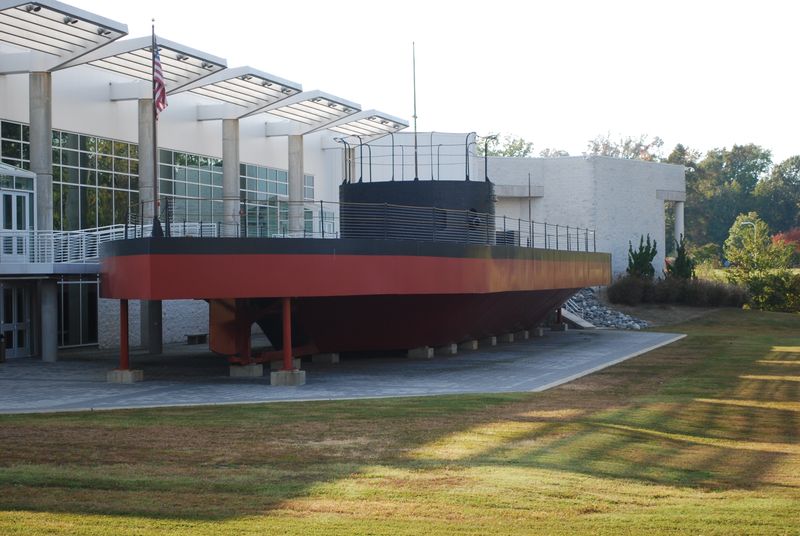
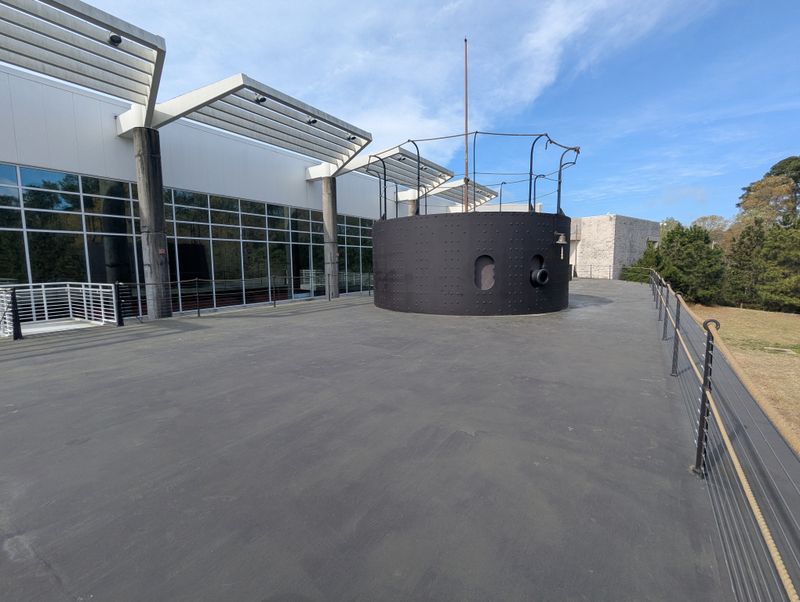
Step aboard a partial reconstruction of the CSS Virginia and suddenly the Civil War becomes tangible rather than abstract. This full-scale recreation lets visitors walk sections of the Confederate ironclad that battled the Monitor, providing spatial understanding that photographs and descriptions simply cannot convey.
The reconstruction reveals just how cramped and uncomfortable conditions were aboard these revolutionary warships. You’ll duck through hatches, navigate tight passageways, and marvel that crews functioned effectively in such confined spaces.
The authenticity extends to materials and construction methods matching historical records.
Standing inside the ironclad, you gain visceral appreciation for the courage required to sail into combat aboard these experimental vessels. The sloped armor plating, limited visibility, and claustrophobic quarters created environments that tested every sailor’s nerve.
Interactive elements explain how various systems operated during battle.
Photography inside the reconstruction captures the dramatic angles and shadows created by the unique design. The exhibit allows visitors to ring an authentic ship’s bell, creating memorable photo opportunities.
Families enjoy exploring the vessel together, with children especially fascinated by the hands-on access. The reconstruction complements the Monitor artifacts perfectly, showing both sides of the historic encounter.
Walking through this piece of maritime history beats reading about it in textbooks by a nautical mile.
Column 15 Cafe and Outdoor Seating
Museum fatigue hits differently when you can recharge with quality coffee and fresh pastries in a pleasant setting. Column 15, the museum’s cafe addition, provides exactly that respite, offering visitors a comfortable spot to refuel between galleries.
The menu focuses on beverages and light bites rather than full meals, perfect for sustaining energy during extended visits. Quality coffee drinks satisfy caffeine cravings while pastries provide quick sustenance.
The pricing remains reasonable, continuing the museum’s commitment to accessibility.
Indoor seating creates a relaxed atmosphere where families can regroup and discuss what they’ve seen so far. Outdoor tables take advantage of the beautiful park setting, letting guests enjoy fresh air and natural surroundings.
The cafe operates during museum hours, making it convenient for mid-visit breaks.
Many visitors use the cafe as a meeting point or planning spot, reviewing maps and deciding which exhibits to tackle next. The addition enhances the overall experience without feeling like a corporate intrusion.
Staff maintain friendly, efficient service even during busy periods.
Having a quality cafe on-site removes the pressure to rush through exhibits before hunger strikes. Guests can pace themselves comfortably, knowing refreshments await whenever needed.
The outdoor seating particularly shines during Virginia’s pleasant spring and fall weather, creating an ideal transition between indoor exploration and outdoor trail walking.
The Preservation and Conservation Labs
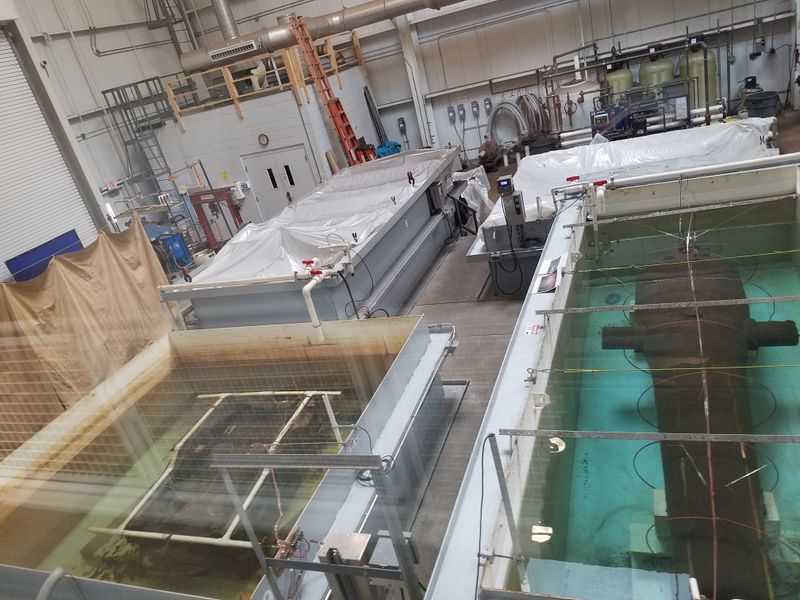
Transparency takes center stage as visitors peer into working conservation labs where specialists perform delicate restoration on priceless maritime artifacts. Most museums hide this technical work behind closed doors, but The Mariners’ Museum embraces it as part of the educational experience.
Watching conservators carefully clean, stabilize, and preserve historical objects adds depth to the overall visit. You witness the painstaking effort required to protect these treasures for future generations.
The visible workspace demonstrates the museum’s commitment to proper stewardship of its collection.
Complex processes unfold before your eyes as specialists use specialized tools and techniques developed specifically for maritime artifacts. Saltwater damage, metal corrosion, and organic decay all require different treatment approaches.
The labs showcase cutting-edge preservation technology alongside traditional conservation methods.
Informational displays explain what conservators do and why their work matters so critically. Many visitors report feeling grateful that professionals dedicate careers to saving these historical objects.
The transparency builds trust and appreciation for the institution’s mission.
Seeing conservation in action transforms artifacts from static displays into ongoing stories of rescue and preservation. The labs remind guests that museums actively work to protect history rather than simply storing old things.
This behind-the-scenes access ranks among the most memorable aspects of many visits, offering authentic glimpses into museum operations that educational institutions rarely share so openly with the public.
Dear Reader: This page may contain affiliate links which may earn a commission if you click through and make a purchase. Our independent journalism is not influenced by any advertiser or commercial initiative unless it is clearly marked as sponsored content. As travel products change, please be sure to reconfirm all details and stay up to date with current events to ensure a safe and successful trip.
