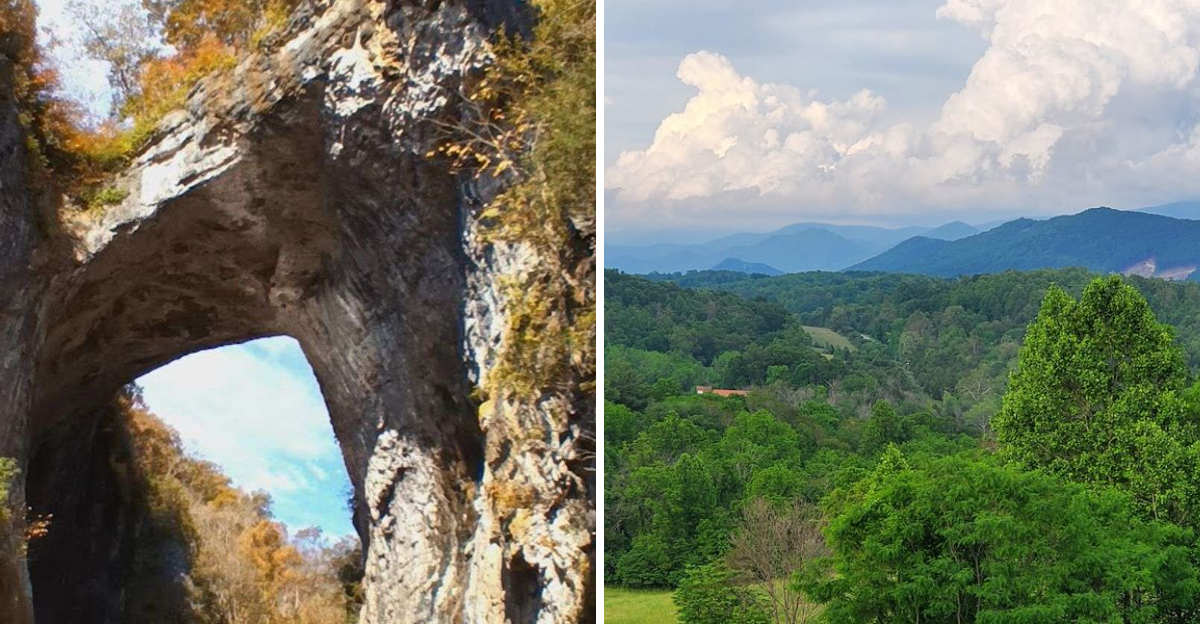
Most natural stone arches are tucked away in the woods, reachable only by a steep hike. This Virginia bridge is different.
It is so massive that a highway literally runs over it. Cars drive across the top, and you can stand underneath and wonder how that is legal.
The bridge rises 215 feet above the creek below, a solid wall of limestone carved by water over millennia. Thomas Jefferson once owned it, calling it one of the natural wonders of the world.
I stood at the base, craning my neck, and felt very small. The trail to the bridge is short and easy, but the impact is enormous.
Virginia has plenty of natural wonders. This one comes with a road on top.
The Stone Giant That Carries a Real Road
Most bridges are built by engineers. This one was built by time itself, and it happens to carry a working highway on its back.
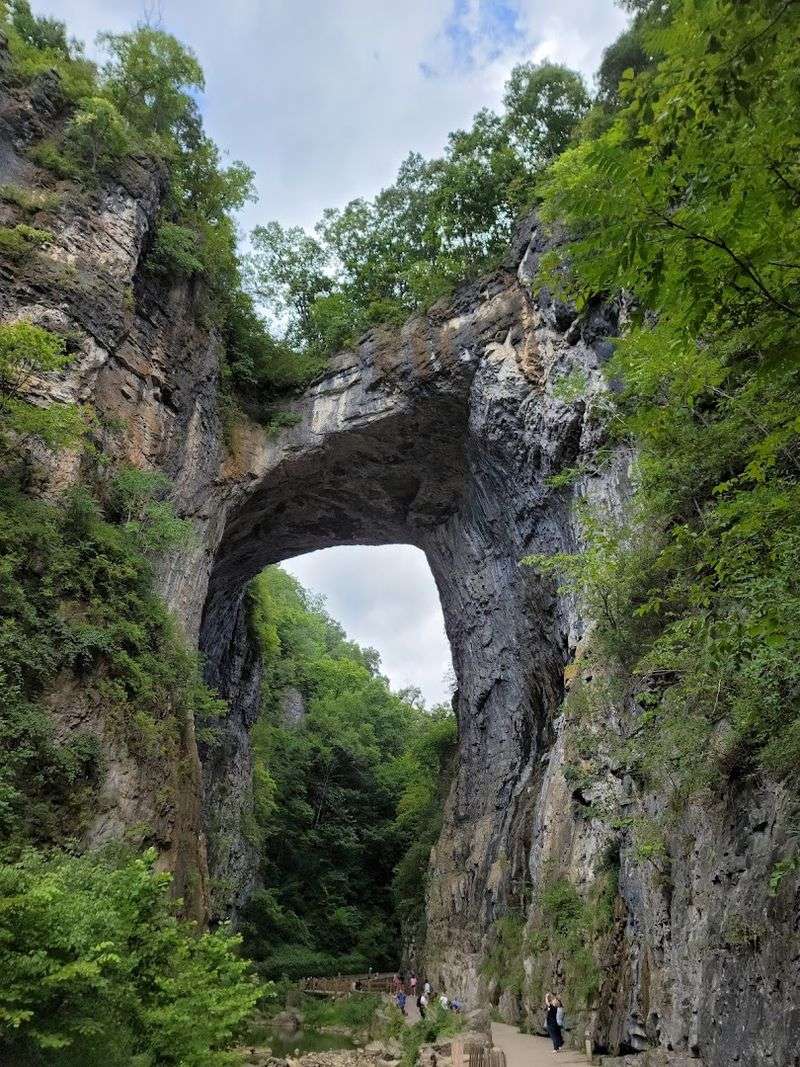
The Natural Bridge in Virginia legally functions as an overpass for U.S. Route 11, also known as Lee Highway, making it arguably the most ancient piece of road infrastructure in the entire country.
The arch stretches 90 feet across and soars 215 feet above Cedar Creek, which still flows peacefully beneath it. Standing directly underneath and looking up is a full-body experience that stops most people mid-sentence.
Formed from limestone carved over hundreds of millions of years, the bridge is actually the remnant of a cave roof. Cedar Creek slowly dissolved the rock around it, leaving this magnificent arch standing while everything else eroded away.
Virginia officially took ownership of the bridge and its surrounding acres in 2023, cementing its status as a public treasure. The Virginia Department of Transportation has even floated plans to eventually reroute the highway off the bridge entirely, which would be a first in geological history.
For now, cars still roll across the top while hikers gawk from below. Few places on Earth offer that kind of perspective shift.
A Park Born From Ancient Roots
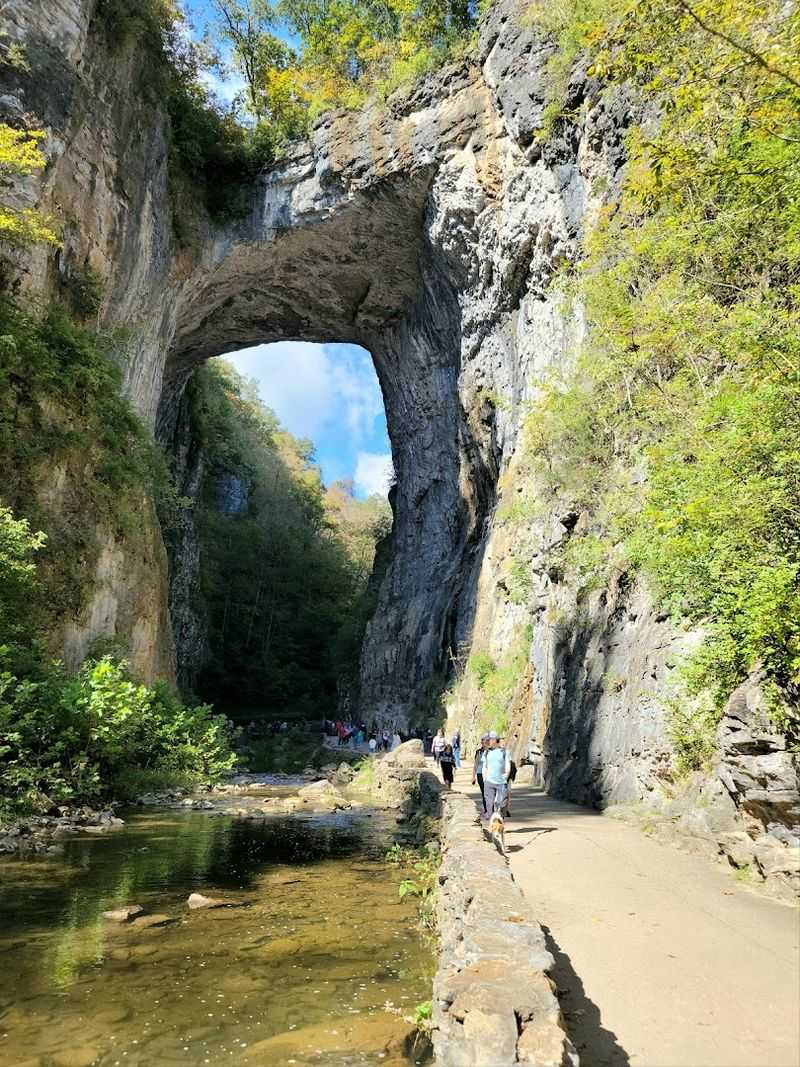
Natural Bridge State Park officially opened its gates in September 2016, but the land itself has been drawing people in for far longer than any park designation could account for. The Monocan Nation, indigenous to this region of Virginia, considered the bridge a sacred site and called it the Bridge of God.
George Washington reportedly surveyed the area, and Thomas Jefferson was so captivated by the spot that he purchased the land and called it one of the most sublime pieces of nature in America, placing it alongside Niagara Falls in terms of natural importance.
The park now manages over 1,500 acres of karst landscape, forested ridges, and creek-carved gorges. It became a National Historic Landmark back in 1998, long before it transitioned into state park management.
What makes this park genuinely special is how it layers geological wonder with deep human history. Every trail marker, every carved rock face, and every bend in Cedar Creek connects to a story stretching back centuries.
Virginia poured real care into preserving this landscape, and walking through it today feels like stepping through layers of time that most parks simply cannot offer.
Cedar Creek Trail and What Waits Along It
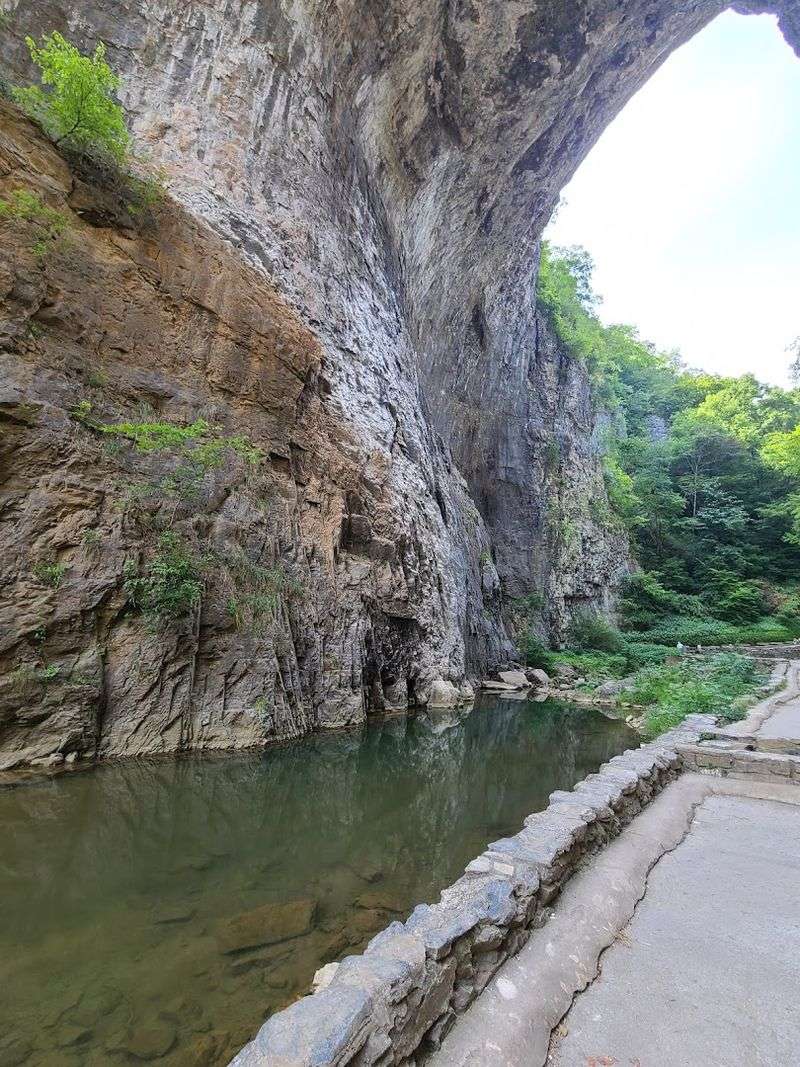
Cedar Creek Trail is the main event at Natural Bridge State Park, and it delivers from the very first step. Starting near the visitor center, the path descends through a series of stairs before flattening out into an easy, well-maintained trail that hugs the creek for its entire length.
The trail runs roughly 1.5 miles one way out to Lace Falls, making the round trip a manageable but genuinely rewarding outing. Along the way, the creek sparkles with crystal-clear water rushing over smooth rocks, and the canyon walls rise dramatically on both sides.
My favorite stretch is the section just past the Natural Bridge itself, where the gorge narrows and the trees create a canopy overhead that filters light in the most cinematic way possible. The sound of the water bouncing off limestone walls adds a whole extra sensory layer to the walk.
Dogs on leashes are welcome on the trail, which makes it a great outing for the whole family. The path is also relatively flat beyond the initial staircase, so most fitness levels can handle it without much trouble.
Pack a light bag, bring water, and give yourself at least two hours to enjoy it properly without rushing.
Saltpeter Cave and the Underground Mystery
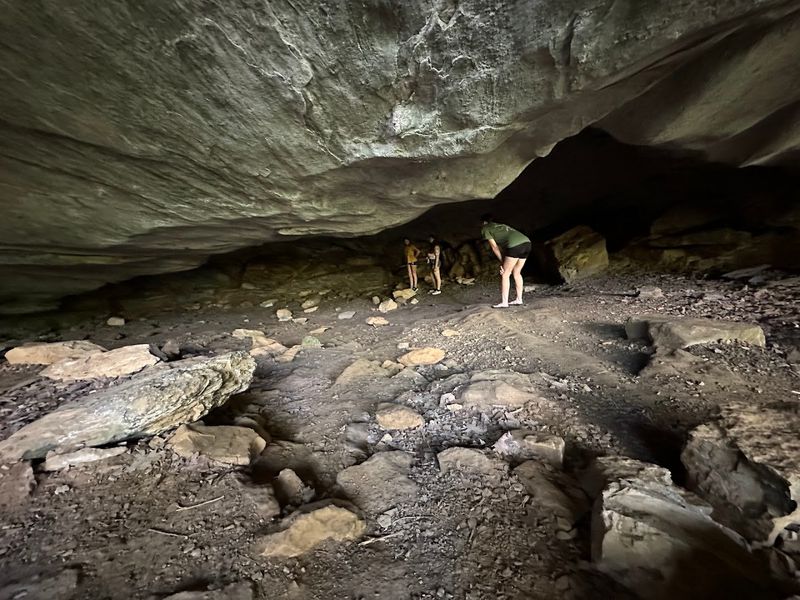
Tucked along the Cedar Creek Trail, Saltpeter Cave is one of those unexpected stops that genuinely earns a spot on the highlight reel. The cave earned its name from the saltpeter, a mineral used in making gunpowder, that was historically mined from its walls during times of conflict in American history.
Stepping inside feels immediately different from the rest of the trail. The temperature drops, the light changes, and the geology becomes personal in a way that outdoor formations rarely achieve.
Limestone formations line the walls and ceiling, telling a quiet story of water and time.
Adjacent to the cave, the so-called Lost River adds another layer of intrigue. A small opening in the rock wall allows hikers to hear the rush of an underground stream that disappears entirely from view, flowing somewhere deep beneath the surface before reemerging downstream.
It is the kind of feature that makes kids go wide-eyed and adults pull out their phones for a video that will never quite capture the sound. Natural Bridge State Park is full of moments like this, where the land reveals something unexpected around nearly every corner.
The cave is included with the paid trail ticket, so there is no reason to skip it on your visit.
Lace Falls at the End of the Trail
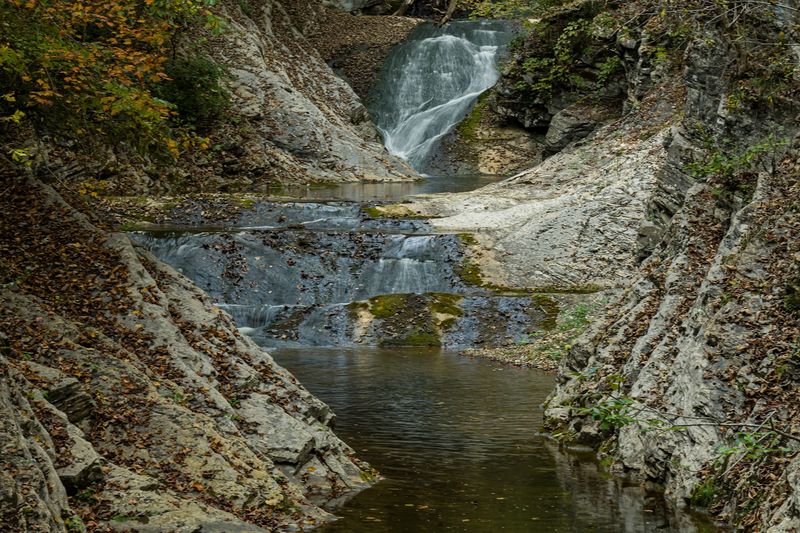
Lace Falls sits at the far end of Cedar Creek Trail and serves as the trail’s natural finale. The waterfall is delicate and narrow, earning its lacy nickname from the way water threads in thin ribbons down the rock face rather than crashing in a dramatic torrent.
Honest assessment: Lace Falls is more charming than overwhelming. After a rain, the flow picks up considerably and the scene becomes genuinely lovely.
On a dry day, it is more of a pleasant trickle that rewards the walk without exactly blowing anyone away.
That said, the journey to reach it is absolutely worth every step. The gorge surrounding the falls is quiet, mossy, and bathed in filtered light that photographers will want to linger in for as long as possible.
The rock walls frame the waterfall in a way that feels almost deliberately composed.
Most hikers spend a few minutes here before turning back, but there are flat rocks near the base that make perfect spots for a short rest before the return trip. The walk back feels quicker than the walk out, especially once the Natural Bridge comes back into view.
Virginia has grander waterfalls, but few are set in a gorge this atmospheric or this easy to reach.
The Visitor Center and Getting Your Bearings
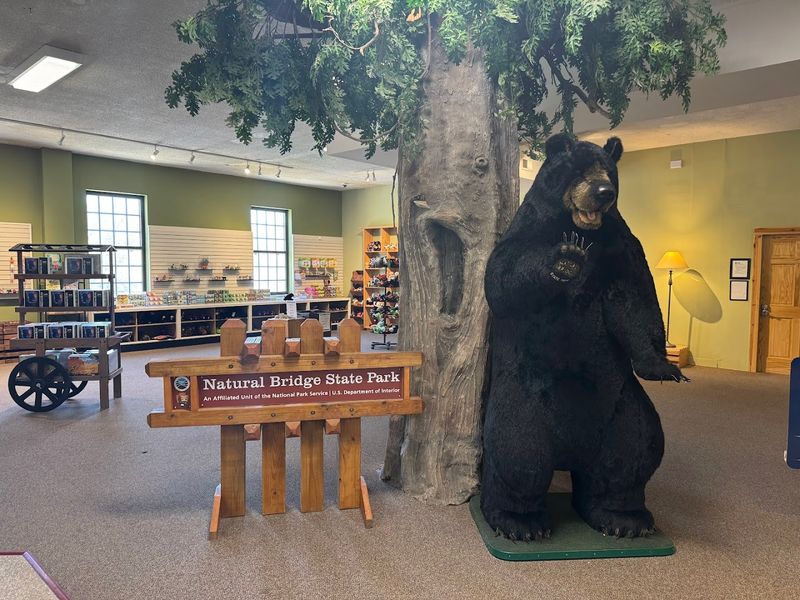
The visitor center at Natural Bridge State Park is the logical first stop, and it sets a genuinely welcoming tone for everything that follows. The building sits at the top of the trail descent, giving first-time visitors a chance to orient themselves before heading down into the gorge.
Inside, a well-stocked gift shop offers park merchandise, maps, and a selection of snacks and coffee drinks. The staff are consistently knowledgeable and enthusiastic about the park, which makes asking questions feel worthwhile rather than awkward.
Paid trail tickets, which cover access to the Natural Bridge, Saltpeter Cave, Lost River, and Lace Falls, are purchased here. A smaller ticket kiosk at the bottom of the staircase also handles sales for those who arrive early before the main center opens.
For anyone with mobility challenges, there is a staff road that bypasses the main staircase and provides vehicle access to the lower trail area. The park staff are accommodating and genuinely helpful when navigating accessibility needs.
Restrooms are available at multiple points along the trail, which is a small but meaningful detail for anyone planning a longer visit. Natural Bridge State Park has clearly put thought into making the experience smooth and enjoyable from the moment you arrive.
The Skyline Trail for Panoramic Ridge Views
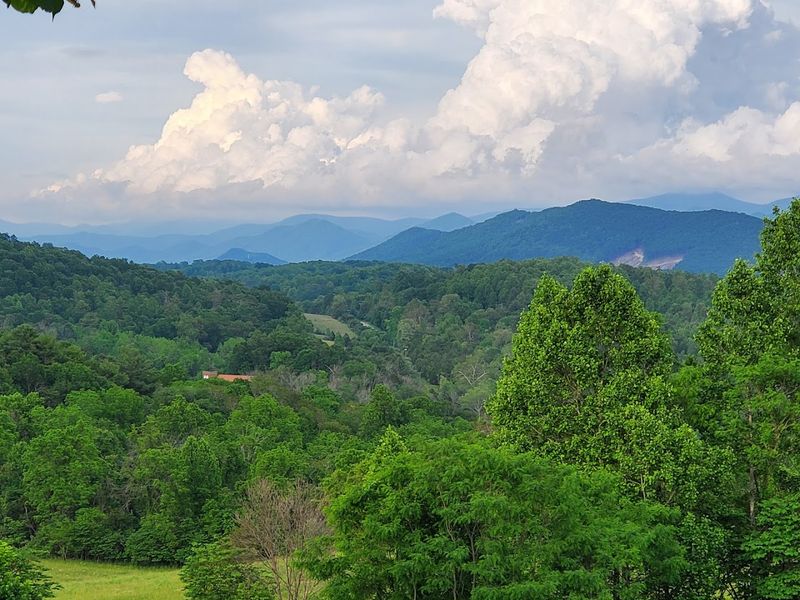
Beyond the paid Cedar Creek Trail, Natural Bridge State Park offers a network of free hiking trails that most casual visitors completely overlook. The Skyline Trail is the crown jewel of this free trail system, looping along the ridgeline above the gorge with sweeping views that open up dramatically in the clearer months.
My experience on the Skyline Trail was one of pure, unhurried solitude. The trail climbs steadily from the trailhead and rewards the effort with panoramic views of the surrounding Virginia landscape that stretch far beyond the gorge itself.
A small parking fee applies at the free trailheads, payable at an honor-system box near the trailhead markers. The trails are clearly marked with distance and difficulty information, making it easy to plan the right loop for your energy level on any given day.
Dogs on leashes are welcome here as well, and the trail surface is firm and well-maintained throughout. Seasonal changes make this trail worth visiting multiple times across the year, with fall foliage turning the ridge into something that looks almost too colorful to be real.
Virginia’s hiking scene is strong, but the Skyline Trail at this park offers a quality-to-effort ratio that genuinely surprises most people who make the extra stop.
The Geology That Took 500 Million Years to Build
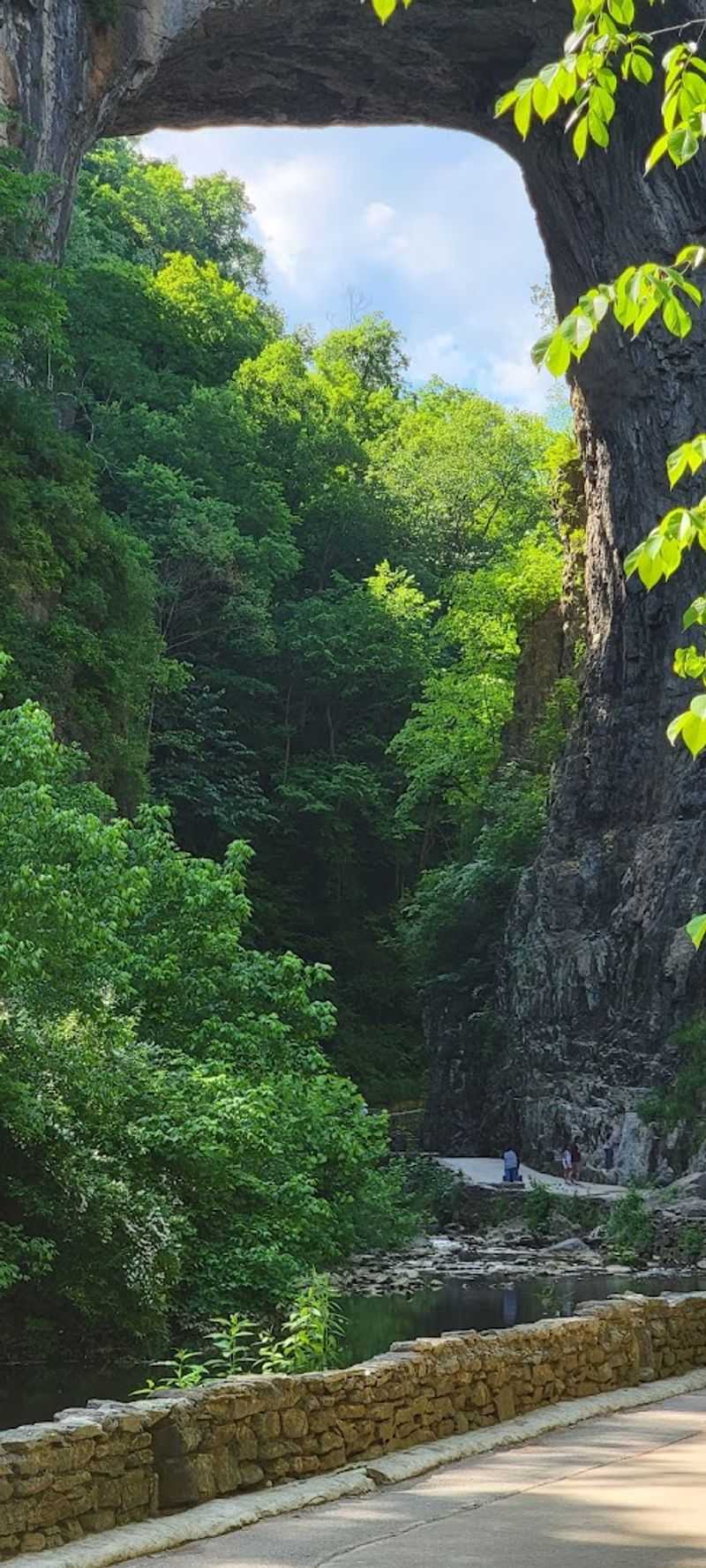
The Natural Bridge is not just big. It is ancient in a way that makes human history feel like a brief footnote.
Geologists estimate the limestone that forms the bridge was deposited between 400 and 500 million years ago, back when this part of Virginia was covered by a shallow tropical sea.
Cedar Creek is the artist responsible for the arch’s current form. Over millions of years, the creek carved through the limestone, dissolving rock and creating a network of underground tunnels.
Eventually, most of the cave system collapsed, but the roof of one section held firm, leaving behind the massive arch still standing today.
The karst landscape surrounding the bridge is equally fascinating. Karst terrain forms when soluble rocks like limestone are gradually dissolved by water, creating sinkholes, caves, and disappearing streams.
The Lost River along the trail is a perfect live example of karst hydrology in action.
Walking through this gorge with that geological context in mind transforms the experience completely. Every crack in the cliff face, every smooth boulder in the creek bed, and every cave opening tells part of a story that started long before any creature walked the Earth.
Natural Bridge State Park is, in the most literal sense, a window into deep time.
History, Heritage, and the Monocan Nation
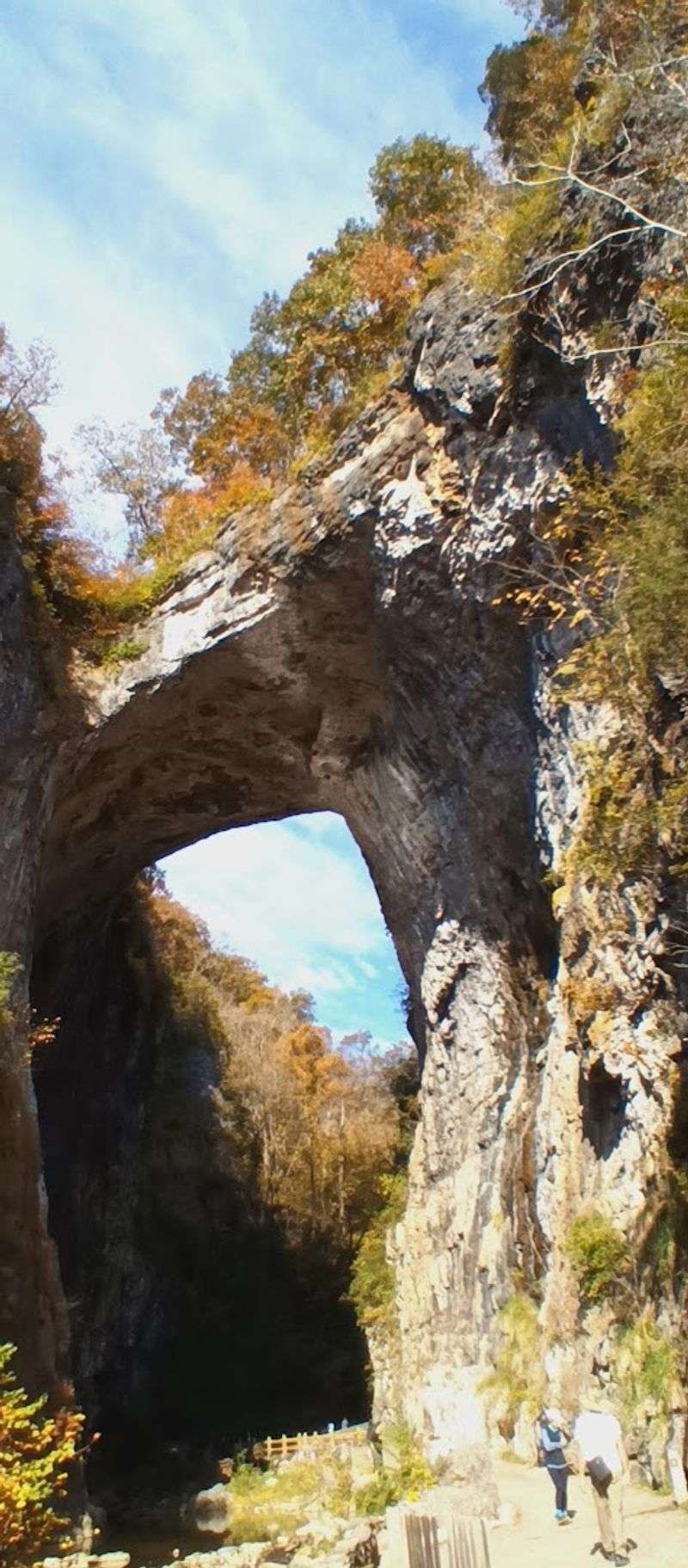
Long before any European explorer set eyes on the Natural Bridge, the Monocan Nation held this site as sacred ground. The bridge was known to them as the Bridge of God, a place of spiritual significance tied deeply to their understanding of the land and its power.
That reverence makes complete sense when you stand beneath it. The arch commands a kind of awe that transcends any cultural background, and the Monocan connection adds a layer of meaning that the park actively honors through interpretive signage along the trail.
Thomas Jefferson’s relationship with the land is another thread woven throughout the park’s history. He purchased the surrounding acreage and wrote passionately about its beauty, describing it as one of the most important natural landmarks in the young nation.
His admiration helped establish the bridge’s early reputation as a must-see American destination.
Historical plaques are scattered throughout the Cedar Creek Trail, each one adding context to the landscape without overwhelming the experience. Reading them while the creek rushes past and the gorge walls rise overhead makes the history feel immediate rather than academic.
Virginia’s deep historical roots are on full display here, layered into every rock face and every bend of the creek in ways that reward curious, attentive visitors.
Planning Your Visit to Natural Bridge State Park
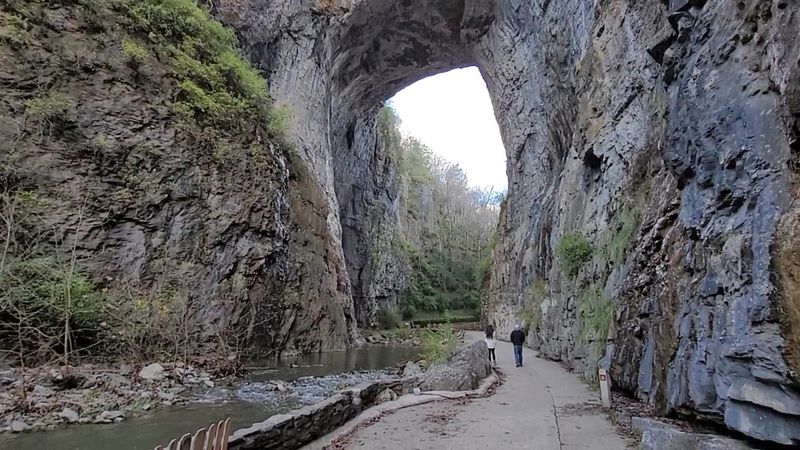
Natural Bridge State Park sits at 6477 S Lee Hwy, Natural Bridge, VA 24578, right along U.S. Route 11 in Rockbridge County.
Getting there is straightforward from most directions, and the park is well-signed from the highway, making it an easy stop whether you are passing through or making a dedicated trip.
Spring through fall draws the biggest crowds, with families and school groups filling the trail on weekends. Visiting on a weekday or during the quieter winter months means more trail space, better photo opportunities, and a genuinely peaceful atmosphere that the gorge naturally encourages.
A small parking fee applies at the free trailheads, while the paid Cedar Creek Trail ticket covers parking as well. The park opens early, and the lower ticket kiosk near the creek begins selling passes around 8 AM for early risers who want to beat the crowds to the bridge.
Comfortable walking shoes, water, and a light layer are all you really need. The trail is flat and well-maintained, so there is no need for serious hiking gear unless you plan to tackle the ridge trails as well.
Virginia has no shortage of incredible state parks, but Natural Bridge State Park earns its reputation every single time. Go see it for yourself.
