History books have a way of making everything feel flat and finished. This place does the opposite.
You walk down a dusty lane and suddenly it is April 1865, not some distant paragraph you skimmed in school. The buildings still look like someone just stepped out for a minute.
You can almost hear the creak of leather boots and the awkward silence of two generals figuring out how to end a nightmare. It is not a glossy reenactment with perfect costumes.
It is a raw, quiet, strangely hopeful little village where something enormous actually happened.
The McLean House: Where History Shook Hands
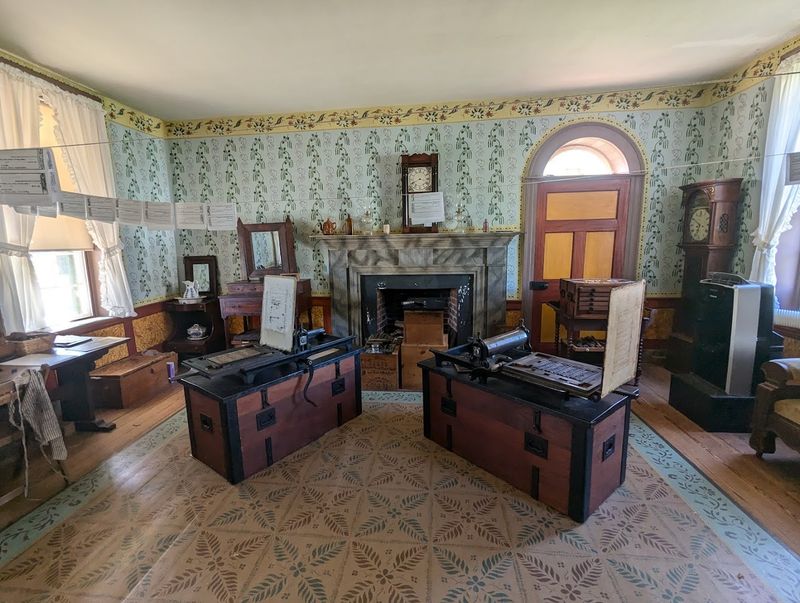
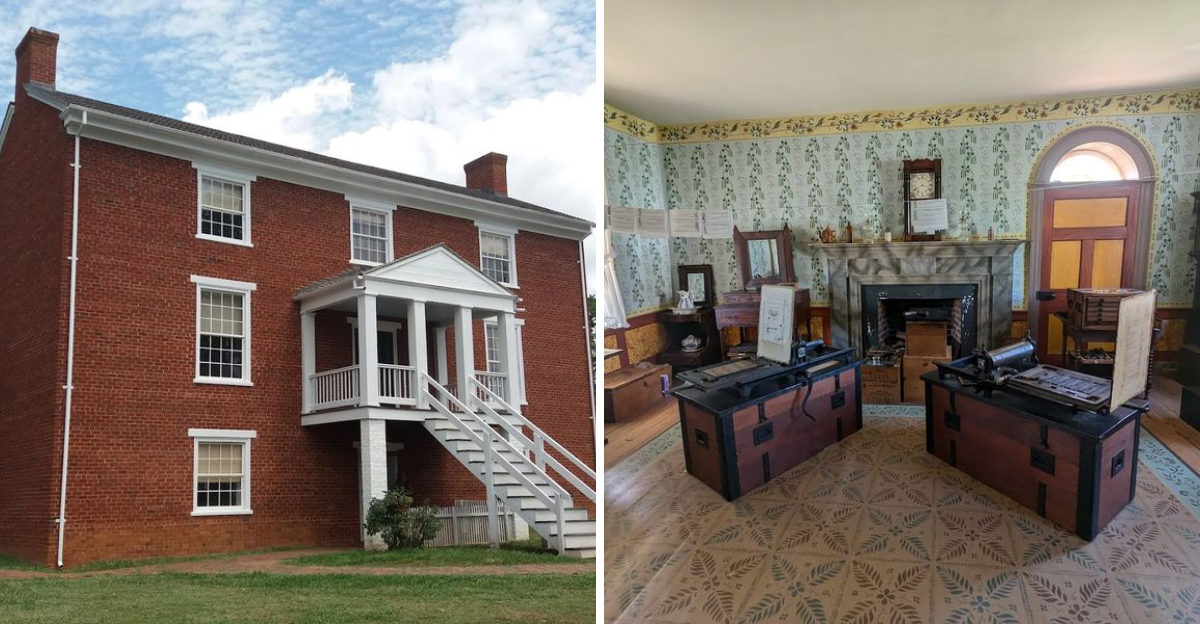
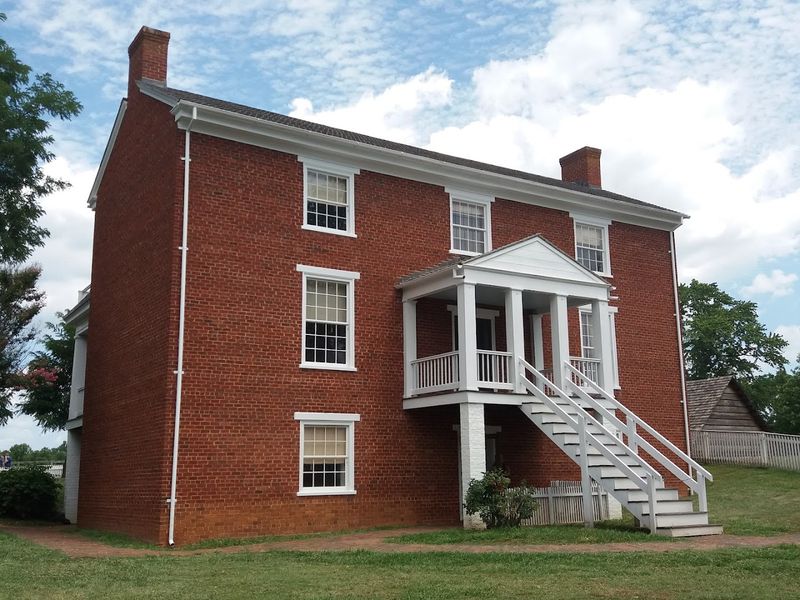
Few rooms in America carry as much emotional gravity as the parlor of the McLean House. On April 9, 1865, General Robert E.
Lee and General Ulysses S. Grant met inside this modest red-brick home to sign the terms of surrender that effectively ended the American Civil War.
Standing in that parlor today feels almost sacred, as if the walls themselves are holding their breath.
The house has been meticulously restored to reflect its 1865 appearance, right down to the period furniture and carefully researched architectural details. Rangers stationed inside bring the scene to life with vivid, knowledgeable commentary that makes the moment feel startlingly real.
Wilmer McLean, the home’s owner, had a remarkable story of his own. He had previously lived near Bull Run, the site of one of the war’s first major battles, and moved to Appomattox specifically to escape the conflict.
Fate had other plans. The war literally started and ended on his property.
Walking through the McLean House is an experience that stays with you long after you leave Virginia.
The Old Court House Visitor Center: Your Perfect Starting Point
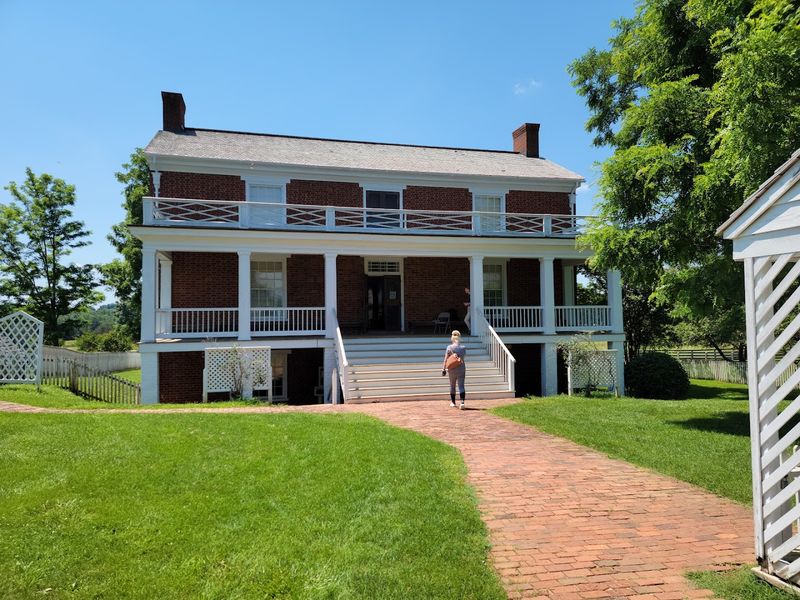
Before wandering the grounds, start your visit at the old courthouse building, which now serves as the park’s main visitor center. The structure itself is a beautifully restored piece of mid-19th century Virginia architecture, and stepping through its doors puts you immediately in the right frame of mind for everything that follows.
Inside, well-organized exhibits trace the final campaigns of the Civil War with maps, artifacts, and interpretive panels that are genuinely engaging rather than dry or academic. The short orientation film shown here is absolutely worth your time.
It condenses the enormous complexity of the war’s final chapter into a punchy, emotionally resonant narrative that sets the tone perfectly.
Park rangers at the visitor center are consistently impressive in their depth of knowledge and enthusiasm. Ask them anything.
Seriously, anything. They field questions from wide-eyed kids and seasoned history scholars with equal warmth and expertise.
Picking up a self-guided tour map here before heading out into the village makes the whole experience significantly richer and more rewarding. Appomattox Court House National Historical Park rewards those who come prepared.
Living History Programs: 1865 Steps Right Off The Page
Appomattox Court House National Historical Park takes living history seriously, and the results are genuinely spectacular. On select days and during special events, costumed interpreters roam the village, embodying soldiers, civilians, and formerly enslaved people whose lives were all transformed by what happened here in April 1865.
The annual anniversary events draw particularly passionate and talented interpreters. Watching a first-person portrayal of a soldier processing the news of the surrender is unexpectedly moving.
These are not stiff, scripted performances. They feel like real conversations with people from another century, full of complexity, emotion, and historical nuance.
One of the most powerful programs involves interpreters portraying enslaved and free Black individuals, giving voice to perspectives that are too often marginalized in Civil War storytelling. Virginia’s history is layered and sometimes painful, and the park does not shy away from that complexity.
Plan your visit around a living history day if you possibly can. The park’s official website lists upcoming programs, and the anniversary events in April are especially unmissable for anyone serious about American history.
The Village Landscape: A Walk Through A Frozen Moment
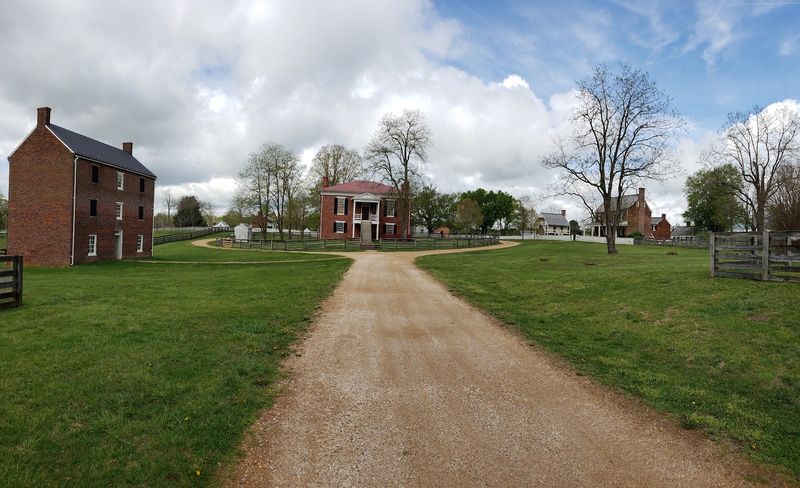
The village at Appomattox Court House National Historical Park is not a reconstruction built for tourists. It is a genuine historic site where multiple original and carefully restored structures stand along quiet paths, creating the uncanny sensation of walking through a photograph from 1865.
Roughly two dozen structures dot the landscape, including a tavern, law offices, a jail, private homes, and various outbuildings. Each one tells a different slice of the story, not just the military drama of the surrender, but the ordinary civilian life that surrounded it.
The grounds are kept immaculately, and the rolling Virginia hills provide a backdrop that is quietly stunning in every season.
Early morning visits have a particularly magical quality. Mist settles in the low fields, birds fill the trees, and the village sits in near-perfect silence.
It is easy to understand why some people describe this place as eerie in the best possible way, a living snapshot of a moment that reshaped an entire nation. Bring good walking shoes because the paths between buildings can be uneven, and you will genuinely want to explore every corner.
The Surrender Triangle: Ground Zero Of American Peace
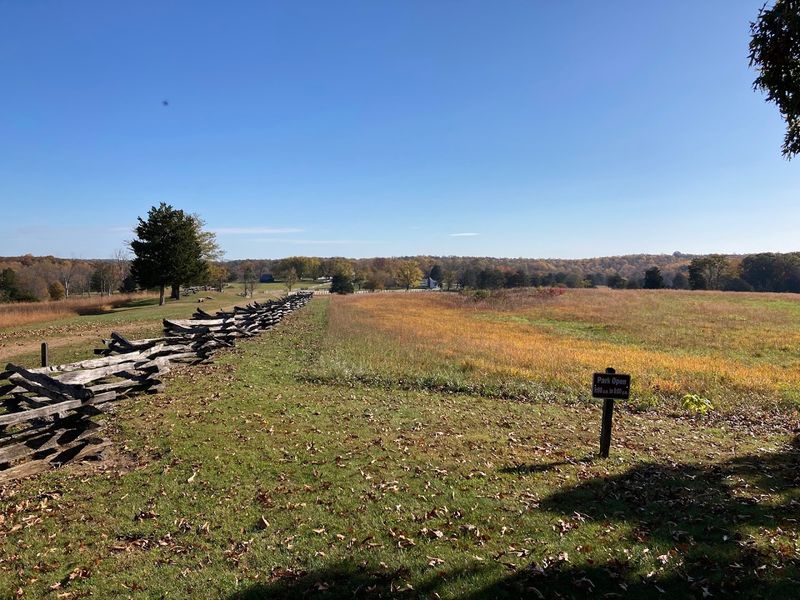
Not every landmark needs a grand building. The Surrender Triangle, a modest open field within the park, marks the spot where Confederate soldiers stacked their arms and formally surrendered their battle flags on April 12, 1865.
It is one of those places where the silence feels earned.
Union General Joshua Chamberlain famously ordered his troops to salute the defeated Confederate soldiers as they marched past, a gesture of respect that has become one of the Civil War’s most discussed moments. Standing in that field, imagining the sound of thousands of rifles being grounded one by one, is a genuinely goosebump-inducing experience.
Interpretive markers around the field provide excellent context without overwhelming you with text. The open sky above and the quiet surrounding landscape make this spot feel contemplative rather than crowded or touristy.
Many people who visit Appomattox Court House National Historical Park say this field, rather than the McLean House, leaves the deepest impression. It is a reminder that peace, like war, has its own sacred geography.
Virginia has no shortage of historic ground, but this particular patch feels singular.
The Clover Hill Tavern: Virginia Hospitality Frozen In Time
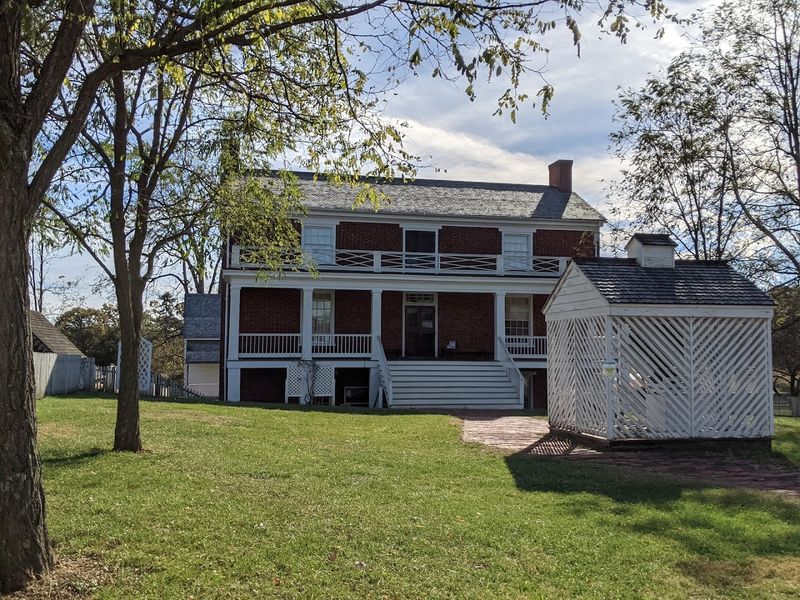
The Clover Hill Tavern is the oldest surviving building in the Appomattox Court House village, and it has personality to spare. Built in the early 19th century, this white clapboard tavern once served travelers, lawyers, and locals passing through what was then a busy county seat.
Today it stands beautifully restored and full of interpretive exhibits that illuminate everyday life in antebellum Virginia.
What makes the tavern especially fascinating is its role during the surrender itself. Union soldiers used the building’s printing press to produce parole passes for thousands of Confederate soldiers, allowing them to return home without fear of arrest.
The logistics of processing an entire surrendering army were enormous, and the tavern was right at the center of it all.
The building’s interior gives a vivid sense of 19th-century tavern life, with period furnishings and detailed signage explaining its various functions over the years. The surrounding outbuildings, including a kitchen and various dependencies, round out the picture beautifully.
Spending time at the Clover Hill Tavern adds a wonderfully human, ground-level dimension to a visit that can otherwise feel focused on generals and grand strategy.
Wildlife And Wildflowers: Nature Thrives On Historic Ground
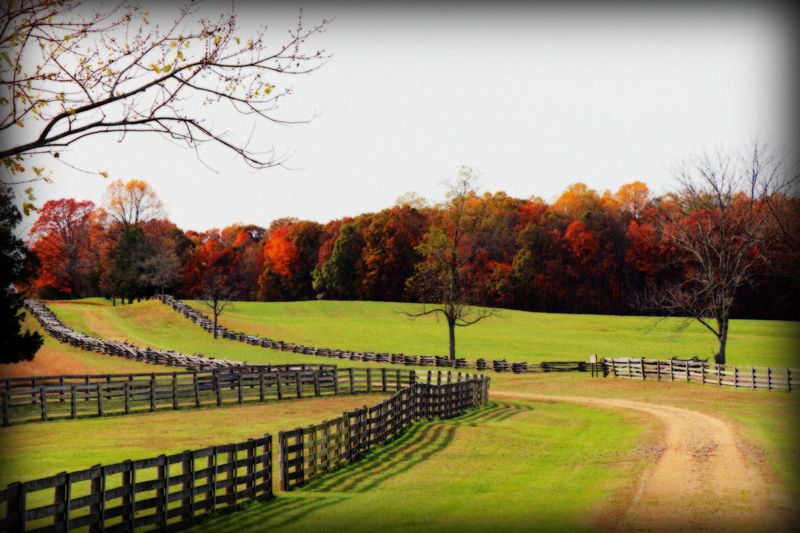
Appomattox Court House National Historical Park is not all solemnity and stone markers. The nearly 1,800 acres of rolling Virginia countryside that surround the historic village burst with natural life throughout the year, and it catches many first-time visitors completely off guard in the best way.
Spring brings fields of wildflowers that genuinely deserve the word breathtaking. Swaths of color roll across the hillsides while birds fill every tree line with sound.
White-tailed deer are a common sight along the park’s walking trails, often grazing calmly within easy viewing distance of the historic buildings. The combination of natural beauty and historical weight gives the park a layered atmosphere unlike anywhere else in Virginia.
Autumn is another spectacular season to visit. The hardwood forests surrounding the village turn vivid shades of orange, red, and gold, framing the historic structures in a way that photographers absolutely love.
Even on overcast days, the landscape has a moody, cinematic quality that adds to the overall experience. The park’s trails wind through both open meadow and forested areas, giving walkers a genuine sense of the terrain as it existed in 1865.
Self-Guided Tours: Your Pace, Your Story
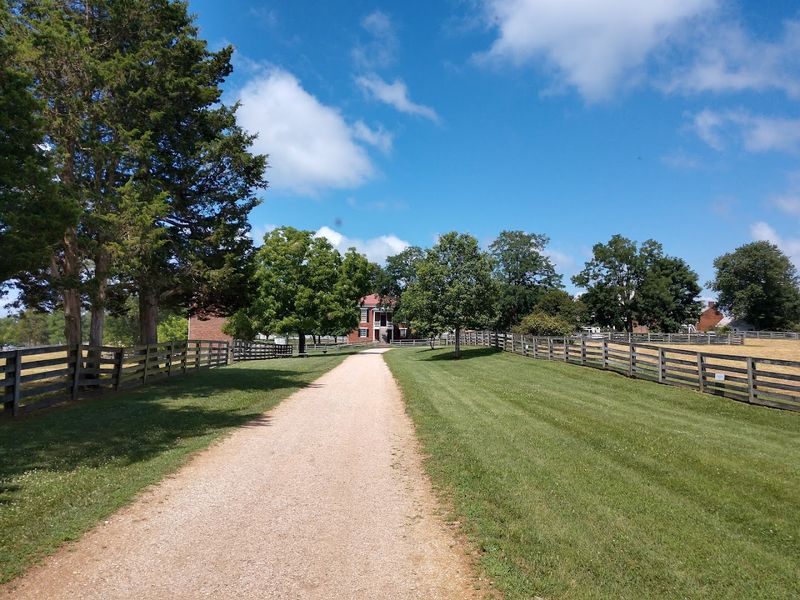
One of the smartest things about Appomattox Court House National Historical Park is that it works brilliantly as a self-guided experience. Pick up a map at the visitor center and you have everything you need to spend anywhere from a brisk ninety minutes to a deeply immersive half-day exploring the village at your own rhythm.
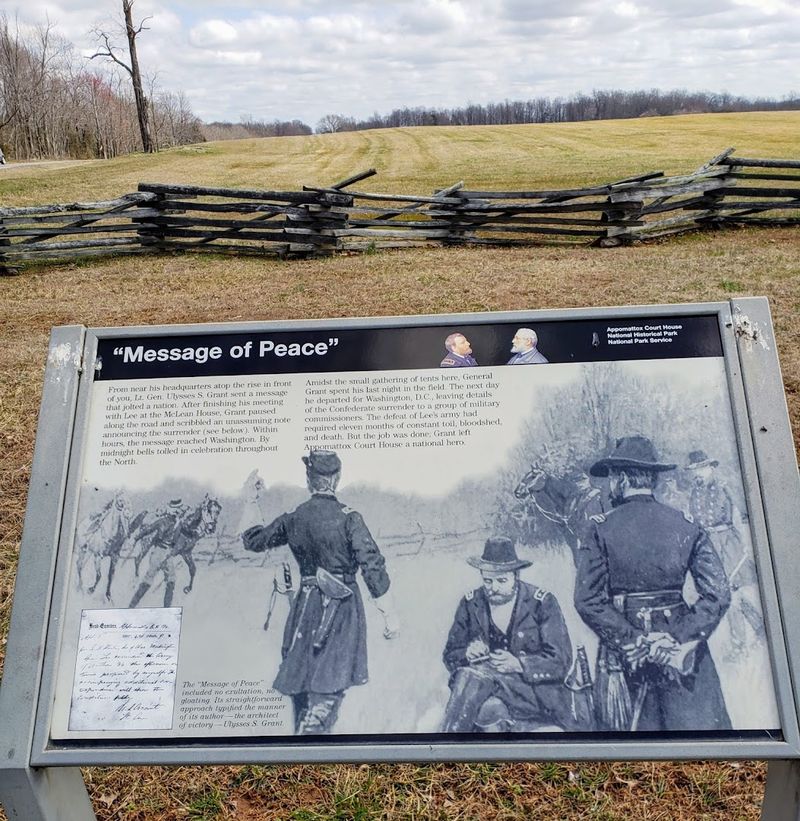
The self-guided route winds past all the major structures and open spaces, with interpretive wayside panels at each stop providing context that is clear, well-written, and genuinely interesting. History buffs will want to linger at every marker.
Families with energetic kids can move at a brisker pace and still absorb the essential story without anyone losing interest.
The beauty of going self-guided is the freedom to double back, sit quietly in a particular spot, or spend extra time in whichever building captures your imagination most. Some people find the law offices most compelling.
Others are drawn back repeatedly to the McLean House parlor. The park’s layout is intuitive enough that getting turned around is nearly impossible, and the grounds are clean, well-maintained, and genuinely pleasant to walk.
Appomattox Court House National Historical Park is one of those rare places that rewards both speed and slowness equally.
The Original Confederate White Flag: A Relic That Stops You Cold
Among the many remarkable artifacts preserved at Appomattox Court House National Historical Park, one stops people in their tracks more reliably than almost any other. The original white flag carried by Confederate forces to request a ceasefire on April 9, 1865, is on display in the park, and seeing it in person is a quietly stunning moment.
The flag is simple, almost shockingly so. A piece of white cloth that carries the full weight of a war that cost hundreds of thousands of lives.
Its ordinariness makes it more powerful, not less. Standing in front of it, knowing exactly what it signaled and what followed, is one of those museum experiences that no photograph can fully prepare you for.
The broader artifact collection at the park includes period weapons, personal items belonging to soldiers from both sides, documents, and military equipment that bring the human scale of the war into sharp focus. The exhibits are thoughtfully curated, avoiding sensationalism while maintaining genuine emotional impact.
Virginia has an extraordinary number of Civil War sites, but the concentration of original artifacts and the intimacy of the setting here make Appomattox Court House National Historical Park feel particularly irreplaceable.
Plan Your Visit: Everything You Need To Know Before You Go
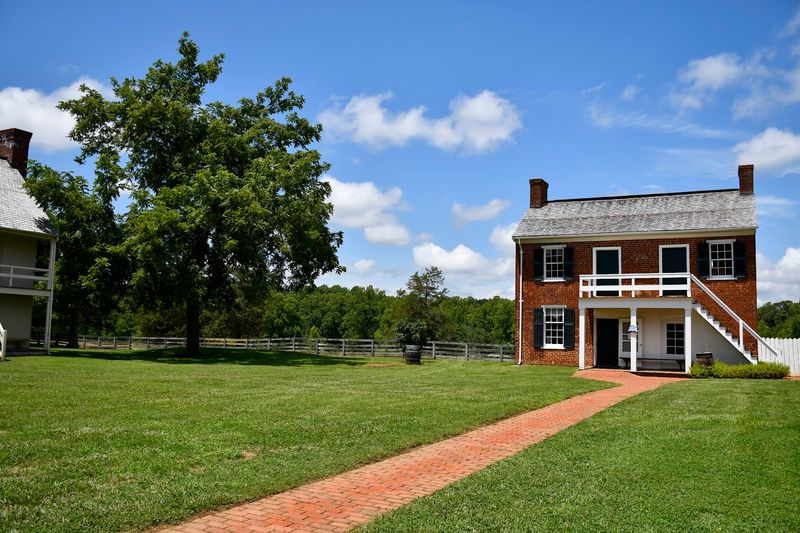
Appomattox Court House National Historical Park sits at 111 National Park Dr, Appomattox, VA 24522, tucked into the gentle hills of central Virginia. The park is open every day of the week from 9 AM to 5 PM, making it easy to slot into a road trip or a dedicated day visit from virtually anywhere in the region.
Entry is completely free, which feels almost absurd given the depth and quality of what the park offers. The parking area is generous, and even on busy weekends the site rarely feels overcrowded.
The park’s phone number is 1-434-352-8987, and the official National Park Service website at nps.gov/apco carries up-to-date information on special events, accessibility options, and seasonal programming.
The annual anniversary events held each April are a particular highlight, featuring living history presentations, guided walks, and family activities that draw passionate history enthusiasts from across the country. Accessibility on some of the uneven historic paths can be challenging for mobility-impaired visitors, so checking ahead with the park staff is worthwhile.
Come ready to spend at least two to three hours, because Appomattox Court House National Historical Park almost always surprises people with how much there is to see and feel. Pack your sense of wonder.
Virginia will handle the rest.
