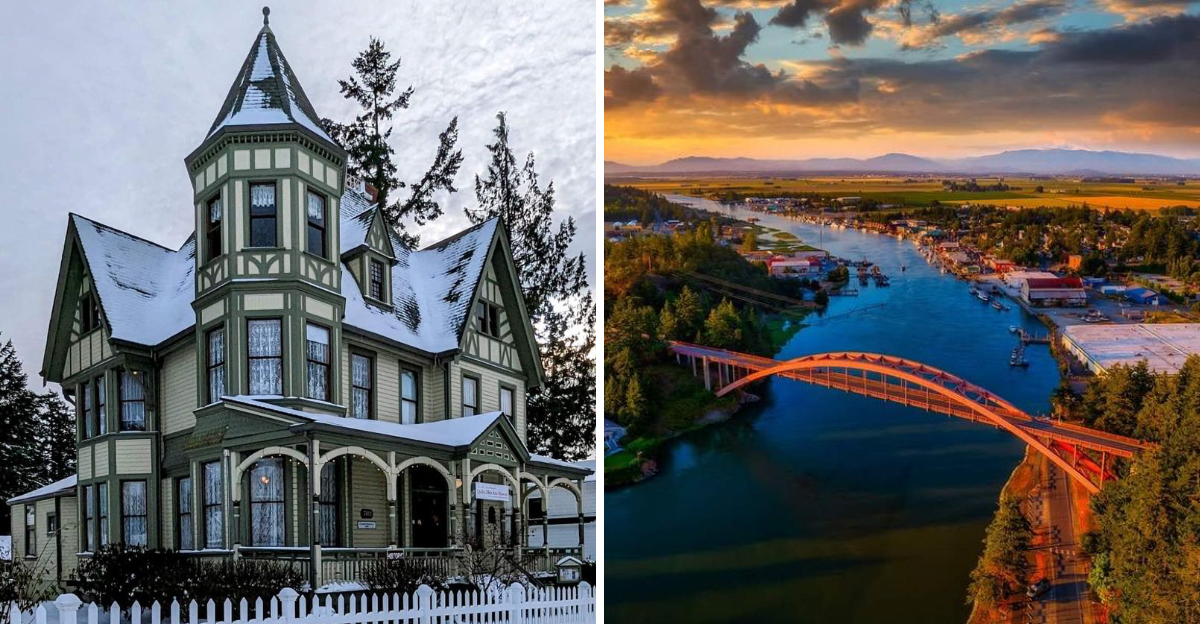
Tucked along the Swinomish Channel, La Conner offers a winter that moves at the pace of decades past.
Fog drifts across historic storefronts, wood smoke curls from chimneys, and fishing boats bob gently at the docks.
This tiny town feels like a postcard from another era, where stillness invites reflection.
Visitors in winter find open galleries, cozy cafes, and a rhythm set by the tides rather than the clock.
The Weathered Waterfront That Defines the Town
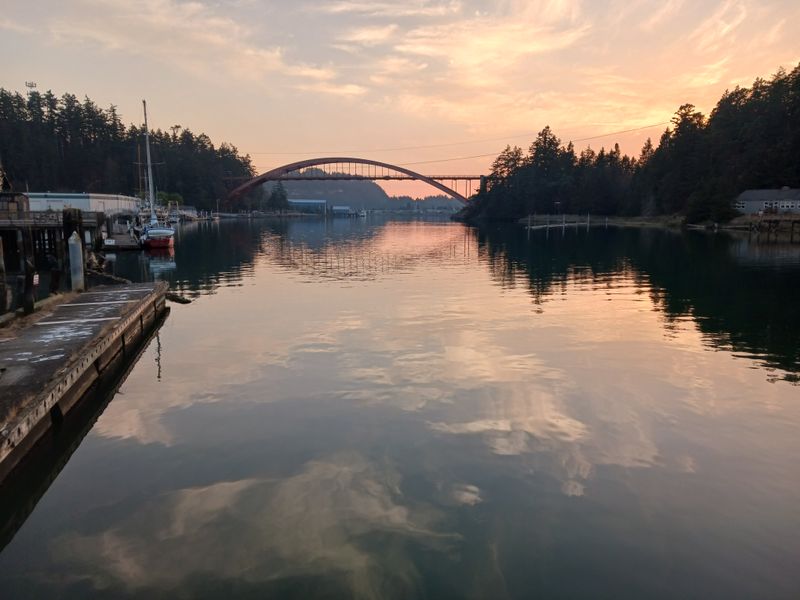
Walking along the waterfront in La Conner during winter feels like entering a painting where time has softened all the edges.
Gray skies meet gray water, and the line between them blurs into something almost dreamlike.
Wooden docks stretch out into the Swinomish Channel, their planks worn smooth by decades of footsteps and weather.
Fishing boats rock gently in their slips, their masts swaying in rhythm with the current.
Morning fog clings to the surface of the water, muffling sounds and wrapping everything in a quiet hush that feels sacred.
Old pilings stand like sentinels along the shore, their weathered wood telling stories of storms and seasons past.
Seagulls drift overhead, their calls echoing across the channel in the stillness.
Small shops and cafes line the waterfront street, their windows glowing warmly against the cold.
Locals move slowly here, stopping to chat or simply stand and watch the water.
Winter in La Conner strips away the distractions of busier seasons and reveals the bones of the place.
Bare trees frame views of the channel, their branches etched against pale winter skies.
The air smells of salt and wood smoke, a combination that feels both ancient and comforting.
Visitors who take the time to walk this waterfront discover that winter has its own beauty, one that does not shout but whispers.
Historic Storefronts Frozen in Time
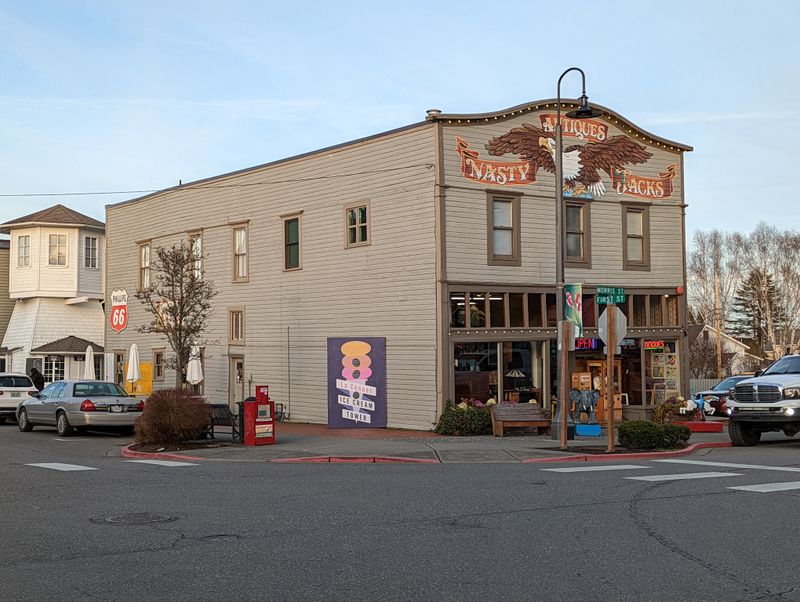
First Street in La Conner looks like a movie set, except everything here is real and still functioning as it has for over a century.
Buildings lean slightly with age, their wooden facades painted in muted colors that have weathered beautifully over time.
Some structures date back to the 1800s, built when La Conner was a bustling port town serving the surrounding farmland.
Walk these sidewalks in winter and you will notice details that modern construction never includes: hand-carved trim, original glass windows that ripple with age, doorways sized for shorter generations.
Art galleries occupy spaces that once housed general stores and ship chandleries.
Cafes serve lattes in buildings where loggers and fishermen once gathered for strong coffee and conversation.
The town has not been preserved as a museum but continues to evolve while respecting its past.
Winter reveals the architecture in ways summer crowds obscure.
You can stand in the middle of the street and really see the buildings, notice the way rooflines vary, spot the dates carved into cornerstones.
Some storefronts still have wooden boardwalks out front, a reminder of muddy streets and horse-drawn wagons.
Local shop owners know their neighbors and often their customers by name.
Business moves at a human pace here, with time for greetings and genuine conversation.
The town never succumbed to chain stores or modern franchises.
Art Galleries That Warm the Cold Months
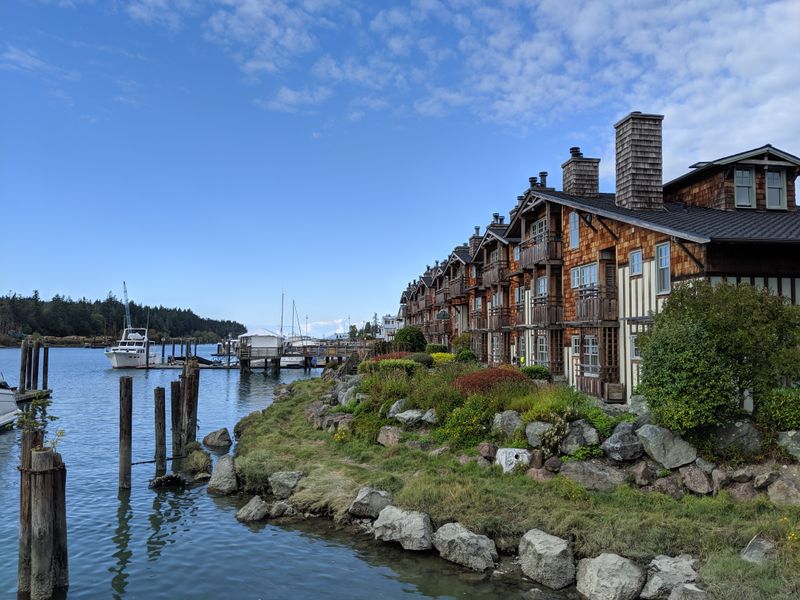
La Conner has been an artists’ colony since the 1940s, and winter is when the gallery scene truly shines.
More than a dozen galleries operate year-round in this tiny town, an astonishing concentration of creative energy.
Painters, sculptors, potters, and fiber artists have been drawn here for generations by the quality of light and the community of fellow creators.
Winter light in the Pacific Northwest has a particular character that artists prize: soft, diffused, and constantly changing.
The galleries in La Conner range from traditional to contemporary, housed in historic buildings that add character to every visit.
Wooden floors creak as you walk through exhibition spaces filled with landscapes, abstracts, and works inspired by the surrounding countryside.
Many galleries feature local artists whose work captures the essence of Skagit County: farmland, water, mountains, and the ever-changing sky.
Gallery owners are often artists themselves, happy to discuss techniques, inspiration, and the creative process.
Winter brings fewer tourists, which means more time for these conversations and a more intimate viewing experience.
Some galleries host rotating exhibitions that change monthly, giving regular visitors reason to return.
Others focus on representing a stable of regional artists whose work reflects the Northwest aesthetic.
Pottery studios invite you to watch artists at the wheel, transforming clay into functional beauty.
Fiber artists display weavings and textiles that echo the colors of winter fields and water.
Sculptors work in wood, metal, and stone, creating pieces that feel rooted in this landscape.
The concentration of galleries makes La Conner a genuine art destination, not just a town with a few shops selling souvenirs.
The Rainbow Bridge Spanning Two Worlds
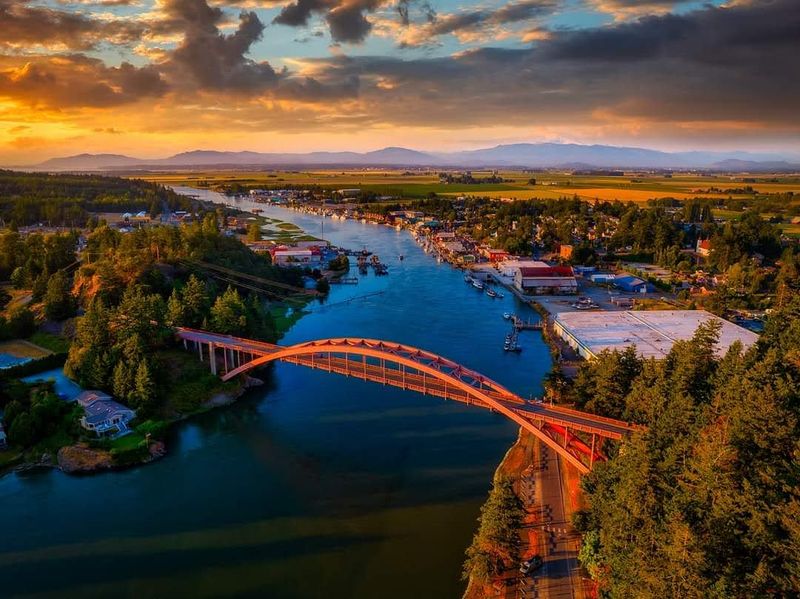
Rising above the Swinomish Channel, the Rainbow Bridge connects La Conner to Fidalgo Island and the Swinomish Indian Tribal Community.
Built in 1957, this steel arch bridge painted in shades of red has become an iconic symbol of the town.
Its graceful curve dominates the skyline, visible from almost every point along the waterfront.
In winter, the bridge takes on a different character than during sunnier months.
Fog sometimes obscures the far end, making the structure seem to disappear into clouds.
Other days, the bridge stands sharp and clear against gray skies, its geometric form a contrast to the organic shapes of water and land.
Walking across the bridge offers views that change with every step.
Below, the channel flows with tidal currents that reverse direction twice daily.
Boats pass underneath, heading to or from the marinas that line both shores.
Looking back toward town from the bridge, you see La Conner laid out like a miniature village, its buildings clustered along the water.
The surrounding farmland stretches flat and green even in winter, fields that will explode with tulips and daffodils come spring.
Mountains rise in the distance: the Cascades to the east, the Olympics to the west.
Winter weather brings drama to these views, with clouds racing across the sky and light changing minute by minute.
Museum Quality History in Small Town Spaces
For a town of fewer than a thousand residents, La Conner punches well above its weight in cultural institutions.
The Museum of Northwest Art sits prominently along the waterfront, a modern building designed to showcase regional creativity.
Founded in 1981, the museum has grown into a respected institution that draws visitors from across Washington and beyond.
Permanent collections trace the development of Northwest art from early indigenous work through contemporary expressions.
Rotating exhibitions bring fresh perspectives and new artists to the gallery spaces throughout the year.
Winter is an ideal time to visit, when you can take your time with each piece without crowds pressing behind you.
The museum building itself is worth noting, with clean lines and large windows that frame views of the channel.
Natural light floods the galleries, creating ideal conditions for viewing paintings and sculptures.
Educational programs run year-round, offering lectures, workshops, and artist talks that deepen understanding of Northwest art traditions.
Just down the street, the Skagit County Historical Museum occupies a hilltop location with sweeping views.
This museum tells the story of the region through artifacts, photographs, and exhibits that cover indigenous history, early settlement, farming, fishing, and industry.
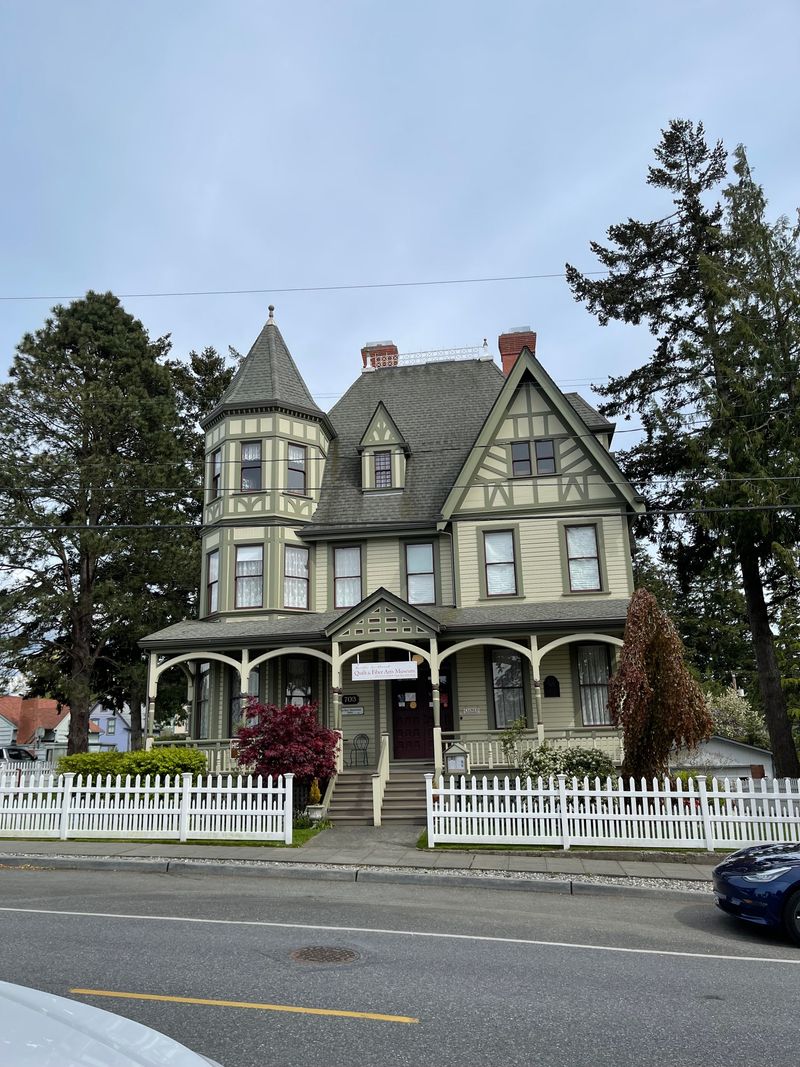
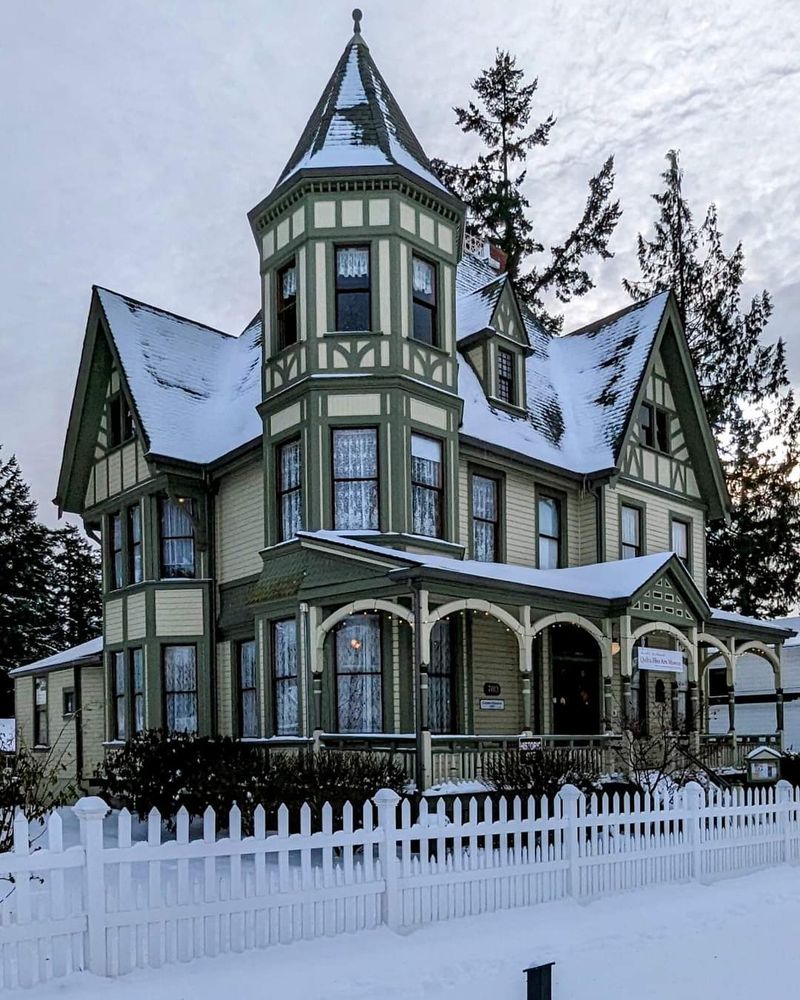
A Victorian-era mansion adjacent to the historical museum has been restored and furnished to show how prominent families lived in the late 1800s.
Walking through these rooms in winter, with rain pattering on the windows, you can almost feel the presence of earlier residents.
Cafes and Bakeries Built for Cold Days
Winter in La Conner means seeking out warm spaces, and the town delivers with cafes and bakeries that feel like extensions of home.
These are not corporate coffee shops with identical menus and sterile design.
Each establishment has its own personality, shaped by the people who run it and the building it occupies.
Wood floors, exposed beams, and vintage fixtures create spaces that feel lived-in and welcoming.
Locals gather here throughout the day, treating these spots as community living rooms.
Morning brings fishermen and farmers stopping for coffee before work.
Midday sees artists taking breaks from their studios, sketchbooks often open on tables.
Afternoons attract visitors warming up after walking the waterfront.
The food is simple but well-made: fresh-baked pastries, hearty soups, sandwiches on good bread.
Ingredients often come from nearby farms, keeping the connection to place strong even in winter.
Coffee is taken seriously, with local roasters supplying beans and baristas who know their craft.
Windows fog up on cold mornings, adding to the cozy atmosphere.
Conversations flow easily between strangers, the small-town friendliness genuine rather than forced.
Some cafes display work by local artists, turning walls into rotating galleries.
Others have bookshelves where patrons can browse or trade volumes.
Fireplaces in a few establishments add literal warmth to the figurative kind.
Tillinghast Seed Company and Agricultural Roots
Agriculture defines Skagit County, and La Conner sits at the heart of some of the most productive farmland in Washington.
The Tillinghast Seed Company building stands as a reminder of this agricultural heritage.
Built in the early 1900s, this structure once processed seeds from the surrounding fields.
Today it has been repurposed but retains its historic character, painted signs still visible on weathered walls.
Winter is when the connection between town and farmland becomes most apparent.
Fields lie fallow or planted with cover crops, their flatness extending to distant horizons.
Farmers come to town for supplies and conversation, their trucks often muddy from field roads.
La Conner has always been a service center for the agricultural community, and that relationship continues.
Seed companies, farm supply stores, and equipment dealers still operate here or nearby.
The town’s prosperity has long been tied to the productivity of the surrounding soil.
Rich alluvial deposits from the Skagit River created some of the best farmland in the Pacific Northwest.
Crops ranging from tulips to vegetables to berries thrive in this soil and climate.
Winter is the quiet season, when fields rest and farmers plan for spring.
But the rhythm of agricultural life still pulses through town, evident in conversations at cafes and the goods available in local shops.
Tidal Rhythms and Channel Life
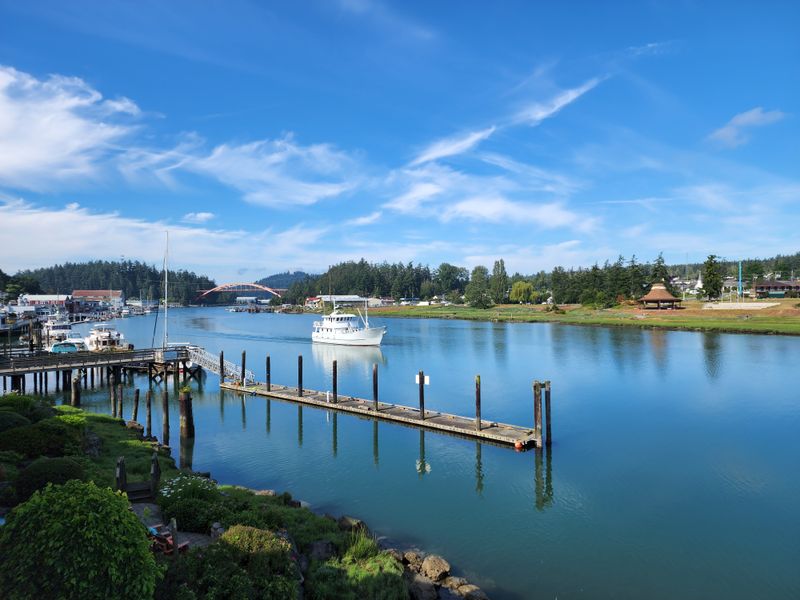
Life in La Conner moves according to tides, a rhythm that city dwellers often forget exists.
The Swinomish Channel connects Skagit Bay to the south with Padilla Bay to the north, creating a waterway that flows in both directions depending on the tide.
Twice daily the water reverses course, creating currents that boaters must respect and timing that affects everything from fishing to ferry schedules.
Winter brings some of the most dramatic tidal changes, with differences of ten feet or more between high and low water.
At low tide, mudflats emerge, exposing a world usually hidden beneath the surface.
Shorebirds descend on these flats, probing the mud for invertebrates and small fish.
Herons, egrets, and gulls work the exposed areas, while eagles perch in waterfront trees watching for opportunities.
The channel at low tide reveals the bones of the place: old pilings, rocks, and the contours of the bottom.
Boats rest at odd angles in their slips, waiting for water to return and lift them.
At high tide, the channel fills and the waterfront comes alive with different energy.
Boats move freely, their wakes spreading across the surface.
The water laps higher against docks and seawalls, sometimes reaching the very edge of the boardwalk.
Winter storms combined with high tides can send spray across the waterfront street, salt water mixing with rain.
These tidal rhythms connect La Conner to the larger patterns of moon and ocean, reminders that nature sets schedules here.
The Quiet Season Before the Tulip Rush
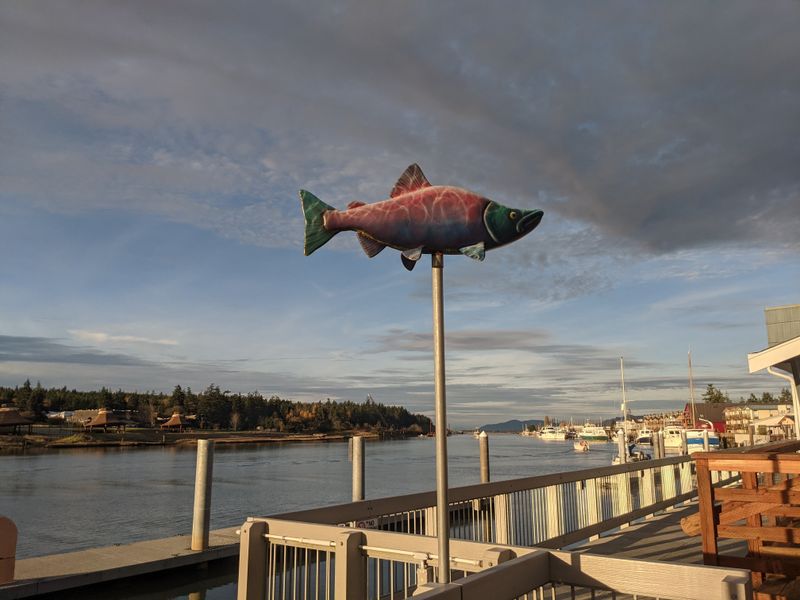
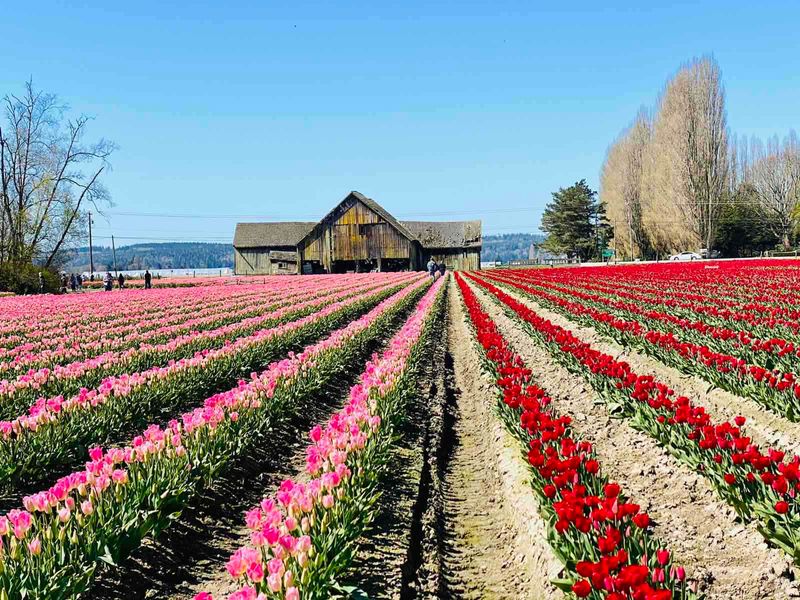
Anyone familiar with La Conner knows that spring brings an explosion of visitors during the Skagit Valley Tulip Festival.
Hundreds of thousands of people descend on the area to see fields painted in brilliant stripes of red, yellow, pink, and purple.
But winter is the opposite: quiet, uncrowded, and offering a completely different experience.
The same fields that will dazzle in April lie brown and bare in January, their soil resting between seasons.
Some fields show the green of cover crops planted to enrich the soil and prevent erosion.
Others are simply turned earth, dark and rich, waiting for spring planting.
Farmers work these fields even in winter, preparing drainage, repairing equipment, and planning crop rotations.
Visiting La Conner in winter means experiencing the town without the festival crowds.
You can find parking easily, walk into restaurants without waits, and have genuine interactions with locals who have time to talk.
The pace is slower, the atmosphere more relaxed.
This is La Conner as residents know it, not as a destination but as home.
Winter weather in Washington can be challenging, with rain and gray skies dominating.
But this weather is part of the authentic experience, the reality that makes spring flowers possible.
Wood Smoke and Winter Evenings
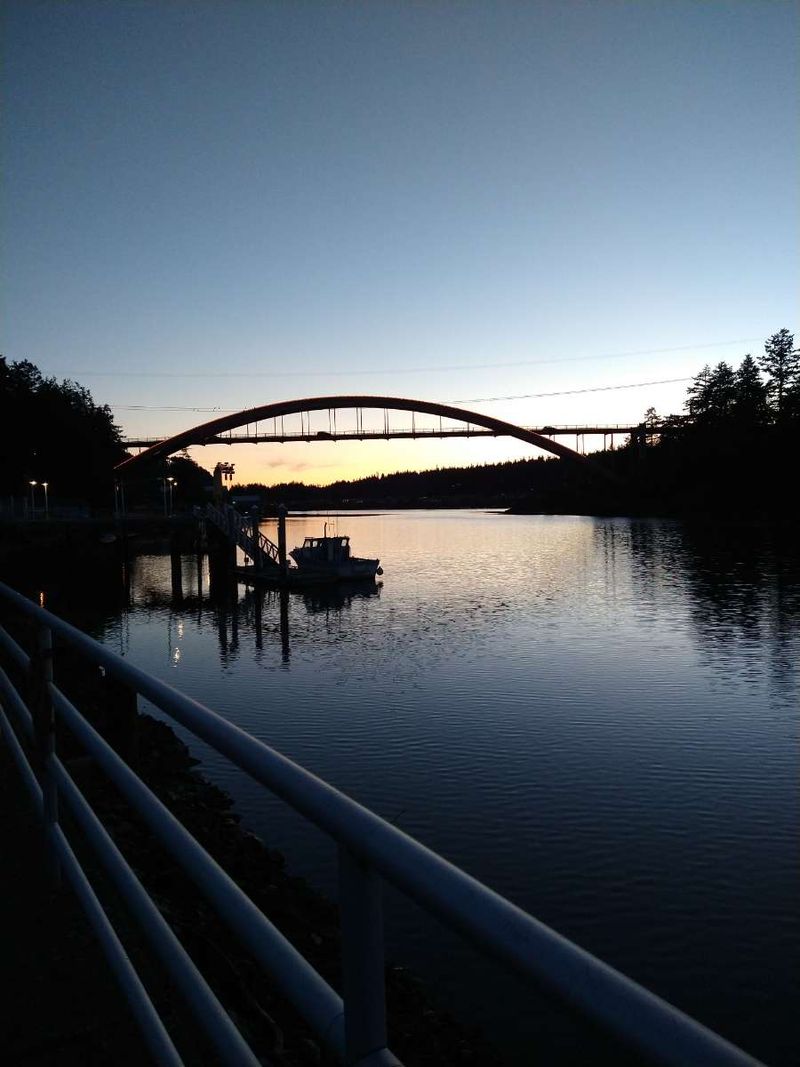
Winter evenings in La Conner arrive early, with darkness settling over the town by late afternoon.
This is when the place takes on its most old-fashioned character, when you can imagine how it looked decades or even a century ago.
Wood smoke drifts from chimneys, a scent that instantly evokes comfort and warmth.
Many buildings still have functional fireplaces or wood stoves, and residents use them throughout the colder months.
The smell of burning alder or fir mixes with salt air, creating an aroma unique to coastal winter.
Lights come on in shop windows and homes, their warm glow reflecting on wet streets.
The waterfront takes on a softer appearance as daylight fades, edges blurring and details disappearing into shadow.
Boats in the marina become silhouettes, their forms simplified against the darkening water.
People move between lit doorways, visiting restaurants or heading home after work.
There is no rush, no sense of urgency.
Evening in La Conner unfolds at a pace that allows noticing: the sound of water against pilings, the call of a gull settling for the night, the creak of wood as buildings adjust to cooling temperatures.
Winter constellations wheel overhead, the same patterns that guided sailors and fishermen for generations.
La Conner at night in winter feels safe, welcoming, and somehow timeless.
This is small-town life at its best, where darkness brings community together rather than driving everyone into isolation.
Dear Reader: This page may contain affiliate links which may earn a commission if you click through and make a purchase. Our independent journalism is not influenced by any advertiser or commercial initiative unless it is clearly marked as sponsored content. As travel products change, please be sure to reconfirm all details and stay up to date with current events to ensure a safe and successful trip.
