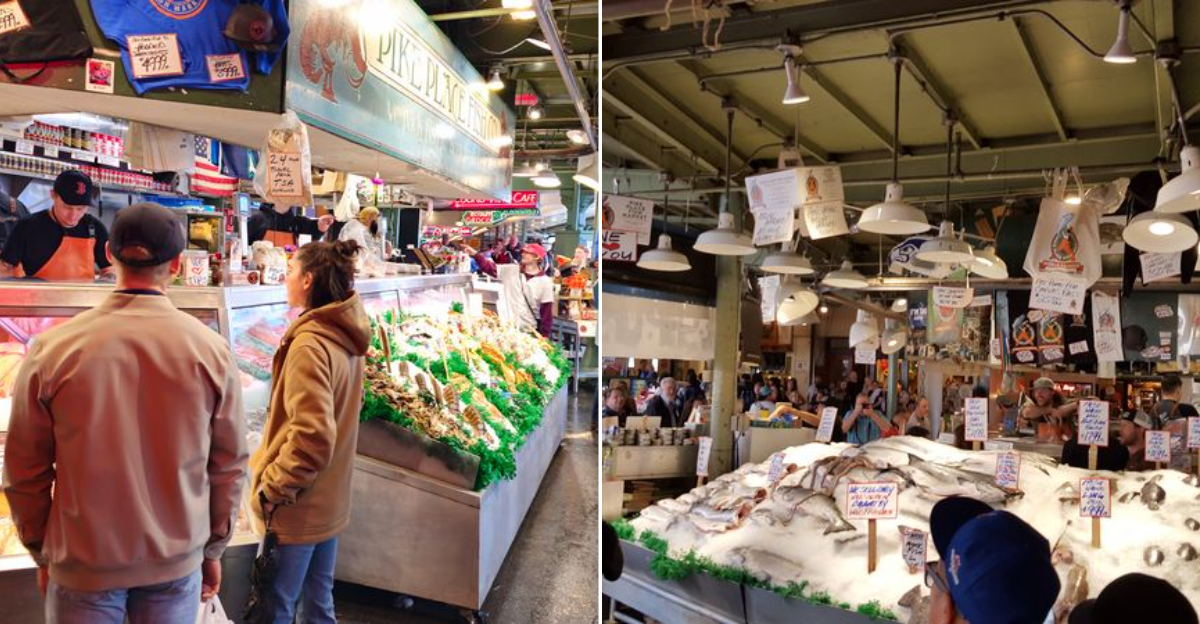
Have you ever shopped somewhere that feels like a celebration of everything grown and made in its own backyard? This Washington market lives and breathes that idea, with every stall telling a local story.
The farmers arrive before dawn with produce still flecked with morning soil. The crafters set out goods shaped by hands that live just a few miles away.
You can taste the difference in a tomato that traveled only a short distance. You can see the care in a handmade bowl from a neighbor’s workshop.
The market hums with the energy of people who take pride in harvesting and creating close to home. Strolling through the aisles feels less like shopping and more like meeting the heart of Washington agriculture and artistry.
Nothing here comes from a distant warehouse. Everything here carries the honest mark of local work and local land.
It Feels Like Washington Right Away
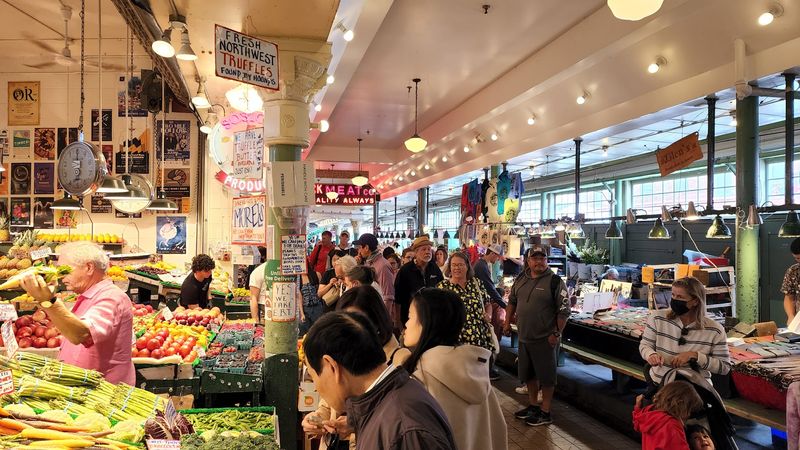
The first thing that hits you here is not even one specific stall, but the feeling that Washington is introducing itself all at once. You smell flowers, bread, salt air, and fresh herbs in the same breath, and somehow it all makes sense together.
That mix feels lively without feeling staged, which is rarer than it should be in a place this well known.
As you ease into the market, you start noticing how many conversations are actually about growing, making, catching, baking, and carrying things in from around the state. It does not feel like a generic sightseeing stop pretending to be local for the afternoon crowd.
It feels like local work is the whole point, and you are just lucky enough to wander through the middle of it.
That is probably why the place sticks with people long after the fish counters and flower buckets are out of sight. You are not just looking at Washington products lined up neatly under signs.
You are seeing Washington habits, Washington weather, and Washington hands behind the whole experience, and that gives the market a kind of warmth that is hard to fake.
Honestly, it makes you slow down without even realizing it, and that is a good way to begin.
The Produce Stands Still Set The Tone
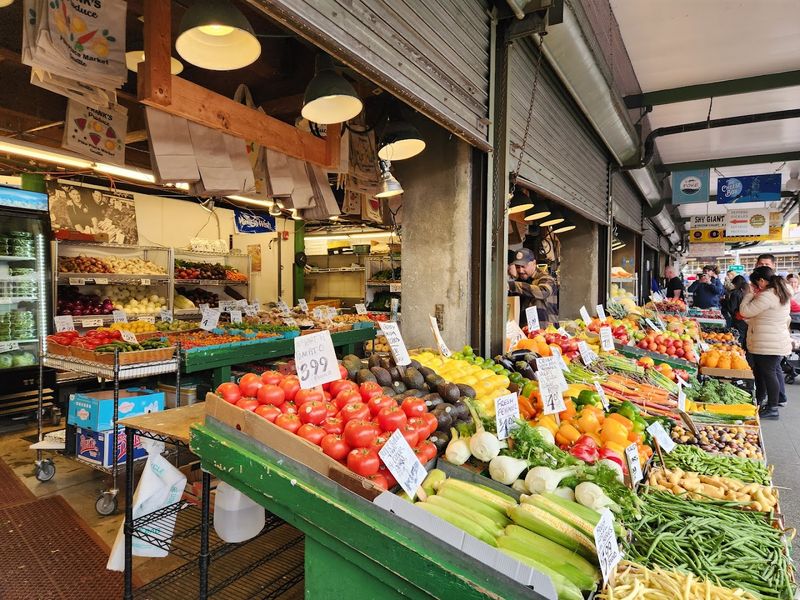
If you want to understand the market fast, start with the produce stands and just linger there for a minute. The color alone pulls you in, but the real charm is hearing people talk about what came in fresh and what looks especially good that day.
It feels grounded, practical, and proud in a way that makes the whole market seem more honest.
These displays are not trying to turn fruits and vegetables into some kind of museum exhibit. They are here because Washington grows an astonishing amount of beautiful food, and the market gives that fact a very public stage.
You can feel the connection between nearby farms and city shoppers, and that link gives the place a heartbeat you do not get everywhere.
Even if you are not carrying a shopping bag, the produce section changes how you move through the rest of the market. Suddenly the flowers seem brighter, the bakeries smell warmer, and the crafts feel more rooted in place.
That is what I like most about it, honestly, because fresh produce does not just feed the market here, it quietly explains what the market stands for in the first place.
That part comes through clearly, even on a busy day.
The Address Matters Less Than The Energy
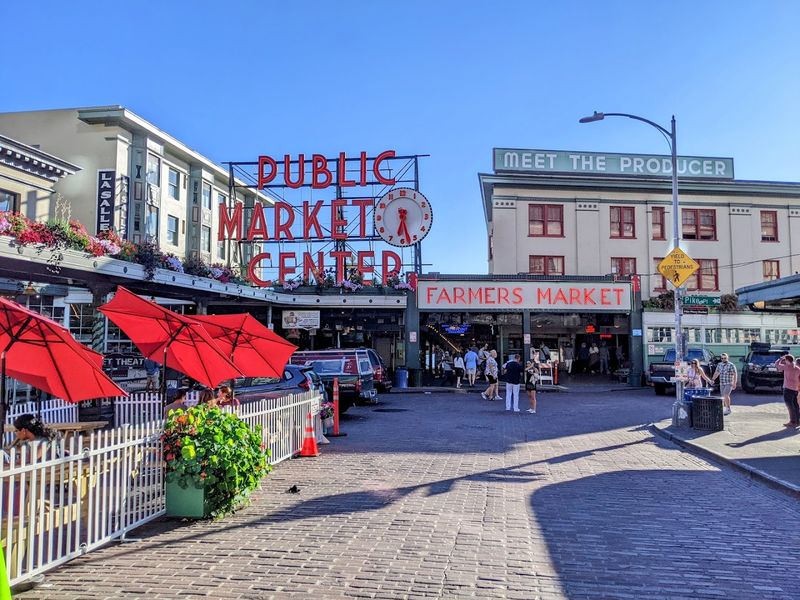
When you actually step into Pike Place Market at 85 Pike St, Seattle, WA 98101, the funny part is how fast the address stops mattering. A place this famous could have felt stiff or overarranged, but instead it feels like it woke up early and got to work before you arrived.
You are inside the motion of it right away, and that makes the whole visit feel personal instead of performative.
There is a nice kind of closeness here, where flower sellers, produce stands, fish counters, and craft tables all seem to lean into one another without crowding each other out. That creates an energy that feels deeply Seattle, but also broadly Washington in the way people talk shop and share space.
You can sense that this market still functions as a real part of daily life, not just a backdrop for photos.
I think that is why first impressions land so hard here. The building, the sounds, and the steady shuffle of people all tell you this place has roots.
Once you settle into that rhythm, you are not just visiting a landmark anymore, you are moving through a working piece of Washington culture.
The Handmade Crafts Feel Genuinely Personal
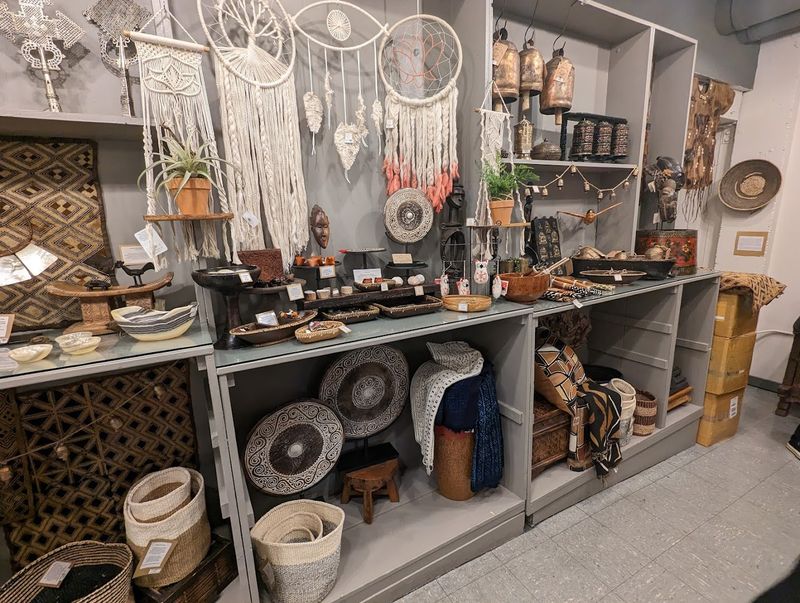
What I love about the crafts here is that they do not feel like filler tucked beside the food. They feel like a real extension of the same local spirit, just told through clay, paper, wood, fabric, glass, and ink.
You can tell pretty quickly that these booths are not about mass-produced souvenirs pretending to be thoughtful.
There is something reassuring about talking with makers who actually know every part of what they are selling. That conversation changes the way you look at an object, because suddenly it is not just a pretty bowl or print, it is the result of somebody’s practiced hands and quiet persistence.
Pike Place Market has long made room for that kind of work, and you can feel how important that is.
In a state like Washington, where place matters so much to artists and craftspeople, this part of the market feels especially meaningful. You notice regional colors, coastal textures, mountain references, and all sorts of small details that could only come from living here closely.
Even if you leave empty-handed, you still come away feeling like you met the creative side of the state in a very direct, very human way.
That makes the whole experience feel warmer and more memorable.
The Flower Vendors Make Everything Brighter
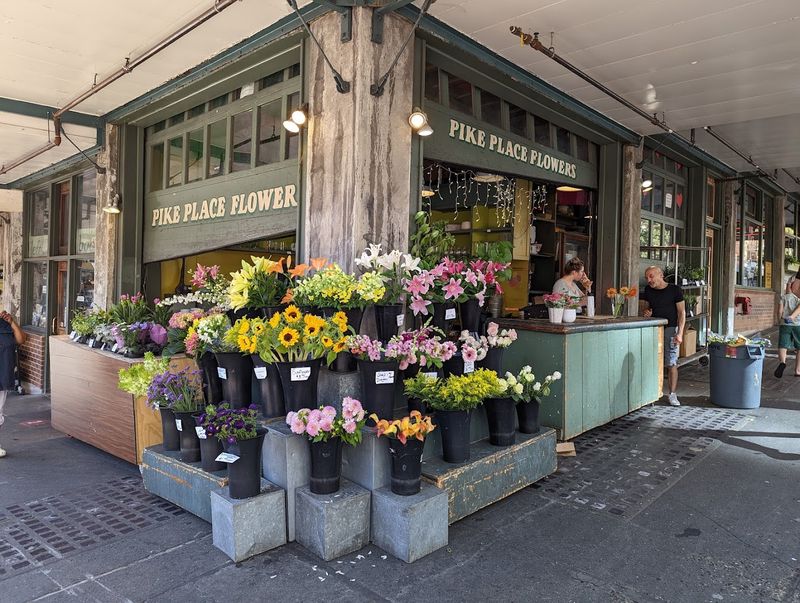
Even if you think you are just passing through, the flower vendors have a way of stopping you in your tracks. The stalls are so bright and full that they almost change the light around them, and suddenly everyone nearby looks a little happier.
It is one of those scenes that feels famous for a reason, but still lands as fresh when you see it yourself.
What makes it better is knowing these flowers are part of the same local pattern that runs through the rest of the market. They are not just there to look pretty in pictures, though they absolutely do that without trying very hard.
They help show how Washington growing conditions shape daily life, beauty, and business all at once.
I always think flowers can tell you whether a market has real pulse or just surface charm. Here, they feel woven into the place, not decorated onto it, and that matters more than people might expect.
Between the scent, the color, and the easy conversations happening over bunches and stems, the whole section gives Pike Place Market a softness that balances the noise and movement everywhere else.
It is lively, sure, but it is also unexpectedly tender in that corner.
The Fish Counters Keep The Market Honest
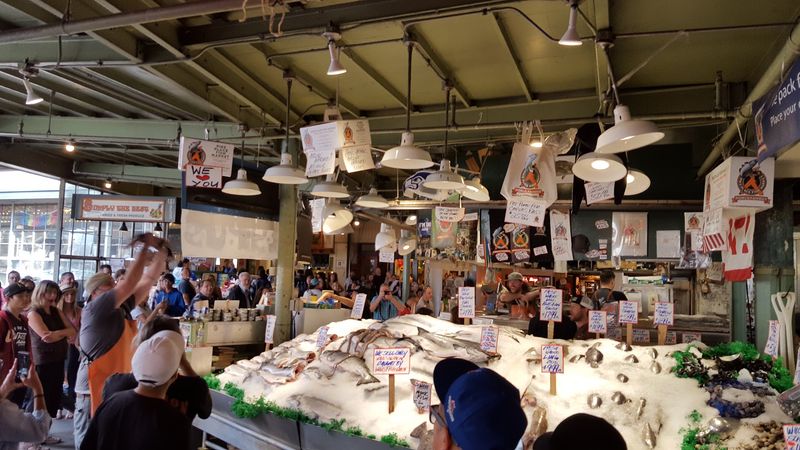
You cannot talk about this market without talking about the fish counters, because they bring a very specific kind of energy to the whole place. There is movement, noise, quick banter, and a sense that real work is happening at a fast clip.
Instead of feeling theatrical, it mostly feels like the market reminding you that Seattle is still tied to the water.
That connection matters, especially in Washington, where regional identity is tangled up with coastlines, working boats, and cold salt air. The seafood area gives the market a backbone, because it adds something practical and unsentimental to all the color and charm around it.
You can admire the displays, sure, but you also get the sense that people are here to shop, ask questions, and carry dinner home.
I like that balance a lot, because it keeps the market from drifting into pure nostalgia. The fish counters say this place may be beloved, but it is also useful, noisy, and fully alive.
That is part of why Pike Place Market feels more durable than many markets with big reputations, since its identity still depends on people doing their jobs in plain view, right in front of you.
That kind of honesty gives the whole place staying power.
The Lower Levels Reward A Slower Walk
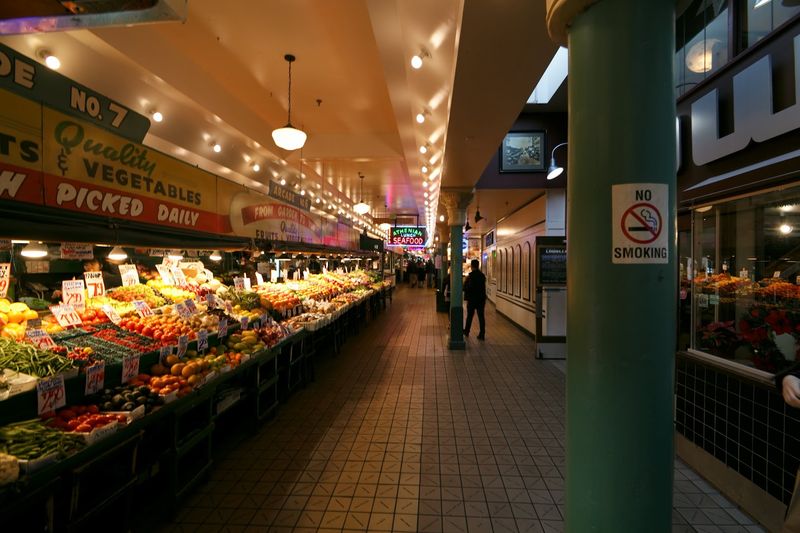
A lot of people rush the main arcade and then move on, but the lower levels are where the market starts talking in a quieter voice. The pace shifts, the corridors narrow a little, and suddenly you are noticing details instead of just reacting to the crowd.
That change makes the whole place feel bigger, older, and much more layered than it seems at first glance.
Down there, it becomes easier to appreciate the independent spirit that has always helped define Pike Place Market. Small shops and maker spaces feel tucked in rather than hidden, and browsing starts to feel more like conversation than consumption.
You get the sense that regulars know these corners well, which is usually a sign that a famous place still belongs to locals too.
There is also something nice about stepping away from the loudest parts and letting the market unfold more gradually. Seattle can move fast outside, especially along the waterfront, but these lower stretches invite you to pay attention.
If the upper levels introduce the market with a big voice, the lower levels make the case for why it stays meaningful in Washington beyond its postcard reputation.
That slower rhythm is worth making time for, even if you wandered in casually.
You Can Feel The Community In The Aisles
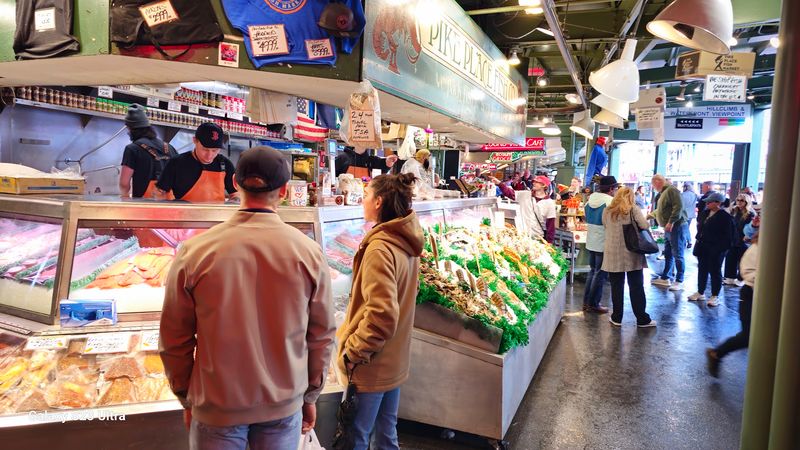
Some places are busy in a way that makes you want to leave, and some are busy in a way that makes you curious. Pike Place Market falls into the second category, because the traffic in the aisles feels social rather than purely transactional.
People are browsing, chatting, comparing notes, greeting vendors, and generally acting like this is part of normal life.
That matters because the market is not just a collection of stalls under a famous sign. It works as a civic space where daily routines, neighborhood habits, and visitor excitement all overlap without completely canceling one another out.
You can feel Seattle showing up for errands, snacks, bouquets, ingredients, and conversation, and that gives the place a lived-in softness beneath the buzz.
I think that is one reason the market never feels totally interchangeable with other big public markets around the country. Its community texture is specific to this city and this state, shaped by Washington growers, makers, and shoppers who keep choosing it.
Even if you are only there for a short visit, you start picking up on those rhythms, and once you do, the market feels less like an attraction and more like an ongoing neighborhood ritual.
That human mix is really the secret sauce here.
It Still Works As A Real Market
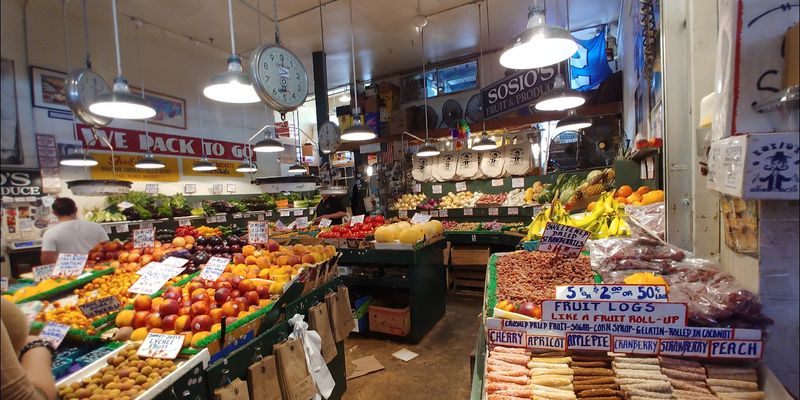
For me, the most convincing thing about Pike Place Market is that it still behaves like a market instead of a monument. People are making actual choices about dinner, gifts, flowers, pantry staples, and things for home, and that changes the tone immediately.
You are not just looking at a preserved idea of local life, because local life is still moving all around you.
That usefulness gives the market a steadiness that many famous places lose over time. Vendors are not there just to decorate the scene, and shoppers are not there only to admire the setup from a safe distance.
There is exchange, routine, and trust built into the place, and you can feel that in the way conversations happen across counters all day long.
It also explains why the market remains such an important symbol in Washington without feeling frozen in symbolism. The values people associate with it – supporting growers, backing makers, keeping local food visible, and protecting public gathering space – are still active there in plain sight.
When a place can be iconic and functional at the same time, it usually means it has earned its reputation honestly.
That is exactly the feeling Pike Place Market leaves you with by the end.
You Leave Feeling Like You Got The Real Thing
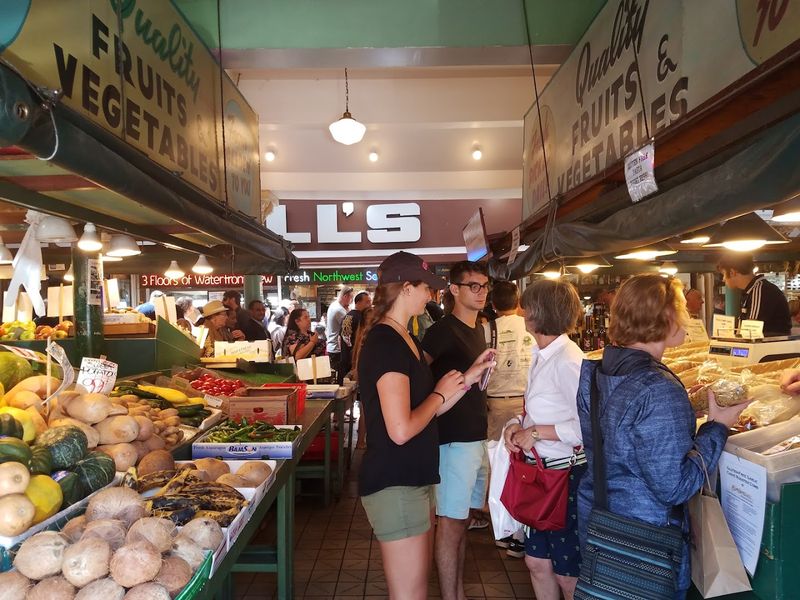
By the time you head out, what stays with you is not one single stall or dramatic market moment, though there are plenty of memorable ones. It is the overall sense that you spent time somewhere with real roots, real labor, and real affection behind it.
That feeling is harder to manufacture than people think, and Pike Place Market seems to understand that without ever needing to announce it.
You leave carrying more than a visual memory of Seattle, because the market gives you a practical, sensory, and emotional read on the city all at once. The produce, flowers, seafood, crafts, and conversations all build a portrait of Washington that feels textured instead of simplified.
Even if you only wander for an afternoon, the place hands you a clearer picture of what local pride looks like when it is lived daily.
That is why I would tell a friend not to treat this market like a box to check before moving on. Give it time, follow your curiosity, and let it be a little uneven and surprising.
When you do that, Pike Place Market stops being just a famous stop in Seattle and starts feeling like one of the most honest introductions to Washington you could ask for.
Honestly, that is a pretty great thing to walk away with.
