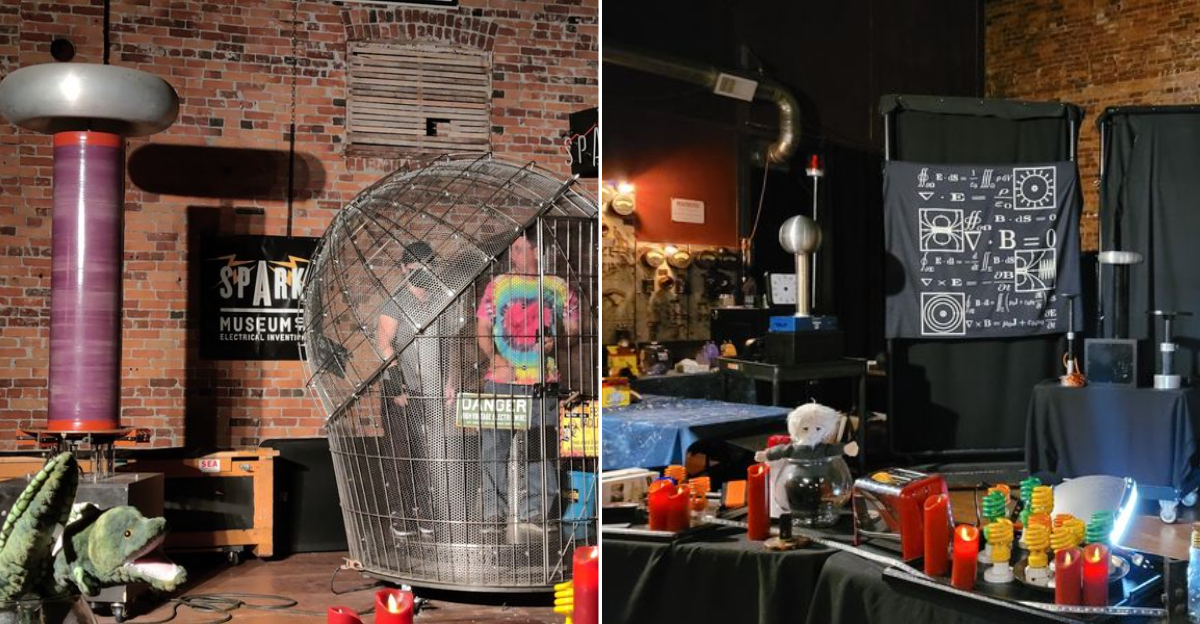
You stand behind a protective screen as a million volts of electricity dance between two metal spheres with a sound like a thunderclap. That is not a movie special effect.
It is a regular demonstration at this Washington museum, where electricity crackles, flashes, and roars right inside the building. You can crank a hand generator to make your hair stand on end, send a spark leaping across a gap, or watch a Tesla coil shoot lightning into the air.
The exhibits are hands on and loud, designed for curious visitors of all ages. Kids giggle as their hair floats upward, and adults find themselves grinning like children.
The building is modest, but the electricity inside is anything but. You will learn about the history of radio, telegraphs, and the scientists who tamed the power that now lights your home.
The best part is watching the crowd jump every time a giant spark explodes. Washington hides some truly unique attractions, and this indoor lightning show is one of the most thrilling.
The First Jolt Hits Fast
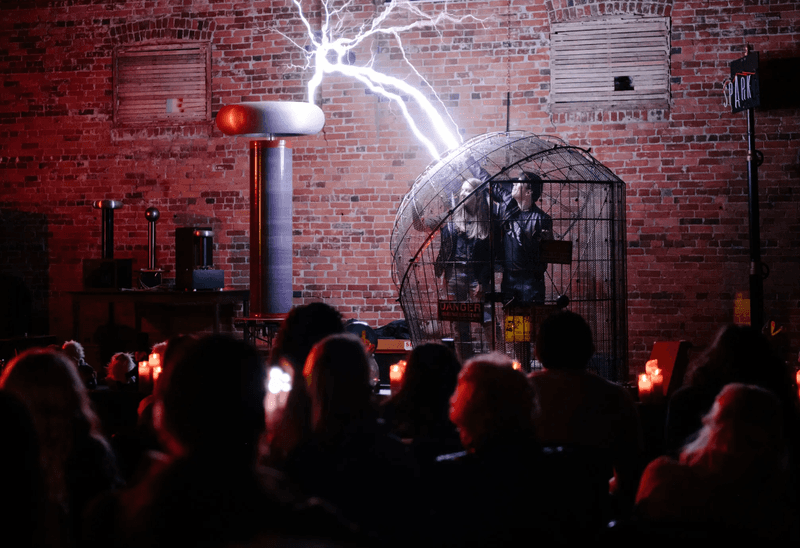
The funny thing about this place is that it wakes you up before you have time to settle into museum mode. You walk in expecting display cases and quiet voices, and then the whole idea of electricity starts feeling loud, physical, and strangely alive around you.
That shift happens fast, and it is honestly part of the charm.
SPARK does not treat invention like a dry timeline hanging on a wall. It feels more like you are stepping into a conversation between old machines, bold ideas, and the people who kept pushing until invisible forces could light a room or carry a voice across distance.
Even before the big show starts, you can feel that restless energy in the galleries.
I liked how the museum in Washington never seemed interested in talking down to anyone. If you already love science, there is plenty to sink into, and if you just came because roaring indoor lightning sounded wild, you still get pulled along naturally.
That balance is harder to do than it looks.
By the time you start moving from one room to the next, you are not just looking at objects anymore. You are paying attention to sparks, sound, invention, and all the ways human curiosity keeps turning invisible ideas into something you can actually feel standing there.
Where To Find The Buzz
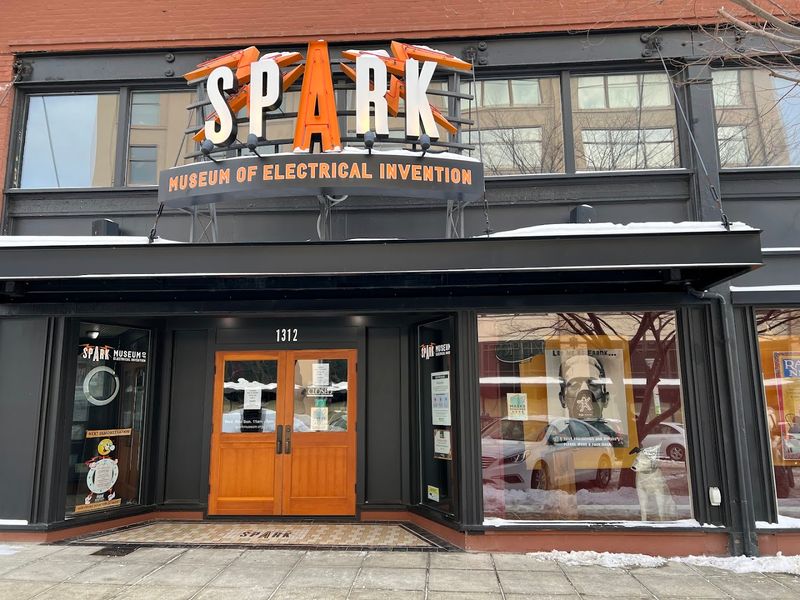
If you are the kind of person who likes knowing exactly where you are headed before the fun starts, this one is easy to pin down. The SPARK Museum of Electrical Invention sits at 1312 Bay Street, Bellingham, WA 98225, right in the middle of a walkable part of town that already feels good to wander.
That location matters more than you might think, because the museum fits naturally into a day in Bellingham instead of feeling like a random detour. You can stroll the surrounding streets, get your bearings, and then step inside a space that suddenly trades coastal calm for crackling energy.
It makes the whole visit feel a little more cinematic.
I also liked that the setting in Washington gives the museum a grounded, everyday feeling from the outside. Nothing about the block prepares you for indoor lightning and buzzing historic inventions, which makes the reveal even better once you are through the door.
It has that nice contrast between ordinary street and very not ordinary experience.
So if you are building a day around it, you really do not need a complicated plan. Just get yourself to Bay Street, give yourself time to linger, and let the museum do the rest, because it earns your attention almost immediately after you arrive.
The MegaZapper Is Not Subtle
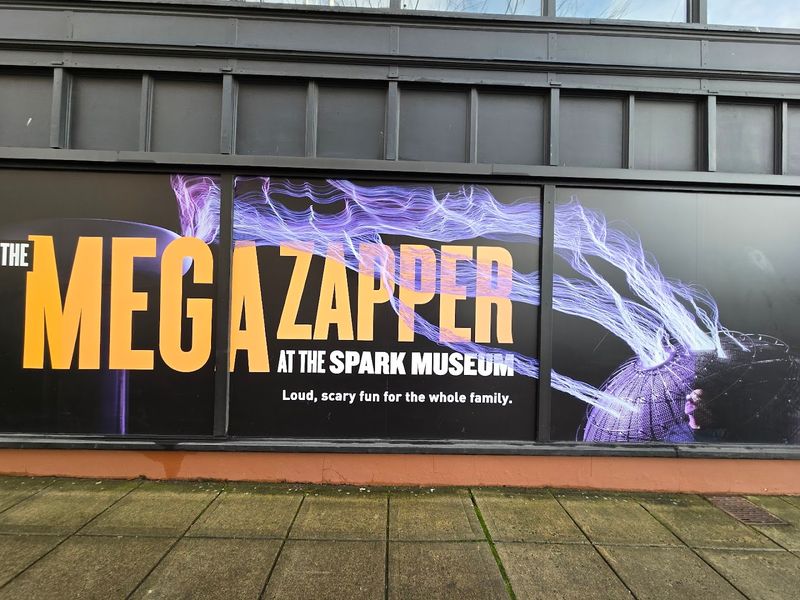
Let me put it this way, the MegaZapper is not one of those museum add-ons you politely watch and forget by dinner. It is the kind of indoor show that grabs your shoulders through sound and light, then leaves you laughing a little because your body clearly noticed before your brain caught up.
That roar is real.
The centerpiece is a giant Tesla coil, and the whole room changes once it starts throwing bright arcs through the air. You are not looking at a diagram of electricity or reading a careful label about it.
You are standing there while it crackles, flashes, and sounds almost animal for a moment. That is a very different kind of learning.
What makes it work is that the show feels theatrical without losing the science underneath it. There is genuine spectacle, sure, but it still connects back to the bigger story the museum is telling about invention, experimentation, and the human urge to understand forces we cannot hold in our hands.
That connection gives the excitement some weight.
If you came here wondering whether the famous show is actually worth planning around, I would say yes without hesitation. It is loud, strange, memorable, and wonderfully committed to making electricity feel less like a concept and more like something alive in the room.
Old Inventions Feel Weirdly Alive Here
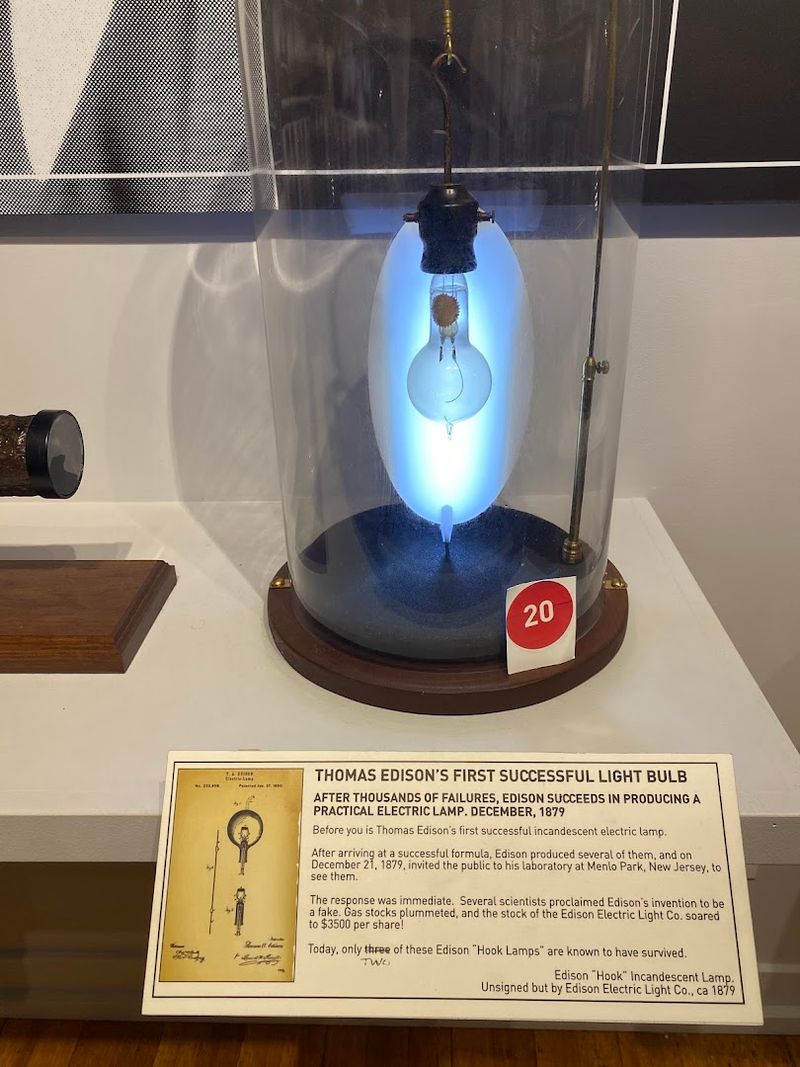
What surprised me most was how alive the older objects felt once I slowed down and really looked at them. A lot of museums have historic pieces that you admire from a respectful distance, but here the story around each invention gives it a pulse, like you are catching a machine mid-thought instead of after retirement.
That changes everything.
The collection reaches across centuries of electrical history, and you can feel the ambition inside it. Early light technology, radio equipment, communication devices, and beautifully strange instruments all sit together in a way that makes progress look less smooth and inevitable than we usually pretend.
It feels messy, brilliant, and deeply human.
I liked that the museum never separates wonder from context. You can enjoy the sheer novelty of seeing landmark objects connected to famous inventors, but you also start noticing the long chain of trial, obsession, and imagination behind them.
That broader view keeps the place from turning into a simple cabinet of cool stuff.
If you are traveling through Washington and worry that a science museum might feel too technical, I would not overthink it. The galleries work because they tell stories through objects, and those stories are about people trying to solve problems, surprise each other, and change daily life in ways we now take for granted.
You Can Actually Play With The Ideas
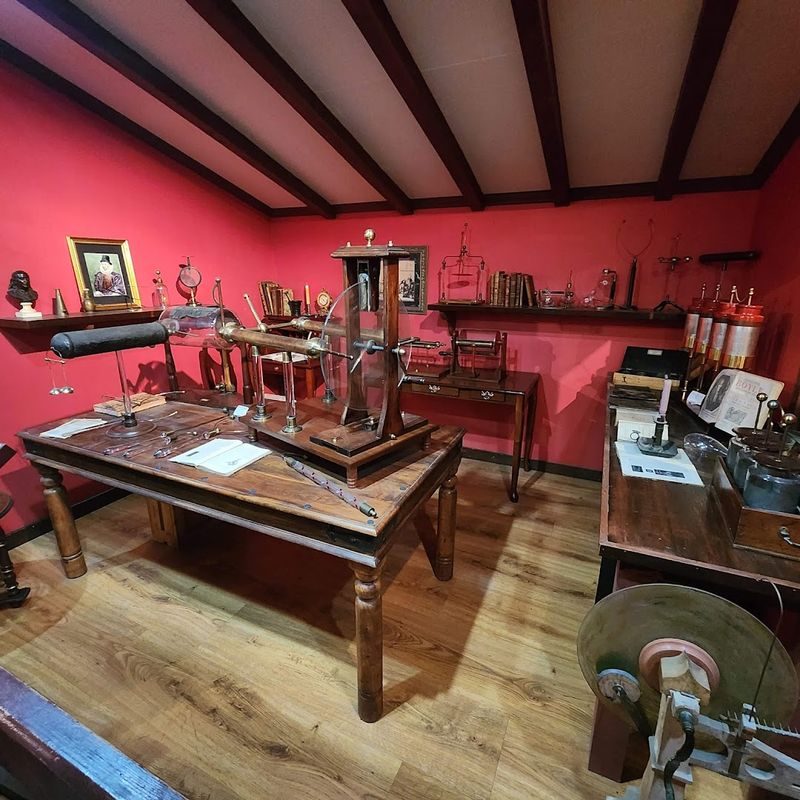
Here is the part that keeps the museum from feeling like a place where you quietly admire the past and move on. SPARK gives you room to interact, experiment, and poke at ideas with your own hands, which means the whole visit stays lively instead of sliding into that glazed-over feeling some exhibit halls accidentally create.
You stay engaged without trying.
The hands-on areas invite you into circuits, static electricity, and the kind of cause-and-effect moments that make curiosity feel immediate again. Instead of simply being told that electrical phenomena can surprise you, you get little chances to test, observe, and connect the dots for yourself.
That direct involvement is what makes the learning stick.
I especially love museums that trust visitors to be curious without overscripting every second, and this place generally gets that tone right. You can wander, pause, double back, and let one question lead to another naturally, which feels much closer to how real discovery works anyway.
It is playful, but not in a forced way.
If you are bringing someone who claims they are not a museum person, this is where they may change their tune. Once your own body and senses are part of the experience, the topic stops being distant, and suddenly you are in it, asking better questions because the exhibits gave you something tangible to react to.
The Theremin Steals A Little Of The Show
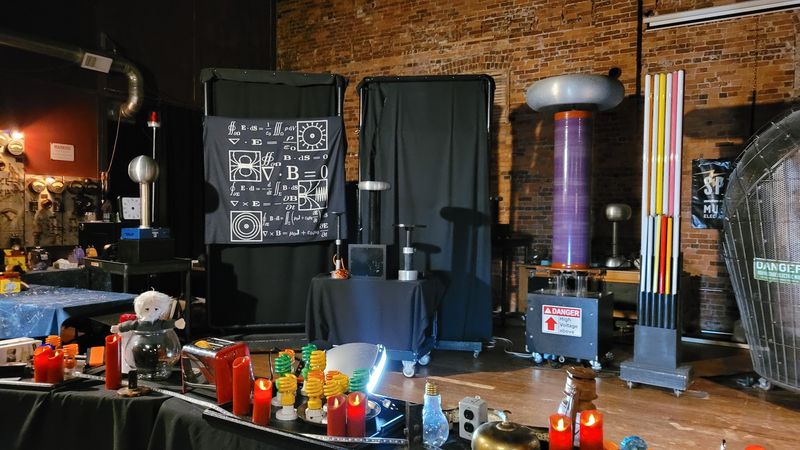
I always have a soft spot for museum pieces that make you stop and say, wait, this thing does what? The theremin section has that exact effect, because it feels equal parts science experiment, musical oddity, and ghostly performance all wrapped into one unforgettable object.
It is strange in the best possible way.
Seeing an electronic instrument tied into the broader history of electricity opens up the museum in a fresh direction. Suddenly the story is not only about power, communication, and invention in a practical sense, but also about sound, performance, and the emotional side of technological creativity.
That little shift gives the collection extra personality.
What I liked most is how naturally it fits with the rest of the museum instead of feeling like a novelty parked in the corner. The theremin reminds you that electricity did not just transform homes and machines, it also changed art, entertainment, and the ways people imagined the future.
That is a bigger and more interesting picture.
If you have never seen one up close, it is worth taking a moment here and letting the weirdness sink in. Washington has plenty of museums with local history and beautiful settings, but not many give you this mix of scientific storytelling and eerie, unforgettable sound that seems to float through the air.
It Makes Science Feel Physical
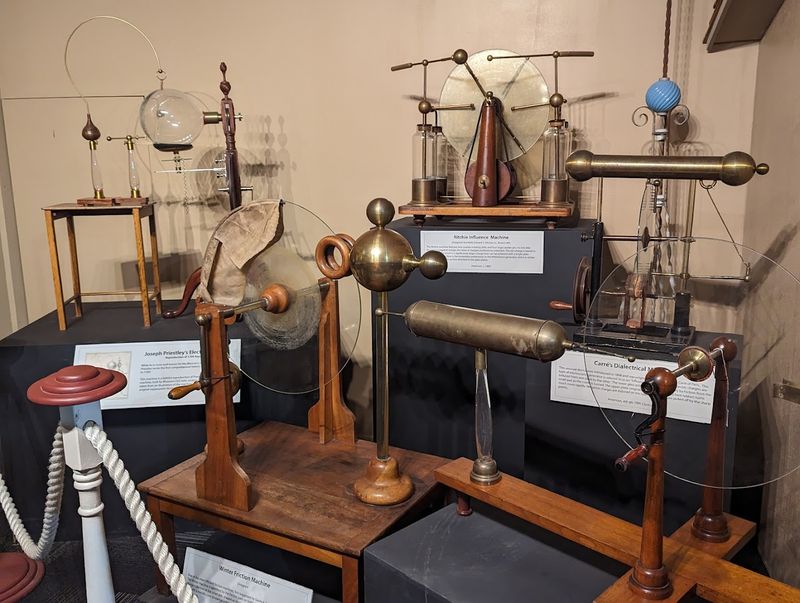
Some museums teach you with labels first and objects second, but this one keeps nudging the body into the conversation. You hear the crackle, feel the tension in the room before a demonstration, and start noticing that electricity is not just an idea floating above daily life.
It has texture, drama, and presence when it is presented this way.
That physical quality is what makes the place so memorable. Static electricity demonstrations, interactive displays, and the larger theatrical moments all work together to turn invisible principles into something you can anticipate with your senses.
The result is that you remember not only what you saw, but how it felt standing there waiting for the next burst.
I think that matters because science can become abstract very quickly when it is flattened into diagrams and definitions. Here, the museum pulls those ideas back into human scale, where surprise, sound, and movement help explain concepts your brain might otherwise file away too neatly.
It feels less like memorizing and more like understanding.
If you are traveling through Washington with someone who says museums all blur together after a while, this place makes a convincing argument otherwise. It gives you a bodily memory of the visit, and that is powerful, because you leave carrying more than facts.
You leave carrying a sensation.
Why This Stop Stays With You
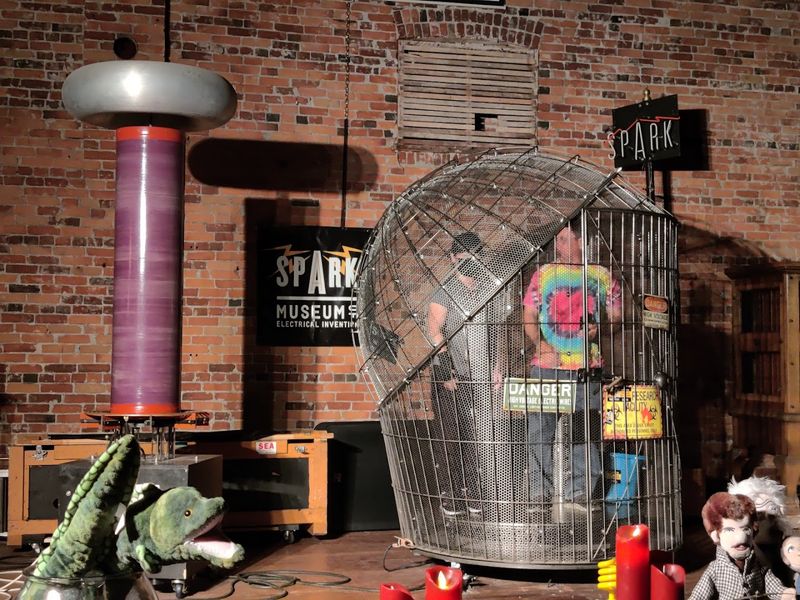
By the end, what sticks with you is not just the lightning, even though that part absolutely earns the hype. It is the way the museum blends spectacle with story so naturally that you leave feeling both entertained and a little more awake to the invisible systems running through ordinary life.
That combination is rarer than people think.
The MegaZapper gives the place its famous roar, but the surrounding galleries give that roar meaning. Old inventions, communication tools, musical experiments, and hands-on displays all build a larger picture of how people learned to shape energy into something useful, expressive, and sometimes downright dramatic.
The whole visit feels connected from start to finish.
I would especially recommend it if you like attractions that leave you with something to talk about on the walk back outside. This is not the kind of museum where you shrug and say it was nice before moving on to lunch.
You replay moments, imitate sounds badly, and end up describing electrical history with way more excitement than you expected.
So yes, if you are anywhere near Bellingham, make room for SPARK. Washington has no shortage of beautiful places to spend an afternoon, but this one gives you a different kind of rush, and it does it indoors with flashes, noise, and enough personality to keep the memory bright long after you leave.
