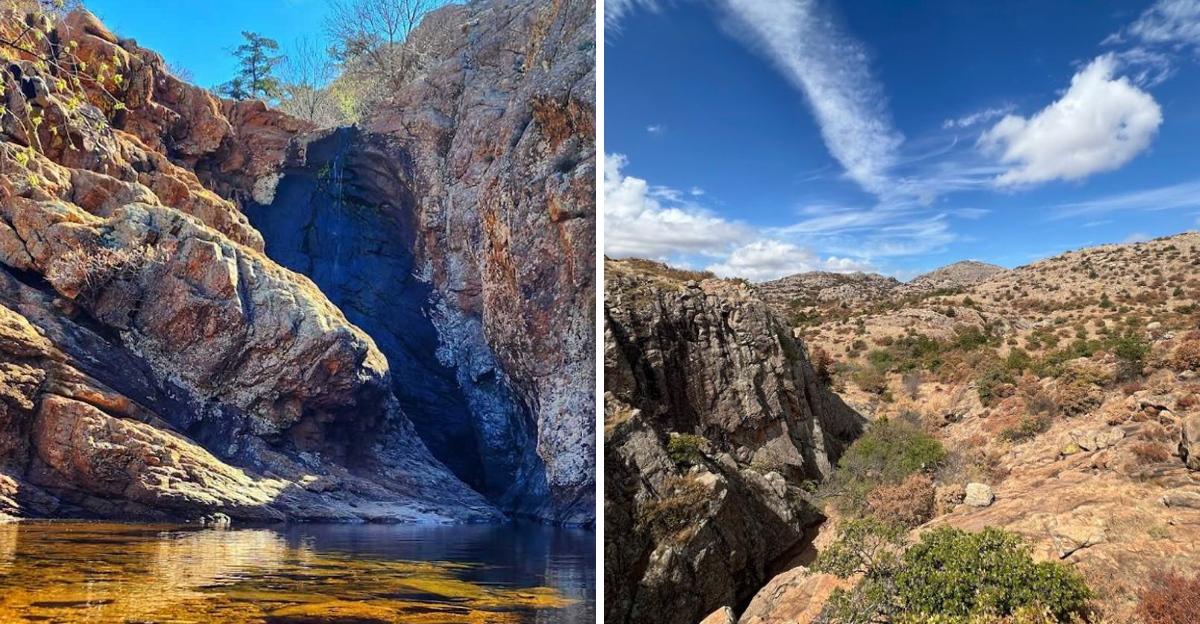
There are hikes you forget about a week later, and then there are hikes that stick with you like a burr on your boot. This one falls firmly in the second category.
Picture rugged granite boulders, ancient twisted oaks, and a trail that winds through wild Oklahoma terrain before dropping you in front of something you almost can’t believe is real. It’s the kind of place that makes you feel like you earned something, and honestly, you did.
The reward waiting at the end of this rocky, sun-dappled adventure is a waterfall so quietly dramatic it feels like a secret the landscape has been keeping for centuries. If you love the feeling of discovering something special on foot, this trail was made for you.
Lace up your boots, charge your phone for the map, and keep reading because this one is worth every step.
The First Steps Feel Deceptively Easy
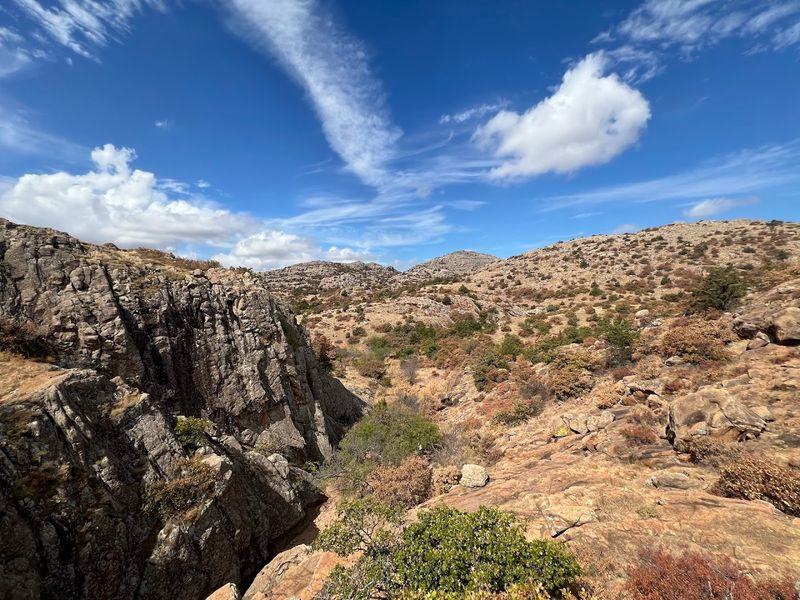
You step onto the trail and think, okay, this is manageable. The ground is relatively flat at first, the air smells like dry earth and cedar, and the sky is wide and blue overhead.
Don’t let that fool you even a little bit.
The Charon’s Garden Trail has a personality all its own. It starts friendly enough, but it gradually reveals its true character the further you push in.
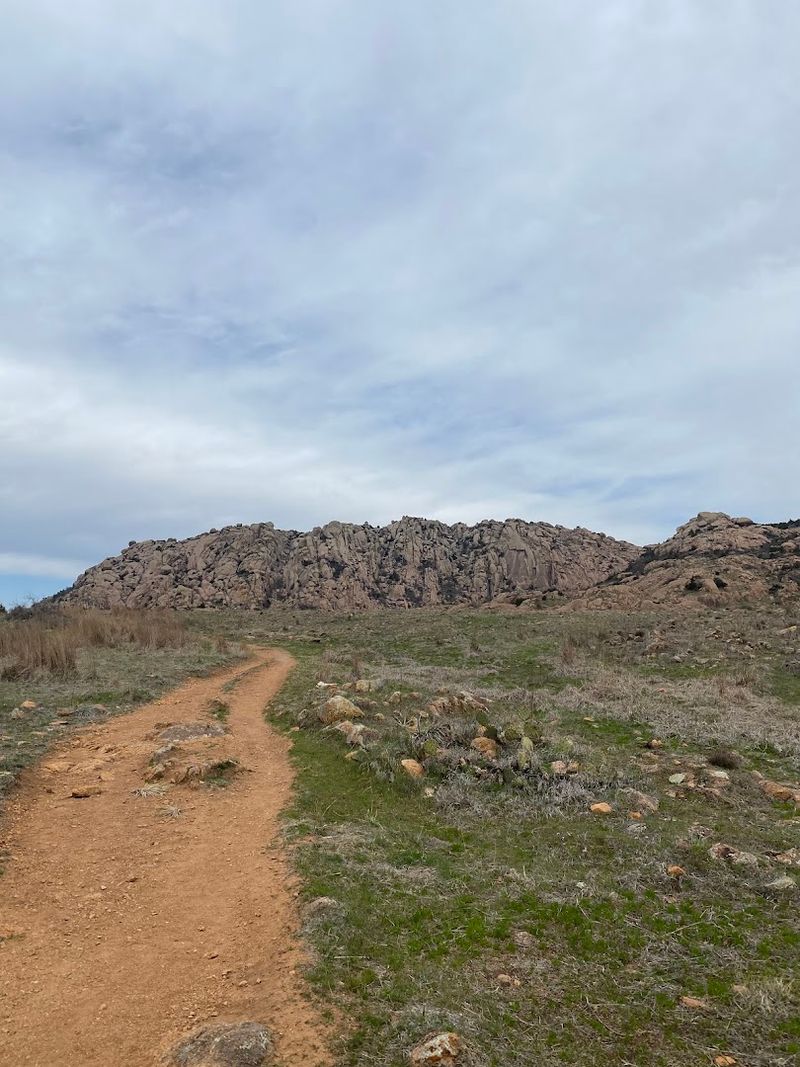
Rocky patches appear underfoot. The path narrows.
Boulders begin to crowd in from both sides like they’re curious about you.
The round trip is roughly three miles, which sounds modest until you’re scrambling over uneven terrain in the Oklahoma heat. Medium difficulty is the official rating, and that feels about right.
You won’t need technical climbing gear, but you will need solid footwear and a decent sense of balance.
Flat sneakers are a bad idea here. Boots with ankle support and non-slip soles are genuinely your best friends on this trail.
The rocks can be slippery, especially near water crossings, and a twisted ankle is a rough way to end an adventure.
Start early if you can. The morning light hitting the granite is something special, and the trail gets warmer and more exposed as the day rolls on.
Rocky Terrain Keeps You Honest the Whole Way
About halfway through, the trail stops pretending to be polite. The rocky ground becomes the main character, and every step demands your full attention.
This is not a trail you can hike while scrolling your phone.
The landscape here is part of the Wichita Mountains Wildlife Refuge, and the geology is ancient and dramatic. Massive granite formations jut out of the earth at odd angles.
Some look like they were stacked by a giant with too much free time. The boulders are smooth in some places and jagged in others, which makes route-finding a small but satisfying puzzle.
There are several desire trails branching off the main path. Those are the unofficial routes that hikers have worn into the ground over time.
Stick to the main trail and follow the signs. The signage isn’t overwhelming, but there is a marker pointing toward the waterfall when you need it most.
Water crossings show up along the way. Some are easy to hop across on dry rocks.
After rain, they get a little more interesting and require some creative footwork to avoid a soaking. Either way, they add a sense of adventure to the whole experience.
The terrain keeps you humble, and somehow that’s exactly what makes this hike so satisfying. Every hard step feels like it means something.
Two Trail Options Give You a Choice Before You Commit
Here’s something worth knowing before you set out: the trail splits into an upper and lower route. Each one offers a completely different experience, and your choice shapes the whole hike.
The upper trail is the easier of the two. It gets more direct sunlight, the path is a bit more straightforward, and the views open up in a way that feels almost cinematic.
If you’re hiking with kids or just want a more relaxed pace, this is your lane.
The lower trail is shadier and more sheltered, which is a serious perk on a hot Oklahoma afternoon. It’s also slightly more challenging.
The terrain is rougher underfoot, and you’ll find yourself ducking under branches and stepping more carefully. The reward is a cooler, more intimate hike through denser vegetation.
Both routes lead to the same destination. The waterfall doesn’t play favorites.
But the lower trail gets you closer to the base of the falls, which is where the real drama lives. Standing right at the bottom and looking up is a completely different experience than viewing from above.
If you want to see it all, do one route on the way in and the other on the way back. That’s the move.
You get the full picture and double the trail experience in one outing.
Seasonal Timing Makes or Breaks the Whole Experience
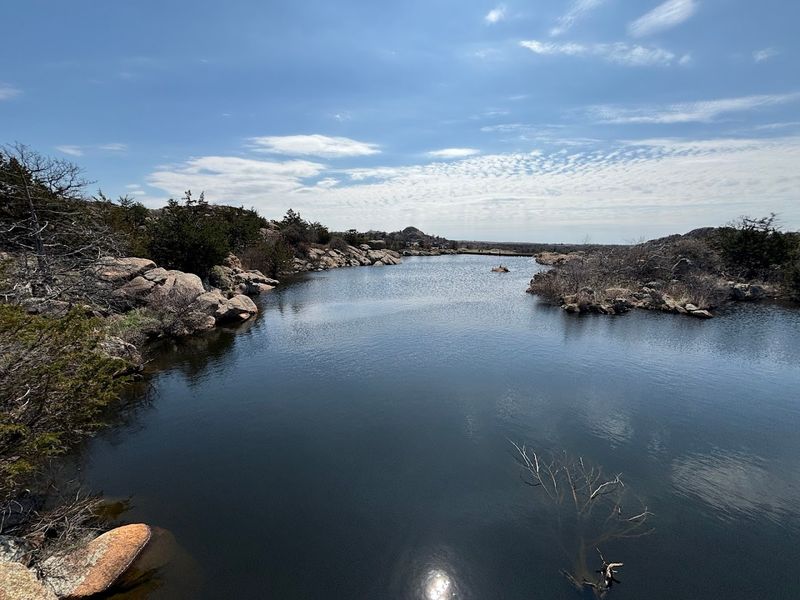
Let’s be upfront about something: this waterfall is seasonal. That means timing your visit matters more here than at almost any other trail destination in the region.
Show up at the wrong time and you’ll find a beautiful dry rock face instead of a flowing waterfall.
Late summer, especially August, is the worst time for water flow. The heat bakes everything dry, and the falls can disappear almost completely.
It’s still a beautiful hike through striking terrain, but the main event won’t be there.
Spring and late fall are the sweet spots. After rainfall, the waterfall comes alive in a way that stops you mid-step.
The water catches the light, the sound fills the whole rocky bowl around it, and it feels almost theatrical. Visiting right after a good rain is the best possible scenario.
Winter visits are surprisingly rewarding too. The water may be low or absent, but the landscape takes on a stark, moody quality.
The bare trees show off the rock formations better, and the whole place feels quieter and more personal.
Check recent rainfall before you go. A quick look at local weather data for the Indiahoma area can save you disappointment.
The trail is worth hiking in any season, but if you want the full waterfall experience, plan around the weather and not just your schedule.
The Waterfall Itself Is a Quiet Kind of Spectacular
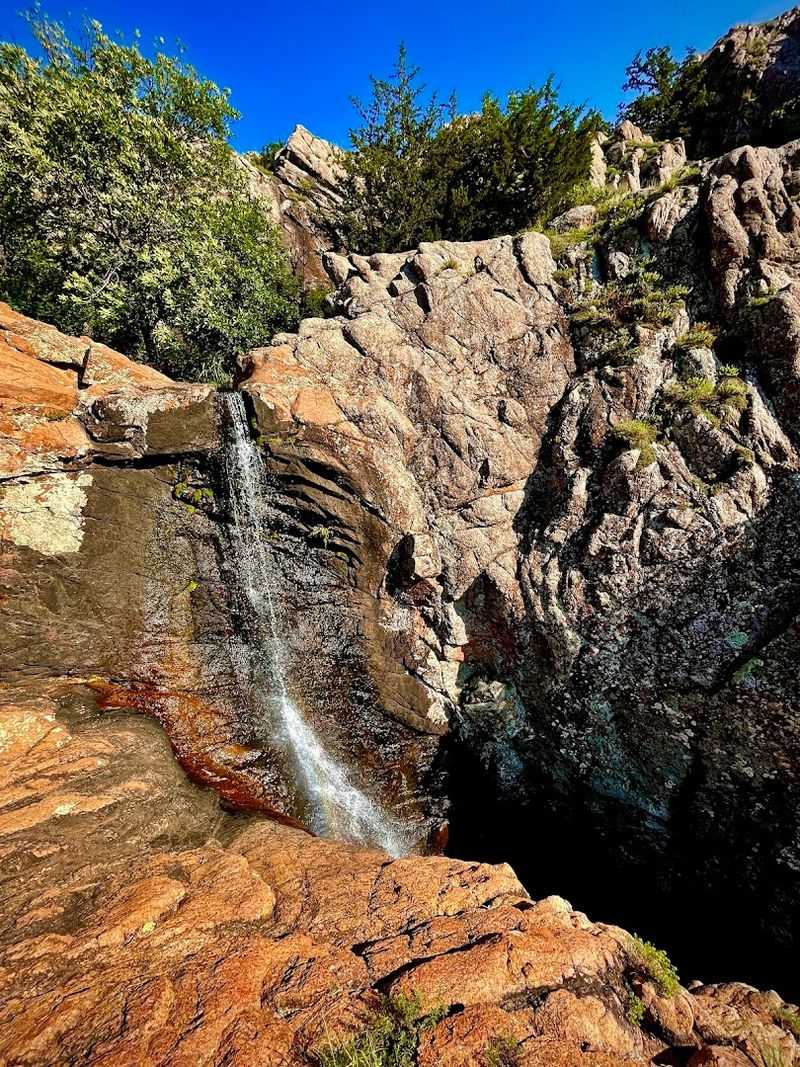
And then you see it. After all the boulders and the scrambling and the trail-finding, the waterfall appears like it’s been waiting patiently for you.
It’s not Niagara. It doesn’t need to be.
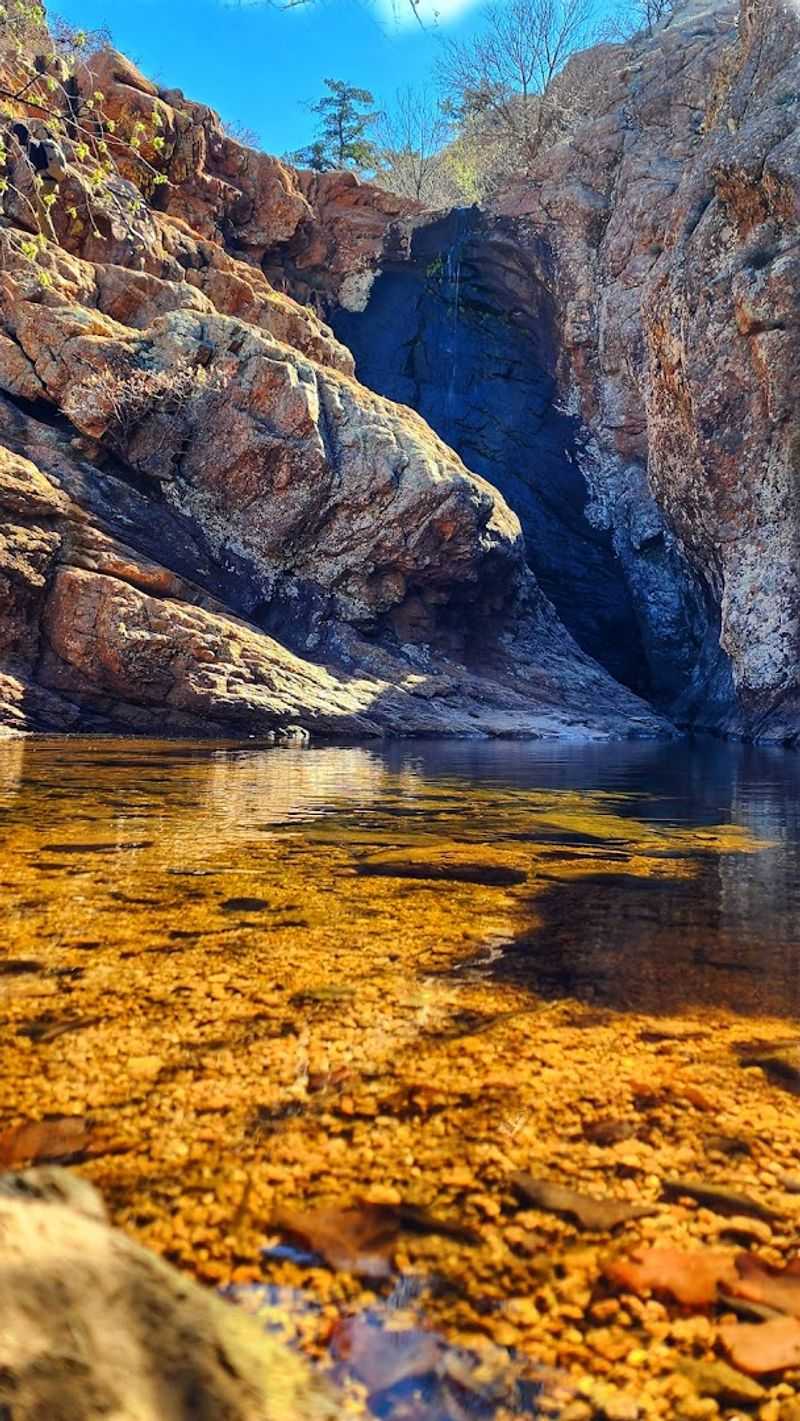
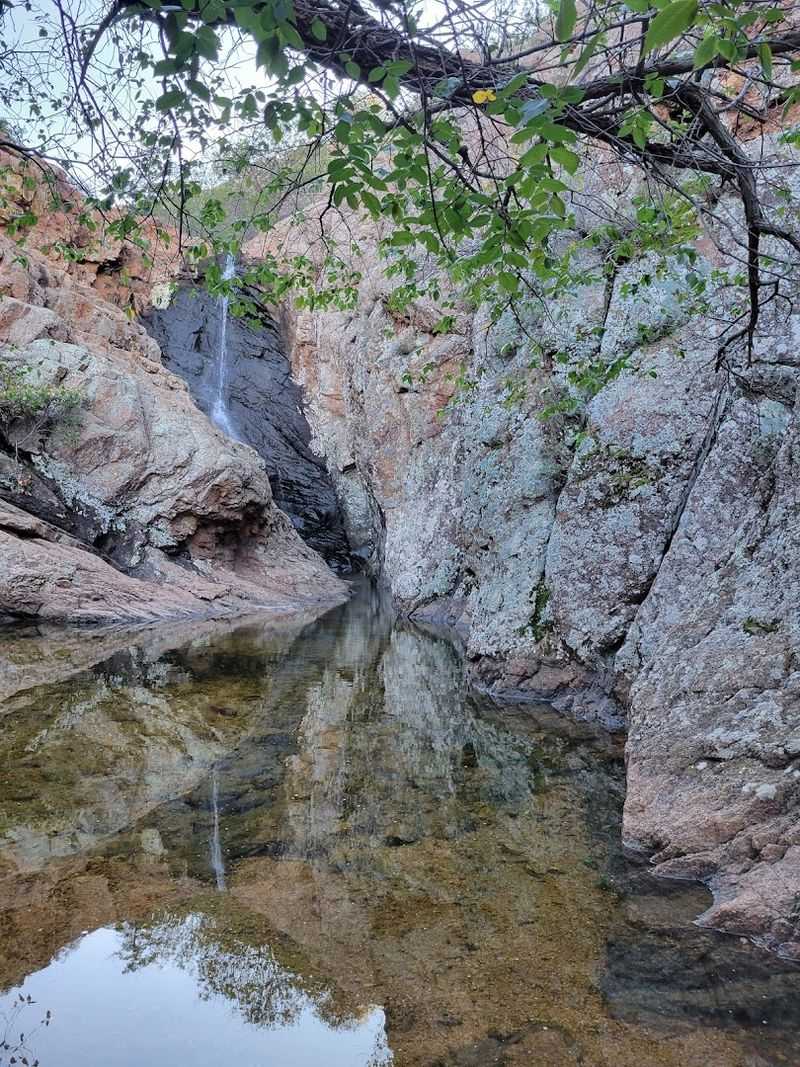
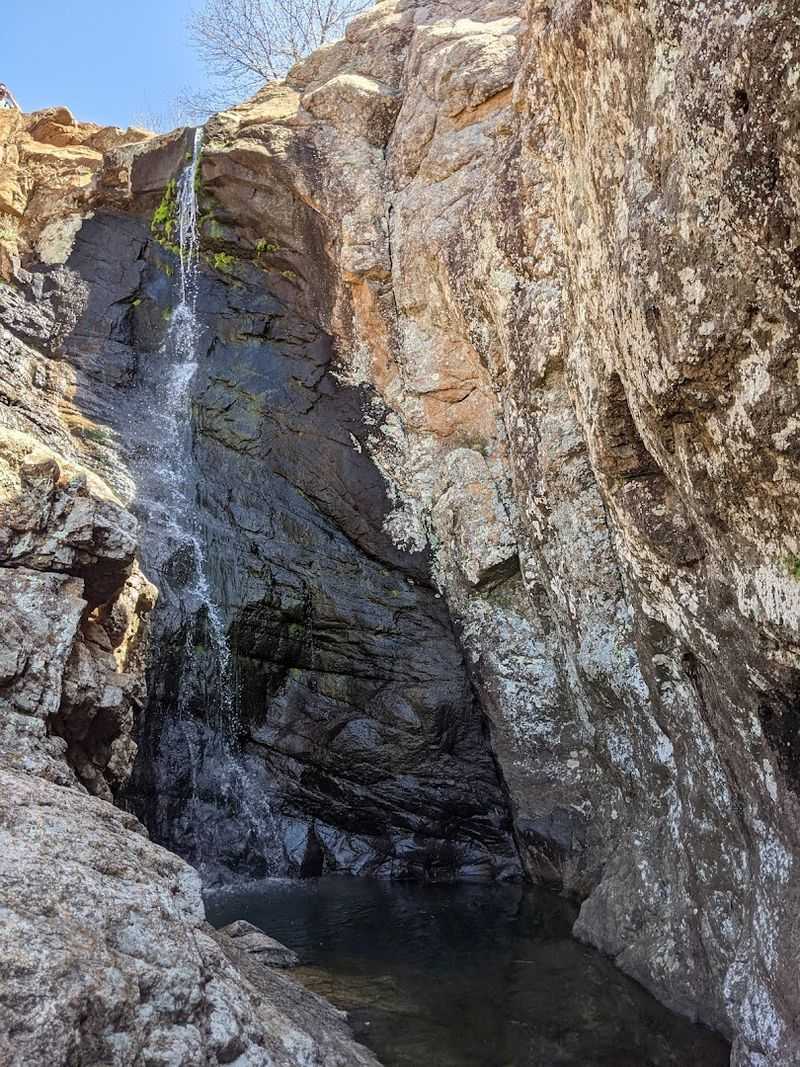
The falls drop over dark, moss-covered granite in a way that feels ancient and unhurried. The rock face is layered and textured, and the water follows the natural contours of the stone as it descends.
When the flow is strong after a good rain, the sound fills the whole rocky alcove around it and bounces off the walls in a deeply satisfying way.
The setting amplifies everything. You’re surrounded by boulders and trees on all sides, and the sky above is framed by the canyon walls.
It feels secretive, like you found something the rest of the world forgot about. That feeling is rare and worth chasing.
Getting a closer look requires some light rock climbing near the base. The rocks are steep and can be slippery, so move carefully and test each foothold before committing.
The payoff for getting close is an entirely different perspective on the falls that photos simply cannot capture.
Post Oak Waterfall rewards patience and effort. It doesn’t announce itself loudly.
It just sits there, beautiful and composed, letting the water do the talking.
Wildlife and Wild Nature Are Everywhere Around You
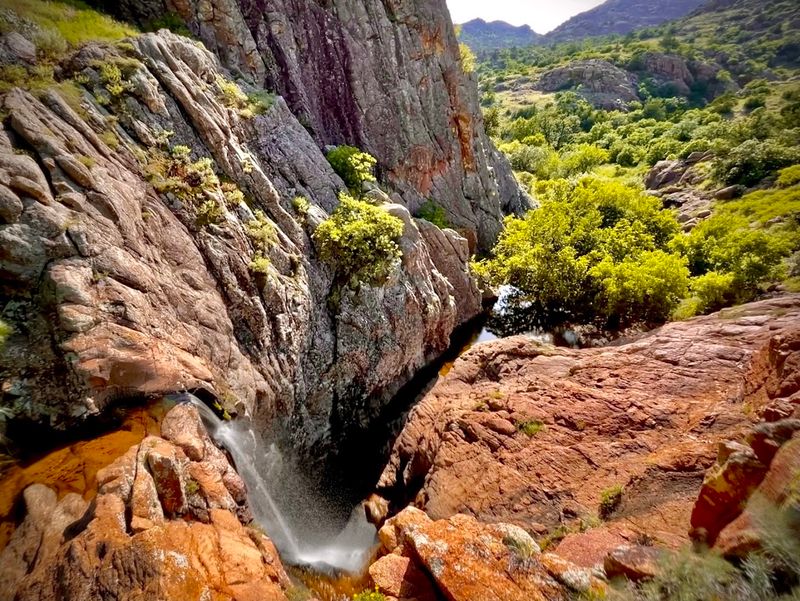
The trail doesn’t just lead to a waterfall. It leads through one of the most ecologically rich areas in Oklahoma.
The Wichita Mountains Wildlife Refuge is home to a remarkable variety of wildlife, and you feel that presence the whole time you’re hiking.
Longhorn cattle roam the refuge freely, and it’s not unusual to spot them near the trail. Bison graze in the wider refuge area.
White-tailed deer move quietly through the trees. Prairie dogs pop up in open areas not far from the trailheads.
The whole place hums with animal life in a way that feels completely unscripted.
Bird activity along the trail is constant. Red-tailed hawks ride thermals overhead.
Smaller songbirds dart through the scrub oak. If you slow down and stay quiet for a few minutes, the forest reveals layers of activity you’d miss if you were rushing.
One word of caution: watch for snakes. This is real Oklahoma wilderness, and rattlesnakes and other species are present.
Stick to the trail, watch where you place your hands when climbing rocks, and wear long pants if possible. Prickly plants are also part of the landscape, so shorts aren’t ideal here.
The wildlife encounters feel like bonus gifts. Every sighting adds a layer to the hike and makes the whole experience feel more alive and worth remembering.
Packing Smart Changes Everything on This Trail
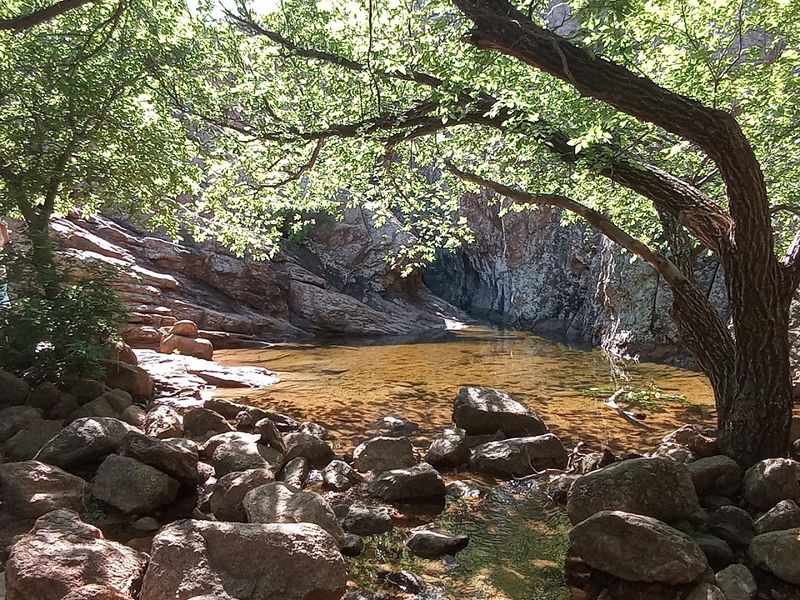
Here’s the thing about this trail: it gives nothing away for free. There are no restrooms.
No drinking water. No trash cans.
No vending machines. No rescue station with a friendly ranger handing out granola bars.
You are on your own out there, and that’s kind of the point.
Pack water and pack more than you think you need. The Oklahoma sun is relentless, and the rocky terrain means you’re working harder than a flat trail would suggest.
Dehydration sneaks up fast when you’re scrambling over boulders in the heat.
Bring all your snacks in and carry all your trash out. The refuge operates on a strict leave-no-trace philosophy.
Don’t take anything from the natural environment either. The rocks, plants, and wildlife are part of a protected ecosystem.
A downloaded offline map is a smart move. Cell coverage can be inconsistent out here, and the trail has enough branching paths to get confusing.
Charge your phone fully before leaving the car. A portable battery pack is worth the extra weight in your bag.
First aid basics, sunscreen, and a hat round out the essentials. The trail is exposed in sections, and sunburn is a real concern on longer outings.
Dress in layers if you’re going in cooler months, because temperatures in the Wichita Mountains can shift quickly and without much warning.
The Atmosphere Feels Like a World Apart
There’s a specific feeling this trail creates and it’s hard to name exactly. It’s somewhere between awe and peace, with a little bit of earned satisfaction mixed in.
The landscape looks prehistoric, and in many ways it is.
The Wichita Mountains are some of the oldest exposed rock formations in North America. Walking through them feels like walking through time.
The granite is rough and red and warm to the touch on a sunny afternoon. The post oak trees twist and lean over the path like they’re listening to something you can’t hear.
When the wind drops and everything goes quiet, the silence has actual weight to it. You become very aware of your own breathing, your footsteps, the crunch of dry leaves.
It’s the kind of quiet that clears your head in a way that no app or playlist ever could.
The light changes constantly out here. Morning brings long golden shadows stretching across the boulders.
Midday turns everything bright and sharp. Late afternoon softens the whole landscape into something warm and cinematic.
Every hour looks different, and every hour is worth seeing.
This place doesn’t try to impress you. It just exists, fully and unapologetically, in its own ancient rhythm.
And somehow, that’s exactly what makes it so impressive. You leave feeling like you visited somewhere real.
Getting There and What to Know Before You Go
Planning ahead for this hike saves a lot of stress on the day. The trail begins on the Charon’s Garden Trail within the Wichita Mountains Wildlife Refuge.
The south parking lot is a common starting point, and from there the trail winds its way toward the waterfall over roughly three miles round trip.
The address for navigation purposes is the Charon’s Garden Trail, Indiahoma, OK 73552. Plug that into your maps app before you lose signal and you’ll be in good shape.
The refuge sits in southwestern Oklahoma, not far from the town of Lawton, which is where you’ll want to fuel up, grab food, and sort out any last-minute gear needs.
The refuge is managed by the U.S. Fish and Wildlife Service, and more information about trail conditions and visiting hours is available at fws.gov/refuge/wichita_mountains.
Check that site before your trip, especially if you’re visiting after a dry stretch or planning a winter outing.
Parking is free and the trail is open to the public. No technical equipment is required, just solid boots, plenty of water, and a willingness to move slowly and carefully over uneven ground.
Post Oak Waterfall is one of those rare places where the effort of getting there is part of the experience. The drive through the refuge alone is worth the trip.
Everything after that is a bonus.
Dear Reader: This page may contain affiliate links which may earn a commission if you click through and make a purchase. Our independent journalism is not influenced by any advertiser or commercial initiative unless it is clearly marked as sponsored content. As travel products change, please be sure to reconfirm all details and stay up to date with current events to ensure a safe and successful trip.
