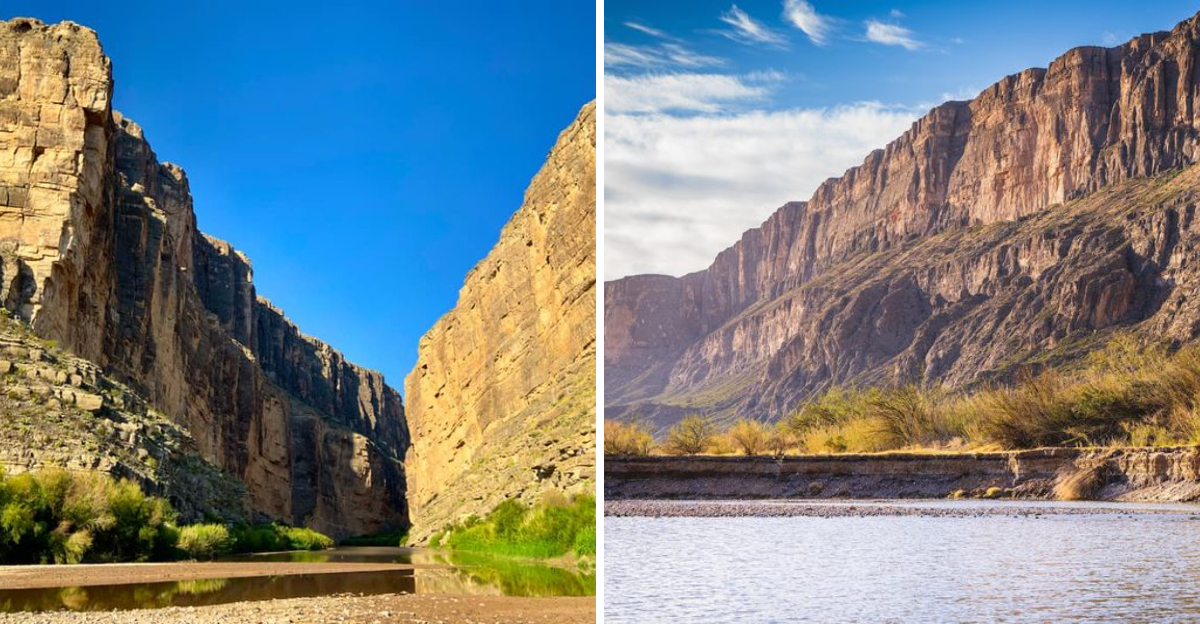
Standing at the mouth of Santa Elena Canyon for the first time, I felt like the earth had swallowed me whole in the best possible way. Towering limestone walls rise over 1,500 feet on both sides, and the Rio Grande slips quietly between them like it has been doing this for millions of years.
There is something almost surreal about being this deep in West Texas, surrounded by raw, unpolished wilderness that feels completely untouched by modern life.
Big Bend National Park holds many wonders, but Santa Elena Canyon has a way of stopping you mid-step and making you forget whatever was on your mind.
The trail itself is short enough for almost anyone to tackle, yet the scenery it delivers feels wildly out of proportion to the effort. If you have ever wanted to feel genuinely small in the most awe-inspiring way, this is the place that will do it.
Where the Canyon Begins: The Trailhead Experience
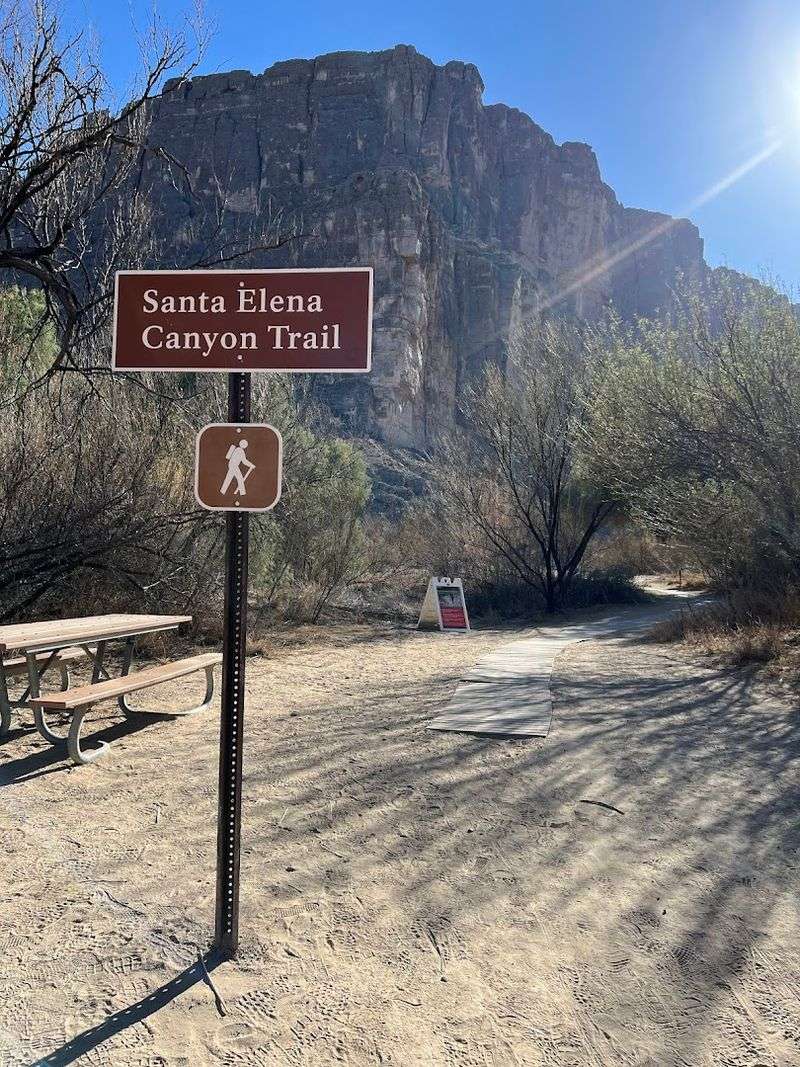
Pulling into the trailhead parking lot, the first thing you notice is how organized and surprisingly well-equipped everything is. There are clean restrooms right next to the parking area, which feels like a small miracle given how remote this corner of Big Bend National Park actually is.
Plenty of parking spaces make it easy to arrive without stress.
The trailhead sits at the edge of the Chihuahuan Desert, and even before you take your first step, the canyon walls are already visible in the distance, hinting at what is ahead. Informational signs near the start give you a sense of the geology and history of the area.
Reading them only builds the anticipation.
Starting early in the morning is genuinely the best move here. The air is cooler, the light is softer, and the canyon walls glow in shades of amber and gold that feel almost painted.
Arriving before the midday heat sets in gives you a more comfortable and enjoyable experience overall. The drive to the trailhead is also scenic, winding through open desert with mountain views that set the tone beautifully for what comes next.
Crossing the Water: A Small Adventure Before the Trail Proper
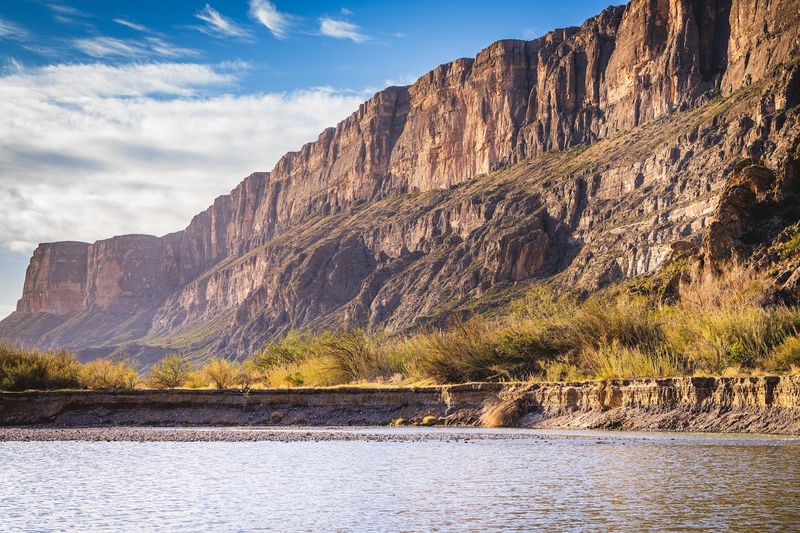
Right near the start of the trail, you may encounter a shallow water crossing that depends entirely on the season and recent rainfall. During dry months, this section is just a sandy wash you walk straight through without a second thought.
After storms or heavy rain, though, the water can rise enough to make the crossing a genuine mini-adventure.
A few visitors have mentioned getting turned back after heavy weather when the trail floods quickly. Checking conditions before you go is genuinely worth the few minutes it takes.
The park service and ranger stations can give you real-time updates on trail accessibility.
When the crossing is manageable, wading through the cool, clear water actually feels refreshing, especially on a warm morning. The Rio Grande feeds into this area, and the water carries a quiet energy that matches the mood of the whole canyon.
Some people bring sandals specifically for this section and switch back to hiking shoes on the other side. It sounds like extra effort, but your dry feet will thank you later.
This small moment of crossing water before entering the canyon walls adds a sense of passage, like stepping through a threshold into something ancient.
The Walls Close In: Walking Inside the Canyon
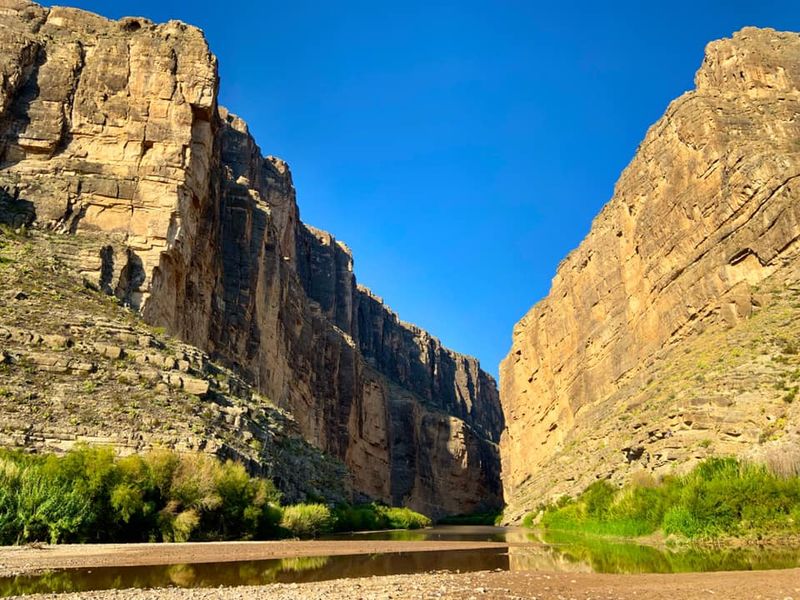
Once you pass the water crossing and round the bend, the canyon walls rise up so suddenly it almost feels theatrical. Limestone cliffs that stretch over 1,500 feet above you on both sides block out a wide strip of sky, leaving just a ribbon of blue overhead.
The temperature drops noticeably inside, which is a welcome shift after walking through open desert sun.
The rock itself is layered in bands of cream, rust, and deep gray, each layer representing millions of years of geological history. Touching the walls feels oddly meaningful, like pressing your hand against deep time.
The Rio Grande flows quietly along the canyon floor, adding a soft, constant sound that fills the space without overwhelming it.
Walking deeper into the canyon, the scale keeps shifting in ways that are hard to describe. Sometimes the walls feel close enough to touch on both sides, and other times the canyon opens slightly, offering a wider view.
Butterflies appear unexpectedly along the path, fluttering between canyon walls and desert plants in a way that feels completely out of place and yet completely right. The whole experience has a calm, almost meditative quality that surprises most people who come expecting something more rugged.
The Staircase Sections: More Engaging Than You Expect
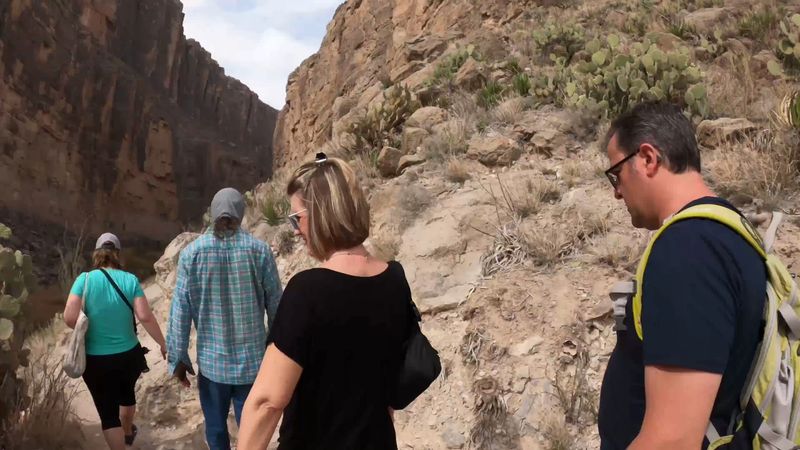
People who read the trail description and expect a completely flat walk will get a mild surprise when they reach the staircase sections. The trail climbs up a series of carved rock steps that hug the canyon wall, offering elevated views down to the river below.
It is not difficult by any hiking standard, but it does ask your legs to wake up a little.
The stairs are uneven in places, and the railing coverage is minimal along some stretches, so paying attention to your footing matters. Wearing proper closed-toe shoes rather than sandals makes a real difference here.
The surface can be smooth and slightly slippery depending on conditions.
What makes the stair sections worth every step is the view that unfolds as you climb. Looking back down the canyon from an elevated position gives you a completely different perspective on the scale of everything around you.
The river looks almost miniature from up there, threading between walls that suddenly feel even more massive. Coming back down those same stairs during the return trip, with the late afternoon light shifting across the rock faces, hits differently than the ascent.
Many hikers say the stair sections are actually among the most memorable parts of the whole trail experience.
Wildlife and Plants Along the Path: A Living Desert
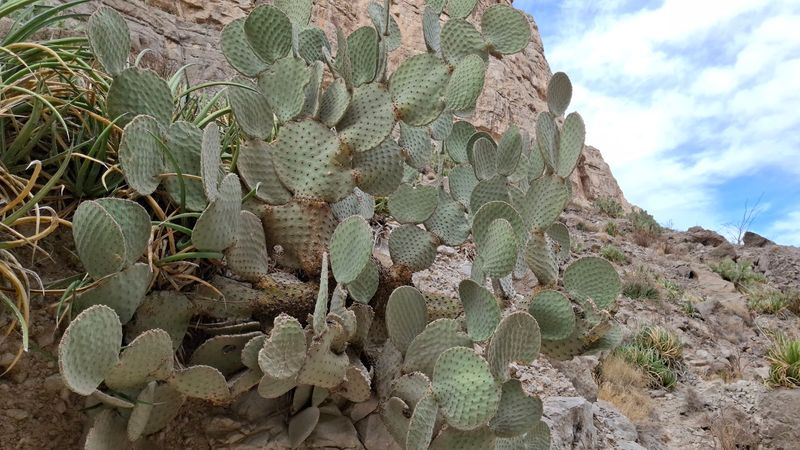
The trail corridor between the trailhead and the canyon entrance is surprisingly rich with plant life for a desert environment. Lechuguilla, ocotillo, and various cacti line the path, their textures and shapes creating a kind of natural gallery on either side.
Watching how these plants thrive in such a dry, rocky landscape is genuinely impressive.
Birds are a constant presence along the trail. Small species flit between the desert shrubs, and canyon wrens can sometimes be heard calling from high up on the rock faces.
Their echoing song carries beautifully through the narrow walls of the canyon interior.
Butterflies show up in numbers that catch most visitors off guard. On any given morning, dozens of different species can be spotted moving through the vegetation near the canyon entrance, drawn by blooming plants and the moisture near the river.
Dragonflies hover near the water in the lower sections of the trail. The biodiversity packed into this relatively short trail corridor is remarkable considering the surrounding desert landscape.
Paying attention to the small things, a lizard darting across the path, a hawk circling overhead, a cluster of blooming desert flowers, adds an entirely different layer of richness to the hike that pure scenery alone cannot provide.
Sunset on the Trail: A Completely Different Experience
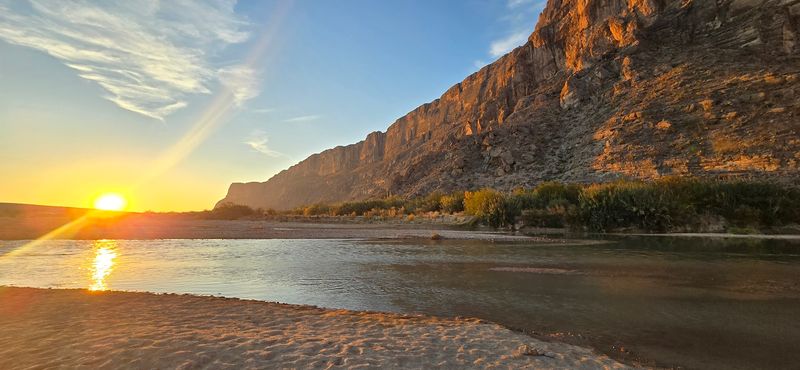
Hiking Santa Elena Canyon at sunset is one of those experiences that earns its reputation without any exaggeration needed. The angle of the late afternoon light catches the canyon walls in a way that makes the limestone glow in shades of deep orange, copper, and rose.
Shadows stretch dramatically across the rock faces, creating a constantly shifting visual show that photography struggles to fully capture.
Crowds thin out considerably as the day progresses, so the evening hours offer a more solitary and peaceful version of the trail. The sounds of the canyon become more pronounced when fewer people are around.
Wind moving through the narrow walls carries a low hum that feels ancient and deeply calming.
One practical note worth mentioning: starting a sunset hike requires awareness of the return trip in fading light. Bringing a small headlamp is a smart precaution even on a trail this short.
The path is easy to follow, but the stair sections benefit from being visible. Timing the turnaround so you exit the canyon just as the last light fades gives you the best of both worlds, the dramatic color show inside the canyon and enough light to walk safely back to the parking area.
It is genuinely one of the best ways to experience this trail.
The Boundary Between Two Countries: A Unique Geographical Moment
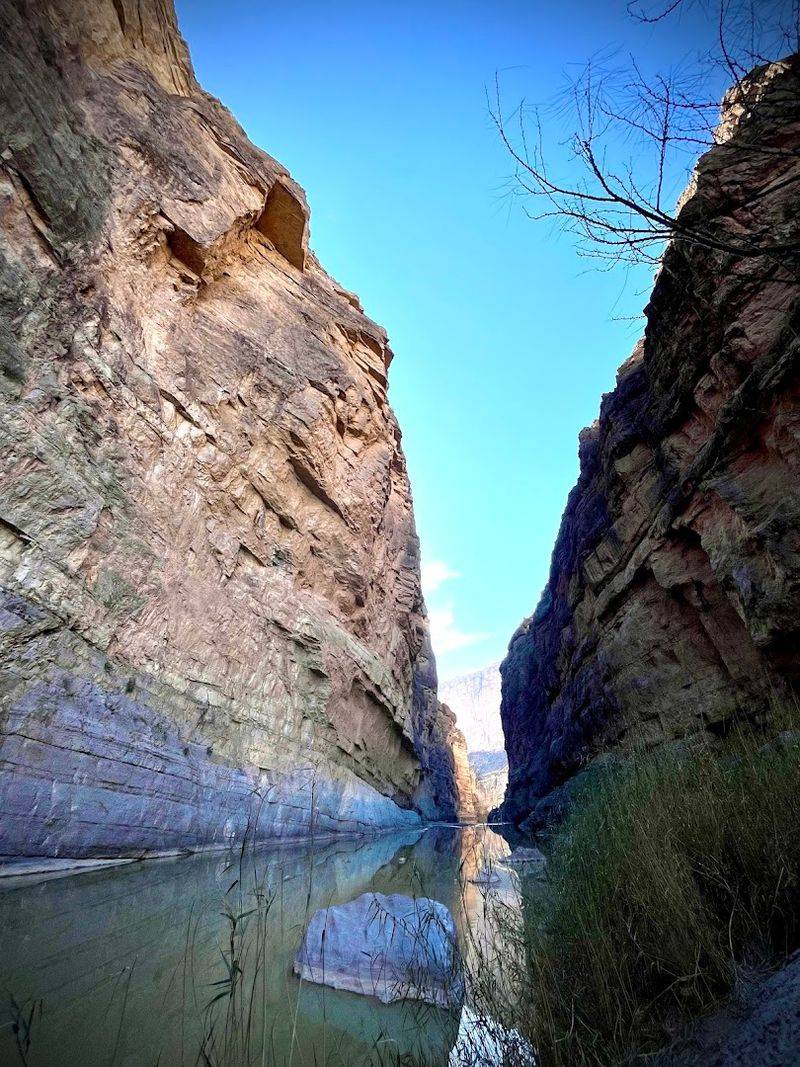
Standing inside Santa Elena Canyon and looking at the Rio Grande flowing below, you are looking at an international border. The river marks the boundary between the United States and Mexico, and from the trail, both canyon walls belong to different countries.
That fact alone adds a layer of significance to the experience that is hard to shake.nThe Mexican side of the canyon is part of the Maderas del Carmen protected area, which means the wilderness extends far beyond what the national park boundary covers.
The conservation on both sides of the river creates a rare, connected ecosystem that benefits wildlife and plants across a massive stretch of land. It is a genuinely collaborative effort between two nations.
Looking across the river from the trail, the opposite wall rises just as dramatically as the American side. There is no visible difference in the rock, the plants, or the sky above.
Nature does not recognize border lines, and inside the canyon, that truth feels especially clear and grounding. Some hikers find this moment unexpectedly moving, standing in a narrow slot between two countries with a river threading quietly below.
It reframes the whole hike from a scenic walk into something with a bit more weight and meaning attached to it.
Trail Difficulty and Accessibility: Who Can Actually Do This Hike
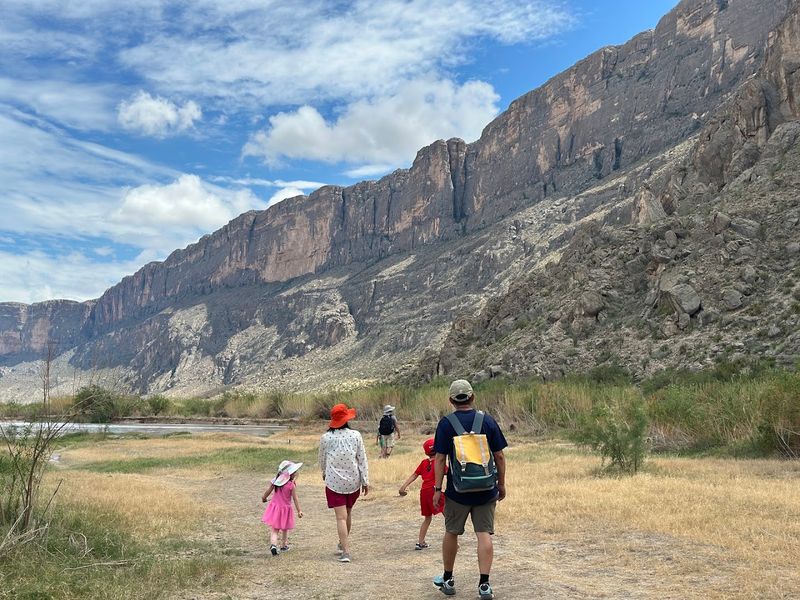
One of the most appealing things about Santa Elena Canyon Trail is that it genuinely works for a wide range of hikers. The trail runs just under two miles out and back, with moderate stair sections that most reasonably active people can handle without much trouble.
Children, older adults, and casual hikers all complete this trail regularly and happily.
The flat sections near the river are smooth and easy to walk, making them accessible for those who want to experience the canyon without tackling the elevated stair portions. Many visitors simply walk to the canyon entrance and spend time near the water before heading back.
That experience alone is worth the trip.
Heat management is the most important practical consideration here, not the physical difficulty of the trail itself. The shade inside the canyon provides some relief, but the approach trail is fully exposed to the sun.
Starting early in the morning or going during cooler seasons makes the hike significantly more comfortable. Bringing enough water is non-negotiable in this climate.
A hat, sunscreen, and sturdy shoes round out the basic preparation. The trail rewards casual visitors and dedicated hikers equally, which is a rare quality that makes Santa Elena Canyon genuinely one of the most inclusive hikes in all of Big Bend National Park.
The Sound of Silence: What the Canyon Does to Your Senses
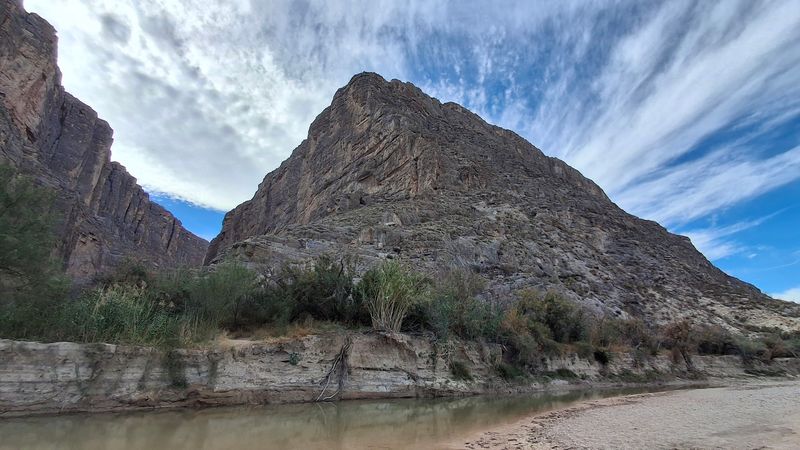
There is a particular kind of quiet inside Santa Elena Canyon that you do not find in many places. The thick limestone walls absorb and redirect sound in unusual ways, muffling the outside world and replacing it with the soft rush of the river and the occasional echo of a distant bird call.
It is the kind of silence that feels active rather than empty.
Your eyes adjust to the reduced light inside the canyon and start picking up details you would miss in brighter conditions. The texture of the rock walls becomes more vivid, the color variations in the stone more distinct.
Water reflections dance across the lower sections of the cliff faces in the morning hours.
Smell plays a role too, though it is subtle. The damp air near the river carries the earthy scent of wet rock and desert vegetation, a combination that is genuinely hard to describe but immediately recognizable once you have experienced it.
The sensory shift between the open desert trail and the enclosed canyon interior is dramatic enough that some people pause right at the canyon entrance just to take it in. That pause feels completely natural and entirely justified.
The canyon has a presence that goes beyond what you can see, and your senses seem to register it before your brain has time to process it.
Planning Your Visit: Practical Tips for Getting the Most Out of the Trail
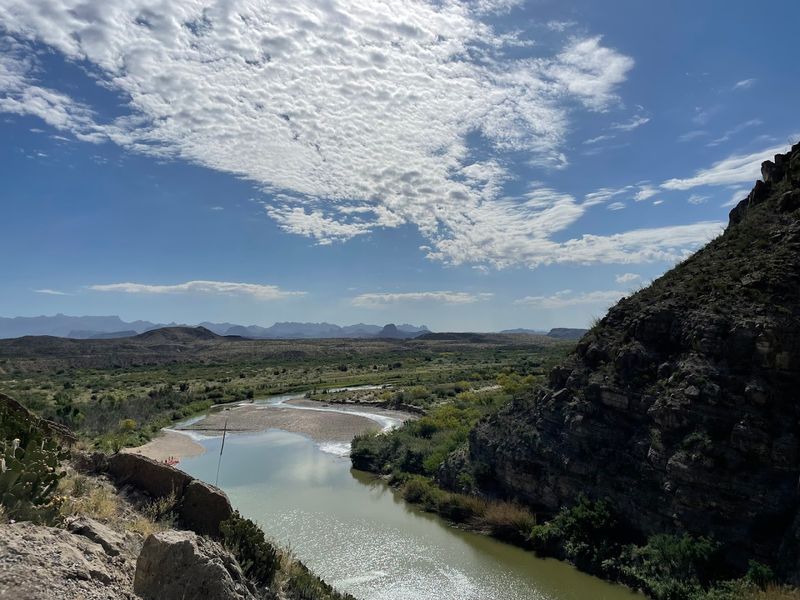
Getting to Santa Elena Canyon Trail takes roughly an hour from the Panther Junction Visitor Center, and the drive itself is part of the experience.
The road passes through open desert with sweeping mountain views and occasional wildlife sightings that make the journey feel like an extension of the park rather than just a commute to a trailhead.
Restrooms are available at the parking area, which is a practical detail worth knowing before you commit to the drive. The lot accommodates a good number of vehicles, but arriving early on weekends during peak season helps you avoid the busiest periods.
Midweek visits tend to be noticeably quieter.
Bringing a full water bottle for each person in your group is essential, not optional. The desert climate pulls moisture out faster than most people expect, and the trail offers no water sources along the way.
Snacks, a hat, and sunscreen cover the rest of the basics. For those interested in a longer experience on the water, canoe trips through the canyon are available through outfitters in the area, offering a completely different perspective on the same dramatic landscape.
Whether you have two hours or a full day to spend here, Santa Elena Canyon adjusts to your pace and rewards every level of engagement with something genuinely unforgettable.
Address: Terlingua, Texas 79852
Dear Reader: This page may contain affiliate links which may earn a commission if you click through and make a purchase. Our independent journalism is not influenced by any advertiser or commercial initiative unless it is clearly marked as sponsored content. As travel products change, please be sure to reconfirm all details and stay up to date with current events to ensure a safe and successful trip.
