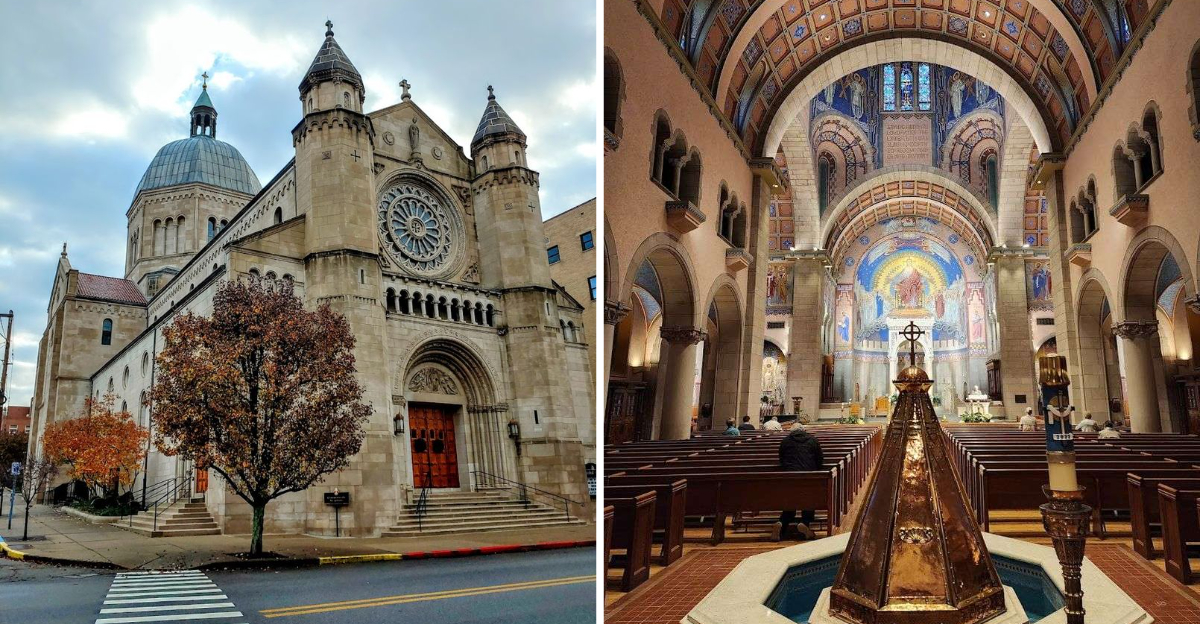
Close your eyes for a second. Now open them and pretend you just stepped into Rome without the expensive flight.
Pink Italian marble gleams under soft light. Gold accents catch your eye from every direction.
The ceiling stretches so high that your neck will get a little workout.
This is not a dream. This is West Virginia hiding a breathtaking cathedral that belongs in a European travel brochure.
Local hands built this beauty with imported stone and endless devotion.
You do not need a passport to feel transported. You just need to walk through those heavy wooden doors and look up.
Have you ever stood somewhere so grand that you forgot to blink? That will happen here.
Bring your camera, but also bring a quiet moment for yourself. Some places just ask to be felt.
The Lombard Romanesque Exterior That Stops You Cold
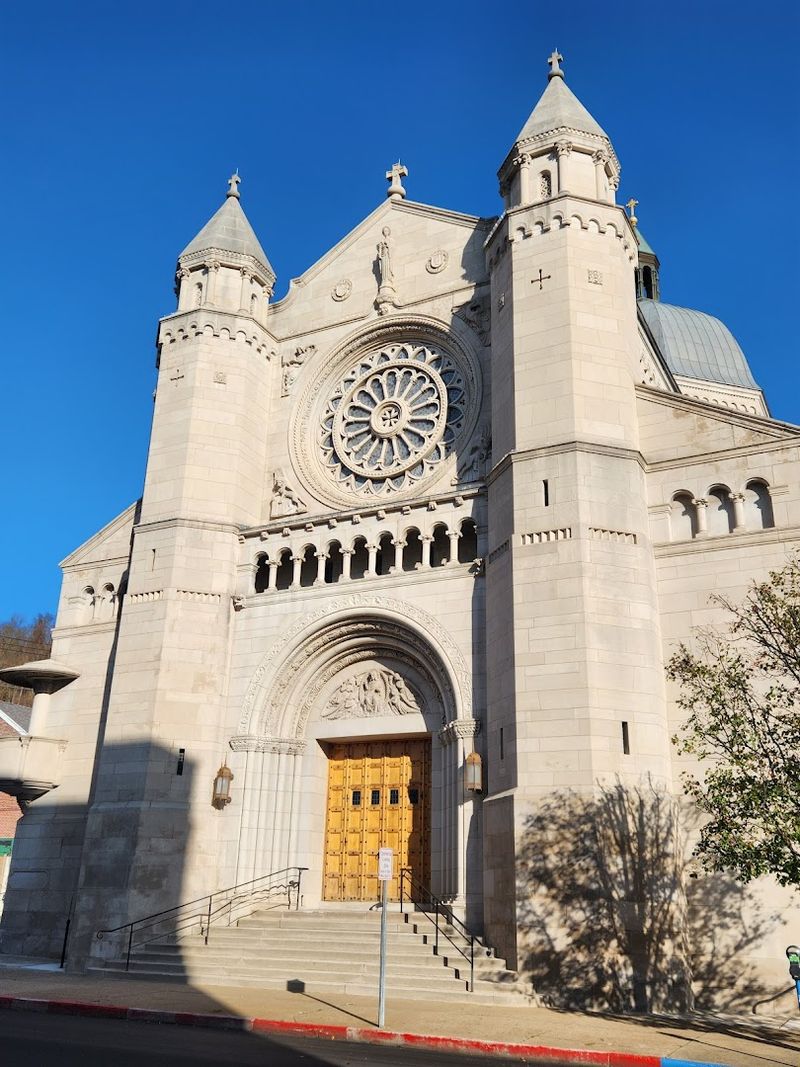
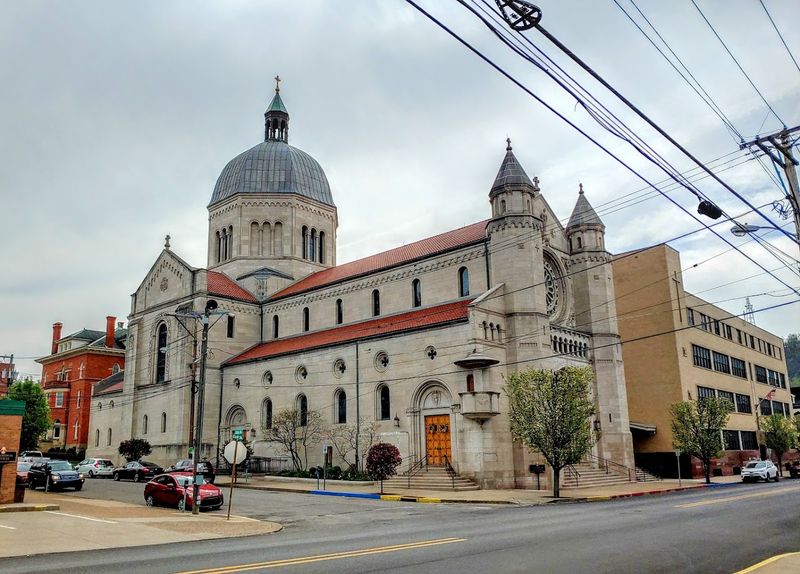
Standing on the sidewalk outside, the first thing that hits you is the sheer scale of the stone facade rising above Eoff Street.
Built entirely from Indiana Limestone, the exterior draws direct inspiration from Italian churches, particularly the Church of San Pietro in Toscanella and the Cathedral in Prato.
The craftsmanship is immediately obvious, even before you step inside.
Two elegant turrets flank a large round rose window on the main facade, giving the building a symmetry that feels both commanding and graceful.
Above the main entrance door, a carved stone figure of Christ in Majesty watches over visitors, surrounded by symbols of the Four Evangelists.
The detail in each carved element is the kind of thing you want to photograph from every angle.
The crowning feature is a dome that climbs 148 feet into the Wheeling sky, modeled after the famous dome of the Cathedral of Santa Maria del Fiore in Florence. Consecrated on April 21, 1926, this building was completed in just three years, a remarkable feat for its era.
Italian Marble That Covers Every Surface You Can See
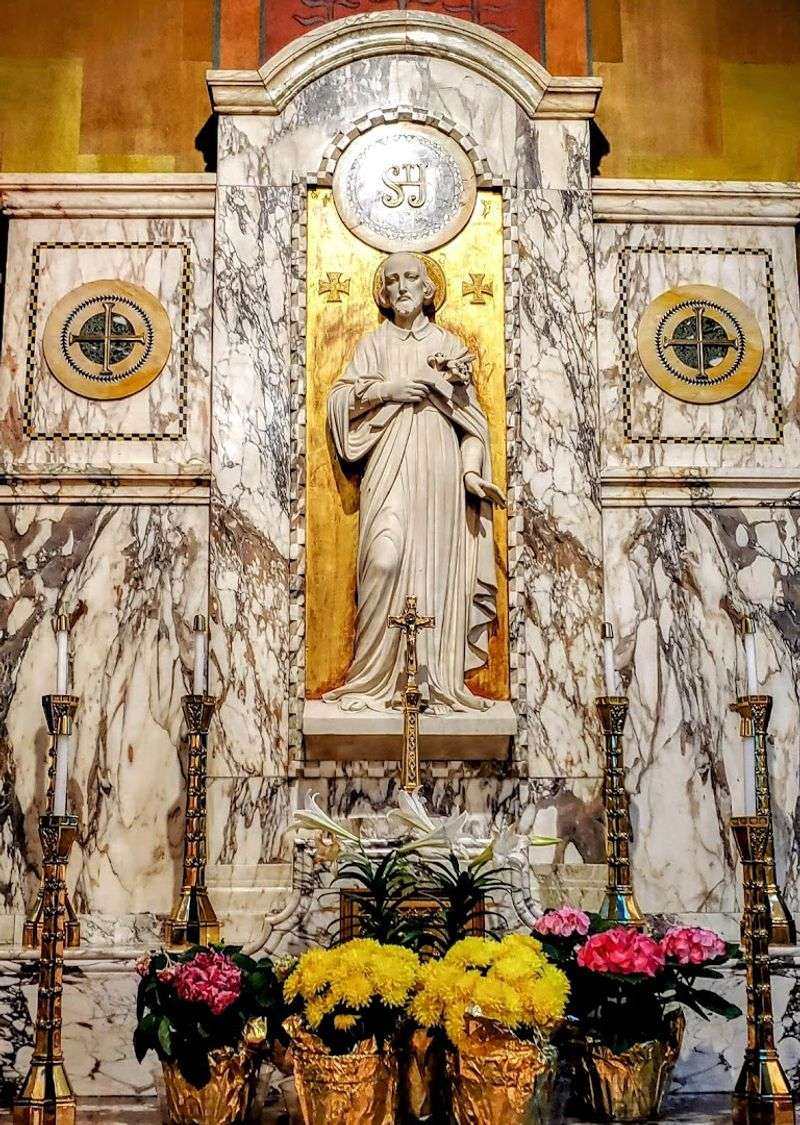
Few things prepare you for the moment the interior comes into full view. The marble used throughout this cathedral was sourced from Italy, Greece, Spain, and France, and each variety was chosen for its color and character.
Rose tavernelle, botticino, jasper, and Belgian black marble all appear together in a combination that feels almost impossibly luxurious for a city in the Appalachian hills.
Running your eyes across the floor is like reading a geological map of Europe. The warm pinks and creamy whites of the Italian stones contrast beautifully against the deep black Belgian marble accents.
Nothing about the material choices feels accidental or rushed.
A major renovation in 1996 and the installation of a new marble floor, altar, and ambo in 2012 refreshed these surfaces while keeping the original vision intact.
The result is a space that looks as vibrant and carefully considered today as it did nearly a century ago.
Marble this varied and this beautiful is genuinely rare to find outside of Europe.
A Painted Dome Ceiling Designed to Depict Heaven
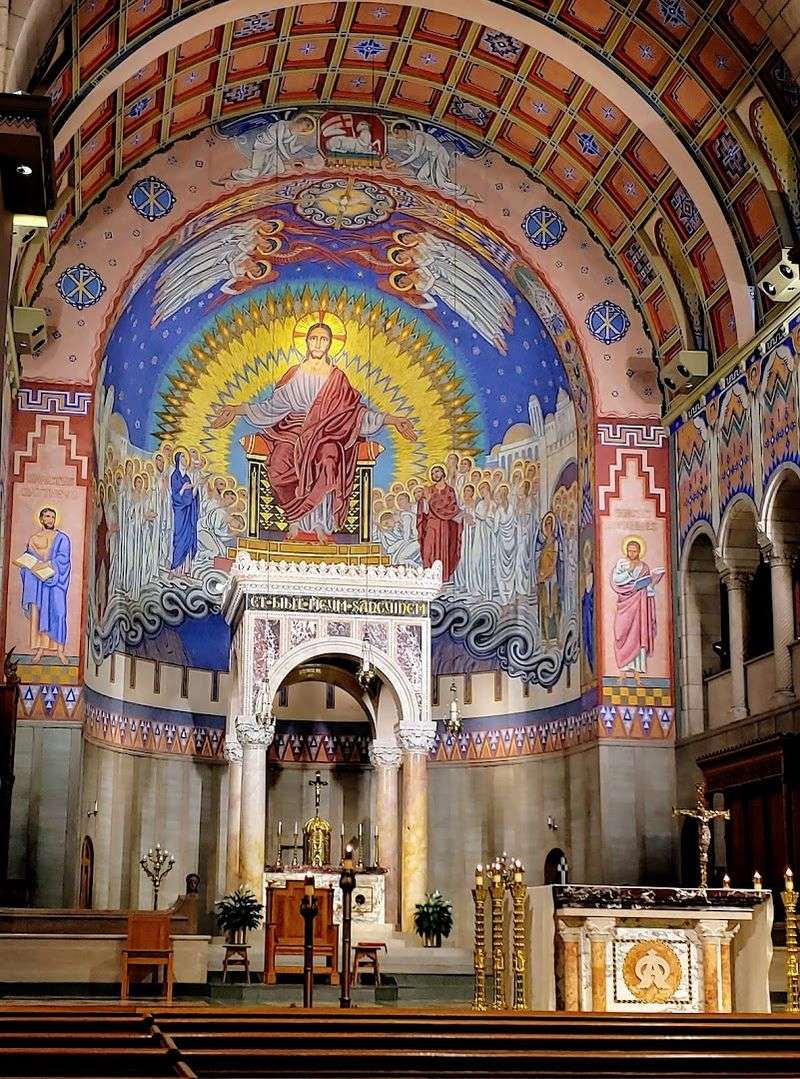
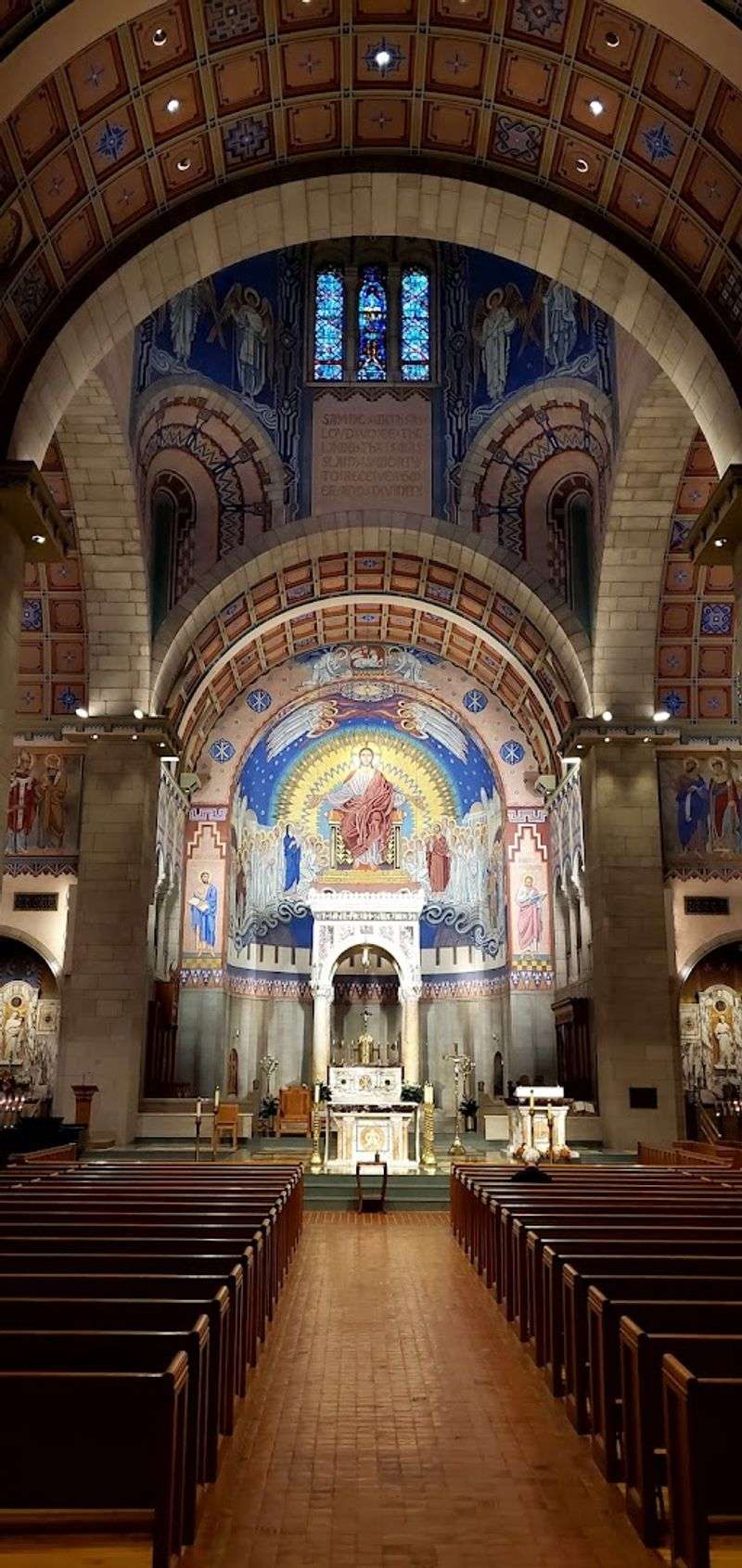
Tilting your head back inside the main dome is one of those travel moments that genuinely stops time. The ceiling of the primary dome is painted to depict heaven, and the colors are so rich and layered that the image seems to glow from within.
It is the kind of ceiling that makes you grateful you remembered to look up.
The interior design concept follows the Medieval Byzantine style, which favors deep jewel tones, golden accents, and an almost overwhelming sense of sacred drama.
Every painted surface contributes to the feeling that you have stepped into a world apart from the ordinary.
The combination of architecture and painting creates an atmosphere that is simultaneously ancient and alive.
Standing directly beneath the dome, the full effect of the space settles in around you. The height, the light filtering through the stained glass, and the painted ceiling all work together to produce something that feels genuinely transcendent.
Even visitors who arrive out of pure architectural curiosity tend to linger here far longer than they planned.
Medieval-Style Stained Glass Windows by George W. Sotter
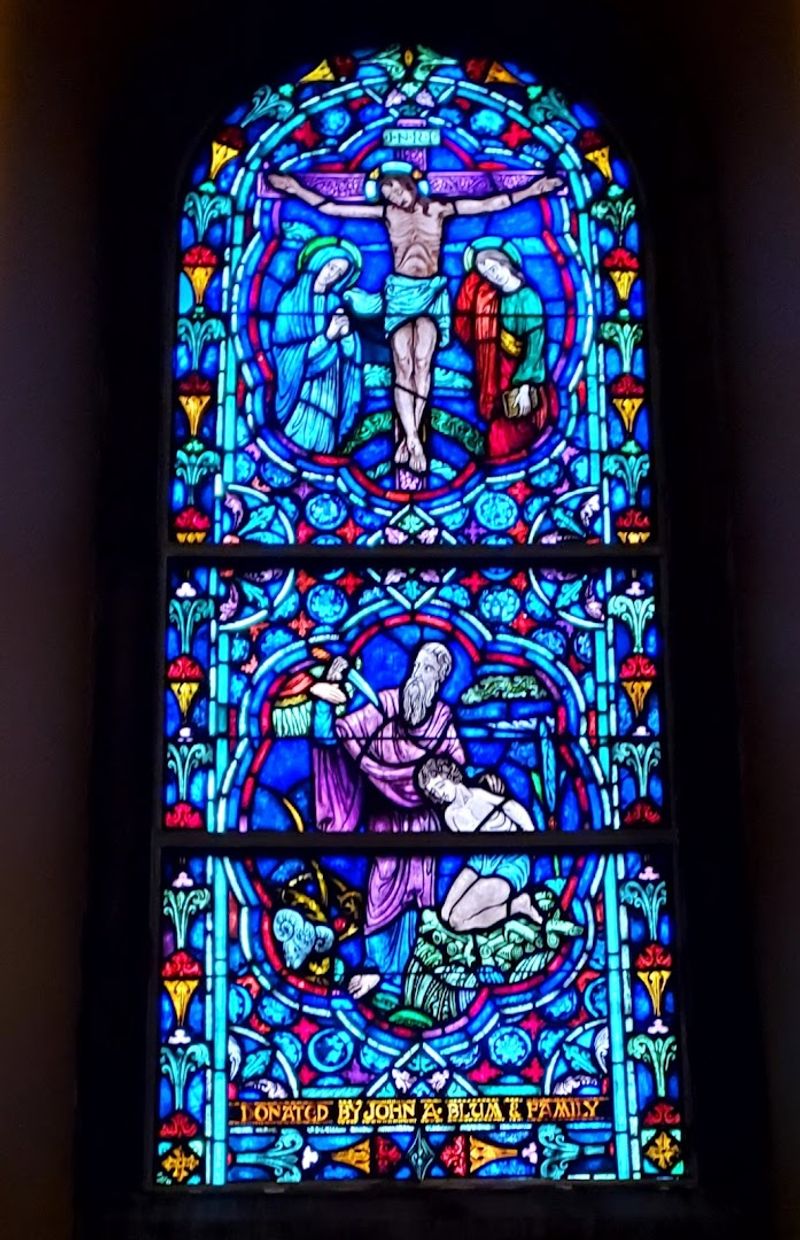
Light behaves differently inside this cathedral, and the stained glass windows designed by George W. Sotter are the reason why.
Each window filters sunlight into pools of deep blue, ruby red, and amber gold that shift slowly across the marble floors as the day moves.
Sotter designed them in a medieval style that feels completely at home within the Lombard Romanesque architecture surrounding them.
The windows are not just decorative backdrops. They function as storytelling panels, each depicting religious narratives with a level of craft that takes time to fully absorb.
The leading work, the color gradients, and the compositional choices all reflect a level of artistic ambition that matches everything else in the building.
Morning visits tend to offer the most dramatic light, when the low angle of the sun pushes color deep into the interior. Late afternoon brings a warmer, quieter glow that feels almost contemplative.
Either way, the windows transform the atmosphere of the space in ways that shift from hour to hour, making each visit feel slightly different from the last.
The Apse Mural That Fills an Entire Half-Dome
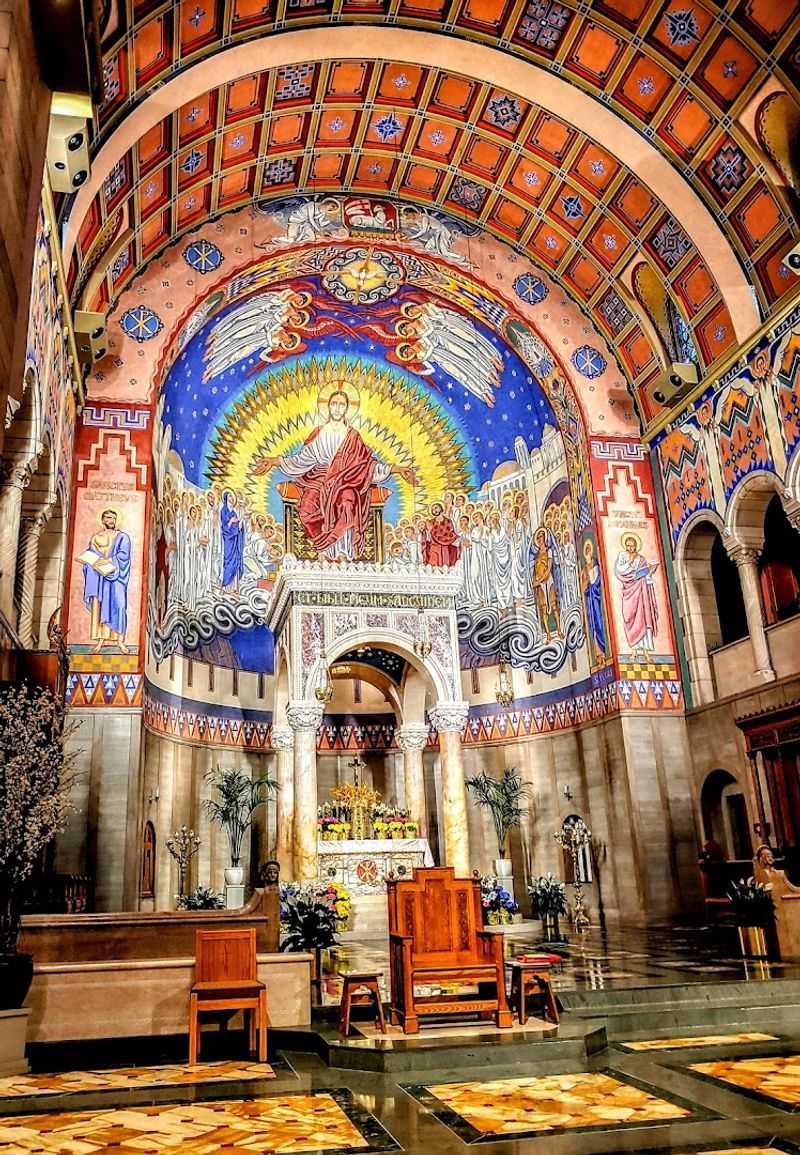
At the far end of the cathedral, the apse opens into a sweeping curved wall covered entirely by a mural called Enthroned Christ and the Communion of the Saints. Painted by artist Felix B.
Lieftuchter, this work fills the half-dome above the altar with a composition that feels both monumental and deeply personal. The scale of it is something photographs simply cannot fully capture.
Lieftuchter used the curved architecture of the apse as a canvas, allowing the figures to radiate outward from the central enthroned Christ in a way that pulls your eye upward and inward at the same time.
The richness of the color palette ties directly into the Byzantine design language used throughout the rest of the interior.
Everything here speaks the same visual language.
Spending a few quiet minutes looking at this mural reveals new details with each pass.
The expressions on the figures, the layering of the saints, and the careful use of gold tones throughout make this one of the most accomplished pieces of religious painting in the entire region.
It rewards patience generously.
The Barrel Vault Nave With Trompe l’Oeil Coffers
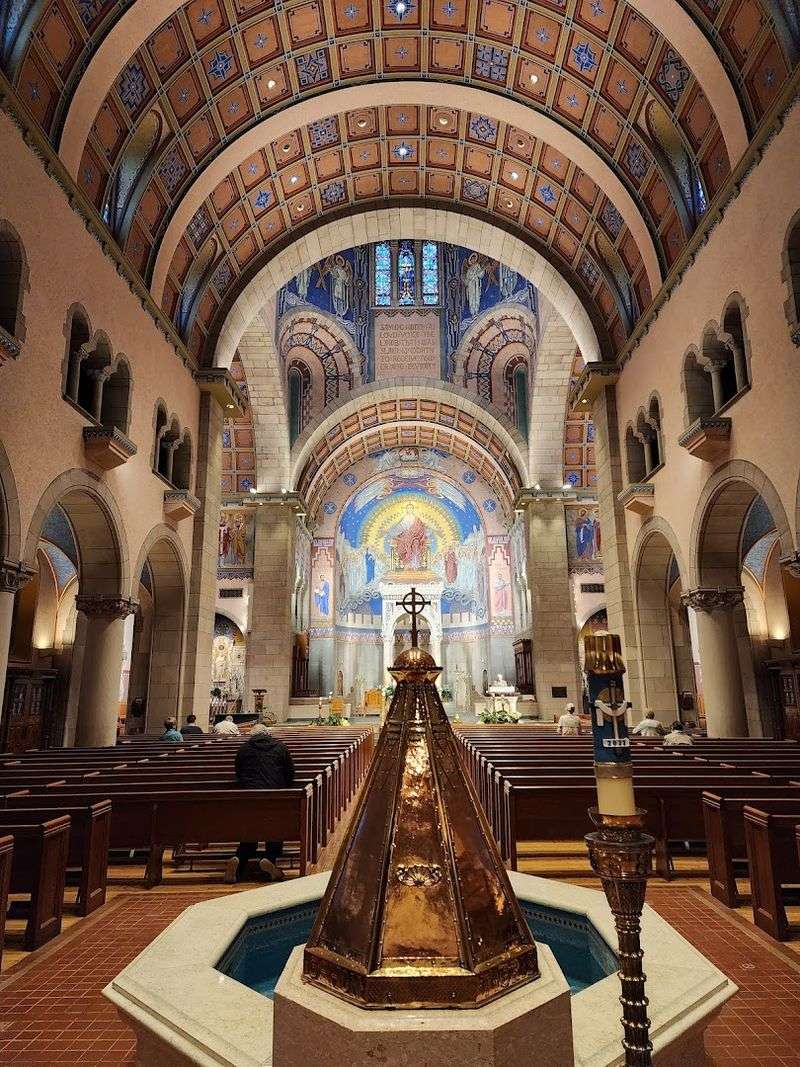
Walking down the nave toward the altar, the ceiling above you is doing something clever.
The long barrel vault is decorated with painted trompe l’oeil coffers, a technique where flat painted surfaces are made to look three-dimensional through careful shading and perspective.
The effect makes the ceiling appear deeply carved and architecturally complex even though the surface itself is relatively smooth.
Trompe l’oeil, which translates roughly to “deceive the eye” in French, was a beloved technique in European church decoration for centuries.
Seeing it executed at this scale in Wheeling, West Virginia is one of those genuinely surprising discoveries that reminds you how ambitious the original builders truly were.
They wanted the interior to match the grandeur of the great European cathedrals, and they largely succeeded.
The nave itself is long enough that the perspective creates a natural sense of procession as you move toward the altar. The rhythm of the painted coffers overhead reinforces that movement in a subtle but effective way.
Architecture and painting work together here as a unified experience rather than separate elements.
The Rose Window That Anchors the Main Facade
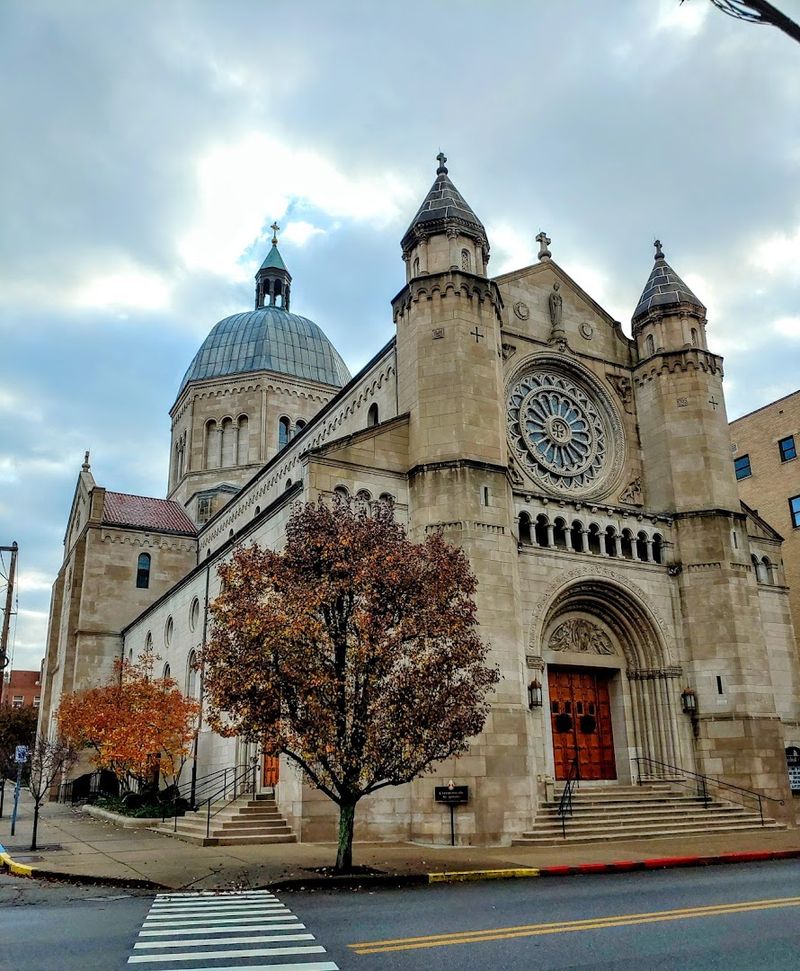
Rose windows have a way of commanding attention even from a distance, and the one on the main facade of this cathedral is no exception.
Positioned between the two flanking turrets, the large circular window sits at the visual center of the exterior composition and draws your eye immediately upon approach.
It is the kind of architectural feature that announces the building’s ambitions before you even reach the door.
From the outside, the window reads as a bold geometric statement against the pale limestone.
From the inside, it becomes a source of diffused light that softens the entrance area and creates a transition between the brightness of the street and the more enveloping atmosphere of the interior.
That shift in light quality is something you feel physically as you step across the threshold.
Rose windows trace their origins back to Gothic and Romanesque European cathedral design, where they symbolized eternity and divine perfection.
Finding one of this scale and quality in West Virginia feels like a genuine gift to anyone who appreciates architecture.
It ties the building firmly to a centuries-old tradition of sacred design.
The Historical Weight of Wheeling’s Oldest Catholic Congregation
There is something quietly powerful about knowing that the congregation gathered here is the oldest Catholic congregation in the city of Wheeling. That continuity stretches back generations, connecting families across time in a single physical place.
The cathedral serves as both a living church and a kind of living archive of community history.
As the mother church of the Catholic Diocese of Wheeling-Charleston, St. Joseph carries a significance that extends well beyond its immediate neighborhood. Decisions made within its walls have shaped Catholic life across the entire state of West Virginia.
That institutional weight adds a layer of meaning to every visit, whether you come for the architecture or the worship.
The building is also recognized as a contributing property to the East Wheeling Historic District on the National Register of Historic Places.
That designation reflects the cathedral’s importance not just to its religious community but to the broader cultural and architectural heritage of the region.
Walking through it, you are moving through nearly a century of continuous community life, and that presence is palpable in every corner.
Visiting the Cathedral Today and Planning Your Trip
Getting to the cathedral is straightforward, and the building sits in a walkable part of Wheeling that rewards a bit of exploration before or after your visit.
The surrounding East Wheeling Historic District has its own architectural character worth a slow stroll.
Arriving with some extra time lets you take in the neighborhood context that frames the cathedral’s presence in the city.
The cathedral is open to visitors during regular hours throughout the week, with extended hours on Saturdays and earlier opening on Sundays.
Morning visits on a weekday tend to offer the quietest experience, with soft light coming through the stained glass and very few other people around.
That kind of stillness makes the space feel even more expansive than it already is.
Whether you are a devoted architecture enthusiast, a history lover, or simply someone who stumbled across Wheeling on a road trip, this cathedral delivers something memorable.
The combination of European-inspired design, extraordinary materials, and genuine historical depth makes it one of the most remarkable buildings in the entire Appalachian region.
Address: 1300 Eoff St, Wheeling, WV
