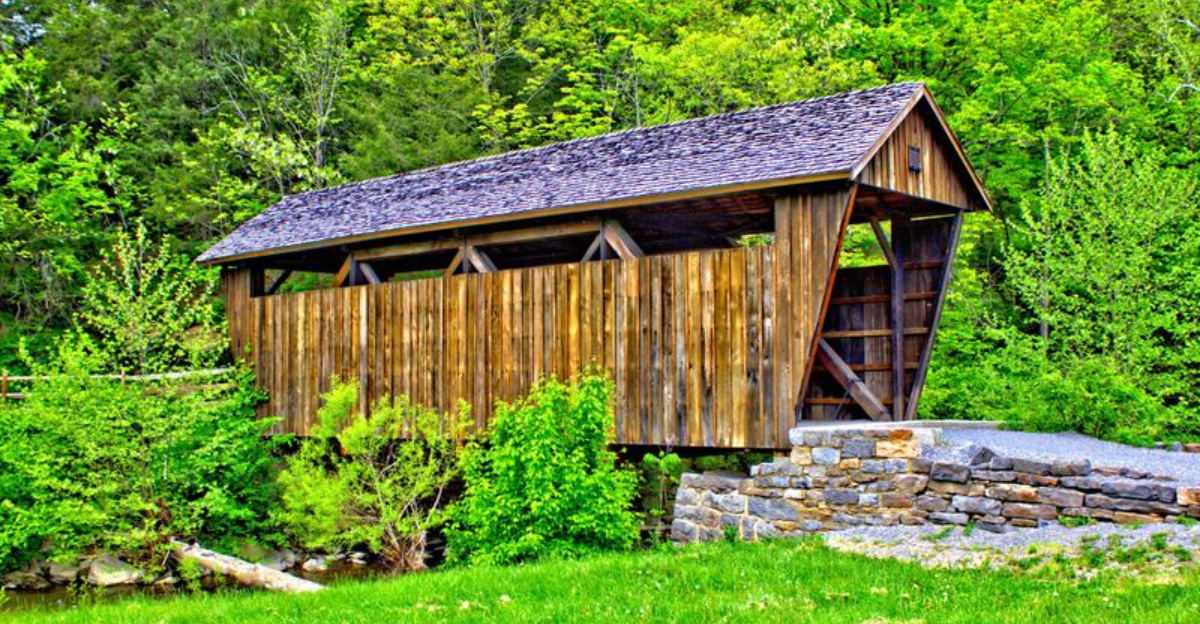
Imagine trusting a bunch of teenagers to build something that would outlast your entire family tree. That is exactly what happened here.
Way back when, young hands hammered and hauled their way to creating this wooden wonder, and somehow, it still stands like it just time traveled from a sepia photograph.
The planks creak with stories, the roof shelters more history than any textbook, and the whole structure leans into the landscape like it owns the place.
West Virginia does not do flimsy, and this bridge proves it. You half expect a horse and buggy to clip clop right through.
It is rustic, it is sturdy, and it absolutely refuses to look its age. Come see what teenage ambition built.
Spoiler: it is still showing off.
Built By Two Teenage Brothers In 1903
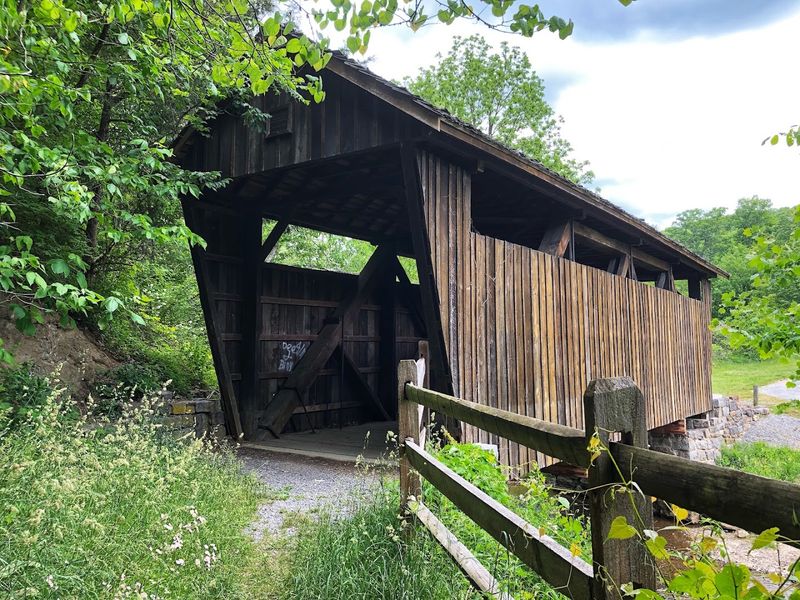
Most teenagers in 1903 were not exactly known for building things that last over a century. Ray and Oscar Weikel were the exception.
At just 16 and 18 years old, these two brothers took on the job of constructing what would become one of West Virginia’s most beloved covered bridges.
They were self-taught contractors who relied on common sense and raw determination to get the job done. Their uncles, who ran a local sawmill, backed the guarantee for the project’s completion.
The brothers set up their own sawmill right near the site and prepared almost all of the materials themselves, sourcing everything except the iron rods, nails, and shingles.
Here is the part that really stands out: they invented their own tool to lift the heavy timber beams into place, a double-geared, back-action cant hook of their own design. That kind of creative problem-solving at such a young age is genuinely remarkable.
Their work has outlasted generations, which says everything about the craftsmanship they brought to this project.
The Bridge Cost Monroe County Only $400 To Build
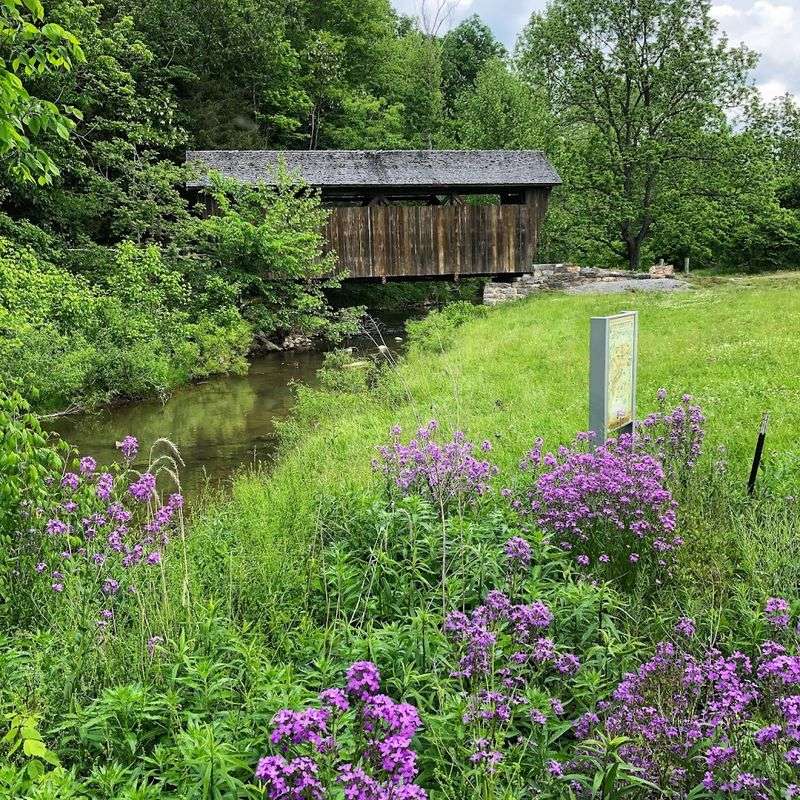
Four hundred dollars. That is what Monroe County paid for a bridge that has now stood for well over a hundred years.
When you walk through it today, that number feels almost impossible to believe. The craftsmanship packed into every beam and plank is worth far more than that figure suggests.
The Weikel brothers kept costs remarkably low by handling most of the labor and material preparation themselves. Setting up their own sawmill on-site meant they did not have to pay outside suppliers for the bulk of the lumber.
That kind of resourcefulness stretched every dollar as far as it could go.
For context, $400 in 1903 was not exactly pocket change, but it was still a shockingly modest sum for a structure of this quality. The bridge served Monroe County continuously for about 30 years before being bypassed.
Getting this much longevity and utility out of such a small investment makes the Indian Creek Covered Bridge one of the most cost-effective public works projects in West Virginia history.
A Rare Long Truss Design
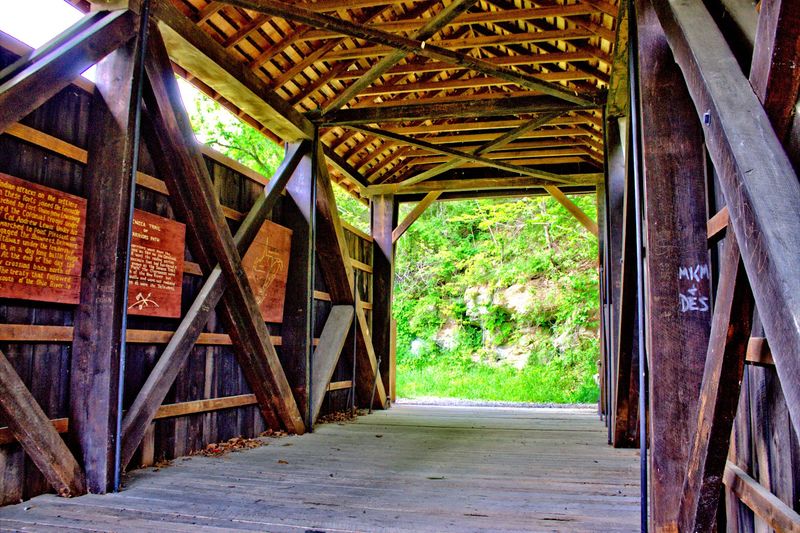
The engineering inside this bridge is more fascinating than it might look at first glance. The Indian Creek Covered Bridge uses a Long truss design, a system patented by Colonel Stephen H.
Long back in 1830. The structure relies on a repeating pattern of boxed X shapes formed by the timber framing, which distributes weight with surprising efficiency.
Only six covered bridges in all of West Virginia share this specific truss style. The others are Philippi, Hokes Mill, Sarvis Fork, Statts Mill, and Center Point.
Being part of such a small, exclusive group makes this bridge a genuine rarity in the state.
What makes the Long truss especially interesting is how it manages to be both structurally sound and visually striking. When you step inside and look down the length of the bridge, the geometric pattern of the wooden framework creates a kind of tunnel effect that feels almost architectural.
For a 50-foot span built by teenagers using hand-prepared timber, the precision of this design is quietly astonishing.
One Of The Most Photographed Covered Bridges In West Virginia
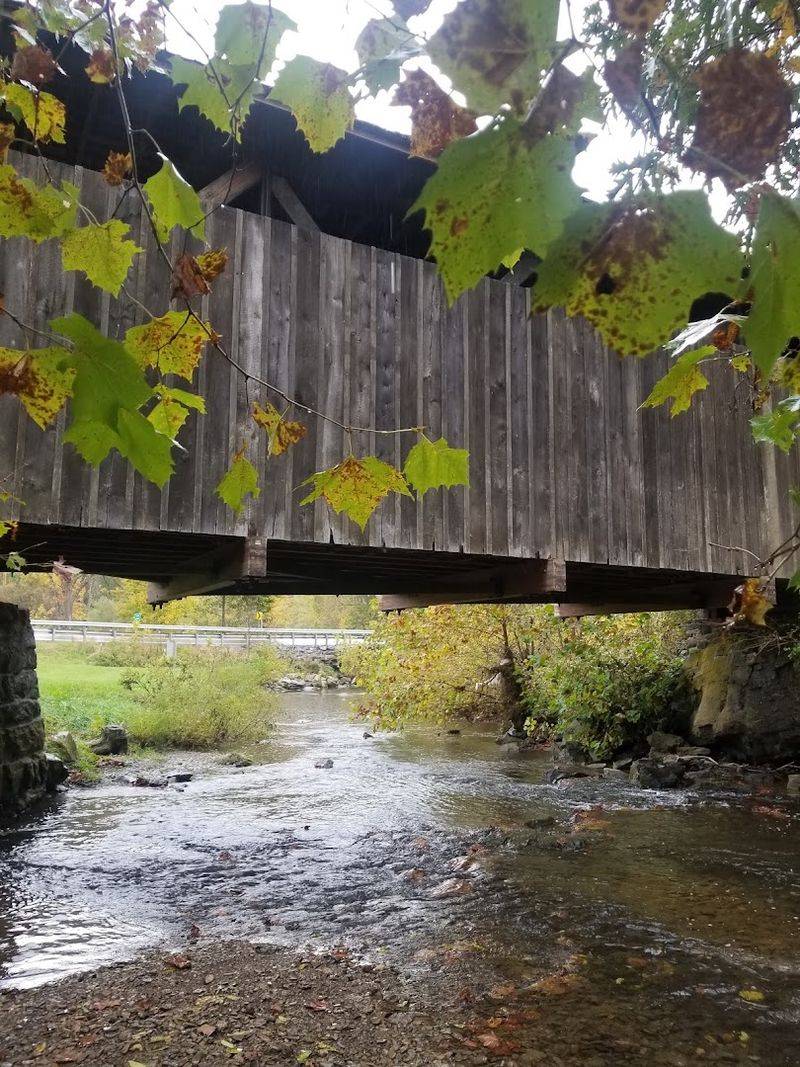
Pull up almost any travel photography collection from West Virginia, and there is a solid chance the Indian Creek Covered Bridge makes an appearance.
Its combination of classic wooden construction, creek-side setting, and surrounding hills creates a scene that practically begs to be photographed.
The light changes beautifully throughout the day here. Morning fog drifting off the creek gives the bridge a dreamy, almost painterly quality.
Late afternoon sun turns the weathered wood a warm amber that no filter can fully replicate.
Fall is especially popular, when the surrounding trees shift into shades of red, orange, and gold. The bridge sits low enough to the creek that you can get stunning reflections in the water from the right angle.
Serious photographers often make this a dedicated stop on a West Virginia road trip, while casual visitors end up spending far longer than planned just framing the perfect shot.
The bridge earns its reputation as one of the most photographed in the state simply by existing in a setting this naturally beautiful.
The Bridge Sits Along An Ancient Seneca Trail
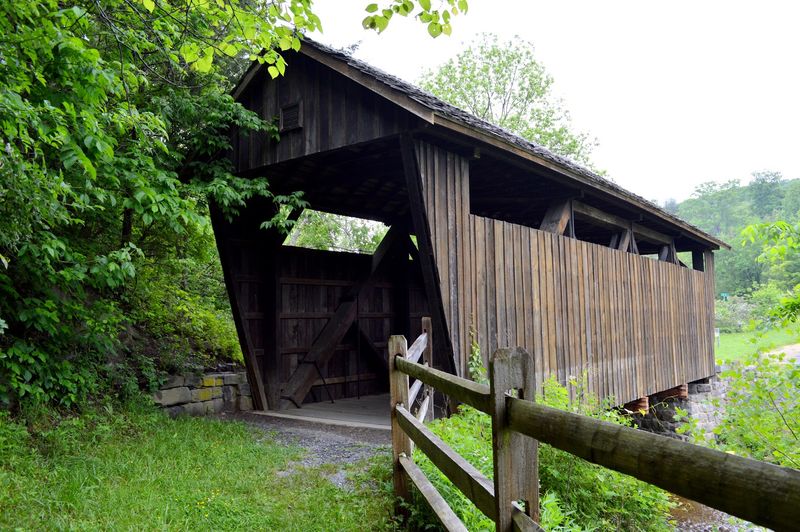
Long before any bridge existed here, this land already carried deep historical weight. The route that would eventually become US-219 closely follows the path of the ancient Seneca Trail, also known as the Warrior’s Path.
This trail was one of the most important travel corridors in the eastern part of North America.
Indian Creek itself is named for the Native American trail that once crossed the Appalachians, connecting the Ohio River valley to the Great Valley of Virginia.
It functioned as what historians sometimes call the interstate of the Indigenous world, a well-worn path used for trade, movement, and communication across the mountains.
Standing on this bridge and knowing that people traveled this same corridor for centuries before the first timber was ever cut for its construction adds a whole new layer to the experience. The bridge did not just appear in a random spot.
It was built at a place where human paths had already been crossing for generations. That kind of layered history makes a visit feel like much more than just a stop to see old woodwork.
Restored In 2000 At A Cost Of Over $330,000
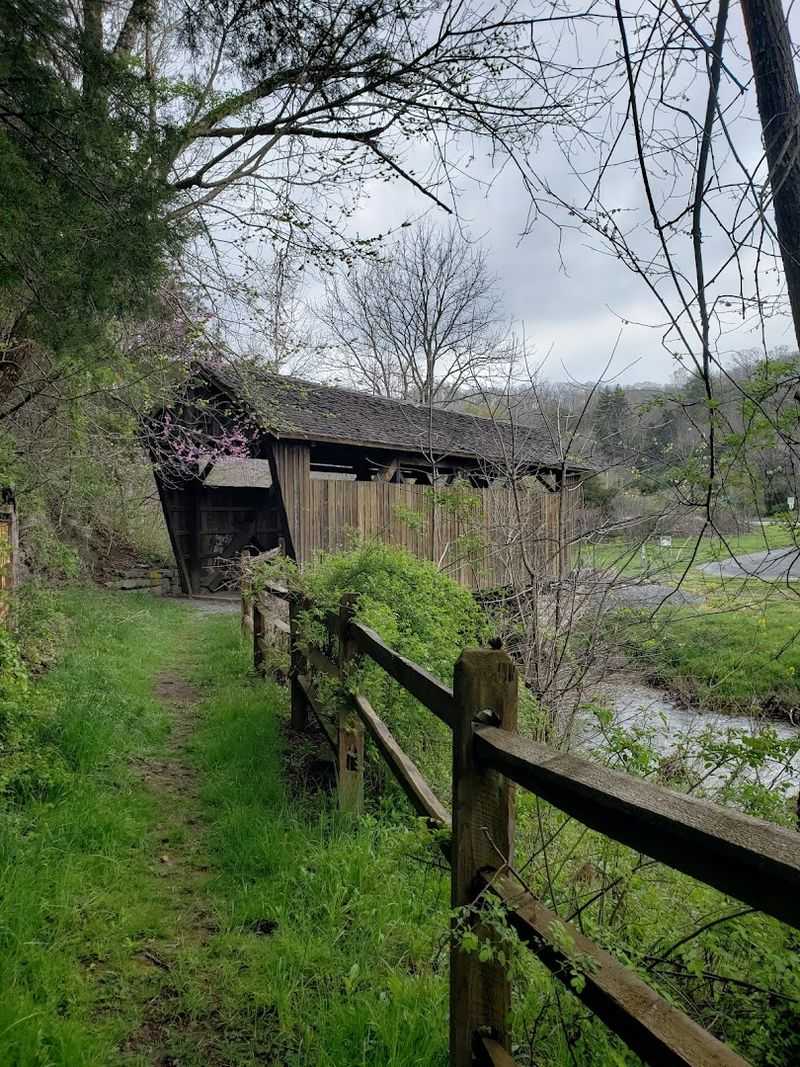
By the late 20th century, the bridge needed serious attention. Hoke Brothers Construction took on the restoration project in 2000, completing work that cost $334,446, a number that puts the original $400 price tag into sharp perspective.
The restoration was thorough and thoughtful, designed to preserve the bridge’s historic character while making it structurally sound.
New timber roof trusses were installed, along with a glue-laminated timber deck, fresh wooden exterior siding, and a new roof made of split shakes. The original chestnut shingles were replaced with red oak, and those shingles were actually made on-site.
To prevent warping, workers installed them at night when temperatures were cooler.
There is also a remarkable human detail woven into the 1965 rehabilitation effort that preceded the full restoration. Oscar Weikel, one of the original teenage builders, returned to assist with that earlier project at 81 years old.
The fact that he lived long enough to help preserve his own work is one of those details that makes this bridge feel genuinely alive with history, not just a relic frozen in time.
A Pedestrian-Only Span With Antique Cars Displayed Inside
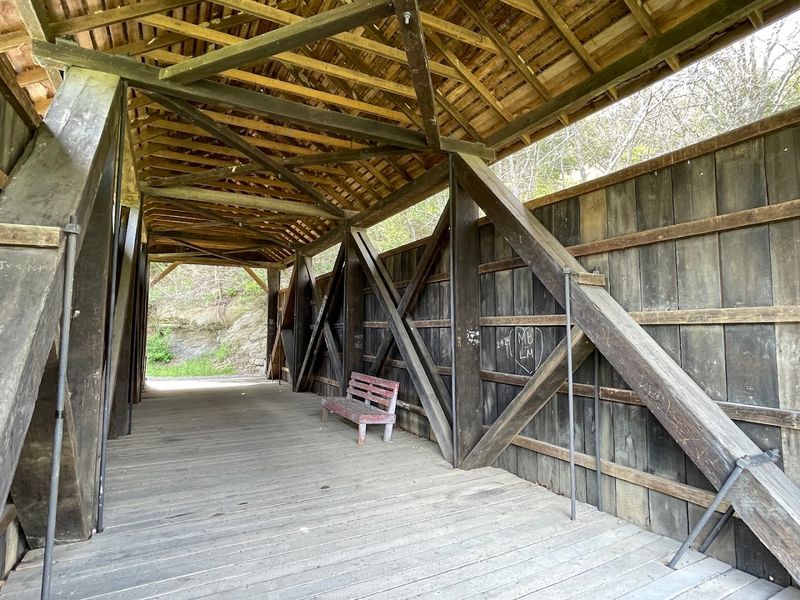
Vehicles no longer cross the Indian Creek Covered Bridge, but the bridge has found a creative new role as an open-air exhibit space.
Walk through it today and you will find antique vehicles from the early 1900s displayed inside, tucked between the timber walls like artifacts in a living museum.
The combination of vintage cars and century-old woodwork creates a surprisingly compelling atmosphere. There is something almost theatrical about it, like the bridge itself is curating its own little show about the era it was born into.
The vehicles and the structure belong to the same chapter of American history.
Being pedestrian-only also means you can take your time without worrying about traffic. You can stop in the middle, look down at the creek below through the gaps in the deck, and really absorb the details of the Long truss framing above your head.
Historical information boards are posted inside, giving context to what you are looking at. It turns a quick roadside stop into something that genuinely holds your attention for a while.
The Limestone Abutments Were Laid Without Mortar
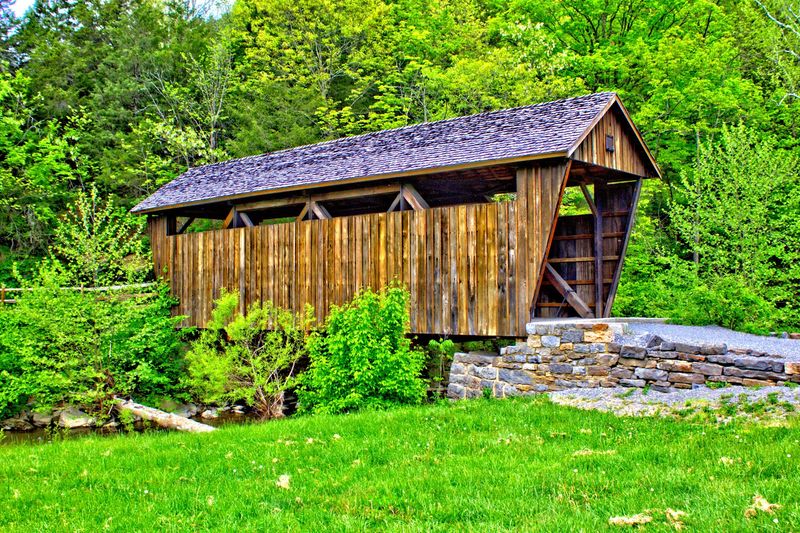
Look closely at the base of the bridge and you will find one of its most quietly impressive features. The abutments that support the entire structure are built from hand-shaped limestone blocks, and they were fitted together without a single drop of mortar.
That is dry-stacked masonry, a technique that relies entirely on precision shaping and careful placement.
It sounds simple, but getting limestone blocks to interlock tightly enough to support a loaded bridge takes real skill. The stones were shaped to fit each other so snugly that the structure holds together through gravity and geometry alone.
Over a century later, those abutments are still doing their job.
There is something deeply satisfying about that kind of craftsmanship. No shortcuts, no filler material, just stone fitted to stone with care and patience.
The fact that the Weikel brothers and their team managed this alongside all the timber work speaks to the overall level of skill brought to this project. The abutments are easy to overlook, but they deserve as much appreciation as the wooden bridge sitting on top of them.
A Slice Of History That Looks Straight Out Of Another Century
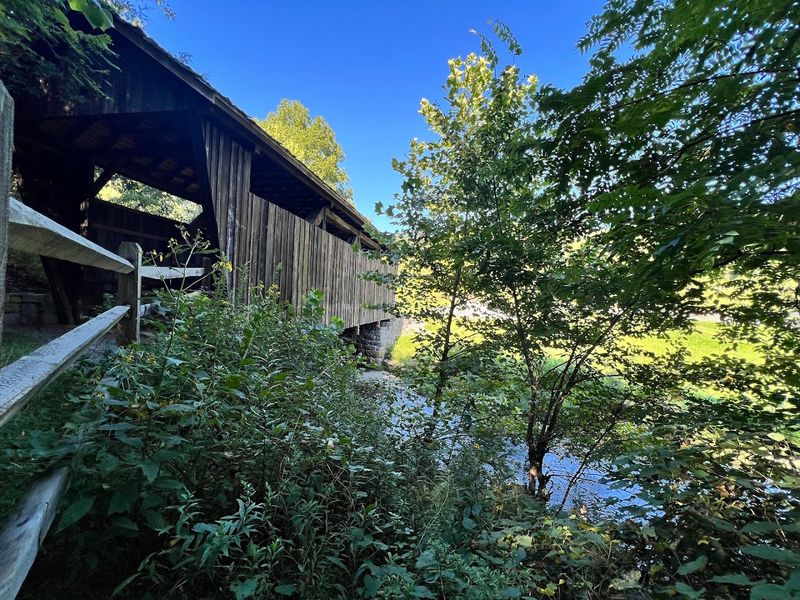
There are places that exist in their own time, and the Indian Creek Covered Bridge is absolutely one of them. Standing in front of it, especially on a quiet morning with mist rising off the creek, it genuinely feels like the modern world has been switched off.
No stoplights, no fast food signs, no noise. Just old wood, moving water, and mountain air.
Listed on the National Register of Historic Places in 1975, the bridge carries official recognition of its cultural importance. But the real impact is something you feel rather than read about.
The bridge has a presence that photographs only partially capture.
What makes it linger in your memory is the combination of everything: the teenage builders, the $400 price tag, the ancient trail beneath it, the mortar-free limestone, and the fact that it is still standing strong. Each detail adds another layer to a story that somehow keeps getting better the more you learn.
This bridge is not just old. It is a place where history feels alive, immediate, and worth every mile of the drive to get here.
Address: US-219, Union, WV 24983
