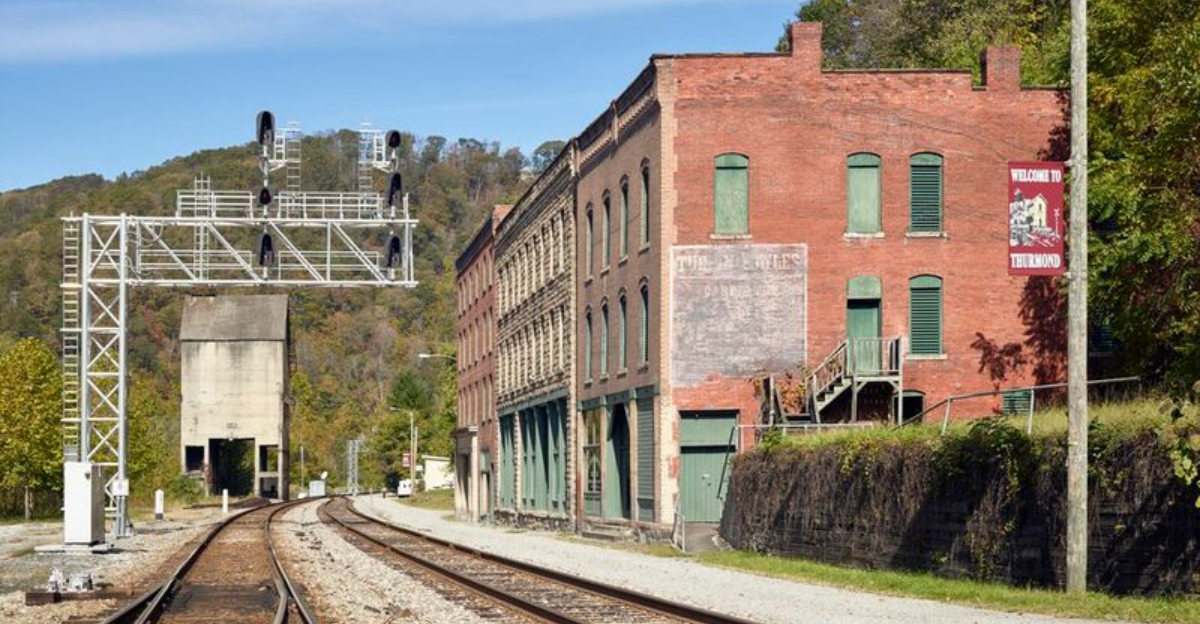
Imagine a place so lively that money practically flowed through the streets like water.
Now imagine that same place silent, with only the wind rattling through empty windows.
Once a booming railroad hub where fortunes were made and trains never stopped running, today it stands as a fascinating whisper of the past.
You can walk the same wooden platforms where millionaires once paced, except now the only crowd is you and a few curious birds.
West Virginia does not let its history fade away completely. It just lets it breathe differently.
Have you ever stood somewhere so quiet that you could almost hear the echoes of old train whistles?
The stories are everywhere.
A Town Built on Rails and River Grit
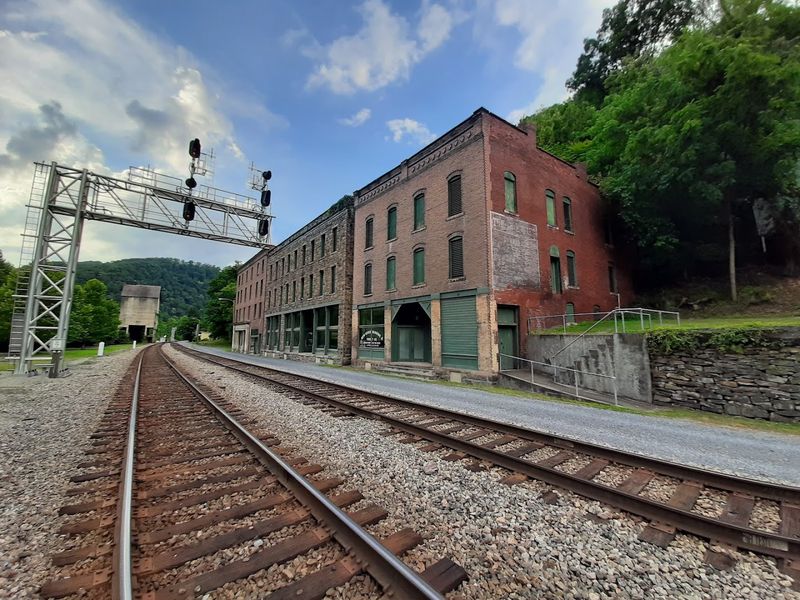
Captain William D. Thurmond probably had no idea what he was starting when he accepted 73 acres of land as payment for surveying work back in 1873.
That scrubby patch along the New River would grow into one of the most powerful railroad towns in the entire eastern United States. The Chesapeake and Ohio Railway made it official when their mainline pushed through that same year.
By 1903, Thurmond was incorporated and buzzing. The town sat right on the river with no road access whatsoever, which meant the railroad was not just convenient, it was everything.
Every person, every pound of coal, every loaf of bread came in by train.
That kind of dependency built a fierce community. People here were tough, resourceful, and deeply connected to the rhythm of the rails.
Standing near those old tracks today, you can almost feel the vibration of freight cars that once made this gorge shake with prosperity and purpose.
More Revenue Than Richmond and Cincinnati Combined
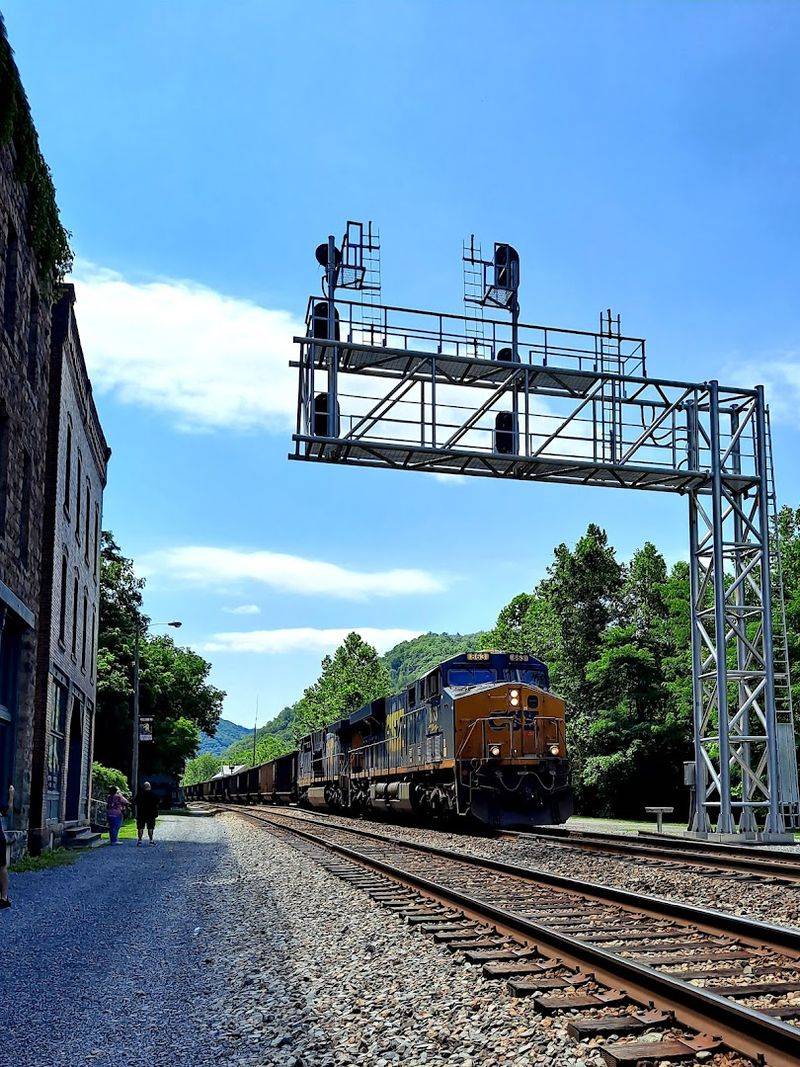
That statistic stops people cold every single time. During the first two decades of the 1900s, Thurmond handled more freight and generated more C&O Railway revenue than Richmond, Virginia and Cincinnati, Ohio put together.
For a town with no road, that is genuinely jaw-dropping.
Coal was the engine behind all of it. The New River Gorge region was rich with high-quality, low-sulfur coal, and Thurmond sat right in the middle of the action.
Approximately 15 passenger trains rolled through daily at the height of operations. The depot served between 75,000 and 95,000 passengers every single year.
Thinking about those numbers while standing at the quiet, restored depot today creates a strange kind of emotional whiplash.
The building is beautiful and well-maintained, but the contrast between what it was and what it is now hits differently than any museum exhibit ever could.
This was not just a stop on a map. It was a financial powerhouse hiding inside a mountain gorge.
The Depot That Still Stands Proud
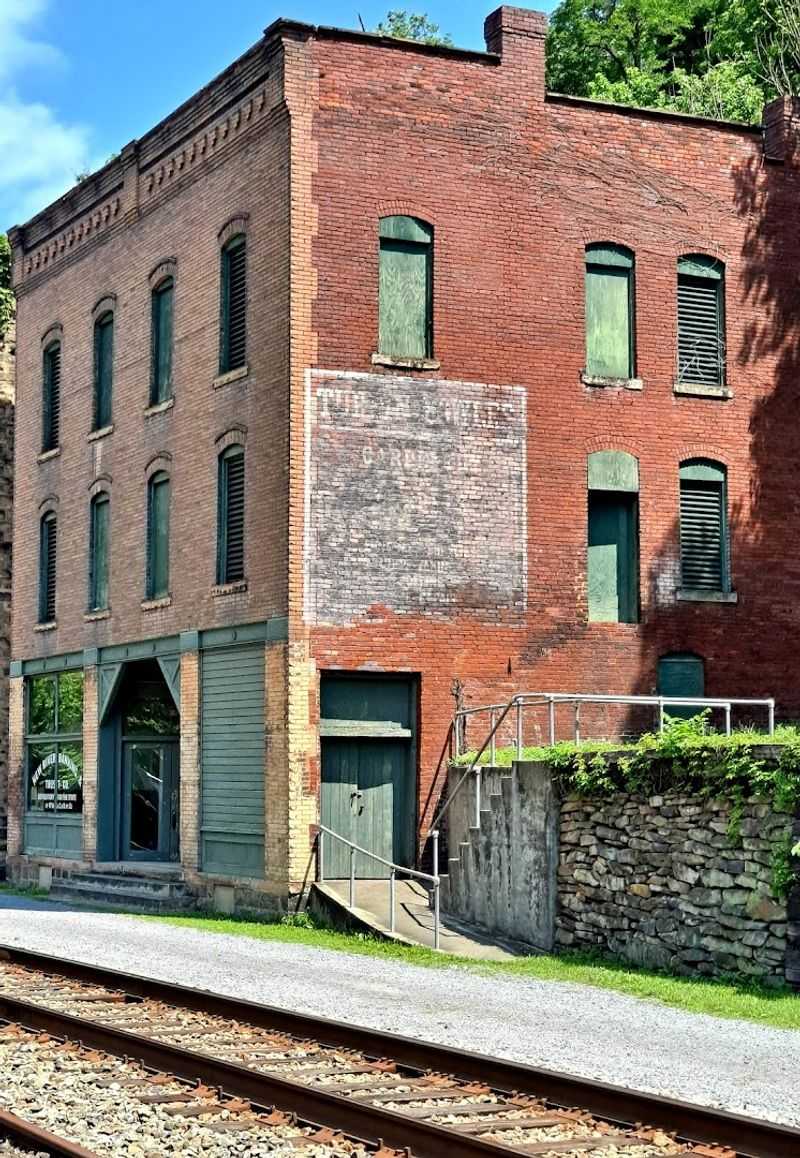
Walking up to the Thurmond Depot feels surprisingly personal.
The National Park Service restored it beautifully in 1995, and it now serves as a visitor center where you can piece together the town’s wild history through exhibits and photographs.
It even functions as a seasonal Amtrak flag stop, which means actual trains still pause here.
The architecture is solid and unpretentious, exactly what a working railroad depot should look like. Red brick, clean lines, and a platform that once hummed with the energy of thousands of travelers passing through each year.
You get a real sense of the scale of activity that once defined this spot.
Picking up a self-guided walking tour map from the depot is the move. It takes you through the remaining structures at your own pace, letting the details sink in naturally.
There is no rush, no tour guide talking over your thoughts. Just you, the river breeze, and a town that refuses to be forgotten despite having fewer than ten residents for decades.
The Dun Glen Hotel and Its Fiery End
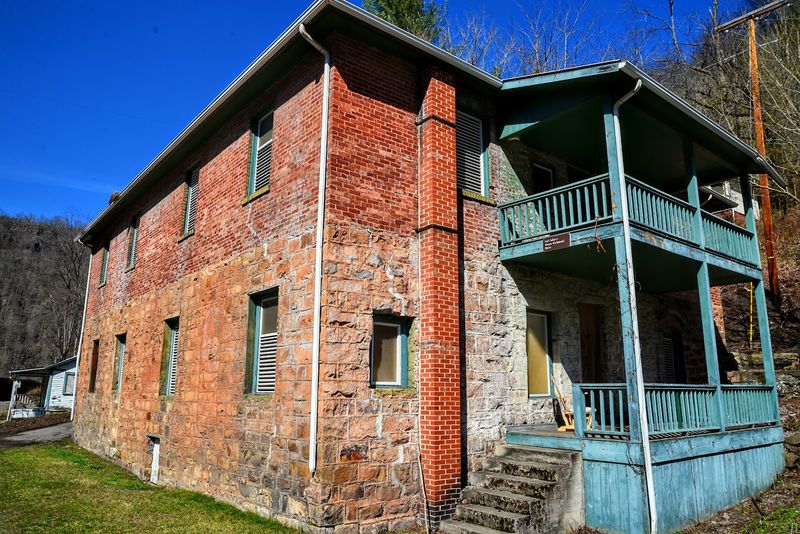
At its peak, Thurmond had a 100-room hotel called the Dun Glen, and by all accounts it was the kind of place that made coal barons feel right at home.
It was nationally known, which for a town accessible only by train deep inside a mountain gorge, is pretty remarkable.
The hotel drew business travelers, railroad executives, and anyone with money to spend in the gorge.
Then came 1930, and a fire took it all down. The Dun Glen never rebuilt.
That loss, combined with an earlier 1922 fire that chewed through much of the south side of town, accelerated a decline that was already quietly picking up speed. Fire was a brutal and recurring theme in Thurmond’s story.
What those fires left behind was a town stripped of its grandest pieces. The absence of the Dun Glen is felt even now, a ghost of a ghost.
Imagining that 100-room building full of guests while trains rumbled past outside makes the current silence feel even more profound and strangely respectful.
Coal Barons and the Banks That Held Their Fortunes
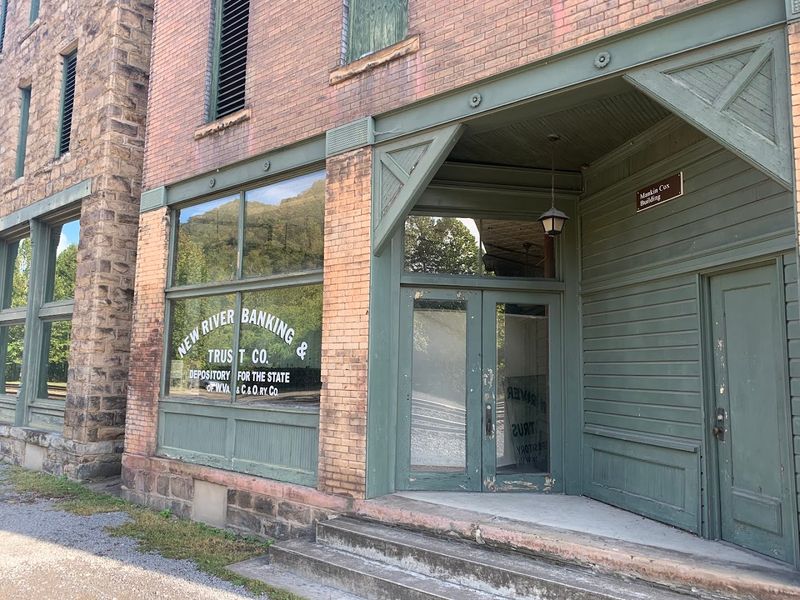
Thurmond’s banks were once considered the richest in all of West Virginia. That is not local legend or regional pride talking.
That is documented history backed by the sheer volume of coal money flowing through this small river town. Coal barons from across the region banked here, which says everything about Thurmond’s financial clout.
Two banks operated at the height of the boom. The National Bank of Thurmond was among them, and it held on until the Great Depression finally forced its closure.
When that bank shut its doors, it was one more domino falling in a sequence that had already been set in motion by fire, competition, and changing technology.
There is something quietly humbling about standing where that kind of wealth once moved. The mountains look exactly the same as they did a century ago.
The river still runs. But the vaults are empty now, and the men who filled them are long gone.
History has a way of leveling everything, no matter how rich the ground once was.
Steam Engines, Engine Houses, and the Men Who Kept Them Running
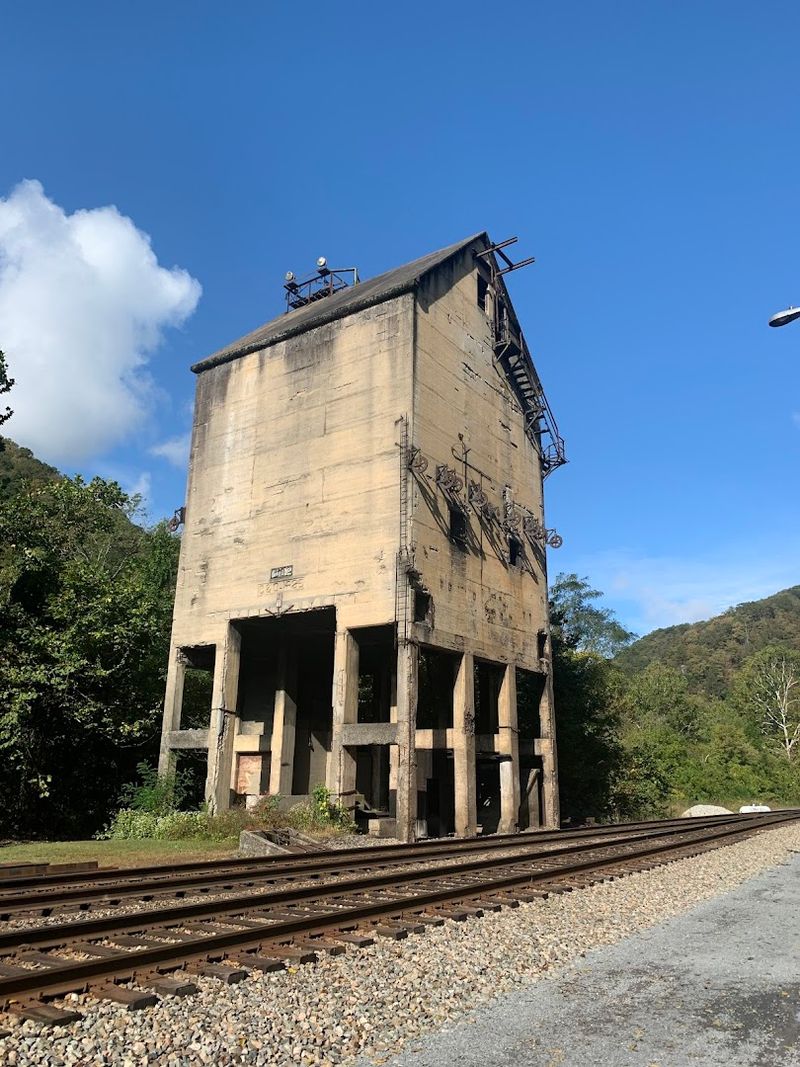
The C&O engine house in Thurmond employed up to 70 men at its busiest. These were the mechanics, the grease-covered specialists who kept the locomotives running through coal dust, mountain weather, and relentless daily schedules.
Without them, the whole operation stalled. They were the unsung backbone of a very loud industry.
Steam locomotives needed constant attention. Coaling stations, water towers, and maintenance facilities all clustered around Thurmond because the geography demanded it.
The gorge was steep and the grades were punishing, so engines needed servicing regularly. Thurmond was perfectly positioned to provide exactly that.
Then came diesel. Around 1949 and 1950, the C&O Railway switched from steam to diesel locomotives, and Thurmond’s entire reason for existing evaporated almost overnight.
Coaling facilities became useless. Jobs disappeared.
Families left. The town that had once hummed with mechanical purpose went quiet in a way that no fire or flood could fully explain.
It was progress, and it was brutal in the way progress sometimes is.
No Roads, No Problem… Until There Were Roads
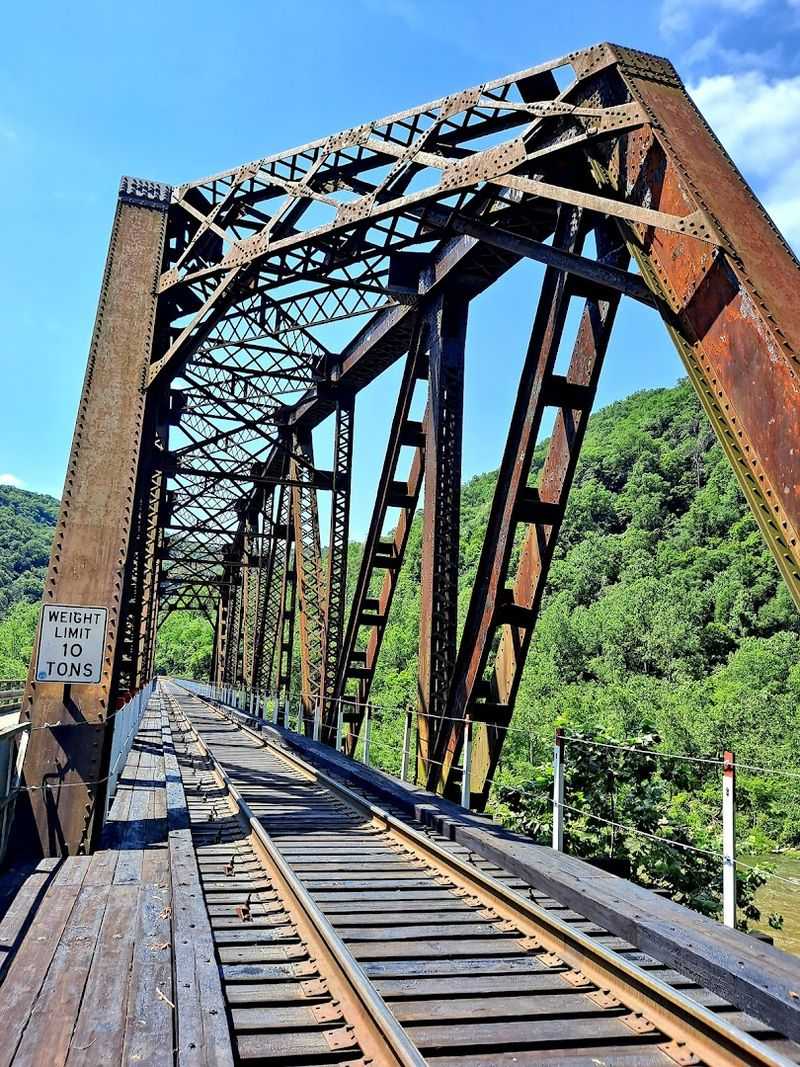
Thurmond had no road access until 1921. Read that again slowly.
A town generating more railroad revenue than two major American cities had zero road connection for nearly the entire span of its boom years. If you needed to get to Thurmond, you took the train.
Full stop.
That isolation was actually part of what made the railroad so dominant there. There was no competition, no alternative, no shortcut.
The C&O had a complete monopoly on movement in and out of the gorge at Thurmond. When the road finally arrived in 1921, it cracked that monopoly open just enough to let automobiles start siphoning away passengers and freight.
It sounds counterintuitive that a road would help doom a town. But that is exactly what happened here.
The automobile gave people options, and options meant Thurmond was no longer the only game in a very narrow gorge. The town that thrived on exclusivity could not survive once exclusivity ended.
Geography had always been its greatest asset and, ultimately, its quiet undoing.
Ghost Town with Five Residents and a Whole Lot of History
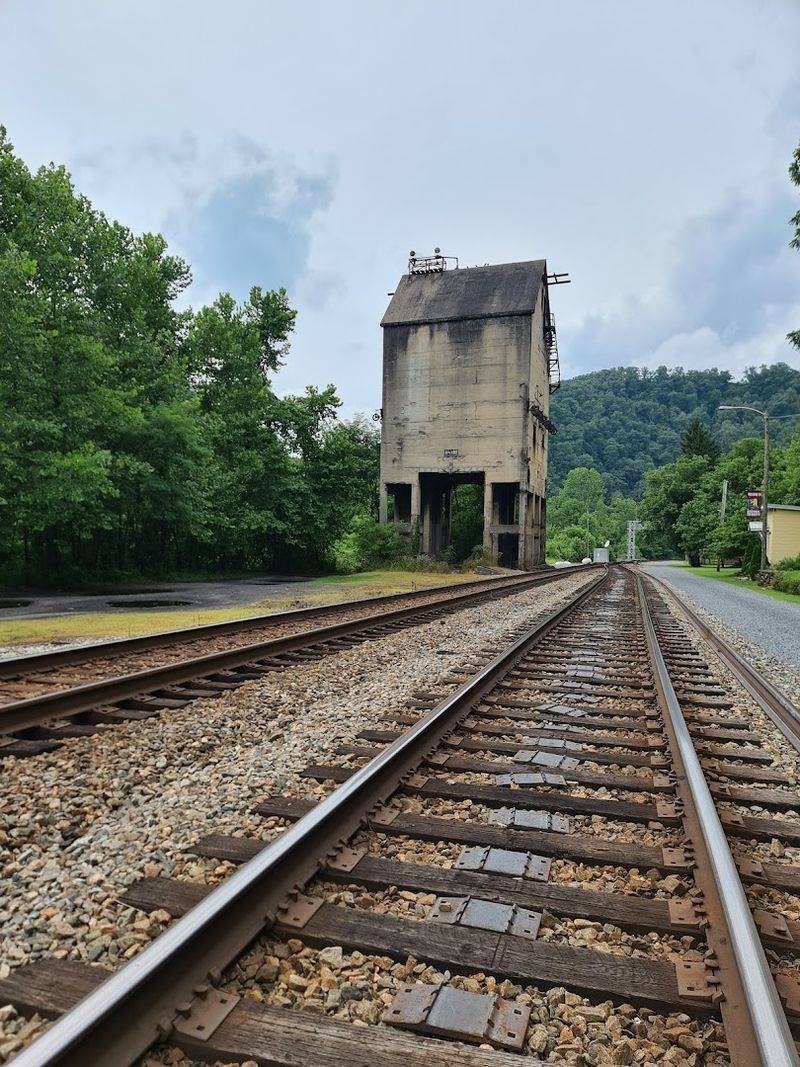
As of the 2020 census, Thurmond has a population of five. Five people.
That makes it the least populous incorporated municipality in the entire state of West Virginia. It is technically still a town, which is either inspiring or deeply ironic depending on your mood when you hear it.
The National Park Service now owns roughly 80 percent of Thurmond. The entire town sits on the National Register of Historic Places as a designated historic district.
That status has kept it from being swallowed by development or stripped for parts, which feels like exactly the right outcome for a place this layered.
Visiting feels less like tourism and more like paying respects. The structures that remain are quiet and weathered, but they are still standing.
The river runs beside them just like it always has. Five people call this place home today, and somehow that feels more meaningful than the thousands who once flooded through its depot every year without a second thought about what they were passing through.
Walking the Self-Guided Tour Through Frozen Time
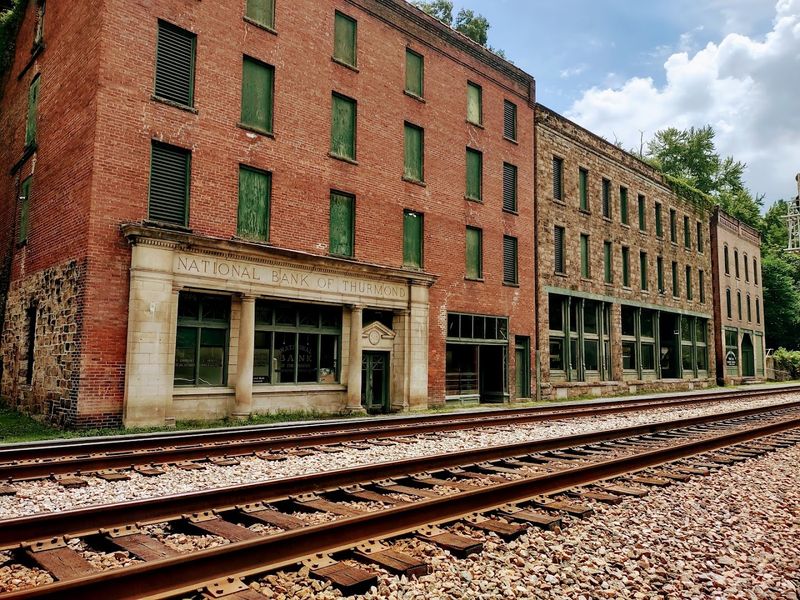
Picking up a walking tour map at the depot and heading out on foot is genuinely one of the better ways to spend a few hours in the New River Gorge area.
The route winds through what remains of the town, past structures that have not changed much since the early 1900s.
It is calm, unhurried, and oddly moving.
Each stop on the tour adds another layer to the story. You start to see how the pieces fit together, where the hotels stood, where the banks operated, how the engine house related to the tracks.
The layout of the town begins to make sense as you walk it rather than read about it.
There are no crowds here most days. That quiet is part of the experience.
Birdsong, river sounds, and the occasional train passing through on the active tracks nearby create a soundtrack that feels both ancient and alive.
It is the kind of place that rewards slow movement and genuine curiosity over quick snapshots and moving on.
Food, Fuel, and the Flavor of a Railroad Town
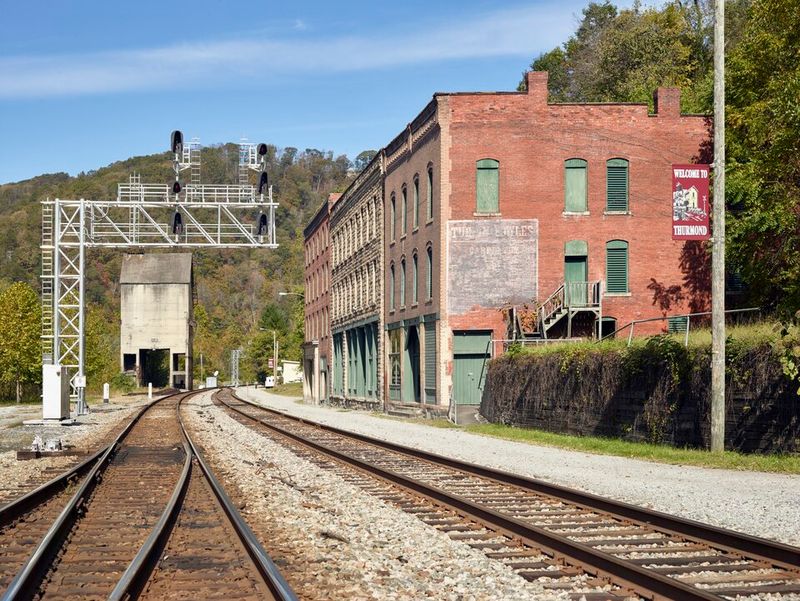
Thurmond once had restaurants, stores, and every kind of business a working railroad town needed to keep thousands of daily travelers fed and moving.
The food culture here was practical and hearty, built around the appetite of men who worked with their hands and bodies in demanding mountain conditions.
Cornbread, beans, and whatever came off the supply trains kept everyone going.
Today, the town itself has no restaurants. But the surrounding New River Gorge region is full of spots worth stopping at before or after your visit.
Small diners and local spots in nearby Fayetteville serve up Appalachian staples with genuine warmth and no pretense.
That kind of food feels right after a morning spent walking through a place this grounded in working-class history.
Packing a simple lunch and eating beside the river in Thurmond is honestly the most fitting way to experience it.
Sitting with a sandwich and the sound of moving water while old brick buildings stand quietly nearby creates a meal you remember long after the taste fades.
Address: West Virginia 25901
