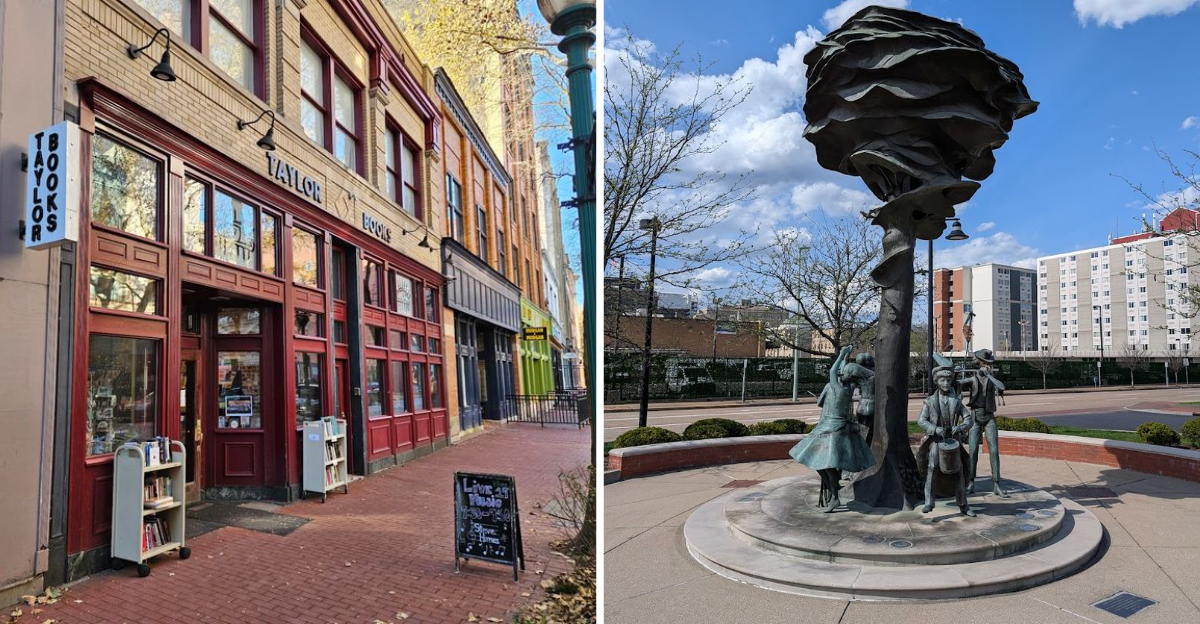
History does not have to be locked away in a quiet museum. This stretch of downtown West Virginia puts it right on the street, where the architecture does all the talking.
The buildings here are a walkable timeline of the state’s ambition, rising in the decades surrounding the early 1900s.
You can see the confidence in the classical columns and the detailed terracotta work on a former storefront.
Then you look up and spot a playful rooftop design that has been standing for well over a century. It is not just the buildings.
A striking public art piece now shimmers in a central plaza, adding a contemporary layer to the historic scene.
The whole district feels like a conversation between the past and the present.
It is a reminder that the most interesting museums are the ones you can walk right through.
Capitol Street Turns Every Stroll Into A Gallery Walk
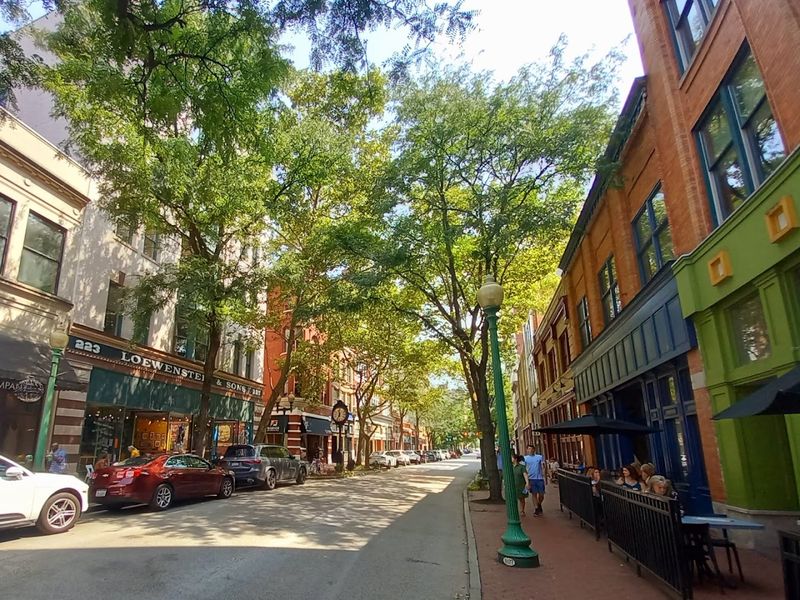
Walking Capitol Street for the first time feels less like sightseeing and more like being pulled forward by curiosity. The buildings rise on both sides in a canyon-like arrangement, each one competing gently for your attention with its own architectural personality.
It is the kind of street that makes you slow down without realizing it.
The variety here is genuinely striking. Late 19th-century commercial structures sit comfortably beside early 20th-century towers, creating a visual timeline that unfolds naturally as you move.
The wide sidewalks give you room to look up without bumping into anyone, which matters a lot when the upper floors are where the real details live.
What makes this stretch so special is how alive it feels despite its age. The street runs from Kanawha Street to Lee Street, and every block rewards a curious pace.
Storefronts hum with daily activity while the architecture above tells quieter, older stories. Capitol Street is not just a road through downtown; it is the main event itself.
Historic Facades That Whisper Charleston’s Past
There is something almost conversational about the facades along Capitol Street, as if the buildings are trying to tell you something if you just pay attention.
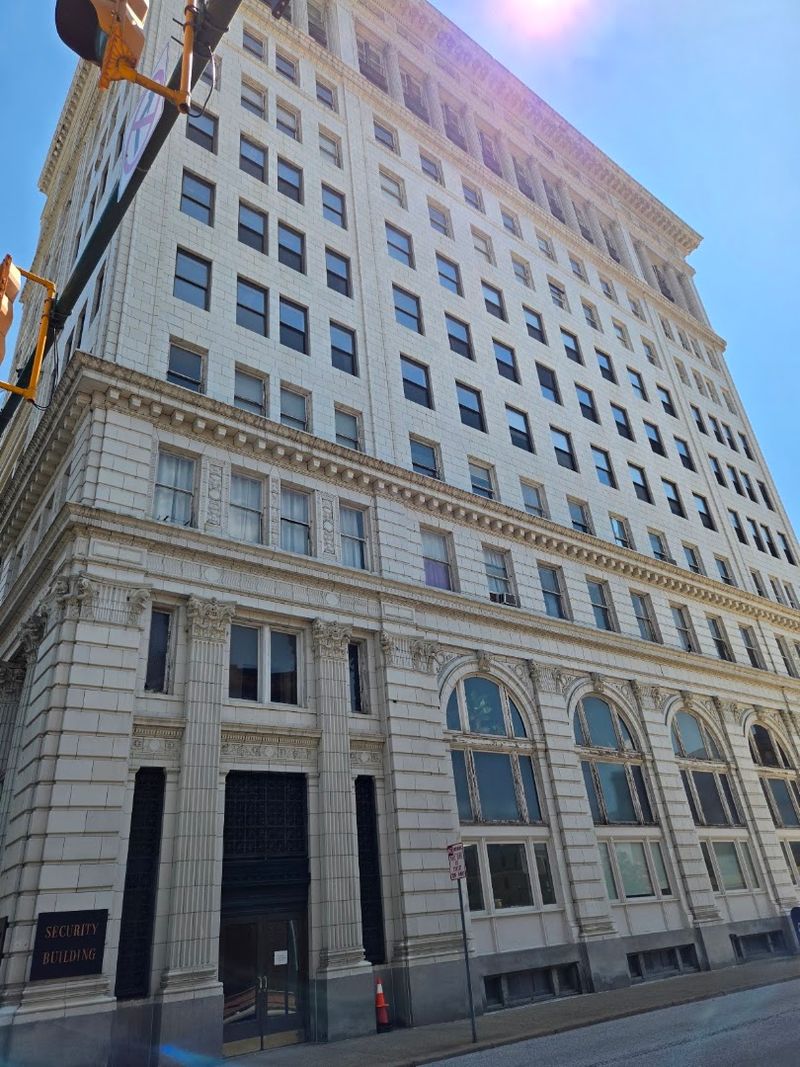
The Kanawha National Bank Building is a standout, dressed in white tile with a textbook base-shaft-capital design that feels both proud and precise.
It commands the block without being showy about it.
A short walk away, the former U.S. Court House and Federal Building presents Indiana limestone, massive arched openings, and half-columns that lean firmly into Renaissance Revival territory.
These are not subtle buildings. They were designed to impress, and decades later, they still do exactly that.
Smaller contributions fill the gaps between the giants, like the blond brick of the Berman Building or the Moderne styling of the Woolworth Building. Romanesque Revival commercial structures add rock-faced texture to the mix.
Each facade represents a distinct moment in American architectural history, making the simple act of walking this street feel like flipping through a very well-illustrated history book, one block at a time.
Quirky Sculptures Pop Up Where You Least Expect Them
One of the genuine joys of exploring this district is the feeling that something unexpected is always just ahead. The “Mortar Man” is a perfect example, a small figure fashioned from leftover cement, perched between buildings at 110 and 112 Capitol Street.
He has been watching the street for over two decades, completely unbothered by the crowds below.
Colorful sculptural bike racks, born from a local FestivALL campaign, bring that same playful energy to functional street furniture. They are easy to miss if you are moving too fast, which is exactly why a slow pace rewards you here.
These pieces are not trying to be grand monuments; they are friendly little surprises embedded in the everyday.
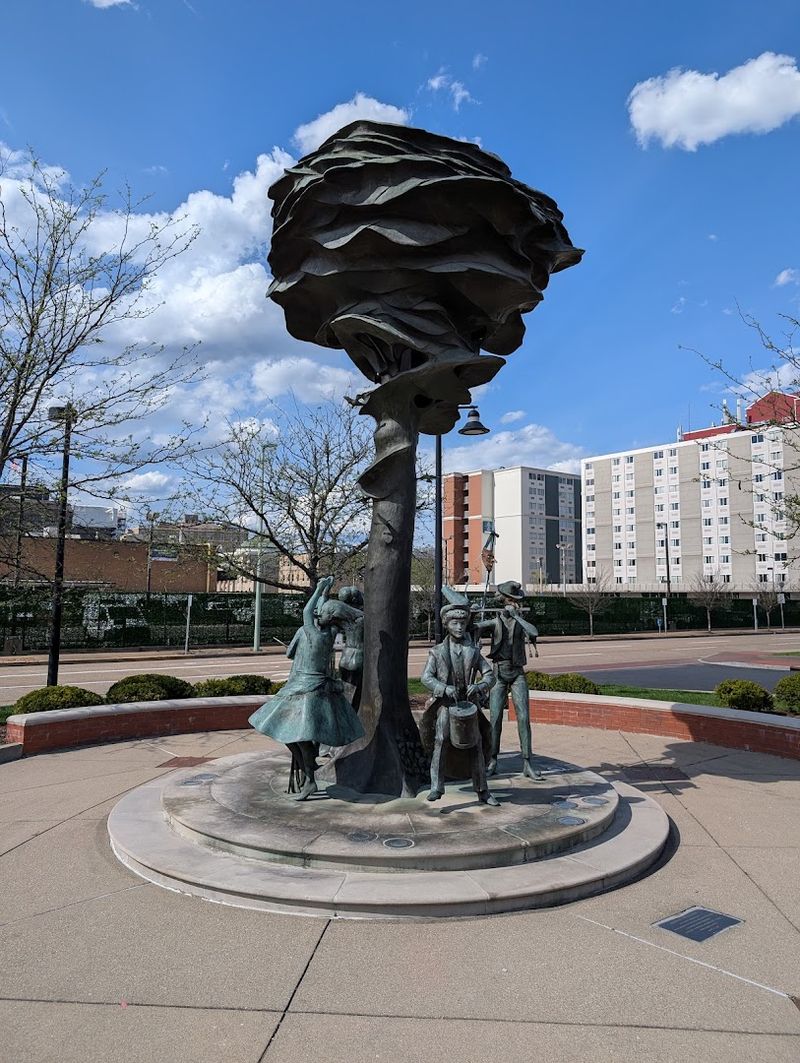
The kinetic sculpture “Deep Roots, Long Reach” by Harry McDaniel adds movement to the mix, shifting gracefully with the wind in front of the Coliseum and Convention Center. Public sculpture here does not feel imposed on the city.
It feels grown from it, organic, a little offbeat, and completely at home in a district that clearly enjoys a good artistic surprise.
A District Where Architecture And Art Share The Stage
Most historic districts choose one identity and stick with it. This one refuses to pick a lane, and that is genuinely part of its appeal.
The stately commercial buildings of Capitol Street serve as a backdrop for contemporary murals and playful sculptures that add a completely different kind of energy to the same space.
A bright mural beside a century-old brick facade does not create tension here. It creates conversation.
The architectural grandeur keeps things grounded while the art keeps things lively, and neither one overpowers the other. That balance is harder to achieve than it looks, and the district pulls it off with what feels like effortless confidence.
Visitors who come expecting only a history lesson leave with something richer. The dialogue between old structure and new expression makes every block feel layered.
You are never just looking at a building or just looking at art. You are experiencing both simultaneously, and the combination creates a depth that neither element could achieve alone.
This is what a truly living historic district feels like.
From Brickwork To Murals The Details Steal The Show
Brickwork in this district is not just construction material; it is craftsmanship on display. The varied patterns and textures across different buildings reveal how much care went into their original construction, and how much continues to go into their preservation.
Running a hand along some of these walls, you can almost feel the decades stacked into each layer.
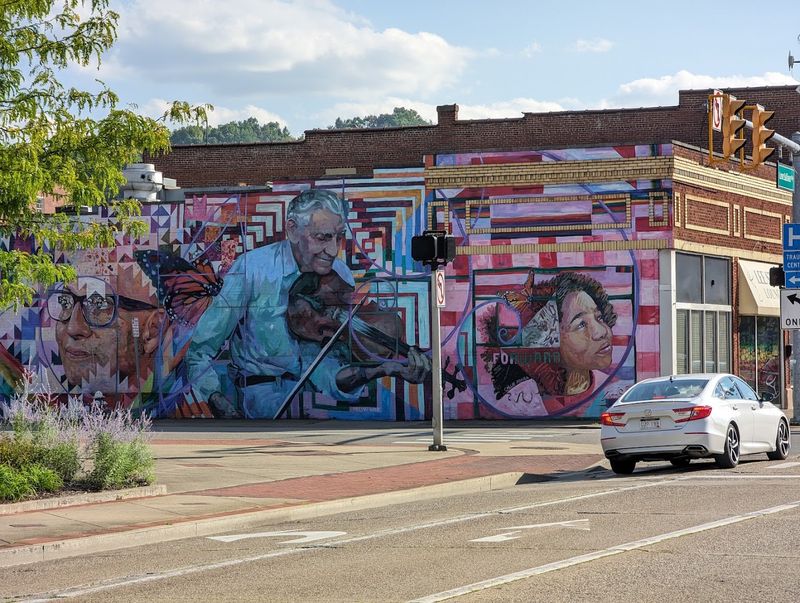
Jesse Corlis’s “Streetcar Stop” mural, tucked into an alley off Quarrier Street between Capitol and Hale Streets, rewards anyone willing to veer off the main path. It is one of those pieces that stops you mid-step.
The “Power” mural by Rebecca Recco and Isaac Emrick at Jacob and Lewis streets builds a sweeping image from thousands of tiny colored squares, each one contributing to something much larger than itself.
The “San Francisco Mural” takes things further with trompe l’oeil technique, making painted houses look startlingly dimensional against a flat wall. These details do not announce themselves loudly.
They wait for attentive eyes. The district is full of these quiet rewards, proof that slowing down always pays off when the surroundings are this thoughtfully made.
Public Art That Adds Personality To Every Corner
Some cities treat public art as an afterthought, a mural here, a statue there, filling empty space. Downtown Charleston treats it like a core ingredient.
The “West Side Wonder Mural” by Charly Jupiter Hamilton is a 30 by 60-foot burst of color and imagination, hiding recognizable local faces within its swirling design for those patient enough to look.
That element of discovery turns art viewing into something participatory. You are not just an observer; you become a searcher.
Josh Martin’s Elk City mural on Tennessee Avenue on the West Side carries a collaborative community spirit that is almost tangible, the kind of project where the process mattered as much as the finished wall.
The monthly ArtWalk adds another dimension entirely, opening galleries and businesses to evening visitors alongside live music and a festive atmosphere that transforms the streets into something even more vibrant than usual. Public art here is not decorative.
It is structural to the district’s identity, woven into its character the same way brick and mortar define its physical shape. Every corner has something to say.
Charleston’s Streets Blend Old Elegance With Modern Flair
Old elegance and modern energy do not always mix gracefully, but Capitol Street manages it in a way that feels completely natural.
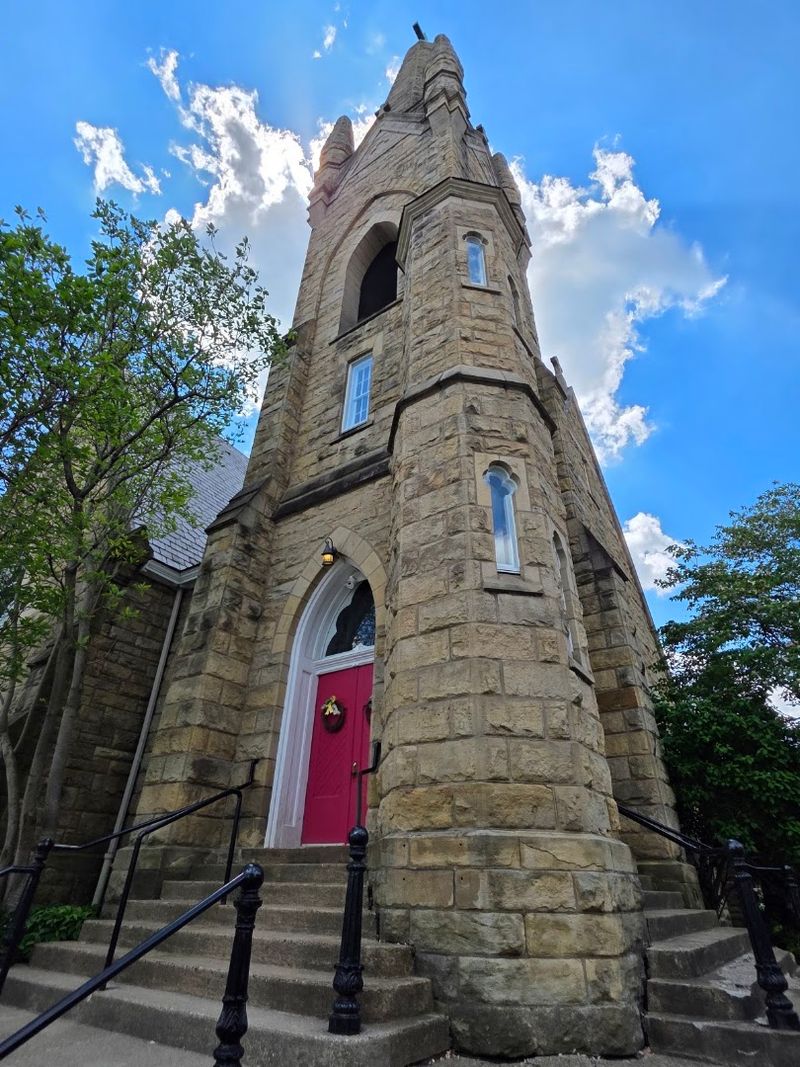
St. John’s Episcopal Church from 1884 and the Basilica of the Co-Cathedral of the Sacred Heart from 1897 anchor the district with a timeless gravity that newer elements can only complement, never compete with.
Yet the district never feels frozen. There is a current of present-day activity running through the historic core that keeps it from tipping into museum territory.
Contemporary art installations, seasonal events, and the everyday rhythm of downtown life layer themselves over the historic foundation without erasing it.
The result is a streetscape that feels genuinely lived in rather than merely preserved. Visitors from larger cities often comment on how the scale here feels approachable, grand enough to impress but compact enough to feel personal.
The elegance is real and unhurried. The modern flair is subtle and confident.
Together they produce a district that respects where it came from while staying fully engaged with where it is going.
A Walkable District That Rewards Curious Eyes
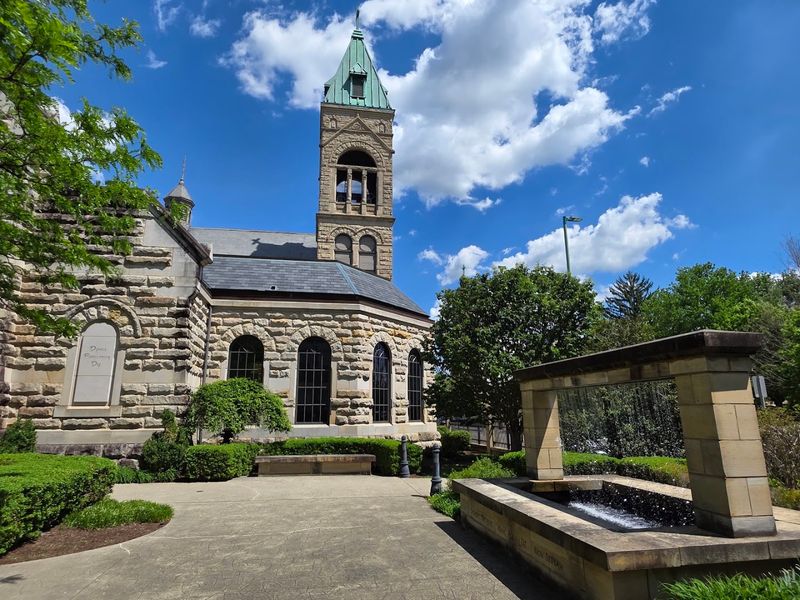
Curiosity is the best tool you can bring to this district. The buildings reward it, the art rewards it, and even the pavement occasionally has something interesting going on at foot level.
A slow pace here is not laziness; it is strategy.
The air carries the occasional scent of something delicious drifting from nearby establishments, a sensory nudge that reminds you exploration and appetite go well together.
Along the Kanawha River, Haddad Riverfront Park fills with food trucks during warmer months, creating spontaneous opportunities to grab something good and keep moving through the district with a snack in hand.
There is even a local legend about “Charleston’s smallest piece of art,” a detail so minor that most visitors walk right past it without knowing it exists. That kind of hidden charm is everywhere once you start paying attention.
The district does not broadcast everything at full volume. Some of its best offerings are whispered, waiting for the visitor who moves slowly enough and looks closely enough to actually hear them.
Bring your most curious self.
This Historic Core Proves Culture Lives Outdoors
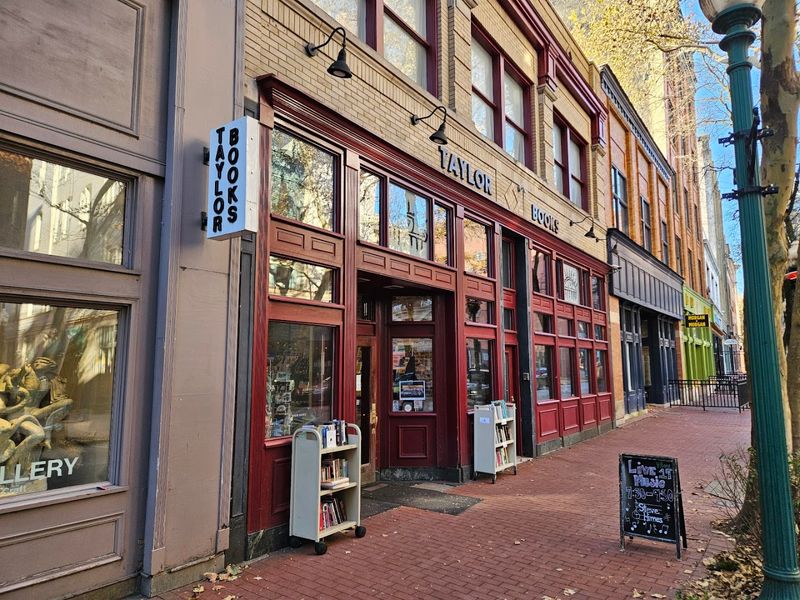
Culture does not need a roof over it to thrive, and this historic core makes that point convincingly.
The murals, sculptures, preserved facades, and open plazas collectively create an outdoor cultural experience that feels as rich and intentional as anything housed in a formal gallery or museum.
The sky is the ceiling, and it works beautifully.
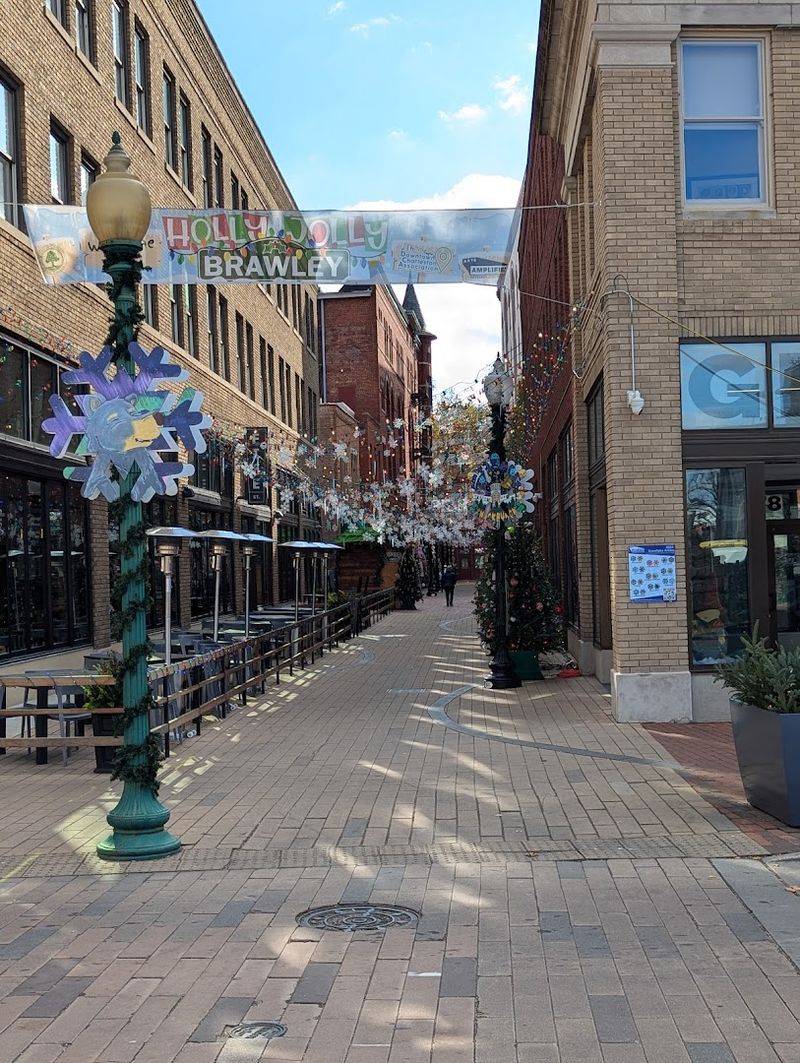
Events like Slack Plaza concerts and the Holly Jolly Brawley holiday celebration bring community energy to the streets in ways that feel genuinely celebratory rather than manufactured.
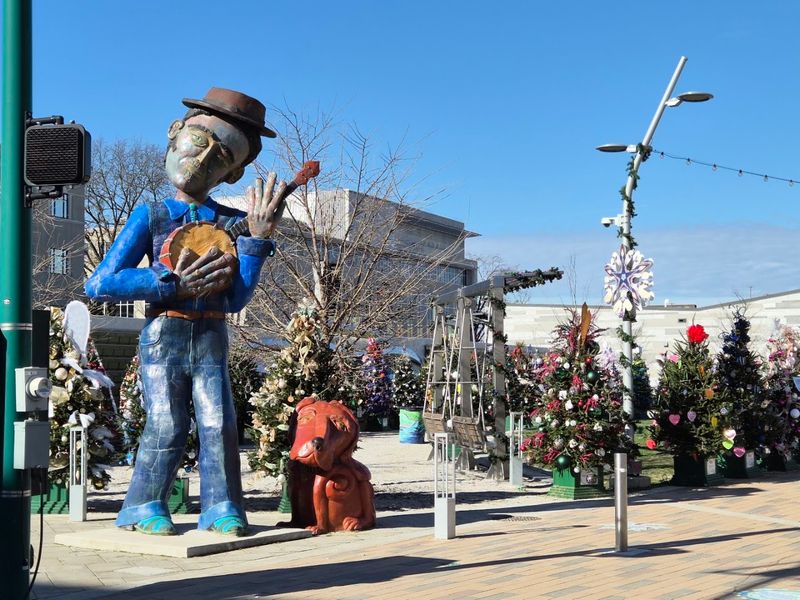
Decorated trees, seasonal displays, and the hum of shared experience fill the district with warmth that no indoor venue quite replicates.
These moments belong to the streets.
The food dimension ties everything together. The scent of something wonderful from a long-standing local establishment, or the promise of what many call the best ice cream in town, turns a cultural walk into a full sensory experience.
The Downtown Charleston Historic District earns its reputation not through any single landmark but through the cumulative effect of everything it offers outdoors, freely, openly, and with unmistakable character.
Address: Quarrier St, Charleston, WV 25301
