
Some towns you visit. Others you feel.
This is one of those places where history does not just live in museums, it lives in the cobblestones beneath your feet.
You can stand in the same firehouse where John Brown made his final stand in 1859, a small brick building that helped change the course of a nation.
Walk a few blocks and you are following paths that soldiers fought over when this town changed hands eight times during the Civil War.
When you need a break from all that weight, the mountains are right there waiting.
Twenty two miles of trails lead you to cliffs where two rivers crash together below.
A place this layered should feel exhausting.
Instead, it just feels like West Virginia showing off.
Walking the Streets Where John Brown Made History

Few places in America let you literally walk the same ground where history cracked open and changed everything.
The streets of Lower Town Harpers Ferry feel remarkably preserved, and wandering them gives you this strange, grounded feeling of connection to the past that no textbook ever managed to deliver.
John Brown led his raid on the federal armory here in October 1859, hoping to spark a rebellion against slavery. That event shook the entire country and pushed the nation closer to the Civil War that would follow just two years later.
Every corner you turn reveals a new historical marker, a restored building, or a view that frames exactly why this location mattered so strategically.
The town sits at the confluence of two rivers, making it both beautiful and historically significant.
Comfortable walking shoes are a must because those stone steps and cobblestone paths are no joke. Plan to spend at least a few hours just absorbing the atmosphere, because rushing through here would honestly be a waste of a truly remarkable place.
The Last Stand That Echoed Through History
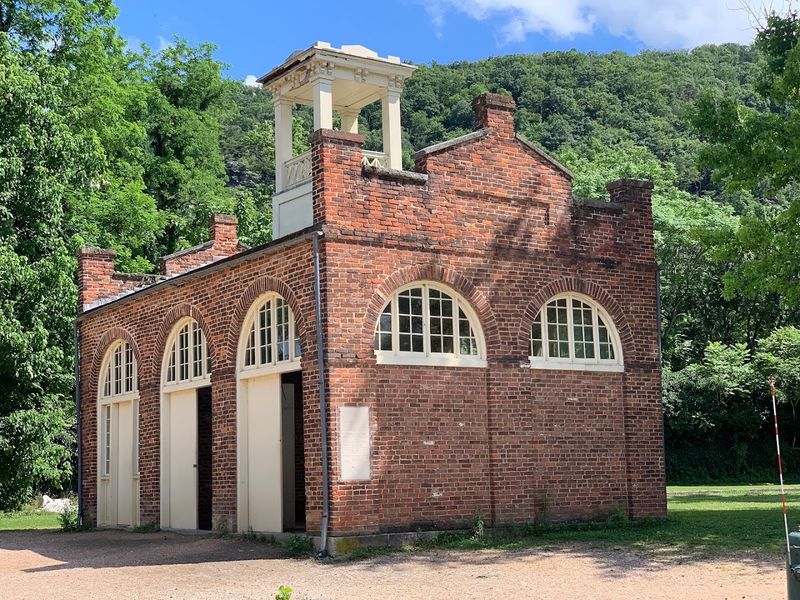
Standing in front of John Brown’s Fort feels oddly emotional, even if you come in without knowing much about what happened here.
This small, sturdy brick building was originally the armory’s fire engine and guard house, built in 1848, and it became the site of Brown’s final desperate stand during his failed raid.
It is the only armory structure that survived the Civil War, which makes it even more remarkable to stand beside. Brown and his followers barricaded themselves inside before U.S.
Marines, led by Colonel Robert E. Lee, stormed the building and ended the raid.
The fort has been moved and relocated several times throughout its history before finally returning close to its original site, which is a story worth reading about before your visit. Rangers and informational displays around the fort do a great job of filling in the context.
Arriving early in the morning means fewer crowds and better light for photos. This single building carries more American history per square foot than almost anywhere else you can visit.
Earn That View and Mean It
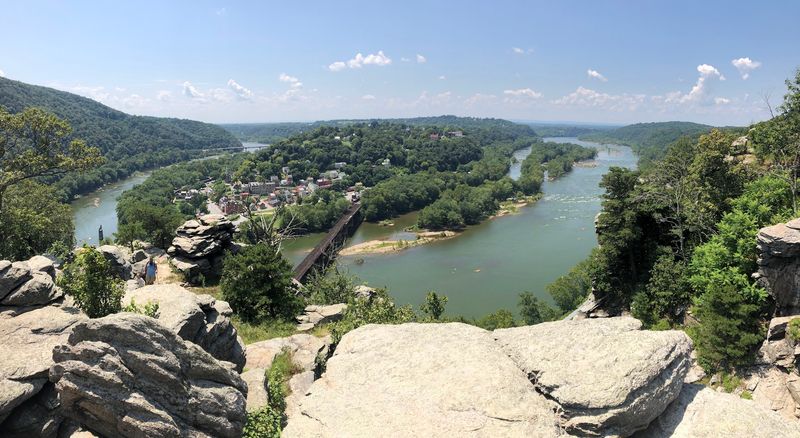
Maryland Heights Trail is the kind of hike that makes you question your life choices around the halfway point and then immediately forgive yourself everything once you reach the top.
Offering either a 4.5 or 6.5 mile roundtrip option, this trail is rated difficult and earns that label with steep, rocky terrain that demands your full attention.
The payoff is a panoramic view of Lower Town Harpers Ferry and the rivers below that genuinely stops you in your tracks. Union fortifications along the route add a layer of historical weight to what is already a physically intense experience.
Trekking poles make a real difference on the rocky descent, so bring them if you have them. Starting early also helps beat both the heat and the weekend crowds that tend to build up by mid-morning.
The trail is marked well enough that getting lost is unlikely, but downloading an offline map is always smart. This one belongs on any serious hiker’s short list for the Mid-Atlantic region, no question about it.
Rugged Terrain With River Views Worth Every Step
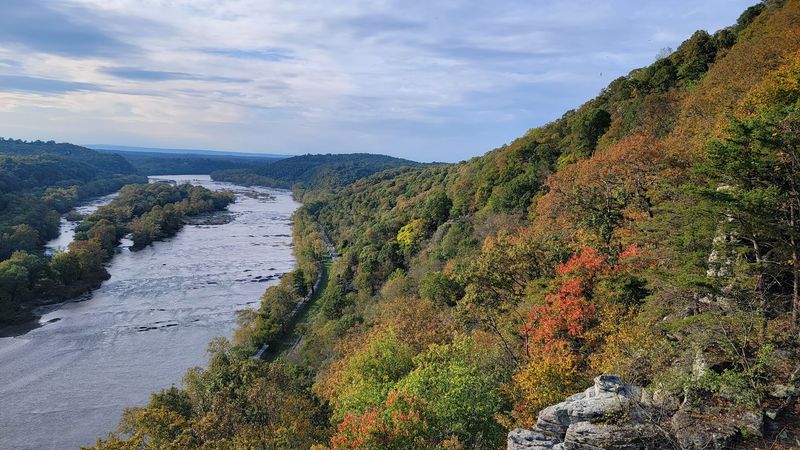
Loudoun Heights Trail brings a different kind of challenge compared to Maryland Heights, and hikers who love rugged, remote-feeling terrain are going to feel right at home here.
The 5.9-mile route out to Split Rock runs through dense woods and over uneven ground that keeps you focused and honest the entire way.
At the end of all that effort, the view of the confluence of the Potomac and Shenandoah Rivers opens up in a way that genuinely takes your breath away.
Two rivers meeting below a ridge you just climbed feels like a reward that was specifically designed to match the effort it took to get there.
Wildlife sightings are common along this trail, from deer moving quietly through the trees to hawks riding thermals overhead. Solid footwear with good ankle support is strongly recommended because the terrain can be unpredictable in spots.
Pack more water than you think you need and bring snacks that give you sustained energy.
This trail rewards those who come prepared and punishes those who underestimate it, so plan accordingly and enjoy every step.
Industrial Ruins Hidden in Plain Sight

There is something quietly haunting about Virginius Island, in the best possible way.
This easy two-mile trail winds past the stone ruins of 19th-century industrial buildings that once hummed with activity, including cotton and flour mills that powered the local economy before repeated flooding eventually reclaimed the island.
Nature has slowly wrapped itself around the old stone walls, and the effect is both beautiful and thought-provoking.
Walking here feels like flipping through a photo album of a life that the river eventually decided to take back.
The trail connects to Hall’s Island and offers scenic water views throughout, making it one of the most photogenic walks in the entire park.
Because the difficulty level is low, this one works well for families with younger kids or anyone who wants a more relaxed experience between bigger hikes.
Morning light filters through the trees beautifully here, especially in spring and fall. Bring a journal if that is your thing, because this trail has a reflective, almost meditative quality that tends to bring out the thoughtful side of most visitors.
A Legendary Path Through a Legendary Town
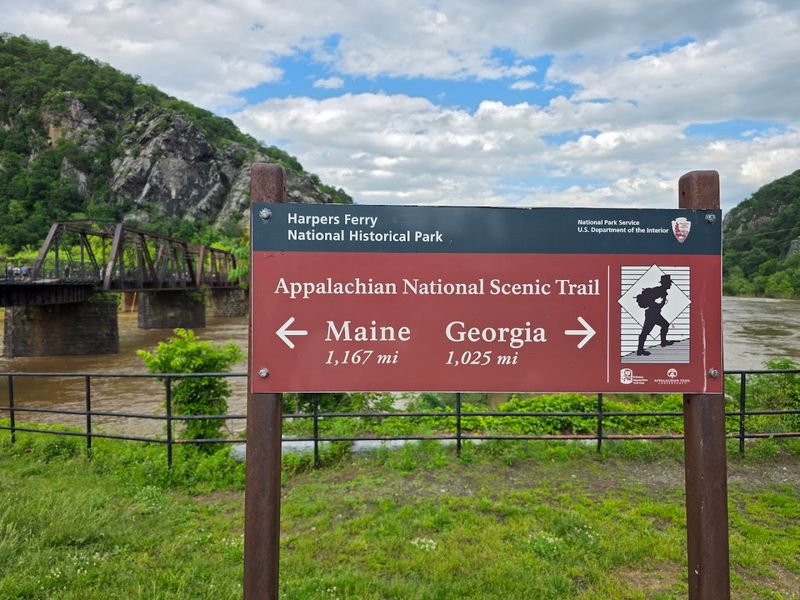
Harpers Ferry holds a special place in the hearts of Appalachian Trail hikers, and not just because the trail passes through it.
The town is considered the psychological midpoint of the entire 2,178-mile trail, and the Appalachian Trail Conservancy headquarters is located right here, making it a meaningful stop for thru-hikers and day visitors alike.
About 1.2 miles of the AT runs through the park, and even a short walk on that stretch carries a certain weight knowing that millions of footsteps have traveled the same path.
Jefferson Rock, accessible via a short section of the AT, offers one of the most photographed views in the park.
Visiting the ATC headquarters is worth a stop even if you are not a thru-hiker, because the exhibits and resources there give great context for the trail’s history and significance. The staff there tend to be genuinely enthusiastic about sharing information.
Whether you walk one mile of the AT or dream of walking all 2,178, Harpers Ferry is a place that makes the trail feel real and reachable in a deeply inspiring way.
Civil War History in Under Half a Mile
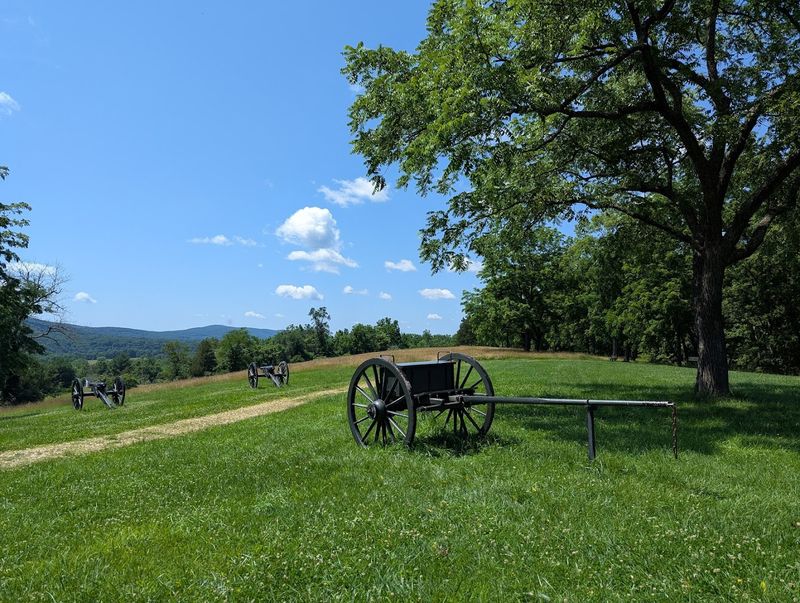
Not every great trail experience has to destroy your knees. Bolivar Heights Trail is a short 0.3-mile loop that packs a serious historical punch by bringing you face to face with Civil War cannons and earthworks that have stood in place for over 160 years.
The open ridge setting gives you sweeping views of the surrounding landscape, and the interpretive signs along the loop do a solid job of explaining the military significance of the heights during the war.
It is the kind of place that makes history feel three-dimensional rather than flat on a page.
This trail is a fantastic option if you are visiting with younger kids, older family members, or anyone who wants the historical experience without a strenuous workout.
The loop is stroller-accessible in dry conditions and easy to complete in under 30 minutes.
Combining Bolivar Heights with the Lower Town walk makes for a well-rounded half-day visit that covers both outdoor and historical highlights without overdoing it. Sometimes the shortest trails leave the biggest impressions, and this one is a perfect example of that.
Where Two Rivers Meet and Everything Slows Down
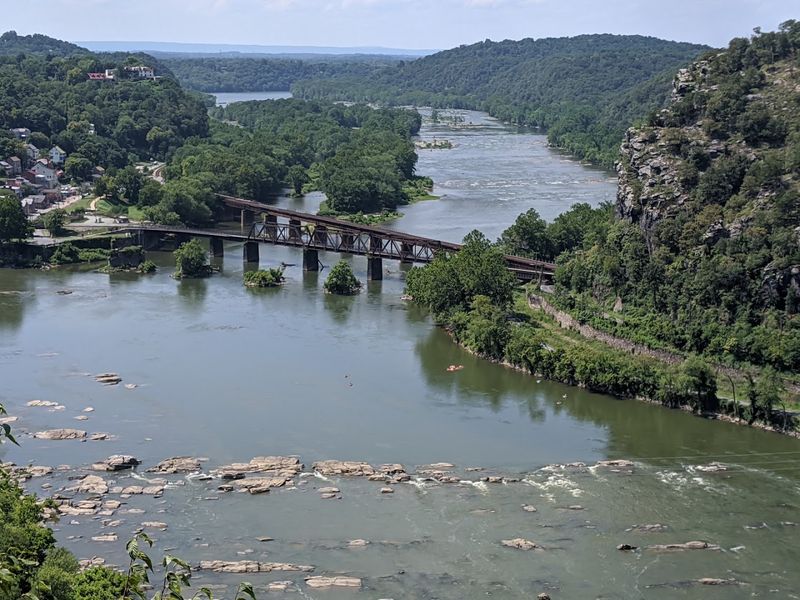
There is a specific moment at Harpers Ferry where you round a corner or reach a certain overlook and the confluence of the Potomac and Shenandoah Rivers comes into full view, and everything just stops.
It is one of those genuinely stunning natural scenes that makes you understand immediately why this location has captured imaginations for centuries.
Thomas Jefferson reportedly called the view worth a voyage across the Atlantic, and while that might sound like an overstatement, standing there makes the claim feel surprisingly reasonable.
The rivers merge with a quiet power that is both calming and awe-inspiring at the same time.
Reaching the best confluence viewpoints can involve some walking and a bit of climbing, but none of the routes are particularly technical.
The pedestrian bridge near the lower town is a great starting point for getting oriented and taking in the water views at a comfortable pace.
Sunset light turns the whole scene golden in a way that photographs beautifully. This is the kind of view you come back for in different seasons just to see how it changes each time.
Practical Tips for Making the Most of Harpers Ferry
Getting the most out of Harpers Ferry starts with a few simple logistical decisions that can make a big difference in how the day unfolds.
Parking in Lower Town is extremely limited, so most visitors park at the visitor center and either walk the trail down or hop on the free shuttle that runs every 15 minutes on busy days.
The park is open daily from 9 AM to 5 PM, which gives you a solid window to explore trails, historic sites, and the town itself. Arriving right at opening time on weekends means you beat the crowds and get the best light for photos throughout the morning.
Wearing layers is smart because the weather near the rivers can shift quickly, especially in spring and fall when the park is at its most scenic.
Sturdy footwear matters more here than almost anywhere else because the terrain ranges from smooth pavement to steep, rocky trail within just a short distance.
Bringing a reusable water bottle is practical since filling stations are available near the pedestrian bridge.
Address: 171 Shoreline Dr, Harpers Ferry, WV.
