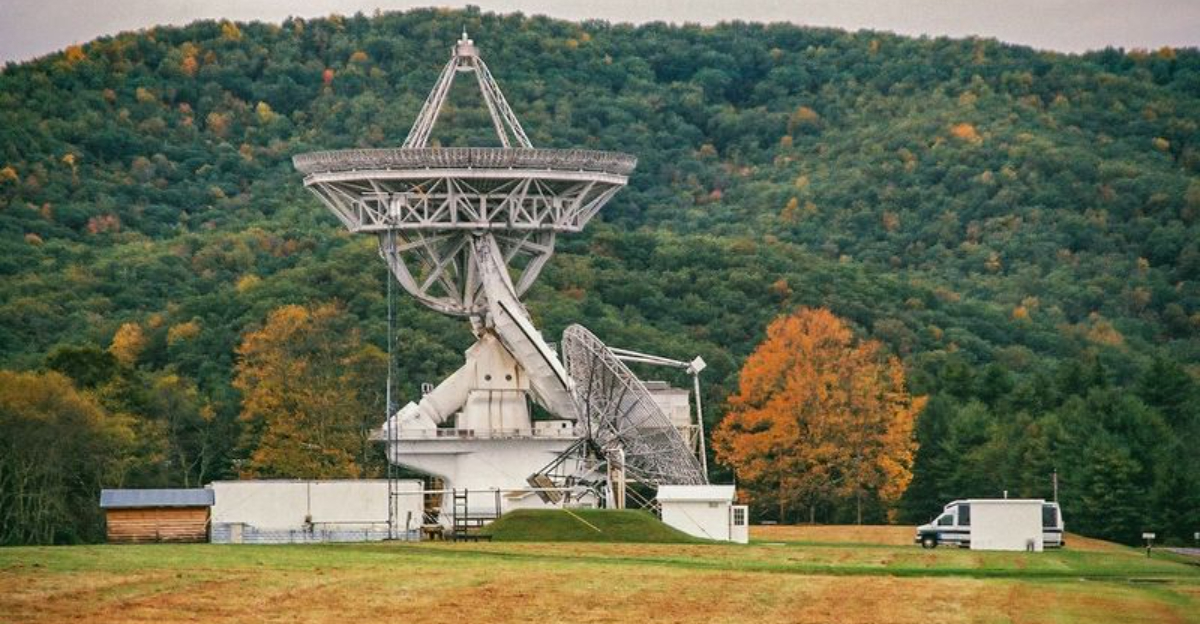
You reach for your phone and there’s nothing.
No bars. No signal. Just a quiet panic that slowly turns into peace.
This West Virginia observatory sits inside a 13,000 square mile radio dead zone where your cell phone is basically a tiny brick.
They banned them for good reason.
The massive telescopes are listening for whispers from the birth of the universe, and your pocket noise would ruin everything.
No WiFi. No cameras. Just you, the stars, and a white dish so huge it looks like a sci-fi movie set.
Scientists hunt for pulsars and cosmic secrets while you simply stand there, gloriously disconnected.
It’s the quietest, geekiest, most wonderful show on planet Earth. And your phone can’t come.
The National Radio Quiet Zone: A 13,000 Square Mile Bubble of Silence
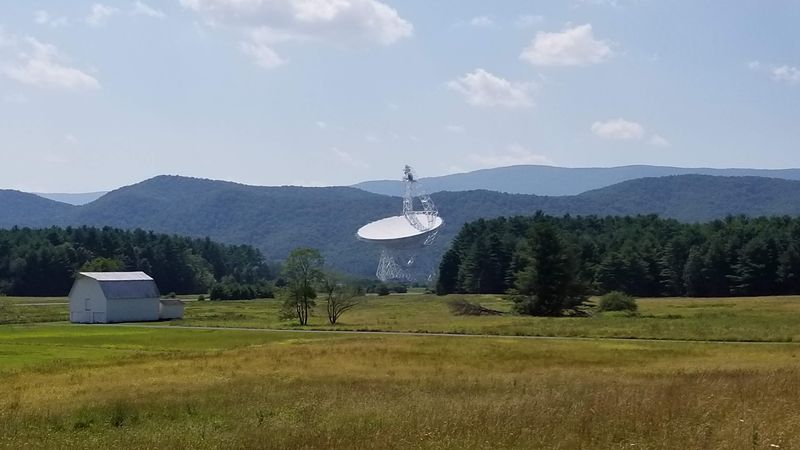
Back in 1958, the Federal Communications Commission did something pretty extraordinary. They drew an invisible boundary around a chunk of West Virginia and Virginia, roughly 13,000 square miles, and said: keep the radio signals out.
That boundary became the National Radio Quiet Zone, and it is still very much enforced today.
The zone was created to protect two key facilities: the Green Bank Observatory and the U.S. Navy’s signals intelligence operation in Sugar Grove.
Without this quiet zone, the sensitive telescopes here would be constantly drowned out by the noise of everyday technology.
Living or traveling inside this zone means playing by different rules. New radio transmitters require official coordination.
Cell towers are rare. Wi-Fi is tightly controlled.
Even microwave ovens and digital cameras can cause interference near the telescope. The whole concept sounds like science fiction, but it is very real, very enforced, and honestly kind of refreshing once you settle into the rhythm of it.
Green Bank Telescope: The World’s Largest Steerable Radio Dish
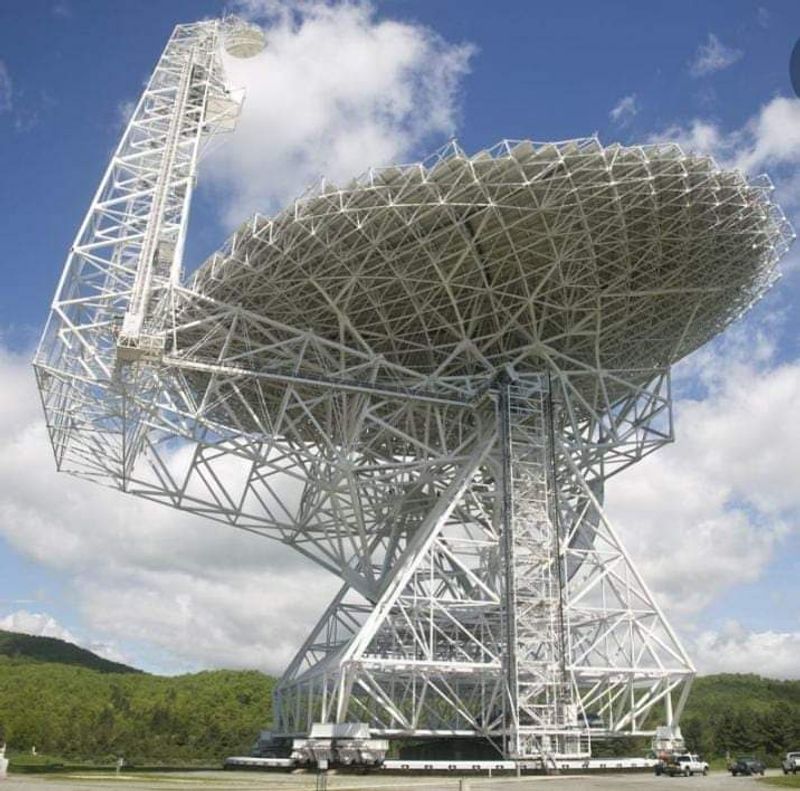
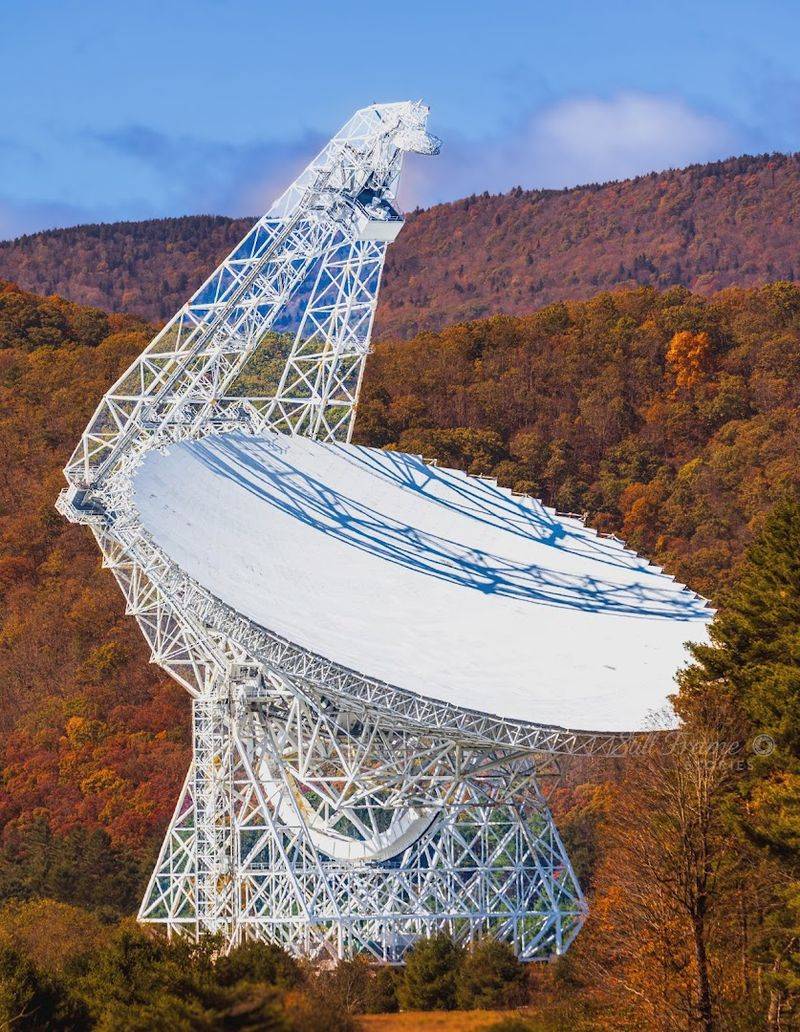
Standing at the base of the Green Bank Telescope and looking straight up is one of those moments that makes your brain temporarily stop working. The thing is enormous.
Over 17 million pounds, 2.3 acres of surface area, and it can actually move, rotating to point at different parts of the sky.
Built to replace an earlier telescope that collapsed in 1988, the GBT became fully operational in 2000 and has been rewriting our understanding of the universe ever since. Scientists use it to study pulsars, map hydrogen gas clouds, and even search for signs of extraterrestrial intelligence.
Getting close to it on the bus tour is a completely different experience than seeing photos online.
The scale is almost impossible to process until you are standing right there, neck craned back, realizing that this machine is actively listening to the cosmos in real time.
It is the kind of sight that makes you feel very small in the most wonderful way possible.
The Visitor Center and Its Surprisingly Excellent Cafe
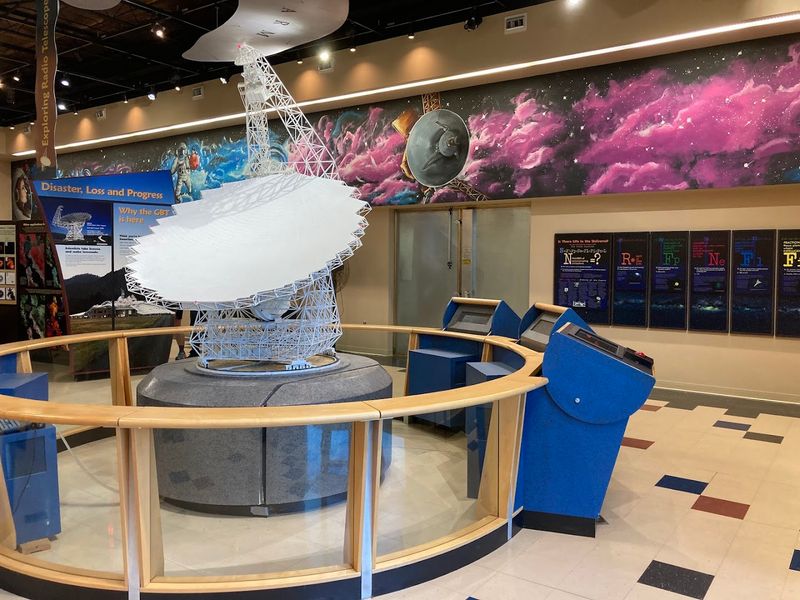
Honestly, nobody warned me about the food, and that felt like a personal injustice. The little cafe inside the visitor center punches well above its weight.
The sub sandwiches have earned genuine praise from visitors, and after a long drive through mountain roads, something warm and filling hits differently.
The visitor center itself surrounds the cafe with interactive exhibits explaining radio astronomy, the history of the site, and the science behind the telescope. Kids and adults both get pulled in by the hands-on displays.
It is the kind of place where you plan to spend twenty minutes and end up staying two hours.
Grab your food, find a table near the windows, and soak in the views of the surrounding hills while you eat. The atmosphere is calm, unhurried, and genuinely educational without ever feeling like homework.
After fueling up, the rest of the campus opens up in a way that feels much more meaningful when you actually understand what you are looking at.
The Bus Tour Experience That Brings the Science to Life
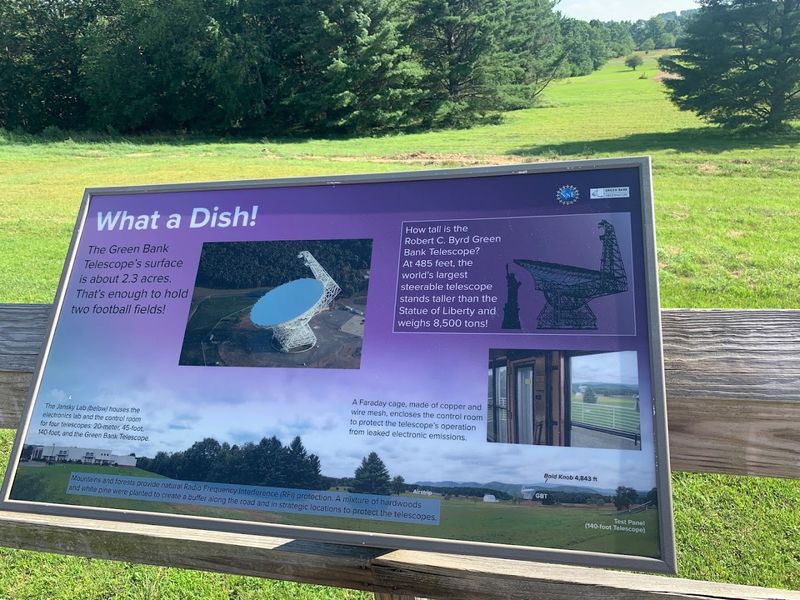
Tours run every two hours starting at 10 AM, and booking ahead is strongly recommended because they fill up fast.
The bus tour takes you out past the gate where electronics must be switched off, putting you right at the foot of the telescope in a way the self-guided trail cannot fully replicate.
Tour guides here are genuinely passionate about what they do. The information flows naturally, with real stories about the research being conducted and the history of the site woven into the commentary.
Complex astrophysics gets translated into language that a curious ten-year-old and a retired engineer can both appreciate equally.
One tip worth knowing: bring a disposable camera if you want photos near the telescope. Digital cameras and smartphones must be powered down past the gate, so old-school film is your best friend out there.
It adds a fun, retro layer to the whole experience and gives you something tangible to hold onto when you get home and try to explain just how massive that telescope really is.
The Self-Guided Solar System Trail Worth Every Step
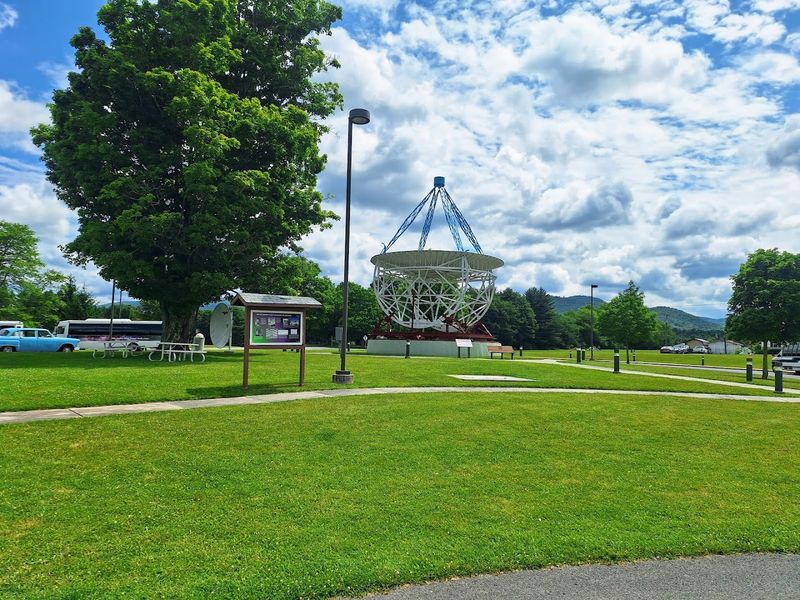
The campus road doubles as a scale model of the solar system, and that detail alone makes the walk feel like something out of a science class you actually wanted to attend.
Each planet gets its own marker spaced at the correct relative distance, and by the time you reach Pluto out near the largest telescope, your legs have a very real sense of just how far away things really are.
The trail stretches roughly three to four miles out and back, with a nature loop option that adds a peaceful forest section on the return.
Deer are common along the path, wandering through the tall grass between the telescope structures without much concern for the humans passing by.
Information boards at each stop explain the science without overwhelming you. Families with kids tend to love this route because it keeps everyone moving and learning at the same time.
The scenery shifts beautifully depending on the season, with fall bringing especially vivid color to the Appalachian hills surrounding the campus.
Cell Phone Ban and the Digital Detox Nobody Asked For But Everyone Needed
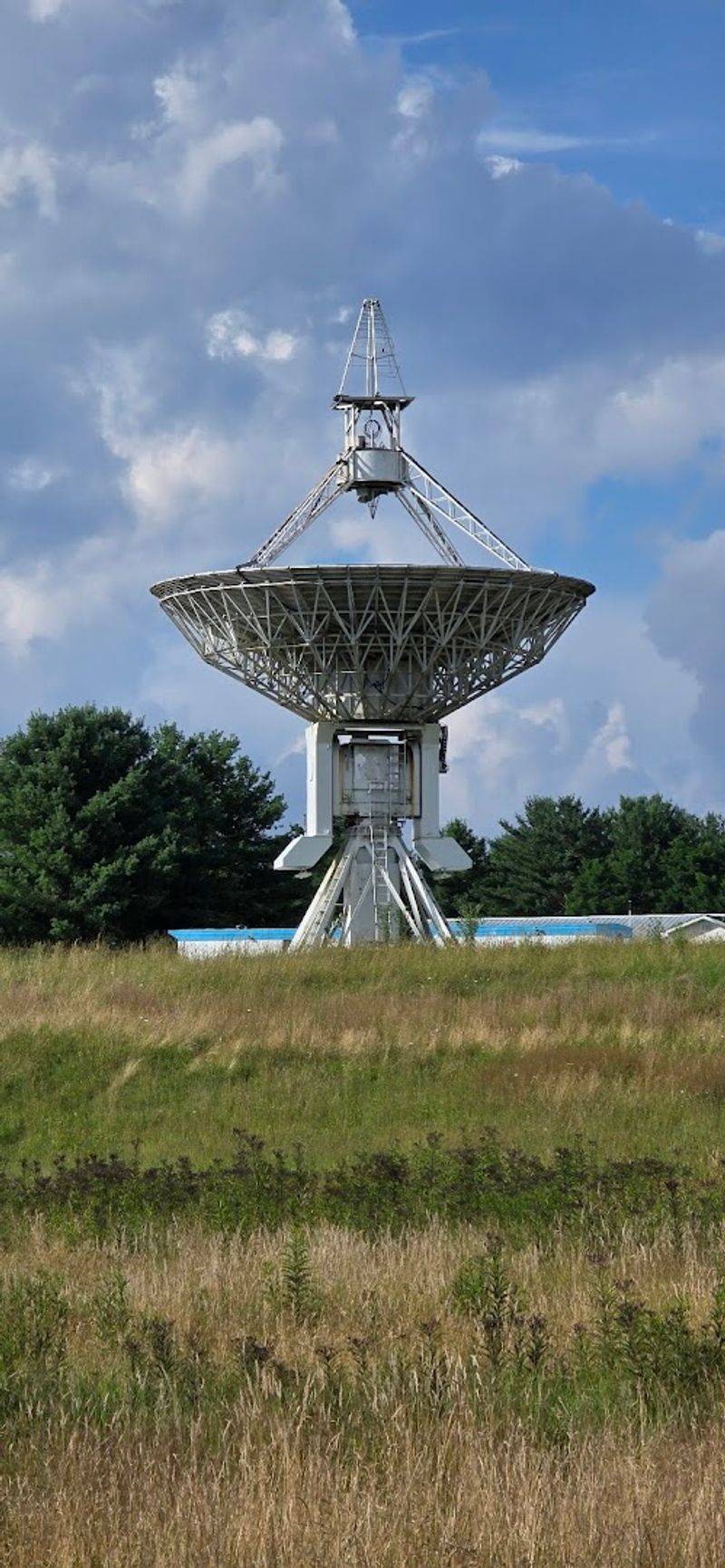
Handing over your digital habits for a few hours feels uncomfortable for about the first fifteen minutes. Then something shifts.
Conversations get longer. People actually look at each other.
The mountains stop being a backdrop and start being the main event.
Within a 20-mile radius of the observatory, cell phones and Wi-Fi are generally banned. Even devices that seem harmless, like microwave ovens and certain cameras, produce radio frequencies that can interfere with the telescope’s incredibly sensitive receivers.
The observatory actively monitors the area for electromagnetic interference and works with residents and visitors to keep the zone clean.
West Virginia also has its own state law, the Radio Astronomy Zoning Act, which further restricts transmitters within 10 miles of the site. Emergency services and CB radios are exempt.
Starlink has recently been allowed under a monitored trial period for most households. But for visitors, the practical reality is simple: power down, look up, and let the quiet do its thing.
It is unexpectedly restorative.
The History Behind America’s First Radio Astronomy Site
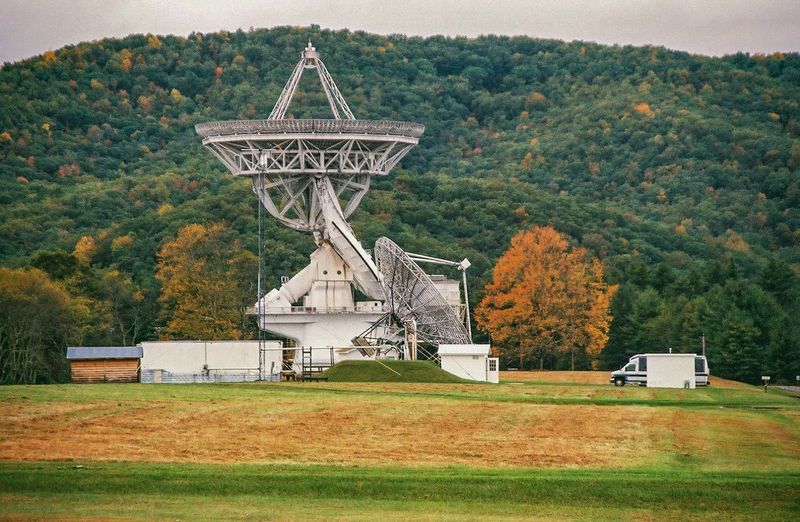
Groundbreaking at Green Bank happened in 1957, making it the first site in the United States dedicated to radio astronomy. That is not just a footnote in science history.
That is the origin story of how America started listening to the universe rather than just looking at it.
The original telescope collapsed dramatically in 1988 due to a structural failure, and the loss actually accelerated the push to build something bigger and better.
The current Green Bank Telescope, completed in 2000, became the most capable steerable radio telescope ever constructed.
Every piece of that history is woven into the exhibits at the visitor center.
Green Bank also holds the distinction of being the first observatory to invite scientists from around the world to conduct research on-site. That spirit of open collaboration has continued for decades.
Walking through the campus, you get a real sense that the discoveries made here, from mapping distant galaxies to detecting new types of pulsars, are genuinely changing how humanity understands its place in the cosmos.
The Gift Shop and Hands-On Museum Exhibits
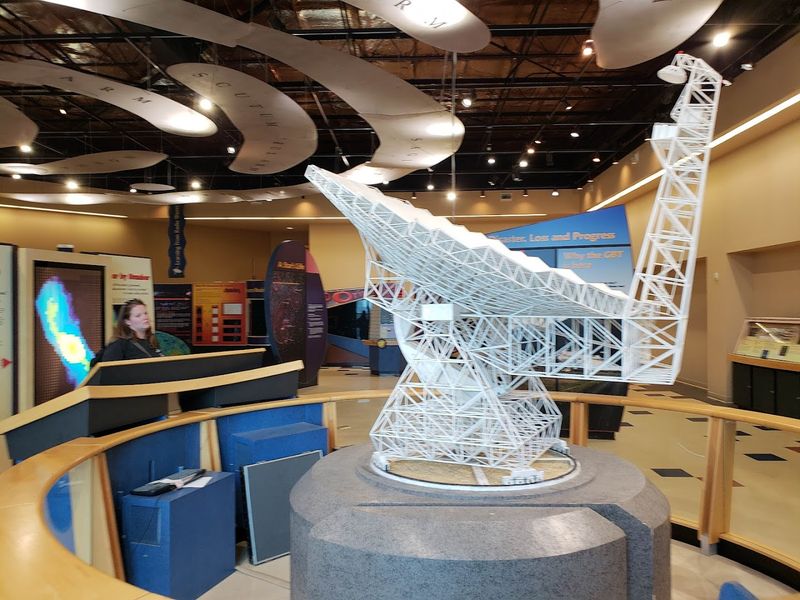
Few gift shops at scientific institutions actually make you want to linger, but the one at Green Bank does. The merchandise leans heavily into the astronomy theme without veering into cheesy souvenir territory.
Books, science kits, telescope-branded gear, and educational toys fill the shelves with options that feel genuinely useful rather than just decorative.
The hands-on museum attached to the visitor center is where kids tend to disappear for stretches of time. Interactive displays let visitors experiment with radio wave concepts, explore scale models of the solar system, and understand how the telescope actually collects data from deep space.
The learning feels effortless because the exhibits are well-designed and genuinely fun.
Space Rumpus events bring an even more festive energy to the campus on select weekends, with activities geared toward families who want a full tech-free experience in the mountains.
Between the gift shop, the museum, the cafe, and the trails, it is entirely possible to fill a full day here without ever feeling like you are running out of things to do.
Planning Your Visit: What to Know Before You Go
The observatory is open Thursday through Monday from 9:30 AM to 5:30 PM, and closed on Tuesdays and Wednesdays.
Tours start at 10 AM and run every two hours, so arriving early gives you the best shot at catching the first one without rushing.
Booking in advance is strongly recommended, especially for the more in-depth specialty tours that fill up weeks ahead.
Getting there involves a scenic drive through the Appalachian Mountains, and the roads leading to Green Bank are part of the experience. Plan for the journey to take longer than a map app suggests, especially if you stop to take in the views, which you absolutely should.
Leave the electronics anxiety at home. Power down the phone, grab a disposable camera if photos matter to you, and settle into the pace of the place.
The cafe is ready for you when you arrive, the trails are waiting after lunch, and the telescope will still be there pointing at the sky long after you leave.
Address: 155 Observatory Rd, Green Bank, WV 24944.
