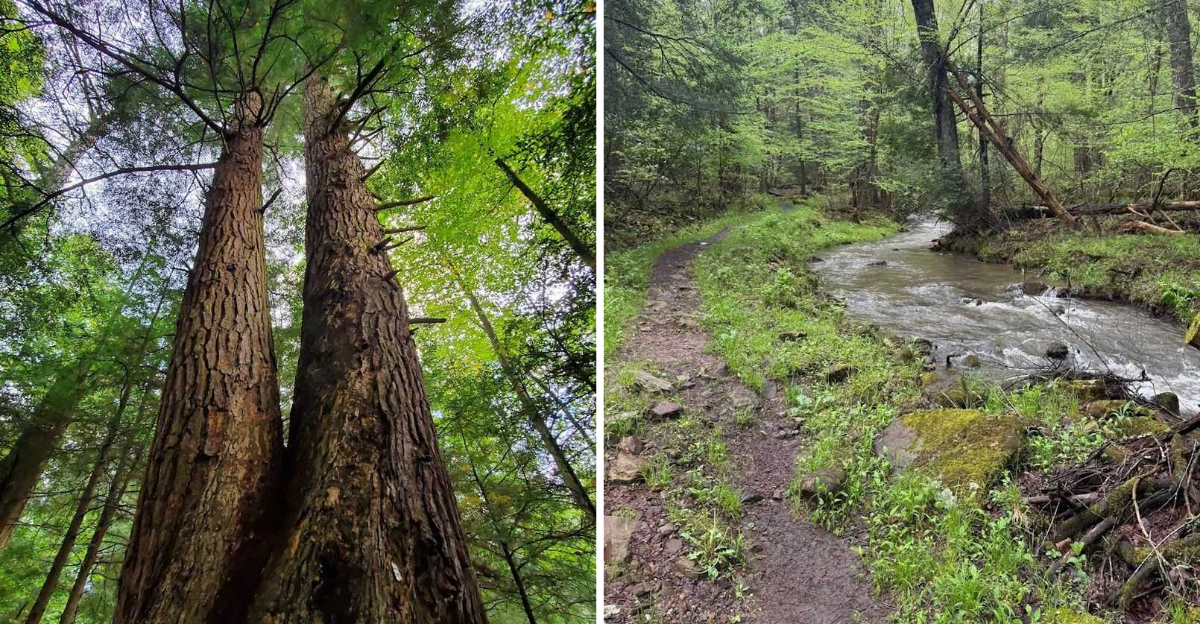
This place makes you feel small in the best possible way. A sanctuary in West Virginia shelters a forest so ancient, it predates the state itself.
Its name comes from the towering, cathedral-like canopy created by massive hemlock trees, a feature so special it earned a national designation.
The forest is not just tall, it is a testament to a promise made decades ago to never let an axe touch it.
Stand beneath the oldest hemlock, which has been alive for over five centuries, a living monument to a time before the state was settled.
It is quiet, humbling, and absolutely unforgettable.
Come stand among giants and let the silence speak for itself.
Towering Hemlocks Reach More Than 90 Feet High
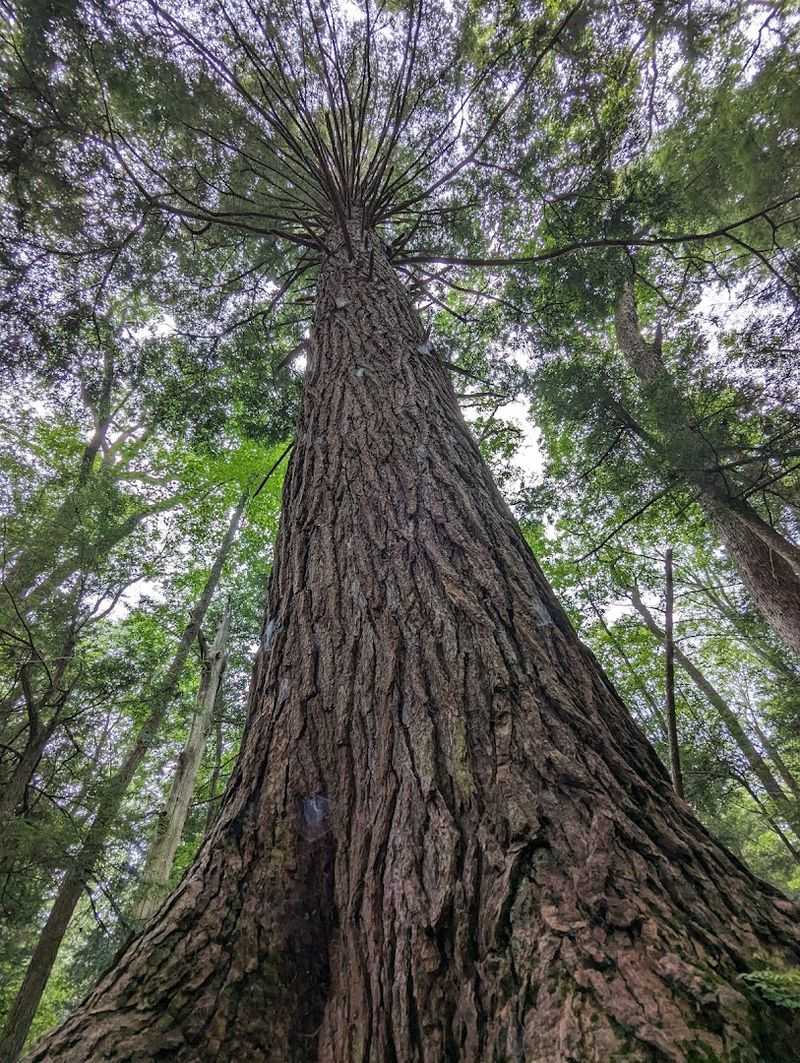
Standing beneath a 90-foot hemlock is a full-body experience. Your eyes travel upward, and upward, and still upward, until the treetop disappears into a blur of green needles and fractured light.
Cathedral State Park is home to eastern hemlocks that routinely exceed 90 feet, with some extraordinary specimens stretching as tall as 120 or even 123 feet into the West Virginia sky.
The trunks of these trees are equally impressive, with circumferences reaching 16 feet or more. That is not a typo.
You could gather several adults hand-in-hand and still struggle to fully encircle a single tree. Their bark is deeply furrowed, rough to the touch, carrying the texture of something that has survived centuries of weather.
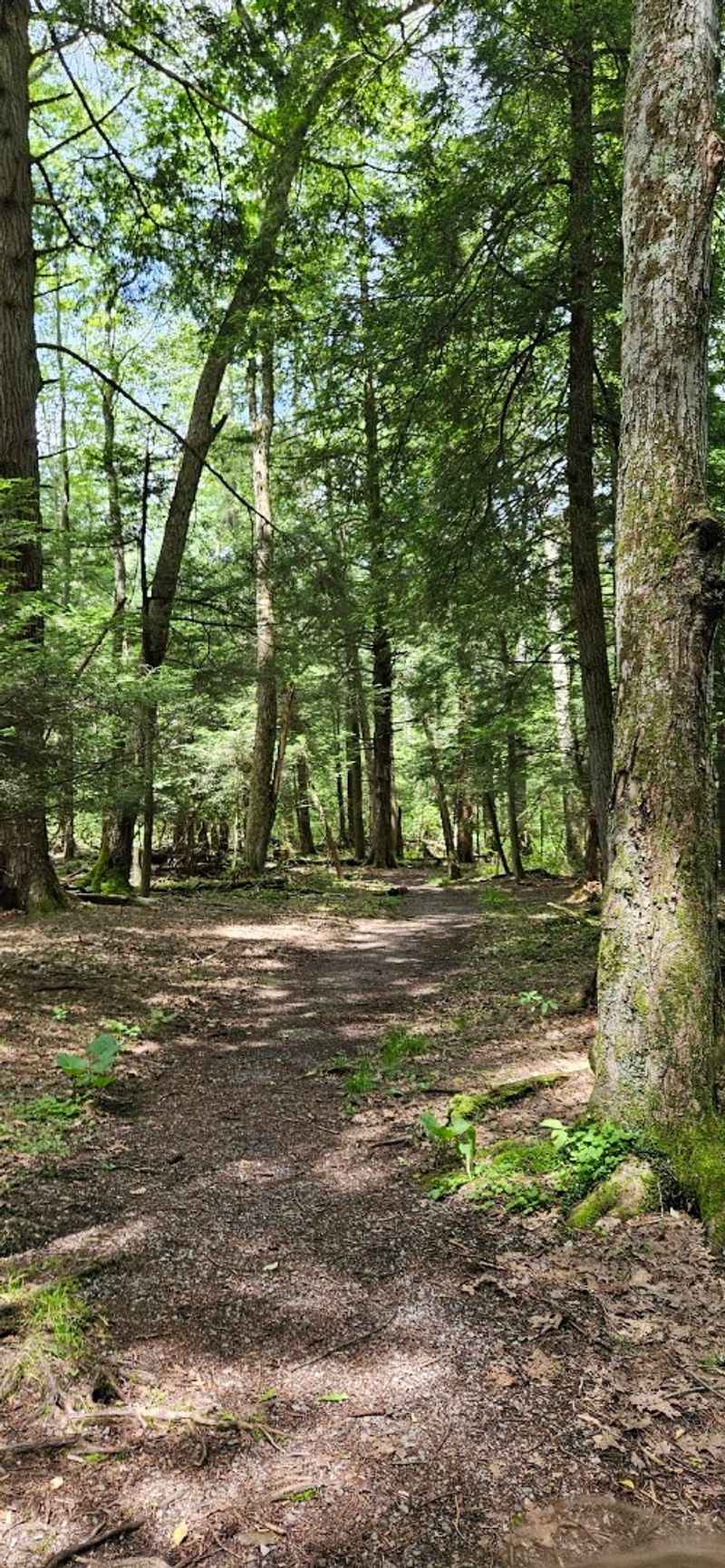
Sunlight filters through their dense needle canopies in thin, golden beams, shifting slowly across the soft forest floor as the day moves along. Walking among them feels less like a hike and more like stepping into a living cathedral.
The scale here redefines what the word forest actually means.
Ancient Giants That Have Stood For Over 500 Years
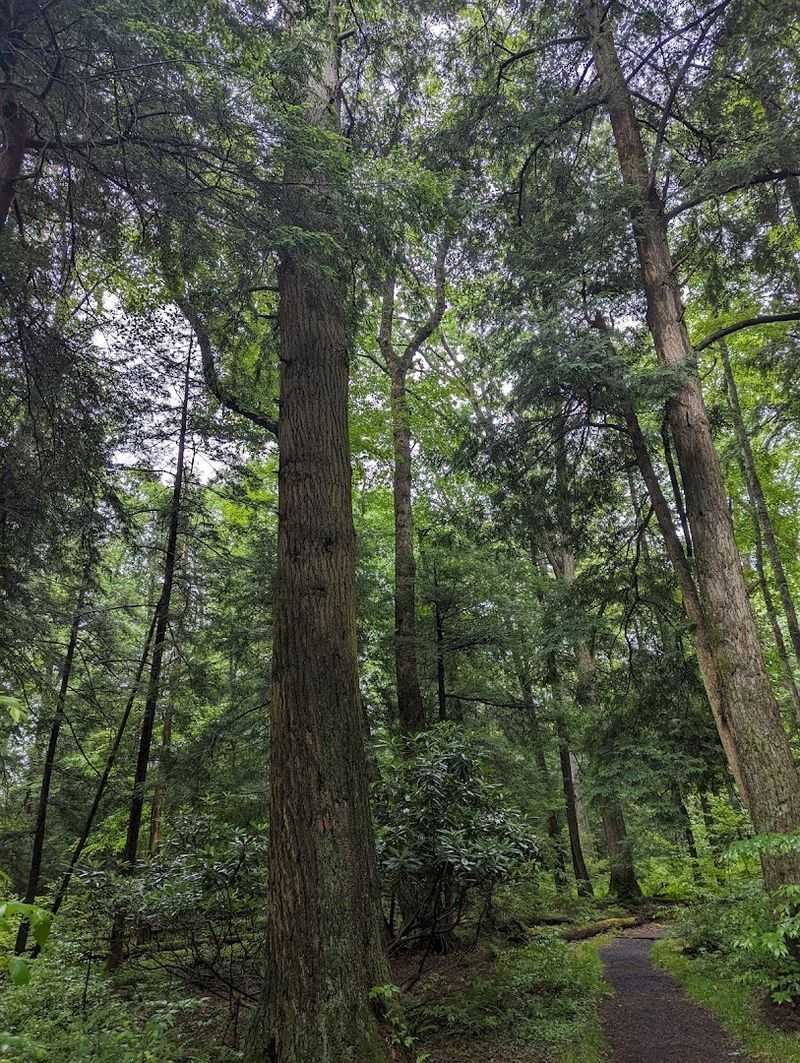
Some of these trees were already growing when Columbus was still sailing. That thought alone is enough to stop you mid-step on the trail.
Cathedral State Park shelters eastern hemlocks estimated to be over 500 years old, making them living witnesses to centuries of history that unfolded far beyond these quiet West Virginia woods.
The oldest confirmed hemlock in the park is approximately 500 years, and the average age of trees throughout the forest hovers around 350 years. These are not young, energetic trees stretching toward the sun for the first time.
They are settled, immovable elders, rooted so deeply that storms have come and gone without leaving much of a mark.
Their gnarled trunks and sprawling root systems tell stories no book ever could. Each ridge in the bark represents another decade of quiet, persistent growth.
Walking past them feels genuinely humbling, like meeting someone whose patience and endurance put everything else in perspective. This is what 500 years of standing still actually looks like.
A Forest Cathedral Where Nature Inspires Awe
The name is not just poetic. It is genuinely accurate.
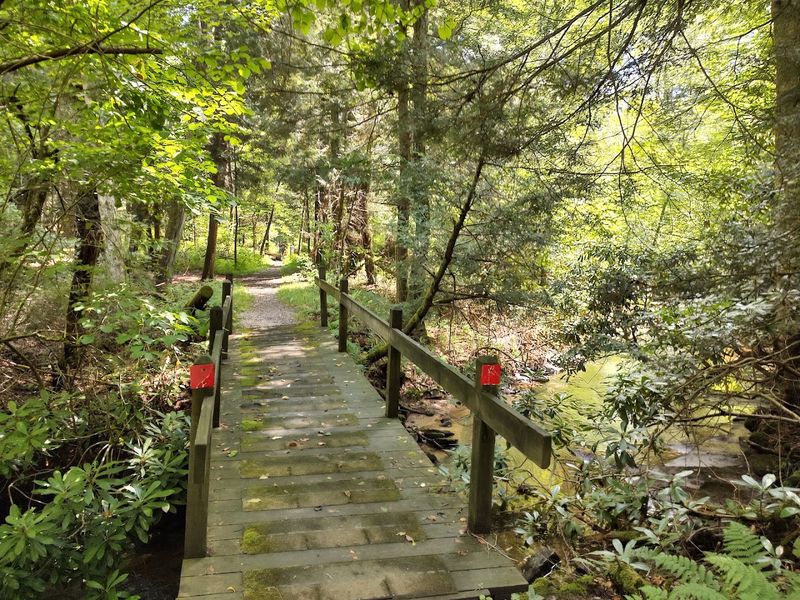
Walking into Cathedral State Park feels like stepping through the doors of something sacred, where the tall hemlock trunks form natural columns and the dense canopy above creates a vaulted ceiling of living green.
The atmosphere shifts the moment you leave the parking area behind.
A kind of hush settles over everything. The distant sound of Rhine Creek replaces the noise of the road, and the air carries a cool, earthy fragrance that is impossible to replicate anywhere else.
Even on a bright afternoon, the light inside the forest is soft and subdued, giving the whole space a quality that feels almost reverent.
Birds call from somewhere deep in the canopy, and the occasional rustle of leaves in a light breeze is about as dramatic as things get. That stillness is the point.
This forest does not demand anything from you. It simply surrounds you, quietly and completely, until the outside world starts to feel very far away.
The experience stays with you long after you leave.
Trails Wind Beneath Canopies Older Than America
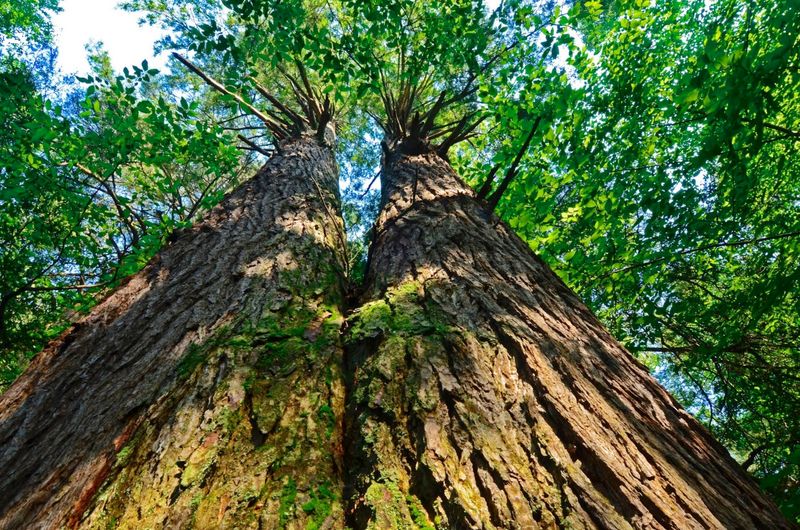
The trails here do not demand much from your legs, but they deliver a great deal to your senses. Cathedral State Park offers roughly three miles of paths, including the short Giant Hemlock Trail at just 0.2 miles and the Cathedral Trail at 1.1 miles.
Neither route is steep, making the park accessible to a wide range of visitors, from young families to those who prefer a slower, more contemplative pace.
Each trail winds through the forest in a way that feels organic rather than engineered. Wooden bridges carry you over Rhine Creek at multiple points, and the sound of water running beneath your feet adds a lovely rhythm to the walk.
Exposed roots and rocks dot the ground, so wearing sturdy shoes is genuinely smart advice.
What makes these trails remarkable is not the distance but the company. Every step takes you beneath canopies that were already ancient when the United States was founded.
Grab a trail map from the park office before heading out, and download it in advance since cell service in the area can be unreliable. The forest rewards those who come prepared.
West Virginia’s Last Stand Of Virgin Hemlock
Cathedral State Park holds a distinction that very few places in the eastern United States can claim. It contains the largest remaining stand of virgin hemlock in West Virginia, a 133-acre preserve where the forest has never been subjected to large-scale logging.
In a state where timber operations dramatically reshaped the landscape throughout the 1800s and early 1900s, this untouched tract is something genuinely rare.
The term virgin forest means the trees here have grown, aged, and fallen entirely on their own terms. No ax has shaped their canopy.
No saw has interrupted their centuries-long growth. That distinction gives the forest an ecological integrity that managed woodlands simply cannot replicate, and scientists and naturalists recognize it as an invaluable reference point for understanding Appalachian forest systems.
Walking through it, you get a sense of what this entire region once looked like before human development changed the equation. The density, the age, the layered complexity of plant life underfoot, all of it reflects an ecosystem operating exactly as it evolved to.
This is not a restored forest. It is the original one, still standing.
Visitors Walk Among Trees That Touch The Sky
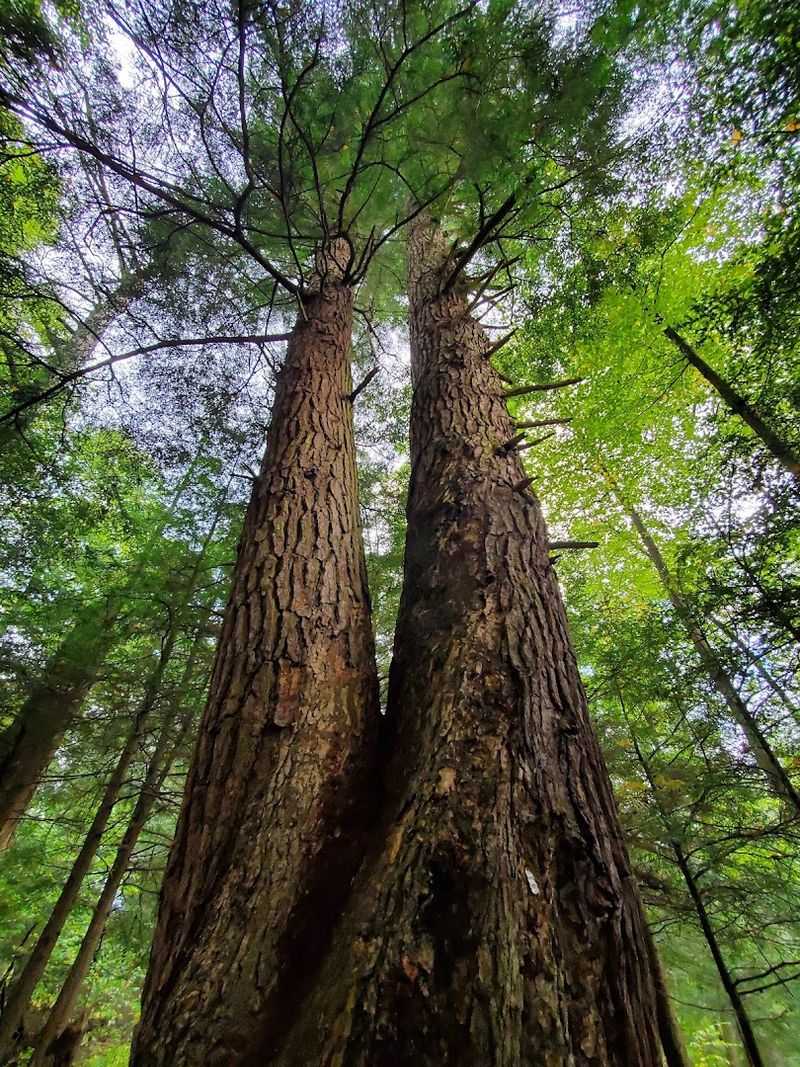
Few experiences in nature produce the kind of neck-craning, wide-eyed wonder that comes from standing at the base of a 120-foot hemlock. The trees at Cathedral State Park create a scale that the human eye genuinely struggles to process.
You keep expecting the trunk to narrow and taper, and it just keeps going, thick and straight, all the way up into the canopy.
The Giant Hemlock Trail is the best route for encountering the park’s most impressive specimens up close. Two particularly massive hemlocks sit right along the path, making them easy to find and impossible to walk past without stopping.
Photography here is an exercise in perspective, because no single frame can capture the full height of these trees without losing the detail at their base.
Families with children tend to love this trail precisely because the trees produce such an immediate, visceral reaction. Kids who have never shown much interest in nature suddenly become very interested when they realize a tree trunk is wider than their entire living room.
That sense of scale is one of the park’s most powerful and memorable gifts to every visitor who makes the trip.
A Living Monument To Appalachian Ecology
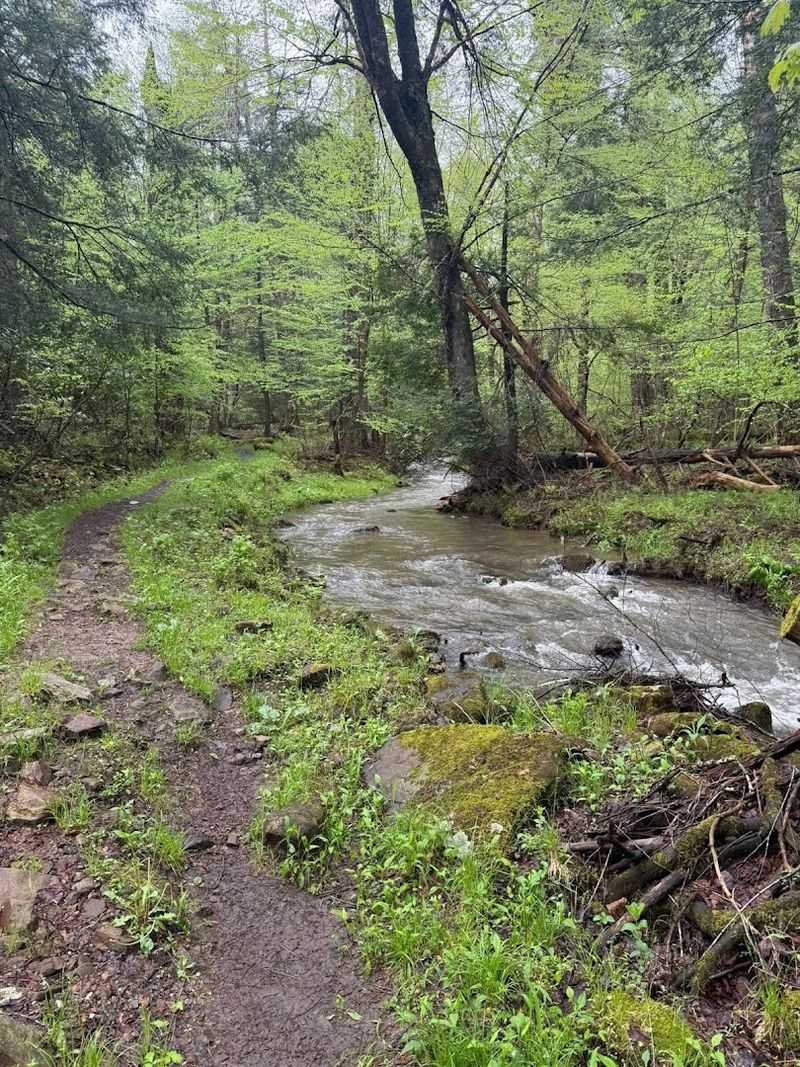
Cathedral State Park does not just look impressive. It functions as a living laboratory for understanding Appalachian ecology in its most undisturbed form.
The park’s intact old-growth structure supports ecological processes that simply cannot be observed in managed or replanted forests, making it valuable far beyond its scenic appeal.
Rhine Creek threads through the park, supporting aquatic life and contributing to the moisture levels that allow ferns, mosses, and wildflowers to thrive in such abundance.
The creek crossings along the trails offer quiet moments to crouch down and observe the water moving over rocks, with the forest canopy reflected in the surface.
Those small, still moments are among the most memorable parts of any visit.
Wildlife evidence is present throughout the park, with deer and bear activity documented regularly in the area. The dense undergrowth and layered habitat provide shelter and food for a wide range of species.
Every element of this ecosystem connects to every other element in ways that took centuries to develop. Spending time here is a reminder that the most complex and beautiful systems are often the ones that have simply been left alone to grow.
This Forest Proves Age And Height Can Be Majestic
Some places earn their reputation through spectacle, and some earn it through quiet, enduring presence. Cathedral State Park belongs firmly in the second category.
The trees here do not need dramatic backdrops or engineered viewpoints. They simply exist, tall and ancient and completely sure of themselves, and that confidence is contagious.
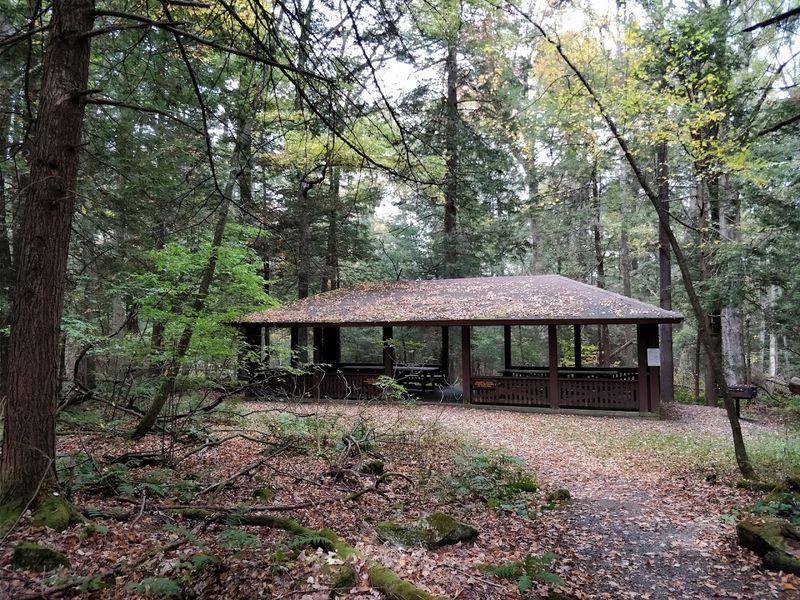
Settling into the picnic area for a meal surrounded by 400-year-old hemlocks reframes what a lunch break can feel like. The shelters provide shade even on sunny days, and the sounds of the creek and the birds overhead replace whatever was stressing you out before you arrived.
Simple food tastes better in a place like this. The setting does something to your appetite and your pace.
Cathedral State Park is open 24 hours, every day of the week, making it accessible whenever the mood strikes. Whether you arrive at dawn to catch the morning light through the canopy or wander the trails on a quiet weekday afternoon, the forest meets you exactly where you are.
Age and height, it turns out, are a deeply compelling combination. This park makes that case better than anywhere else in West Virginia.
Address: 12 Cathedral Park Dr, Aurora, WV 26705
