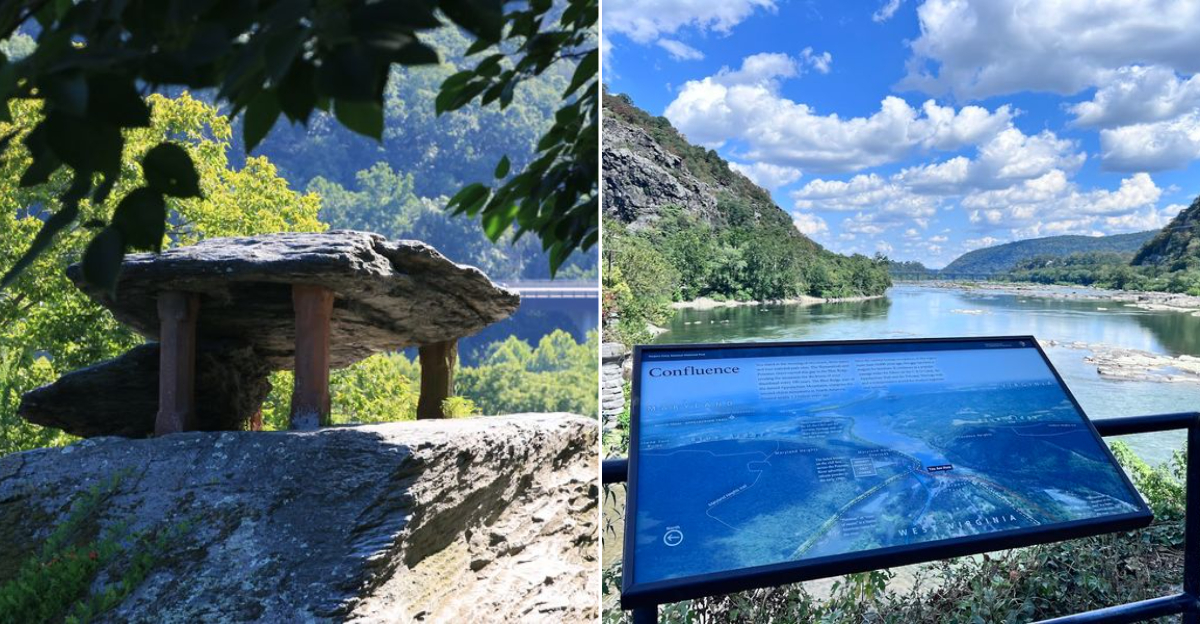
Thomas Jefferson once declared this view “worth a voyage across the Atlantic,” and centuries later, little has changed. This West Virginia overlook captures the exact timeless beauty he praised, where the Shenandoah and Potomac rivers rush together and tear through the Blue Ridge Mountains.
You stand on a historic shale outcropping along the Appalachian Trail, gazing at the same water gap that stirred a founding father’s soul. The scene unfolds like a living painting, with rivers carving through ancient stone and mountains stretching toward a calm horizon.
A short climb rewards you with a panorama so grand it once convinced Jefferson that nature had torn the mountains apart right at this spot. The land below tells stories of industry and conflict, but up here, only the wind and the water have a voice.
West Virginia holds many treasures, but few carry the weight of presidential praise quite like this one.
Why The First Look Hits So Hard
The first thing that got me up here was how unprepared I felt for the scale of it, even though I already knew the reputation. You come expecting a nice overlook, and then the rivers start pulling your eye through the gap in the mountains like the whole landscape is quietly showing off.
It feels old in a way that is hard to fake, which is probably why this view still lands so strongly.
From Jefferson Rock, you are looking across the meeting of the Potomac and Shenandoah rivers, and that alone gives the scene a lot of movement. Then the Blue Ridge rises around the water gap, and everything starts layering together in that deep, hazy Appalachian way that makes distance feel almost touchable.
Harpers Ferry has plenty of history, but right here the natural setting steals the conversation without even trying.
I think that is what makes this spot stay with people after they leave. The view is dramatic, sure, but it is also calm enough that you end up noticing smaller things, like the texture of the ridges, the changing light on the water, and the way West Virginia can feel grand without ever feeling loud.
You do not just look at it. You sort of settle into it for a while.
The Walk Up Feels Like Part Of The Story
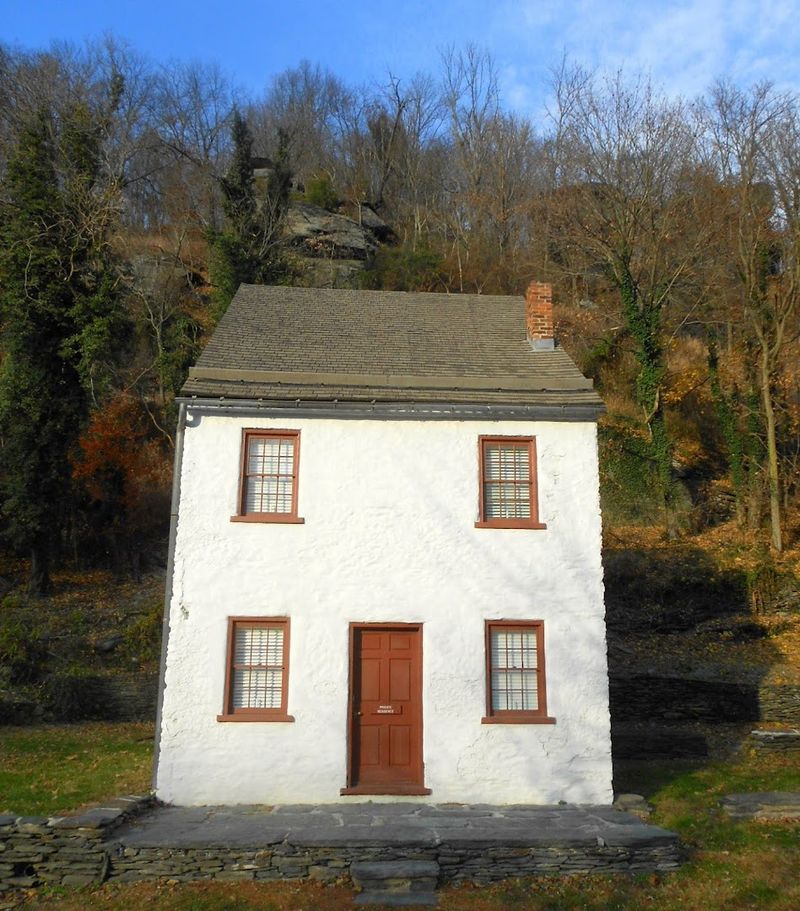
Getting to Jefferson Rock is not some huge expedition, but it does ask you to pay attention, and honestly that helps. The old stone steps feel like they belong to the place instead of being dropped in later for convenience.
By the time you reach the viewpoint at Jefferson’s Rock, Appalachian Trl, Harpers Ferry, WV 25425, United States, you have already shifted into a slower rhythm.
The climb is uneven, and that matters because this is not one of those spots where you stroll up while barely looking around. You notice the grade, the worn surfaces, the way the path winds through a setting that still feels grounded in the landscape and not overly polished.
In West Virginia, that kind of approach can make a place feel more honest, and this one really benefits from that.
I would not rush this part, even if you are excited to get to the top. The walk gives the overlook some buildup, and it also reminds you that historic places are often best when they still ask a little something from you.
Once you arrive, the view feels earned in a good way, like the setting has already pulled you into its mood before the main reveal even begins.
Thomas Jefferson Was Not Exaggerating
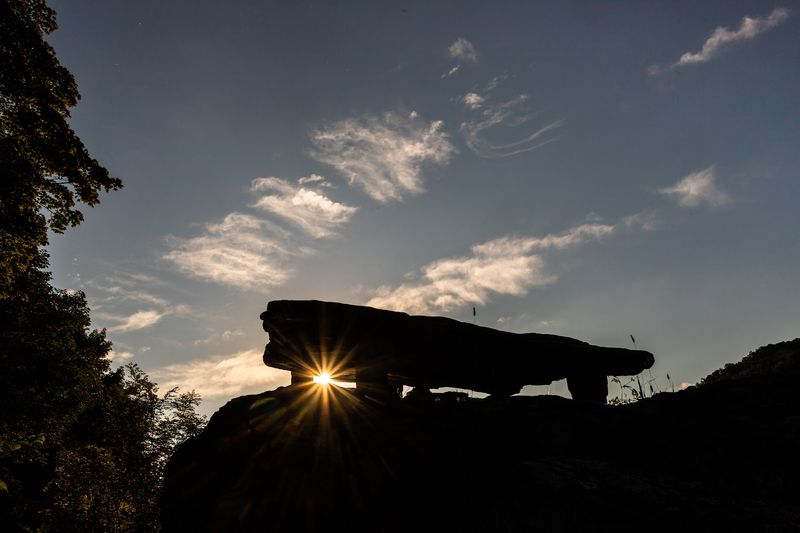
I know people throw around old travel quotes all the time, but this one makes sense the second you see the view. Thomas Jefferson stood here and called the passage of the Potomac through the Blue Ridge one of the most stupendous scenes in nature, and for once that kind of praise does not feel oversized.
If anything, the landscape still does the heavy lifting for him.
What I like is that the viewpoint does not depend on a plaque or a speech to make you care. You can stand there without knowing the full backstory and still feel why someone would write about it in a lasting way.
Then, once you remember that Jefferson thought it was worth crossing an ocean to see, the whole thing gets a little more interesting.
There is something satisfying about finding a famous place that still feels convincing in person. Harpers Ferry has plenty of stories attached to it, but this view is not surviving on reputation alone.
The ridges, the water, and the deep cut through the mountains still carry that same sense of drama, and West Virginia still gives the scene the kind of texture and scale that keeps it from feeling like just another historic stop.
The Rivers Do Most Of The Talking
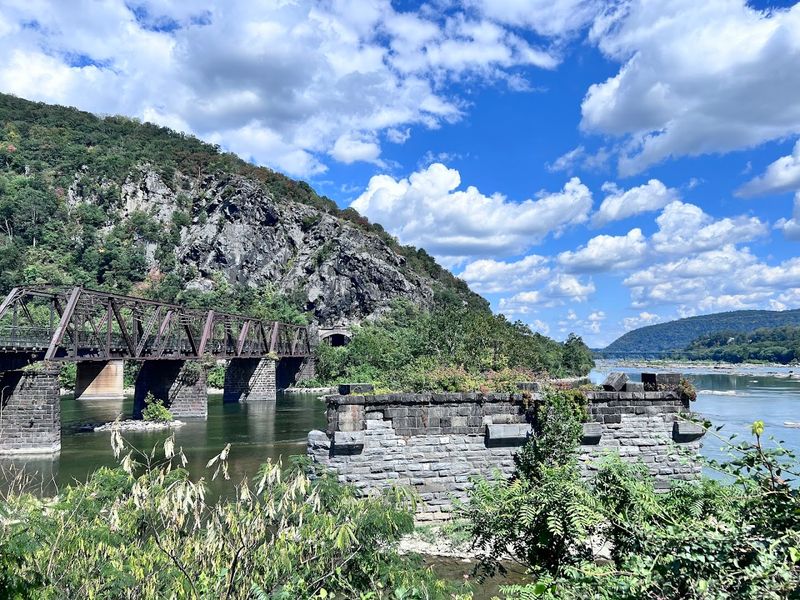
Once you settle in at the overlook, the rivers become the thing you keep coming back to, even if the mountains get your attention first. The Potomac and Shenandoah meet below in a way that makes the whole scene feel active and alive, like the landscape is still shaping itself in front of you.
You can trace the water with your eyes and understand why this location matters so much visually.
That meeting of rivers is not just pretty from a distance, either. It gives the view structure, movement, and a kind of natural logic that makes everything around it feel connected.
The gap through the Blue Ridge looks less like a postcard arrangement and more like evidence of time, pressure, and persistence, which is a very satisfying thing to stand and think about for a while.
I found myself watching the water longer than I expected because it keeps changing the way the rest of the scene reads. Depending on the light and the season, the rivers can seem soft and reflective or dark and strong, and that shifts the whole mood of the overlook.
In West Virginia, views like this often feel layered, and here the rivers are the reason the layers actually hold together.
The Rock Itself Has A Story Too
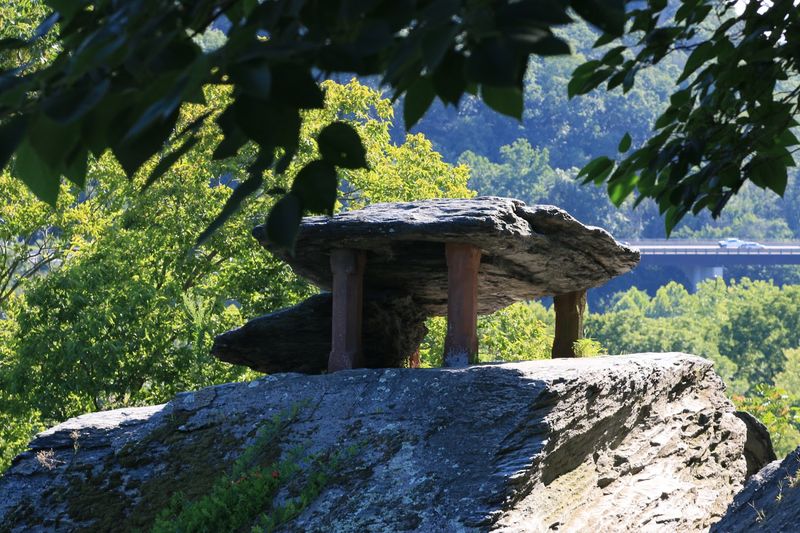
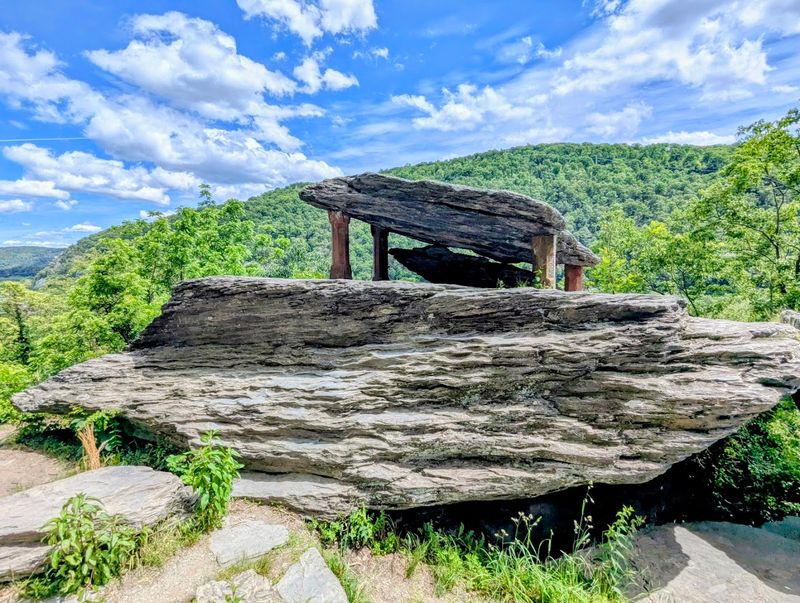
It is easy to focus so much on the view that you almost forget the overlook itself has a pretty interesting history. Jefferson Rock is made of large masses of Harpers shale, and the formation has been altered over time to keep it standing.
The top slab once rested on a narrower natural base, but support pillars were added later when weathering and heavy visitation made the original support unreliable.
That detail changes the way you see the site once you know it. Instead of treating the rock like some untouched object from another era, you start noticing how people have been trying to preserve both the landmark and the experience of standing here for a very long time.
It feels like a reminder that even places we think of as permanent sometimes need help staying in place.
There is also something oddly charming about the rock looking both rugged and carefully watched over at the same time. It fits Harpers Ferry, which is full of places where the natural world and human history keep overlapping in plain sight.
You are not just visiting a scenic point here. You are standing on a landmark that has had its own complicated life while the mountains and rivers kept carrying on around it.
You Really Want To Linger Up Here
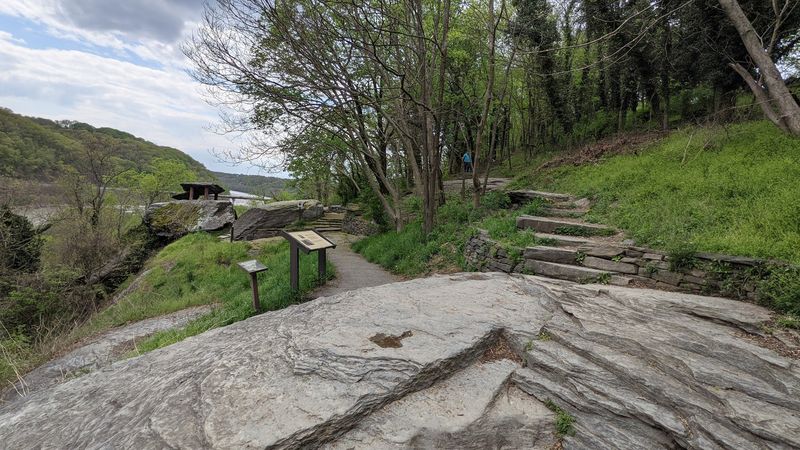
Some viewpoints are all about the quick photo and the fast exit, but this one makes you slow down without asking permission. You get there, take in the obvious sweep of the landscape, and then a few extra details keep pulling you back into the scene.
The longer you stay, the more the overlook starts feeling less like a stop and more like a conversation you do not want to cut short.
Part of that comes from the atmosphere around the viewpoint, which feels calm without being sleepy. There is usually enough movement in the air, the trees, and the distant water to keep things from feeling static, and that matters more than people realize.
It gives the place a lived-in quality, like the scenery is doing something subtle every minute you are there.
I think that is why Jefferson Rock works so well for travelers who like a little space to think. You are high enough to get perspective, but not so removed that the town and rivers disappear into abstraction.
In Harpers Ferry, and really in West Virginia overall, the best overlooks often let you feel both grounded and wide open, and this one absolutely knows how to do that.
The Appalachian Trail Adds Something Special
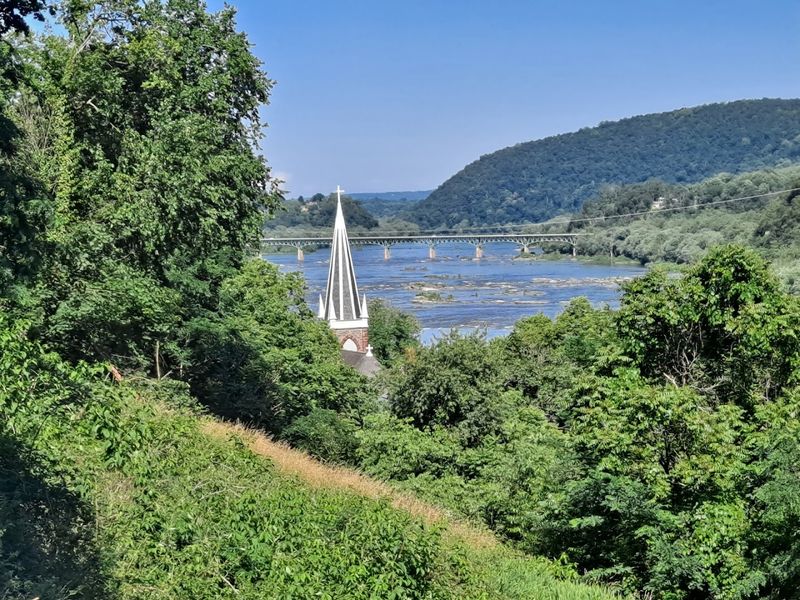
There is something extra satisfying about knowing this viewpoint sits along the Appalachian Trail, because it gives the whole visit a slightly bigger frame. Even if you are not hiking a long stretch, you still feel connected to that long ribbon of path and all the people who have passed through this landscape with sore legs and wide eyes.
That little bit of trail energy gives Jefferson Rock a different texture than a roadside overlook.
It also fits the setting perfectly. Harpers Ferry has always been a crossing place, a meeting place, and a place where routes matter, so having the trail run through here feels less like trivia and more like part of the identity of the town.
You get scenery, history, and that sense of onward movement all at once, which is a pretty rare combination.
I like how the trail presence keeps the viewpoint from feeling too polished or too ceremonial. There is still some grit to it, some sense that you are in a real landscape that people move through rather than just pose in front of.
In West Virginia, that blend can be hard to beat, especially when the payoff is a view that feels both storied and completely alive in the present.
Why This View Still Feels Timeless
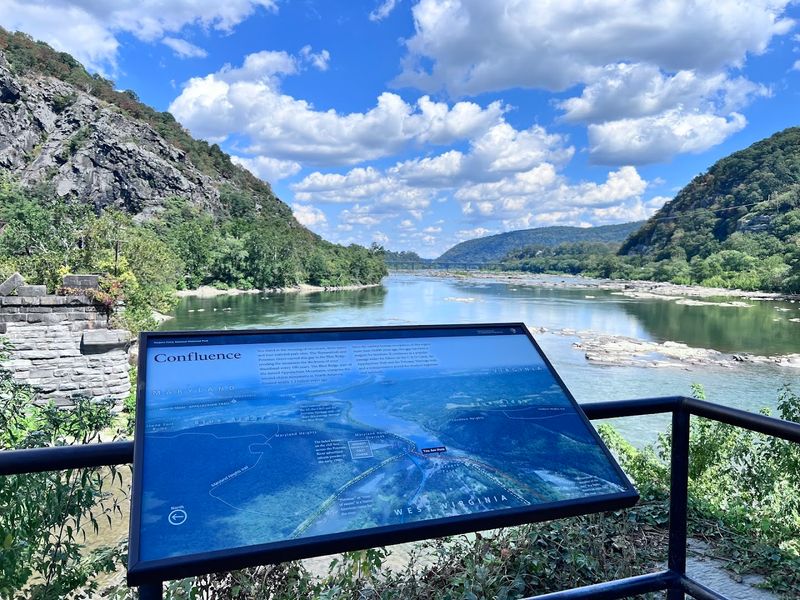
By the time you are ready to head back down, the word timeless does not feel exaggerated anymore. It is not that the place looks untouched, because it clearly carries history, maintenance, and the wear of many visitors.
It is that the essential experience of standing here, looking at the rivers breaking through the mountains, still feels just as immediate as it must have long ago.
That is a rare thing, and I do not say it lightly. Plenty of famous viewpoints end up feeling overexplained or somehow smaller than the stories attached to them, but Jefferson Rock holds onto its power because the landscape itself stays in charge.
The setting is broad, textured, and emotionally clear in a way that does not depend on trend, hype, or a carefully edited angle.
If you are wandering through West Virginia and want one place that explains the pull of this region without turning into a lecture, this is the one I would bring you to. We would climb the steps, stand still for a bit, and let the mountains and water handle the introduction.
After that, there would not be much left to argue about, because the view really does make its case all by itself.
