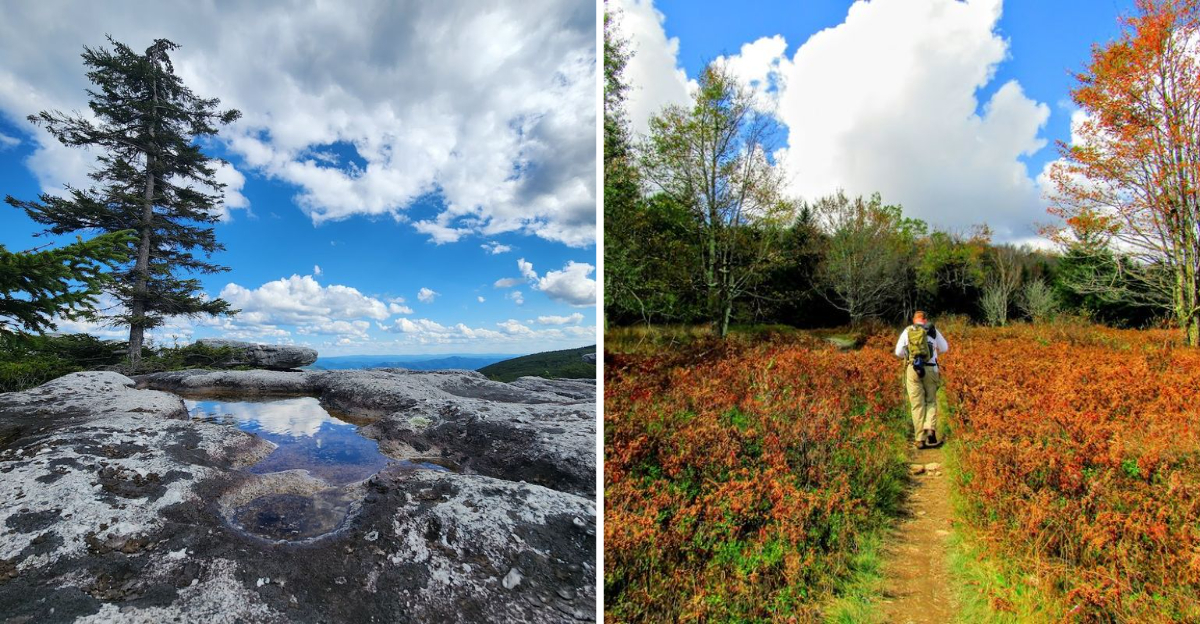
Standing on this high-altitude plateau feels like a glitch in the matrix.
You are in West Virginia, but the landscape screams Canadian tundra with wind-stunted trees, open rocky plains, and sphagnum bogs that belong way further north.
The wild blueberries that carpet the ground in summer are a sweet bonus.
But here is the wild part.
Beneath those squishy bogs and scenic trails, a dangerous secret lingers.
This area was once a military training ground during World War II, and some unexploded shells are still scattered in the muck.
So yes, you can hike through a subarctic wonderland, just maybe watch your step.
West Virginia really knows how to keep things interesting.
The Arctic-Like Plateau
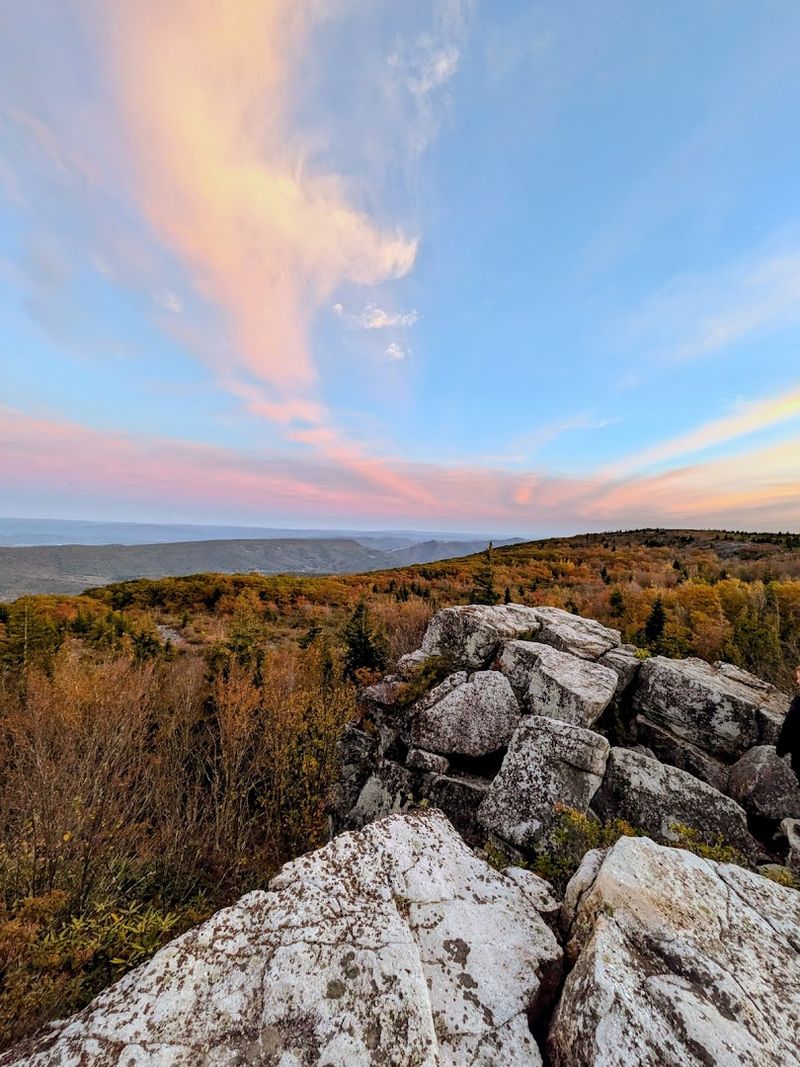
Most people picture rolling green hills and dense hardwood forests when they think of West Virginia. Dolly Sods flips that expectation completely on its head.
Sitting between 2,500 and over 4,700 feet in elevation, this plateau feels like a completely different country.
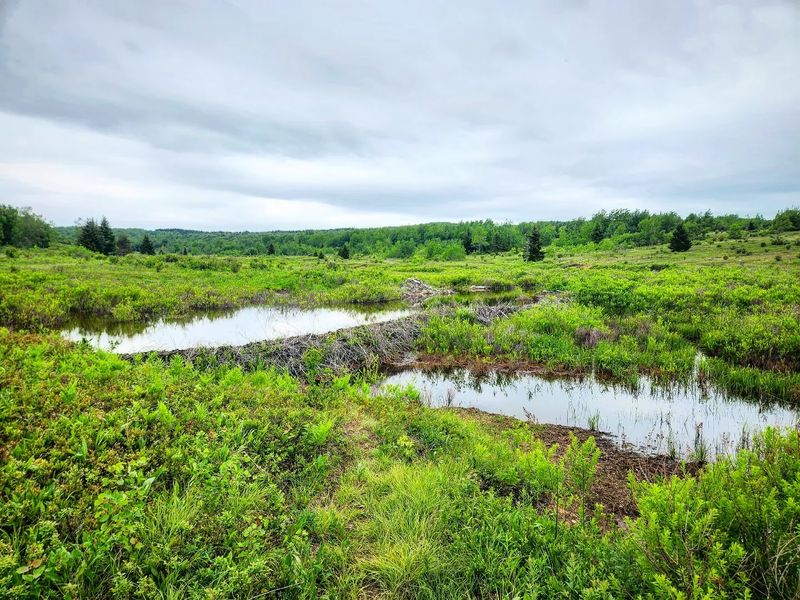
The landscape here is dominated by open sphagnum bogs, rocky plains, and low heath shrubs that stretch out in every direction. On a gray morning with fog rolling across the ground, you could genuinely convince someone they were standing in northern Canada.
The resemblance to sub-arctic tundra is not just poetic, it is ecologically real.
Frost can happen any month of the year here. The wind is relentless, and the weather shifts faster than you can fold a map.
Packing layers is not optional, it is survival strategy. The Allegheny Mountains create their own weather systems at this elevation, and Dolly Sods sits right in the middle of all that glorious unpredictability.
Coming here prepared means coming here ready for anything.
Nature’s Wind Sculptures That Tell a Story
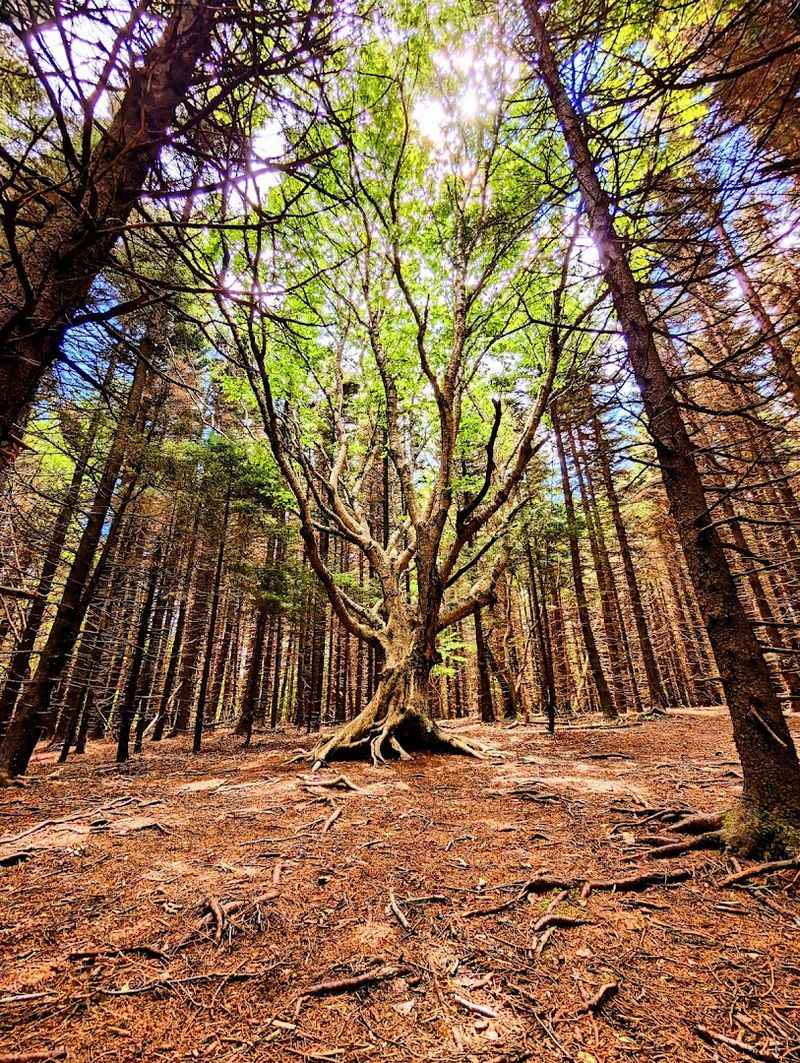
There is something almost eerie about the trees at Dolly Sods. They do not grow the way trees are supposed to grow.
Instead, their branches stretch almost entirely to one side, pointing east like they are all trying to escape something coming from the west.
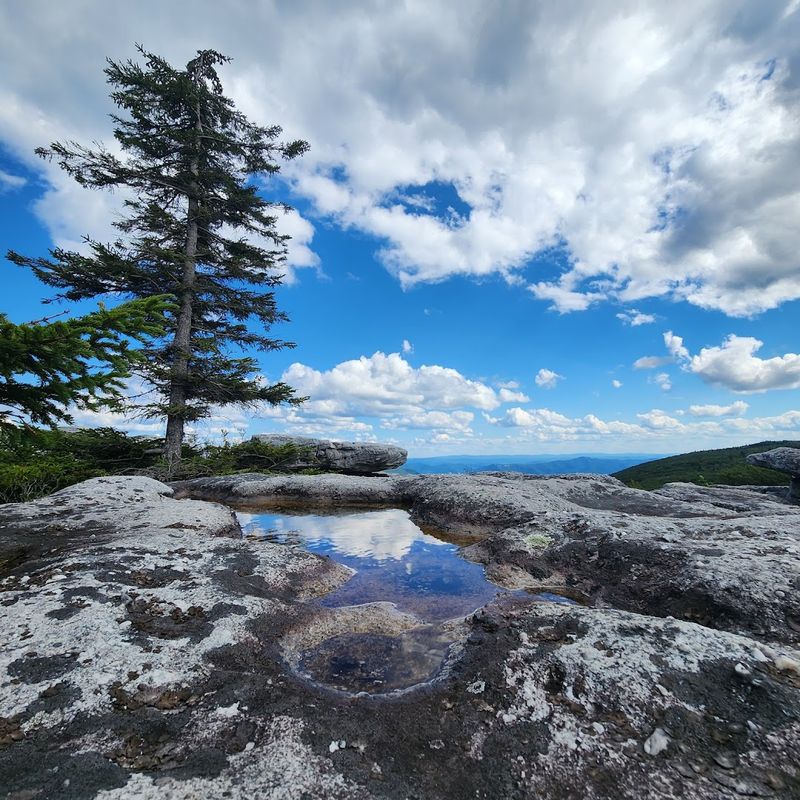
These are called flagged trees, and the culprit is the relentless westerly wind that hammers this plateau year-round. The wind essentially sculpts the red spruce, stripping branches from the windward side and leaving only those sheltered enough to survive.
It looks like every tree is permanently leaning away from an invisible force.
Walking among them feels like moving through a natural art installation. Each tree tells the same story about endurance and adaptation in a harsh environment.
Red spruce typically thrive in colder northern climates, so seeing them here in West Virginia, twisted and stunted by wind, adds to the surreal northern atmosphere.
They are tough little survivors, and honestly, there is something quietly inspiring about that kind of stubborn resilience.
Sphagnum Bogs Full of Carnivorous Plants and Wild Cranberries
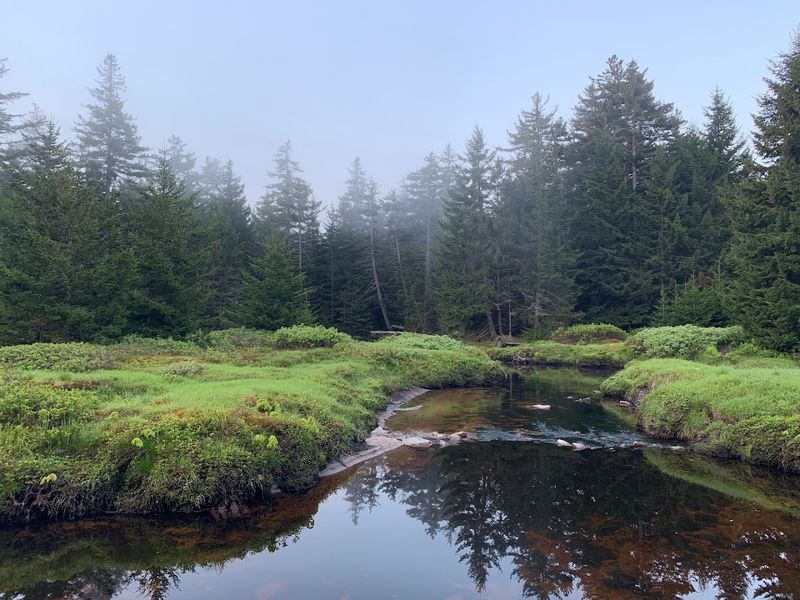
Bogs at Dolly Sods are not just wet, muddy inconveniences on the trail. They are thriving, bizarre little ecosystems packed with plants that have no business existing this far south.
Sundew plants, which trap and digest insects, grow here alongside wild cranberries in the thick sphagnum moss.
Sundews are genuinely fascinating once you crouch down to look at them. Their leaves are covered in sticky, glistening red hairs that catch flies and other small bugs.
The plant then slowly digests its meal, which sounds like something from a science fiction story but is completely real and happening right at your feet.
Wild cranberries ripen in late summer and early fall, and foragers who know what they are looking for can find small clusters tucked into the sphagnum.
The bog ecosystem here mirrors what you would find in northern Canada, which is part of why ecologists find Dolly Sods so remarkable.
It is a northern habitat transplanted into the mid-Atlantic mountains, and every bog visit feels like a quiet, soggy adventure worth having.
The WWII Military History Hidden Beneath Your Boots
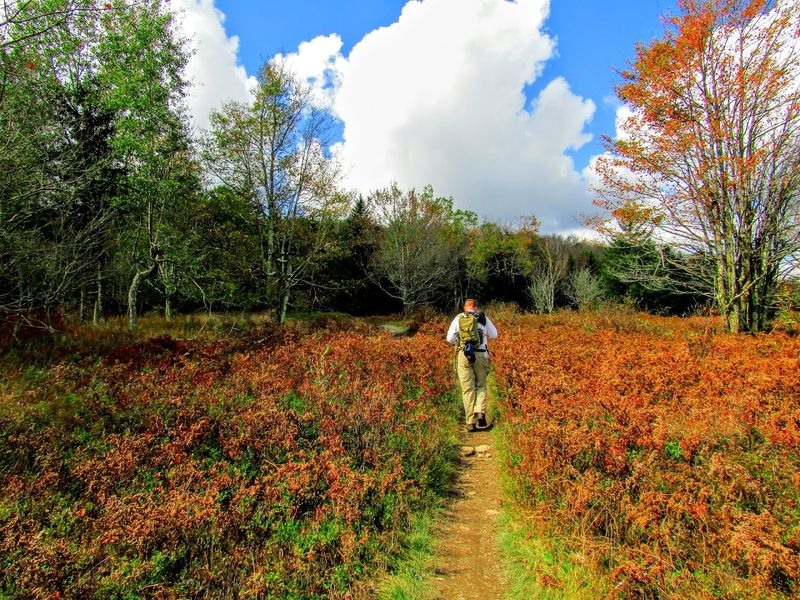
From August 1943 to July 1944, the U.S. Army used Dolly Sods as an artillery and mortar training range.
Soldiers practiced for combat in Europe here, firing shells across the plateau in preparation for what was waiting overseas. The rugged, remote terrain made it ideal for that kind of training.
When the military left, the shells did not all go with them. A major cleanup effort in 1997 involved thousands of excavations along trails and known campsites.
Crews discovered and safely detonated over a dozen live mortar shells, mostly along the Fisher Spring Run Trail. That number alone makes the hike feel a little more charged with history.
Many more unexploded shells are believed to still be out there beneath the bogs and rocky soil. Forest Service signs throughout the wilderness remind visitors not to touch, move, or dig near anything suspicious.
Mark the location from a safe distance and contact the Forest Service immediately if something unusual turns up. The history here is not just in the past, it is still very much part of the present landscape.
The Views That Stop You Mid-Sentence
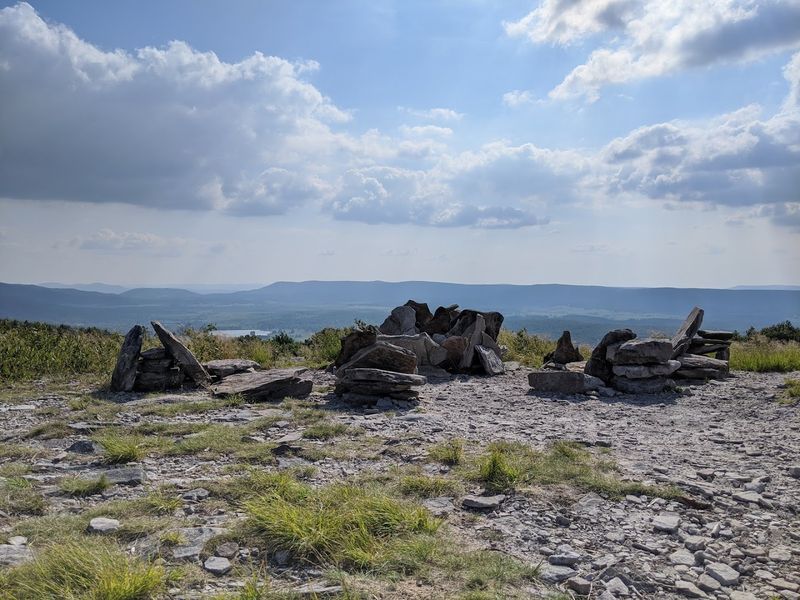
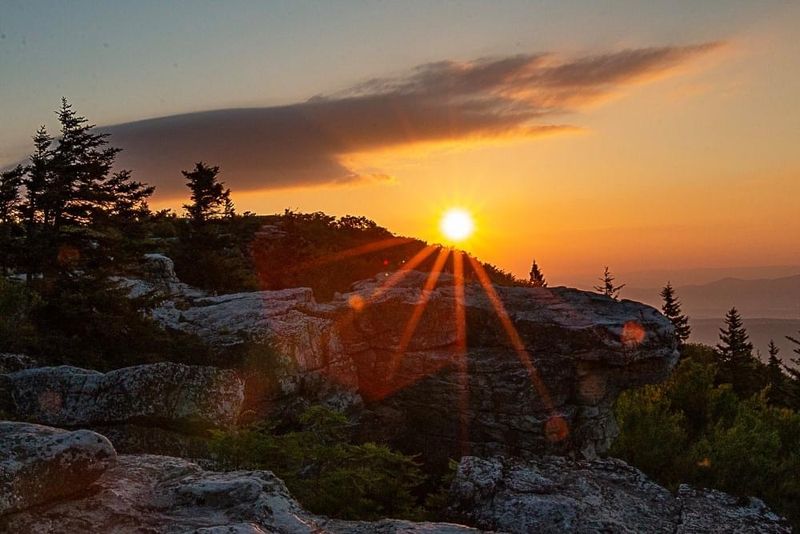
Bear Rocks Preserve sits at the northern edge of the plateau and delivers one of the most jaw-dropping views in the entire eastern United States.
Standing on those wind-scoured boulders and looking out over multiple mountain ranges at once is the kind of moment that makes you forget what you were about to say.
The rocks themselves are extraordinary. Carved and smoothed by thousands of years of wind and weather, they form a dramatic jumble of sandstone that feels ancient and powerful.
Sitting on them while the wind pushes hard from the west is both exhilarating and humbling at the same time.
Fall is particularly spectacular here, when the surrounding forests turn shades of red, orange, and yellow that seem almost too vivid to be real. Spring brings its own quiet beauty, with the heath shrubs starting to bloom and the bogs awakening after winter.
No matter the season, Bear Rocks rewards the drive down the bumpy access road with scenery that genuinely earns every pothole along the way.
Wildlife That Belongs Up North
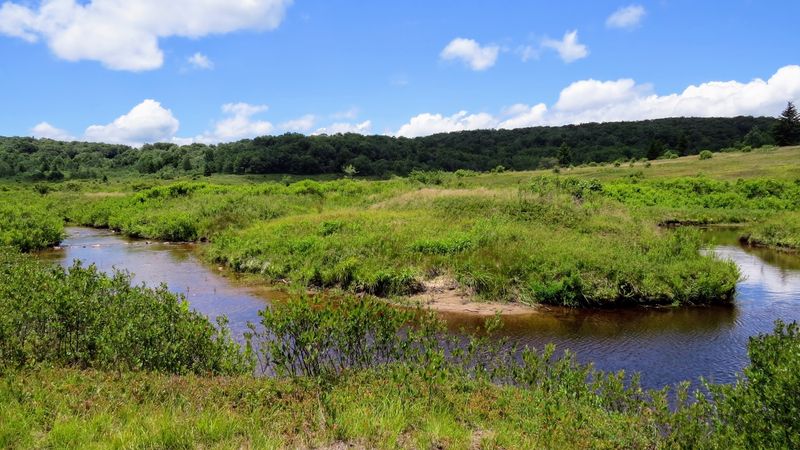
Spotting a snowshoe hare at Dolly Sods feels like catching a glimpse of the wrong continent. These animals typically live much farther north, in boreal forests and arctic regions.
Finding them here in West Virginia is a direct result of the unique high-altitude environment the plateau provides.
The Saw-whet owl also calls this place home, and it holds the distinction of being the smallest owl in the eastern United States. At only about eight inches tall, it is easy to miss unless you know what to listen for at dusk.
Their call is a repetitive, almost mechanical tooting sound that carries surprisingly far through the spruce trees.
Bird watchers come from across the country to visit the seasonal bird banding station at Dolly Sods, where migratory species are documented during their annual journeys. The diversity of wildlife here is genuinely remarkable for a mid-Atlantic location.
Beavers, deer, fox, and turkey round out the wildlife roster, making every trail walk feel like a potential encounter with something completely unexpected.
The Hiking Trails That Range From Boardwalks to Boot-Stealing Mud
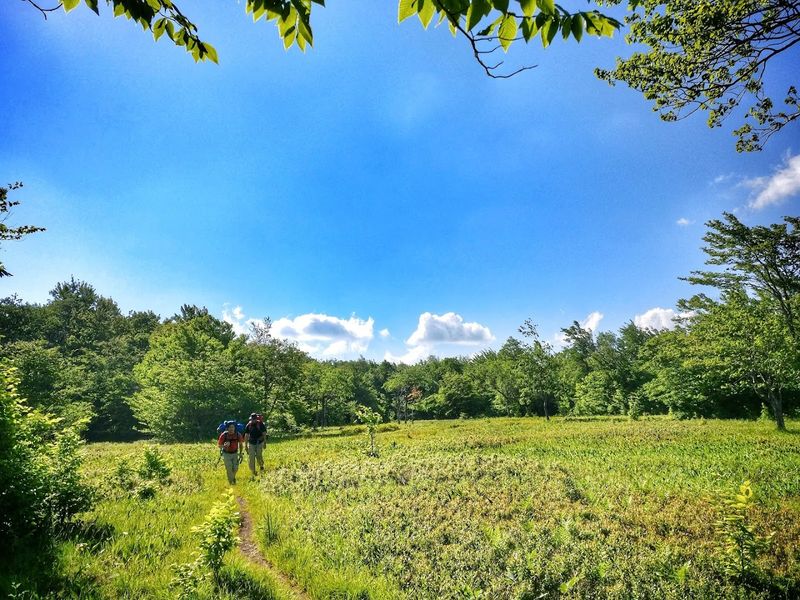
Dolly Sods does not have just one kind of trail experience. One moment you are walking on a solid, almost road-like path through open heath barrens.
The next, you are knee-deep in a swampy section of trail that seems personally offended by your boots.
The variety is part of the appeal. Trails here pass through hardwood forests, rocky meadows, dense spruce groves, and along rushing mountain streams, sometimes all within the same mile.
That constant shift in terrain keeps the hiking interesting and the scenery fresh around every bend.
Downloading offline maps before heading out is genuinely essential, especially on the plateau where trail markers can be sparse and snow can erase visible paths entirely in winter.
Waterproof boots with solid ankle support are not just recommended, they are close to mandatory for anything beyond a short day hike.
The Fisher Spring Run Trail, the Blackbird Knob area, and the Lion’s Head rock scramble are all standout routes worth planning around. Every trail here offers something the others do not.
Camping Under Stars So Clear They Feel Unreal
The night sky at Dolly Sods is something that genuinely surprises people who have spent most of their lives near city lights. With minimal light pollution and clear air at elevation, the stars come out in numbers that feel almost theatrical.
The Milky Way is visible on clear nights with a clarity that makes you feel small in the best possible way.
Camping here is dispersed and backcountry-style, meaning you carry in what you need and carry out everything you brought. There are no hookups, no facilities, and no neighbors unless another backpacker happens to set up nearby.
That solitude is a big part of the draw for people who come back year after year.
Early spring and late fall offer the quietest camping experiences, with fewer crowds and a peaceful stillness that the warmer months cannot match. Mornings at camp are cold and often foggy, with the kind of atmosphere that makes a warm meal feel like a small luxury.
The sounds here at night, wind through spruce branches and distant wildlife, are genuinely unforgettable.
The Ecological Devastation That Accidentally Created a Tundra
Dolly Sods did not always look like this. Before the late 1800s, the plateau was covered in dense, towering spruce and hemlock forests.
Then came the logging companies, who clear-cut the entire area with industrial efficiency and left behind enormous piles of slash and debris.
The leftover debris caught fire repeatedly, and those wildfires burned so intensely that they destroyed not just the remaining vegetation but the fertile organic soil itself.
What was left was essentially a scorched, nutrient-poor substrate that could no longer support the original forest.
Nature, being nature, adapted and filled the space with something entirely different.
What grew back was the tundra-like landscape visitors see today, complete with sphagnum bogs, heath barrens, and scattered stunted spruce. It is an ecological transformation that took decades and was born entirely out of destruction.
The story is both sobering and fascinating, a reminder that landscapes carry history in ways that are not always obvious at first glance. Walking across those bogs means walking across a landscape shaped by human decisions made over a century ago.
Practical Tips for Visiting Dolly Sods Without Getting Into Trouble
Getting to Dolly Sods requires driving several miles of rough, unpaved forest road that can rattle a low-clearance vehicle pretty convincingly. A car with decent suspension or higher ground clearance handles it much better.
The road is part of the adventure, but it is worth knowing what you are signing up for before you commit.
Always register at the trailhead and grab a paper map. Cell service is essentially nonexistent on the plateau, and digital maps are only useful if downloaded offline ahead of time.
Weather changes fast and dramatically here, so packing extra layers, rain gear, and snacks is just smart planning regardless of what the forecast says at home.
The unexploded ordnance situation is real and worth taking seriously. Stay on established trails when possible, and never touch, move, or dig near anything metallic or suspicious in the ground.
Report anything unusual to the Forest Service immediately. With the right preparation and a genuine respect for the wilderness, Dolly Sods rewards visitors with an experience that is truly unlike anything else in the eastern United States.
Address: Dolly Sods Wilderness, West Virginia 26260
