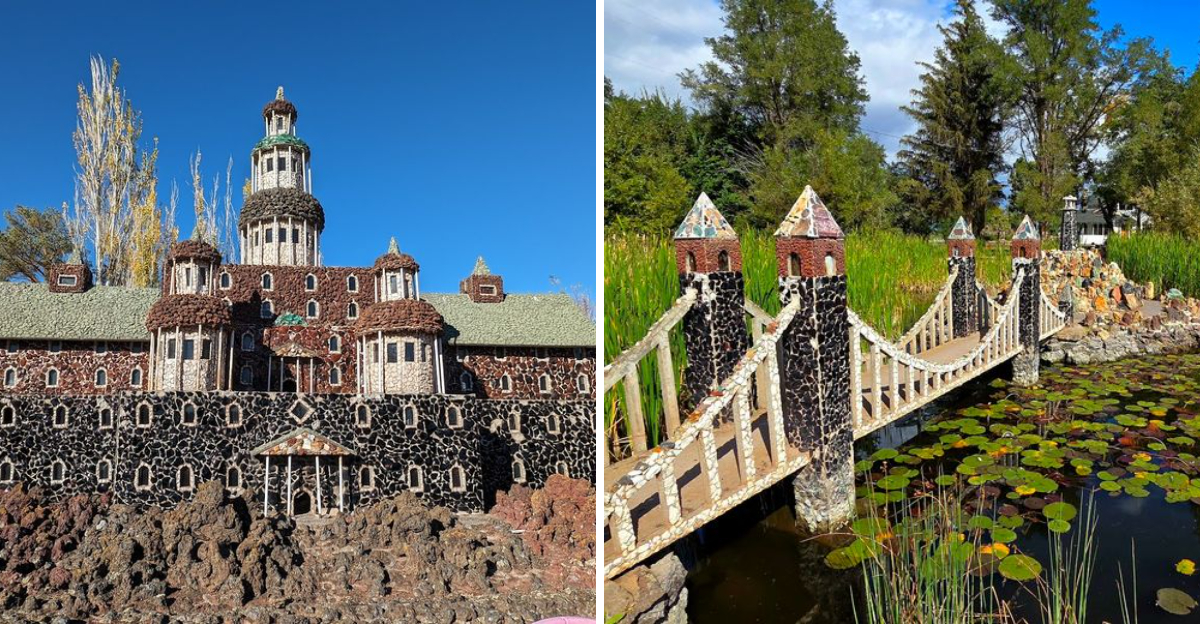
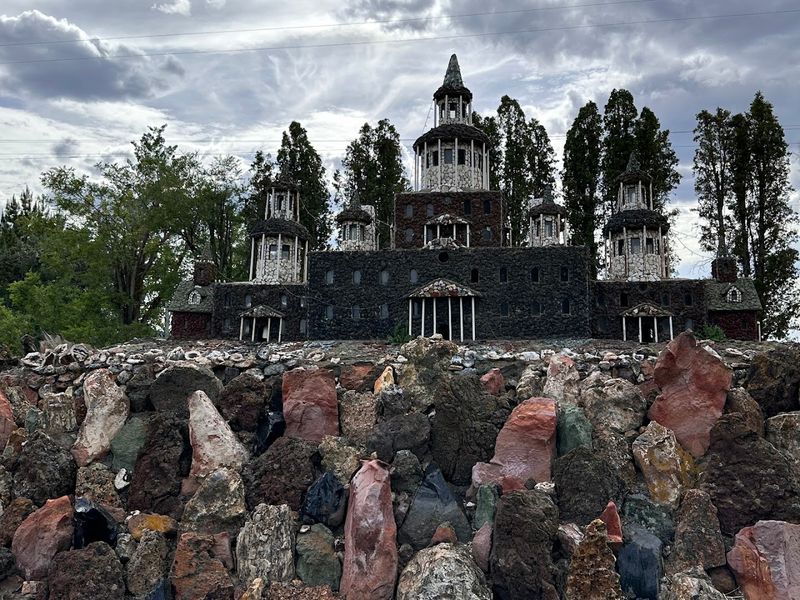
Exploring that whimsical garden in Oregon felt like stepping into a living fairy-tale. Every corner reveals a castle molded from lava, rock, and petrified wood, each structure more enchanting than the last.
I spent the afternoon tracing the winding paths. I paused to admire a stone?capped keep that seemed to whisper stories of ancient forests and volcanic fire.
The blend of rugged natural materials with imaginative design creates a serene yet adventurous atmosphere. It’s a setting that’s hard to forget.
For anyone who loves a mix of artful creativity and the great outdoors, this spot offers a delightful escape. It feels both magical and surprisingly down-to-earth.
The Vision Behind the Rock Garden
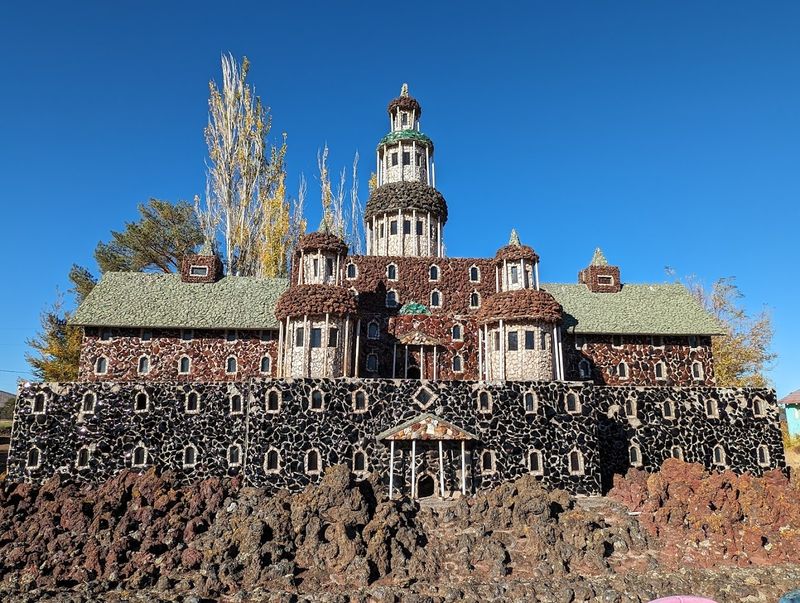
Rasmus Petersen was a Danish immigrant with a farmer’s hands and an artist’s soul. Starting in 1935, he began collecting rocks from within roughly 85 miles of his Central Oregon property.
What followed was nearly two decades of patient, obsessive, brilliant work.
He built miniature castles, patriotic monuments, and small bridges entirely by hand. No hired crew.
No heavy equipment. Just one man and his deep love for Oregon’s volcanic landscape.
The structures he left behind range from small decorative walls to multi-tiered towers. Each one uses locally sourced material, including petrified wood, obsidian, agate, jasper, and lava rock.
The variety is staggering.
Visiting today, you can see a clear progression in his skill. Earlier pieces feel raw and experimental.
Later ones show a confident, detailed hand. It is genuinely moving to walk through the timeline of his work.
The whole garden exists because one person decided to build something extraordinary, quietly, over years, in the high desert of Oregon.
Miniature Castles Built From Lava Rock
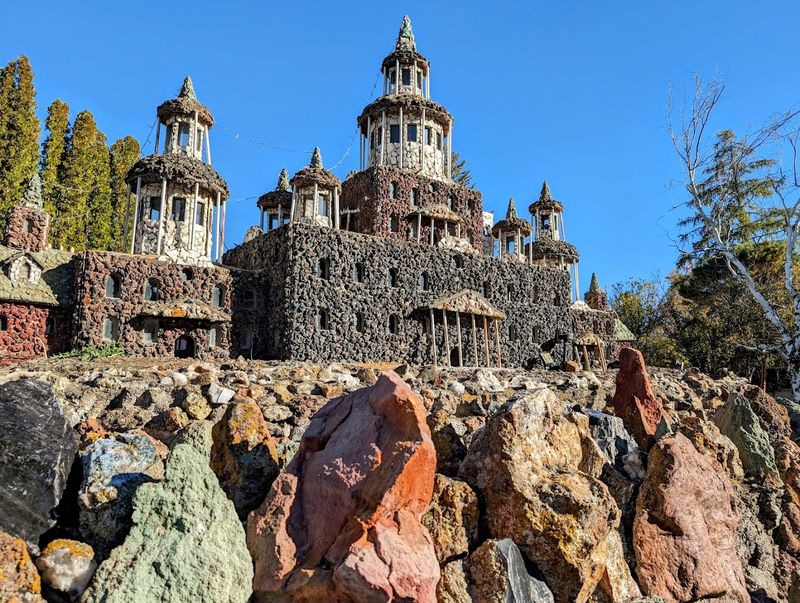
The castles at Petersen Rock Garden are the first thing that stops you mid-step. They sit low to the ground but carry a real architectural weight.
Towers, archways, and walls rise up in careful layers of volcanic material.
Lava rock dominates the construction. It is dark, porous, and surprisingly beautiful up close.
Petersen used it alongside agate and obsidian to create contrast and color throughout each structure.
Some castles have tiny windows. Others feature bridges that span small ponds on the property.
The level of detail in each one is hard to believe when you realize a single person built all of it.
Standing beside them, you get a strange sense of scale. They are not towering, but they feel grand.
The craftsmanship demands respect. Kids tend to crouch down and peer inside the small arched openings.
Adults tend to stand back and just stare. Both reactions make complete sense here.
These structures are genuinely unlike anything else you will find in Oregon.
Petrified Wood Wonders Throughout the Grounds
Petrified wood has a quality that never gets old. It looks like timber but feels like stone, and the color variations are endlessly interesting.
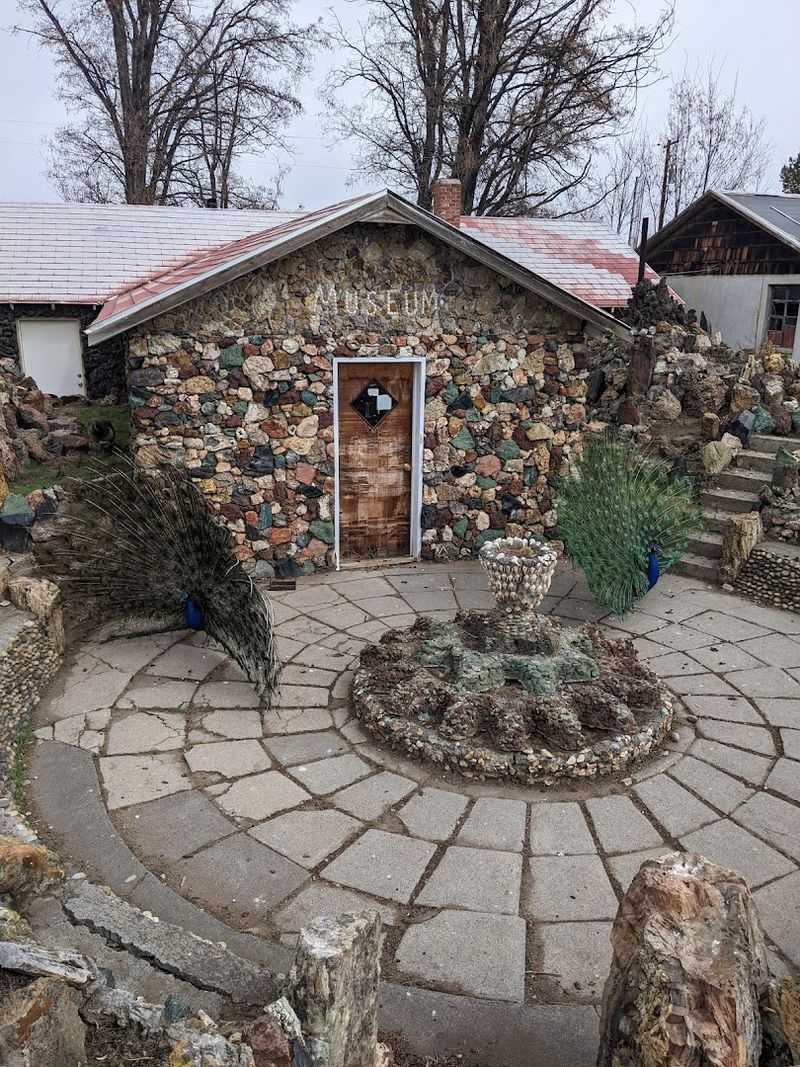
At Petersen Rock Garden, it appears throughout the structures and the museum collection.
Oregon is rich in petrified wood deposits, and Rasmus Petersen gathered specimens from within a close radius of the property. Some pieces are enormous.
Others are slender and delicate, almost like twigs turned to mineral.
Inside the museum, petrified wood specimens are displayed alongside labels that explain their origin. The detail in the grain patterns is remarkable.
You can see the original wood structure preserved in perfect stone form.
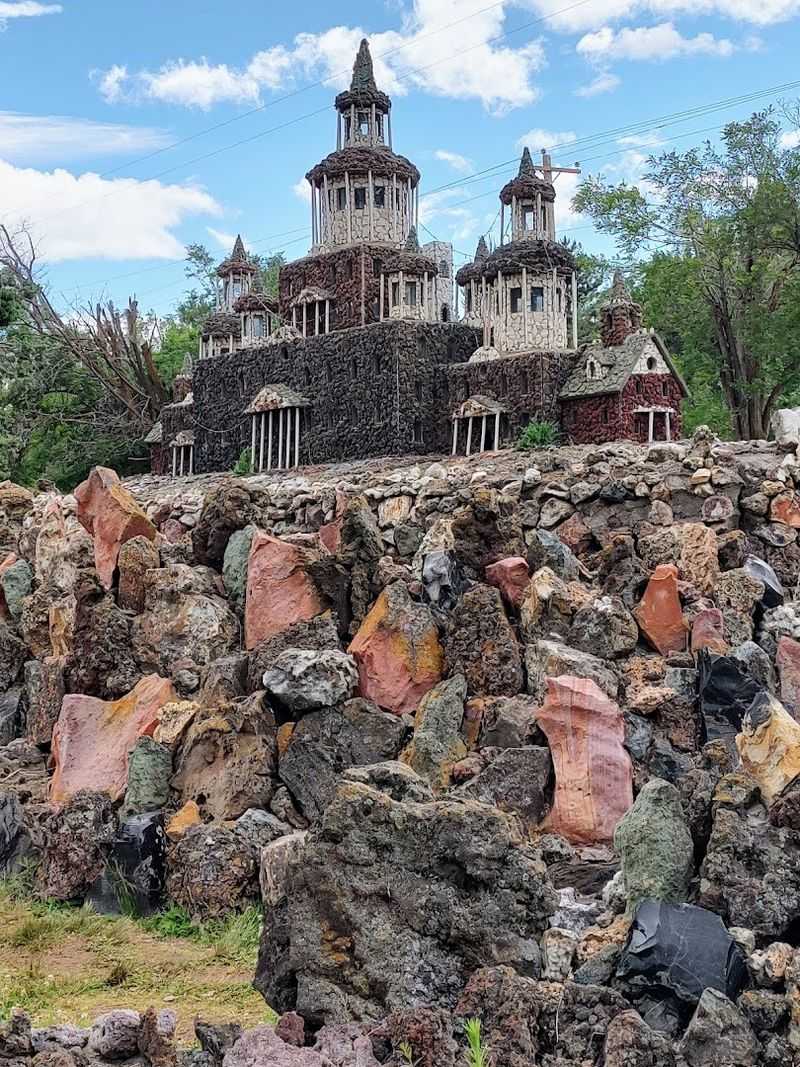
Out in the garden, petrified wood gets built directly into the walls and towers. It blends with lava rock and agate in a way that feels both natural and intentional.
Running your hand along one of these walls, you feel millions of years of Oregon geology all at once. It is a quiet, grounding kind of moment that sneaks up on you.
The Museum and Its Glowing Gemstone Collection
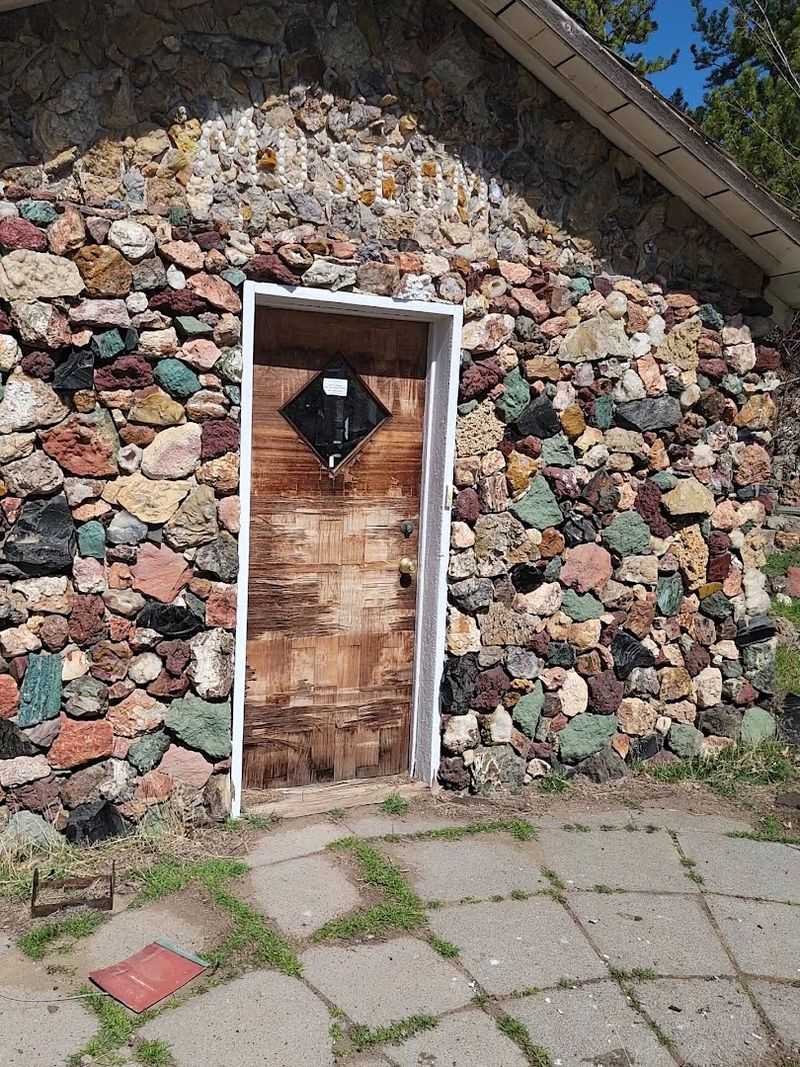
The museum building at Petersen Rock Garden is compact but absolutely packed with geological wonders. Shelves and cases hold specimens from across Central Oregon.
The variety is genuinely impressive for a roadside attraction.
Agate, jasper, malachite, obsidian, quartz, and thundereggs all have their place here. Many pieces come from within 85 miles of the property.
The collection reflects just how mineral-rich this part of Oregon really is.
The black light room is a highlight. Certain stones transform completely under ultraviolet light, glowing in shades of orange, green, and white.
Volunteers have been known to demonstrate the effect on thundereggs, which puts on a small but genuinely memorable show.
Staff and volunteers at the museum are knowledgeable and happy to share context. They explain geological history, point out rare specimens, and bring real enthusiasm to the space.
It never feels like a scripted tour. It feels like talking to someone who genuinely loves rocks.
That energy is contagious, and most visitors leave wanting to know more about Oregon geology.
Peacocks Roaming Free on the Property
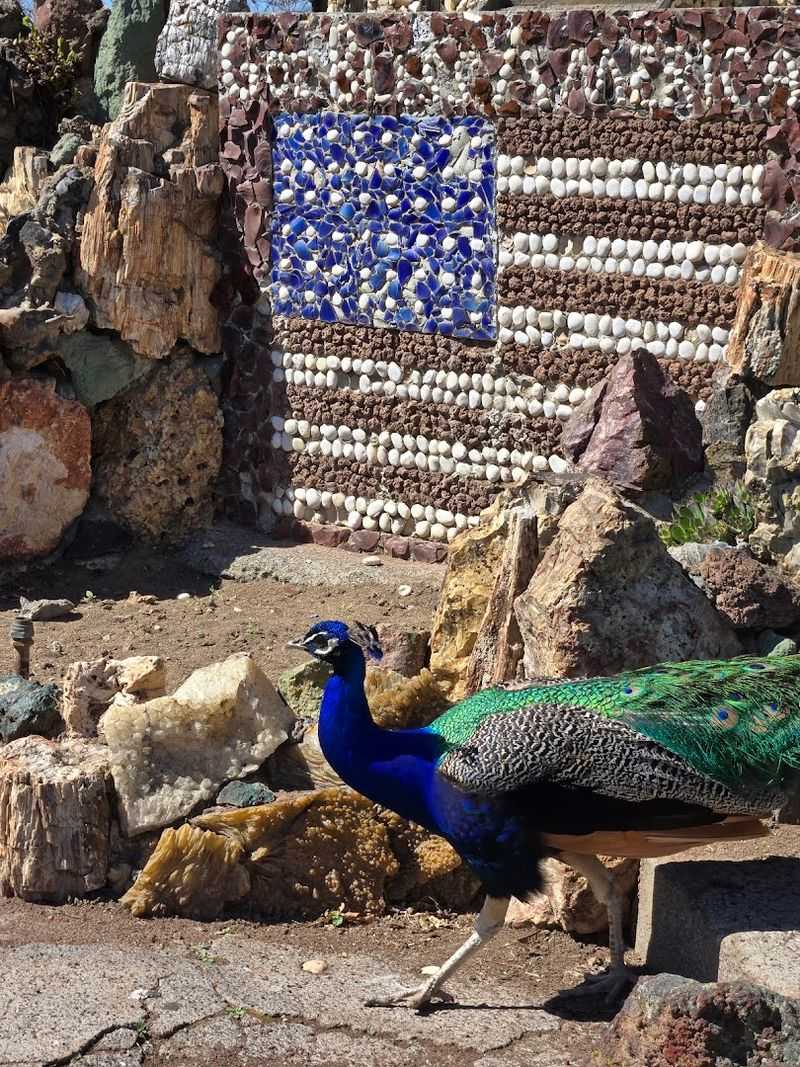
Nobody warns you about the peacocks, and that is honestly part of the magic. You hear them before you see them.
The sound carries across the whole property, loud and theatrical and completely unexpected.
A dozen or more peacocks roam the grounds freely. They perch on stone walls, wander between the rock structures, and occasionally fan their feathers with total dramatic flair.
Peahens and younger birds mix in among them.
Visitors can buy a small cup of food near the museum entrance to hand-feed the birds. They are calm enough to approach closely.
Kids absolutely love this part. Adults do too, though they tend to pretend otherwise until a peacock walks directly up to them.
The peacocks add a surreal, almost dreamlike quality to the whole experience. Bright blue and green feathers against grey volcanic stone create a visual contrast that feels almost staged.
It is not staged, of course. It is just one of those happy accidents that makes Petersen Rock Garden feel like a place operating on its own delightful logic.
The Pond, Islands, and Water Features
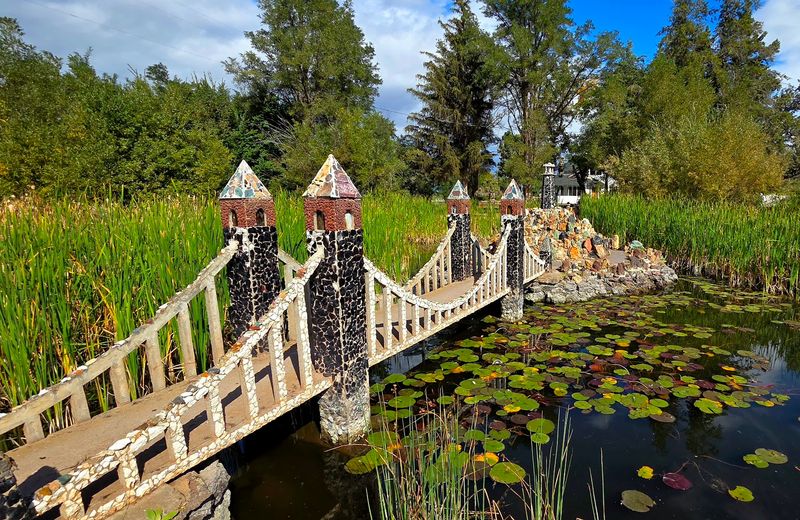
Near the front of the property sits a water feature that many first-time visitors almost miss. It is easy to walk past if you head straight for the main garden path.
Doubling back to find it is absolutely worth the extra steps.
Small rock islands sit in the middle of the pond, each one carefully constructed in Petersen’s signature style. Lily pads float across the surface in warmer months.
The whole scene has a stillness that feels completely separate from the rest of the property.
The water reflects the surrounding stone structures and sky in a way that makes for genuinely beautiful photos. It is also just a nice place to pause.
Benches and tables are scattered around the property, and the pond area is one of the better spots to sit quietly for a few minutes.
The contrast between the water’s calm surface and the jagged volcanic textures nearby is striking. This corner of the garden captures something essential about Petersen’s vision: rough materials arranged into something unexpectedly peaceful and beautiful.
The Wish Shed and Community Art Installation
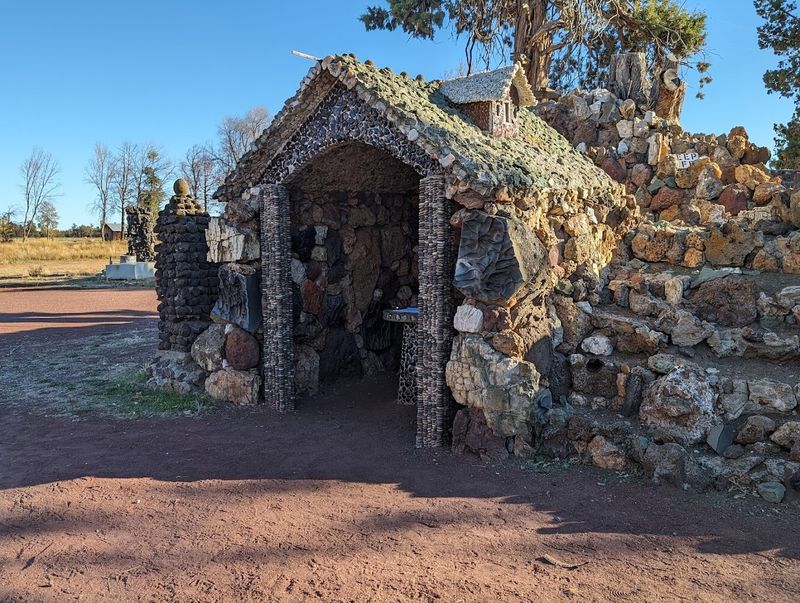
Tucked off to the side of the main garden path is a small wooden shed with a question painted above the door. It asks what you want to rock.
Inside, hundreds of small wooden boards hang from strings, each one carrying a handwritten wish from a previous visitor.
The tradition is simple. You write your wish on a board and hang it with the others.
The shed fills up over time with layered messages, some funny, some deeply personal, some just a single word. Reading through them takes longer than expected.
It is the kind of installation that sneaks up on you emotionally. You go in expecting a quirky side attraction and come out feeling oddly connected to a long chain of strangers who stood in that same small space.
The shed represents something important about this whole property. Petersen Rock Garden is not just a museum or a garden.
It is a living space that keeps accumulating meaning. Each visit adds something.
Each visitor leaves a small trace. That ongoing quality is rare, and it makes the place feel genuinely alive.
Oregon Minerals Up Close: Obsidian, Agate, and More
Central Oregon sits on top of one of the most geologically active regions in North America. Volcanic eruptions, ancient lava flows, and hydrothermal activity have produced an extraordinary range of minerals.
Petersen Rock Garden puts that geology directly in your hands.
Obsidian appears throughout the structures in dramatic black chunks. It catches light in a way that makes the walls sparkle unexpectedly.
Agate shows up in banded slices of amber, red, and cream. Pumice adds texture.
Jasper brings deep earthy color.
The gift shop carries specimens for purchase, and the prices are genuinely low compared to specialty rock shops. Thundereggs are a particular standout.
Cracked open, they reveal crystalline interiors that look like tiny geodes. Most pieces in the shop come from within a short radius of the property.
For rockhounds, this place is a serious destination. For casual visitors, it is an education.
You leave with a much better understanding of what the Oregon landscape is actually made of, and a new appreciation for how much beauty hides under the surface.
The Historic Farmhouse and Ongoing Restoration
The property at Petersen Rock Garden carries a history that stretches well beyond the rock structures themselves. The original farmhouse on the site is currently undergoing restoration, and the work happening there adds an interesting layer to any visit.
Rasmus Petersen farmed this land before he began his rock-building project. The transition from working farm to folk art landmark happened gradually.
The farmhouse is a physical reminder of that earlier chapter.
Current owners have been making steady improvements to the site. New rock displays built by Petersen are still being discovered on the property.
Each find adds to the understanding of how much work he actually completed over his lifetime.
There is something energizing about visiting a place mid-restoration. You get the sense that the story is still unfolding.
The garden is not a finished, static exhibit. It is a living project with people actively working to preserve and reveal more of what Petersen left behind.
Coming back in future years means potentially seeing something brand new, which is a rare quality in any historic attraction.
Planning Your Visit to Petersen Rock Garden
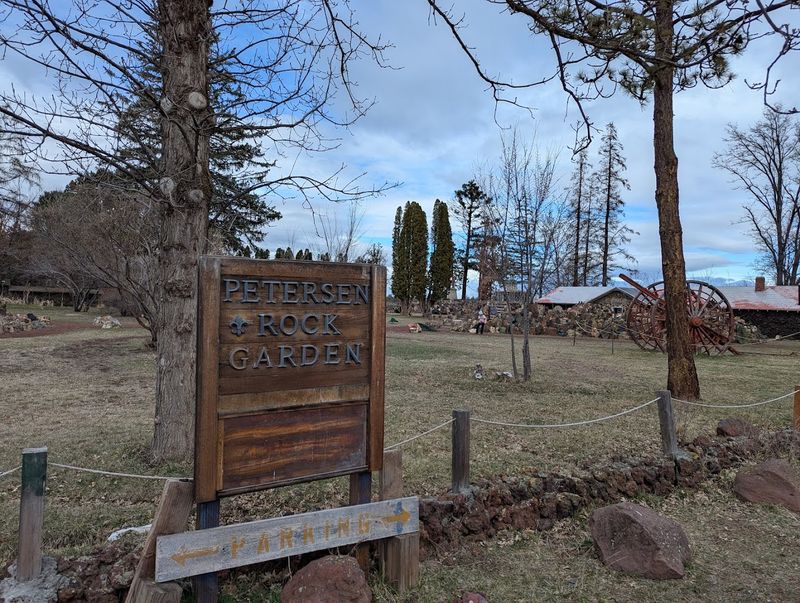
Getting to Petersen Rock Garden is straightforward. The property sits just outside Redmond, Oregon, making it an easy stop on any Central Oregon road trip.
The drive in from the highway is short, and parking is plentiful.
The garden is open Thursday through Monday from 10 AM to 3 PM. It is closed on Tuesdays and Wednesdays.
Checking hours before you go is smart, since seasonal adjustments do happen. A suggested donation covers entry, and the honor system is part of the charm here.
Plan for at least two hours. The grounds cover more area than the entrance suggests.
The museum, the garden structures, the pond, the wish shed, and the gift shop each deserve real time. Bringing a picnic is a great idea since tables are spread around the property.
Dogs are welcome on leash. The site is toddler-friendly and works well for all ages.
Comfortable shoes help since some paths are uneven. Peacock food is available for a small donation near the museum entrance.
Address: 7930 SW 77th St, Redmond, OR 97756.
Dear Reader: This page may contain affiliate links which may earn a commission if you click through and make a purchase. Our independent journalism is not influenced by any advertiser or commercial initiative unless it is clearly marked as sponsored content. As travel products change, please be sure to reconfirm all details and stay up to date with current events to ensure a safe and successful trip.
