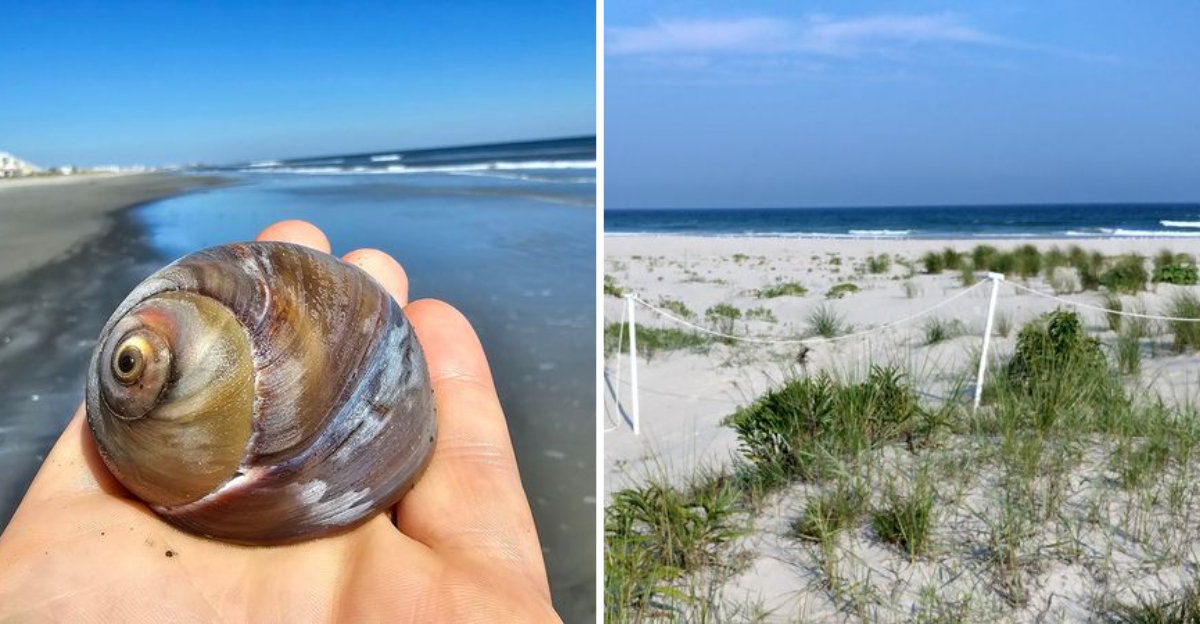
Forget the neon lights and the funnel cake chaos for a minute. This place is a glimpse into what the shore used to be, wonderfully wild and beautifully untouched.
The beach is free, the sand stretches wide, and the feeling of space is pure magic.
But the real treasure lies behind the dunes, where protected coastal habitat thrives.
This is a sanctuary, a vital stopover for migratory birds that journey thousands of miles.
In fact, the beach closes to visitors for part of the year specifically to protect rare nesting shorebirds, making it a haven for those who appreciate nature’s rhythms.
You will find no boardwalk games here, just the soothing sound of the waves and the quiet rustle of maritime forests.
This wild New Jersey escape is a breath of fresh, salty air.
A Beach That Belongs to the Birds

Most beaches along the Jersey Shore come with a soundtrack of crowds and commercial noise. Two Mile Beach plays something completely different.
Managed as part of the Cape May National Wildlife Refuge, this stretch of Atlantic coastline is one of the last truly undeveloped beaches in all of New Jersey.
The beach closes every year from April 1 through September 30 to protect nesting birds like the federally threatened piping plover, the state-endangered least tern, and American oystercatchers. That seasonal closure is not a downside.
It is actually the reason the place stays so pristine.
Visiting in the off-season means you get wide, clean, silky sand almost entirely to yourself. The absence of summer crowds gives the whole place a rare, unhurried quality.
Shorebirds patrol the waterline with zero concern for your presence, and the Atlantic stretches out endlessly in front of you. Getting the timing right here transforms a simple beach trip into something that genuinely feels like a discovery.
The Cape May National Wildlife Refuge Connection
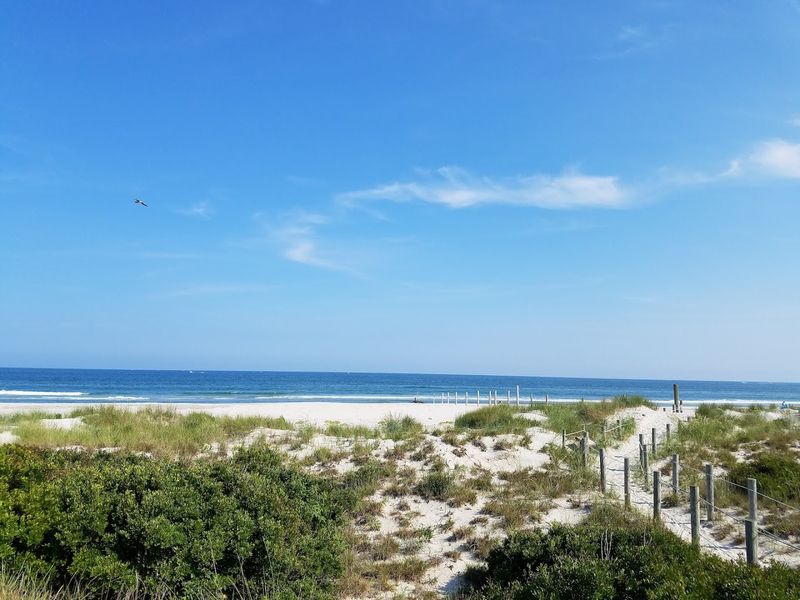
Understanding why Two Mile Beach feels so different starts with knowing who actually manages it. The beach is part of the Cape May National Wildlife Refuge, a federal refuge that protects some of the most ecologically valuable coastal land on the entire East Coast.
The Two Mile Beach Unit covers about 507 acres and sits right along the Atlantic Ocean near Wildwood Crest.
Its purpose is to preserve one of the last remaining stretches of undeveloped maritime habitat in New Jersey, including salt marshes, tidal channels, and natural beach dunes.
That federal protection is what keeps developers, vendors, and boardwalk planners from ever getting a foothold here. The land is managed for wildlife first and visitors second, which is exactly why it feels so refreshingly untouched.
Knowing that a government agency is actively working to keep this place wild adds a certain weight to every visit. You are not just taking a walk on the beach.
You are stepping into a living conservation story.
Landscape That Time Forgot
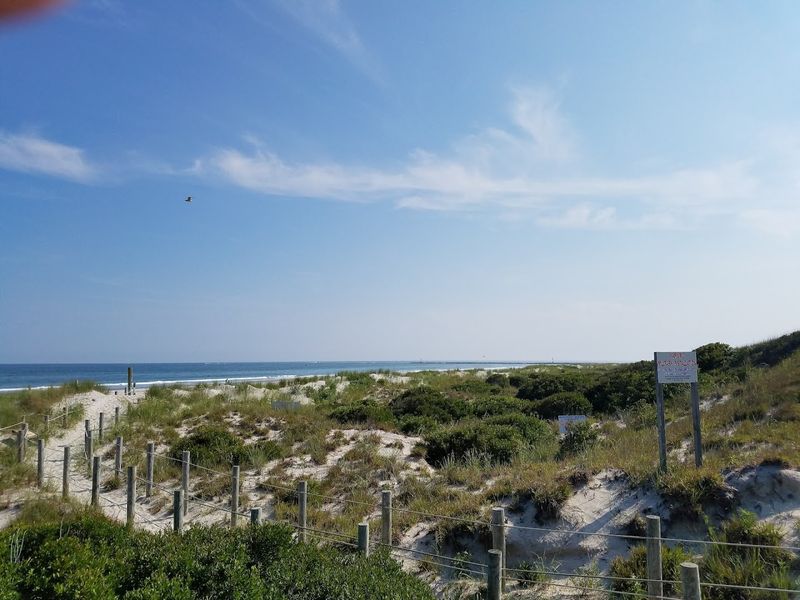
There is a specific kind of beauty that salt marshes have, one that takes a minute to appreciate but then becomes completely impossible to ignore.
At Two Mile Beach, the landscape behind the dunes opens into a network of tidal channels and marsh grasses that stretch toward the horizon in every direction.
These wetlands are not just scenic backdrops. They function as nurseries for fish, feeding grounds for migratory birds, and natural buffers against coastal storms.
The whole ecosystem feels interconnected in a way that more developed stretches of shore have long since buried under concrete.
Walking along the edges of the marsh during low tide reveals horseshoe crabs tucked into the shallows, wading birds picking through the mud, and the kind of quiet that city people spend a lot of money trying to find. The tidal channels shift and shimmer depending on the light.
Early morning visits reward you with golden reflections across the water that feel almost too good to be real. This is coastal New Jersey at its most elemental.
A Walk That Actually Delivers
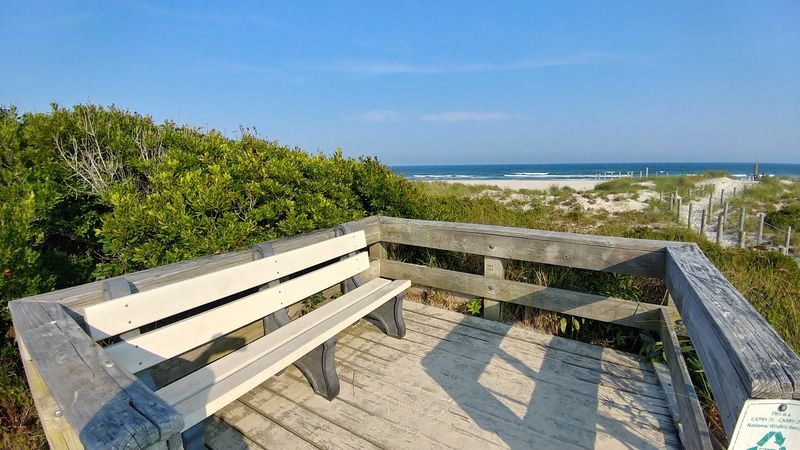
Not every nature trail earns its reputation, but the Dune Trail at Two Mile Beach is the real deal. The path runs about 0.9 miles one way, making it a 1.8-mile round trip that moves through two very different but equally compelling environments.
Starting behind the beach dunes, the trail winds through dense maritime forest before opening onto wooden boardwalk sections that lead to elevated observation platforms.
From those platforms, the Atlantic Ocean spreads out below you in a way that feels genuinely earned after the walk through the trees.
The maritime forest section is especially surprising. Twisted shrubs and low-canopy trees create a shaded, almost tunnel-like atmosphere that feels completely at odds with the open beach just yards away.
Birdsong fills the air constantly, and the variety of species you might spot along the trail is remarkable. The trail is accessible and well-maintained, making it a solid option for visitors of most fitness levels.
Pack water and comfortable shoes, and plan to take your time through the forest section.
Wildlife Watching That Rivals Any Nature Documentary
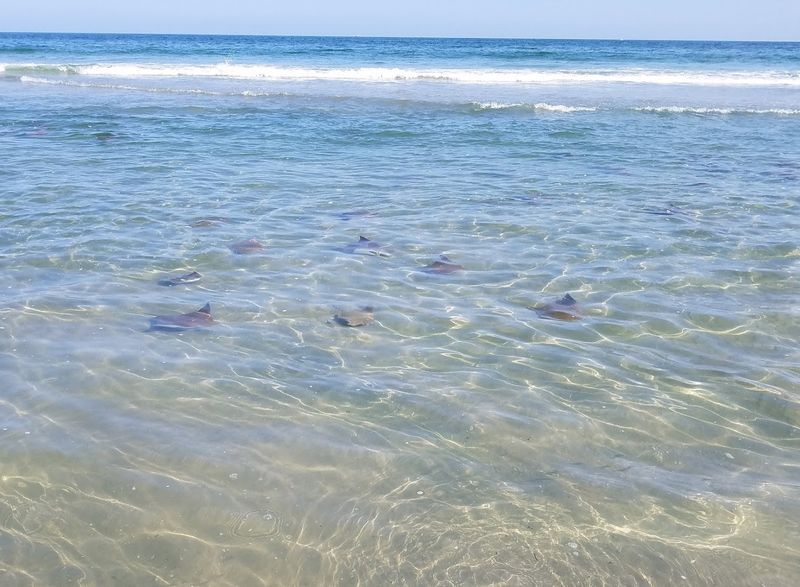
Two Mile Beach has a wildlife roster that genuinely surprises first-time visitors.
The federally threatened piping plover nests here, along with the state-endangered least tern and the striking American oystercatcher, a bird with a bright orange bill that looks almost cartoonishly vivid against the pale sand.
During migration seasons, thousands of shorebirds pass through the area, turning the beach and marshes into a living field guide. Dolphins surface just offshore with enough regularity to make the sighting feel casual rather than extraordinary.
Rays glide through the shallows, jellyfish drift in the surf, and various seabirds work the water from above.
The concentration of wildlife here is directly tied to the lack of human development. Migrating birds actively seek out undeveloped stretches of coast, and Two Mile Beach is considered a critical stopover in the region.
Bringing a pair of binoculars transforms the experience entirely. Even without them, standing quietly near the observation platforms for just a few minutes tends to reward patience in ways that feel genuinely exciting.
Shell Hunting on Sand That Has Not Been Picked Over
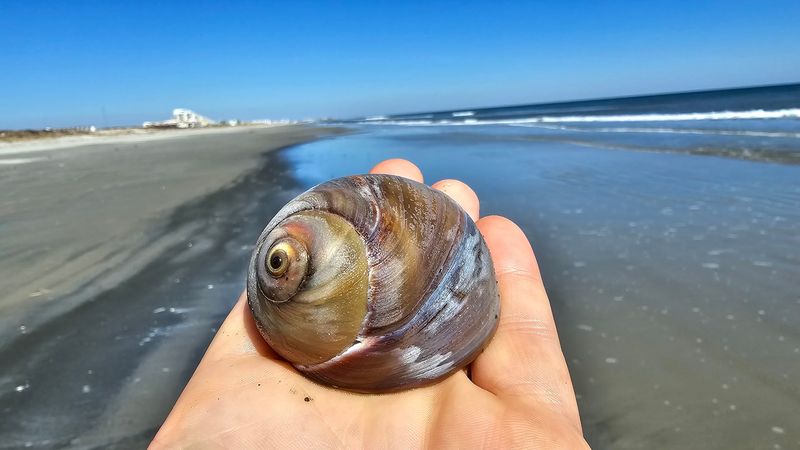
Shell hunters have a special appreciation for beaches that do not get hammered by summer crowds, and Two Mile Beach delivers in a way that more popular spots simply cannot.
Because the beach is closed during peak tourist season, the shells that wash ashore from April through September sit largely undisturbed until the beach reopens in October.
By the time visitors return in the fall and winter months, the tideline is often stacked with finds. Whelks, moon snails, clam shells, and occasional sand dollars show up regularly.
The silky texture of the sand makes spotting shells easier than on coarser beaches, and the long, relatively uncrowded stretches mean you can move at your own pace without bumping elbows with anyone.
Shell collecting is one of those activities that sounds simple but turns into an unexpectedly meditative experience on a beach this quiet.
The sound of the surf, the cold off-season air, and the small thrill of spotting something intact and beautiful in the sand adds up to something genuinely restorative.
Bring a small bag and low expectations, and you will almost certainly leave pleasantly surprised.
Where the Fishermen and the Horizon Meet
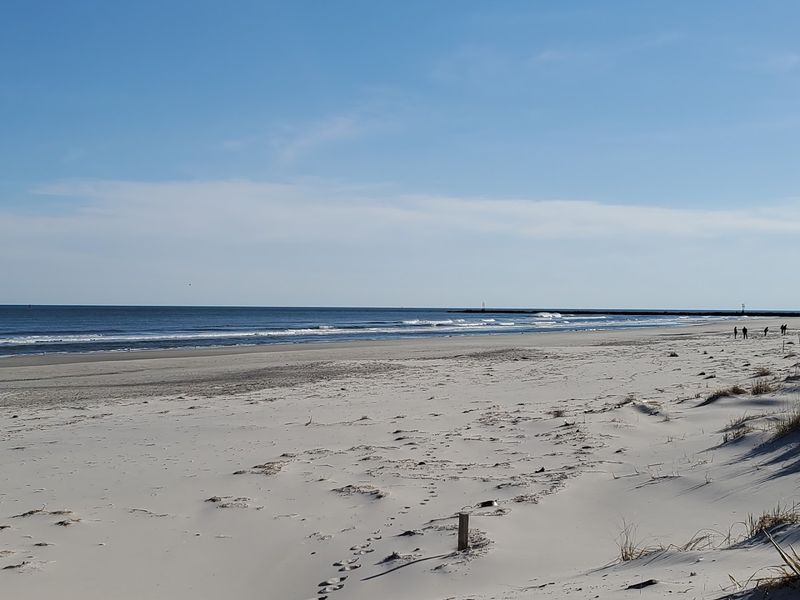
The jetty at Two Mile Beach has its own distinct personality, and it earns a visit separate from the trail and the shore.
It extends out from the beach into the inlet, offering unobstructed views of the water on both sides and a front-row seat to the constant maritime traffic moving through the channel.
Fishing from the jetty is a long-standing tradition in this area. Anglers set up along the rocks and cast into the current while boats of every size pass through the inlet nearby.
Watching that mix of small recreational vessels and larger working boats against the backdrop of open water gives the whole scene a timeless quality.
The jetty also provides some of the best elevated viewing angles for spotting dolphins offshore. On clear days, the visual range from the end of the jetty is remarkable, with the Atlantic stretching wide in both directions.
The rocks can be slippery, so solid footwear matters here. Early morning visits tend to be especially peaceful, with the light low and golden and the inlet traffic just beginning to pick up for the day.
Sunsets Over the Ocean on the East Coast (Yes, Really)

One of the most genuinely surprising things about Two Mile Beach is its sunset situation. The general assumption about East Coast beaches is that you get sunrises over the water and sunsets over the land.
Two Mile Beach challenges that assumption in a very satisfying way.
The orientation of this particular stretch of coastline, combined with the way the inlet curves and the dunes position the horizon, creates conditions where the setting sun drops toward the water rather than behind the inland landscape.
The result is a proper ocean sunset that most Jersey Shore visitors never expect to find on the Atlantic side.
Visiting in the late afternoon during the off-season puts you in position for one of the quieter, more beautiful end-of-day experiences the shore has to offer.
The low winter light hits the water differently than summer sun, casting longer shadows across the sand and turning the whole scene into something that feels almost theatrical.
No crowd, no vendors, no distractions. Just the light doing something remarkable over the water while the birds finish their day alongside yours.
What to Know Before You Go
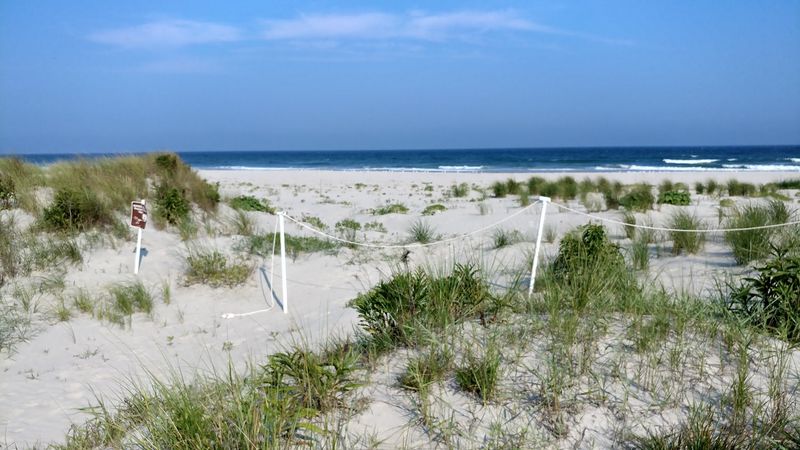
Getting the most out of Two Mile Beach starts with understanding its rules and rhythms. The beach itself is closed from April 1 through September 30 every year to protect nesting birds.
That means the best window for visiting runs from October through the end of March, which is also when the off-season quiet makes the experience most rewarding.
Swimming, sunbathing, surfing, picnicking, kite flying, and bringing dogs are all prohibited on the refuge property year-round. Those restrictions exist to protect the habitat, and respecting them is part of what keeps the place worth visiting.
The Dune Trail remains the primary way to experience the area, and it is worth walking the full 1.8-mile round trip to reach the beach-view platforms.
Parking is available at multiple locations around the refuge, and the trail itself is clearly marked and well-maintained. Dress for the weather, which along the Cape May coast can be brisk and windy even on sunny winter days.
Binoculars, a field guide to shorebirds, and a genuine willingness to slow down are the only things you really need to bring.
Address: Two Mile Beach, Lower Township, NJ 08204.
