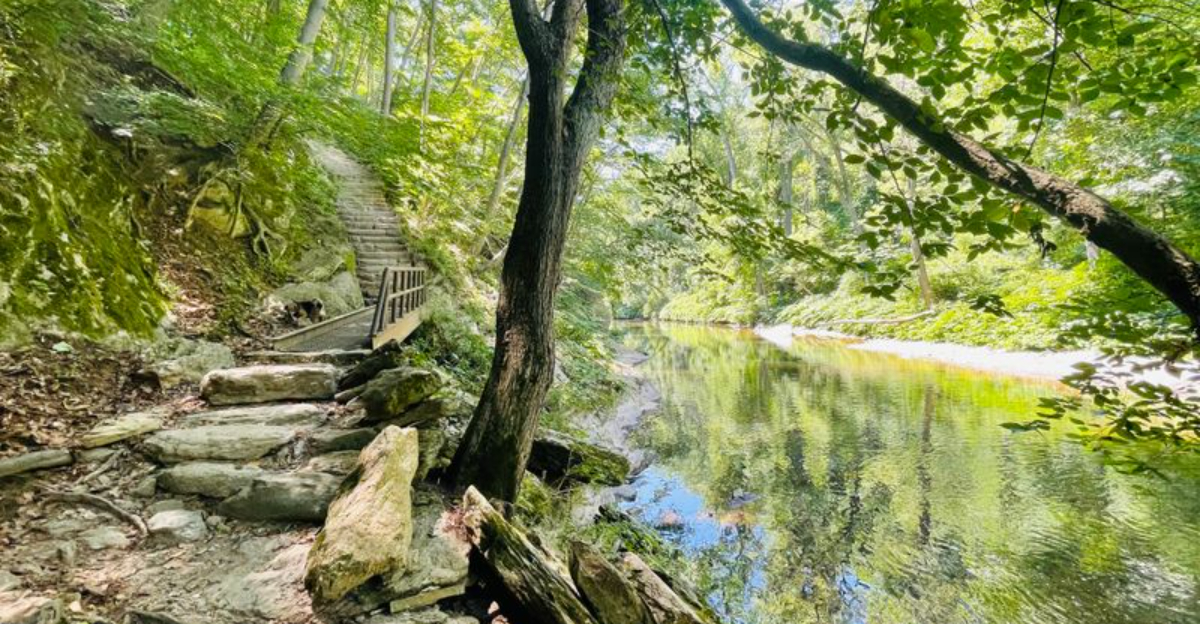
Nestled in the Baraboo Hills of south-central Wisconsin, Devil’s Lake State Park stands as one of the most breathtaking natural wonders in the Midwest.
This stunning 360-acre lake sits cradled between towering quartzite bluffs that rise up to 500 feet above the water, creating a dramatic gorge that feels impossibly grand for the region.
Travelers flock here year-round to experience the park’s unique blend of ancient geology, crystal-clear waters, and outdoor adventure opportunities that rival destinations twice its size.
Whether you’re scrambling up rocky trails for panoramic views, swimming at sandy beaches, or simply marveling at the sheer scale of these ancient cliffs, Devil’s Lake delivers an experience that truly feels larger than life.
Towering Quartzite Bluffs That Define the Landscape
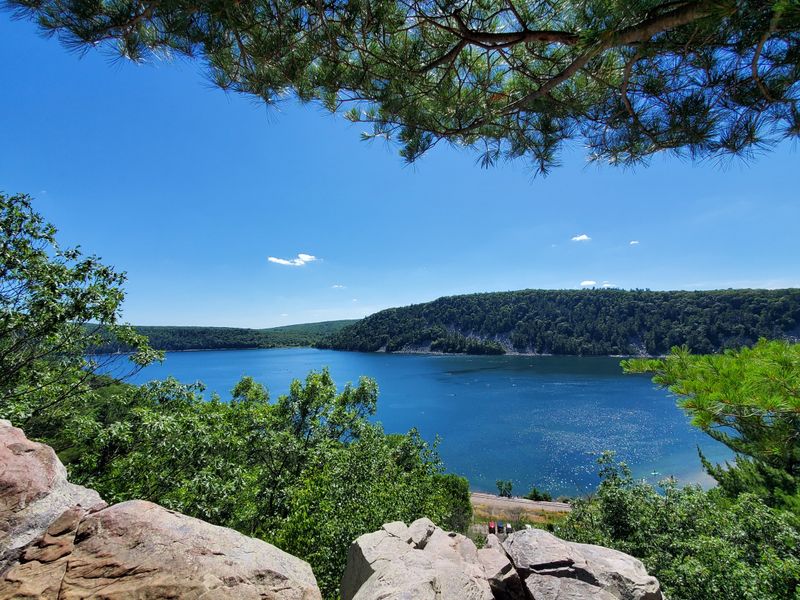
Walking into Devil’s Lake State Park for the first time feels like stepping into a landscape that shouldn’t exist in Wisconsin.
The quartzite bluffs that frame the lake on both the east and west shores rise dramatically from the water, creating a gorge-like setting that seems transported from the American West.
These ancient rock formations are over 1.6 billion years old, making them some of the oldest exposed rock in North America.
The bluffs stretch skyward in layers of purple, pink, and tan stone, their faces marked by centuries of weathering and glacial activity.
During sunrise and sunset, the quartzite catches the light in spectacular ways, glowing with warm hues that photographers and nature lovers cherish.
The sheer scale of these cliffs becomes even more apparent when you spot tiny figures of hikers perched along the ridgelines.
Rock climbers from across the region come specifically to test their skills on these challenging vertical faces.
The East Bluff and West Bluff each offer distinct perspectives, with the East Bluff featuring more dramatic vertical drops and the West Bluff providing gentler approaches.
Geological forces pushed these formations upward millions of years ago, and glaciers later carved out the basin that now holds the lake.
Standing at the base and looking up, you can truly appreciate how these massive stone sentinels create the larger-than-life atmosphere that defines Devil’s Lake.
The bluffs aren’t just beautiful; they’re a living geology lesson that tells the story of Earth’s ancient past.
Crystal Clear Waters Perfect for Swimming
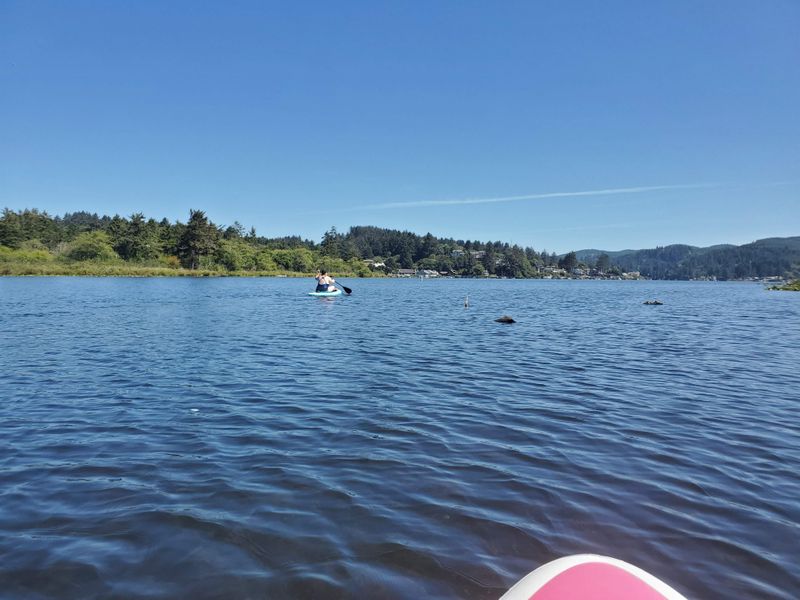
Few inland lakes in the Midwest can match the clarity and inviting quality of Devil’s Lake’s waters.
The lake stretches across 360 acres, with depths reaching up to 47 feet in some areas, and the water maintains a remarkable transparency that lets you see straight to the rocky bottom in many spots.
Unlike many Wisconsin lakes, Devil’s Lake has no natural inlet or outlet, which means the water isn’t constantly flowing through and stirring up sediment.
This unique characteristic keeps the lake exceptionally clean and clear throughout the swimming season.
Two sandy beaches offer easy access to the water, with the South Shore Beach being the larger and more popular option.
Families spread out on the sand while children splash in the shallow areas near shore, and more adventurous swimmers strike out toward the deeper middle sections.
The water temperature warms nicely by mid-summer, making it comfortable for extended swimming sessions.
Lifeguards patrol the beaches during peak season, adding an extra layer of safety for families with young children.
Beyond traditional swimming, the lake attracts snorkelers who enjoy exploring the underwater rock formations and observing fish in their natural habitat.
On hot summer days, the contrast between the cool lake water and the warm sun creates the perfect conditions for a refreshing escape.
The backdrop of those massive bluffs rising from the shoreline transforms a simple swim into something far more memorable and scenic than your typical lake experience.
Challenging Hiking Trails With Rewarding Views
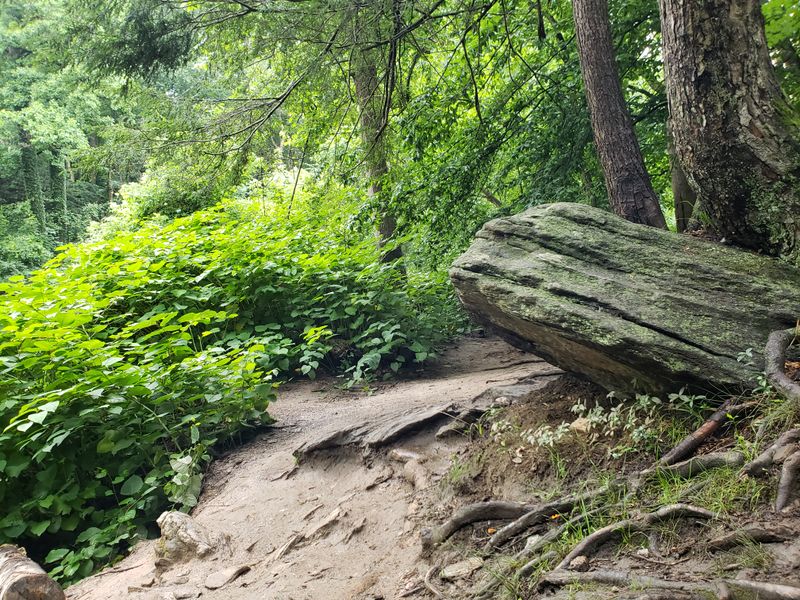
Devil’s Lake boasts over 29 miles of hiking trails that range from easy lakeside strolls to steep, boulder-scrambling adventures.
The Balanced Rock Trail on the East Bluff stands out as one of the most popular routes, leading hikers past a precariously perched boulder that seems to defy gravity.
This moderate trail rewards your effort with stunning overlooks where you can gaze down at the entire lake spread out below.
For those seeking a more intense workout, the Tumbled Rocks Trail lives up to its name with a challenging path through massive boulders that require actual scrambling and climbing.
Families with younger children often prefer the Grottos Trail, which winds through interesting rock formations without requiring technical climbing skills.
The West Bluff Trail offers a gentler ascent but still delivers spectacular panoramic views from multiple overlook points.
Each trail provides a different perspective on the gorge, with some hugging the bluff edges and others cutting through dense forest before emerging at breathtaking viewpoints.
Spring brings wildflowers that carpet the forest floor, while fall transforms the landscape into a kaleidoscope of orange, red, and gold foliage.
Winter hiking presents its own rewards, with ice formations clinging to the cliff faces and snow-covered trails offering solitude and stark beauty.
Trail maps are available at the park office and posted at major trailheads, helping visitors choose routes that match their fitness levels and time constraints.
No matter which trail you select, the combination of physical challenge and natural beauty creates an unforgettable hiking experience.
Rock Climbing Paradise for All Skill Levels
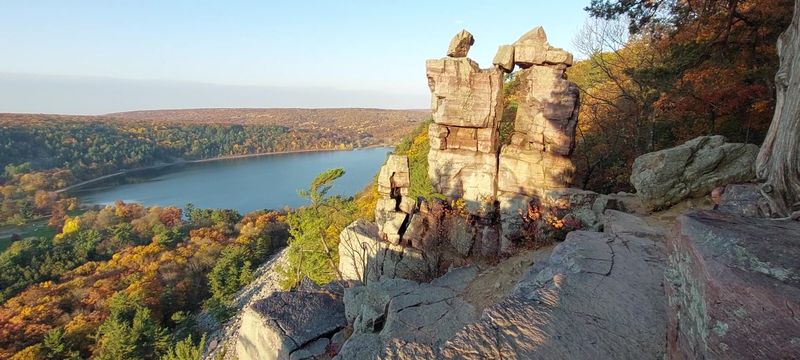
Rock climbers consider Devil’s Lake one of the premier climbing destinations in the entire Midwest.
The park features over 1,600 established climbing routes spread across both bluffs, offering everything from beginner-friendly top-rope setups to advanced multi-pitch climbs.
The quartzite rock provides excellent friction and holds, creating ideal conditions for climbers who appreciate solid, reliable surfaces.
Routes are rated using the traditional Yosemite Decimal System, with options ranging from easy 5.0 grades to extremely difficult 5.13 challenges that test even expert climbers.
Popular climbing areas include Balanced Rock Wall, Cleopatra’s Needle, and the Railroad Tracks area, each offering unique characteristics and route varieties.
Many climbers camp at the park specifically to maximize their time on the rock, arriving early to claim prime routes before crowds gather.
The climbing community here maintains a welcoming atmosphere, with experienced climbers often offering tips and encouragement to newcomers.
Several guide services operate in the area, providing instruction and equipment rental for those new to the sport.
Fall attracts the largest crowds of climbers, as cooler temperatures create comfortable conditions for extended climbing sessions.
The combination of accessible approaches, high-quality rock, and stunning surroundings makes Devil’s Lake a bucket-list destination for climbers across North America.
Even if you don’t climb yourself, watching skilled climbers navigate these vertical walls adds another dimension to appreciating the scale and drama of these massive bluffs.
Scenic Camping Under the Stars
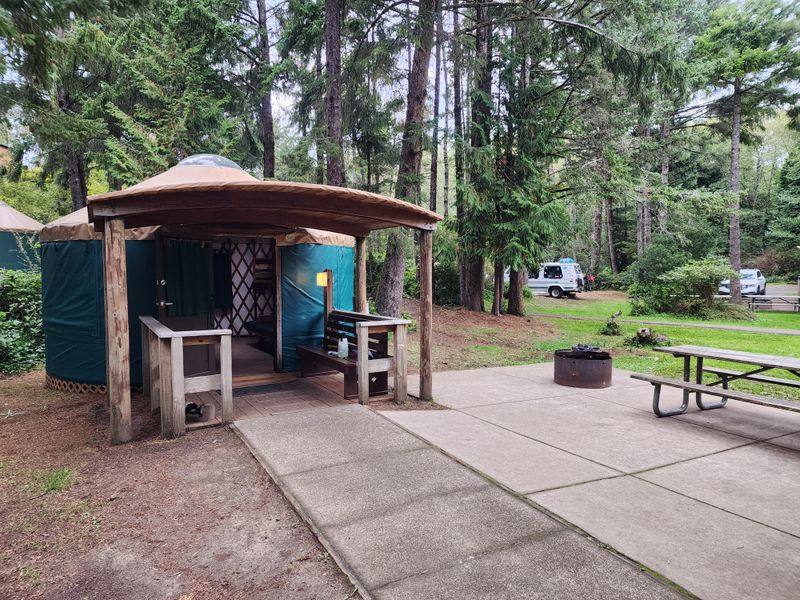
Spending a night under the stars at Devil’s Lake transforms a day trip into a fully immersive natural experience.
The park offers over 400 campsites spread across three main campgrounds, each providing different levels of amenities and proximity to the lake.
The Northern Lights Campground sits closest to the lake and hiking trails, making it the most popular choice for visitors who want easy access to activities.
Quartzite Campground offers a more secluded setting on the south end of the park, with sites nestled among mature trees that provide shade and privacy.
Ice Age Campground features both electric and non-electric sites, accommodating everyone from tent campers to RV enthusiasts with larger setups.
Waking up to morning mist rising off the lake while those ancient bluffs catch the first light of dawn creates memories that last far beyond your visit.
Campfires are permitted in designated rings, and there’s something magical about gathering around flames while the sounds of the forest settle in for the night.
Modern restroom facilities with showers serve each campground area, providing comfort without sacrificing the camping experience.
Reservations are strongly recommended, especially for summer weekends and fall foliage season when the park reaches capacity quickly.
Many families return year after year, establishing traditions and claiming favorite sites that become their home away from home.
The camping experience here goes beyond just sleeping outdoors; it’s about connecting with a landscape that feels both ancient and alive.
Fascinating Geological History and Ice Age Legacy
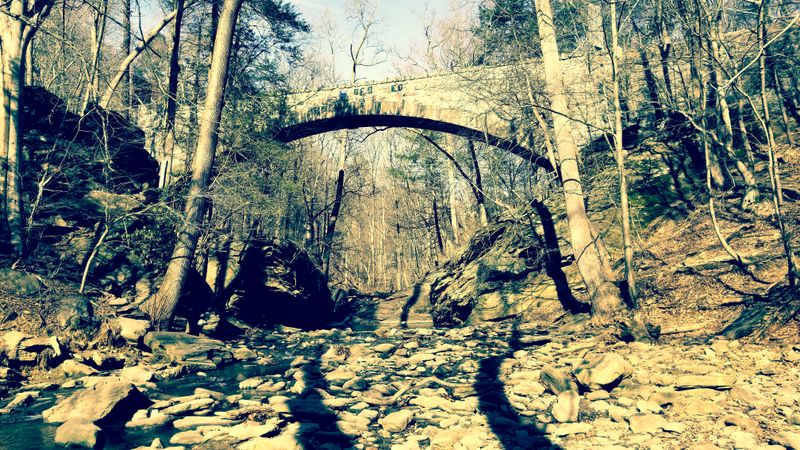
Understanding the geological forces that created Devil’s Lake adds profound depth to your visit.
The story begins over 1.6 billion years ago when sand deposits accumulated in an ancient sea, eventually compressing into the quartzite that forms today’s bluffs.
Tectonic forces pushed these formations upward, creating the Baraboo Range, one of the oldest mountain ranges in North America.
The Wisconsin Glaciation, which peaked around 20,000 years ago, played the crucial final role in shaping the landscape we see today.
As massive ice sheets advanced and retreated, they deposited terminal moraines at both ends of the valley, essentially damming it and creating the basin that now holds the lake.
The glacier’s tremendous weight and movement also polished and shaped the quartzite bluffs, leaving behind the dramatic cliffs and talus slopes visible today.
Geologists from universities across the country bring students here to study these textbook examples of glacial processes and ancient rock formations.
Interpretive signs throughout the park help visitors understand what they’re seeing, turning a casual hike into an educational journey through deep time.
The park sits along the Ice Age National Scenic Trail, which traces the furthest extent of the last glaciation across Wisconsin.
Looking at these ancient rocks and understanding their billion-year journey puts human timescales into humbling perspective.
This geological heritage isn’t just academic; it’s the foundation for everything that makes Devil’s Lake feel so dramatically different from the surrounding Wisconsin landscape.
Wildlife Watching Throughout the Seasons
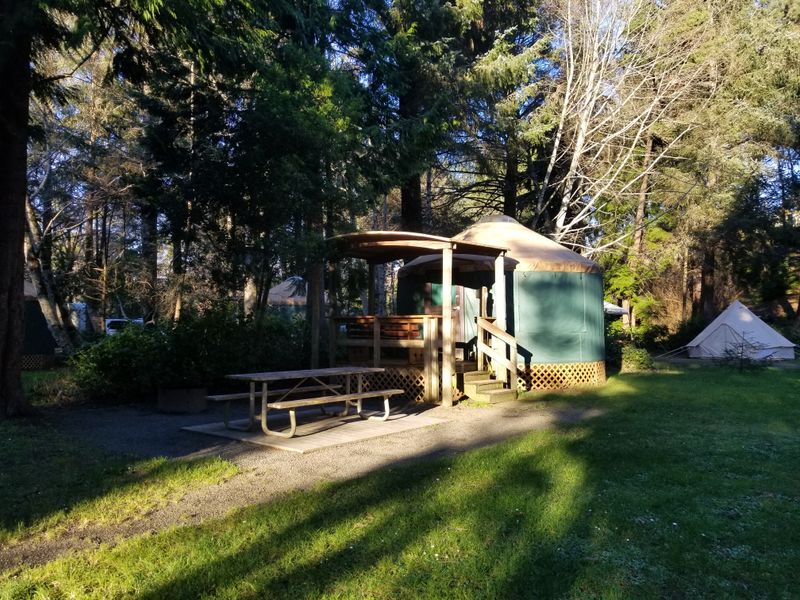
Beyond its geological wonders, Devil’s Lake supports a rich ecosystem that rewards patient observers with memorable wildlife encounters.
White-tailed deer are frequently spotted along trails during early morning and evening hours, often appearing remarkably calm around respectful visitors.
The lake and surrounding forests provide habitat for over 100 bird species, making it a favorite destination for birdwatchers armed with binoculars and field guides.
Spring migration brings warblers, thrushes, and other songbirds that fill the woods with music as they pass through on their journey north.
Bald eagles occasionally soar overhead, their distinctive white heads visible even from great distances as they hunt for fish in the lake.
Turkey vultures ride thermal currents along the bluff faces, their V-shaped wing profile making them easy to identify against the sky.
Chipmunks and squirrels scurry among the rocky areas, while the occasional fox makes an appearance in less-traveled sections of the park.
The lake itself supports populations of bluegill, bass, and northern pike, though fishing requires a valid Wisconsin fishing license.
Reptile enthusiasts sometimes spot painted turtles basking on logs along the shoreline, and garter snakes sun themselves on warm rocks.
Winter tracking in fresh snow reveals the surprising amount of animal activity that continues even in the coldest months.
Bringing a wildlife identification guide enhances your visit, turning random sightings into opportunities to learn about the species that call this unique gorge home.
Year-Round Beauty and Seasonal Transformations
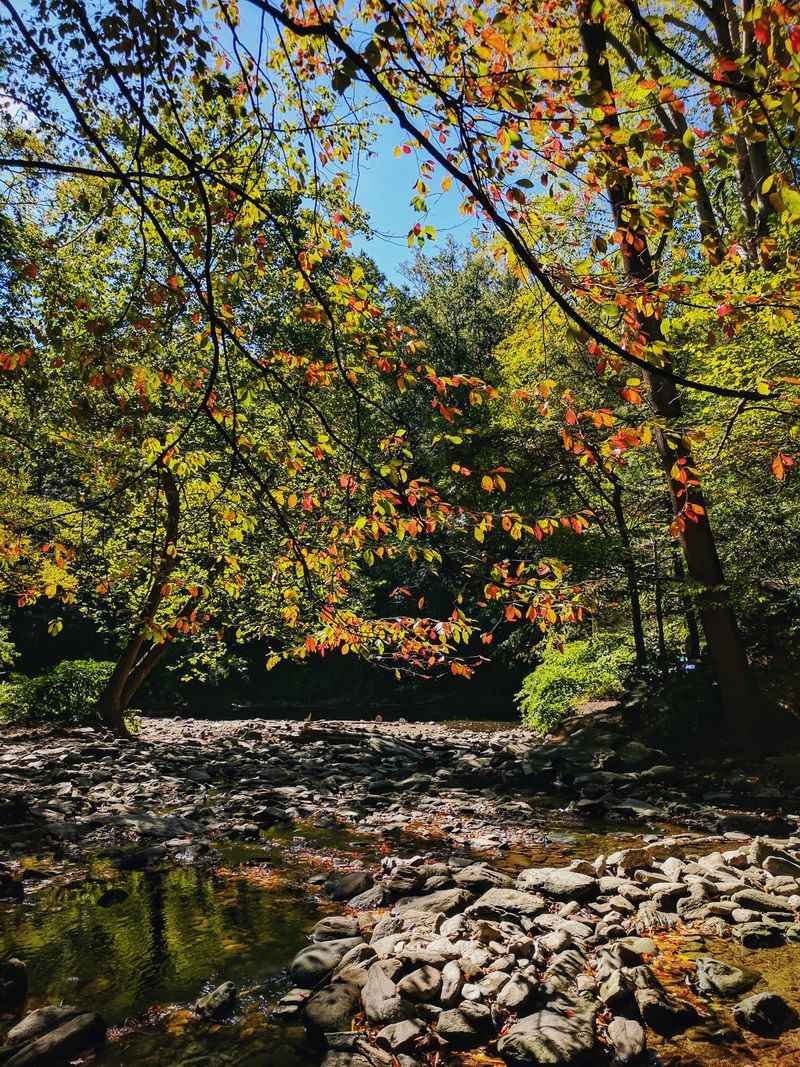
Each season paints Devil’s Lake in completely different colors and moods, making it a destination worth visiting multiple times throughout the year.
Spring arrives with rushing waterfalls from snowmelt, wildflowers carpeting the forest floor, and that fresh green glow of new leaves unfurling on trees.
Summer transforms the park into a hub of activity, with beaches packed with swimmers, trails bustling with hikers, and climbers dotting the cliff faces from dawn to dusk.
Fall brings the most dramatic visual transformation, as maple, oak, and birch trees explode into brilliant reds, oranges, and yellows that contrast beautifully with the purple-gray quartzite.
October weekends draw massive crowds of leaf-peepers who come specifically to photograph the gorge in its autumn glory.
Winter offers a completely different experience, with ice formations clinging to the bluffs and the lake sometimes freezing solid enough for ice fishing.
Cross-country skiers and snowshoers find peaceful solitude on trails that were crowded just months earlier.
The park remains open year-round, though some facilities close during winter months and visitors need to be prepared for harsh conditions.
Photographers particularly treasure winter visits, when snow highlights the contours of the bluffs and creates stark, dramatic compositions.
No matter when you visit, the fundamental character of the gorge remains constant even as its appearance shifts with the seasons.
This year-round accessibility and ever-changing beauty make Devil’s Lake a park that reveals something new with every visit.
Accessible Adventure Near Major Cities
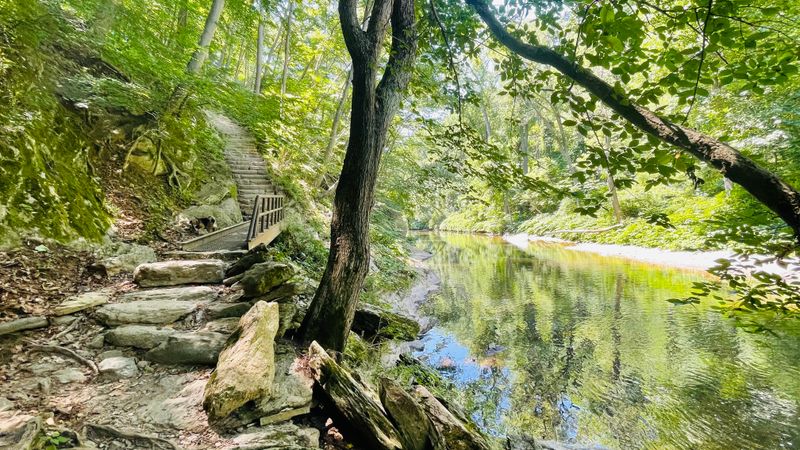
One of Devil’s Lake’s greatest advantages is its accessibility, sitting just 45 minutes north of Madison and three hours northwest of Chicago.
This convenient location makes it possible to escape urban life and immerse yourself in dramatic natural scenery without committing to a full day of travel.
The main entrance at S5975 Park Rd, Baraboo, WI 53913 is well-marked and easy to find, with ample parking available even during busy periods.
A state park vehicle admission sticker is required, which can be purchased as a daily pass or annual permit at the park entrance or online before your visit.
The park office provides maps, trail information, and answers to visitor questions, with friendly staff who genuinely want to help you make the most of your experience.
Multiple parking areas serve different sections of the park, allowing you to start your adventure close to your chosen activity.
The nearby town of Baraboo offers additional lodging, dining, and shopping options for those who prefer not to camp but still want to spend multiple days exploring.
Cell phone coverage is generally reliable throughout the park, though some trail sections may have spotty service.
Concession stands operate during summer months, providing snacks and basic supplies, though bringing your own food and water is recommended for longer visits.
The park’s accessibility combined with its larger-than-life scenery creates the rare opportunity to experience genuine wilderness grandeur without the logistical challenges of reaching remote destinations.
This perfect balance makes Devil’s Lake an ideal choice for both spontaneous day trips and carefully planned outdoor adventures.
Dear Reader: This page may contain affiliate links which may earn a commission if you click through and make a purchase. Our independent journalism is not influenced by any advertiser or commercial initiative unless it is clearly marked as sponsored content. As travel products change, please be sure to reconfirm all details and stay up to date with current events to ensure a safe and successful trip.
