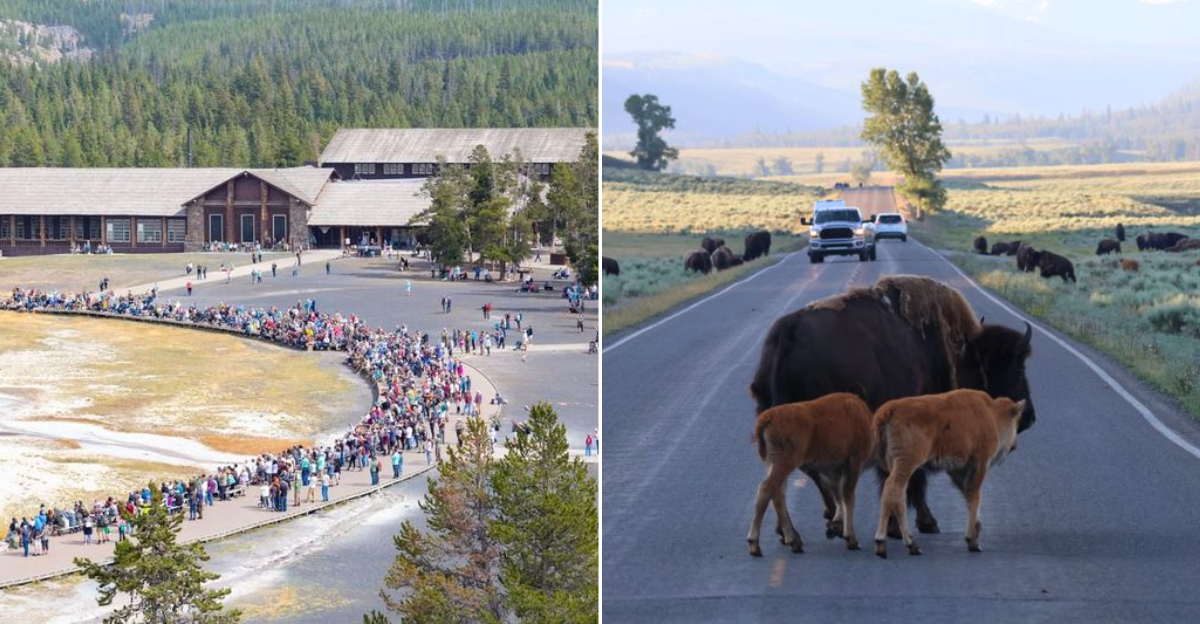
Wild places are supposed to feel like an escape, which is exactly why this Wyoming park creates such a strange first impression now.
It still has the kind of scenery people dream about, with dramatic landscapes, unforgettable wildlife, and the sense that something incredible could appear around any bend. But its fame has changed part of the experience in a way that is hard to ignore.
Traffic jams now come with the territory, turning stretches of the park into slow-moving lines of cars whenever crowds and animal sightings collide. That contrast is what makes the place so fascinating to talk about.
You are in one of the most beautiful natural settings in the country, yet you can still find yourself inching forward like you are stuck in a very scenic backup.
For visitors, that mix of wonder and congestion has become part of the story. This Wyoming park still feels wild, but now it comes with a very modern reminder of what happens when a spectacular place becomes too popular to stay quiet.
A First Glimpse That Already Feels Bigger Than Life
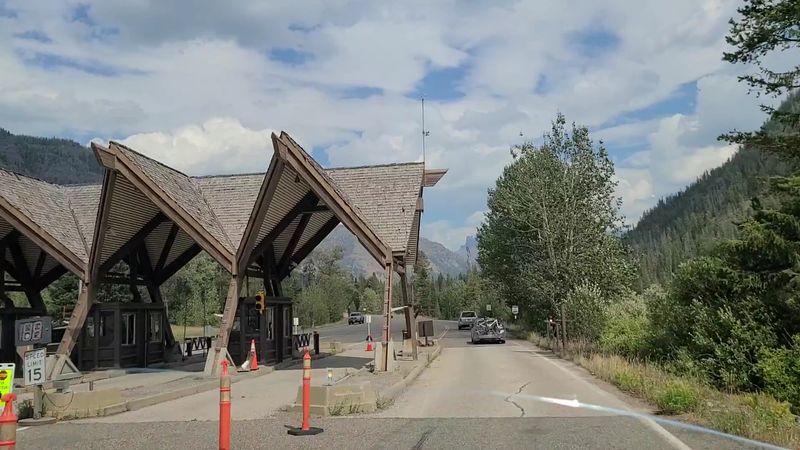
You know that feeling when a place meets you at the windshield and somehow fills the whole frame before you even stop the car? That first stretch near the West Entrance does that, with steam lifting off flats and pines standing like quiet ushers while the Madison River slides alongside.
You catch yourself slowing down just to see how the light hangs on the water, and suddenly the traffic does not feel like traffic, because everybody is rubbernecking toward the same giant hello.
I always tell friends to use that first pullout wisely, since the scene changes by the minute and your brain needs a beat to catch up. The way Wyoming sky spreads out here, it convinces you that distance is a kind of invitation, not a wall.
If elk are moving in the meadows, the whole line of vehicles breathes in and out together, and you can hear doors click as people second-guess whether to step out.
What gets me is the sound mix, a soft hush of wind and a low conversation of water with the steady murmur of idling engines. It is not glamorous, but it is honest, and it puts you right inside the reality of a famous park learning to carry its fame.
You clock the park rules, check the map, and agree to be patient, because everything worth seeing in Yellowstone arrives on its own schedule and only sometimes on yours.
Geysers, Valleys, And Views That Pull In Huge Crowds
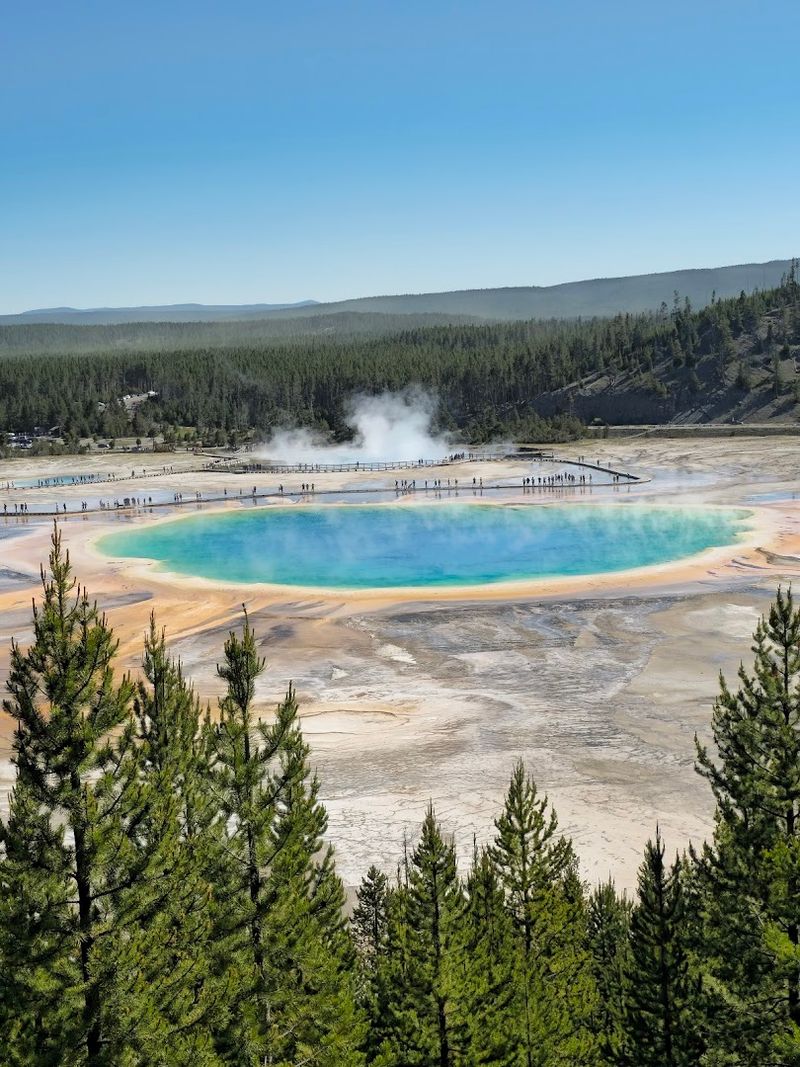
You cannot blame people for showing up when the ground paints with colors and the air writes with steam. Old Faithful has its timing, sure, but Grand Prismatic Spring steals whispers every time, and Norris Geyser Basin feels like the planet thinking out loud.
The crowds make sense, because these are not normal sights, and the boardwalks wrap you just close enough to feel the heat without forgetting where your feet stand.
Out in Lamar Valley, the space resets your inner clock, and bison move like weather across the sage. Even when the road slows to a crawl, you get this moving theater, with pullouts turning into bleacher seats and binoculars passing between new friends.
Wyoming seems to hand you distance and then encourage you to measure it with your eyes rather than your odometer.
The trick is timing and attitude, plus a promise to be kind in the shuffle. Mornings feel easier, edges of day feel gentler, and shoulder seasons can stretch your luck, though nothing here truly empties.
When the queue thickens near Midway Geyser Basin, I nudge over, breathe against the rail, and let the mineral blues and oranges reset the reason I came, because the line matters less when the land keeps telling you why people keep returning.
Why Wildlife Jams Became Part Of The Yellowstone Story
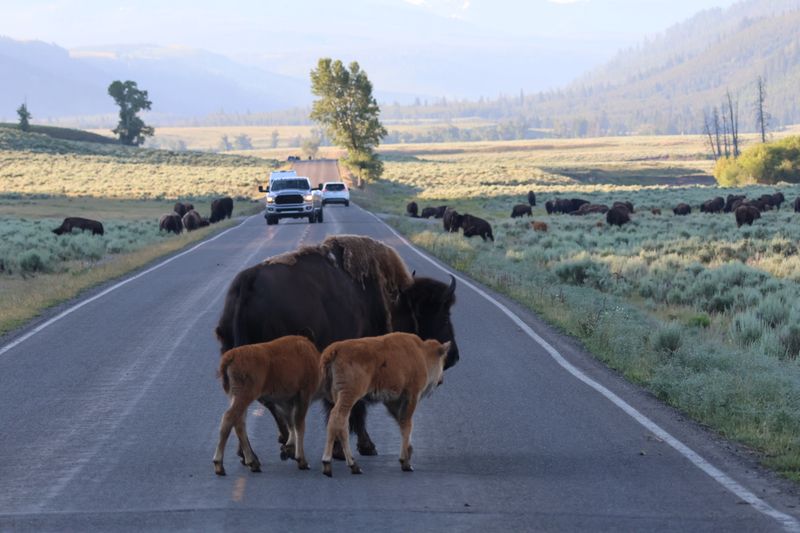
Let me level with you, wildlife jams here are not accidents, they are expectations wearing turn signals. The park is wired for it, with animals using the same valleys and corridors that the road conveniently traces, especially along Hayden and Lamar.
When bison or bears drift close, the entire tempo shifts, and the asphalt becomes a viewing platform where strangers narrate sightings through open windows like an impromptu radio station.
Yellowstone is in Wyoming, and the scale is generous, but the rules are simple if you want to keep it safe. You pull into a proper turnout, you keep space, you let rangers direct the dance, and you remember that wildlife is not a show hired for your afternoon.
The jam, honestly, is what happens when awe overruns planning, so you plan for awe and the jam turns into a story instead of a headache.
I have sat there while a calf learned to match its mother’s pace and the line of cars eased forward like a tide. Nobody complained out loud because the valley seemed to hush us, and that silence did more than any signpost.
You will hear folks mention bear jams to the south in Grand Teton too, a Wyoming reality that underlines why patience is not optional; it is the ticket that keeps everyone, animal and human, moving home in one piece.
The Strange Mix Of Wild Beauty And Bumper-To-Bumper Stops
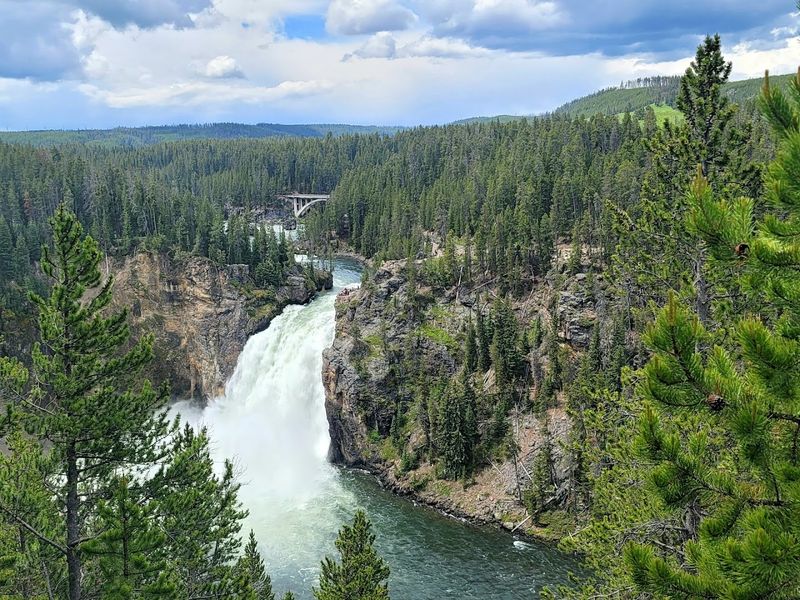
It is funny how your heart can sprint while your wheels barely move. One moment you are drifting past lodgepole pines, and the next you are in a serpent of brake lights, staring at steam plumes and listening for news from up the line.
Someone points toward a hillside, someone else checks a map, and a ranger waves the calm, patient wave that says trust the choreography.
I think of it as Yellowstone’s personality in motion, because the park is both primal and practical. It knows how to funnel wonder onto pavement and still keep the valleys mostly to themselves.
You get flashes of wild beauty through the windshield and then a slow minute to anchor the memory, which turns out to be a generous rhythm if you let it be.
Wyoming drivers, locals and visitors alike, learn the etiquette quickly, and it helps. Stay in your lane, use the pullouts, keep the shoulder clear for emergency vehicles, and treat the stopped time as borrowed minutes for fresh air and perspective.
By the time the column starts moving again, the scene that caused all this has probably drifted over a ridge, but your pulse is still a touch high, which is exactly how a place like this sneaks into your stories.
Why Even A Bison Sighting Can Slow Everything Down
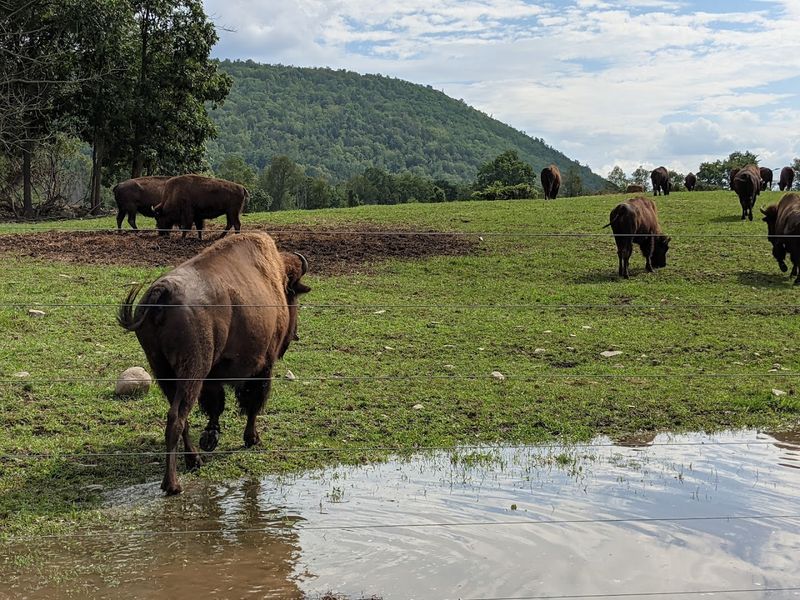
Bison do not hurry, and that might be the whole explanation taped to the dashboard. When a herd decides the pavement is today’s corridor, the park briefly belongs to them, and everyone else practices patience in neutral.
You can feel the car settle when those hooves start clicking on the asphalt, and you watch the animals make steady, unbothered choices that put your urgency in its place.
I like to roll down the window just enough to hear the low breaths and the shuffling, while staying inside and giving them the courtesy they deserve. A ranger might appear up the road, keeping folks from creeping too close, and that gentle traffic control lets the animals finish their plan without drama.
It is Wyoming common sense with Yellowstone flair, and it works because the point is not speed, it is respect.
The best part is how the pause becomes a class you did not sign up for. You observe calves shadowing elders, you notice the way a leader pivots the group with barely a glance, and you learn that the road is just another path across an old home.
When the herd clears, the line rumbles forward, people wave like neighbors, and the landscape exhales as if to say thanks for remembering who lives here first.
Big-Nature Moments That Test Everyone’s Patience
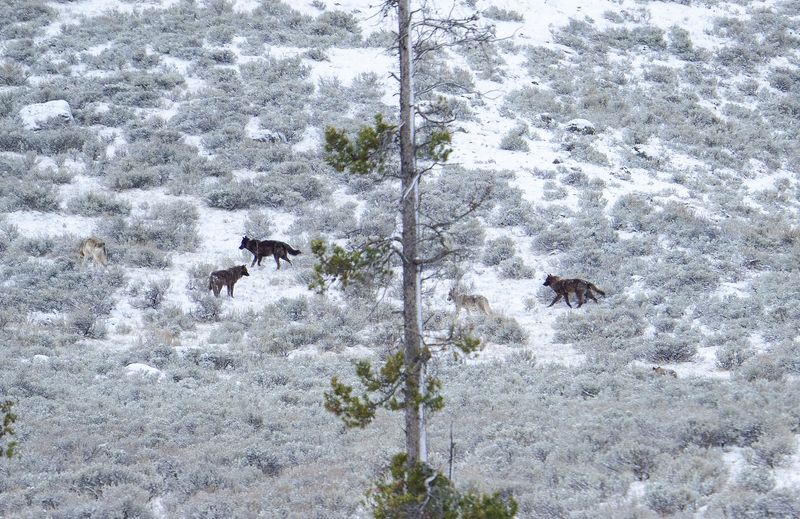
There is a special kind of quiet that shows up when rumors of wolves start slipping down a turnout. People lower their voices without thinking, and cameras soften their clicks, and the whole group leans into the same patch of meadow like it can hear us hoping.
Minutes stretch, ankles shift, and the impatience goes looking for a snack you smartly left behind at the lodge.
Then something moves, or maybe the light changes just enough to trick your nerves, and the whispered updates begin. A ranger or a seasoned watcher will remind everyone to keep scopes on the animals and feet off the grasses, and that steady presence is the guardrail we need.
In Wyoming, the word wild still means boundaries, and Yellowstone makes that meaning visible with every measured suggestion.
When the moment lands, you almost forget the stalled cars and the tight parking. A silhouette crosses snow patches in spring, or a distant howl threads through the morning, and nobody breathes for a beat.
Patience cashes out as memory, and the rest of the day finds an easier gear, because you waited together and the valley answered, which turns a slow scene into the reason you drove all this way.
How Fame Changed The Pace Of A Park Built For Awe
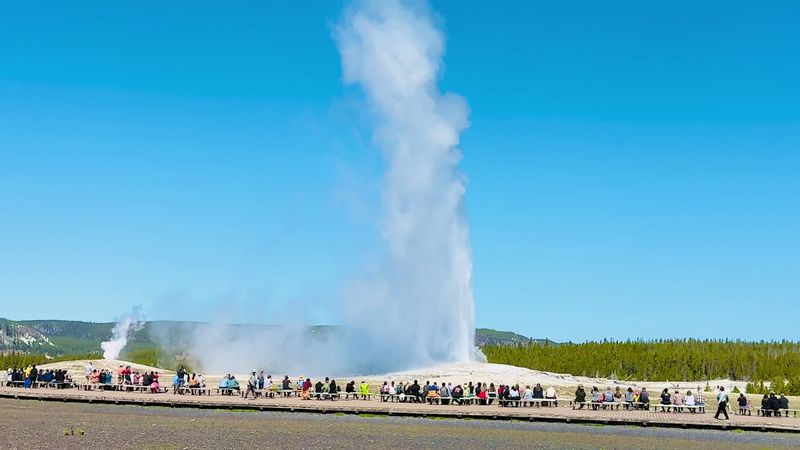
Fame does this thing where it speeds up attention while slowing down everything else. Old Faithful’s boardwalk fills efficiently, parking lots hit capacity, and the roads carry more stories per mile than they were ever meant to, yet the geyser does not change its mind for anyone.
You sit, you wait, and you realize the show never needed promotion, it just needed time.
Yellowstone is still Yellowstone, even as social posts stack up and trip plans get tighter. The park has adapted with clear signs, more education, and a steady ranger presence that keeps the edge off the bustle.
That said, patience remains the currency, and a friendly wave or a yielded merge can make a whole lane feel less like a contest and more like a community field trip.
I try to match my pace to the place, which sounds cheesy until it works. Walk slower on the boardwalks, linger an extra minute at a viewpoint, and choose turnouts like you are threading beads instead of beating a timer.
Wyoming rewards that shift with wider horizons and kinder conversations, and Yellowstone’s fame becomes background music instead of the whole song, which is exactly how you find your way through the crowds without losing the wonder you came to feel.
The Kind Of Place That Feels Incredible And Overwhelming
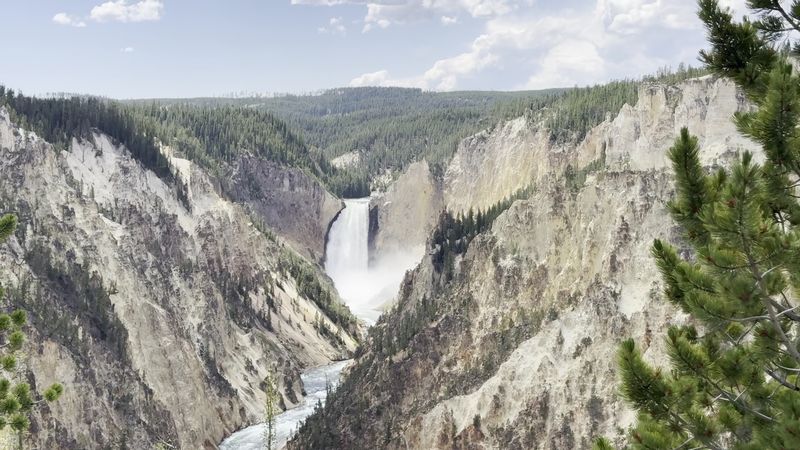
Stand at Artist Point and tell me your brain does not try to zoom out and in at the same time. The canyon colors argue with one another in the prettiest way, and the falls keep throwing white noise into a scene that barely fits inside your eyes.
Even with people lining the rail, it feels like stepping into a painting that decided not to hold still.
Overwhelming is not a problem here, it is a feature with friendly instructions. You take turns at the rail, you step aside for a shorter view, and you listen for the ranger who can name the layers faster than a guidebook.
Yellowstone sits in Wyoming like a luminous idea made of rock and water, and the only way to hold it is a little at a time.
I like to leave with one detail, not ten. Maybe it is the way mist drifts over the far wall, or the echo that lands a second later if the wind is right, or a raven sketching a slow loop above the spray.
When the parking fills and the walkway hums, I remember that big feelings ride well with small focuses, and that balance turns a crowded overlook into a personal moment that keeps unfolding later.
Why Visitors Still Keep Coming Despite The Slowdowns
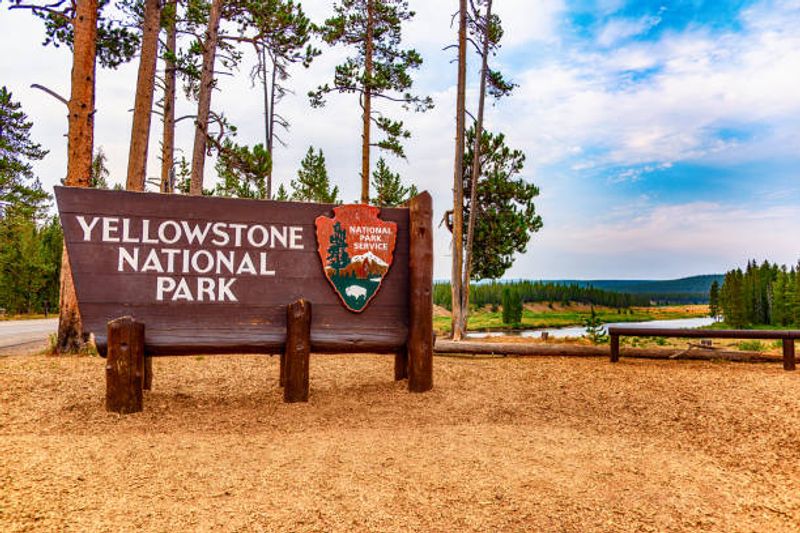
Every traveler I meet gives me the same shrugging smile when we talk about the slow stretches. They say it is fine, because the place keeps paying them back in scenes that do not exist anywhere else.
Yellowstone Lake at evening can hush a whole day, and the mirror of water against the sky feels like someone lowered the volume knob on everything that was loud an hour earlier.
People return because the trade feels fair. You give time, and you get moments that are oddly gentle for a park that still rumbles under your feet.
The parking lot tidies itself as folks drift back to cars, and a ranger cruises by with a nod that says the shoreline is closing in peace.
In Wyoming, distance carries a friendly kind of quiet, and Yellowstone uses that quiet to reset your plans. You realize you do not need to see every famous stop to go home full, and that takes pressure off every mile.
Even if traffic stacked up near a valley that morning, the lake erases the edges, and you drive away slowly on purpose, which is the kind of decision that brings people back year after year, not for the checklist but for the way the place rearranges your breathing.
The Wyoming Park Where Even Traffic Feels Wild
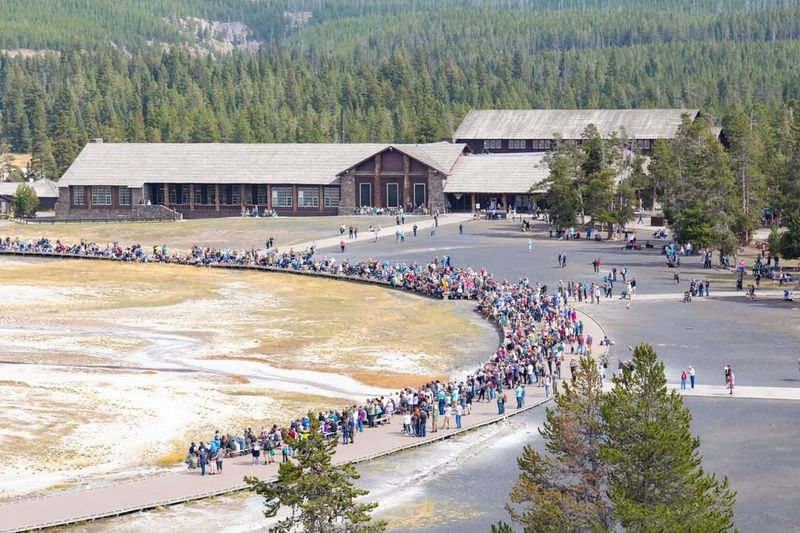
By the time twilight slides in, the day’s delays feel like part of the narrative rather than detours. Taillights trace a soft ribbon through trees, and steam from some far basin lifts like a final curtain call.
You tuck the windows down a crack, hear crickets stitch the edges together, and realize this traffic has a pulse that belongs to the landscape, not the clock.
That is the wild part to me, the way motion and stillness refuse to separate. A brief stop becomes a trailhead for your attention, and roadside chatter fades into a wider hush as stars try out the sky.
Rangers do a last sweep, drivers settle into courteous gaps, and the park gathers itself for another round of patient wonder.
Wyoming knows how to end a day, and Yellowstone writes the closing credits with a gentle hand. You pass a final turnout, glimpse a valley resting under its own weather, and feel grateful for the strange mix of gridlock and grandeur.
If a place can teach better timing without saying a word, this one does it between gear shifts, and you carry that lesson past the boundary sign, wondering when you will be back to practice it again.
Dear Reader: This page may contain affiliate links which may earn a commission if you click through and make a purchase. Our independent journalism is not influenced by any advertiser or commercial initiative unless it is clearly marked as sponsored content. As travel products change, please be sure to reconfirm all details and stay up to date with current events to ensure a safe and successful trip.
