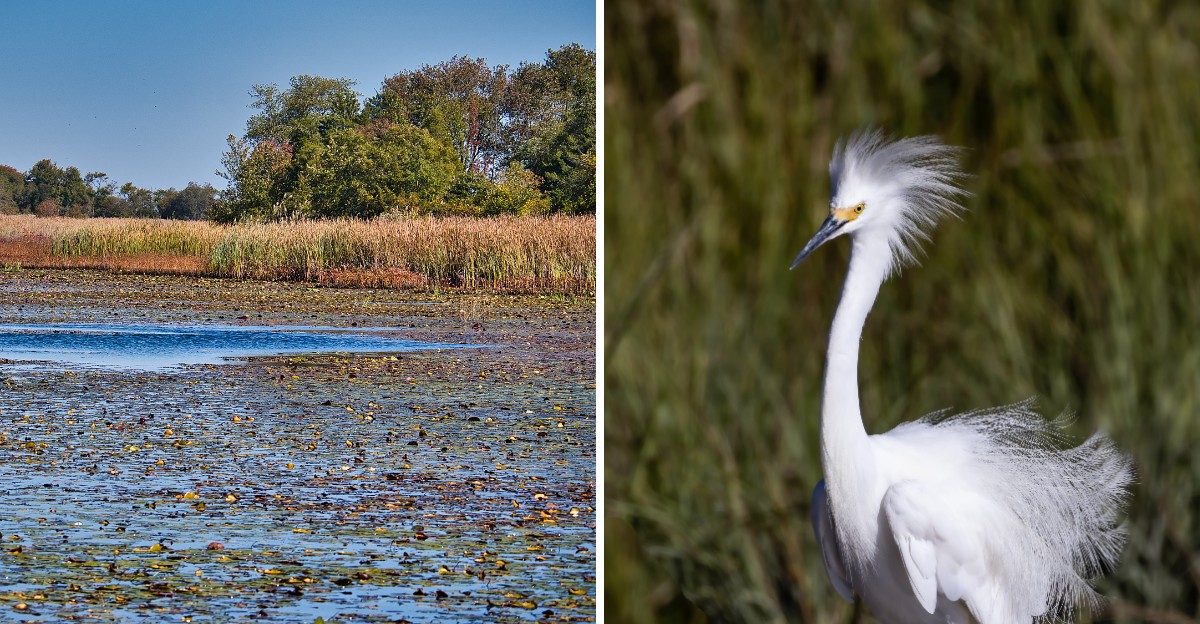
The marshes get busy when the birds arrive. New Jersey has a coastal refuge where more than 360 bird species have been recorded, turning quiet wetlands into a remarkable wildlife stage.
And wow, fall migration can make the place feel completely different.
Ducks, shorebirds, waders, and seabirds move through the refuge, filling the marshes with flashes of wings and sudden bursts of activity.
An eight-mile wildlife drive, observation towers, trails, and a boardwalk make it easy to explore without chasing every sighting on foot.
There are no flashy attractions here, and that’s exactly the charm.
The landscape does the entertaining. One minute, everything feels still. The next, a flock sweeps across the sky and steals the entire show.
Bring your binoculars and keep your eyes up. You never know what might fly into view.
The Salt Marsh That Runs The Whole Show
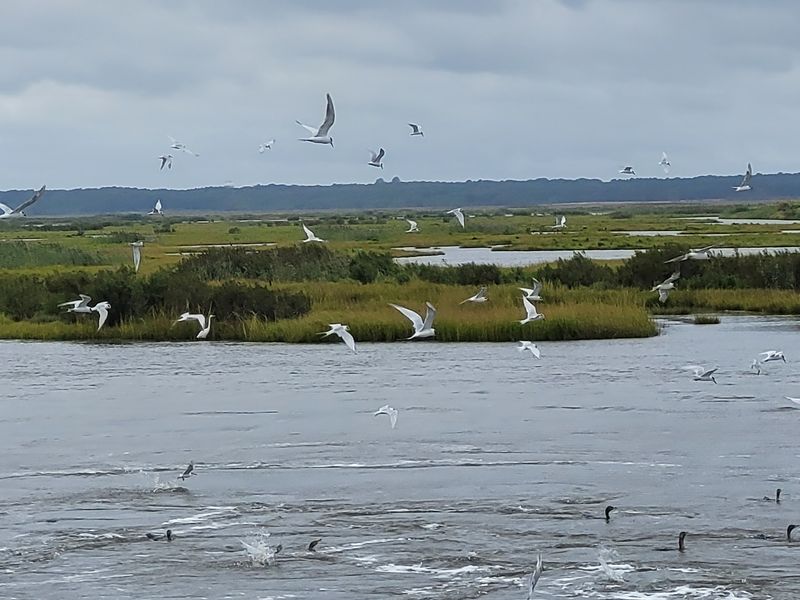
Cordgrass moves before you hear the wind, which is a strange and lovely thing to watch. More than 80 percent of the Edwin B.
Forsythe National Wildlife Refuge is tidal wetland, and that statistic makes sense the moment the marsh opens up in front of you.
Channels braid through the grass, filling and emptying twice a day with the tides. That rhythm feeds everything here.
Salt marshes act like natural filters, cleaning water before it reaches the bay, and they buffer the coast when storms roll through. They also work as nurseries, sheltering young fish and shellfish in water too shallow for larger predators.
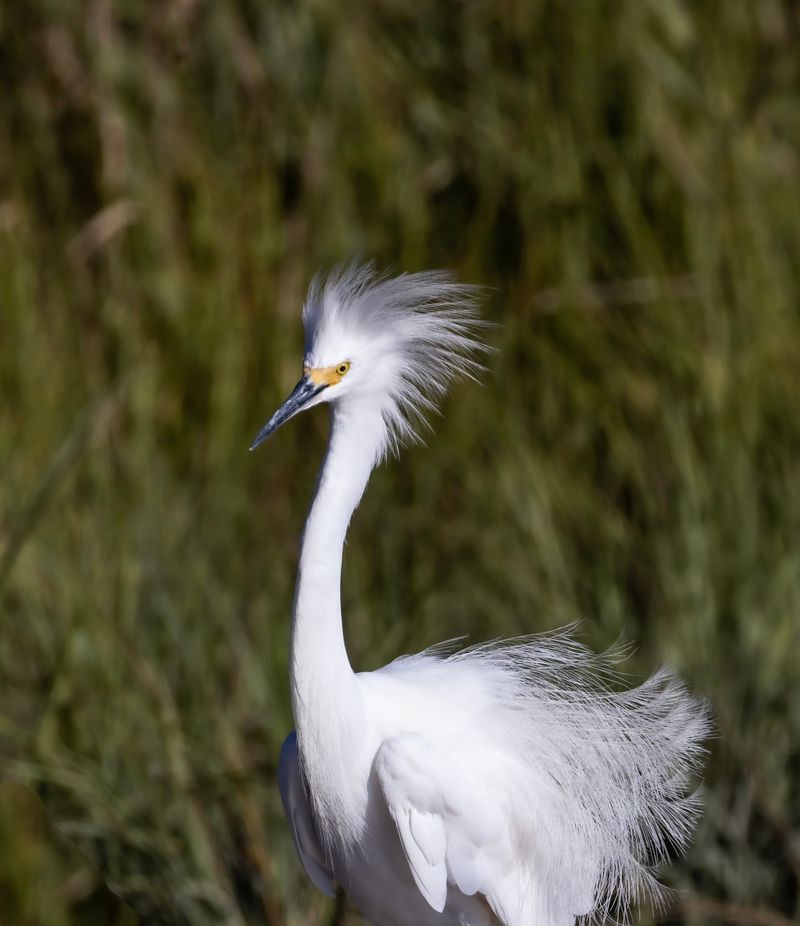
Birds figured this out long before people did. Egrets and herons stalk the edges with slow, deliberate steps, freezing mid-stride before striking.
Bring binoculars, because distances out here fool the eye badly. What looks like a smudge on a mudflat often turns out to be a tight cluster of shorebirds working the same patch of exposed ground together.
A Rest Stop On The Atlantic Flyway
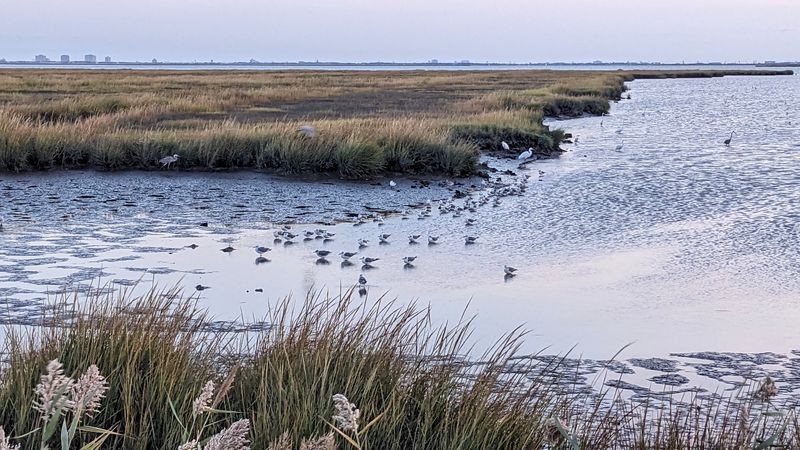
Migration turns this place into something close to a busy terminal, minus the announcements. Tens of thousands of shorebirds, ducks, geese, and wading birds pass through during spring and fall, using the refuge as a place to eat and rest before pushing on.
Some of these travelers cover thousands of miles. A safe stopover with plenty of food is not a luxury for them, it is survival.
The refuge sits along one of the busiest stretches of the Atlantic Flyway, which explains the sheer volume of activity. Winter brings its own crowd, including some of the largest gatherings of wintering American Black Duck and Atlantic Brant found anywhere along the Atlantic coast.
Timing matters more than luck here. Early mornings tend to be calmer, with better light and less heat shimmer over the water.
Give yourself permission to sit still for a while. Flocks often shift all at once, lifting off in a sudden wave that makes the whole marsh feel electric.
Eight Miles Behind The Wheel, Windows Down Or Up
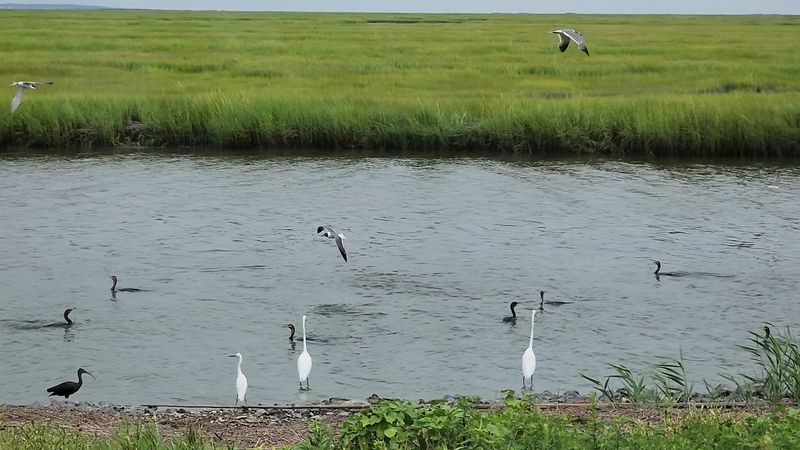
Few drives feel less like driving than this one. The Wildlife Drive is a self-guided eight-mile loop along raised berms that separate freshwater impoundments from tidal marsh, and it delivers wildlife sightings at nearly every bend.
You set your own pace. Pull-offs make it easy to stop, let others pass, and settle in with a camera.
Vehicles double as blinds, which is the quiet genius of the route. Birds tolerate cars far better than people on foot, so you often get closer views than a trail would ever allow.
Plan on at least an hour, and honestly more if the light is good. Some visitors loop twice because the tide changes what is visible.
A practical heads up worth taking seriously: biting insects can be intense from roughly midsummer onward, so keeping windows closed at times is smart. Sections of the road can also get rough, so ease off the gas and enjoy the slow crawl.
Observation Towers And The View That Widens Everything
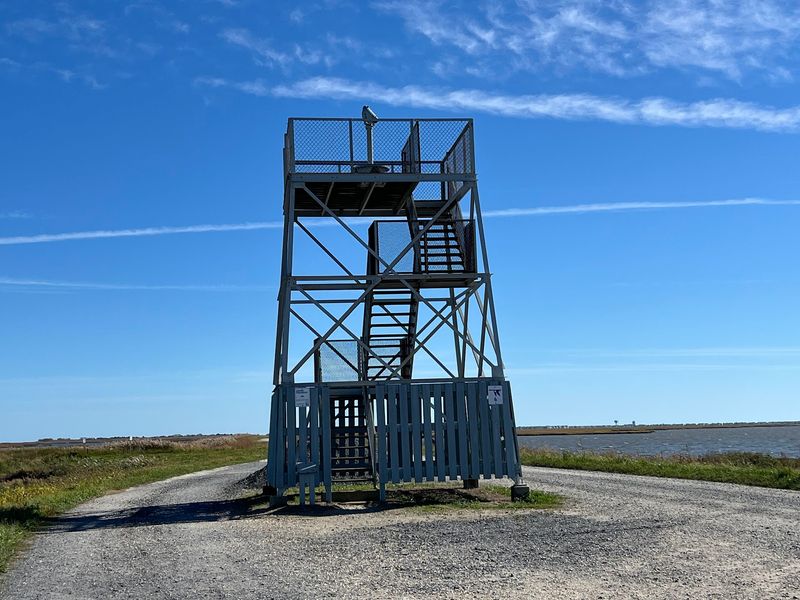
Climbing a few steps changes the entire experience, which sounds obvious until you actually do it. Observation towers along the route, including spots near Gull Pond and Turtle Cove, lift you above the grass line and suddenly the marsh reads like a map.
Distant rafts of waterfowl appear where you saw nothing before. Raptors become easier to track across open sky.
The elevated decks are also the best place to notice how many habitats sit side by side here. Freshwater on one side, salt water on the other, with narrow dikes stitching them together.
On clear days the Atlantic City skyline rises on the horizon, an odd and memorable contrast against so much wild space. Photographers love that juxtaposition.
Bring a hat and something to steady your binoculars, since wind picks up quickly at height. Give your eyes time to adjust and scan slowly, because motion usually reveals birds long before shape or color does.
Trails For Anyone Who Prefers Their Own Two Feet
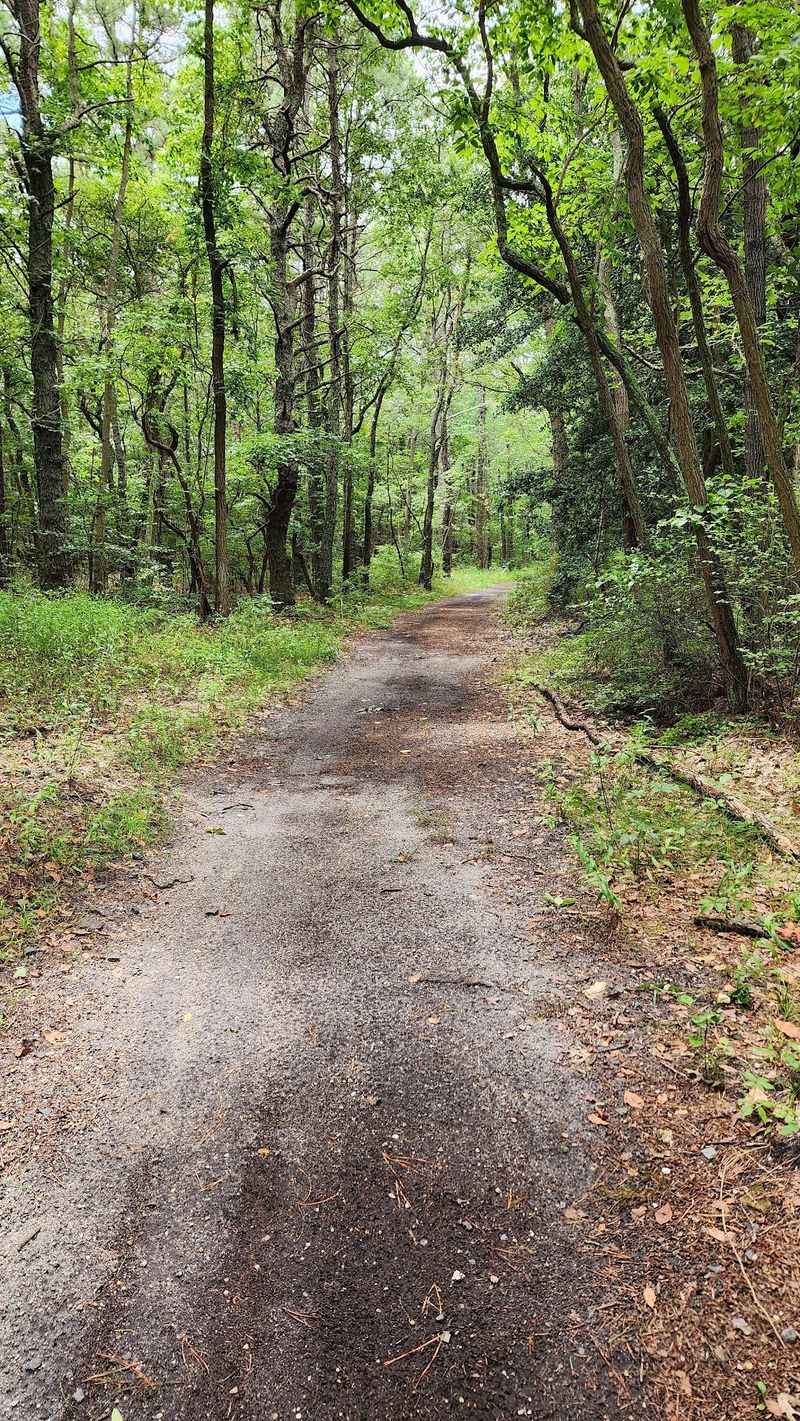
There is a different kind of quiet on foot. More than eight miles of trails wander through the refuge, and they trade the sweeping marsh views for closer, smaller details.
Grasses rustle at shoulder height. Frogs plop into water you cannot quite see.
Akers Woodland Trail makes a short, pleasant loop that suits warbler watching during migration and nesting songbirds later on. Leeds Eco-Trail takes a boardwalk route out over wetland, which is a fun way to stand above the mud without sinking into it.
Other options, like Bristow and the paths at Cedar Bonnet Island, show off yet another slice of habitat.
Most trails stay flat, so they work well for families and anyone who is not looking for a workout. Long sleeves and pants help considerably with insects during warmer months.
Walk slowly and stop often. The refuge rewards patience far more than distance covered, and the best sightings usually happen when you stop moving.
Rare Nesters Getting A Second Chance
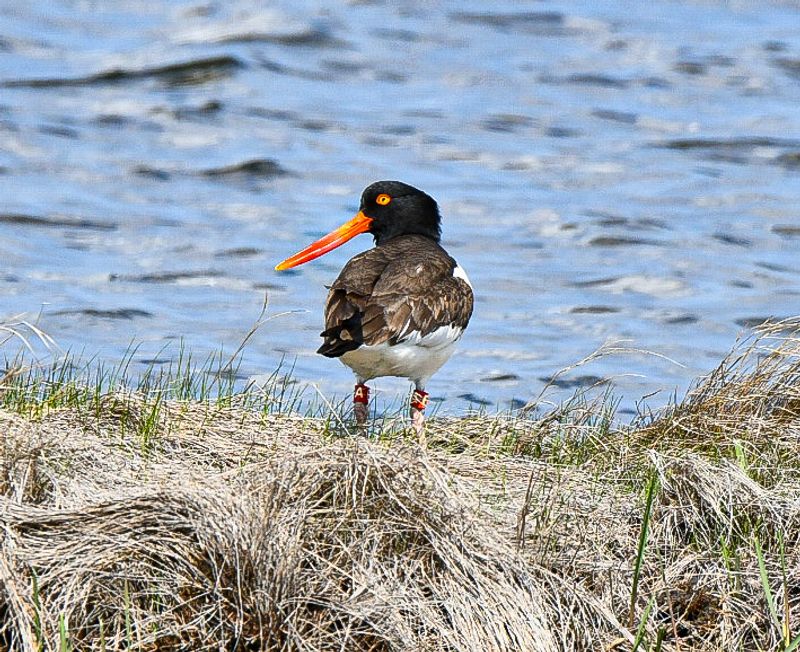
Some of the most important residents here are also the hardest to spot. The refuge protects breeding habitat for the federally threatened piping plover, along with state-endangered black skimmers and least terns.
Beach-nesting birds need undisturbed sand, and undisturbed sand is getting harder to find along the coast. Protected stretches like these matter enormously.
Plovers blend into the beach so well that their nests are nearly invisible, which is exactly why posted closures exist during nesting season. Respecting those boundaries is the single easiest way visitors help.
Skimmers are easier to enjoy, since they fly low with that lower bill slicing the water surface.
Raptors share the neighborhood too. Northern Harriers glide low over grass with that distinctive tilt, while Red-tailed Hawks perch and watch, and Short-eared Owls occasionally hunt near dusk.
Listen for Marsh Wrens and Seaside Sparrows in the cordgrass, tiny voices that carry surprisingly far across open wetland.
Freshwater Pools, Woodlands, And Everything In Between
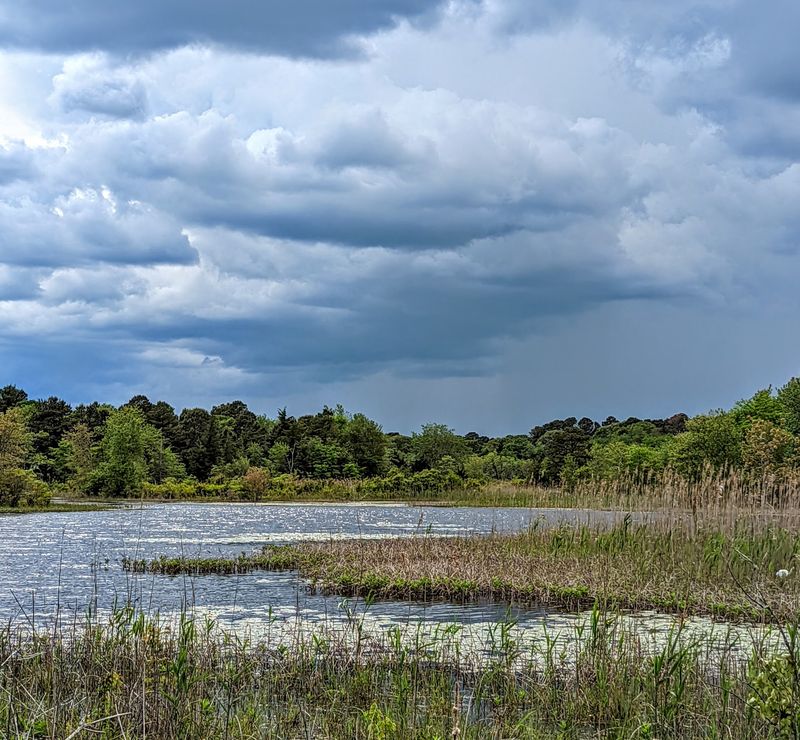
Marsh gets the headlines, but the supporting cast deserves attention. Managed freshwater impoundments sit alongside the tidal wetlands, and water levels in them are controlled to create conditions waterfowl and wading birds actually use.
That management is why certain pools fill with ducks while others host long-legged waders on exposed mud.
Head slightly inland and the scenery shifts again. Pine and oak uplands, grasslands, woodlands, and undeveloped barrier beach all fall within refuge boundaries.
Each pocket supports its own mix of plants and animals, which is why a single visit can produce such a wildly varied species list.
Songbirds favor the trees, while open grassy areas attract hunting raptors. Freshwater edges draw turtles, frogs, and dragonflies in warm months.
Give yourself time to notice the transitions between habitats, since edges often hold the most activity. That change from forest shade to sudden open sky is one of the most satisfying moments the Edwin B.
Forsythe National Wildlife Refuge offers.
Four Seasons, Four Completely Different Visits
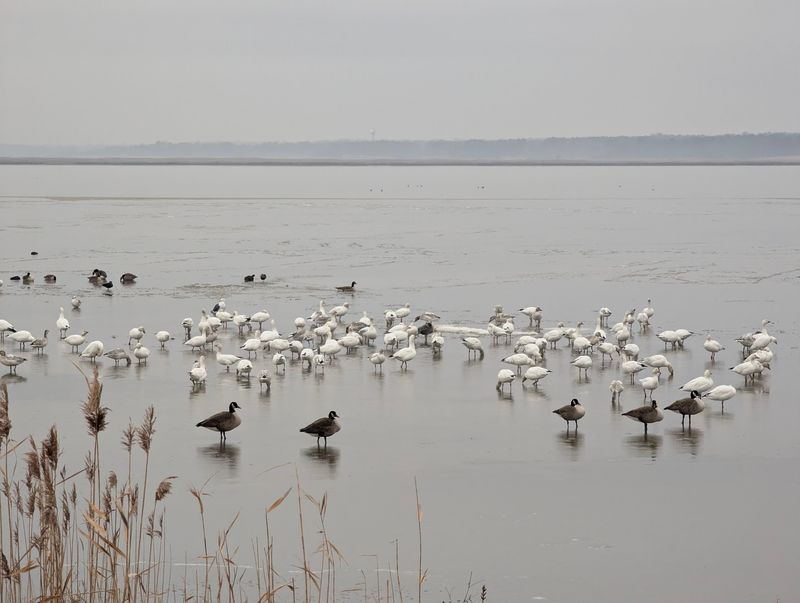
Come back in three months and you may not recognize the cast. Spring and fall deliver waves of migrating songbirds and shorebirds, with warblers flickering through the woodlands and sandpipers working the shoreline in constant motion.
Summer keeps things busy in its own way. Nesting songbirds fill the trees, and multiple heron species work the shallows, sometimes eight or nine different kinds across the refuge.
Winter strips the landscape down and makes birds easier to see. Atlantic Brant and American Black Ducks gather in impressive numbers, and Bald Eagles become a realistic sighting rather than a lucky one.
Short-eared Owls hunt low as light fades.
Weather plays a bigger role than most visitors expect, with wind and tide shifting where birds gather on any given day. Dress in layers during colder months, because there is almost no shelter from wind out on the dikes.
Repeat visits are genuinely worth it here.
Photography, Fishing, And Slow Water Days
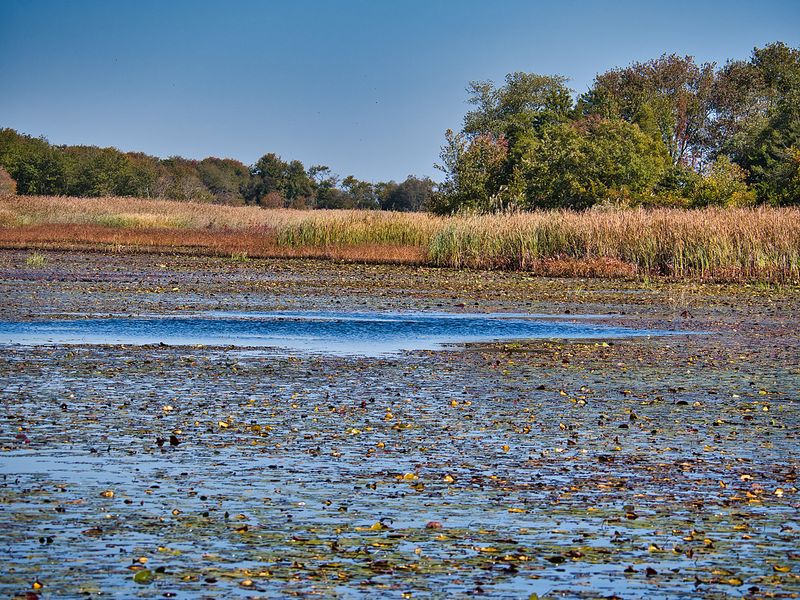
Golden hour out here is almost unfair. Light spreads flat across the water and turns ordinary marsh grass into something worth a hundred photos, which explains why sunset draws so many cameras to the loop.
Reflections in the impoundments double every bird you see.
A long lens helps enormously, though even a phone captures wide landscape shots nicely. Patience beats gear most days.
For anyone who prefers being on the water instead of beside it, designated areas allow fishing and kayaking, giving a completely different angle on the same scenery. Paddling puts you at eye level with the marsh, where sound carries strangely and the grass feels taller.
Boat access can be shallow depending on the tide, so checking conditions before launching saves frustration.
Plenty of New Jersey visitors simply park, sit, and watch nothing in particular. Honestly, that counts as a full activity here, and it might be the most restorative one available.
Conservation With Global Recognition
Protection on this scale did not happen by accident. Formed in 1984 by combining two earlier refuges, this coastal preserve became a unified effort to safeguard habitat that was under growing pressure.
It belongs to the National Wildlife Refuge System, a nationwide network dedicated to wildlife and the places they depend on.
Recognition reached well beyond state lines. The refuge was among the first four sites in the United States designated a Wetland of International Importance under the Ramsar Convention, which says a lot about its global value.
Ongoing habitat management keeps those wetlands functioning for resident and migratory species alike.
A visitor center near the entrance offers exhibits worth a stop before heading out, especially for first timers trying to identify what they are about to see. Restrooms and parking are available on site.
Plan your trip to the Edwin B. Forsythe National Wildlife Refuge, 800 Great Creek Rd, Galloway, NJ 08205, and give this corner of New Jersey a full unhurried day.
