
Ever wonder what kind of rules could make you laugh out loud on a road trip?
West Virginia has plenty. Just when you think you’ve seen it all, another oddball law shows up and makes you blink twice.
Every state has at least one head-scratcher tucked away in its books, but West Virginia seems to have collected a whole set.
Some of them make sense if you picture life decades ago: horses on busy streets, small towns trying to keep order, or old habits that stuck around.
Others feel so random that they sound like jokes until you realize they’re real.
That’s what makes driving through this state fun.
It’s not just the scenery or the winding roads, it’s the little surprises that pop up along the way.
Knowing these laws ahead of time means less confusion and more laughs when they come up in conversation.
So, ready to hear the quirks that catch tourists off guard?
Make sure to keep on reading!
1. You’re Not Allowed To Whistle Underwater

I swear I did not make this up, but West Virginia has a rule about whistling underwater, and tourists always do a double take.
This one is famously strange and endlessly quoted.
It’s practically impossible to do, which makes the rule even funnier.
The law likely exists because of outdated nuisance wording.
Tourists usually assume it’s a joke until they see it listed.
If you swing by the Charleston Town Center area at 3000 Charleston Town Center, Charleston, WV, you will hear locals joke about it in passing.
It kind of lives in the same category as those goofy town myths that refuse to retire.
Still, it shows up in law roundups that travelers share when planning a stop across the state.
Honestly, the charm here is how West Virginia winks at you while holding a straight face.
It also says a lot about how old statutes stick around long after anyone needs them.
You are not going to see a lifeguard chasing someone for making underwater bird sounds.
Yet the phrase itself is so specific that your brain cannot let it go.
We will roll through the Kanawha Riverfront and you will hear a local tell the story better than any sign could.
It becomes a conversation starter in pool halls and hotel lobbies.
Ask someone and they will grin like they have told it a hundred times.
That is the fun of traveling here, and that is why this odd line still gets attention.
2. Wildlife Casualties Can Be Legally Collected In Some Cases
This one always gets a pause, because West Virginia allows animal remains to be salvaged under specific conditions.
That surprises visitors who assume it’s always illegal.
Locals see it as practical, not weird.
Tourists tend to double-take when they hear it’s allowed.
If you want to see where people talk about it, a good anchor is the West Virginia Division of Natural Resources office at 324 Fourth Avenue, South Charleston, WV.
You can ask questions there and get the straight details on how reporting works here.
The rules emphasize safety and proper handling, and that is the big point people miss.
It is not a free for all, and there is a process that keeps things orderly.
Driving the Highland Scenic Highway near Marlinton, you will hear truckers mention it like common sense.
To them, the idea just fits the landscape and the realities of wildlife on mountain roads.
Folks from out of state expect a hard no, then end up nodding along.
It is still a surprise the first time you hear it said plainly.
When we are on the road together, you will notice how the conversation shifts from shock to practicality fast.
The mountains teach you to adapt to what the road gives you.
In West Virginia, the rules follow that rhythm, and that is why this one sticks with travelers.
It is a snapshot of local logic.
3. You Can’t Hunt On Sundays In Certain Areas

You will want to keep an eye on Sunday plans, because you can’t hunt on Sundays in certain areas here.
Sunday hunting restrictions still apply in parts of the state, visitors planning weekend trips often miss this detail.
Locals plan around it without thinking twice, and tourists get caught off guard when plans suddenly change.
If you stop by the West Virginia Division of Natural Resources headquarters at 1900 Kanawha Boulevard East, Charleston, WV, you can grab the latest map.
The boundaries matter, and they can be specific in ways that surprise newcomers.
Some public lands allow it, while others hold the line depending on local decisions.
Out on the Monongahela National Forest office at 200 Sycamore Street, Elkins, WV, the staff can answer area questions in a heartbeat.
People sometimes think statewide rules are uniform, then find out the exceptions do the real work.
It is not meant to trip you up, it is a patchwork created over time that locals navigate with muscle memory.
When you plan a weekend, you check weather, gear, and the Sunday rule in the same breath.
If that sounds fussy, it becomes natural after a day or two on mountain roads.
West Virginia likes its rhythms, and this law is part of that rhythm.
4. Throwing Objects At A Train Is Explicitly Illegal

Here is one that sounds like it jumped out of a railroad safety poster: throwing objects at a train is explicitly illegal, and the law spells this out very clearly.
It dates back to the coal and rail boom years.
While obvious today, the wording feels oddly specific.
Tourists don’t expect train-focused laws to still be active.
If you pass through the Collis P. Huntington Railroad Historical Society at 1323 8th Avenue, Huntington, WV, you can see how central rail has been here.
These tracks once ran like arteries through the hills, and they still shape small town rhythm.
The law reads like a snapshot of that era, short and direct, no fluff.
Folks laugh at the idea of anyone throwing something, but the rule exists for good reasons.
Rail yards and crossings do not leave much room for jokes when heavy cars roll by.
Standing near a crossing, you feel how the mountains funnel sound and motion into a focused rush.
It makes sense that safety laws stayed clear and strict, so when someone reads the statute out loud, it sounds oddly dramatic and then totally practical.
That is a theme across West Virginia, where old lines still do real work.
Put it on the list of rules that survived because they still protect people, nothing mysterious about it, just history hanging on.
5. You’re Not Supposed To Use Profanity On The Phone

Okay, this one sounds like your grandparent wrote it on a kitchen notepad.
You’re not supposed to use profanity on the phone because old statutes address obscene or profane phone calls.
The language feels very mid-twentieth century.
Enforcement is rare, but the law remains, and tourists are surprised it’s even mentioned.
Back then, a call felt official and public in a way that texts never do, so lawmakers wrote like they were protecting the peace of the living room.
Hearing about it now, you picture someone picking up a rotary phone and gasping at a spicy word.
It is funny, but it points to how laws stick around long after the moment passes.
Traveling across West Virginia, you hear echoes of that formality in courthouse hallways and town boards.
The rule is not hunting you, but it exists, quietly reminding folks to keep it civil.
In a small mountain town, that reminder still lands with a little weight.
You feel it when a clerk answers hello with a careful voice.
Call it quaint, call it dated, it is still on the books.
It becomes another story you tell when you get home.
6. Dueling Is Still Technically Banned

I love how this one sounds like a scene from a dusty novel: West Virginia law explicitly outlaws dueling, and it is still technically there.
It’s a relic from a much earlier era, no one expects this to come up in modern travel.
But yes, it’s still on the books.
If you want a backdrop for the story, the Jefferson County Courthouse at 100 East Washington Street, Charles Town, WV, sets the mood.
Those steps feel like they have heard every kind of speech and promise under the sun.
You can almost hear boots on stone and a friend whispering do not do this.
The law today reads like a handshake between history and common sense.
It says we tried that, it caused trouble, let us not repeat it.
Most visitors laugh, then ask if anyone ever actually tried lately.
The real answer is that life moved on and the statute stayed.
This is how West Virginia keeps a record of what it learned the long way.
Travelers see the line and get a glimpse of older codes of honor.
It is less about drama and more about memory.
7. You Can’t Drive Animals Across A Road Without Control

This one sounds like it was written on a fence post, and honestly it makes sense to me.
You can’t drive animals across a road without control, and the wording covers livestock, not pets.
It was written for rural roads and farm traffic.
Tourists driving scenic backroads don’t expect legal language about cattle.
Locals see it as common sense.
If you cruise past the Greenbrier County Courthouse at 200 North Court Street, Lewisburg, WV, you will hear ranch talk in the coffee line.
People here think about gates, ditches, and shoulders before they think about decorations.
The rule simply says handle your herd so neighbors can get by safely.
When the sun drops behind the ridge, visibility turns tricky fast.
That is when a calm hand and a good plan matter more than anything.
Visitors forget how quickly a quiet lane can fill with motion.
One distracted minute and everyone is stuck, which is why the law exists.
You will see signs and fencing that make the expectation clear without shouting.
The effect is that drivers learn to slow down and look twice.
It is a small courtesy that keeps roads friendly.
8. It’s Illegal To Destroy A Natural Gas Pipeline Marker
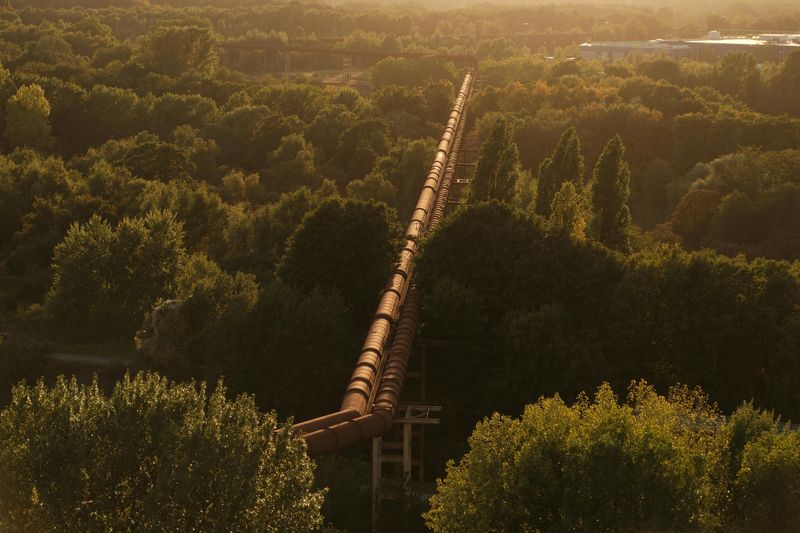
You see those skinny posts along the road and barely notice them until someone points them out.
It’s illegal to destroy a natural gas pipeline marker, and with energy infrastructure across the state, this rule matters.
Markers look insignificant to visitors, and locals know they’re legally protected.
Tourists sometimes learn this one the hard way.
These markers guide crews and keep everyone aware of what runs underfoot.
They are simple, but they carry a lot of safety baked into the color and wording.
West Virginia takes that seriously because hills and hollows can hide a lot.
When you know where lines are, you can plan work and avoid trouble.
The law draws a bright circle around the marker, and it is not for decoration.
It is there so people treat the ground like the system it is.
On a long drive, they blur into the background until a ranger reminds you to leave them alone.
Then you notice how many guide the way across pastures and creek cuts.
Think of them like road signs for what you cannot see.
They are small guardians with a big job here.
9. Public Drunkenness Laws Are Strictly Worded

This one reads like a courthouse script, which fits the setting perfectly.
Public drunkenness laws are strictly worded in West Virginia, and the phrasing is old school formal.
West Virginia’s statutes use very formal, old language, and the rules cover behavior as much as intoxication.
Tourists assume rural areas are more relaxed, but the law disagrees.
If you pass through the Marion County Courthouse at 219 Adams Street, Fairmont, WV, you will feel how official everything sounds around here.
That tone carries into how town centers keep evenings steady and respectful.
It is not about scolding, it is about setting a clear line for shared spaces.
Travelers often forget that quiet streets carry sound farther than city blocks, so the language goes a little stiff to make expectations crystal clear.
When you read it, you can hear a judge saying it slowly enough to land.
Towns here do relaxed days and tidy nights, and that balance works.
It keeps small communities comfortable for everyone passing through.
That is the heartbeat of these mountain streets.
10. Bear-Related Laws Are Surprisingly Detailed

You do not realize how much thought goes into wildlife rules until you start asking around.
Bear related laws are surprisingly detailed, and hunting and wildlife laws go deep on bears specifically.
That surprises visitors who don’t realize how common bears are here.
Locals treat these rules seriously.
Tourists underestimate how regulated wildlife interactions can be.
The point is making sure bears and people avoid bad encounters, that means storage, distance, and a calm way of moving through the woods.
On a quiet morning, you will see signs that spell it out without drama.
It is not fear, it is respect that keeps everyone safe.
The mountains give bears room to roam and that is the beauty here.
The rules build a framework so the rhythm of the forest stays in tune.
Travelers sometimes think it sounds intense until they see how simple the practices are.
Then it clicks, and the trail feels more relaxed because you know what to do.
You will leave with a checklist you can use anywhere these hills meet big woods.
That is how West Virginia teaches without lecturing.
Dear Reader: This page may contain affiliate links which may earn a commission if you click through and make a purchase. Our independent journalism is not influenced by any advertiser or commercial initiative unless it is clearly marked as sponsored content. As travel products change, please be sure to reconfirm all details and stay up to date with current events to ensure a safe and successful trip.
