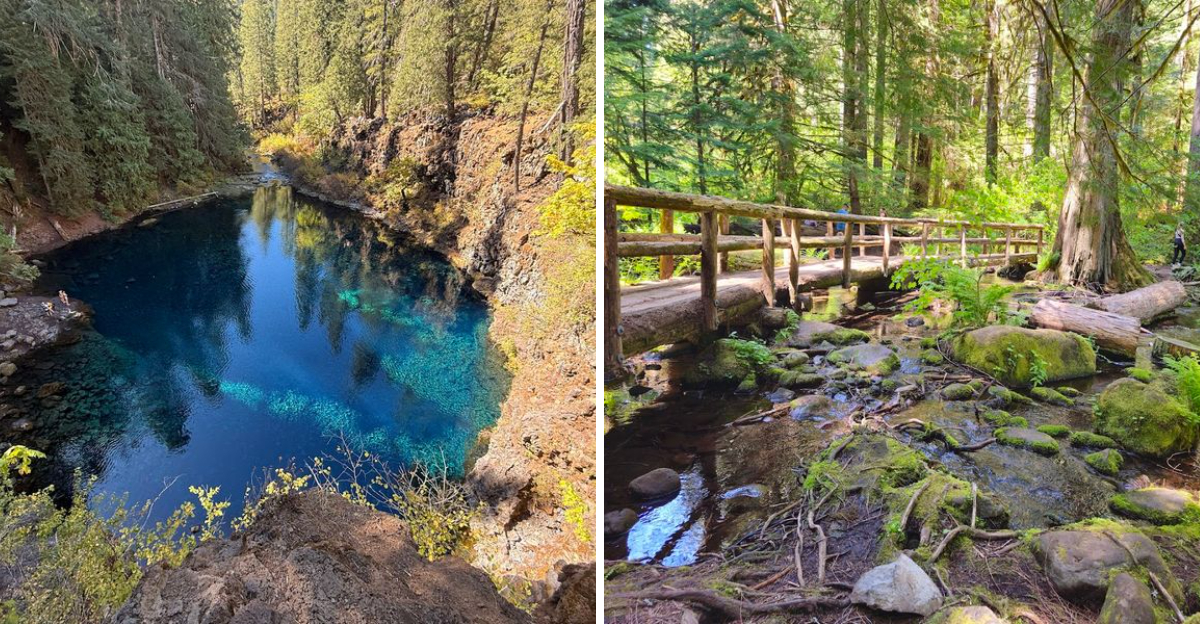
When I heard locals whisper about a stunning blue-water spot tucked away in Oregon, I pictured a quiet place. The horizon melted into crystal?clear waves.
Instead, the scene now feels more like a tourist hotspot than a secret sanctuary. Crowds spill onto the shore, and the water’s brilliance is dulled by endless photo ops.
The contrast between the original charm and the current chaos is striking. It’s a reminder of how quickly a beloved natural treasure can be overwhelmed.
If you’ve ever wished for a pristine getaway, this story might just change the way you plan your next adventure.
What Makes Tamolitch Blue Pool So Extraordinary
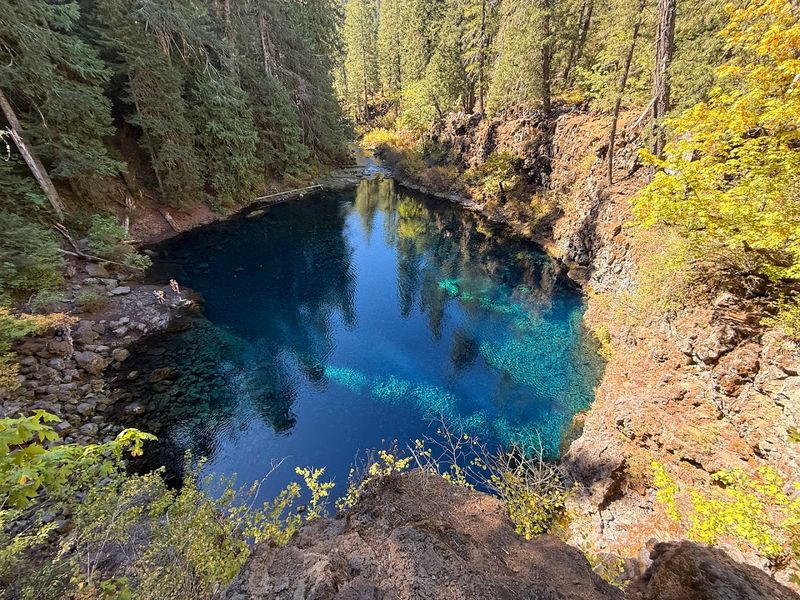
Standing at the rim of Tamolitch Blue Pool for the first time feels surreal. The water glows an electric, almost unreal shade of blue.
It looks painted, not natural.
The secret behind that color is pure science. The McKenzie River flows underground for roughly three miles through porous lava rock.
It resurfaces here, cold and incredibly clear, around 37 to 38 degrees Fahrenheit year-round.
That frigid purity absorbs red and green wavelengths of light. Only blue reflects back to your eyes.
No algae grows in water that cold, so the pool stays crystal clear.
The surrounding landscape adds to the drama. Moss-covered lava boulders frame the pool on all sides.
Ancient trees press in close overhead.
It feels like a scene from a fantasy film. The geological story behind it stretches back roughly 1,600 years.
A lava flow from Belknap Crater buried the river, forcing it underground.
That underground journey created this stunning pool. Nothing else in Oregon quite compares to it.
The Hike In Is Half The Magic
Most people focus entirely on the pool itself. They forget that the hike getting there is genuinely beautiful on its own.
I noticed that the moment I stepped onto the trail.
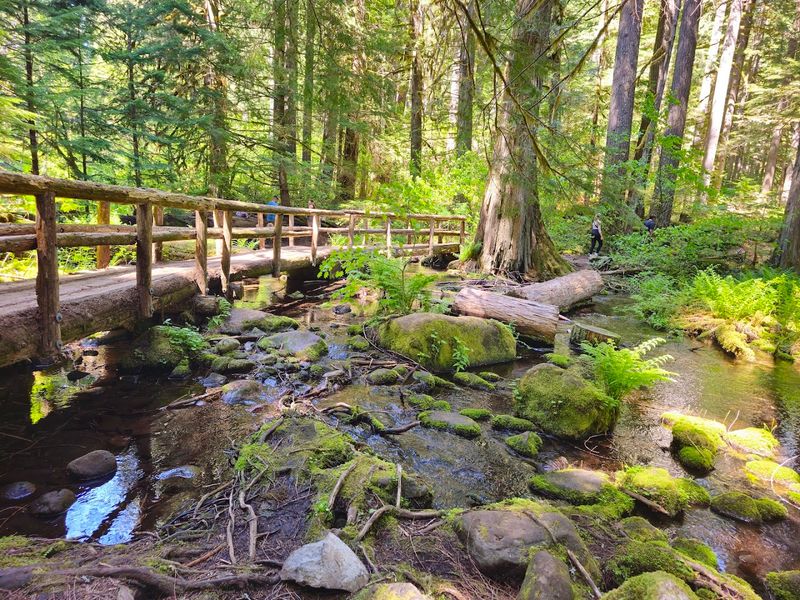
The path follows the McKenzie River Trail for about 2.3 miles one way. Early on, the forest floor is soft and shaded.
Mossy rocks and running streams line the route.
You cross two wooden bridges along the way. The river rushes below, cold and quick.
The air smells like pine and wet earth.
As you get closer to the pool, the terrain shifts. Volcanic lava rock takes over the ground.
Roots and boulders require real attention underfoot.
Trip hazards become more frequent near the end. Good hiking shoes make a real difference here.
Walking sticks help too, especially for anyone with balance concerns.
The hike is roughly 4.5 miles round trip. Most people finish in 45 minutes to an hour each way.
The scenery keeps the pace feeling easy.
How Overcrowding Started Changing Everything
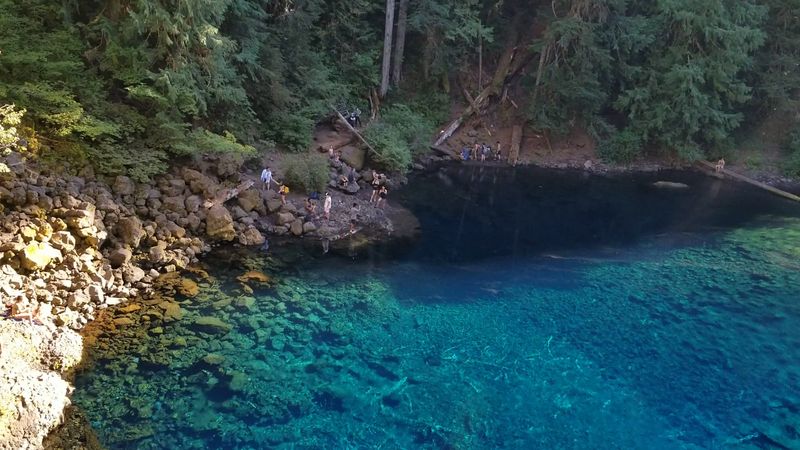
A few years ago, word spread fast about the Blue Pool. Social media did what social media does.
Suddenly, everyone wanted to see it.
Summer weekends became overwhelming. Parking lots filled before 9am.
Cars lined the road far beyond the designated area.
The trail itself grew busy with foot traffic. More boots on the ground meant more erosion.
Fragile mossy rocks got scraped bare.
The pool area took the hardest hit. People scrambled down unofficial paths to reach the water.
Those shortcuts damaged vegetation that had grown for decades.
Noise levels rose sharply. The peaceful stillness that made the spot magical started disappearing.
Wildlife retreated further into the forest.
Trash became a visible problem. Food wrappers and water bottles appeared near the pool.
Some visitors left gear behind on the rocks.
Rangers and volunteers began showing up more frequently. They worked hard to manage the damage.
Still, the pressure on this fragile place kept growing every season.
The Trash Problem That Broke Hearts
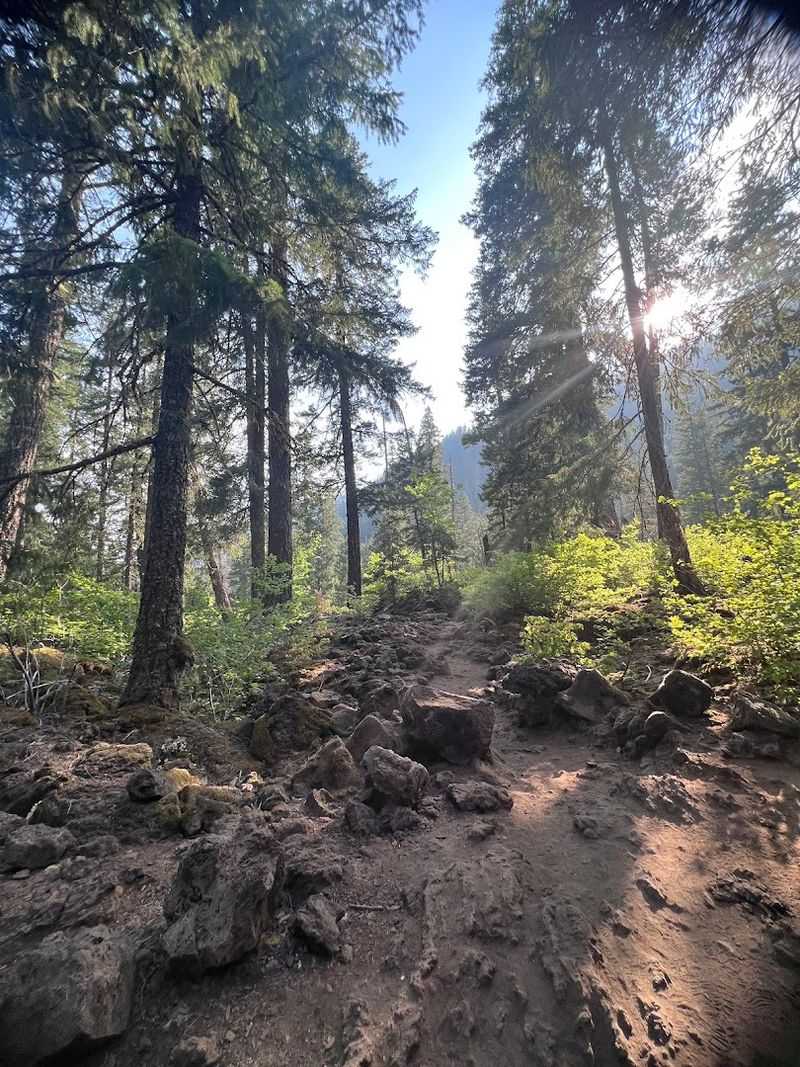
Trash at Tamolitch became one of the most talked-about problems in Oregon hiking communities. It hurt to read about.
It hurt even more to see in person.
The pool sits far from any road. Carrying garbage out requires effort.
Some visitors simply chose not to bother.
Food wrappers got wedged into rock crevices. Plastic bottles floated near the pool’s edge.
Even broken glass showed up on the rocky descent.
Volunteers organized cleanup events to fight back. They hauled out bags of waste each visit.
Their dedication kept things from getting worse.
The damage went beyond aesthetics. Wildlife in the area interacts with the trash.
Animals that live near the pool face real risks from human waste.
Signs asking visitors to pack out their garbage appeared along the trail. Most people respected them.
A small number ignored them completely.
Jumping Into The Pool Became A Safety Issue
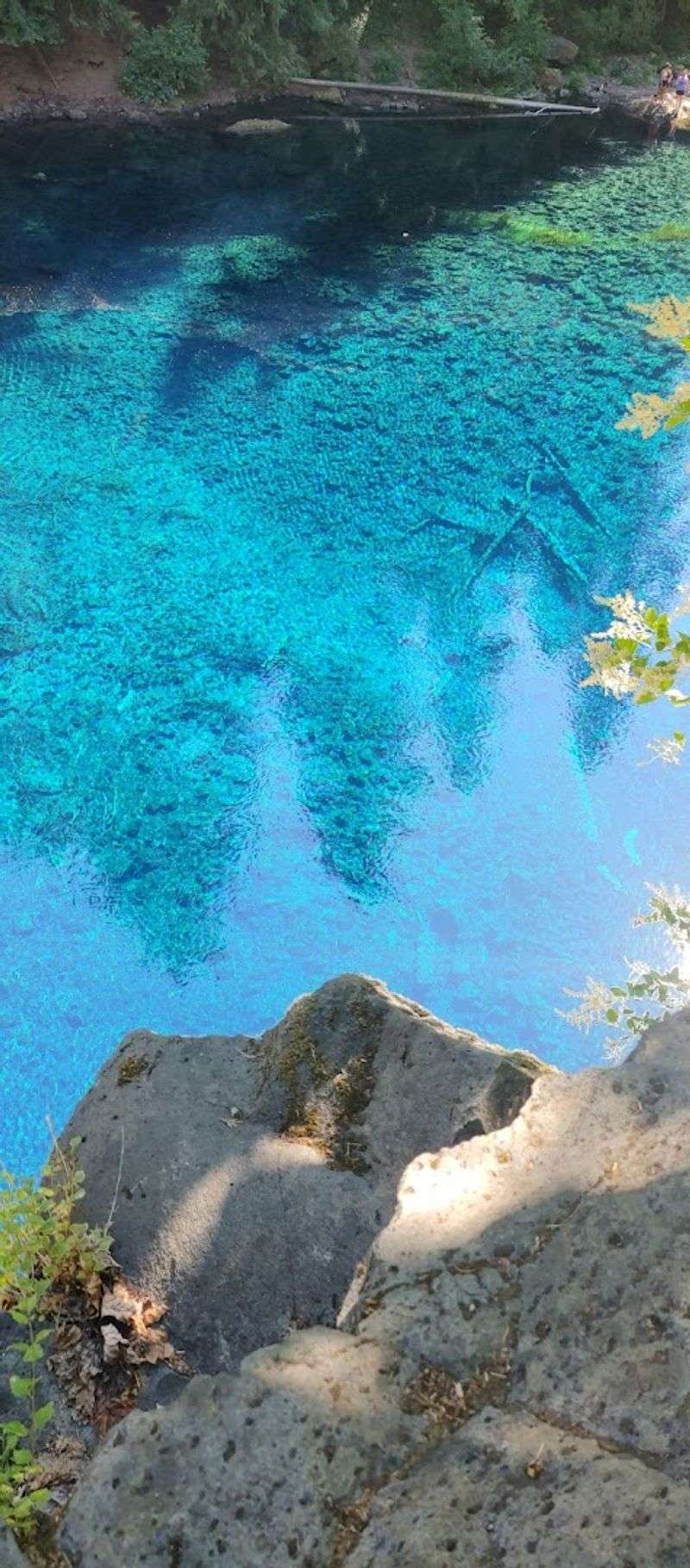
The water at Tamolitch Blue Pool sits at a brutal 37 degrees Fahrenheit. Most people last only seconds after jumping in.
The cold hits you like a wall.
Jumping became a popular challenge shared widely on social media. Visitors started leaping from higher and higher points.
The rocks below are uneven and unforgiving.
Injuries began happening with troubling regularity. Slips on wet lava rock sent people tumbling.
The descent to the water has no paved path and no safety railing.
Emergency rescues were called in on busy summer days. The terrain around the pool is steep.
Getting an injured person out is genuinely difficult.
Rangers began warning visitors about the risks before they reached the pool. The message was clear: this is not a swimming facility.
It is a wild, cold, natural feature.
Water shoes help if you do get in. Getting out of the pool is harder than getting in.
Cold muscles and slippery rocks are a dangerous combination.
Respecting the environment here means respecting your own safety too.
The Best Time To Visit For A Real Experience
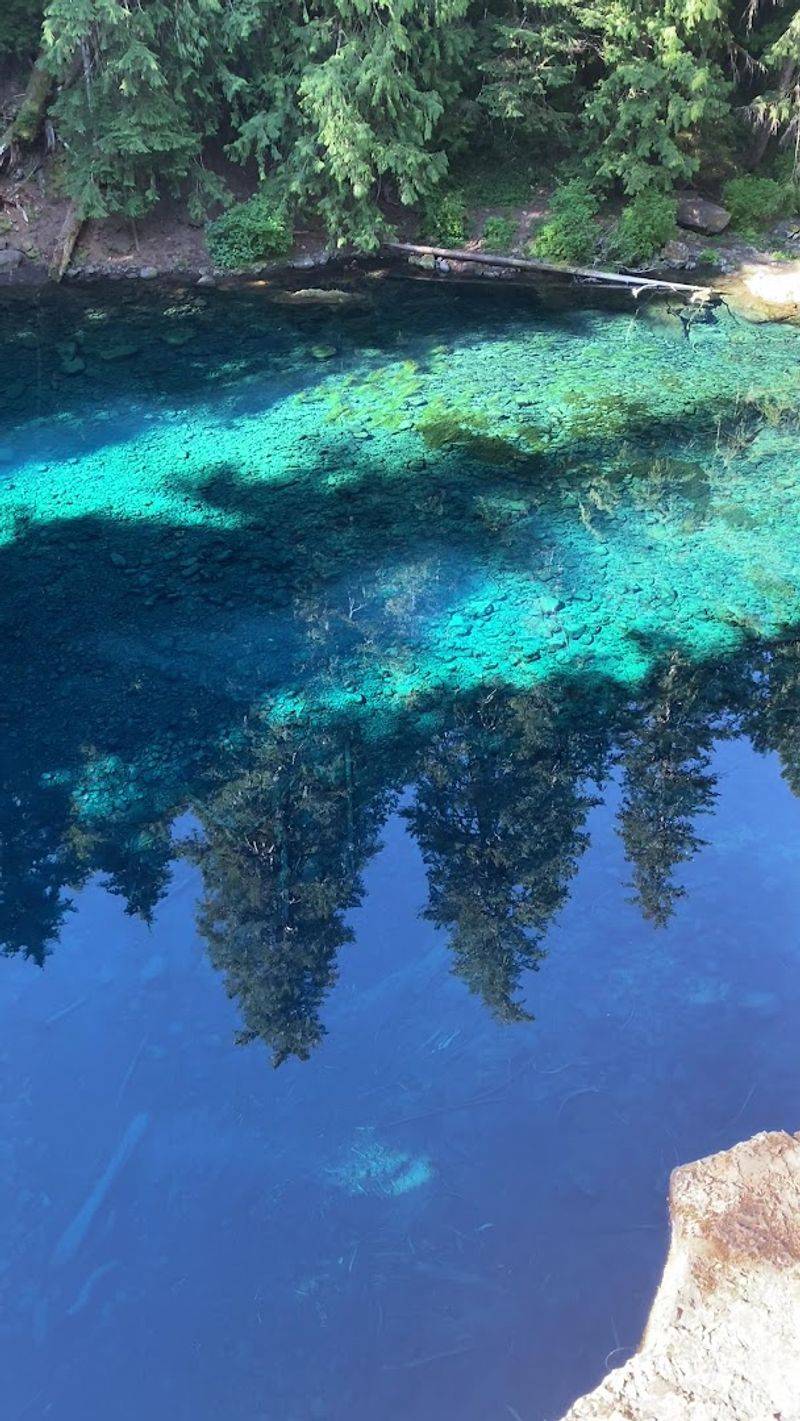
Timing your visit makes an enormous difference at Tamolitch. Summer afternoons are the busiest and most damaging times to go.
Early morning visits feel like a completely different place.
Arriving before 9am on a weekend gives you a real shot at solitude. The light hits the water differently in the morning.
That blue color looks even more vivid in softer light.
Midday sun shining directly overhead illuminates the pool best. Arriving around 11am to noon shows off the water color at its most striking.
Shadows from the treeline can dim the effect later in the afternoon.
Winter visits have their own quiet magic. The trail gets muddy and occasionally snowy.
Fewer people make the trip, which means the forest feels genuinely wild again.
January and February visitors report the trail nearly empty. Cold rain and grey skies keep casual tourists away.
Serious hikers find the experience far more rewarding in the off-season.
No parking permits are currently required. Getting there early remains the single best tip for a peaceful trip.
Trail Conditions And What To Actually Wear
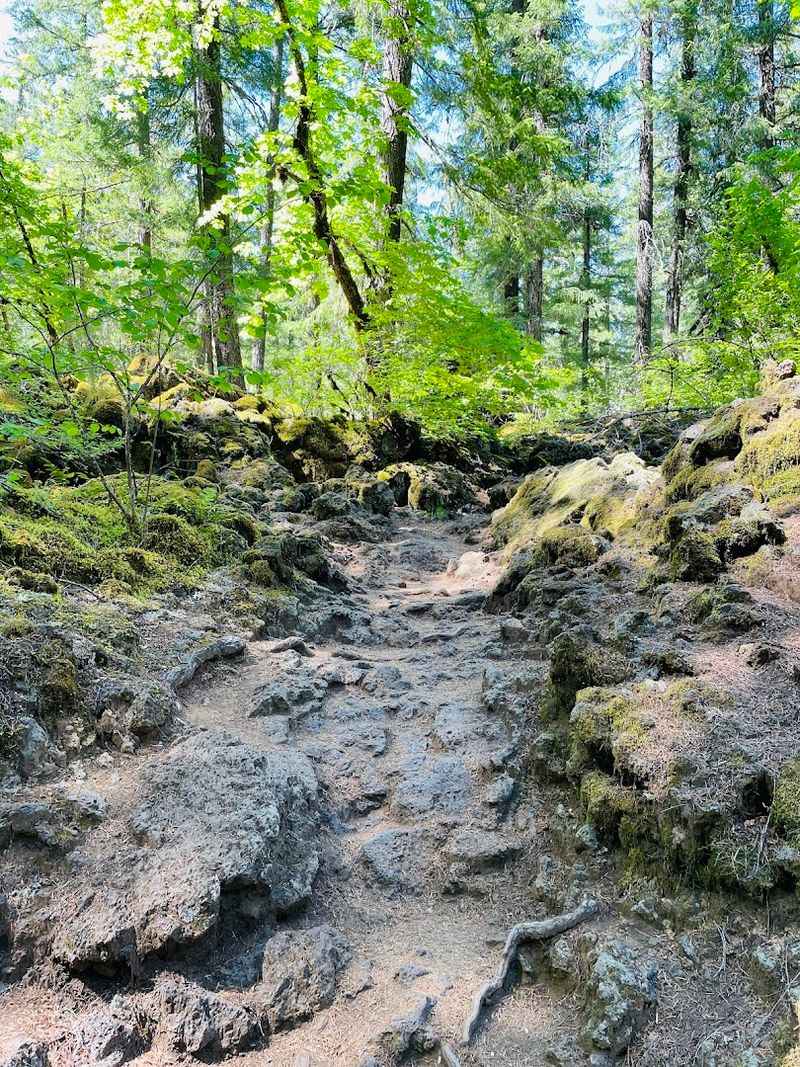
Footwear matters more on this trail than almost anywhere else in Oregon. The lava rock section near the pool is genuinely treacherous in regular sneakers.
Sturdy hiking shoes with ankle support change the experience completely. The rocky sections feel manageable with good grip underfoot.
Sandals and flip-flops are a bad idea here.
The trail is not ADA accessible. Mobility challenges make the final stretch to the pool very difficult.
Planning ahead prevents disappointment and potential injury.
Mud is a reality in winter and spring. Snowmelt turns sections of the trail into a slog.
Waterproof boots earn their keep during those months.
Bring water and snacks. Cell service is unreliable or absent along most of the route.
A downloaded offline map is smarter than relying on a signal.
Blue ribbons tied to branches near the pool help guide you down safely. Following them is strongly recommended.
Straying off the marked path causes more erosion and increases your risk.
Pack layers. The forest stays cool even in summer heat.
The Science Behind That Unforgettable Color
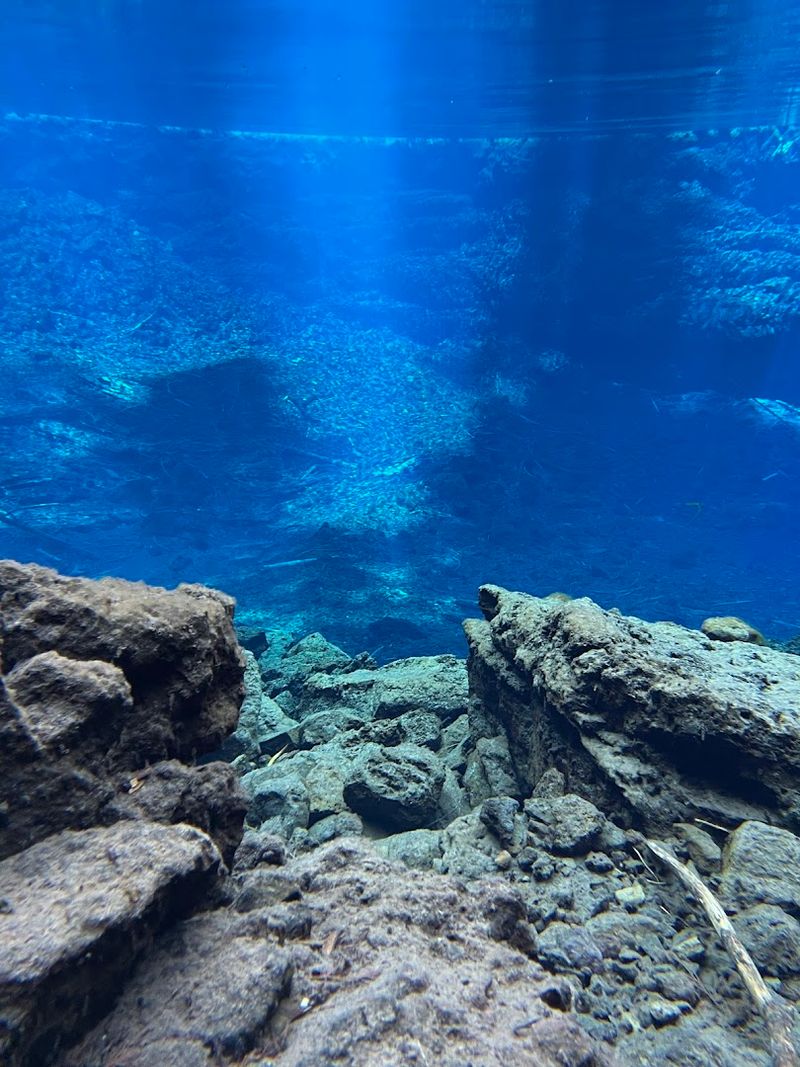
That blue is not just pretty. It is the result of a very specific set of natural conditions.
Understanding them makes the pool feel even more remarkable.
The McKenzie River travels underground through porous volcanic rock for approximately three miles. This underground journey filters the water with extraordinary thoroughness.
What emerges at Tamolitch is almost impossibly pure.
Cold, pure water absorbs red and green light wavelengths. Blue wavelengths reflect back toward the surface.
Your eyes receive almost nothing but blue.
The water temperature hovers between 37 and 38 degrees Fahrenheit all year. That cold prevents algae from growing.
No algae means no cloudiness, just perfect clarity.
The surrounding dark lava rock creates a dramatic contrast. Cliffs and forest reflect into the pool’s surface.
The visual effect shifts depending on cloud cover and sun angle.
This geological story started about 1,600 years ago. Lava from Belknap Crater buried the river.
The underground channel formed slowly over centuries.
No human engineering created this. Time, geology, and cold water did all the work.
What Responsible Visitors Are Doing Differently
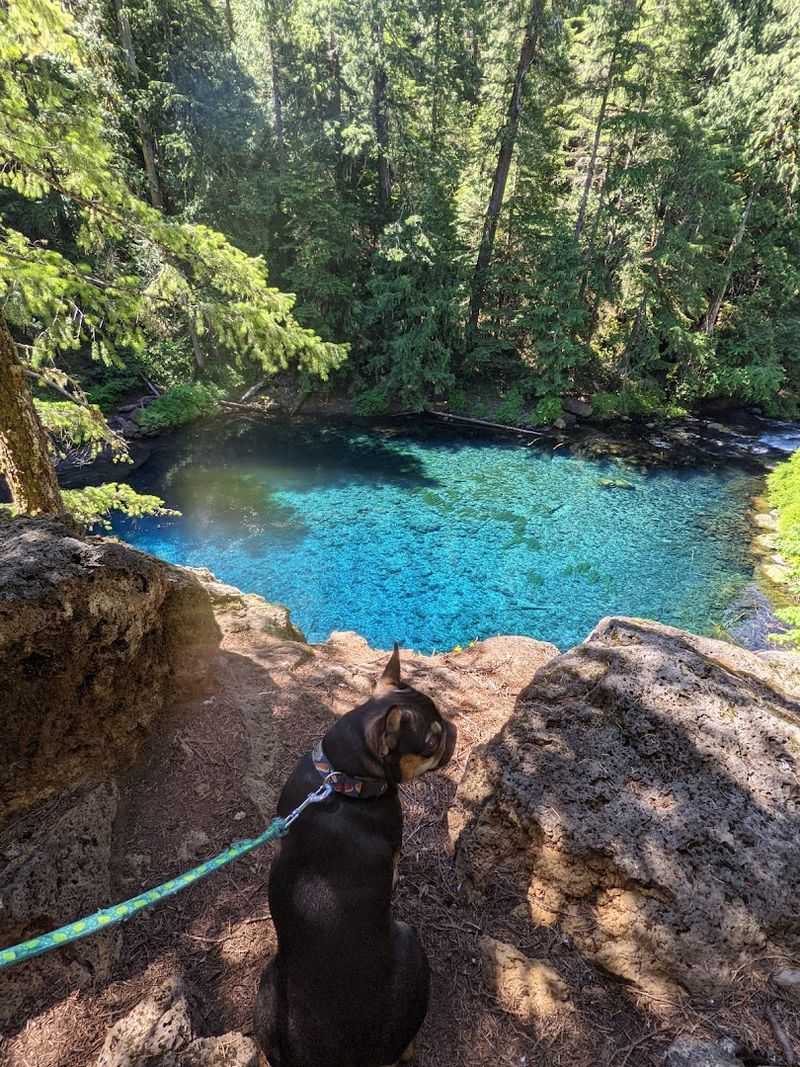
Not every visitor has treated Tamolitch poorly. A growing number of people show up with the right mindset.
They leave the place better than they found it.
Packing out all trash is the baseline expectation. Some hikers carry an extra bag just to collect what others left behind.
That small habit adds up fast over a busy season.
Staying on marked paths protects the fragile vegetation. Mossy rock takes years to grow back after being trampled.
One shortcut can cause damage that lasts a decade.
Keeping noise low respects both other visitors and local wildlife. The forest around the pool supports birds, small mammals, and insects.
Loud groups disrupt that ecosystem in ways that are hard to measure.
Dogs are welcome on the trail but should stay leashed near the pool area. The rocky descent is risky for animals too.
A leash protects your pet and the habitat.
Sharing honest trail conditions online helps others prepare properly. Accurate information reduces dangerous surprises.
The hiking community around Tamolitch has become more vocal about stewardship in recent years.
Can Tamolitch Blue Pool Be Saved
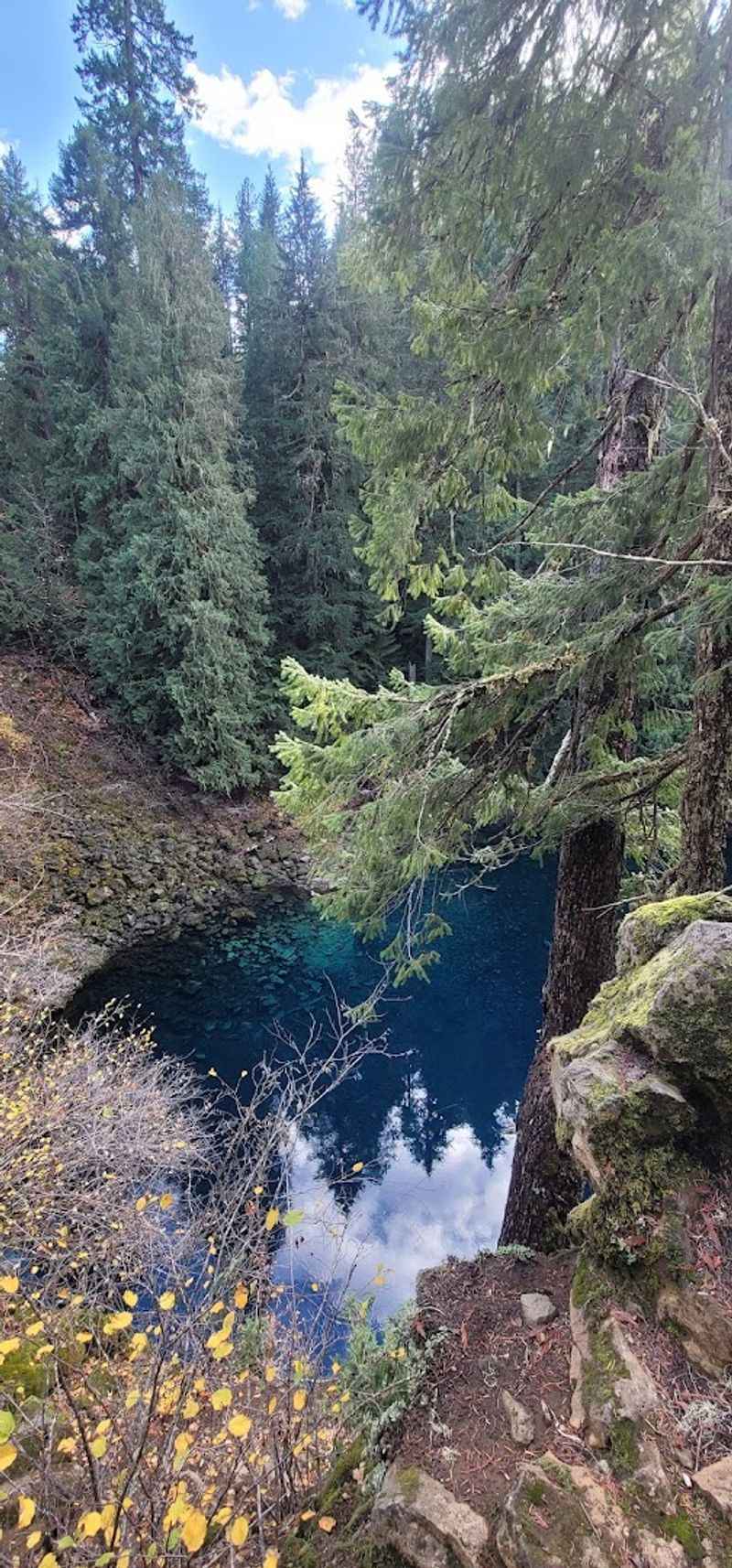
The question hanging over Tamolitch right now is a real one. Can a place this popular survive the attention it has received?
The answer depends entirely on behavior.
The US Forest Service manages the area under the Willamette National Forest. They have the authority to add permit systems, closures, or new regulations.
Whether those tools get used depends on how conditions evolve.
Other popular Oregon destinations have implemented timed entry systems. That approach has worked in some areas.
It reduces peak crowding without banning access entirely.
The trail itself has shown resilience. Volunteer groups have restored sections that were damaged by heavy foot traffic.
New signage has helped direct people more safely near the pool.
The biggest factor remains individual choice. Every visitor decides whether to pack out trash.
Every hiker decides whether to stay on the marked path.
Tamolitch is still stunning. The blue still glows.
The forest still feels ancient and alive.
Protecting it is not complicated. It just requires showing up with more care than selfishness.
The pool has survived 1,600 years of geology. It deserves a fair shot at surviving us.
Dear Reader: This page may contain affiliate links which may earn a commission if you click through and make a purchase. Our independent journalism is not influenced by any advertiser or commercial initiative unless it is clearly marked as sponsored content. As travel products change, please be sure to reconfirm all details and stay up to date with current events to ensure a safe and successful trip.
