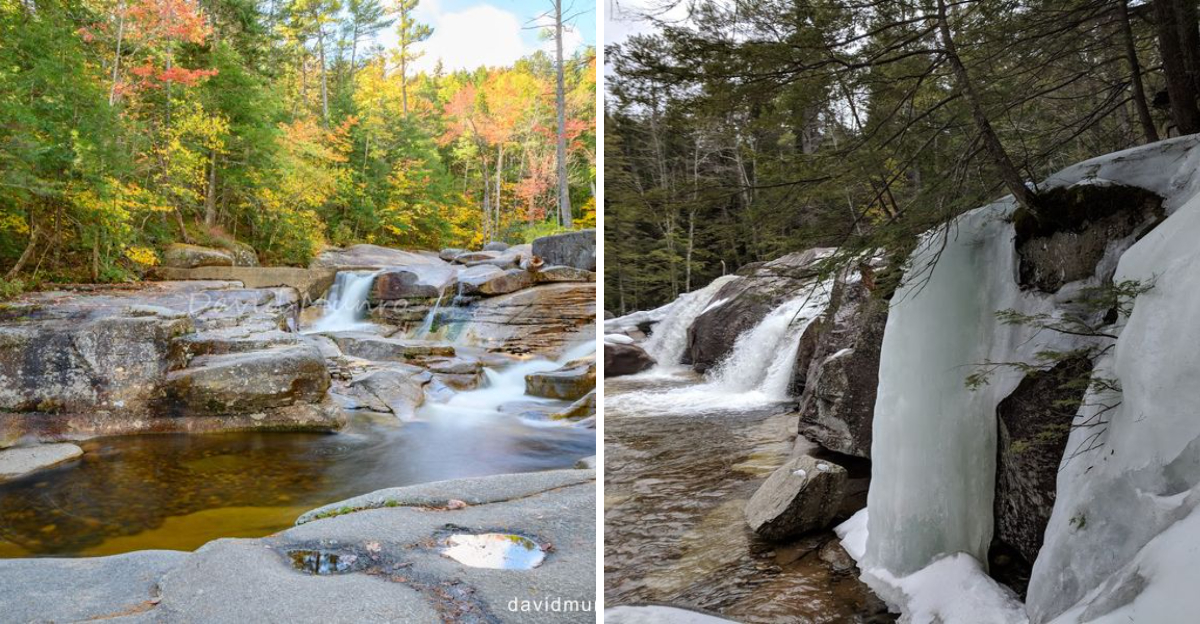
I have been visiting this swimming spot in New Hampshire for years, and I have watched it change in ways that make me sad. It used to be a quiet, hidden gem where you could swim in peace and listen to the water rush over the rocks.
Now it is overrun with tourists, and the locals are still not over it. The parking lot fills up by eight in the morning.
The trails are packed with people taking selfies. The swimming holes are so crowded that you can barely find a place to put your towel.
I talked to a woman who has been coming here since she was a child. She told me she does not even bother anymore during the summer.
She waits until the off season, when the crowds finally thin out. That is not how a beautiful New Hampshire swimming spot should feel.
The water is still cold and clear, and the rocks are still smooth and worn. But the peace is gone.
And that is a loss that cannot be measured.
The Lucy Brook Legacy That Started It All
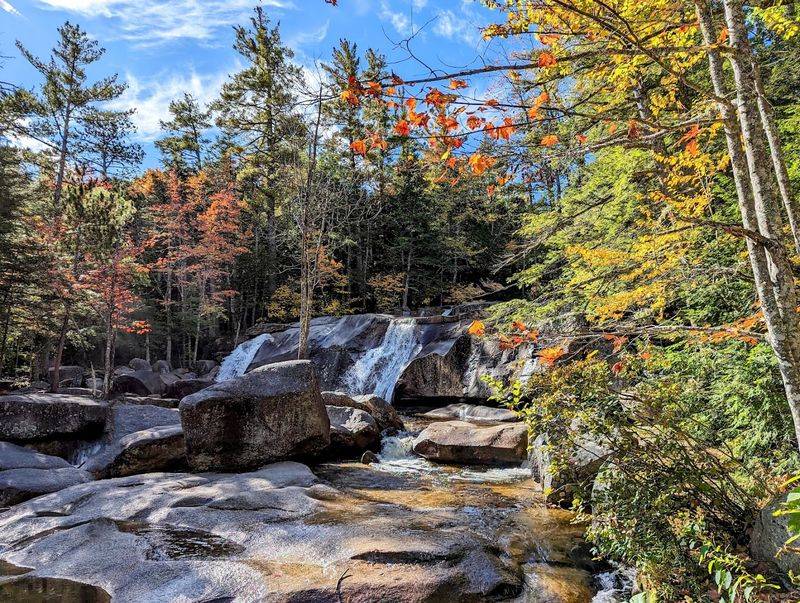
Long before influencers showed up with ring lights and tripods, Lucy Brook was quietly carving its path through the granite bedrock of the White Mountains, minding its own ancient business. Fed by the slopes of Big Attitash Mountain, this brook is the beating heart of the entire Diana’s Baths experience.
The water moves with a kind of confident ease, slipping over polished stone and pooling in hollows that look almost too perfect to be natural.
The Abenaki people knew this place long before any trail sign existed. They called it the “Home of the Water Fairies,” a name that captures the otherworldly shimmer you see when sunlight hits the water at just the right angle.
That poetic name still feels earned today.
What makes Lucy Brook so compelling is its consistency. Seasons change, crowds come and go, but the brook keeps flowing, reshaping the landscape one inch at a time.
New Hampshire’s geology did something genuinely spectacular here, and every step along the trail reminds you that you’re walking through thousands of years of slow, patient artistry. The brook deserves far more credit than the Instagram posts give it.
A Sawmill Once Stood Where Swimmers Now Splash
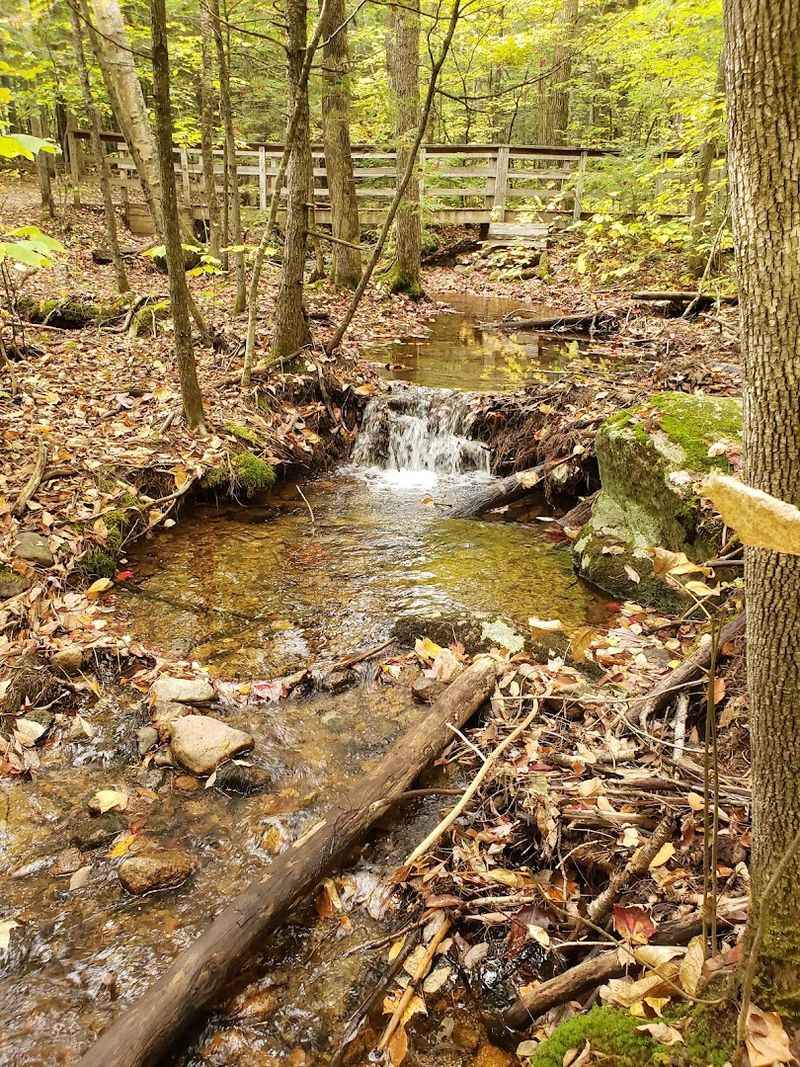
Here’s a detail that stops most people cold when they hear it. Back in the mid-1800s, the Lucy family looked at this gorgeous cascade and thought, productively, “lumber operation.” A working sawmill once hummed and clattered right alongside these very falls, turning timber while the brook powered the machinery.
It’s almost impossible to picture now, standing in what feels like pure wilderness.
The operation didn’t stop there. A three-story boarding house and a gift shop followed, catering to early visitors who were already discovering the scenic pull of this New Hampshire valley.
The whole setup was a kind of proto-tourism economy, surprisingly modern in its instincts.
None of those buildings survived, but if you look carefully along the trail edges, you can spot moss-covered stone foundations peeking through the undergrowth. They’re easy to miss, especially when everyone around you is focused on getting the perfect waterfall selfie.
Those quiet remnants are a reminder that humans have always been drawn to beautiful places and have always found ways to turn that beauty into something commercial. The tension between preservation and exploitation at Diana’s Baths is, in many ways, nothing new at all.
The Trail That Feels Easy Until the Rocks Get Slippery
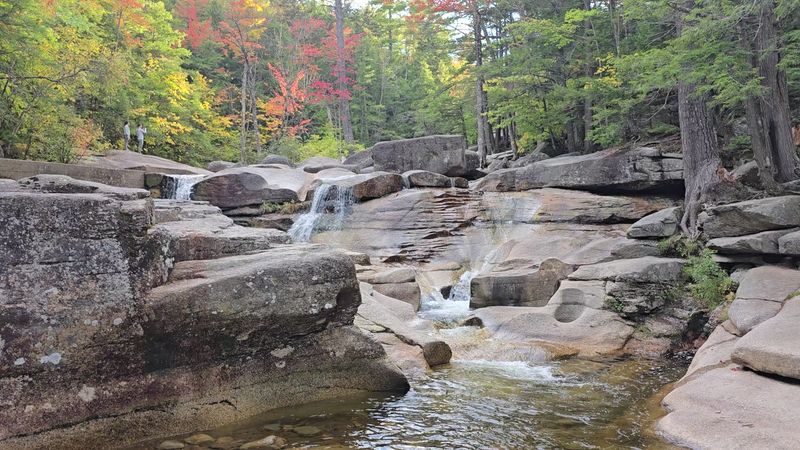
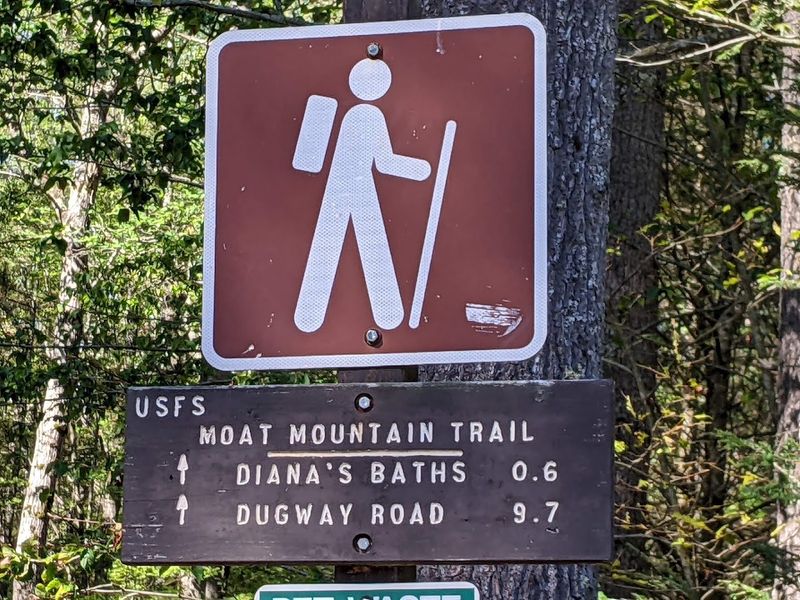
The trail to Diana’s Baths clocks in at roughly 0.6 miles one way, and on paper, that sounds like a casual afternoon stroll. The path itself is wide, well-maintained, and shaded by a gorgeous canopy of northern hardwoods that keeps things cool even on the hottest summer days.
For the first stretch, you’d be forgiven for thinking this is the easiest hike in New Hampshire.
Then you reach the rocks. Smooth, water-polished granite has zero interest in keeping you upright, and the falls area demands genuine attention.
Flip-flops are basically an invitation to an embarrassing tumble. Water shoes with actual grip or sturdy trail sneakers are non-negotiable if you plan to explore beyond the main viewing area.
Kids absolutely love scrambling around the rock ledges, and families with young children do well here, provided everyone moves carefully. The brook crossings add a playful element to the return trip.
My honest advice is to take your time, watch where the rock looks darker and wetter, and resist the urge to rush just because someone behind you is waiting. The falls reward patience, and a slow, careful approach means you actually absorb the beauty instead of speed-running past it.
Frozen in Time, Literally, During Winter Visits
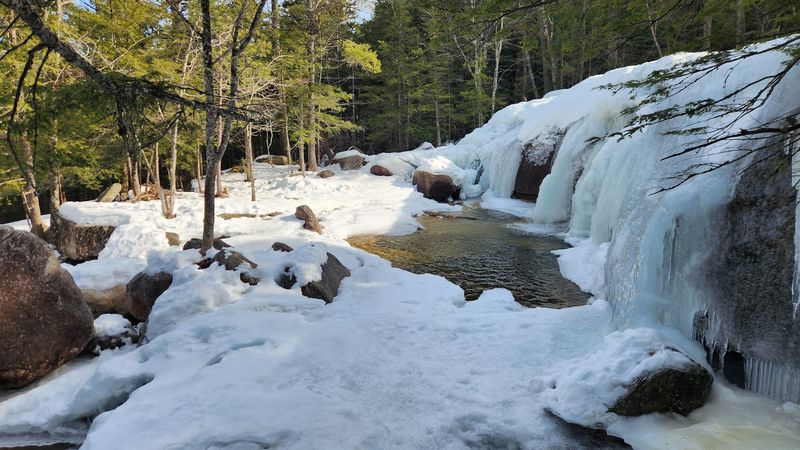
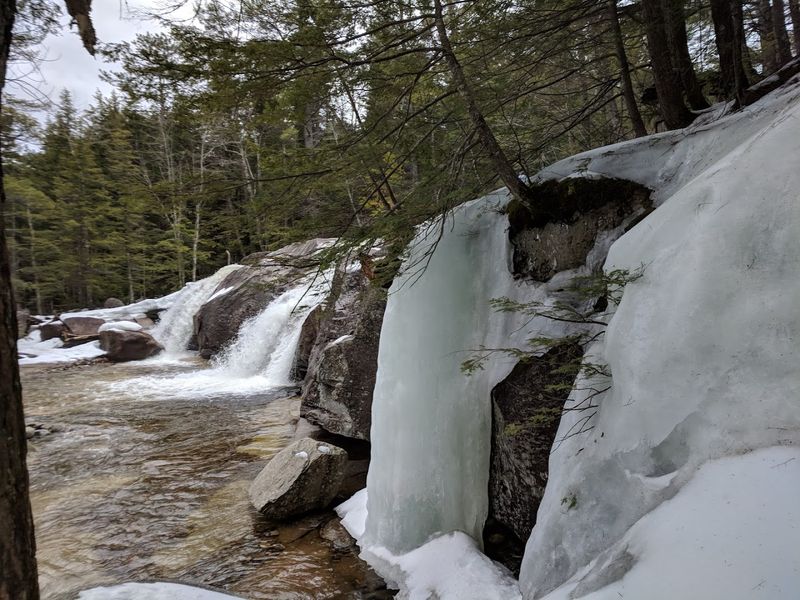
Most people associate Diana’s Baths with summer swimming, but the winter version of this place is a completely different kind of spectacular. When temperatures drop deep enough, the cascades freeze into elaborate ice sculptures, layering over the granite in shapes that look hand-carved.
The whole scene takes on a hushed, fairy-tale quality that the summer crowds never get to witness.
The parking area stays accessible through the colder months, and the trail, while potentially icy, remains passable with the right footwear. Microspikes are a smart addition to your pack if you’re planning a January or February visit.
The silence out there in winter is almost startling after the summer chaos.
New Hampshire winters are no joke, so layering properly is essential. But the payoff for braving the cold is a version of Diana’s Baths that feels genuinely private and unhurried.
I’ve walked that trail in February and had the entire place to myself, which felt like stumbling onto a secret that the summer crowd doesn’t know exists. The frozen waterfalls catch the low winter light in ways that are genuinely hard to photograph well, but impossible to forget.
Cold fingers are a small price for that kind of beauty.
Why Locals Are Genuinely Frustrated and Rightfully So
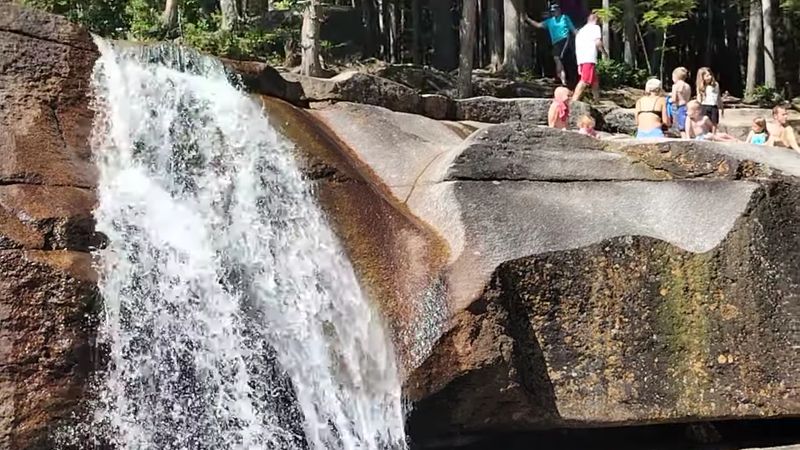
The frustration locals feel about Diana’s Baths isn’t petty or possessive. It’s rooted in watching a place they love slowly absorb the consequences of viral popularity.
Parking queues that stretch back onto the road, litter left on the trail, graffiti scratched into rock faces, and noise levels that shatter the tranquility this spot was known for. These aren’t minor inconveniences.
They’re cumulative damage.
Roadside parking, which is both dangerous and prohibited, became a genuine problem during peak summer weekends. The trail, designed for a modest flow of nature lovers, now handles a volume it was never built for.
The bathroom facilities near the trailhead have, by most accounts, suffered accordingly.
None of this is unique to New Hampshire. Popular natural spots across the country face the same reckoning when social media amplifies their appeal faster than infrastructure can adapt.
The U.S. Forest Service manages Diana’s Baths and has worked to address some of these pressures, including the parking fee system that helps fund maintenance.
But the core tension remains. A place this beautiful will always attract more people than it can comfortably hold, and the visitors who treat it carelessly are the ones who ruin it for everyone who comes after them.
The Art of Actually Getting a Good Visit In
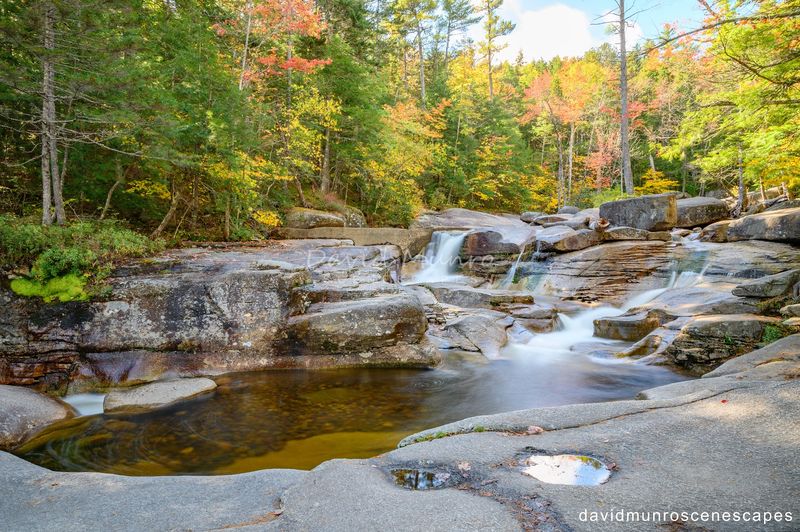
Getting the most out of Diana’s Baths in the current era requires a little strategy. The single most effective move is arriving early, as in, before most people have finished their first cup of coffee.
The parking lot opens at 6 AM, and showing up within the first hour gives you a dramatically different experience than rolling in at noon on a Saturday in July.
Shoulder seasons are genuinely underrated here. May and September offer comfortable temperatures, fewer crowds, and a version of the falls that feels more like the locals remember.
Spring runoff makes the cascades especially dramatic, with water levels high and the sound of the brook filling the whole valley.
Rainy days, counterintuitively, are another solid option. The trail handles light rain well, the rocks are no slipperier than usual (they’re always slippery), and the waterfall volume increases in a satisfying way.
Bring a rain jacket and embrace the moody atmosphere. The America the Beautiful annual pass covers the parking fee if you hold one, which is a nice bonus for frequent national forest visitors.
Planning ahead, packing properly, and choosing your timing wisely transforms Diana’s Baths from a stressful tourist scrum into the peaceful natural escape it was always meant to be.
Pools, Potholes, and the Geology Behind the Magic
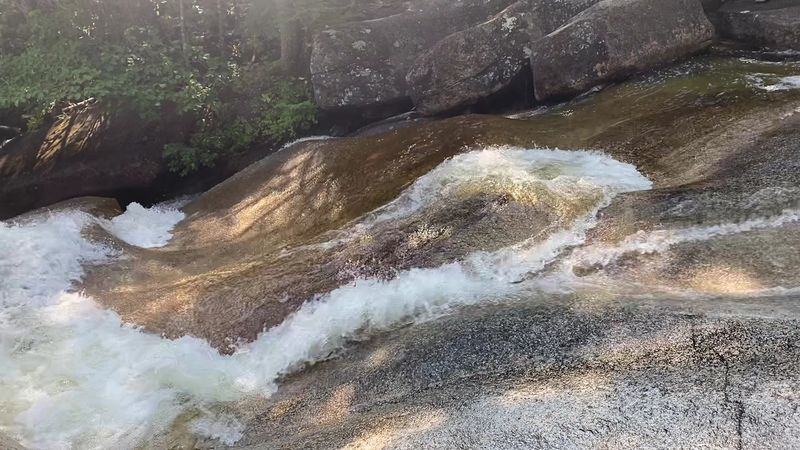
The pools at Diana’s Baths aren’t random. They’re the result of a geological process called pothole formation, where swirling water traps rocks and grinds them in circular motions against the bedrock over centuries.
The result is those perfectly round, smooth-sided bowls you see scattered throughout the falls area. Each one is essentially a slow-motion sculpture project that started long before humans arrived.
The total vertical drop across all the cascades adds up to a genuinely impressive figure, and the variety of water features along the way keeps the experience interesting. There are narrow chutes, wide flat slides, deep plunge pools, and shallow wading areas, each with its own character and appeal.
Summer water temperatures stay refreshingly cold even during heat waves, which is part of the draw for swimmers. The granite itself absorbs heat from the sun, creating warm dry spots to sit and watch the water while your feet dangle in the cool brook.
New Hampshire’s bedrock geology, specifically the Conway granite formation common to this part of the White Mountains, is unusually resistant to erosion, which is why the rock faces stay so smooth and polished rather than crumbling. The falls are, in the most literal sense, a product of deep time.
Dogs, Kids, and Everyone Else Who Belongs Here
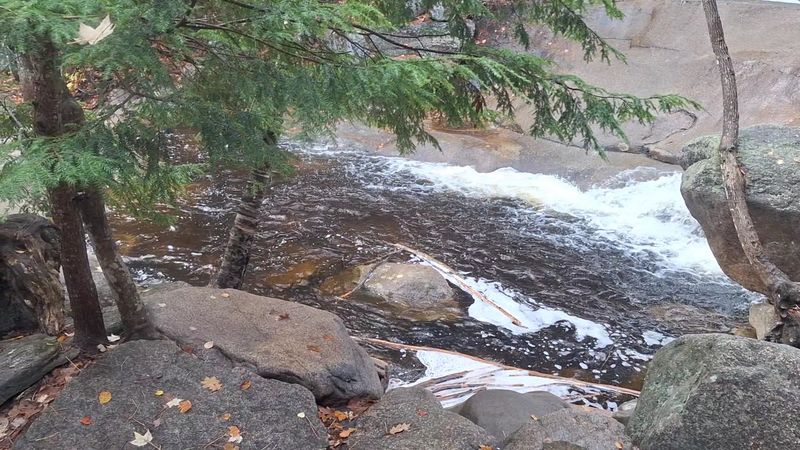
One of the genuinely lovely things about Diana’s Baths is how inclusive the experience is. Dogs are welcome on the trail as long as they’re leashed, and the brook gives them plenty of opportunities to cool off on warm days.
The wide, flat path at the start is manageable even for small children, and the falls area turns into a natural playground that kids find absolutely irresistible.
Families with toddlers tend to stick to the lower pools, where the water is shallow and the rock surfaces are more forgiving. Older kids and teenagers gravitate toward the upper sections, scrambling up ledges and finding the deeper swimming holes.
Everyone finds their level, which is part of what makes this place work so well as a family destination.
The key for dog owners is cleanup responsibility. The trail is shared by a lot of people, and keeping it clean is a collective effort.
Leash rules exist for good reason, both for the safety of other hikers and for protecting the wildlife that still calls this forest home. New Hampshire has a strong outdoor culture, and most people who visit Diana’s Baths genuinely care about preserving it.
The ones who don’t are, unfortunately, the ones who tend to make the news.
Leave No Trace or Leave It Ruined for Everyone
The phrase “leave no trace” gets thrown around so often it risks becoming background noise, but at Diana’s Baths, it carries real weight. The U.S.
Forest Service manages this area with limited resources, and the pressure from high visitor numbers shows in ways that are hard to ignore. Trash left near the falls, fire rings built in prohibited areas, and carved initials on granite are all signs of visitors who treated the place as a backdrop rather than a living ecosystem.
Pack-in, pack-out is the rule here, and it’s not optional. Trash receptacles are located at the parking area, not at the falls themselves, so you carry your waste back to the trailhead.
That’s a reasonable ask for access to one of New Hampshire’s most beautiful natural spots.
Graffiti removal costs time and money that the Forest Service would rather spend on trail maintenance. Fires in unauthorized spots damage the very granite formations that make this place worth visiting.
Every small act of carelessness compounds over thousands of visits per season. The math is brutal.
If you come to Diana’s Baths and leave it exactly as you found it, you’ve done the minimum and the minimum is exactly what’s needed right now. Respect is the only sustainable admission fee.
Getting There and What to Know Before You Go
Diana’s Baths sits off West Side Road in Bartlett, New Hampshire, and the address to plug into your navigation is 3725 West Side Road, Bartlett, NH 03812. The gravel parking lot operates on a self-serve fee system via an on-site kiosk, and America the Beautiful pass holders park for free.
The lot is open daily from 6 AM to 10 PM, every day of the week.
Vault toilets are available at the trailhead, which is more than some comparable natural sites offer. Cell service in the area can be spotty, so downloading an offline map before you leave is a smart move.
The nearest services, including gas stations, convenience stores, and restaurants, are a short drive away in North Conway.
The surrounding region of the White Mountains offers plenty of reasons to extend your trip. Cathedral Ledge and Echo Lake State Park are both nearby and worth folding into your itinerary.
New Hampshire’s outdoor scene in this corner of the state is genuinely world-class, and Diana’s Baths is just one piece of a much larger adventure puzzle. Go early, go prepared, and go with the right attitude.
This place has earned its reputation, and with a little effort, it can still deliver something genuinely memorable.
